
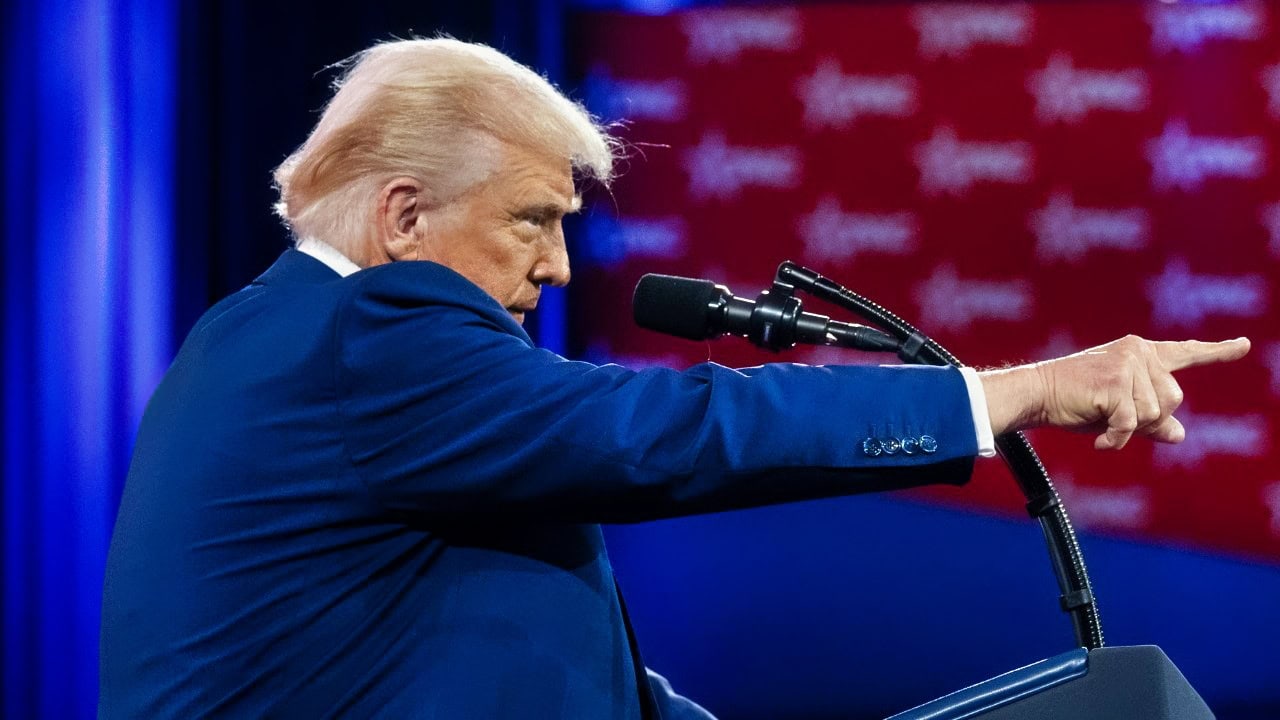
Everyone Is Asking the Wrong Question About Trump’s Foreign Policy
Washington keeps circling the same argument about Donald Trump’s foreign policy. Some insist there is no strategy at all, only impulse and improvisation. Others claim a hidden doctrine, coherent but misunderstood, sits behind the noise. Both camps are looking in the wrong place.
Trump does have a strategic vision, but grand theories don’t shape it, and it isn’t really expressed in policy papers—not even the 2025 National Security Strategy. It operates through instinct and pattern recognition. That distinction matters, because a strategy driven by intuition looks very different from one anchored in formal doctrine—and it produces consequences that many analysts are still struggling to grasp.
Venezuela and the Moment the Pattern Became Impossible to Ignore
The pattern snapped into focus with Venezuela. The action against Maduro skipped past the usual dance of pressure, signaling, and incremental escalation. It happened fast, changed the facts on the ground, and reconfigured the regional order in ways that cannot be easily reversed. Speed mattered as much as the result because it showed how Trump thinks about power in his near abroad: when faced with a challenge that is geographically proximate and clearly within America’s grasp, he sees delay as a weakness that squanders leverage rather than a means to manage escalation.
This was not a one-off bolt from the blue. It revealed a standing instinct Trump has carried for years: the Western Hemisphere is a space where delay itself carries strategic cost and where dominance must be asserted before hesitation hardens into constraint. A challenge inside that space is not treated as a diplomatic puzzle to be managed over time. It is treated as a test that demands resolution. Venezuela brought that ordering – retrospectively referred to by critics as the “Donroe Doctrine” – into view with unusual clarity, and it did so in a way that resists dismissal as improvisation. Improvisation does not reproduce the same hierarchy of priorities under pressure. Trump’s response did.
The episode is often described as a gamble that happened to work, or as recklessness cleaned up afterward by aides and commentators. That framing obscures the point. Venezuela showed that Trump’s strategy is not announced in advance, then executed with discipline. It is executed first, then recognized as a pattern by those willing to look at what repeats. That sequence explains why analysts keep talking past each other. They are searching for a theory when the operative logic is embedded in choice.
Doctrine, Briefly, and Why Trump Breaks the Model
In the American tradition, doctrine usually precedes action. Ideas are articulated, priorities are ranked, and policy follows a declared logic. Trump reverses that sequence. He acts first, guided by instinctive judgments about advantage and risk, then allows results to supply the appearance of coherence. The debate over whether he “has a doctrine” collapses because it assumes strategy must be theorized before it can be practiced.
Trump’s approach is reflexive rather than declaratory. It becomes legible through repetition across cases. The absence of a formal framework does not imply a lack of vision. It reflects a vision expressed through consistent habits of action, rooted in temperament and a limited set of assumptions about how power secures advantage.
Greenland and Strategic Instinct Over Alliance Etiquette
Greenland reinforces the same logic in a different register. What many treated as an eccentric fixation looks less strange when read through the lens of Trump’s instinctive understanding of geography. He reacts strongly to places that shape access and the time available for warning. Physical advantage carries more weight than diplomatic ritual, especially when the geography in question sits along the northern approaches that matter for continental defense.
When Trump identifies a geographic or strategic position he believes confers decisive advantage, he treats hesitation as a transactional failure rather than a form of restraint. In that setting, allied sensitivity does not operate as a boundary on action but as a factor to be weighed and, if necessary, overridden, a dynamic that Greenland brings into sharp relief.
This is not simply about tone or a taste for provocation. It is about a style of strategy that privileges control over cooperation. The Greenland episode matters because it clarifies the mechanism: Trump’s instinct does not stop at borders or at alliance etiquette. It stops only where he perceives costs or benefits that are immediate enough to matter to him.
Iran and Unpredictability as Effect Rather Than Design
Iran provides an example of how this reflexive style works outside the hemisphere. President Trump’s approach to Tehran is typically characterized as falling somewhere between erratic and irrational. That description may reflect how the policy is experienced by Iran and by U.S. allies, but it misidentifies the source of the behavior. Trump’s approach is not carefully calibrated. It reflects a habit of escalating first and working out the logic of deterrence afterward, in the absence of any stabilizing framework to govern how threats are issued, revised, or withdrawn.
This is where the old language of the “madman” approach inevitably appears. The effects can resemble it. Adversaries face uncertainty about thresholds, and signals become less precise. The difference lies in intent and discipline. Nixon’s version, when it worked at all, depended on calibration and containment. Trump’s unpredictability is more organic. It is produced by reflexive escalation rather than by a controlled performance.
The difference is significant because it affects how risk builds up over time. Unpredictability can buy leverage in the short term, particularly against risk-averse opponents. Over longer time horizons, it raises the probability that a signal will be misunderstood or that a bluff will turn into a trap. Iran demonstrates the peril of strategy-by-instinct when escalation ladders are involved.
Strategy Without Architecture
Taken together, Venezuela, Greenland, and Iran reveal a pattern that resists dismissal. Trump privileges immediacy over deliberation and asserts dominance when challenged. He relies on leverage rather than reassurance across regions that differ sharply in context. What is missing is architecture. There is no stable framework to integrate these instincts into a durable design, and no discipline that restrains their application once the moment passes.
This is why his foreign policy can feel forceful while remaining disorienting. It also explains the polarized commentary. Critics see only volatility. Supporters see only strength. Both sides mistake a recurring style for either chaos or genius when a simpler description is more accurate. Trump’s strategy is coherent in its instincts, yet thin in its structure. It works through repetition rather than through a blueprint.
Why This Kind of Strategy Works and Why It Fails
A reflexive strategy has real advantages. It compresses decision time and denies opponents the comfort of predictability. It allows rapid exploitation of opportunity and avoids the paralysis that often comes with an extended process. In certain moments, those traits are decisive. Venezuela remains the clearest example of how speed and dominance can reshape a regional balance before caution reasserts itself.
The costs accumulate elsewhere. Allies struggle to interpret signals and adjust planning horizons. Institutions built around predictability lose traction. Over time, risk shifts from calculation toward chance. The absence of architecture does not prevent action, but it erodes the capacity to sustain success without unintended consequences. This is not a moral critique. It is a structural observation about how intuition functions when it becomes the primary engine of statecraft.
The Doctrine Washington Refuses to Admit Exists
The persistent mistake in Washington is the refusal to accept that Trump’s foreign policy occupies an uncomfortable middle ground. It is neither incoherent nor fully theorized. It is a patterned instinct that is repeatedly applied in moments of stress. That makes it capable of producing sharp results while embedding fragility directly into the system, where it accumulates quietly and surfaces only when correction is no longer cheap.
The more unsettling question is no longer whether Trump has a doctrine. It is whether the United States can sustain a global role when strategy lives mainly in instinct and the momentum of reflexes replaces the discipline of architecture. If that is the reality of American statecraft in mid-January 2026, then the debate should shift. The issue is not whether Trump has ideas. The issue is whether the country can live with a style of power that works best in bursts, then leaves everyone guessing about what comes next.
About the Author: Dr. Andrew Latham
Andrew Latham is a non-resident fellow at Defense Priorities and a professor of international relations and political theory at Macalester College in Saint Paul, MN. You can follow him on X: @aakatham.