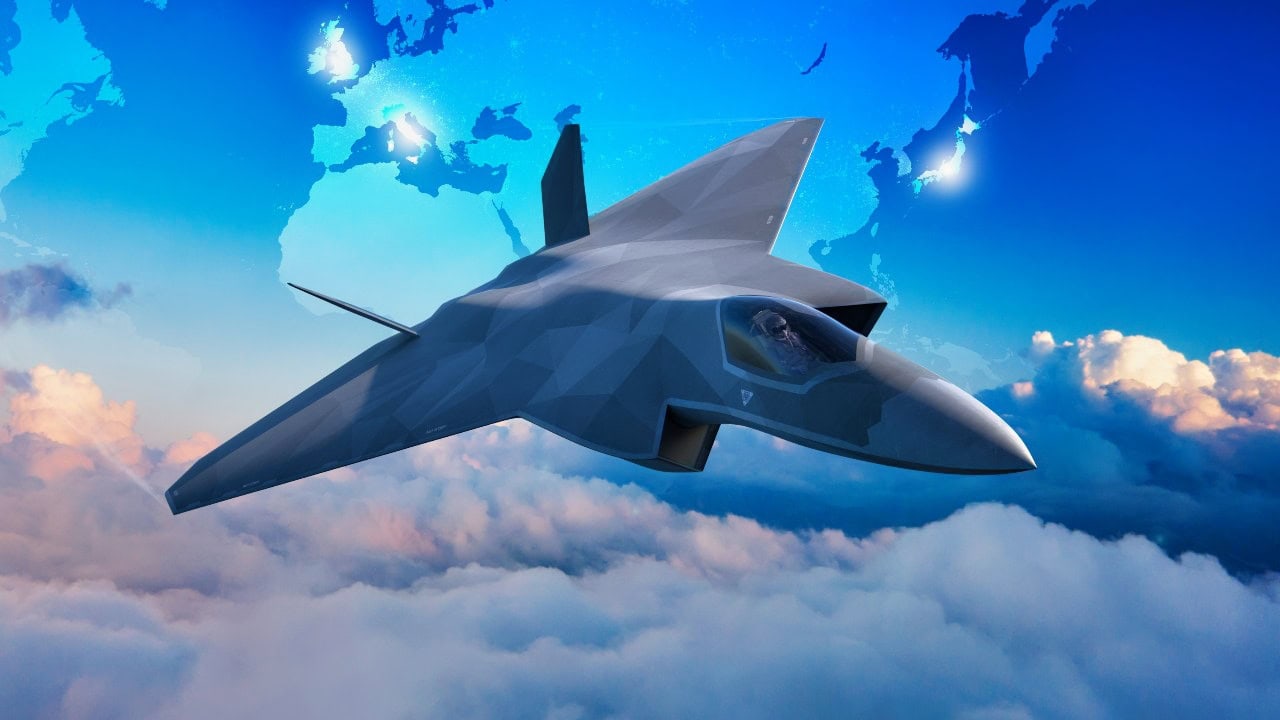
The GCAP Fighter Pulls Ahead As FCAS Stalls
Tokyo, London, and Rome’s next-generation fighter jet programme is going from strength to strength while its rival falters amid strife between German and French stakeholders.
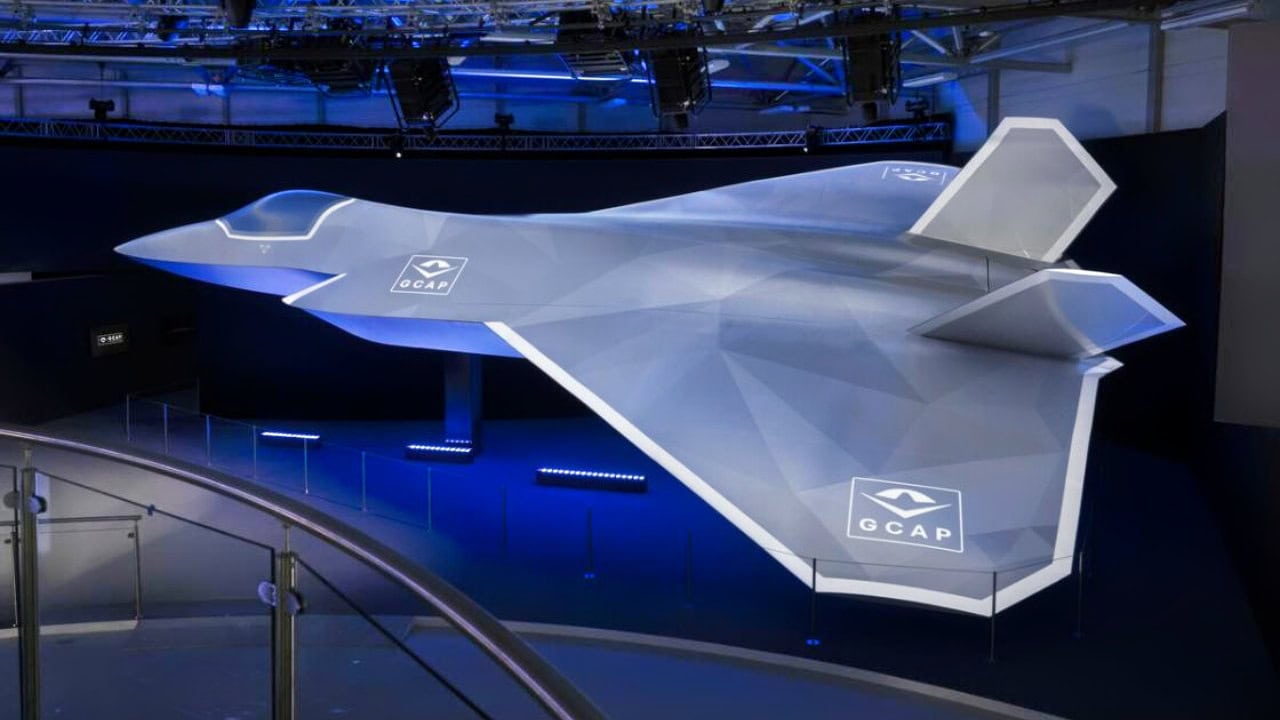
GCAP 6th Generation Fighter
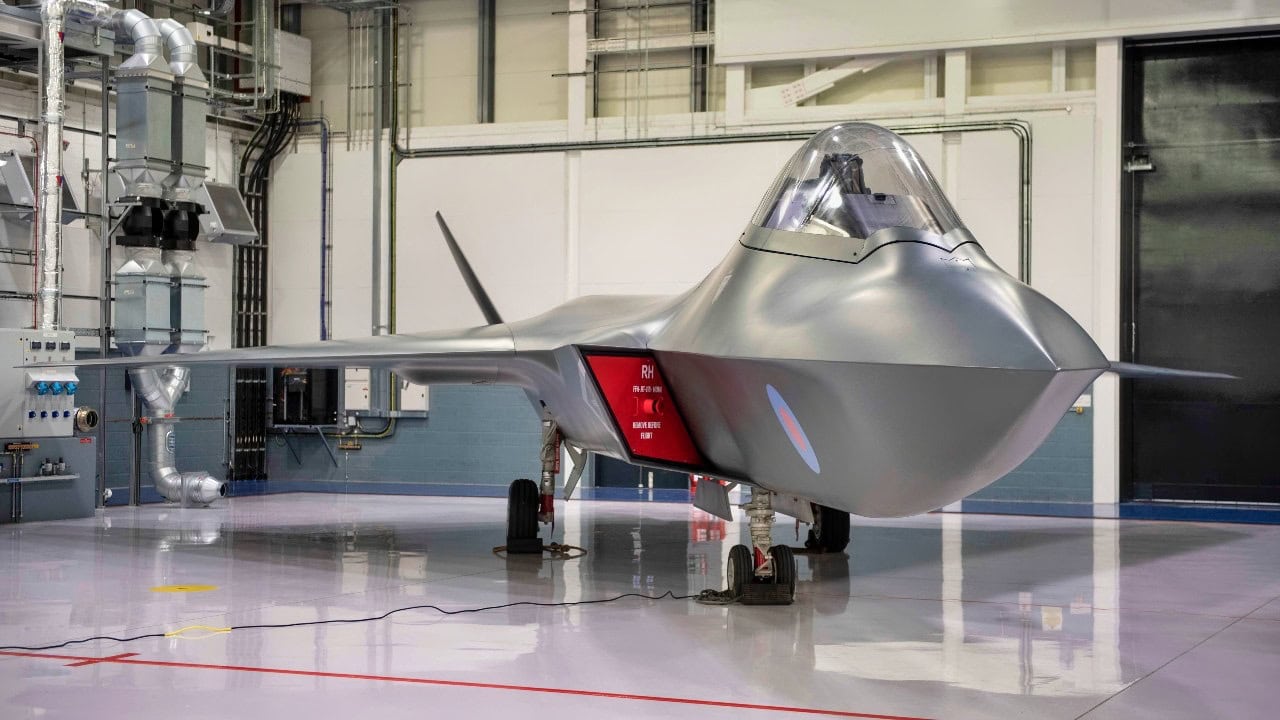
Image of the UK’s concept model for the next generation jet fighter “Tempest”, which was unveiled by Defence Secretary, at Farnborough International Air Show back in 2018.
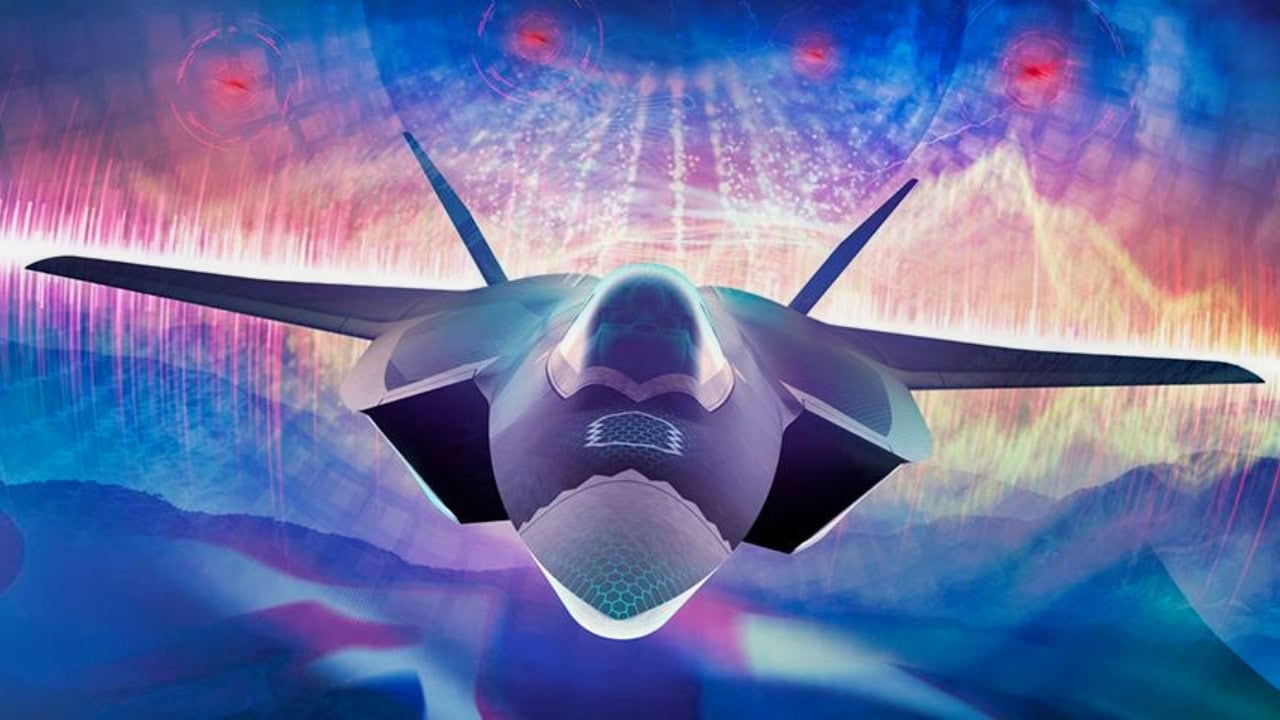
GCAP Fighter. Industry Handout Image.
The Global Combat Air Programme (GCAP), which involves Japan, the UK and Italy, is increasingly becoming a more viable non-US sixth-generation fighter programme.
That assessment follows fresh uncertainty surrounding Europe’s Future Combat Air System (FCAS), which involves Spain, France and Germany.
The South China Morning Post, a newspaper that has been accused of promoting Beijing’s soft power, reported that FCAS now has no fixed deadline after Berlin’s end-of-year deadline passed without comment.
German defence outlet Hartpunkt alleged that disagreements — particularly the French manufacturer’s insistence on a larger role – had rendered the original development timeline “no longer feasible.”
The FCAS initiative remains mired in uncertainty as the three countries involved want to replace and supplement their current jets on differing timescales. Germany, facing heightened security pressures, is increasingly reluctant to wait for a protracted programme.
By contrast, GCAP has presented a picture of relative coherence. In late 2023, the treaty was formalized, and a joint international organisation was subsequently launched. The prime industrial vehicle for the project is Edgewing, a joint venture owned by Japan’s Mitsubishi Heavy Industries, the UK’s BAE Systems and Italy’s Leonardo.
Its stated aim is to deliver an operational aircraft by 2035, replacing platforms such as Japan’s F-2 and the Eurofighter Typhoon.
Much progress has already begun, with work on advanced sensors, adaptive engines, and manned-unmanned teaming already ongoing.
Engine demonstrator activity and flight-testing is planned to take place through to the end of this decade. Japan’s Ministry of Defense also continues to stress the 2035 target, including for its 2026 budget.
Still, this momentum has not arrived without some controversy. This week, Defense News reported that Italy’s projected contribution to GCAP has soared to €18.6 billion. This is three times the figure proposed five years ago, prompting criticism from opposition lawmakers amid Italy’s wider economic woes.
What is clear is that, despite hand-wringing over finances and technology pipelines, it all too often comes down to whether leaders are truly willing to invest time and energy into tough defense projects with no immediate payoff. As FCAS members struggle to align their priorities, GCAP’s look set to surge ahead in the pricey race for air superiority as tensions rise.
About the Author: Georgia Gilholy
Georgia Gilholy is a journalist based in the United Kingdom who has been published in Newsweek, The Times of Israel, and the Spectator. Gilholy writes about international politics, culture, and education. You can follow her on X:@llggeorgia.