
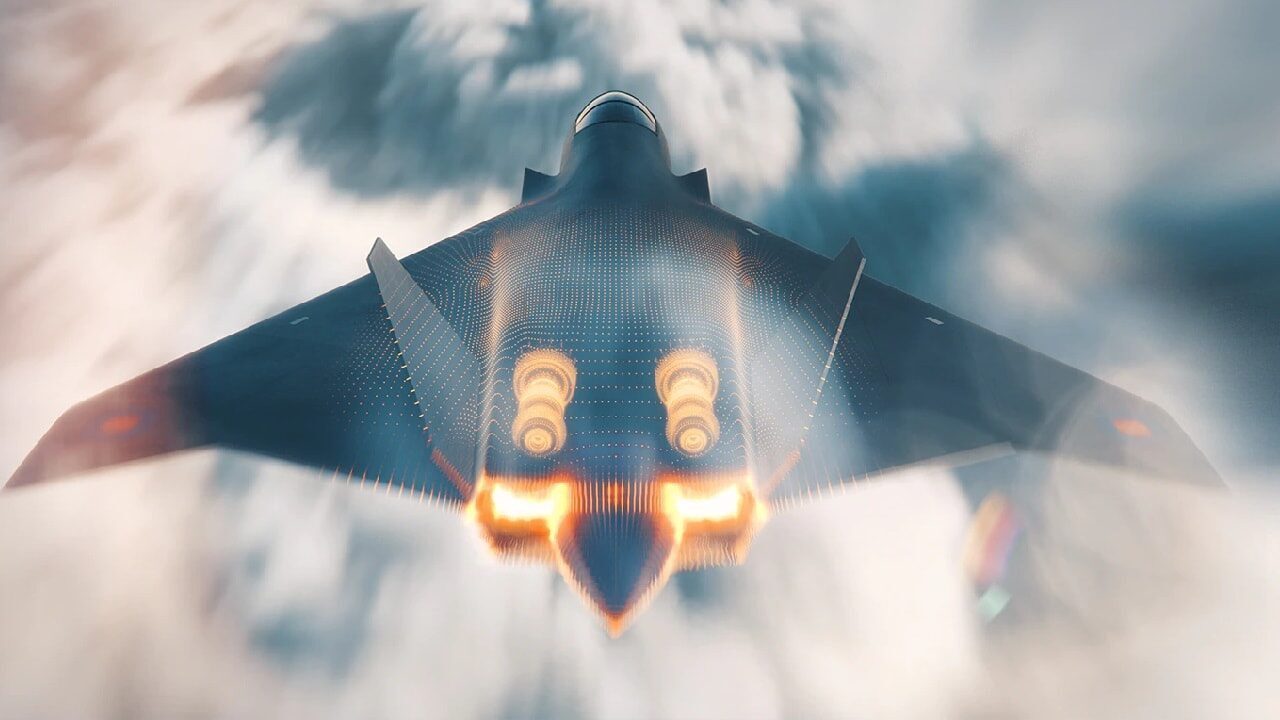
Key Points and Summary – Dassault CEO Eric Trappier’s blunt warning that FCAS “may not happen” has turned a long-running industrial dispute into a strategic alarm bell.
-FCAS was supposed to give France, Germany, and Spain a shared sixth-generation “system of systems” built around a Next Generation Fighter, remote carriers, and a combat cloud.
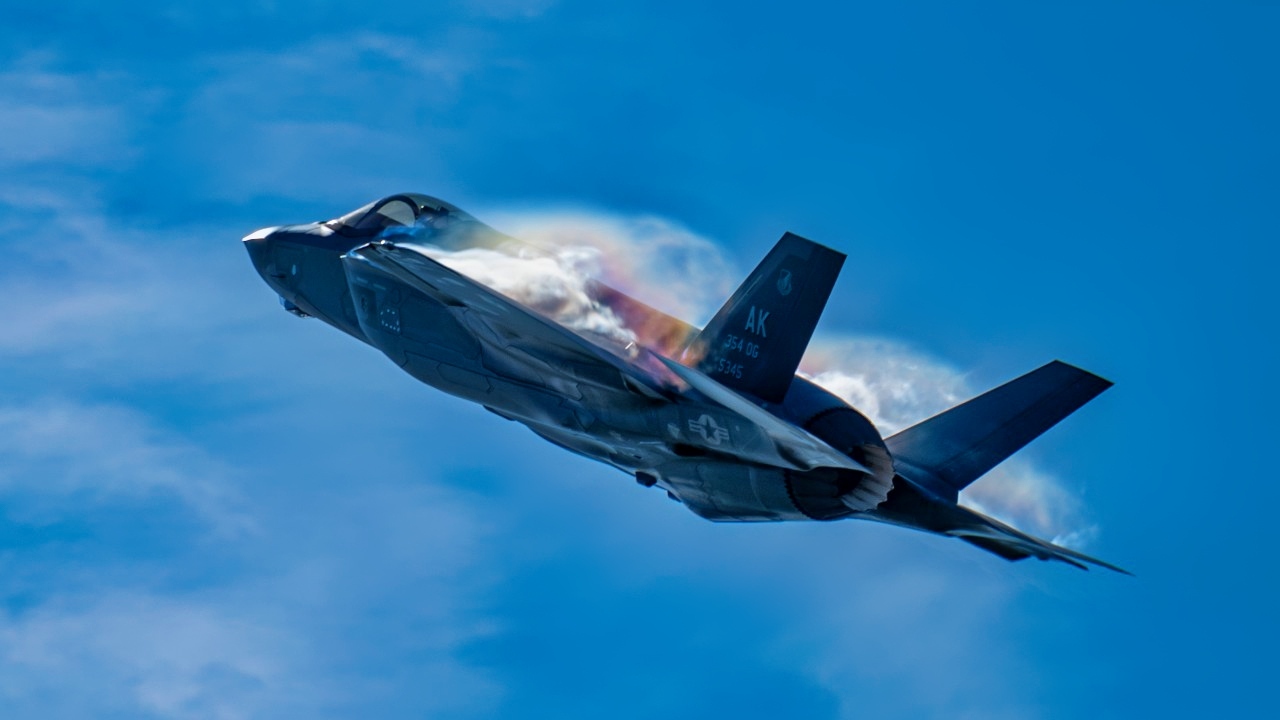
U.S. Air Force Maj. Kristin “BEO” Wolfe, F-35A Lightning II Demonstration Team pilot and commander, flies an aerial performance for the 2021 Arctic Lightning Air Show, July 30, 2021, Eielson Air Force Base, Alaska. The F-35 Demonstration Team utilized F-35s from the 354th Fighter Wing in order to showcase the combat capability of the Pacific Air Force’s newest F-35 units. (U.S. Air Force photo by Capt. Kip Sumner)
-If the program collapses, France can fall back on Rafale and potentially a national successor, but loses its bid to lead European airpower.
-Germany and Spain fare worse, sliding into deeper reliance on U.S. platforms like the F-35. Meanwhile, the UK-Japan-Italy GCAP effort would gain major relative momentum.
What Happens If Europe’s FCAS Fighter Program Collapses?
Dassault Aviation CEO Eric Trappier raised doubts on Tuesday, December 16, about the future of the Franco-German-Spanish fighter program known as the Future Combat Air System (FCAS), raising more questions about the nature of Europe’s future sixth-generation capabilities.
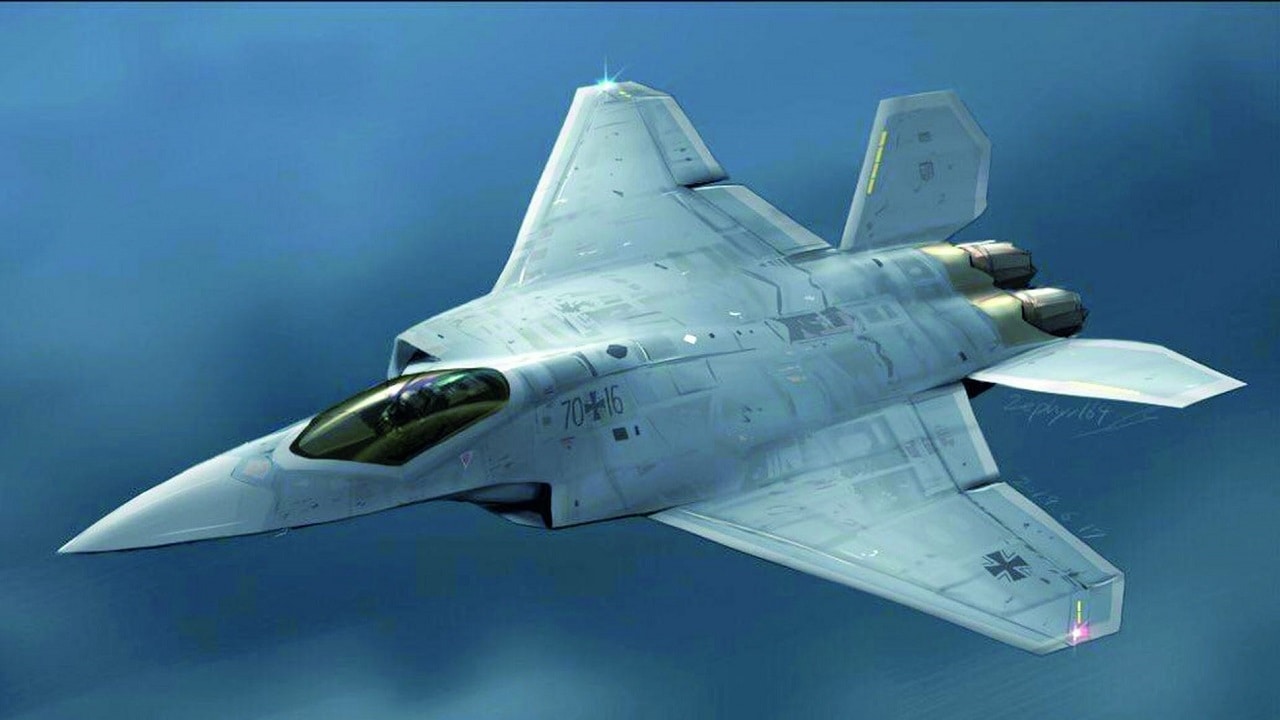
FCAS. Image Credit: Creative Commons.
Speaking at a corporate security conference, Trappier bluntly suggested that the program’s future was entirely uncertain and that it may not produce a next-generation fighter jet at all.
“Will it happen? I don’t know,” Trappier said, as well as calling for improved and clearer leadership over the program’s core fighter component.
When asked about the possibility that France and Germany may part ways and build two jets under a common platform as a result of recent disagreements over the program, Trappier also confirmed that “nobody” had discussed the possibility of two aircraft.
It’s the clearest sign yet that the 100-billion-euro FCAS program is in trouble and that its member states may be left vulnerable if it collapses.
Here’s What’s At Risk
FCAS is not a conventional fighter replacement program. Launched in 2017 and later formalized as a trilateral effort among France, Germany, and Spain, it was explicitly conceived as a sixth-generation “system of systems” designed to enter service in the late 2030s.
At the core of the program is a Next Generation Fighter intended to replace France’s Rafale and Germany and Spain’s Eurofighter Typhoon flights, supported by networked uncrewed “remote carriers” and bound together by a digital combat cloud for data fusion and command-and-control.
At present, the digital cloud is the only system that is likely to survive, with all three countries involved recently discussing the possibility of ditching the fighter program and focusing instead on a digital infrastructure that could function across multiple fighter platforms.
European defense ministries have repeatedly framed FCAS as the backbone of future European air superiority and a cornerstone of future strategic autonomy, but things aren’t looking good. In fact, the program has been beset by a series of major structural disputes that go well beyond routine and expected friction.
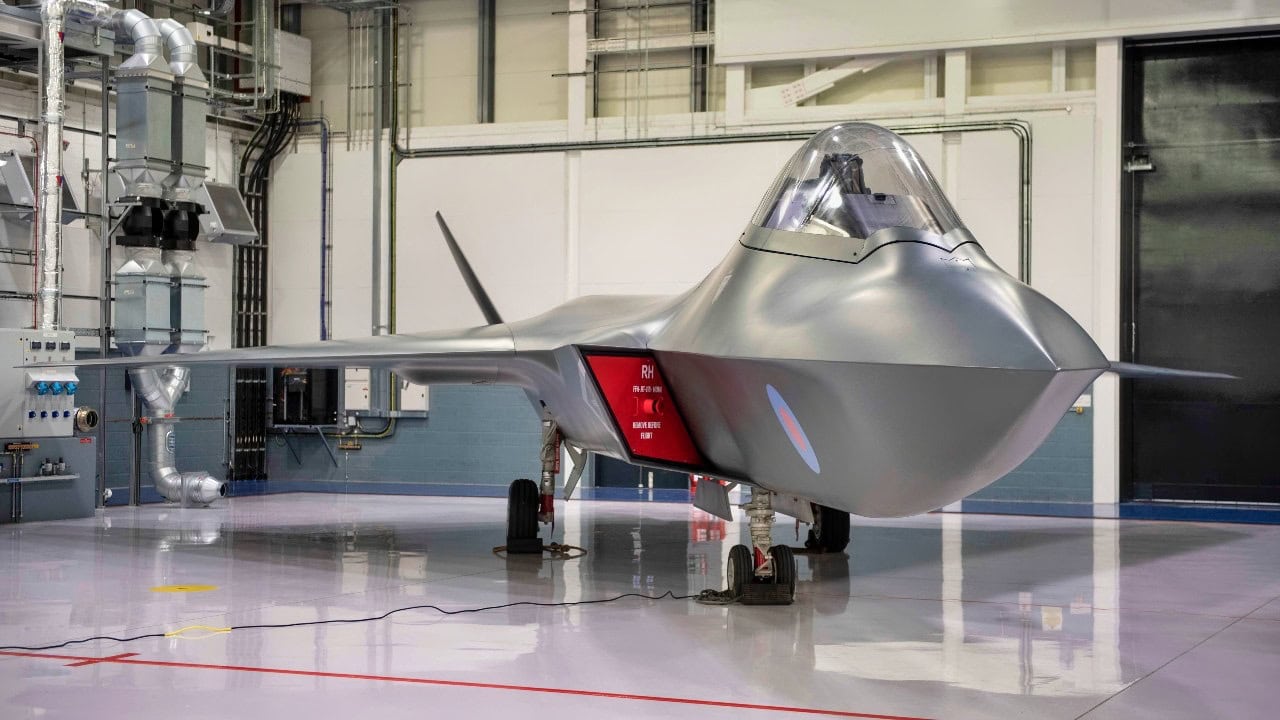
Image of the UK’s concept model for the next generation jet fighter “Tempest”, which was unveiled by Defence Secretary, at Farnborough International Air Show back in 2018.
The central problem is this: Dassault Aviation, France’s national combat-aircraft contractor, and Airbus Defence and Space, which represents German and Spanish industrial interests, can’t agree on who should lead the design efforts.
Dassault has insisted that developing a core fighter design requires clear leadership from a single design authority, citing its experience with the Rafale program to argue that the company should be tasked with that responsibility.
Airbus, by contrast, has accused Dassault of attempting to rewrite agreed governance arrangements and push partners away.
These disagreements have repeatedly played out in public, through press releases and public statements, and have delayed the approval of Phase 1B, which is meant to produce a flying demonstrator later this decade.
The political context has only deepened the strain, too. Germany’s decision to procure the U.S.-built F-35 for NATO nuclear-sharing duties has long been a sore point in Paris, where it was seen as undercutting the logic of investing heavily in a European successor aircraft.
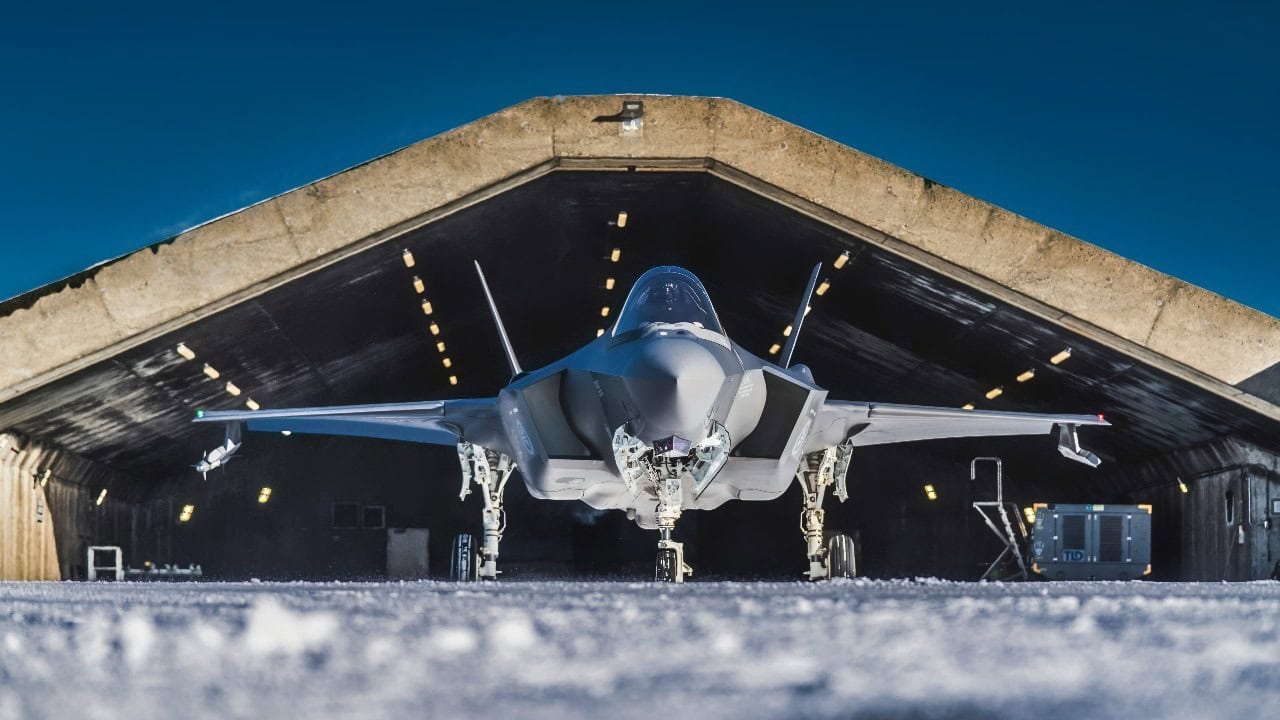
A Royal Norwegian Air Force F-35 Lighting II fighter leaves its shelter at Keflavík Air Base in Iceland. Norway sent the fighters to Iceland, which doesn’t have its own air force, in February 2020.
What Happens If FCAS Collapses?
If FCAS were to succumb to the infighting and collapse outright, the consequences would not be evenly distributed among its partners.
France, for example, would be strategically exposed but not necessarily industrially stranded. As Europe’s only country with a fully sovereign combat-aircraft design and production capability, Paris could retain fallback options that others cannot.
Dassault continued to produce and upgrade the Rafale, which has secured significant export orders and could plausibly be evolved well into the 2040s if required.
France could also pursue a smaller and more tightly controlled successor program, either nationally or with a reduced set of partners. The cost, however, would be enormous: abandoning FCAS would weaken France’s long-standing ambition to lead a pan-European airpower infrastructure/architecture and would forfeit the economies of scale that come with a larger, broader program.
But that situation might arguably be better than the realities for Germany, who would be far more exposed. Berlin, after all, has no sovereign fighter design capability and no alternative European sixth-generation pathway outside of FCAS – for now.
In the short term, Germany would likely rely on incremental upgrades to the Eurofighter Typhoon and on the growing integration of the F-35 into its force structure. That may be fine for now, but over the long term, FCAS failure would lock Germany into permanent dependence on non-European platforms for high-end air combat, making it a buyer rather than a co-designer of future systems.
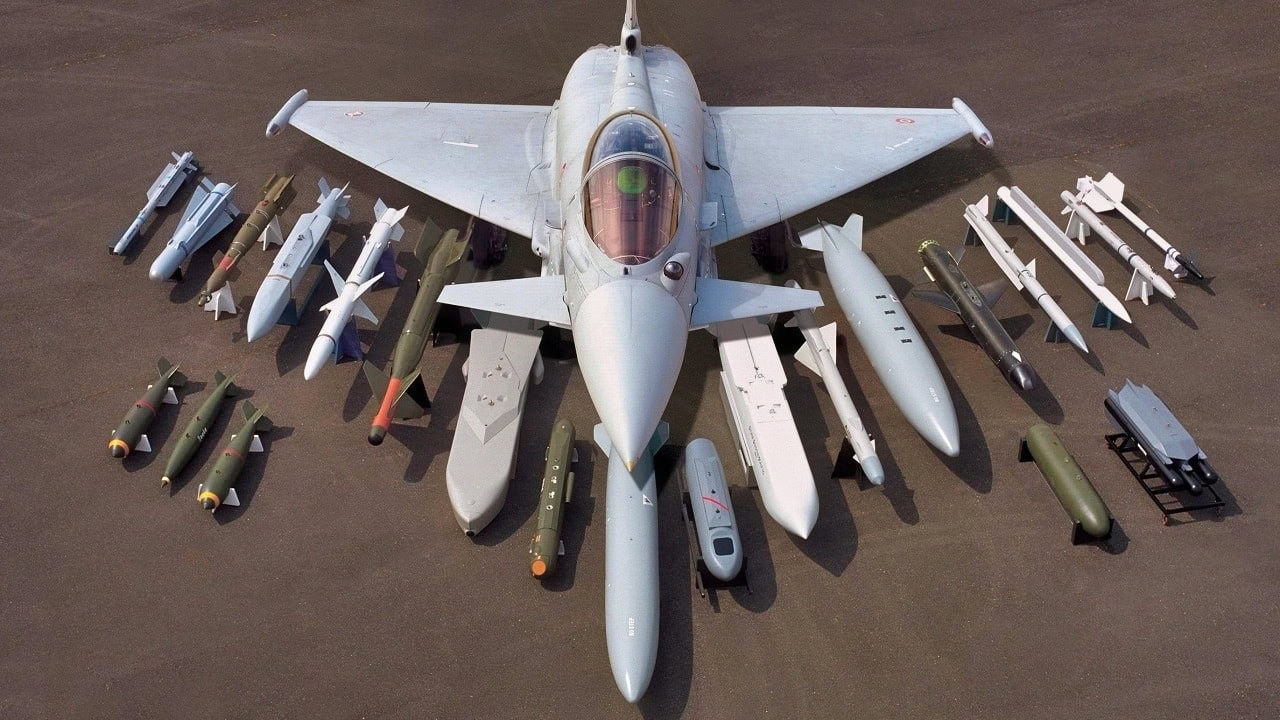
Eurofighter Typhoon. Image Credit: Creative Commons.
Germany would therefore be forced to forfeit its stated support for European defense autonomy and would reinforce French concerns about divergent strategic priorities that are a source of the friction in the FCAS program to begin with.
Spain, while arguably less central to the industrial dispute, would also be a clear loser if FCAS collapses. Lacking a national fighter program of its own, Madrid’s participation in FCAS is its primary route into next-generation combat-aircraft development.
Without it, Spain would have little choice but to follow Germany toward off-the-shelf solutions – potentially from outside of Europe – and accept diminished influence over the requirements of that system, and the timelines for its development.
The collapse of FCAS could, however, strengthen Europe’s other significant sixth-generation effort – the Global Combat Air Program (GCAP) led by the UK, Japan, and Italy.
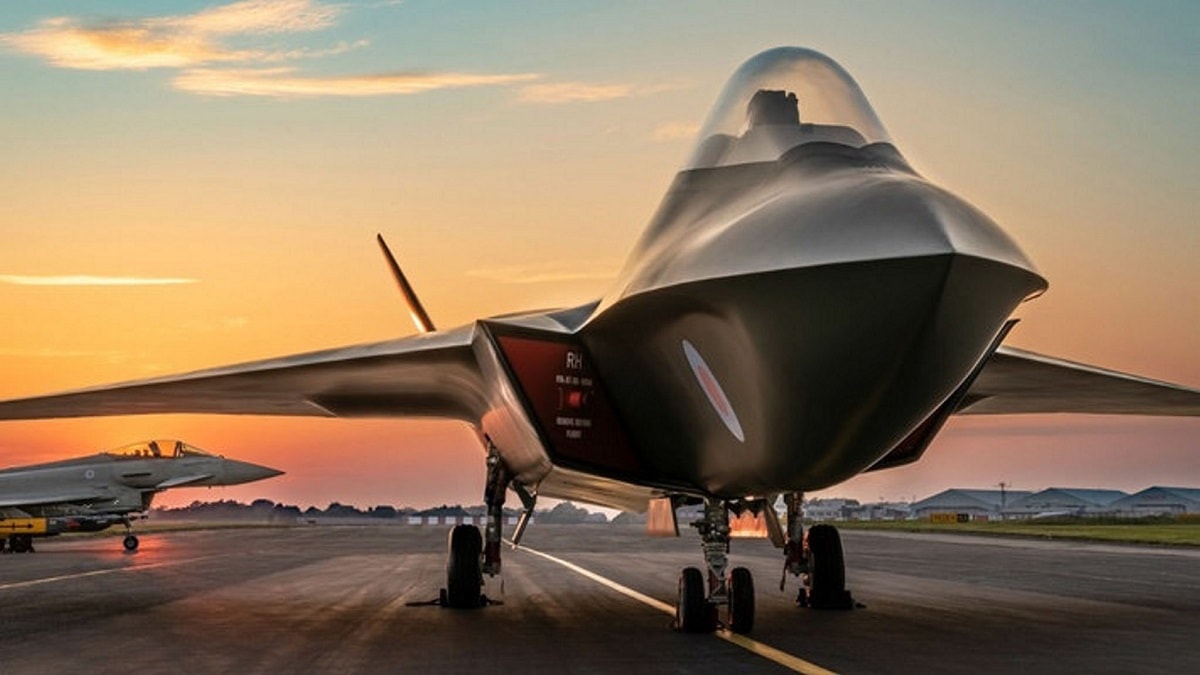
BAE Tempest. Image VIA BAE.
It would become the only credible non-U.S. pathway to next-generation air combat technology – and even without absorbing new members (which is still possible), GCAP would gain relative political and industrial momentum as FCAS falters.
In that sense, should FCAS fail, it would not merely terminate a single project but also reshape the balance of power within Europe’s defense-industrial landscape, and the UK and Italy would be the biggest beneficiaries.
About the Author:
Jack Buckby is a British author, counter-extremism researcher, and journalist based in New York who writes frequently for National Security Journal. Reporting on the U.K., Europe, and the U.S., he works to analyze and understand left-wing and right-wing radicalization, and reports on Western governments’ approaches to the pressing issues of today. His books and research papers explore these themes and propose pragmatic solutions to our increasingly polarized society. His latest book is The Truth Teller: RFK Jr. and the Case for a Post-Partisan Presidency.