
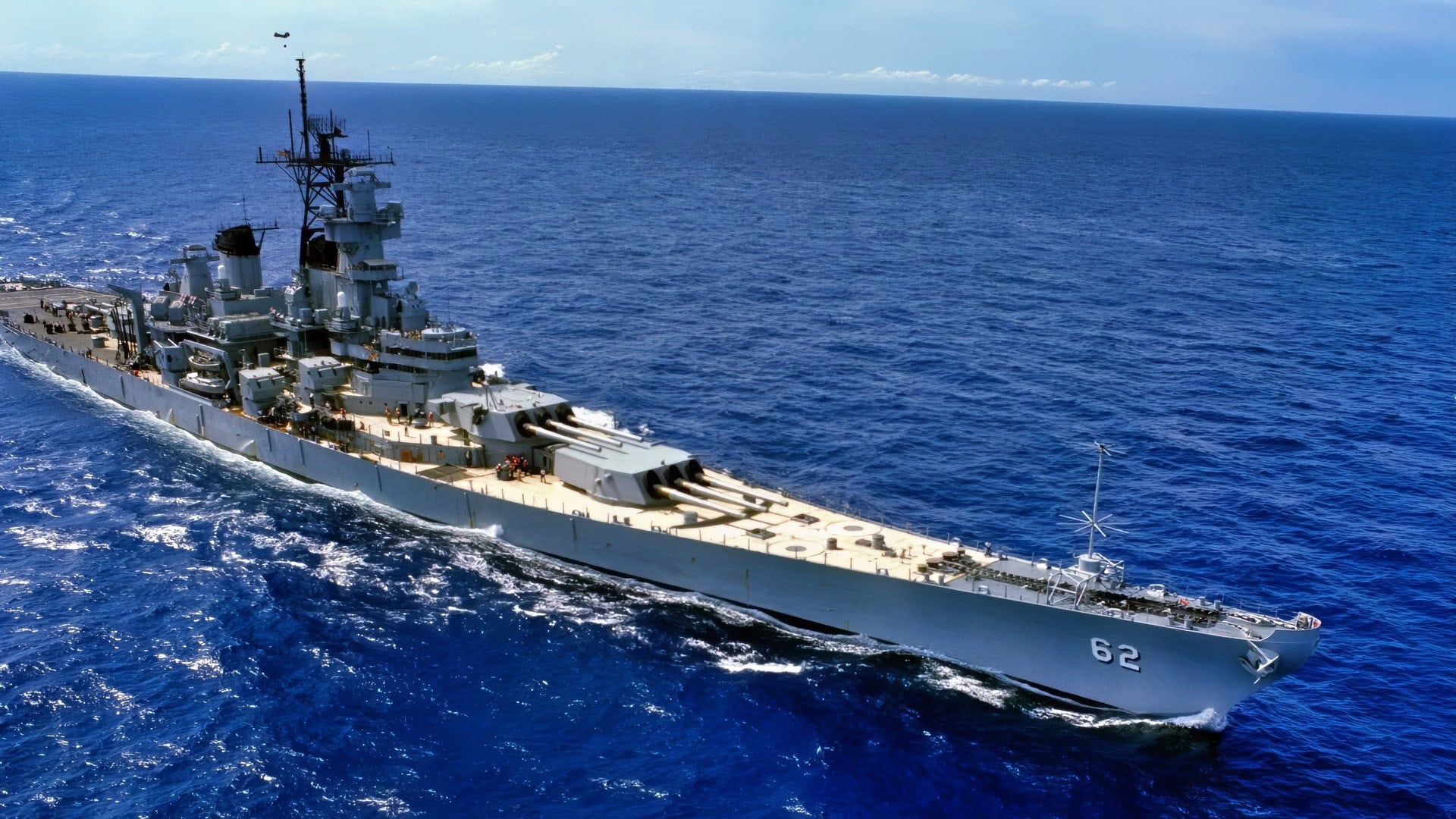
Summary and Key Points: The proposed Trump-class BBG(X) “guided-missile battleship” is framed as a bold response to China, but the concept clashes with modern naval realities.
-Traditional battleships faded because they were costly and increasingly vulnerable, and the BBG(X) would not revive armored gun power anyway—it would be a missile-heavy, oversized surface combatant.
-With estimates ranging as high as $21 billion for the first hull, the opportunity cost is enormous: the same funding could buy multiple submarines, destroyers, or critical logistics ships, all while shipyards face backlogs and workforce shortages.
-Concentrating firepower in one ship also runs against distributed maritime operations, making BBG(X) a high-value target with questionable return.
The $21 Billion “Trump-Class” Battleship: Why It’s a Bad Deal for the Navy
President Trump’s December 2025 announcement of a proposed Trump-class “guided-missile battleship,” officially designated BBG(X), immediately raised eyebrows.
The idea of reviving the battleship—long considered obsolete—was a deliberate provocation, framed as a response to China’s naval expansion and a symbol of restored American maritime power.
But stripped of rhetoric, the proposal raises a more practical question: even if the United States could build such a ship, would it be worth the cost? Especially with some estimates for the Trump-class coming in at $21 billion a piece (for the first warship), far more than the Ford-class supercarrier.
No, almost certainly not.
Battleships: Fading into History
The battleship is no longer relevant to naval warfare.
The type faded into obscurity for a reason, namely, economics and vulnerability.
The U.S. Navy retired its last Iowa-class battleships in 1992 after decades of stop-and-start reactivations.
Those ships survived well into the missile age largely because they already existed. Even then, their final utility—shore bombardment and symbolic presence—was steadily eclipsed by precision strike, carrier aviation, and submarines.
For more than thirty years, no serious naval planning document has argued for building a new battleship from scratch.
Enter the Trump-Class
The Trump-class proposal neglects that history, seemingly in an attempt to redefine what a battleship is.
The BBG(X) would not feature heavy armor or large-caliber guns (like historical battleships), and instead, would be missile-centric, reportedly carrying hypersonic missiles and nuclear-capable cruise missiles with a large vertical launch system.
The boat could also be equipped with directed-energy weapons and aviation facilities for drones or VTOL aircraft. In other words, the Trump-class wouldn’t be a battleship at all, but more of an oversized destroyer.
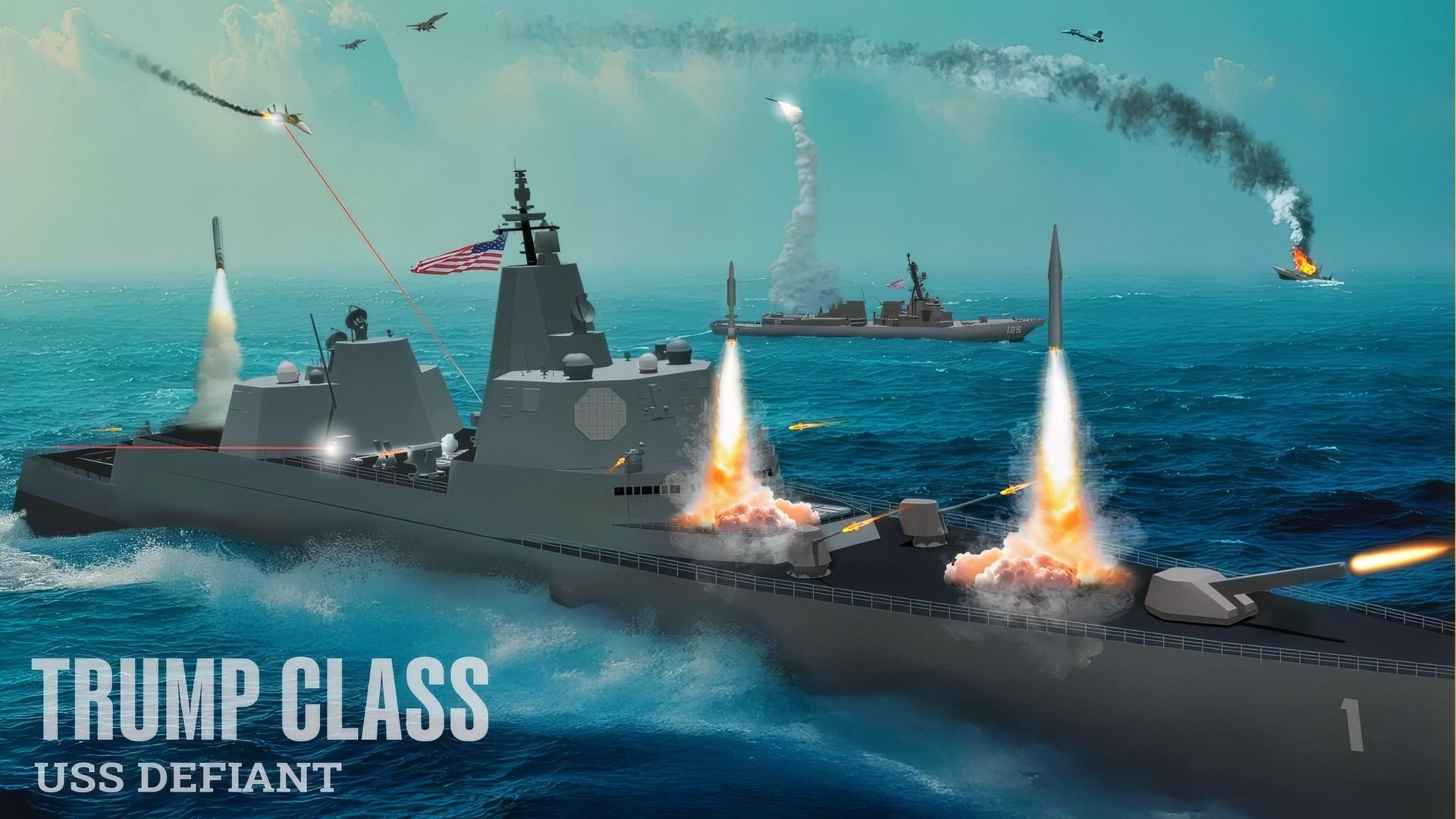
Trump-Class Battleship USS Defiant. Image Credit: Creative Commons.
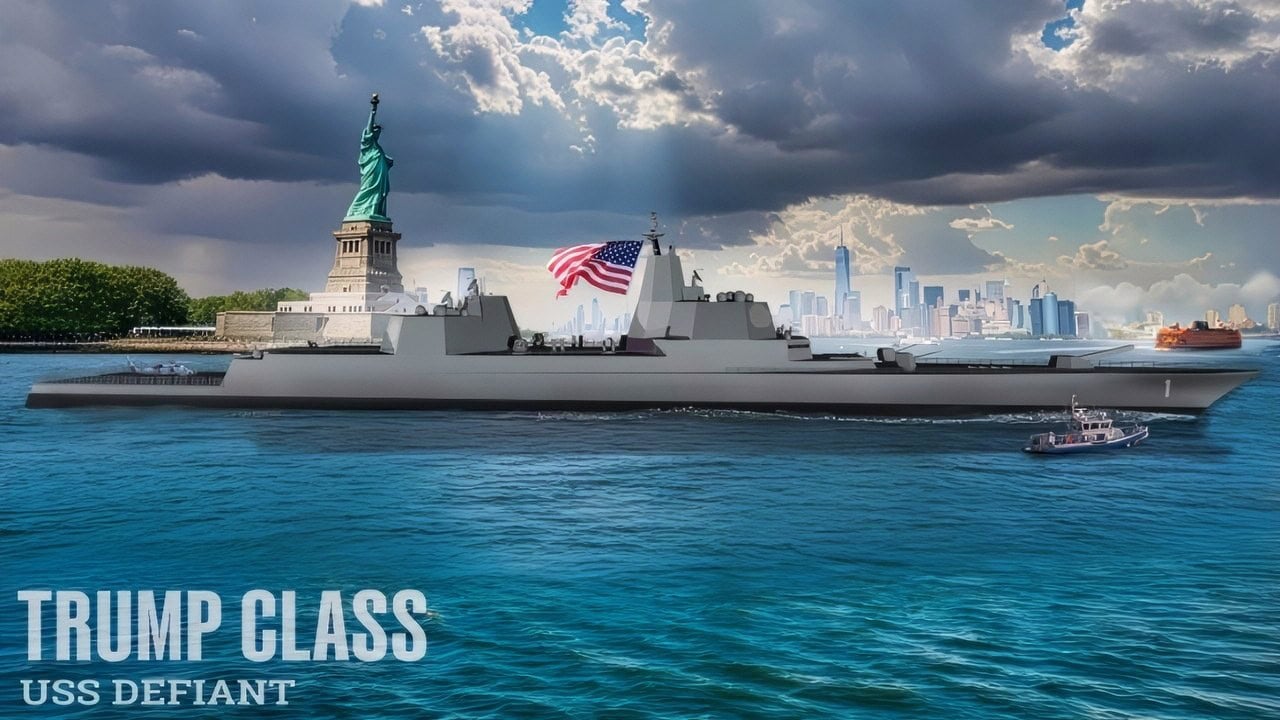
Trump-Class Battleship. Image Credit: Creative Commons/White House.
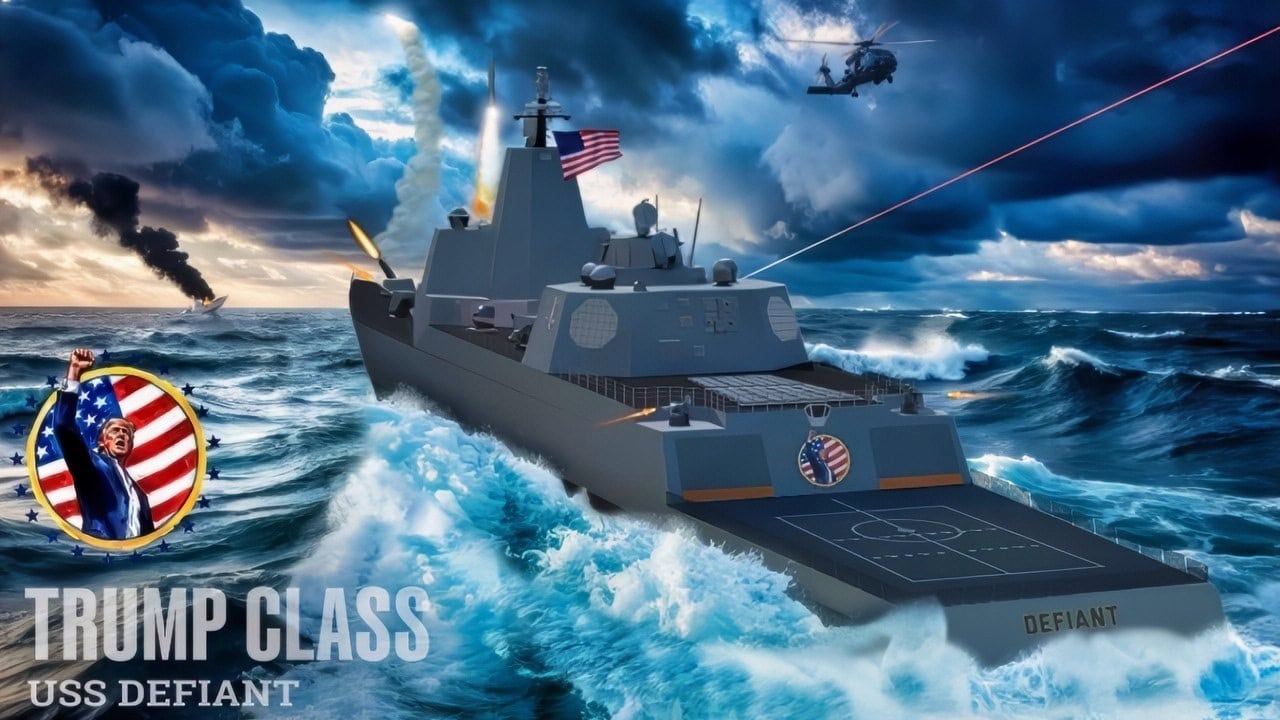
Trump-Class Battleship. Image Credit: Creative Commons/White House Photo.
How Much Would it Cost?
The Trump-class boat would not be cheap. Let’s consider the closest analog. The Zumwalt-class destroyer, a far smaller and less ambitious program, ended up costing well over $4 billion per hull once the buy collapsed.
A Trump-class ship—larger, more complex, and packed with developmental systems—would almost certainly exceed that figure. Conservatively, each hull would likely cost well over $6–8 billion before accounting for lifecycle costs, crew, maintenance, and modernization.
And, as stated above, some estimates are coming in now at $21 Billion. That would make it the most exepensive warship ever and more expensive than a Navy aircraft carrier.
At that price point, the opportunity cost becomes impossible to ignore; where else could that money be spent?
A single Trump-class hull would cost as much as multiple Virginia-class submarines, additional destroyers, or logistics ships. And, again, as stated earlier, more than a new Supercarrier.
Given that the Navy is already struggling with shipyard backlogs, workforce shortages, and delayed submarine production, introducing a brand-new, ultra-complex surface combatant threatens to exacerbate existing production bottlenecks, setting the Navy further behind in its efforts to counter Chinese shipbuilding.
Worth It?
No, the Trump-class would likely not earn a healthy return on investment. Large surface ships are increasingly vulnerable in high-end conflict, especially against adversaries like China with long-range missiles, submarines, and an advanced A2/AD network.
Fielding a Trump-class ship that is larger and more heavily armed would not solve the penetration problem posed by the A2/AD network.
Actually, quite the opposite: the larger ship would make for a lucrative target. The Trump-class proposes to concentrate enormous firepower into a single hull, which is the opposite of what the Navy has been transitioning towards: more distributed maritime operations.
Supporters might argue that advanced power generation, lasers, or railguns could change the calculus. But those technologies remain immature, power-hungry, and unreliable at sea. Betting a multibillion-dollar platform on systems that have yet to prove operationally viable would repeat many of the same mistakes that plagued earlier experimental surface combatants.
Military or Political
The Trump-class proposal seems aimed less at solving a military problem than at addressing a political one. China’s shipbuilding spree creates the impression of American decline relative; a new battleship sounds like a decisive response.
But in reality, US naval power rests, not on battleships, but on submarines, carriers, and networked warfare.
The battleship would serve more as political symbolism than as a functional asset in a 21st-century battlespace.
Even if the thing is ever funded, the Trump-class would almost certainly be built in small numbers, which would drive up costs and limit the boat’s strategic impact.
The idea is mostly nostalgia-driven, which doesn’t play well against peer or near-peer adversaries.
In budgetary, operational, and strategic terms, the Trump-class would be an expensive vanity project, built at the wrong time.
About the Author: Harrison Kass
Harrison Kass is an attorney and journalist covering national security, technology, and politics. Previously, he was a political staffer and candidate, and a US Air Force pilot selectee. He holds a JD from the University of Oregon and a master’s in global journalism and international relations from NYU.