
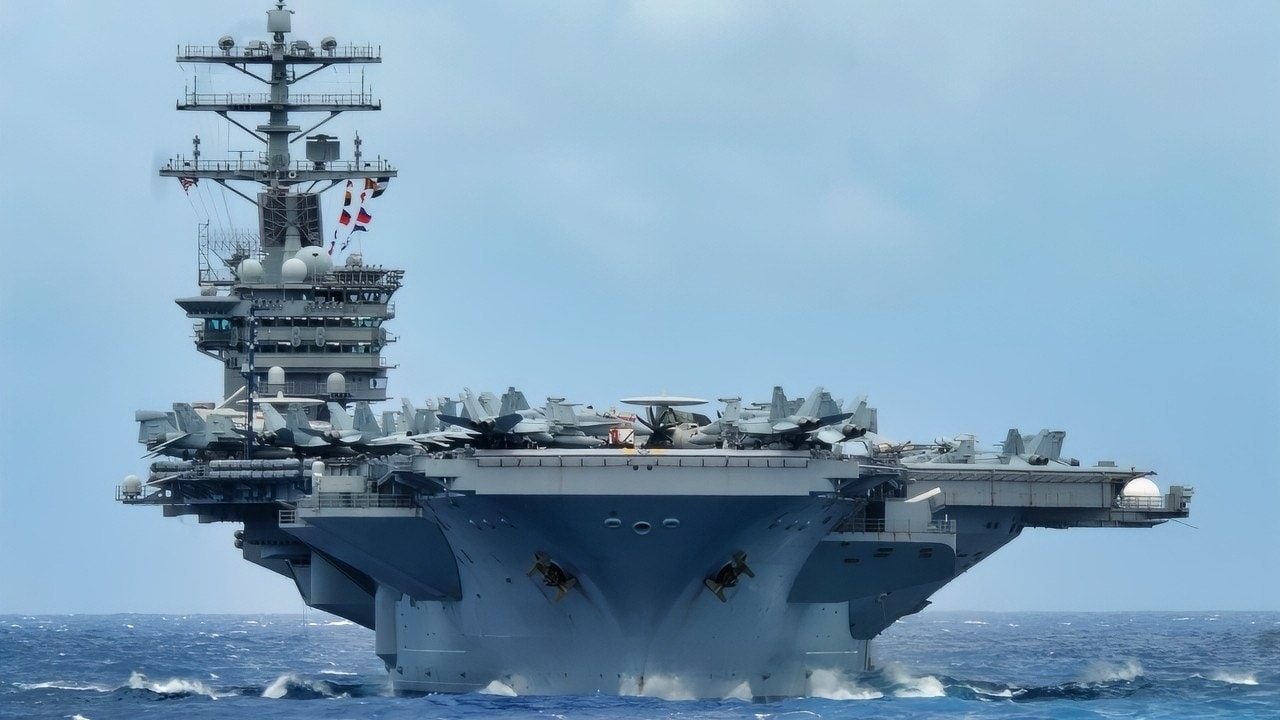
Farewell to a Legend: The USS Nimitz Returns Home for Its Final Decommissioning
In mid-December 2025, the U.S. Navy’s aircraft carrier USS Nimitz returned to Naval Base Kitsap in Bremerton, Washington, concluding what is almost certainly its final deployment before decommissioning.
After nearly nine months at sea, the world’s oldest active nuclear-powered carrier is set to retire in 2026, closing out its fifty-year service life, which spanned the Cold War, Gulf War, post-9/11 conflicts, and some of today’s rapidly evolving global maritime combat environment.
For decades, Nimitz was a symbol of U.S. naval power and its global reach – a floating airbase capable of sustained force projection without reliance on foreign bases. Its farewell is a big moment for the U.S. Navy; it doesn’t bring an end to U.S. naval power, but it does usher in a new era of surface vessels and supercarriers designed for today’s unique challenges.
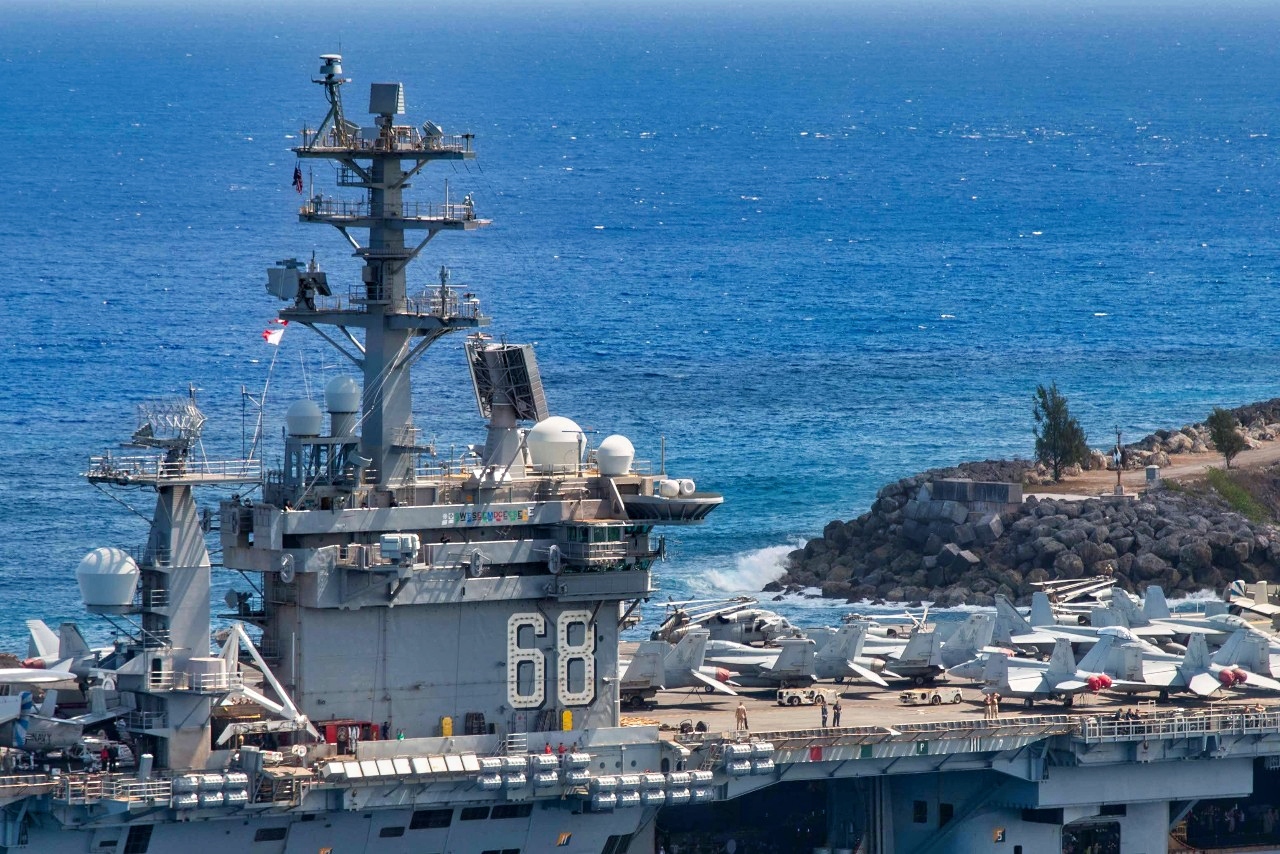
APRA HARBOR, Guam (April 18, 2025) Nimitz-class aircraft carrier USS Nimitz (CVN 68) arrived in Guam for a scheduled port visit, April 18. Nimitz is underway in the U.S. 7th Fleet area of operations on a scheduled deployment, demonstrating the U.S. Navy’s unwavering commitment to a free and open Indo-Pacific. (U.S. Navy Photos by Mass Communication Specialist 1st Class Samantha Jetzer)
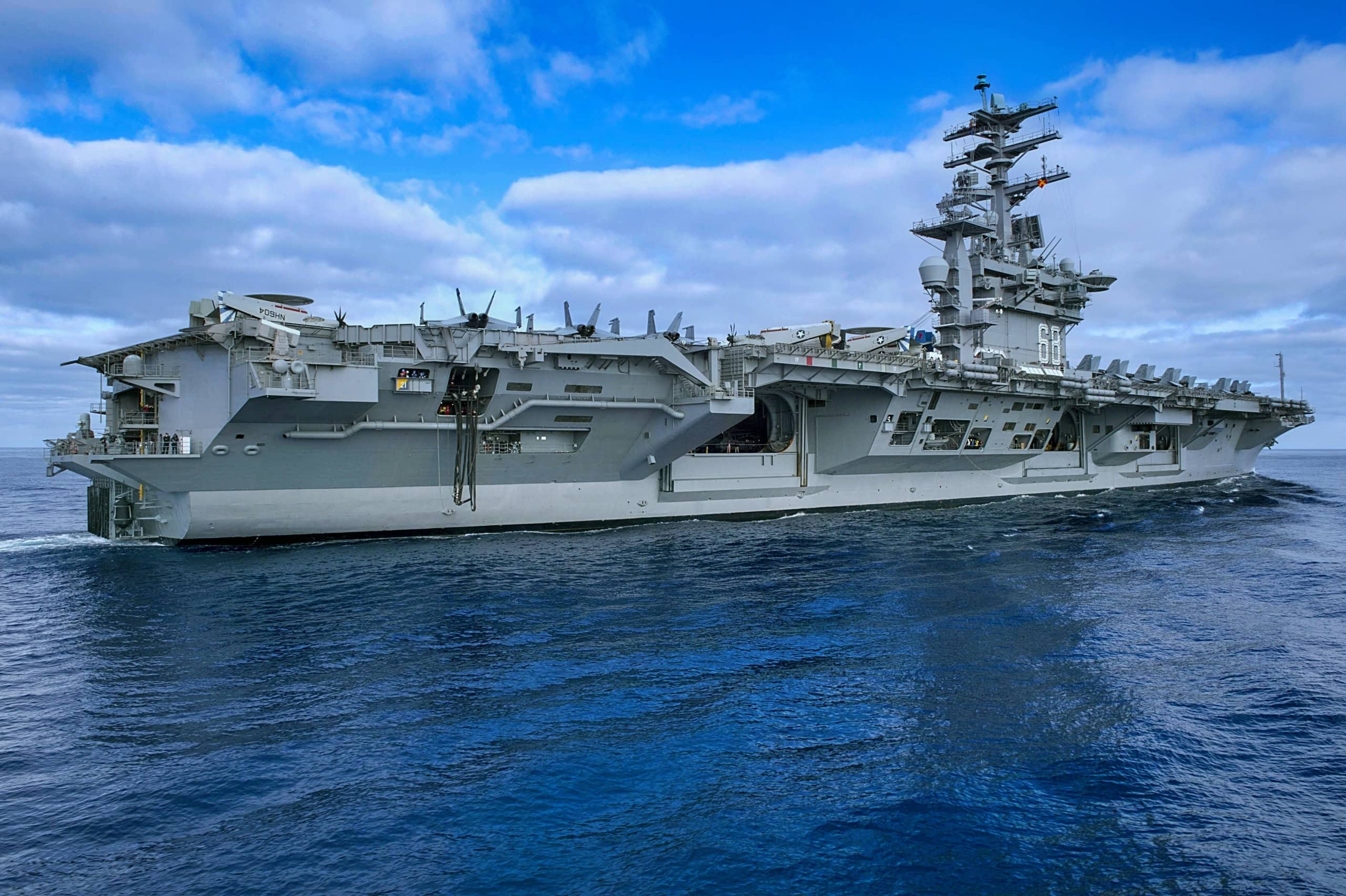
USS Nimitz Aircraft Carrier. Image Credit: Creative Commons.
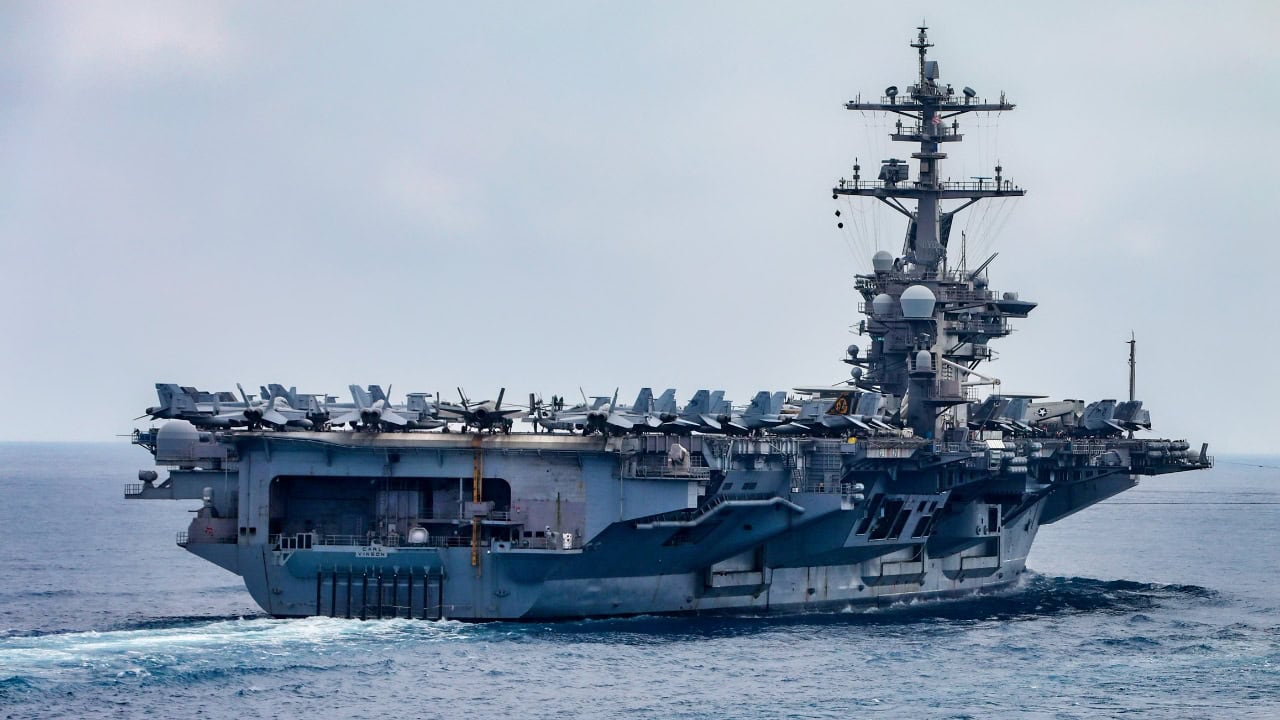
SOUTH CHINA SEA (Feb. 2, 2025) The Nimitz-class aircraft carrier USS Carl Vinson (CVN 70) conducts a replenishment-at-sea with the dry cargo and ammunition ship USNS Carl Brashear (T-AKE 7) Feb. 2, 2025. The Carl Vinson Carrier Strike Group is underway conducting routine operations in the U.S. 7th Fleet area of operations. (U.S. Navy photo by Mass Communication Specialist 1st Class Jacob I. Allison)
Aircraft Carrier USS Nimitz’s Final Deployment
Nimitz departed its homeport in March 2025 as the flagship of Carrier Strike Group 11 and operated across three major combatant commands: U.S. Indo-Pacific Command, U.S. Central Command, and U.S. Third Fleet. Throughout its deployment, the ship and its strike group covered more than two-thirds of the globe.
“We have traveled more than two thirds of this planet during this nine-month deployment, and I cannot overstate the positive impact Nimitz Strike Group has made as part of our mission to maintain peace through strength by sustaining credible deterrence alongside our allies and Partners,” Rear Adm. Fred Goldhammer, commander of Carrier Strike Group 11, said in a statement.
“With USS Nimitz as our flagship, I am extremely proud of how our Sailors carried forth our Navy’s 250-year legacy of promoting prosperity and security, deterring aggression, and protecting the American way of life.”
During its final cruise, Nimitz and its air wing logged some significant activity, executing thousands of flight operations and covering tens of thousands of nautical miles. Although official numbers vary slightly by source, reporting indicates the carrier completed upwards of 8,500 sorties and logged approximately 17,000 flight hours.
In the 5th Fleet’s area – which covers the Arabian Gulf, Red Sea, and parts of the Indian Ocean – U.S. naval forces reportedly conducted freedom of navigation operations, continued deterrence missions, and supported regional stability efforts amid tension involving Iran and others.
And while Nimitz was not always the sole carrier present, its presence formed part of a larger posture intended to shape adversary calculations and provide reassurance and additional support to partner forces.
Nimitz’s service history, however, is extensive and encompasses major military operations dating back to its first deployment in 1976, including roles in the Iran hostage crisis era, Desert Storm in 1991, and combat support in the wars in Iraq and Afghanistan. Throughout the decades, the carrier has been made to adapt to shifting mission requirements, integrating new aircraft and systems while operating across global theaters.
Nimitz Says Goodbye
The retirement of the Nimitz this year will change the American carrier force structure. It is the lead ship of its class and the first of ten Nimitz-class nuclear carriers.
The Navy’s current fleet comprises 11 nuclear-powered carriers: ten Nimitz-class vessels and one Gerald R. Ford-class carrier, USS Gerald R. Ford (CVN-78).
By law, the Navy must maintain a minimum of 11 carriers to meet statutory requirements for global carrier presence – though the number of actually deployed carriers can vary based on maintenance cycles and operational demands at the time.
So, what will replace the Nimitz and the rest of its carriers? The Ford class.
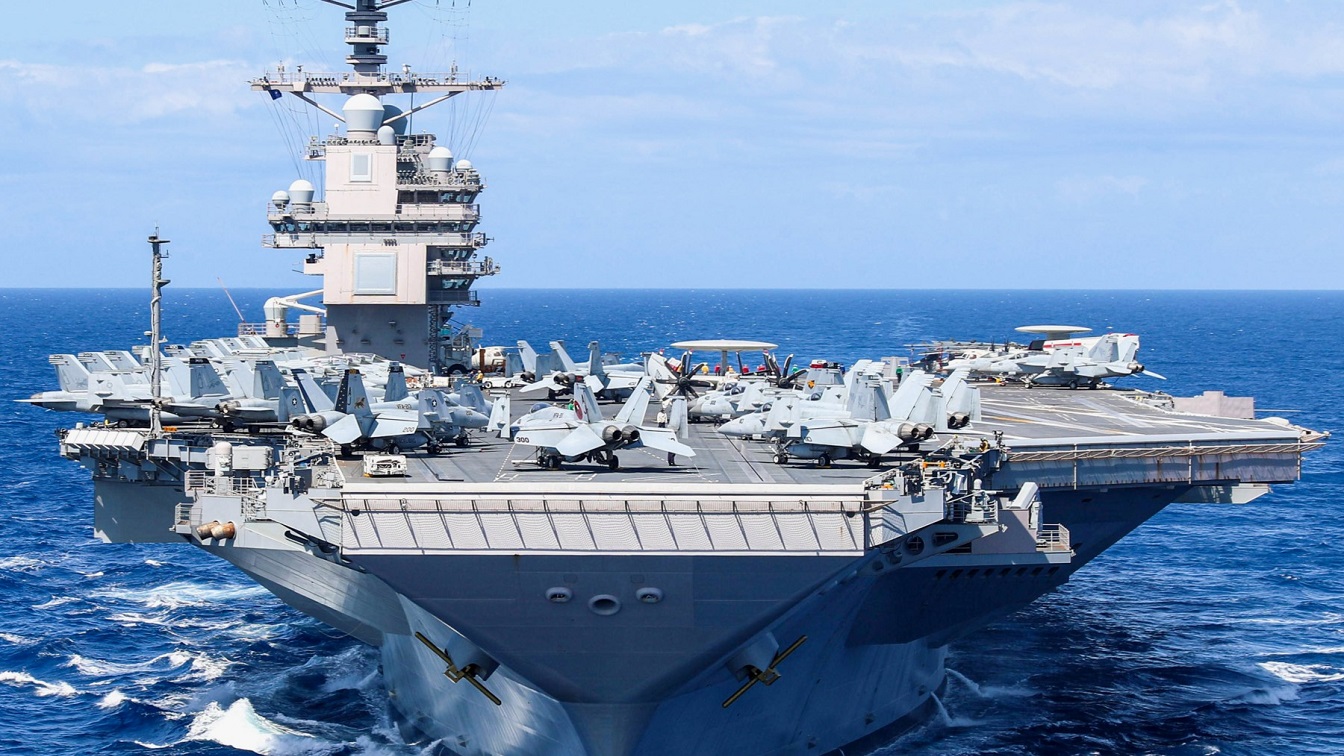
Ford-Class. Ford-Class Aircraft Carrier USS Ford.
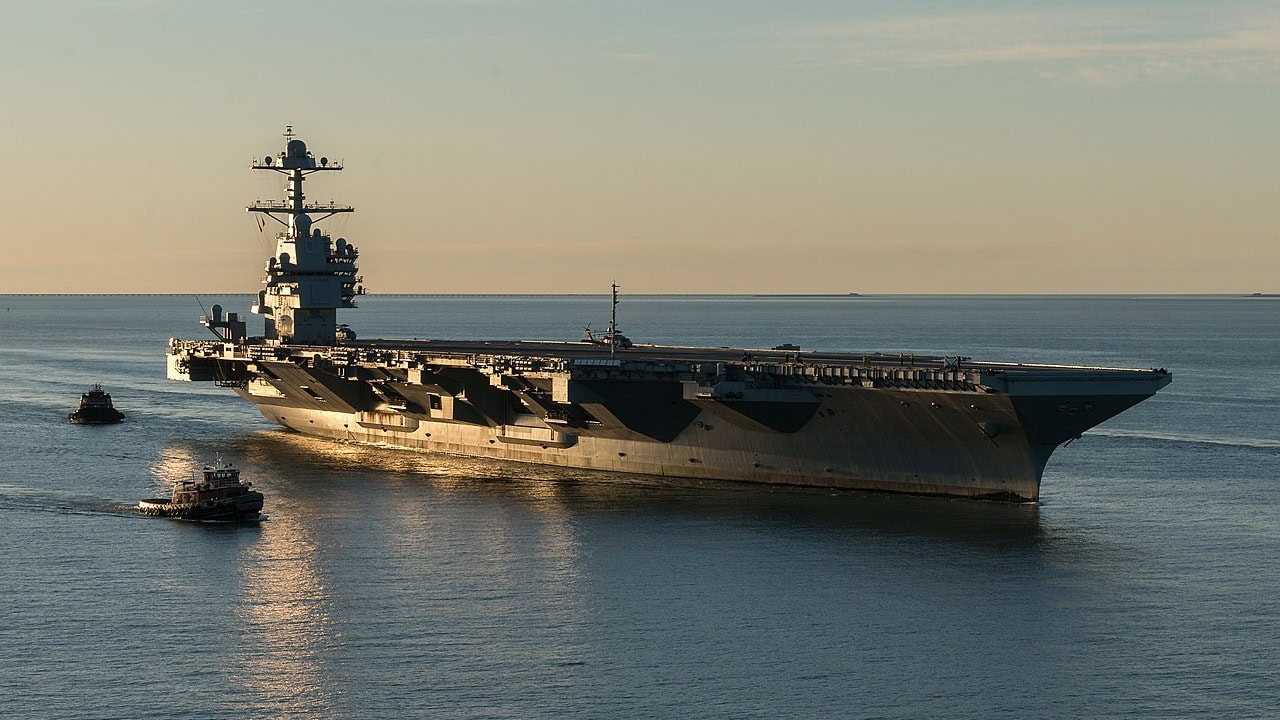
From 2017 – The aircraft carrier Pre-Commissioning Unit (PCU) Gerald R. Ford (CVN 78) pulls into Naval Station Norfolk for the first time. The first-of-class ship – the first new U.S. aircraft carrier design in 40 years – spent several days conducting builder’s sea trails, a comprehensive test of many of the ship’s key systems and technologies. (U.S. Navy photo by Matt Hildreth courtesy of Huntington Ingalls Industries/Released)
The Ford-class carrier program is expected to replace the ships on a roughly one-for-one basis, not only providing new vessels but incorporating advanced technologies like the Electromagnetic Aircraft Launch System (EMALS), updated radar suites, and reduced crew requirements.
The ships are more formidable, more advanced, and more automated – and the improvements are designed to increase sortie generation rates and reduce long-term operating costs at the same time.
However, the transition has faced some challenges. Shipbuilding schedules have slipped, and follow-on Ford-class carriers such as USS John F. Kennedy (CVN-79) are not scheduled for delivery until 2027 or later, potentially leaving gaps in carrier availability.
Ultimately, Nimitz’s retirement means a still-capable hull is benignly removed from an already stretched carrier force at a time when demand for forward presence remains high.
The big question now is whether or not the Ford class can enter service quickly and reliably enough to offset that loss – and whatever happens now will shape U.S. naval availability and deterrence well into the 2030s.
Absent a rapid and predictable tempo for Ford-class production from here onward, the Navy may be forced to rely longer on aging Nimitz-class carriers or accept reduced global coverage. Either outcome would constrain operational flexibility at a time when carrier presence remains central to U.S. strategy. So while the first Nimitz retirement is a sign of things to come, it may be some time before the second ship is retired.
About the Author:
Jack Buckby is a British researcher and analyst specialising in defence and national security, based in New York. His work focuses on military capability, procurement, and strategic competition, producing and editing analysis for policy and defence audiences. He brings extensive editorial experience, with a career output spanning over 1,000 articles at 19FortyFive and National Security Journal, and has previously authored books and papers on extremism and deradicalisation.