
Key Points and Summary – Germany has missed its early 2026 deadline to finalize the Future Combat Air System (FCAS) deal, casting doubt on the massive Franco-German-Spanish sixth-generation fighter project.
-Chancellor Friedrich Merz has warned the program is making “no progress,” while Berlin bristles at French demands for control over the jet’s design.
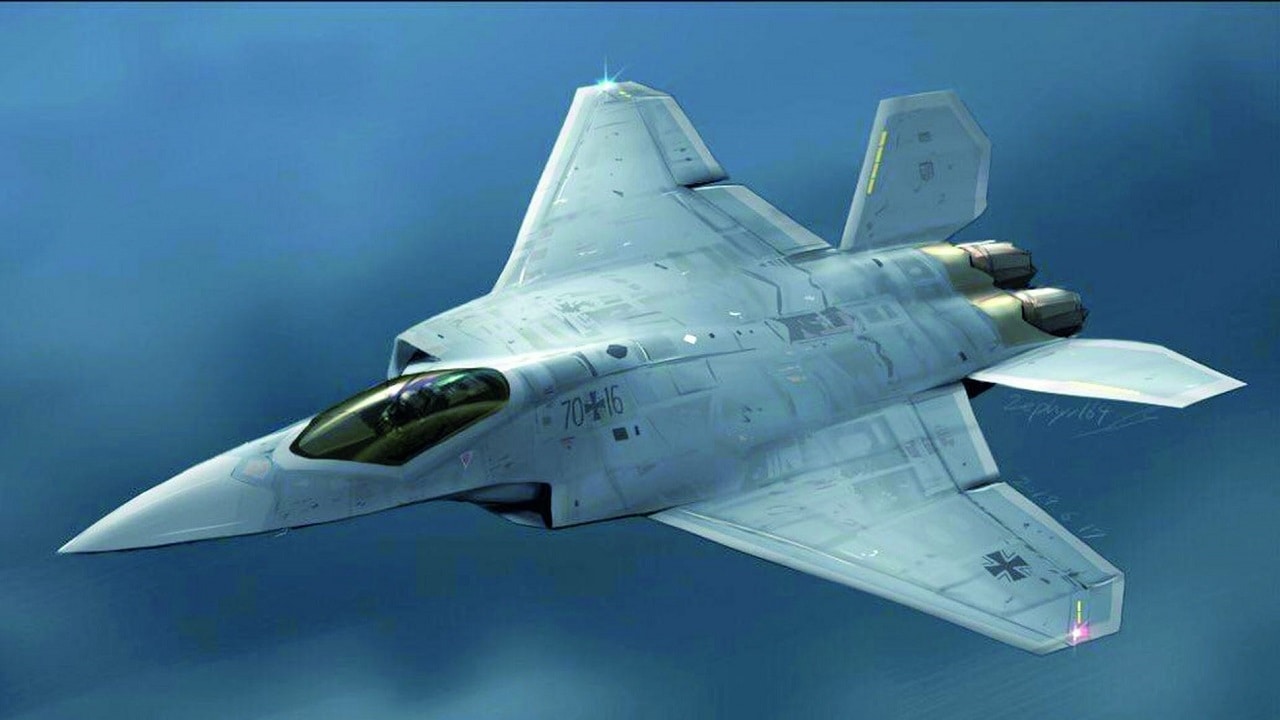
FCAS. Image Credit: Creative Commons.
-With France threatening to exit if the 2040 delivery target isn’t met, reports suggest the project could be “walked back” or split into parallel designs, exposing deep cracks in European defense cooperation.
FCAS Is Falling Apart
The fate of one of Europe’s biggest defence-industrial projects is now in peril, with both Germany and France at odds over the matter.
Despite Berlin pledging to finalize its decision on the Franco-German-Spanish Future Combat Air System (FCAS) by the start of 2026, the deadline has now passed with no public update.
A German government spokesperson has now confirmed to Euractiv that, “contrary to the original plan,” no final decision had been made, nor has Berlin offered a revised timeline.
The delay comes on the back of months of growing unease signalled by German officials. Chancellor Friedrich Merz warned last autumn that FCAS was making “no progress,” while Berlin bristled at French demands for more control over the next-generation fighter pillar of the programme.
In December, German officials told press that FCAS simply failed to reach the top of the Franco-German agenda before the year closed.
Formally, Berlin is hailing FCAS as essential to Europe’s defense independence, especially as Washington continues to blow hot and cold.
In practice, it shows just how pitiful the EU’s military capabilities are after decades of reliance on America. Launched in 2017, FCAS was marketed as a new model of shared European power.
The idea was to manufacture and design a sixth-generation fighter, unmanned systems, and a digital “combat cloud” by around 2040.
Sadly, divisions over who is in charge, intellectual property, and design have made progress slow.
As 2025 came to a close, discussions among German, French, and Spanish officials had degenerated to managing public relations rather than actual progress towards a deal.
France has even threatened to exit the FCAS programme and construct its own next-generation fighter jets if it fails to secure a 2040 delivery schedule.
Bloomberg alleged that options under consideration included splitting the programme into parallel aircraft designs or narrowing FCAS to its networking and unmanned elements. Such proposals would mark a walkback from the original ambition.
Germany’s hesitation also sits within a wider policy shift since Russia’s full-scale invasion of Ukraine, with defense spending soaring and efforts to encourage domestic procurement.
This programme is indeed a litmus test for Berlin in particular, especially as regards to whether they are willing to underwrite programmes shaped by less economically stable countries.
What Happens Next?
Whether FCAS survives intact or not, the episode reflects the fact that while Europe often talks the talk on defense, it is often hesitant to walk the walk when it comes to robust plans.
About the Author: Georgia Gilholy
Georgia Gilholy is a journalist based in the United Kingdom who has been published in Newsweek, The Times of Israel, and the Spectator. Gilholy writes about international politics, culture, and education. You can follow her on X: @llggeorgia.