
The Marine Corps Is Redefining War to Fight China
The U.S. Marine Corps is redefining its role within the United States’ national defense strategy, especially amid threats from China.
The Corps’s mission is being redefined through Force Design, an initiative launched in 2020 and updated in 2025. Force Design is a fundamental shift toward naval expeditionary warfare to confront near-peer adversaries, particularly in the Indo-Pacific region.
The changes are meant to enhance the service’s ability to adapt quickly to advanced threats and continue to intervene as the United States’ premier crisis-response force.
General Berger’s Force Design Started The Change:
General David H. Berger wanted to get the Marine Corps back to its roots when he published his Force Design plan in 2020. He called for the Corps to conduct operations that differentiated the Marines from the U.S. Army and the special operations community.
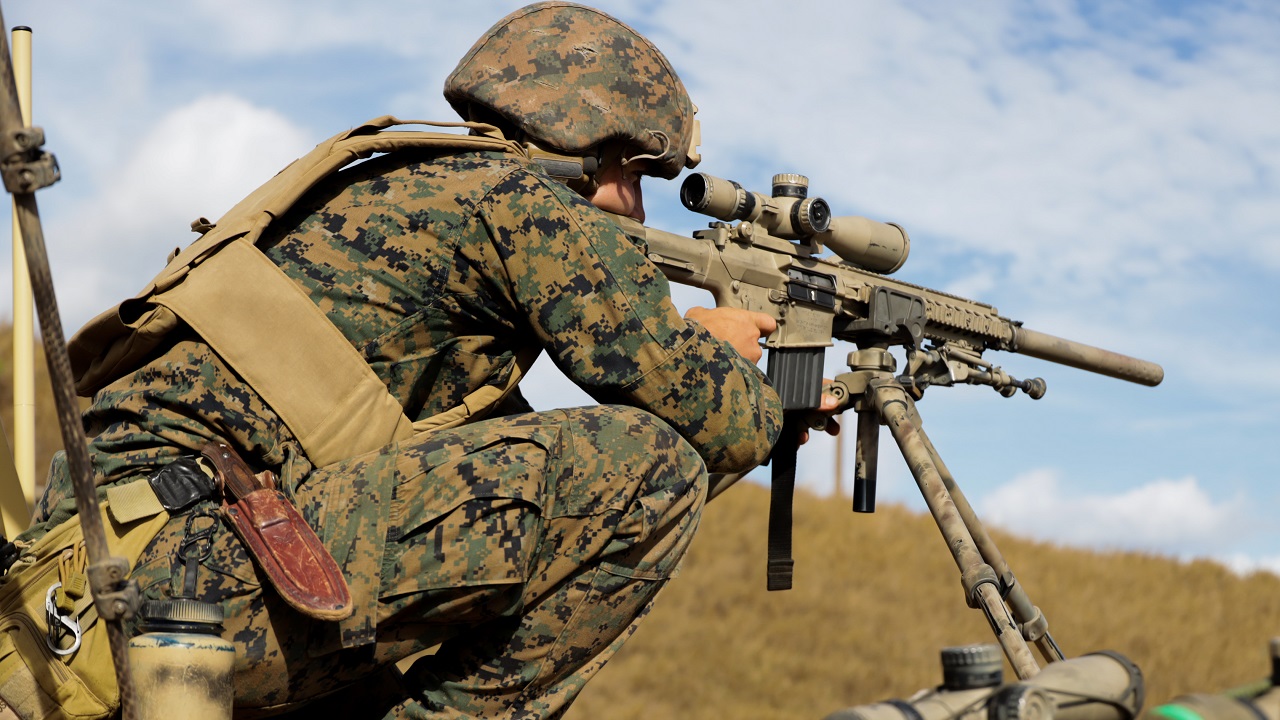
MARINE CORPS BASE HAWAII, Hawaii (July 6, 2022) U.S. Marine Corps Pfc. Darrel Ebaugh, a scout sniper with Weapons Company, Battalion Land Team, 3d Battalion, 4th Marine Regiment, Marine Air-Ground Task Force 7 (MAGFT-7), sights in on a target during a live-fire sniper range in support of Rim of the Pacific (RIMPAC) 2022, on Marine Corps Base Hawaii, July 6, 2022. Twenty-six nations, 38 ships, four submarines, more than 170 aircraft and 25,000 personnel are participating in RIMPAC from June 29 to Aug. 4 in and around the Hawaiian Islands and Southern California. The world’s largest international maritime exercise, RIMPAC provides a unique training opportunity while fostering and sustaining cooperative relationship among participants critical to ensuring the safety of sea lanes and security on the world’s oceans. RIMPAC 2022 is the 28th exercise in the series that began in 1971. (U.S. Marine Corps photo by Lance Cpl. Brayden Daniel)
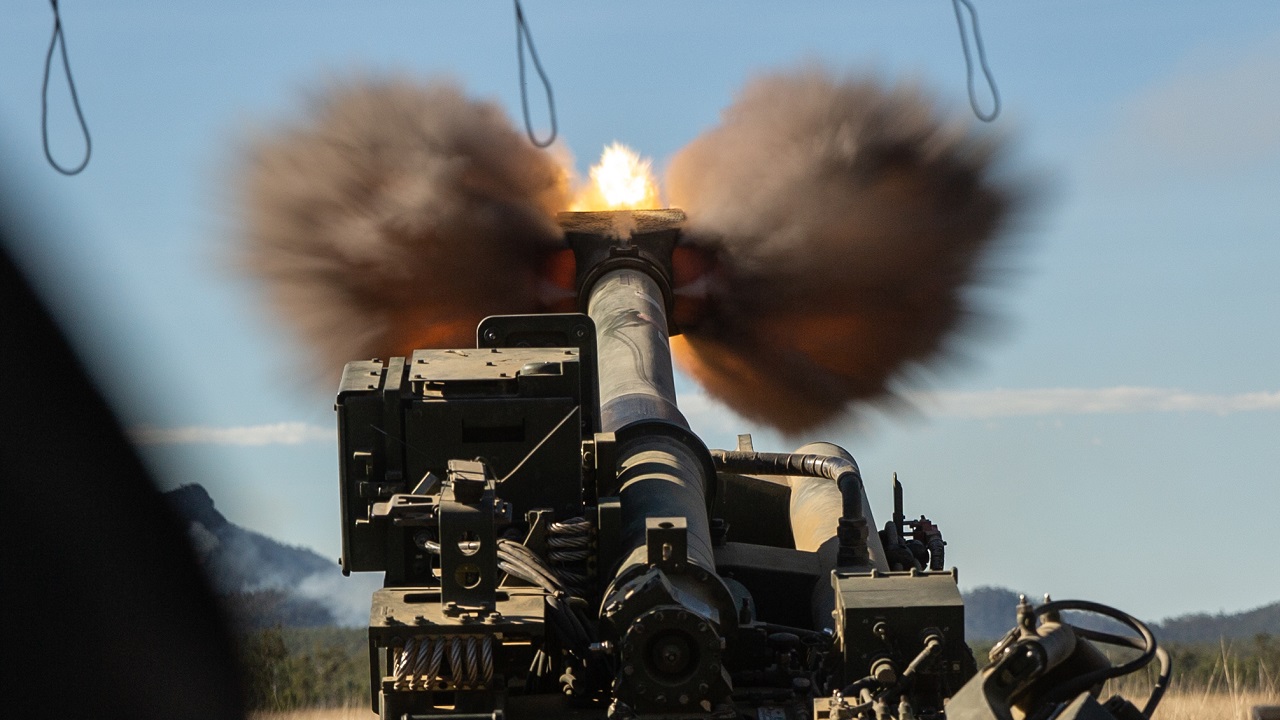
U.S. Marines with Golf Battery, 2d Battalion, 11th Marines, currently attached to the 31st Marine Expeditionary Unit, and Australian Defence Forces with 109th Battery, 4th Regiment, fire an M777 155 mm Howitzer during Exercise Talisman Sabre 21 on Shoalwater Bay Training Area, Queensland, Australia, July 17, 2021. Australian and U.S. Forces combine biennually for Talisman Sabre, a month-long multi-domain exercise that strengthens allied and partner capabilities to respond to the full range of Indo-Pacific security concerts. (U.S. Marine Corps photo by Lance Cpl. Ujian Gosun)
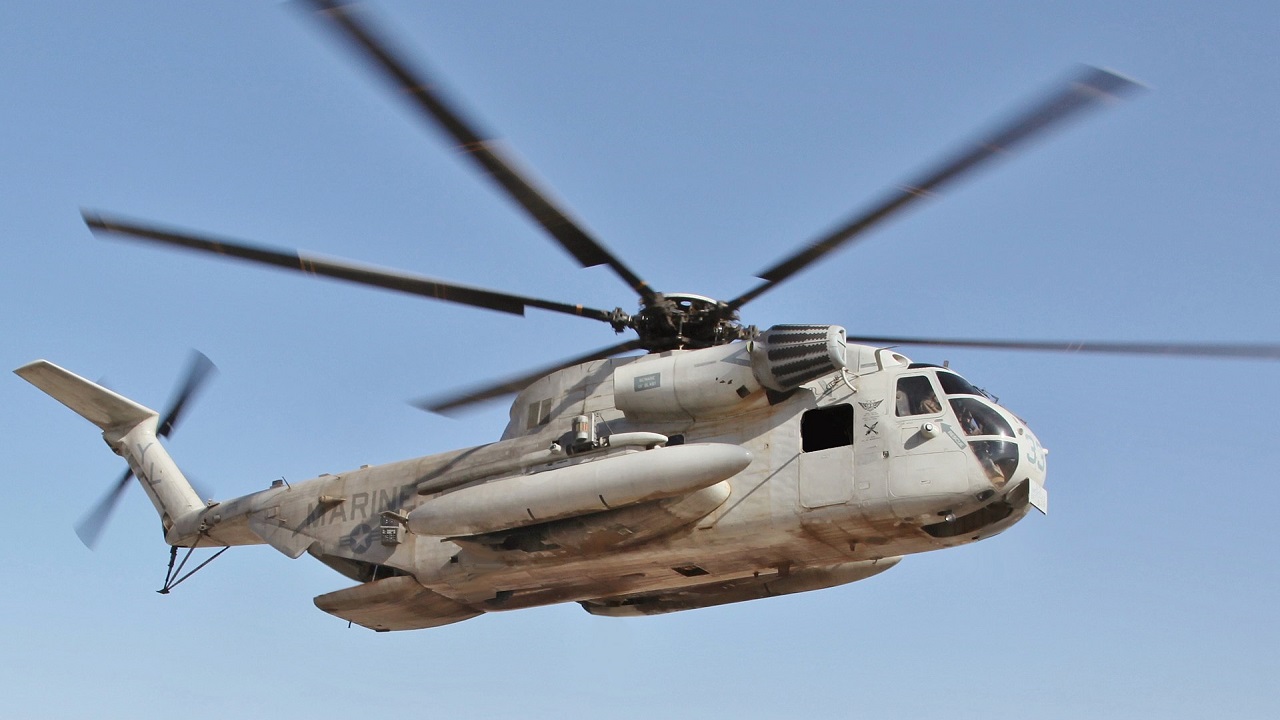
A U.S. Marine Corps CH-53D Sea Stallion with Marine Heavy Helicopter Squadron 362, 3rd Marine Aircraft Wing (Forward) lands on Forward Operating Base Edinburgh, Helmand province, Afghanistan, 26 May 2012. The helicopter was transporting U.S. Marines with Regional Command (SouthWest) and Afghan National Army soldiers with 4th Kandak, 2nd Brigade, 215th Corps.
Berger worried that the Marine Corps was in danger of becoming “irrelevant”—but Berger was not the first commandant to feel this way. His predecessor, General Robert Neller, said in 2017 that he believed the Corps was not ready to address new national security issues.
Current Mission Redefinition (Force Design):
The Marine Corps is pivoting away from long-term, land-based counterinsurgency such as that carried out in Iraq and Afghanistan. It will focus on comprising stand-in forces capable of operating inside an adversary’s weapon engagement zone.
Operational Concepts
The core mission now centers on Littoral Operations in a Contested Environment (LOCE) and Expeditionary Advanced Base Operations (EABO).
LOCE is defined by the Marine Corps as “a concept that describes the integrated application of Navy and Marine Corps capabilities to overcome emerging threats within littoral areas that are rapidly expanding in operational depth, complexity, and lethality.”
As the Marine Corps says: “For years, our naval team has enjoyed the benefits of maritime superiority. As a result, we’ve evolved our forces in ways that maximize our maritime power projection capabilities unencumbered by the concurrent need to achieve and maintain sea control.
“LOCE places a renewed emphasis on gaining sea control, to include employing sea-based and land-based Marine Corps capabilities to support the sea control fight.”
Expeditionary Advanced Base Operations (EABO) “is a form of expeditionary warfare that involves the employment of mobile, low-signature, operationally relevant, and relatively easy to maintain and sustain naval expeditionary forces from a series of austere, temporary locations ashore or inshore within a contested or potentially contested maritime area in order to conduct sea denial, support sea control, or enable fleet sustainment.”
While the vastness of the Pacific Ocean is daunting, especially for a shrinking U.S. Navy, the Marine Corps’ plan is to establish and defend key maritime terrain on which they will emplace long-range weapons and missiles capable of engaging ships and aircraft 500 or more miles away.
Each location provides the U.S. with its own 1,000-mile area of control. Even a handful of such locations could make large swathes of the Pacific Ocean off-limits to China’s navy.
Jim Lacey wrote on War on the Rocks that, “It is time for the United States to stop worrying about how to penetrate Chinese anti-access/area-denial systems, and force them to worry about how they will get past American systems.”
Restructuring for 2026/2030:
The Marine Corps is becoming a smaller, more lethal, and lighter force, reducing its personnel by 12,000 to prioritize advanced, long-range precision weapons and unmanned systems.
The creation of Marine Littoral Regiments (MLRs), such as the 3rd and 12th MLRs, emphasizes sea denial and shore-based maritime surveillance.
MLRs under Force Design 2030 are designed to operate in contested littoral environments, focusing on self-deployment, multi-domain awareness, and EABO to disrupt adversaries. They combine reconnaissance, precision fires such as anti-ship missiles, air defense, and logistics into a mobile force capable of operating from islands and coastlines to support maritime campaigns and deter aggression.
A Marine Littoral Regiment is comprised of:
Command Element: a HQ with Intel, Cyber, and Info Ops.
Littoral Combat Team (LCT): Infantry and anti-ship missile battery.
Littoral Anti-Air Battalion (LAAB): Air defense and surveillance.
Littoral Logistics Battalion (LLB): Resupply and sustainment.
The capabilities for an MLR include networked sensors, long-range drones, naval strike missiles, maritime domain awareness, and information warfare.
The Challenge Of Facing China:
The Marine Corps’ focus is being able to operate within zones affected by Chinese air, missile, and naval power, which the Marine Corps characterizes as Beijing’s weapons engagement zone (WEZ).
Marines provide a “stand-in force” within this WEZ: “Stand-in forces [are] optimized to operate in close and confined seas in defiance of adversary long-range precision ‘stand-off capabilities.”
The Marines’ concept will center on “distributed operations,” or the ability of small forces to operate independently.
“We recognize that we must distribute our forces ashore given the growth of adversary precision strike capabilities, and create the virtues of mass without the vulnerabilities of concentration.”
Small Marine forces would deploy around the islands of the first island chain and the South China Sea, with each element having the ability to contest the surrounding air and naval space using anti-air and anti-ship missiles.
Debate on the Redefinition:
Proponents argue that these changes are necessary to keep the Marine Corps relevant and lethal in a contested environment.
A group of retired officers critical of the changes has argued they destroy the traditional “combined arms” capabilities that made the Marine Corps a versatile, offensive, and mobile force.
Marines’ Primary Mission And How The GWOT Changed That:
The Marine Corps’ primary mission (Under US Code: Title 10) is defined as:
“The Marine Corps shall be organized, trained, and equipped to provide fleet marine forces of combined arms, together with supporting air components, for service with the fleet in the seizure or defense of advanced naval bases and for the conduct of such land operations as may be essential to the prosecution of a naval campaign.”
However, in two decades of the war on terror, the force was heavily involved in the fighting in Afghanistan and Iraq, far from the coast. As a result, many Marines had little experience in amphibious operations. Critics took to calling the Marine Corps “a second land Army.”
The Marine Corps’s new focus will no doubt change as circumstances dictate, but by getting back to its traditional maritime roots, it will continue to have its own mission.
About the Author: Steve Balestrieri
Steve Balestrieri is a National Security Columnist. He served as a US Army Special Forces NCO and Warrant Officer. In addition to writing on defense, he covers the NFL for PatsFans.com and is a member of the Pro Football Writers of America (PFWA). His work was regularly featured in many military publications.