
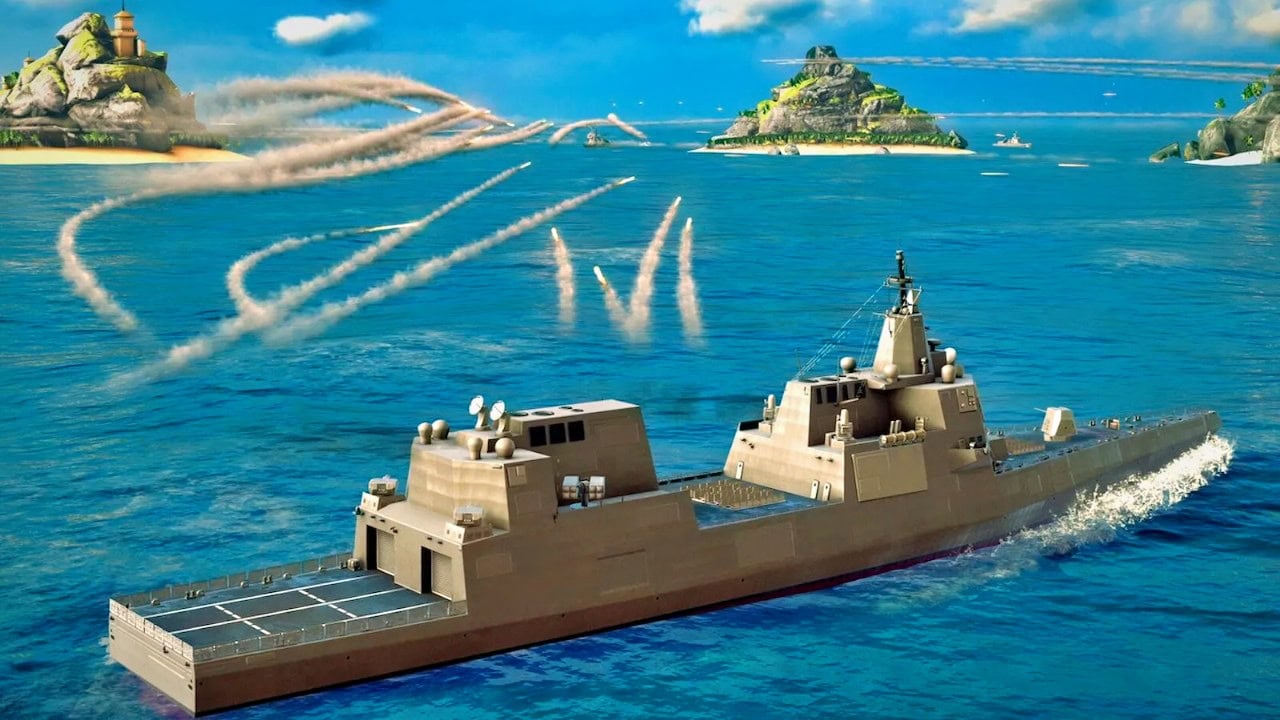
Key Points and Summary – The U.S. Navy isn’t collapsing, but it is operating under visible strain: costly procurement missteps, concept churn, and a shrinking margin for error in a Pacific-focused era.
-Programs like Zumwalt and LCS illustrate how ambitious designs can deliver micro-fleets, early retirements, and wasted training and logistics investment.
-Meanwhile, carriers remain indispensable for power projection, but face denser ISR and longer-range missile threats that demand layered defenses and smarter operational concepts.
-Add shipyard backlogs, industrial-base limits, and China’s production scale, and the picture is clear: the Navy must align strategy, budgets, and shipbuilding reality.
-That means fewer silver bullets and more disciplined, repeatable builds.
The U.S. Navy’s Problems Summed Up in 1 Thing: Concept Churn
Is the US Navy in crisis? No, but it’s under visible stress.
Procurement mishaps, shrinking margins, rising costs, strategic uncertainty in an era of great power competition—the Navy has a series of very real problems, many of which seem to stem from the inherent challenges of trying to do so many things at once.
Procurement Problems for the U.S. Navy
The Navy has developed a pattern for developing ambitious new classes that either get canceled early or are built in such small numbers as to be strategically meaningless or fail to replace the platform they were initially designed to replace.
Primary examples include the Zumwalt-class destroyer and the Littoral Combat Ship (LCS).
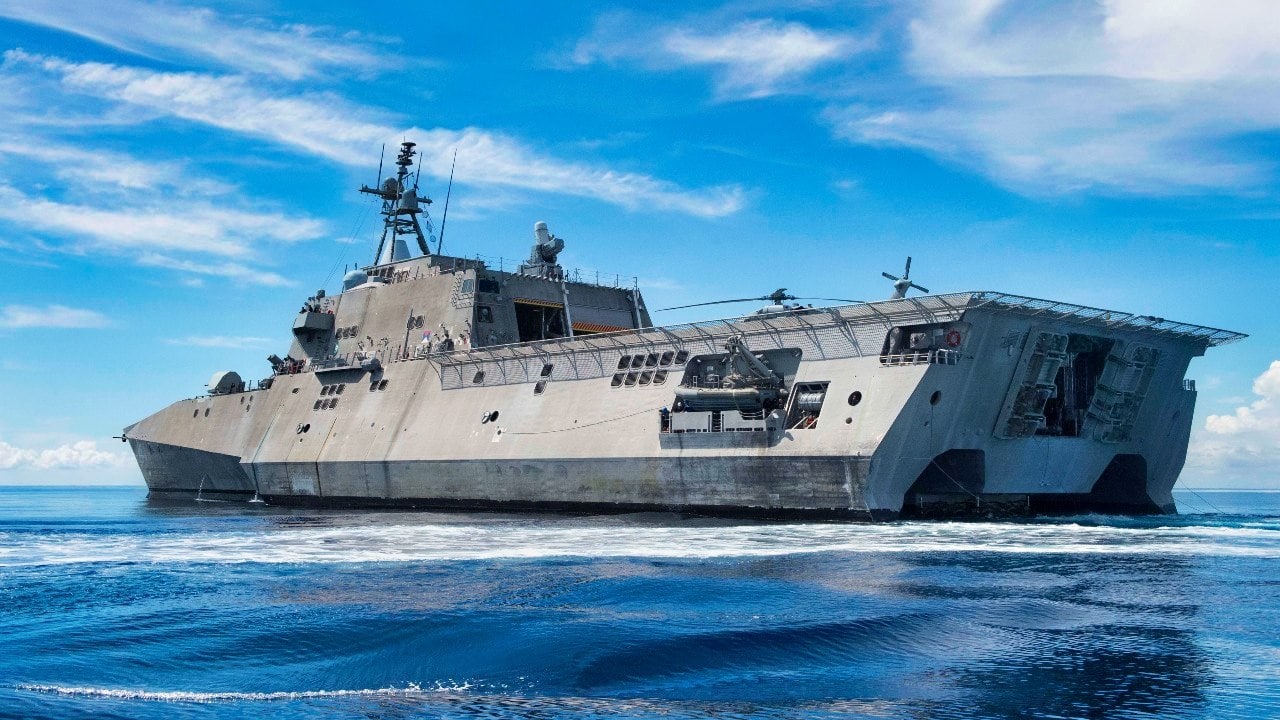
170623-N-PD309-122 BOHOL SEA (June 23, 2017) Littoral combat ship USS Coronado (LCS 4) transits the Bohol Sea during an exercise with the Philippine Navy for Maritime Training Activity (MTA) Sama Sama 2017. MTA Sama Sama is a bilateral maritime exercise between U.S. and Philippine naval forces and is designed to strengthen cooperation and interoperability between the nations’ armed forces. (U.S. Navy photo by Mass Communication Specialist 3rd Class Deven Leigh Ellis/Released)
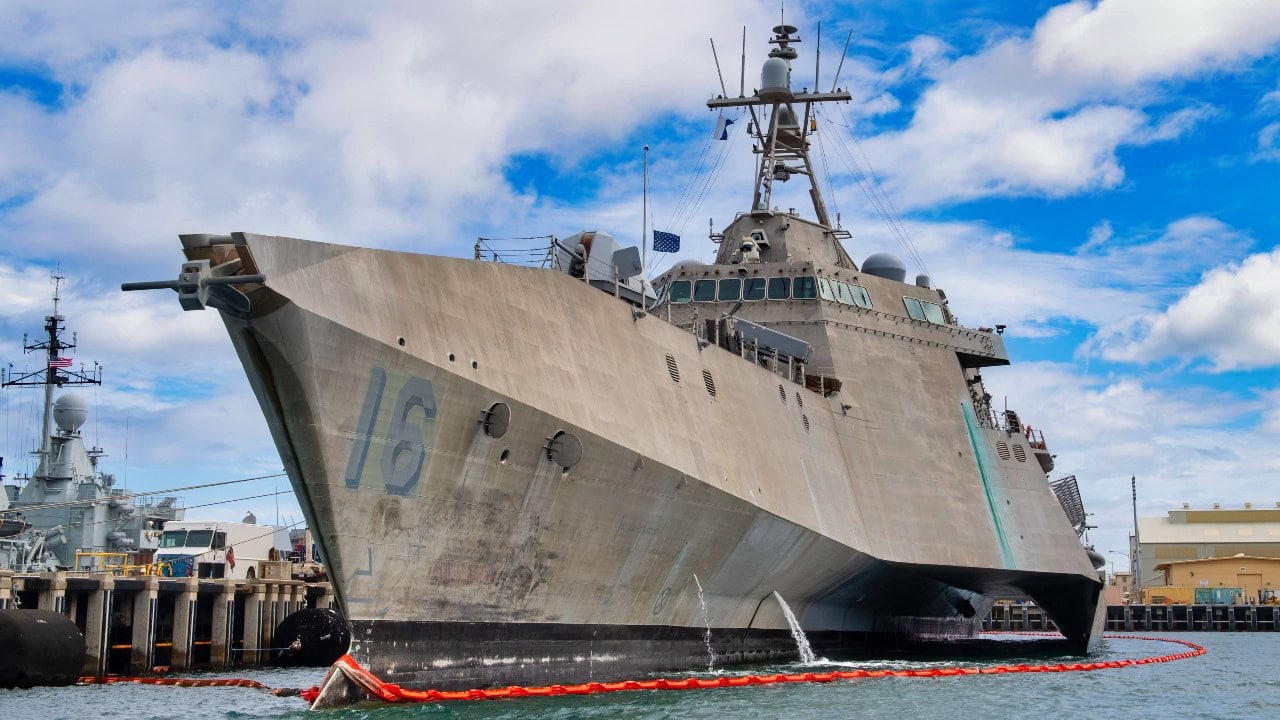
(July 7, 2022) – Independence-variant littoral combat ship USS Tulsa (LCS 16) moored at Joint Base Pearl Harbor-Hickam during Rim of the Pacific (RIMPAC) 2022. Twenty-six nations, 38 ships, four submarines, more than 170 aircraft and 25,000 personnel are participating in RIMPAC from June 29 to Aug. 4 in and around the Hawaiian Islands and Southern California. The world’s largest international maritime exercise, RIMPAC provides a unique training opportunity while fostering and sustaining cooperative relationships among participants critical to ensuring the safety of sea lanes and security on the world’s oceans. RIMPAC 2022 is the 28th exercise in the series that began in 1971. (U.S. Navy photo by Mass Communication Specialist 3rd Class Demitrius J. Williams)
The Zumwalt was designed for land attack and stealth, but only three were ever built; the original gun mission has been abandoned, and the micro-fleet is being repurposed for hypersonic missile deployment (in theory).
The LCS was rolled out in two variants, neither of which was entirely successful.
The platform suffered from mechanical reliability issues and was retired early despite having young hulls. Obviously, both of these programs reflect massive investment in not only fiscal resources but time, logistics, and training, all of which proved terribly inefficient and ultimately worth very little.
Concept Churn
The Navy is cycling through multiple surface combatant concepts, with the latest, the BBG(X) Trump-class battleship, unveiled just this week. Other examples include the CG(X), the DDG-1000, and the DDG(X).
The constant redesign churn suggests uncertainty about the future of naval warfare, namely a difficulty balancing missile defense, strike, and survivability against budget constraints.
The Trump-class example was exceptionally incoherent, suggesting that the new vessel would have heavy missile loadouts, and platforms for helicopters and UAVs, and railgun, lasers, hypersonic, etc.—all even though the battleship has been irrelevant for generations—suggests there is some strategic soul searching happening in real-time.
Aircraft Carrier Capabilities for the U.S. Navy in Trouble?
Are aircraft carriers still viable?
The floating airfield remains the Navy’s centerpiece platform; it provides unmatched air power, flexibility, and unrivaled political signaling. But the threat environment is changing.
Anti-ship ballistic missiles and hypersonic and dense ISR networks, i.e., China’s A2/AD bubble, have potentially rendered carriers increasingly at risk.
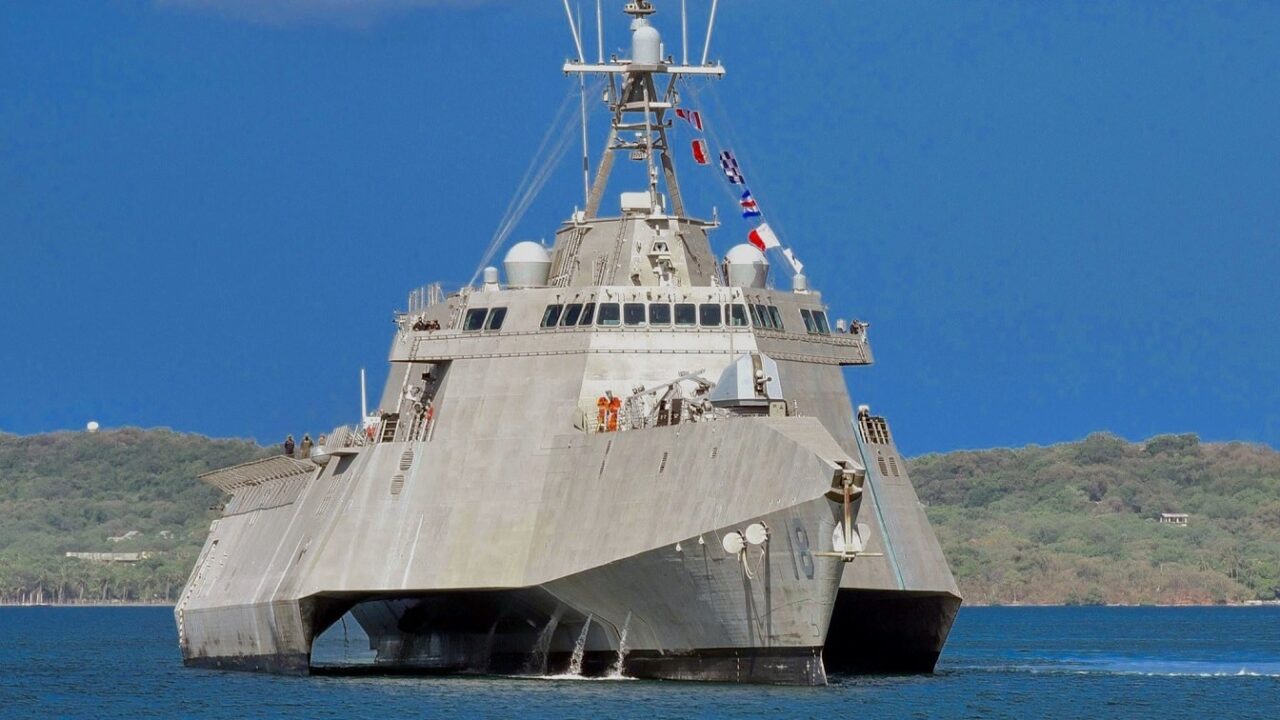
Littoral Combat Ship. Image Credit: US Navy.
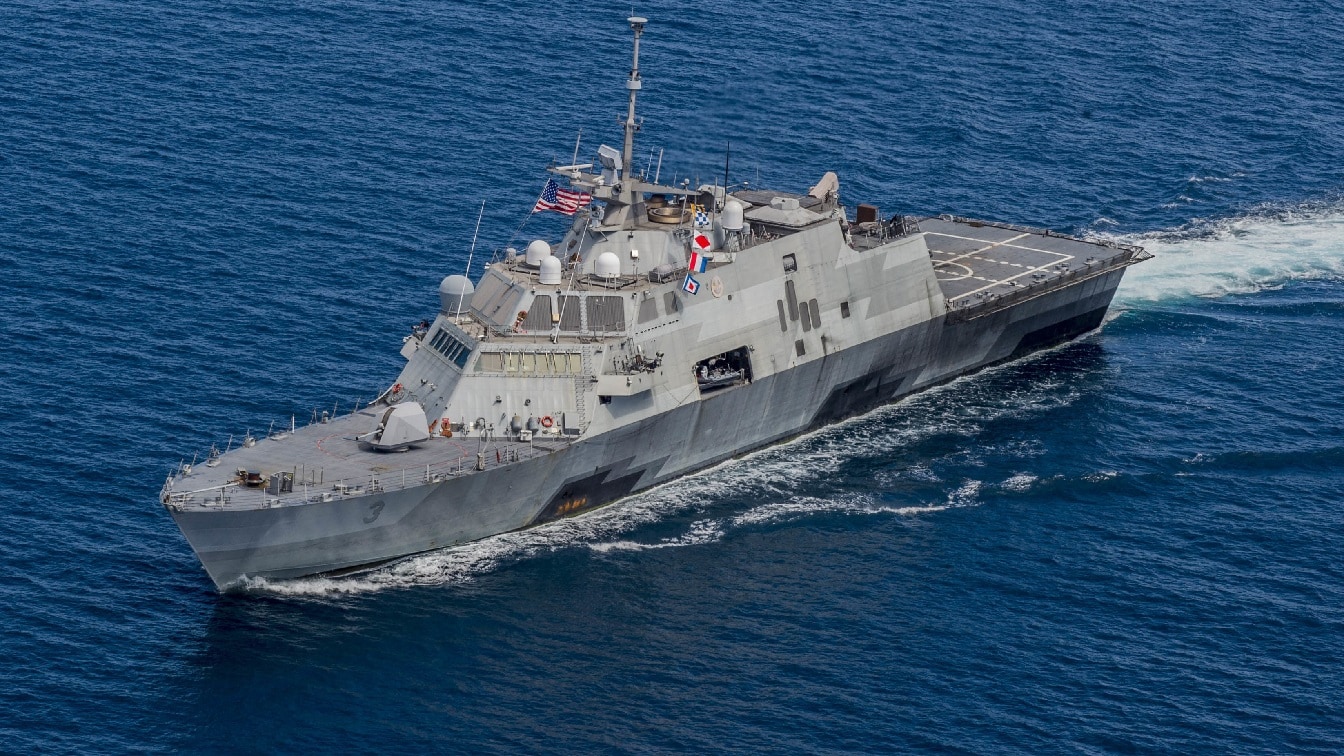
(Aug. 19, 2015) The littoral combat ship USS Fort Worth (LCS 3) assembles in formation with ships from the Royal Malaysian Navy as part of Cooperation Afloat Readiness and Training (CARAT) Malaysia 2015. CARAT is an annual, bilateral exercise series with the U.S. Navy, U.S. Marine Corps and the armed forces of nine partner nations. (U.S. Navy photo by Mass Communication Specialist 2nd Class Joe Bishop/Released)
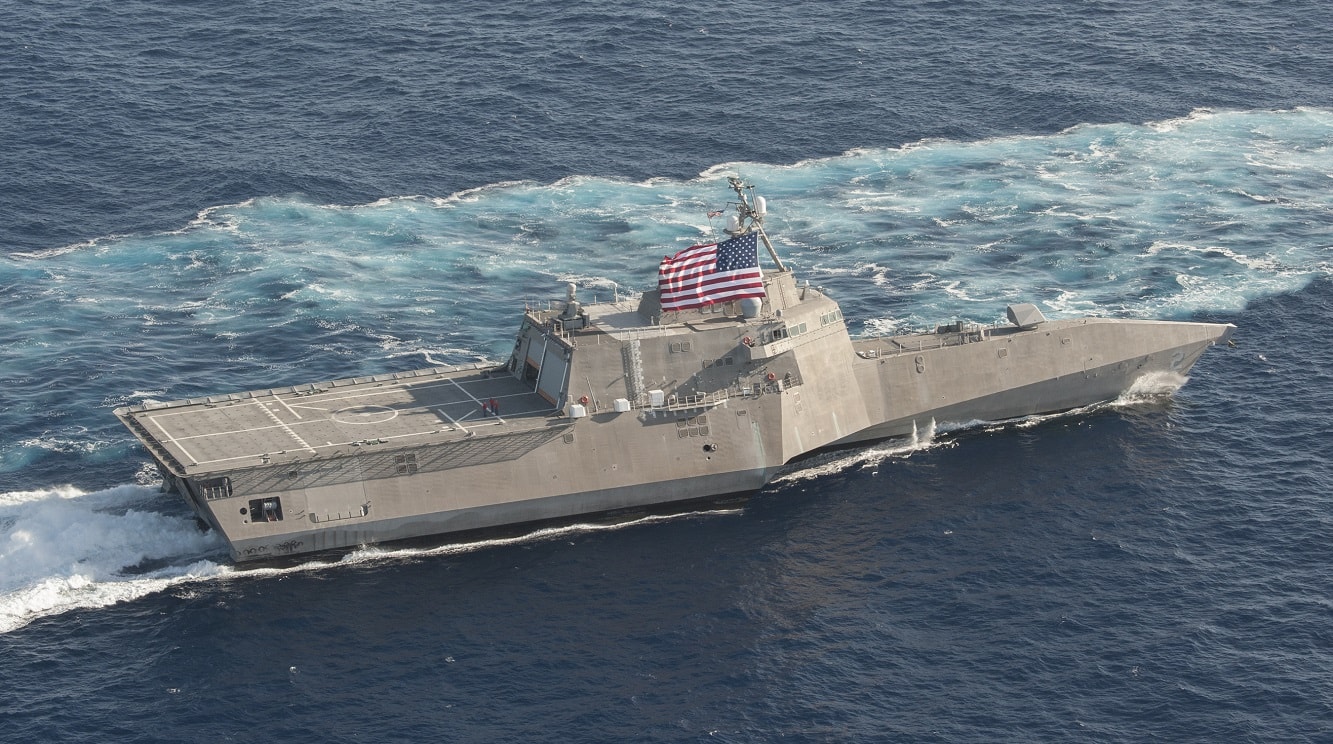
The littoral combat ship USS Independence (LCS 2) is underway in the Pacific Ocean. (U.S. Navy photo by Chief Mass Communication Specialist Keith DeVinney/Released)
Even Secretary of Defense Pete Hegseth has expressed concerns about the carrier’s survivability against a near-peer adversary.
And while finding and sinking an aircraft carrier, especially in a geography as vast as the Indo-Pacific, is more complicated than it may seem, the future of the aircraft carrier has been shaded with doubt.
The Navy is not abandoning the airline, however, but is instead trying to surround the vaunted ships with layered defenses. Carriers are indeed still essential—but they are no longer uncontested.
Numeric Neglect
The Navy’s fleet size is smaller than during its Cold War peak, yet it is stretched across globe-spanning commitments.
Maintenance backlogs abound, with shipyards overburdened and overhaul delays keeping vessels out of service for years. Forward-deployment strain, due to the Navy often having fewer deployable ships than planned, has degraded morale. Long deployments lead to crew fatigue and maintenance requirements that further impact readiness.
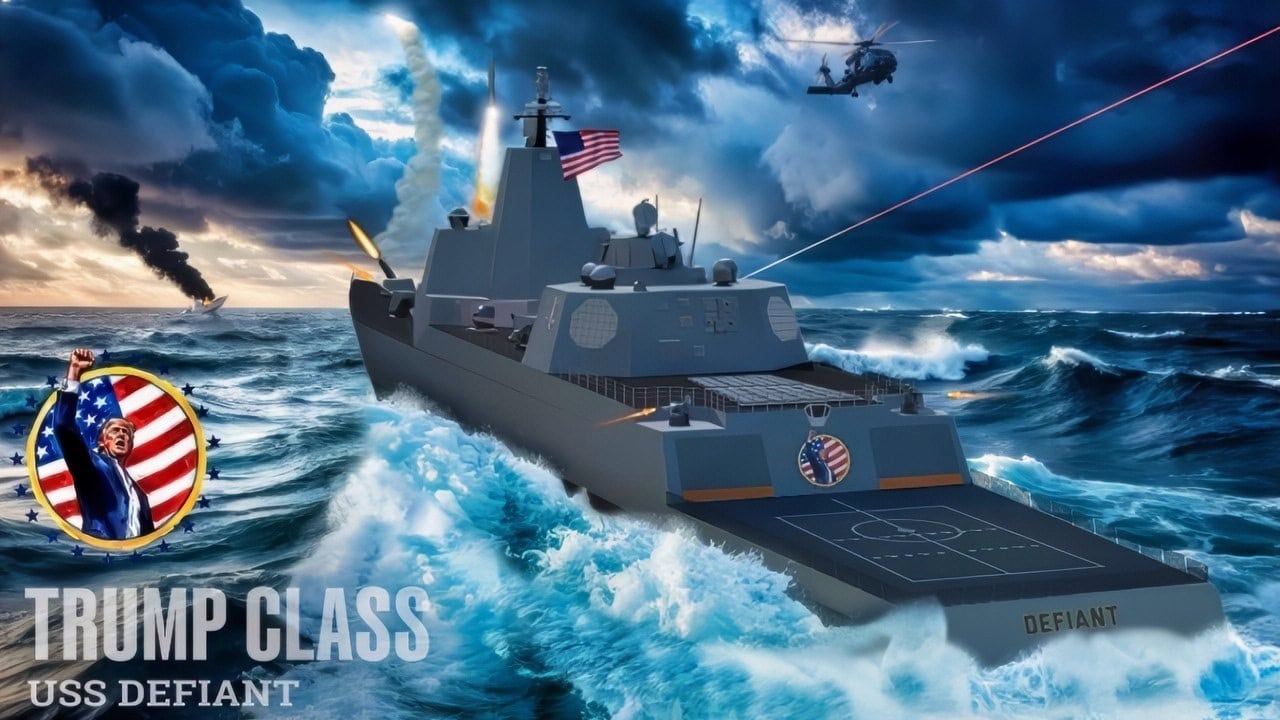
U.S. Navy Trump-Class Battleship. Image Credit: Creative Commons/White House Photo.
The problem will be complex to address without a strategic shift; the US industrial base is facing real constraints. Shipbuilding capacity is down, with fewer shipyards and limited skilled labor.
Contrasted with China, which has faster production cycles and a larger commercial-military crossover, some planners are worried that the US is falling behind its greatest rival, as the Navy struggles to build new ships quickly and maintain old ones efficiently. Of course, this is a national industrial issue, not just a naval issue.
Strategic Sensibilities
The US still maintains the world’s most capable Navy, bar none. In terms of quality and experience, the US Navy is peerless.
But China is developing an advantage in terms of regional density and production scale. Meanwhile, the US strategy is increasingly reliant on alliances, distributed forces, and joint operations, while the Navy itself is transitioning from global dominance to a focus on key theaters, i.e., the Indo-Pacific.
So, the Navy is not losing; the Navy is not in crisis. But they are adjusting under real geopolitical and industrial pressure.
In this moment of recalibration, the Navy will need to avoid indecision, overly complex designs, and trying to solve every potential future problem with a single platform.
The Navy will need to align procurement with strategy with industrial reality to sustain the current US maritime advantage over the coming decades.
About the Author: Military Expert Harrison Kass
Harrison Kass is an attorney and journalist covering national security, technology, and politics. Previously, he was a political staffer and candidate, and a US Air Force pilot selectee. He holds a JD from the University of Oregon and a master’s in global journalism and international relations from NYU.