
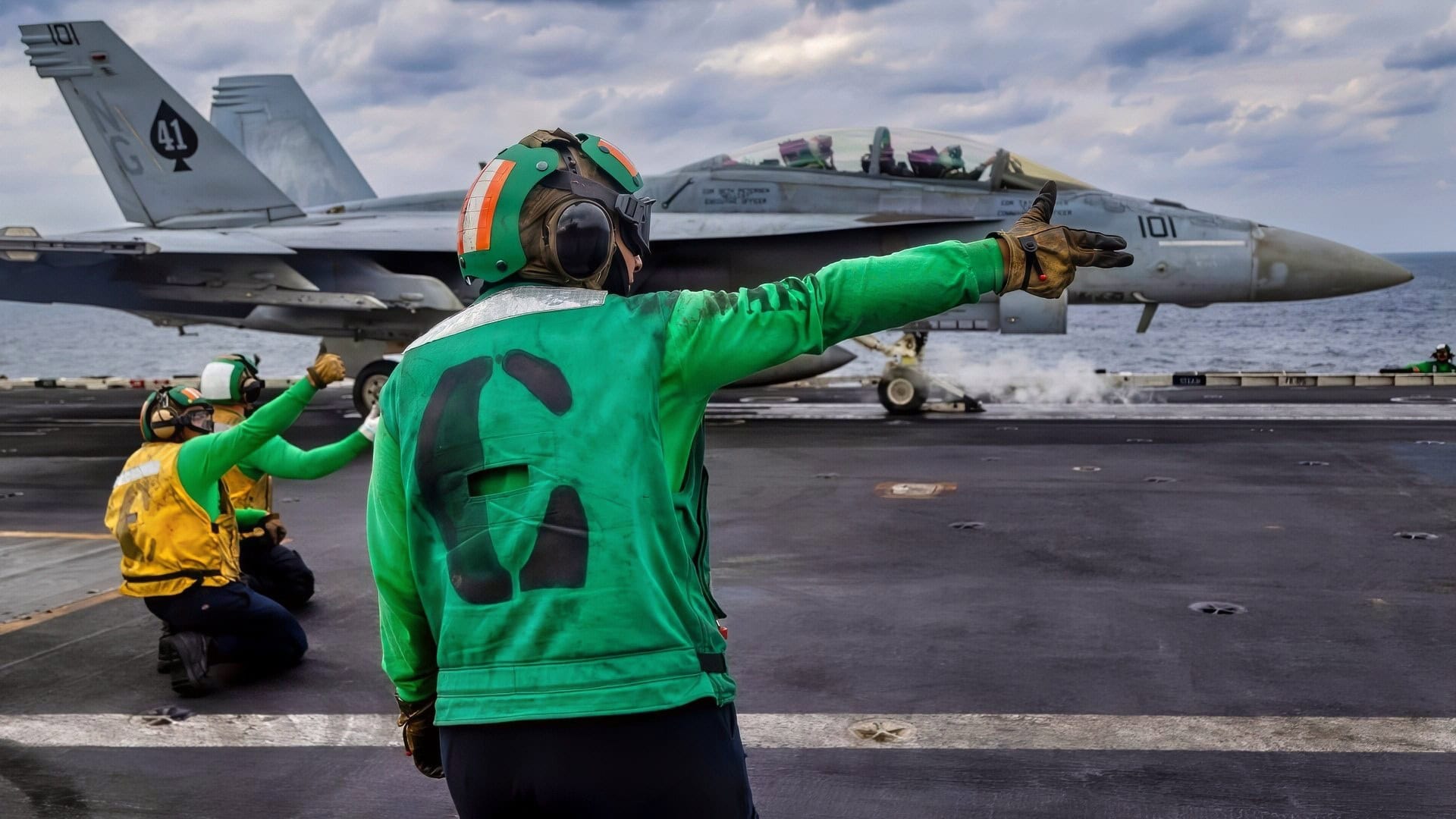
Summary and Key Points: The U.S. Navy’s F/A-XX—built to replace the F/A-18E/F and fly beside the F-35C—has regained momentum after a pause inside the U.S. Department of Defense under Pete Hegseth.
-Lawmakers are pushing FY2026 funding from $74 million to $972 million, but the program still needs a prime contractor.
-Range is the selling point: leaders cite roughly 25 percent more unrefueled reach than today’s carrier jets, amplified by the MQ-25 tanker drone.
-With China flying sixth-gen prototypes and fielding carrier-killing missiles, the Navy wants standoff airpower before Super Hornets age out in the early 2030s.
-If the Navy does not make these changes, the aircraft carrier could end up as obsolete as a battleship.
Is “25% More Range” Enough to Keep Aircraft Carriers Safe in the Pacific?
The US Navy’s next-generation fighter, the F/A-XX, intended to replace the F/A-18E/F Super Hornet and fly alongside the fifth-generation F-35C Lightning II, has new momentum. The F/A-XX was previously put on pause by the Pete Hegseth-led Department of Defense, as Pentagon acquisition leaders wondered whether the defense industrial base could also build the F-47 NGAD. The F/A-XX has many friends in Congress.
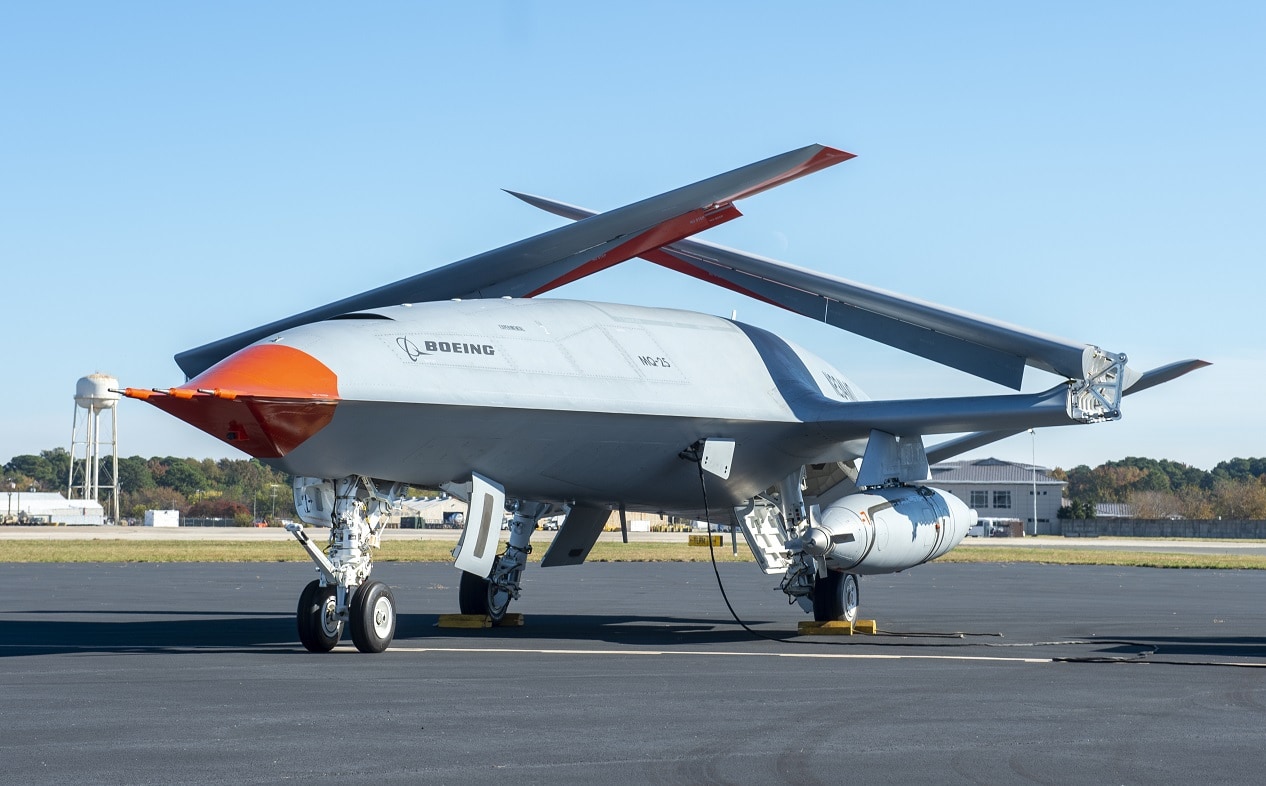
The U.S. Navy and Boeing conducted ground testing of the MQ-25 Stingray at Chambers Field onboard Naval Station Norfolk, Virginia. The MQ-25 Stingray is an unmanned aerial refueling aircraft. (U.S. Navy photo by Mass Communication Specialist 2nd Class Sam Jenkins)
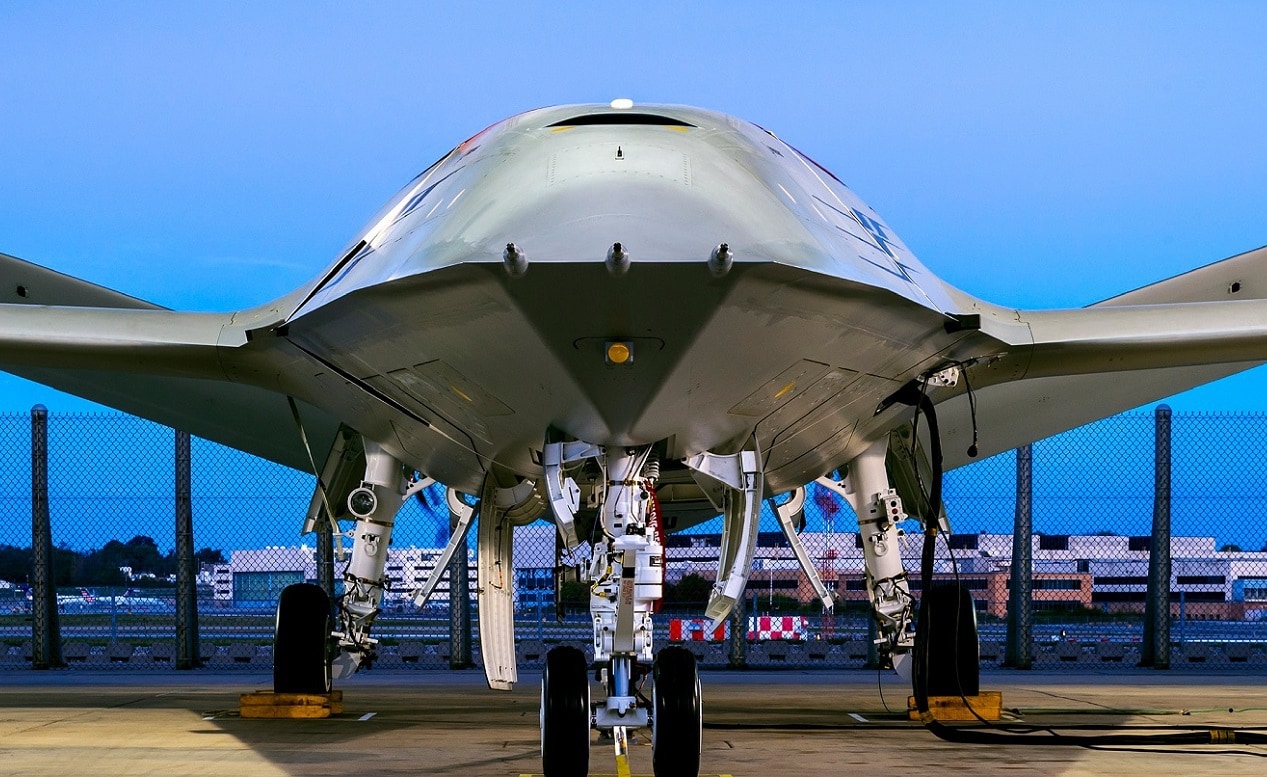
MQ-25. Image Credit – Creative Commons.
Lawmakers on Capitol Hill have given the newfangled jet a substantial funding increase. Dollars invested in the FY2026 budget round will rise from $74 million to $972 million. This is a significant increase that should put the F/A-XX in “green” mode for continued production if legislators approve the final budget.
What Defense Firm Will Build It?
First, the fledgling F/A-XX program needs a defense contractor. Boeing and Northrop Grumman may be in the running. However, there is still uncertainty about the program as the design is forthcoming. F/A-XX features include hypersonic weapons, speeds possibly approaching MACH 3, greater stealth than the F-35C, artificial intelligence in the cockpit, the ability to control unmanned Loyal Wingmen Collaborative Combat Aircraft, and an uncrewed version of the sixth-generation
Time to Replace the Super Hornet
The idea behind the F/A-XX is to have two stealth naval warplanes flying in tandem to enable better anti-ship warfare and ground strikes. The non-stealth Super Hornet needs to be replaced to make this one-two punch a reality. The Super Hornet has been a great airplane, but it is time to move on.
Those Dangerous Carrier-Killing Missiles
The Navy can use the F/A-XX for increased combat radius to help aircraft carrier strike groups stay out of range of ship-killing missiles from China and Russia. The Navy could continue carrier aviation operations without the F/A-XX, of course, but China is forging ahead with its own sixth-generation fighters. The J-50 and J-36 prototypes are already flying, and the United States must move more quickly on the F-47 NGAD and F/A-XX.
Slow and steady could win the race, though. The F-47 NGAD could fly by 2028, while there are few, if any, predictions on an operational date for the F/A-XX since it has no defense contractor attached to the program.
New Drone Tanker Can Push Naval Airplanes to the Max
With the longer range planned for the Navy’s sixth-generation fighter, airplanes refueled by the exciting new MQ-25 Stingray stealthy aerial tanker drone could allow the maritime branch to reach targets beyond the reach of just the Lightning II and Super Hornet.
Super Hornets may reach the end of their service life in the early 2030s; hopefully, by then, the F/A-XX would be launching and landing from aircraft carriers. The F/A-XX program must focus on long-range flight, and that means the propulsion system will be important.
It is supposed to have a 25 percent greater combat radius than the F-35C. However, is this really enough to make a carrier strike group more survivable? Twenty-five percent does not sound like a lot. Of course, the aerial refueling will help.
What Kind of Ranges Are We Talking About?
The F-35C has a current range of around 1,300 miles. The F/A-XX would need to eclipse that, and it would be better if the new fighter jet could fly a 2,000-mile combat radius. This would help carriers stay out of range of warplanes and missiles.
Navy Rear Admiral Michael “Buzz” Donnelly, head of the Air Warfare Division within the Office of the Chief of Naval Operations, discussed the F/A-XX’s range with The War Zone last year.
“F/A-XX will offer probably over 125 percent of the range that we’re seeing today to give us better flexibility operational reach,” Donnelly said. “So it will definitely have a longer inherent range.”
Donnelly was then asked clearly if this meant “25 percent more capacity before you start adding in refueling,” he replied, “yeah, affirm[itive].”
The ‘Kinetic Missile Fight’ Could Get Ugly
If that can be accomplished by the new airplane, it will be a welcome development for carrier aviation. But even if the F/A-XX does not have sufficient range, carriers will still be survivable due to the new features of the sixth-generation warbird.
The Navy needs this airplane badly, and Members of Congress are aware of the threats in the Indo-Pacific, where combat will consist of what I call the “Kinetic Missile Fight,” in which projectiles from Chinese shore-launched missiles and aircraft could send a carrier to the bottom of the sea.
China Has Its Own Chess Moves
China excels in anti-access/area denial warfare and wielding what they call “Assassin’s Mace” weapons like hypersonic missiles that are asymmetric assets. Naval battle planners know they have the work cut out for them, and figuring out the optimum combat radius of weapons systems is an important part of that calculus.
The Navy will still be able to excel in these threat environments thanks to the expertise and combat experience of individual sailors and aviators, but Chinese missiles are a concern. The F/A-XX, should it come to fruition, needs designers and engineers to create engines that can carry the fight to the enemy with violence of action, and that means having the range with refueling to answer threats. We’ll be watching the F/A-XX program closely to see if the Department of Defense is fully behind the project.
It is a problem if no new airplane will replace the aging Super Hornets. In fact, if the Navy does not get these fighters, you could see aircraft carriers become as obsolete as the battleships of World War II.
About the Author: Brent M. Eastwood
Author of now over 3,000 articles on defense issues, Brent M. Eastwood, PhD is the author of Don’t Turn Your Back On the World: a Conservative Foreign Policy and Humans, Machines, and Data: Future Trends in Warfare plus two other books. Brent was the founder and CEO of a tech firm that predicted world events using artificial intelligence. He served as a legislative fellow for US Senator Tim Scott and advised the senator on defense and foreign policy issues. He has taught at American University, George Washington University, and George Mason University. Brent is a former US Army Infantry officer. He can be followed on X @BMEastwood.