In 48 Hours: 2 U.S. Navy Supercarriers Leave Norfolk as Abraham Lincoln Heads to CENTCOM
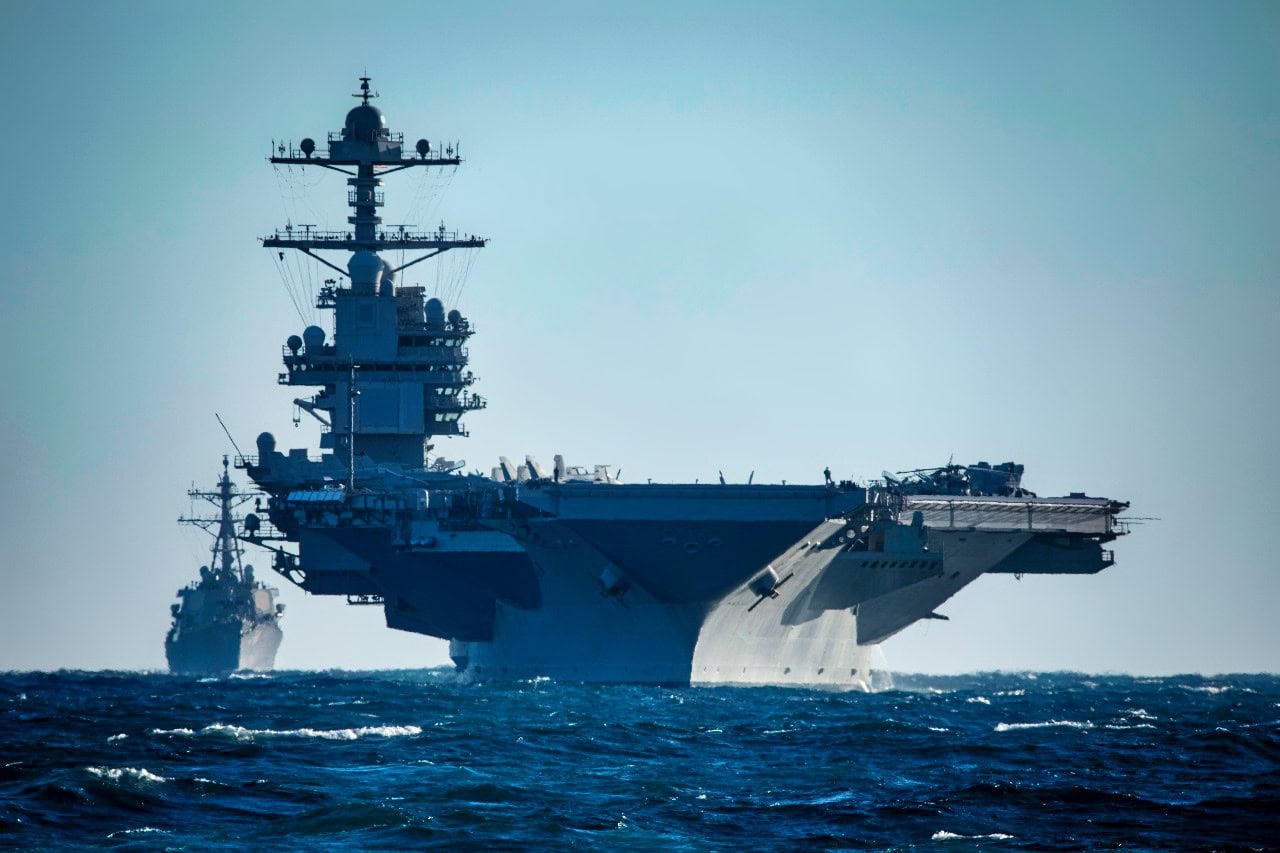
While Washington considers the potential outcome of the growing revolutionary movement in Iran—and the rising death toll from massacres committed by the clerical regime’s security forces—the U.S. Navy has ordered the USS Abraham Lincoln Carrier Strike Group to redeploy from the Indo-Pacific theater to the Middle East.
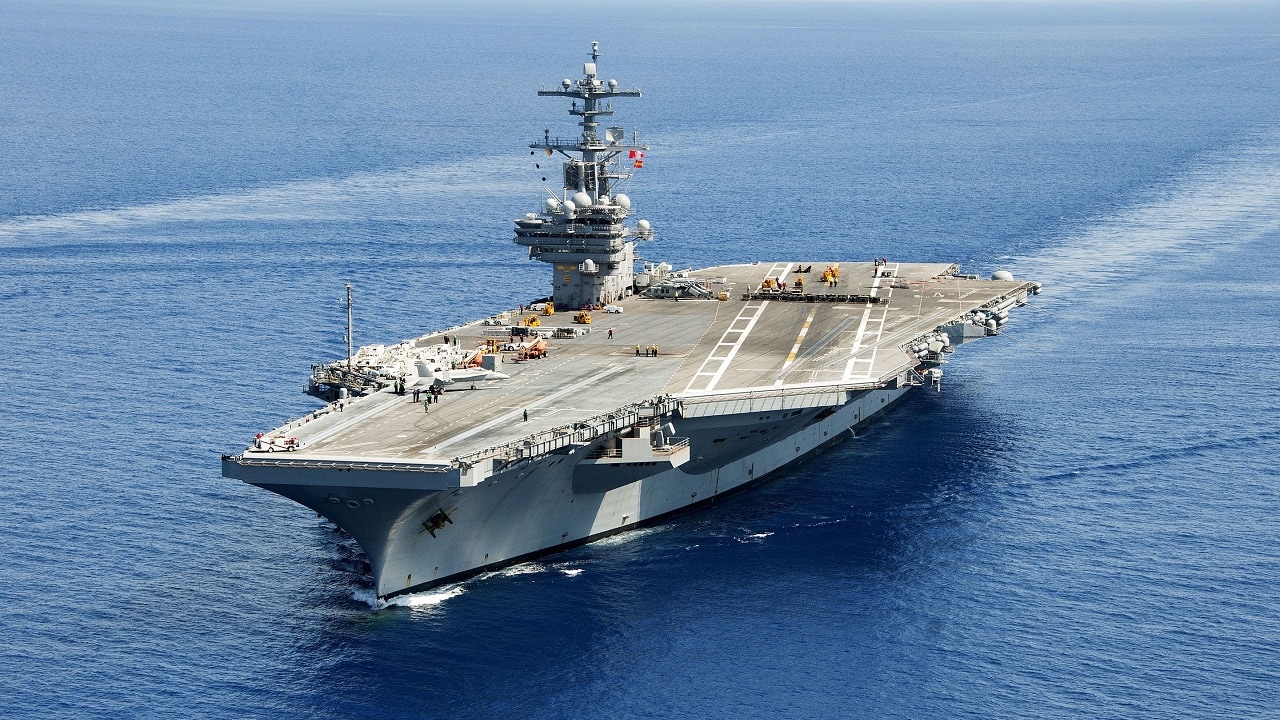
USS George H.W. Bush Aircraft Carrier. Image Credit: Creative Commons.
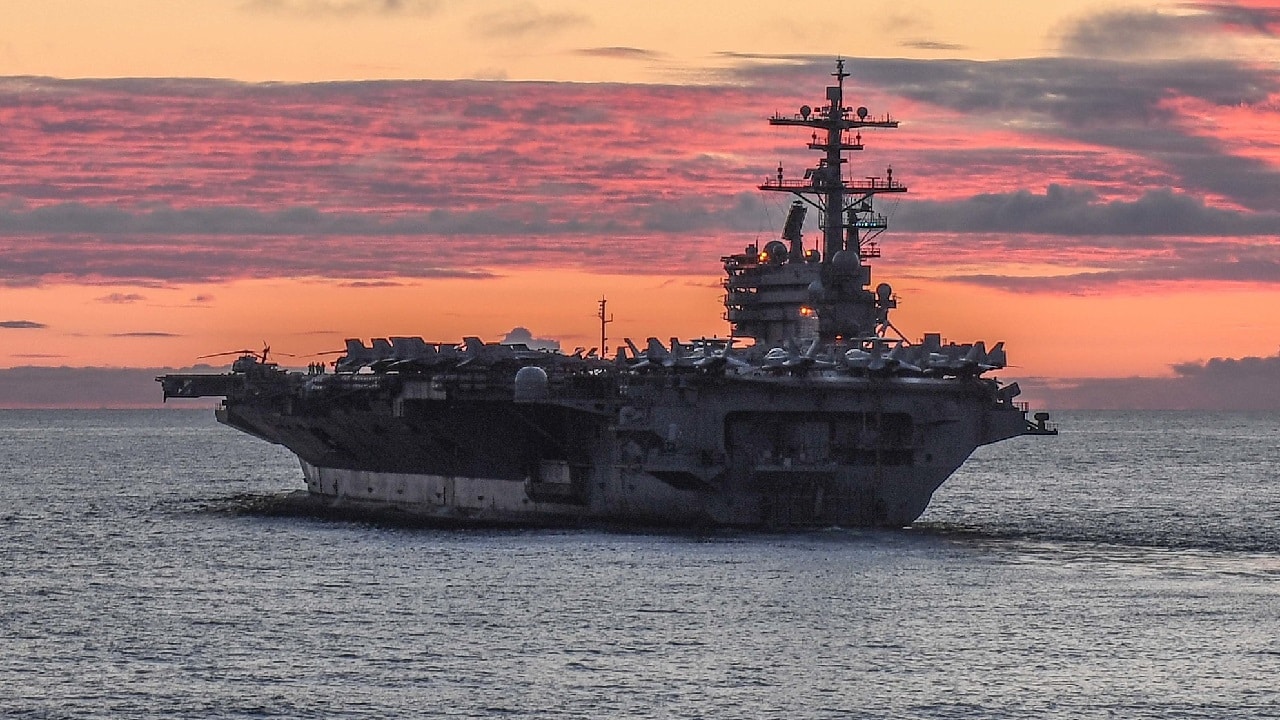
170808-N-FP878-008.ATLANTIC OCEAN (Aug. 8, 2017) The Arleigh Burke-class guided-missile destroyer USS Donald Cook (DDG 75) maneuvers between the Ticonderoga-class guided-missile cruiser USS Philippine Sea (CG 58), left, and the Nimitz-class aircraft carrier USS George H. W. Bush (CVN 77), right, for a photo exercise during exercise Saxon Warrior 2017, Aug. 8. Saxon Warrior is a United States and United Kingdom co-hosted carrier strike group exercise that demonstrates allied interoperability and capability to respond to crises and deter potential threats. (U.S. Navy photo by Mass Communication Specialist 1st Class Theron J. Godbold /Released).
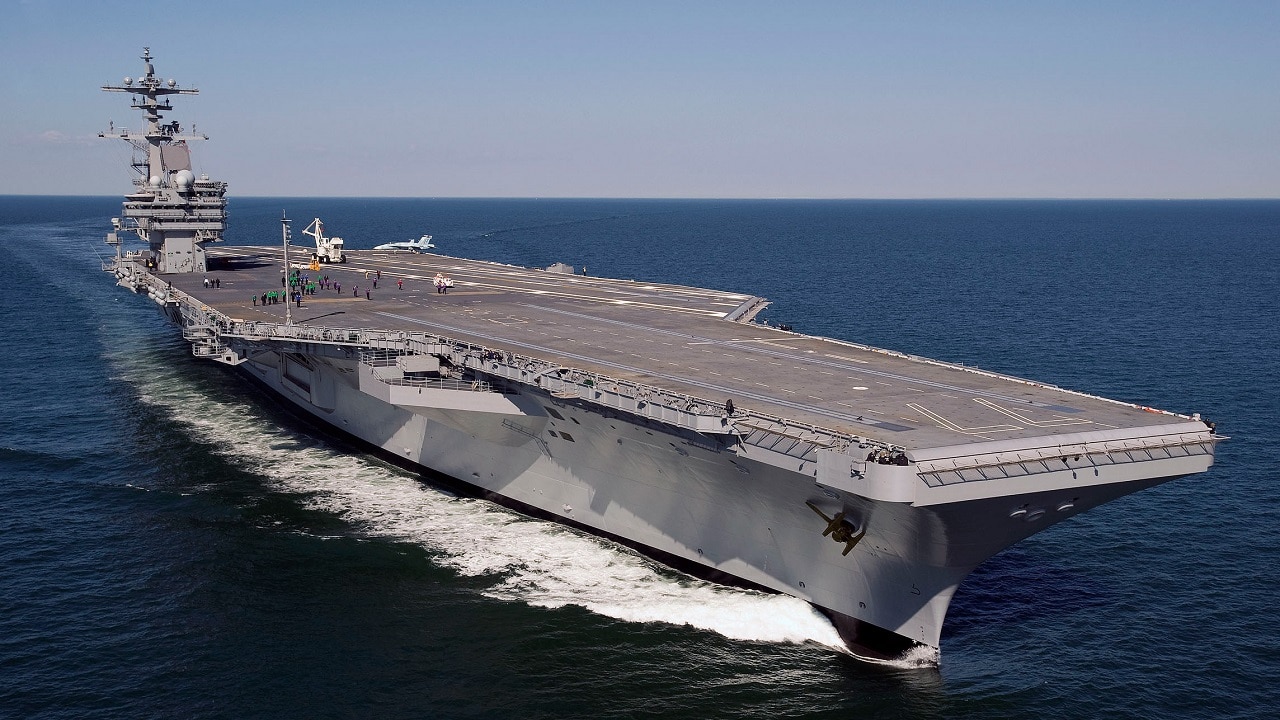
The aircraft carrier USS George H. W. Bush (CVN 77) on builder’s trials, 2/13/2009. The ship, named after the nation’s 41st president, is the 10th and final Nimitz-class, nuclear-powered carrier built at Northrop Grumman Shipbuilding-Newport News. Photo by John Whalen, Northrop Grumman Shipbuilding.
Simultaneously, the U.S. military and its regional partners have opened a new air defense operations cell in Qatar to “enhance integrated air and missile defense,” according to a U.S. Central Command (CENTCOM) announcement on Tuesday.
The cell was opened at the Al Udeid Air Base outside Doha—the same base Iran targeted in a retaliatory attack last June following U.S. Air Force B-2 strikes on Tehran’s nuclear facilities.
“This is a significant step forward in strengthening regional defense cooperation,” said Admiral Brad Cooper, commander of CENTCOM, in a statement Tuesday. “This cell will improve how regional forces coordinate and share air and missile defense responsibilities across the Middle East.”
The Al Udeid base is home to 10,000 American personnel and is the largest U.S. military facility in the Middle East.
It serves as a hub for logistical operations for U.S. forces engaged in operations against ISIS in Iraq and Syria.
The USS Abraham Lincoln (CVN-72) is a Nimitz-class nuclear-powered aircraft carrier. Its presence in the Middle East fits the requirement of positioning sufficient combat power to respond in real time if the security situation deteriorates.
As multiple news outlets point out, this redeployment not only backs U.S. forces already in the region but also adds credibility to warnings from U.S. President Donald Trump that Washington could take military action if Tehran continues to use deadly force against protesters.
Violent actions against demonstrators have occurred in the more than 100 Iranian cities with populations of more than 100,000 that are in open revolt against the clerical regime.
The Strike Group
The Abraham Lincoln’s Carrier Air Wing 9 (CVW-9) operates F/A-18E/F Super Hornets, EA-18G Growlers, E-2D Advanced Hawkeyes, and MH-60R/S Seahawks.
These are the same EA-18G model aircraft that are credited with completely blinding all the ground-based air-defense units in Venezuela during Operation Absolute Resolve.
The CSG’s surface combatant element consists of the Arleigh Burke-class guided-missile destroyers USS Spruance (DDG-111), USS Michael Murphy (DDG-112), and USS Frank E. Petersen Jr. (DDG-121), all of which departed their patrol area in the South China Sea to steam toward the Middle East.
A fast-attack submarine is also likely operating with the strike group per usual operational procedure, but its designation and sailing orders are undisclosed.
At the recent Surface Navy Association’s annual symposium, U.S. Chief of Naval Operations Admiral Daryl Caudle highlighted the Navy’s ability to reposition CSGs globally in less than two weeks. The ability to redeploy so rapidly is at the core of the CSG’s role in U.S. power projection.
Given other U.S. airpower assets in the region, an aircraft carrier is not an essential component for offensive operations. However, the CSG’s arrival in the Middle East will send a clear signal to allies and adversaries that the U.S. is prepared to act with the same level of lethal offensive power it used in the Venezuela operation.
U.S. Navy Moving Around 3 Supercarriers in Total
The redeployment of the Abraham Lincoln coincides with other apparently coordinated movements of multiple U.S. supercarriers and strike groups worldwide.
In the past few days, both the USS Theodore Roosevelt (CVN-71) and USS George H.W. Bush (CVN-77) left port, respectively, in what appear to be coordinated actions to answer increased demands to more publicly present an enhanced force posture.
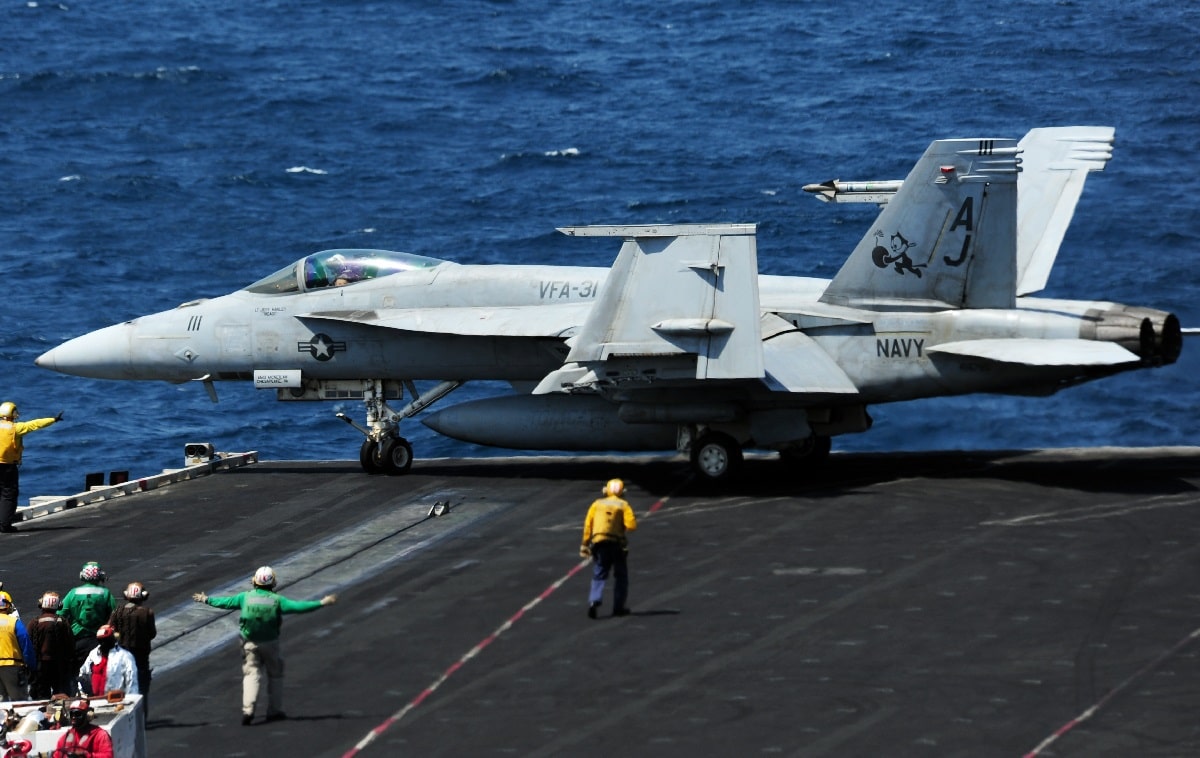
ARABIAN GULF (Sept. 11, 2014) Sailors direct an F/A-18E Super Hornet attached to the Tomcatters of Strike Fighter Squadron (VFA) 31 on the flight deck of the aircraft carrier USS George H.W. Bush (CVN 77). George H.W. Bush is supporting maritime security operations and theater security cooperation efforts in the U.S. 5th Fleet area of responsibility. (U.S. Navy photo by Mass Communication Specialist 3rd Class Joshua Card/Released).
Both carriers had not yet completed standard Composite Training Unit Exercise (COMPTUEX), which is seen as a sign that the Navy is prepared to adjust training timelines or defer them when operational demands are urgent. Navy officials have emphasized that they are continuing to maintain a “layered maritime posture across global commands” as their first-order priority.
At present the Gerald R. Ford CSG remains under U.S. Southern Command in Miami, while the Iwo Jima Amphibious Ready Group will reconstitute in the Caribbean after a Mayport port call.
At the same time, the George Washington CSG is still in a forward-deployed status in Yokosuka, Japan, and is under U.S. Indo-Pacific Command.
U.S. military planners have also made it known the ships on station are not the final word on combat assets in the Middle East. The United States has on hand substantial air, land, and maritime strike capabilities that are within, or at least in range of, CENTCOM’s area of responsibility. These include strategic bombers, forward-based fighter wings, guided-missile submarines, and armed drones.
About the Author: Reuben F. Johnson
Reuben F. Johnson has thirty-six years of experience analyzing and reporting on foreign weapons systems, defense technologies, and international arms export policy. Johnson is the Director of Research at the Casimir Pulaski Foundation. He is also a survivor of the Russian invasion of Ukraine in February 2022. He worked for years in the American defense industry as a foreign technology analyst and later as a consultant for the U.S. Department of Defense, the Departments of the Navy and Air Force, and the governments of the United Kingdom and Australia. In 2022-2023, he won two awards in a row for his defense reporting. He holds a bachelor’s degree from DePauw University and a master’s degree from Miami University in Ohio, specializing in Soviet and Russian studies. He lives in Warsaw.
NOTE: This piece has been updated with more information and sourcing.