
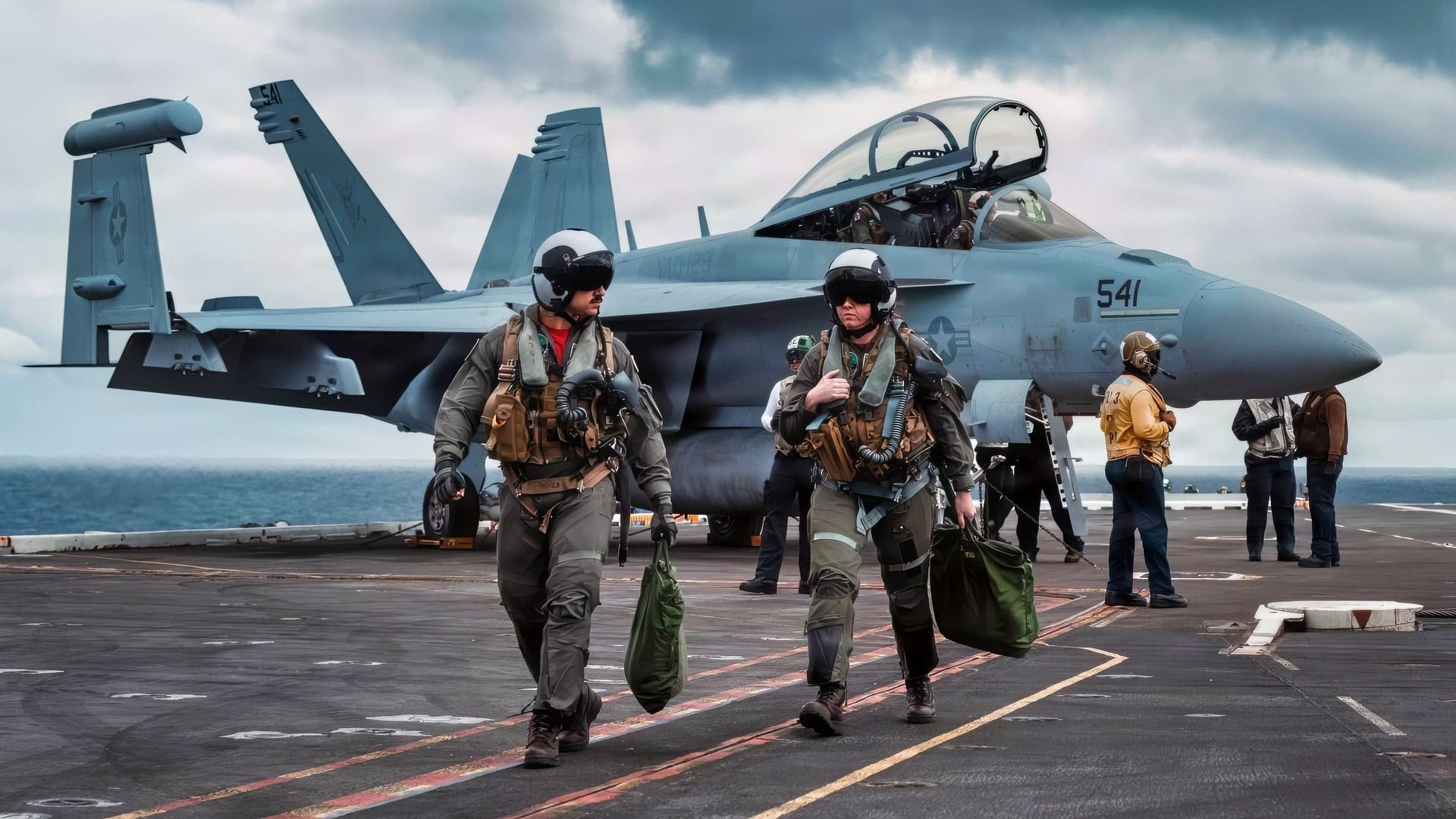
UPDATE 1/29/2026: A few days back, we reported that the Nimitz-class aircraft carrier, Theodore Roosevelt, was headed out to sea on deployment, based on various reports that had been made on the subject.
However, with that reporting now updated to show that was not the case, we have updated this story to reflect that. We apologize for any confusion.
In fact, the U.S. Navy was kind enough to reach out to explain in a statement late last night that: “USS Theodore Roosevelt (CVN 71) was underway in the U.S. 3rd Fleet area of operations conducting Fleet Replacement Squadron Carrier Qualifications.
The statement continues, noting that: “[T]his resulted in the qualification of nearly 50 naval aviators, which maintains fleet readiness and the Navy’s warfighting edge. Additionally, the ship conducted crew-served and small-arms qualifications to maintain crew proficiency. Continuous training and conducting operations at sea gives our Sailors the confidence they need to excel at their jobs and become masters within their specialties.”
Theodore Roosevelt Returns to Sea…Briefly
The Theodore Roosevelt is a Nimitz-class aircraft carrier, a class of large, nuclear-powered warships designed to serve as mobile airbases capable of launching and recovering fighter jets, surveillance aircraft, and support helicopters anywhere in the world without requiring any agreements with host nations.
After completing a demanding 9-month deployment that ended in October 2024, in which it operated across the U.S. 3rd Fleet (Pacific), U.S. 5th Fleet (Middle East), and U.S. 7th Fleet (Indo-Pacific) areas of responsibility, Theodore Roosevelt returned to its San Diego homeport for an extended maintenance and training cycle.
The scope of that 2023–2024 deployment, which lasted 278 consecutive days at sea, far exceeded the traditional six-month typical carrier tour. And that pattern is becoming increasingly common today due to competing global demands.
Despite the United States having more carriers than the navies of China, Britain, India, France, Italy, and Spain combined, only a portion are typically deployed at once.
Why Longer Deployments Are Not Ideal – Or Common
Historically, U.S. carrier deployments have lasted about six months – a length of time that allowed for regular crew rest, maintenance, and training cycles.
Over the past decade, however, carriers have stayed at sea longer due to simultaneous demands in the Indo-Pacific, the Middle East, and other global hotspots. The Theodore Roosevelt’s nearly nine-month deployment in 2023-2024 is just the latest example of this.
Extended deployments, which are typically the result of operational necessity, place strain on many aspects. First, they put pressure on crews who spend more time away from home. It also delays scheduled maintenance, which, in turn, can extend the time ships spend in port under repair and overhaul, thereby creating a bottleneck that reduces the number of carriers ready for rapid deployment.
That’s worrying because this cycle cascades into long-term readiness, potentially diminishing the fleet’s ability to surge forces in response to a sudden crisis without affecting other theaters.
About the Author: Jack Buckby
Jack Buckby is a British researcher and analyst specialising in defence and national security, based in New York. His work focuses on military capability, procurement, and strategic competition, producing and editing analysis for policy and defence audiences. He brings extensive editorial experience, with a career output spanning over 1,000 articles at 19FortyFive and National Security Journal, and has previously authored books and papers on extremism and deradicalisation.