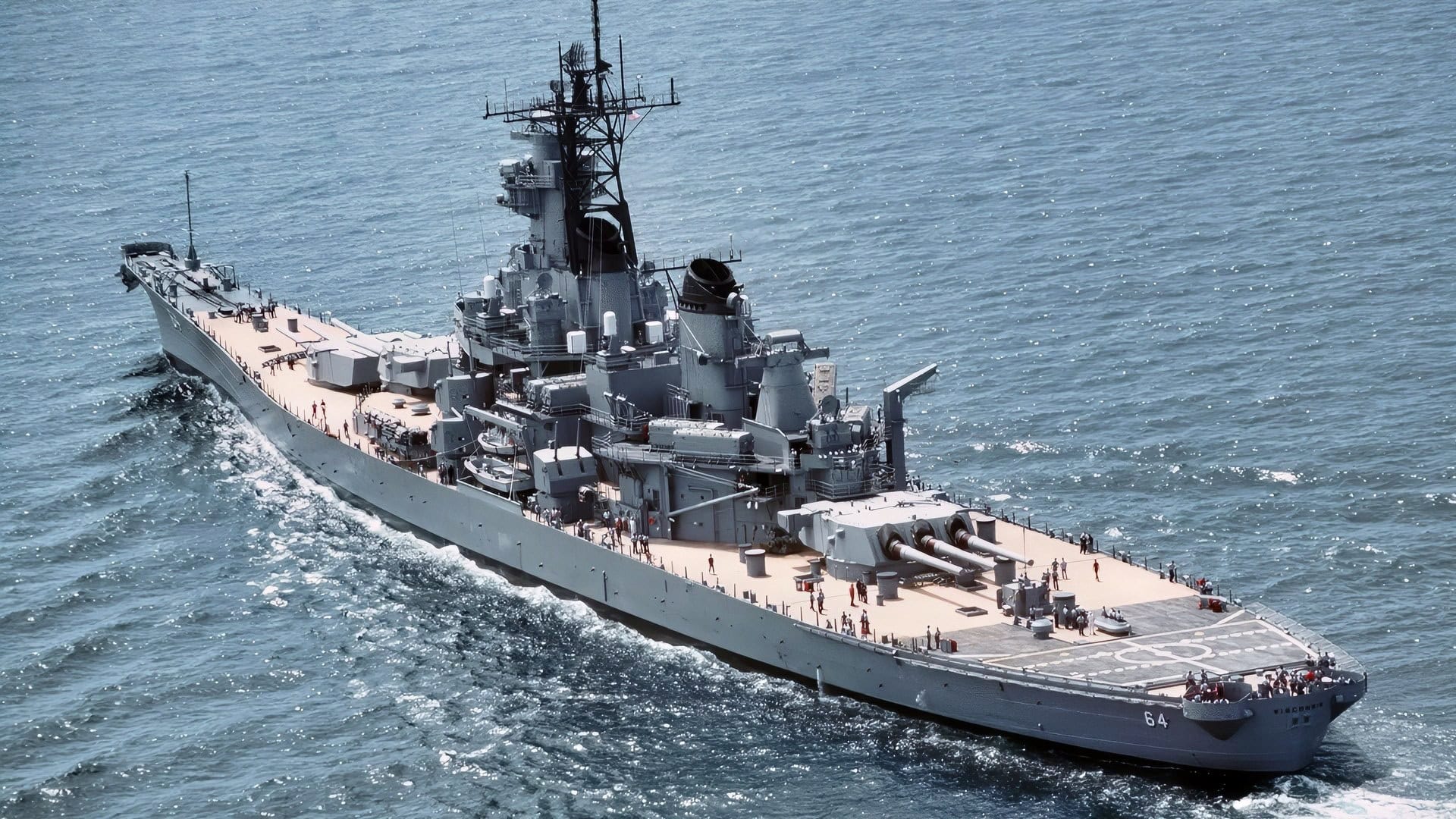
Synopsis: The proposed Trump-class warship, informally dubbed USS Defiant, is framed as a 35,000-ton “battleship,” but the argument here is that it’s closer to a battlecruiser—large, conspicuous, and strategically mismatched to modern naval warfare trends favoring distributed, networked forces.
-The central critique is survivability: China’s anti-access/area-denial architecture across the First Island Chain could saturate any ship’s defenses with massed missiles, hypersonic weapons, and drones, making a large surface combatant an easier target.
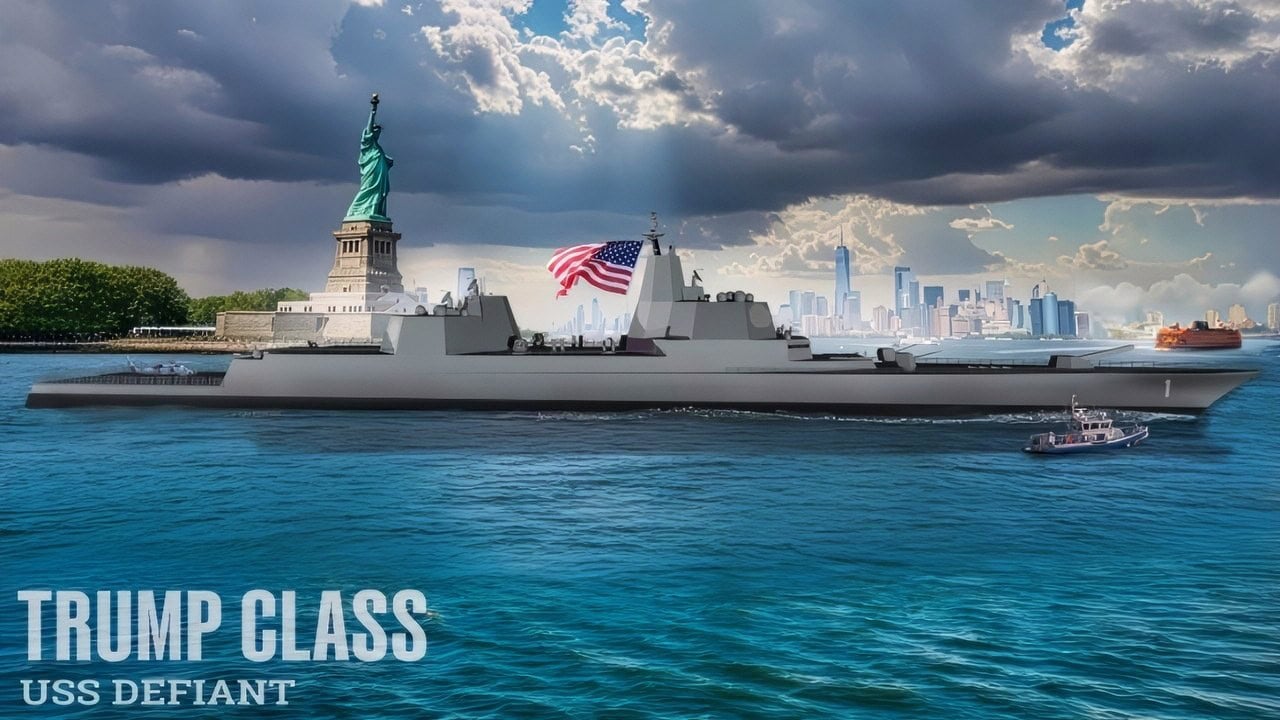
Trump-Class Battleship. Image Credit: Creative Commons/White House.
-The program is an industrial and budgetary wrong turn that diverts scarce shipyard capacity from submarines, unmanned systems, hypersonics, and directed-energy defenses.
The Trump-Class Battleship Mistake
President Donald J. Trump shocked audiences when he recently announced that the United States Navy was to redirect its already strained industrial resources into building a 35,000-ton monstrosity that has been dubbed the Trump-class battleship.
It’s Not a Battleship
To be clear, the proposed system is not a battleship. It is more akin to a battlecruiser, like the Russian Navy’s Kirov-class battlecruiser Admiral Nakhimov.
There is some question as to whether America’s ailing naval shipyards can actually build this leviathan, as the Trump administration expects.
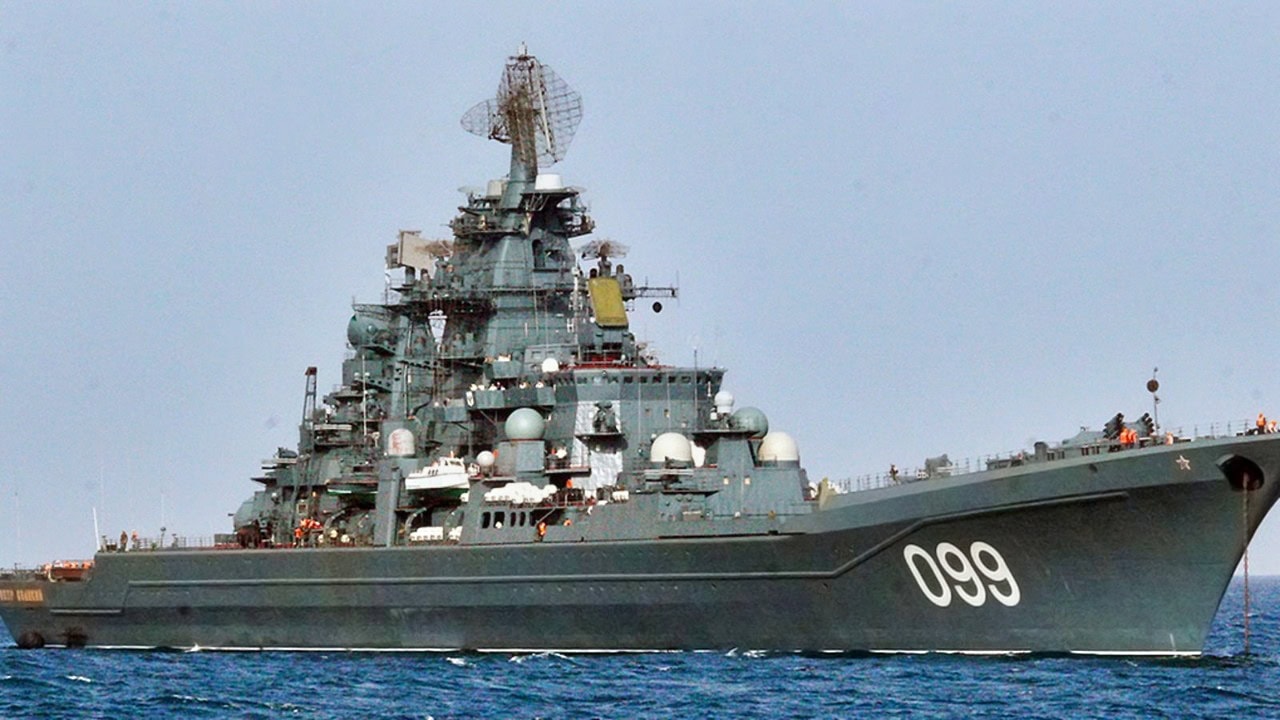
Kirov-Class Battlecruiser Russian Navy. Image Credit: Creative Commons.
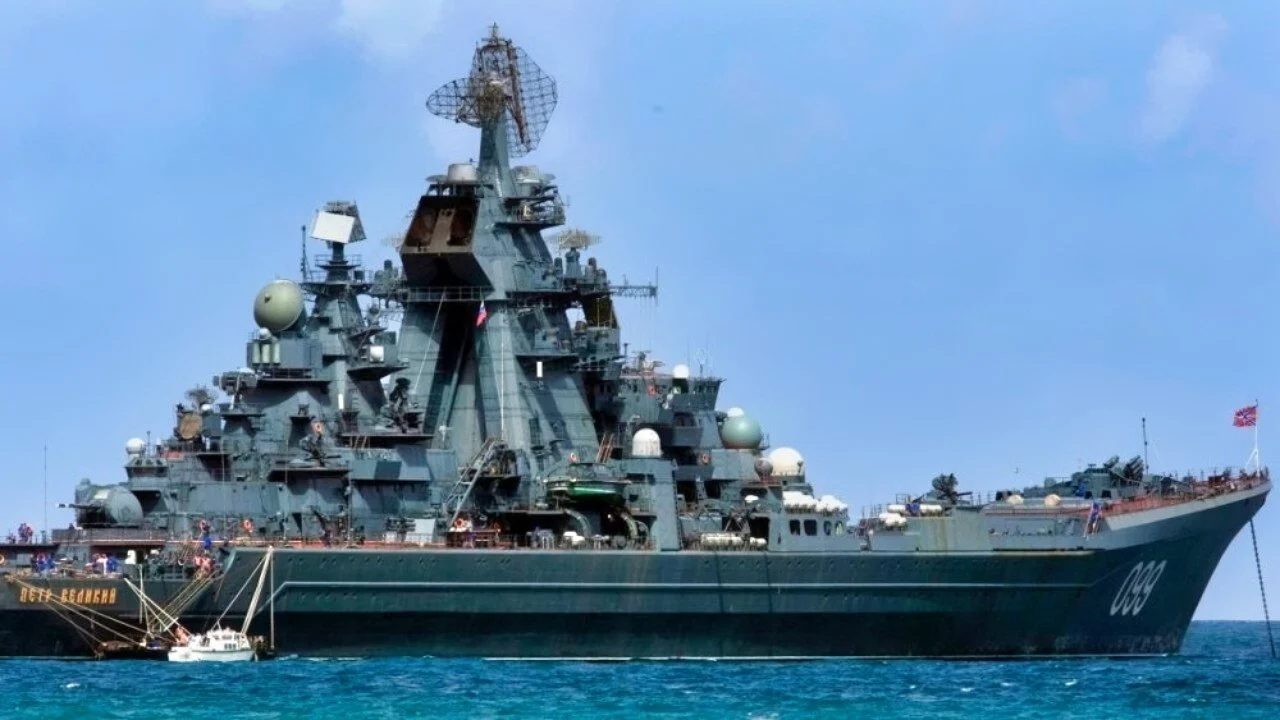
Kirov-Class Battlecruiser. Creative Commons Image.
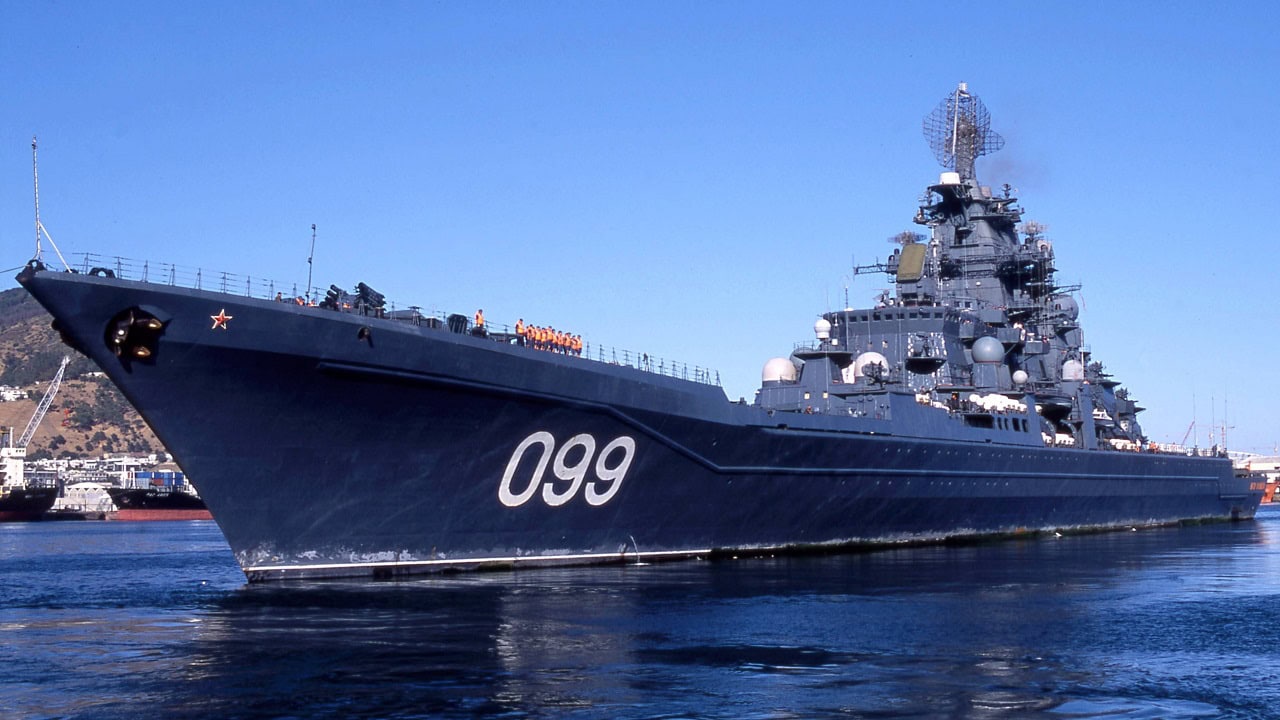
Russian Navy Kirov-Class Battlecruiser. Image Credit: Creative Commons.
Setting that aside, let’s just assume for a moment that the Trump-class “battleship,” named USS Defiant, goes as planned. Just what, precisely, will the mission of this massive warship be?
After all, the trend in modern combat has been to make systems that are smaller, nimbler, decentralized, and networked. In other words, the exact opposite of what the Trump-class represents.
Russia’s Kirov-class Temptation
Some observers of this Trump-class battlecruiser point to the president’s contrarian nature.
Yes, Trump, throughout his business career, was known to run against prevailing trends.
Then again, Trump was also infamous for making truly irresponsible decisions. Need I remind you all about the Taj Mahal Casino? That, too, was Trump’s “bigger, better, best” mentality coming to the fore.
That mentality is likely informed by the fact that the Russians possess the Kirov-class. Trump has a weird infatuation with Putin, and he wants to constantly outdo the Russian leader. Alas, the United States Navy cannot rely on their domestic shipyards to produce warships of increasing scale.
Moreover, Russian naval doctrine is fundamentally different from current US naval doctrine. That is why the US Navy has (mistakenly) placed the aircraft carrier at the center of their surface power projection, whereas the Russians are placing the Admiral Nakhimov at the center of theirs.
China’s A2/AD Wall: The Real Killer of Big Surface Combatants
As for the Trump-class battlecruiser’s utility, it is important for the reader to understand that the single greatest threat to the US Navy’s surface fleet comes from the repeatedly mentioned, though clearly little understood, anti-access/area-denial (A2/AD) capabilities of America’s growing list of rivals.
Namely, the People’s Republic of China. In the South China Sea, across from the Taiwan Strait, and all the way into the East China Sea, the Chinese military has developed a sweeping, overwhelming network of missiles, hypersonic weapons, and drones that can effectively hit any US Navy warship getting within range of these A2/AD systems.
Arrayed in key areas of what’s known as the First Island Chain, the region stretching from the Kamchatka Peninsula down through Taiwan and down to the Philippines, China’s A2/AD capability could conceivably form a protective shield around any Chinese areas of interest.
Say, an invasion of Taiwan was underway, and the US Navy deployed its Trump-class battlecruiser to deter that invasion.
With those A2/AD systems in place, China could create a protective bubble of missiles, hypersonic weapons, and drones that would overwhelm whatever defenses the Trump-class employed and could sink that battlecruiser as easily as the Japanese sank the HMS Prince of Wales in 1942.
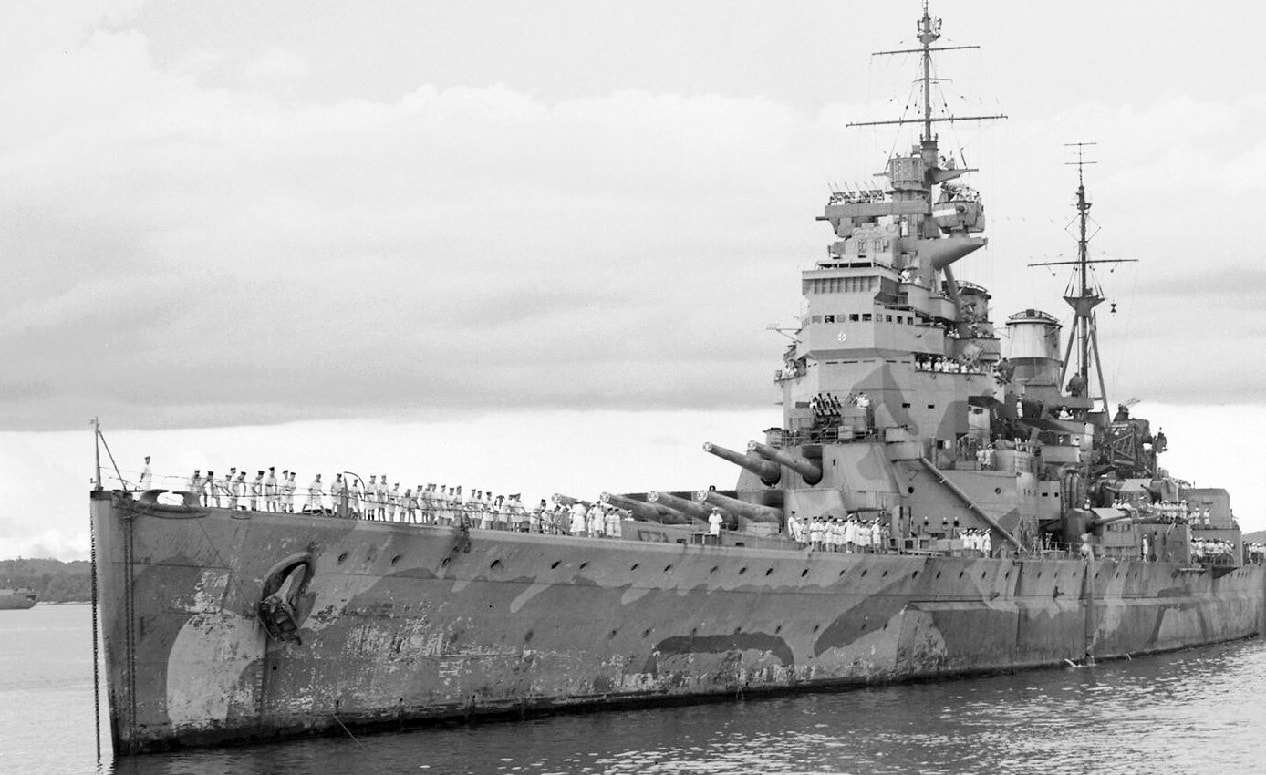
Image of Battleship HMS Prince of Wales. Image Credit: Royal Navy.
The whole point of A2/AD is to fire overwhelming salvos of missiles and hypersonic weapons to saturate the onboard defenses of American warships. Once saturated, at least some of those Chinese A2/AD weapons would penetrate the defensive barriers employed by American warships and either damage or destroy them. What’s more, the larger the warship, the bigger its radar return, and the easier it is for Chinese weapons to range that big target.
Heavily Armed, Lightly Survivable
Yes, the Trump administration has outlined a warship that will be heavily armed. Not only does the Trump administration seek to equip the proposed battlecruiser with an abundance of conventional weapons, but it also envisions making the warship a platform for emerging technologies, such as hypersonic and directed-energy weapons (DEWs).
All this sounds amazing. But it doesn’t matter. Onboard defensive systems can only do so much in the face of sophisticated saturation attacks.
So, the Trump-class is a bizarre wrong turn in a naval development strategy that is already sinking. It will only exacerbate problems within the defense industrial base and further strain an already strained budget.
Further, it will do nothing to address the massive overmatch that the Chinese People’s Liberation Army Navy (PLAN) now enjoys in the First Island Chain when it comes to squaring off against the US Navy there.
The Clock is Ticking in the Indo-Pacific
What the Pentagon should be focused on is breaking those bottlenecks in the US naval shipyards and prioritizing the construction of submarines, unmanned undersea vehicles (UUVs), hypersonic weapons, and DEWs.
Building the Bismarck may stroke Trump’s already inflated ego. It does little to address the very serious problems facing the US Navy’s surface warfare fleet today.
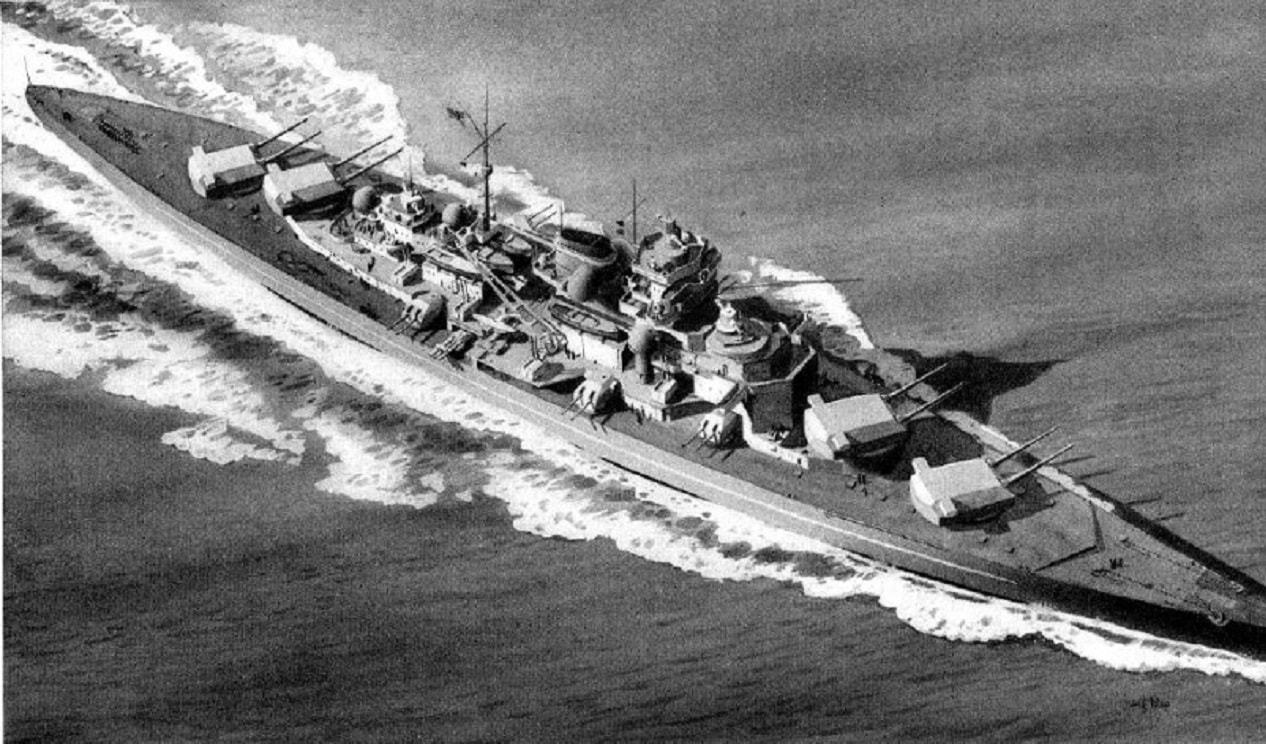
A recognition drawing of Tirpitz prepared by the US Navy.
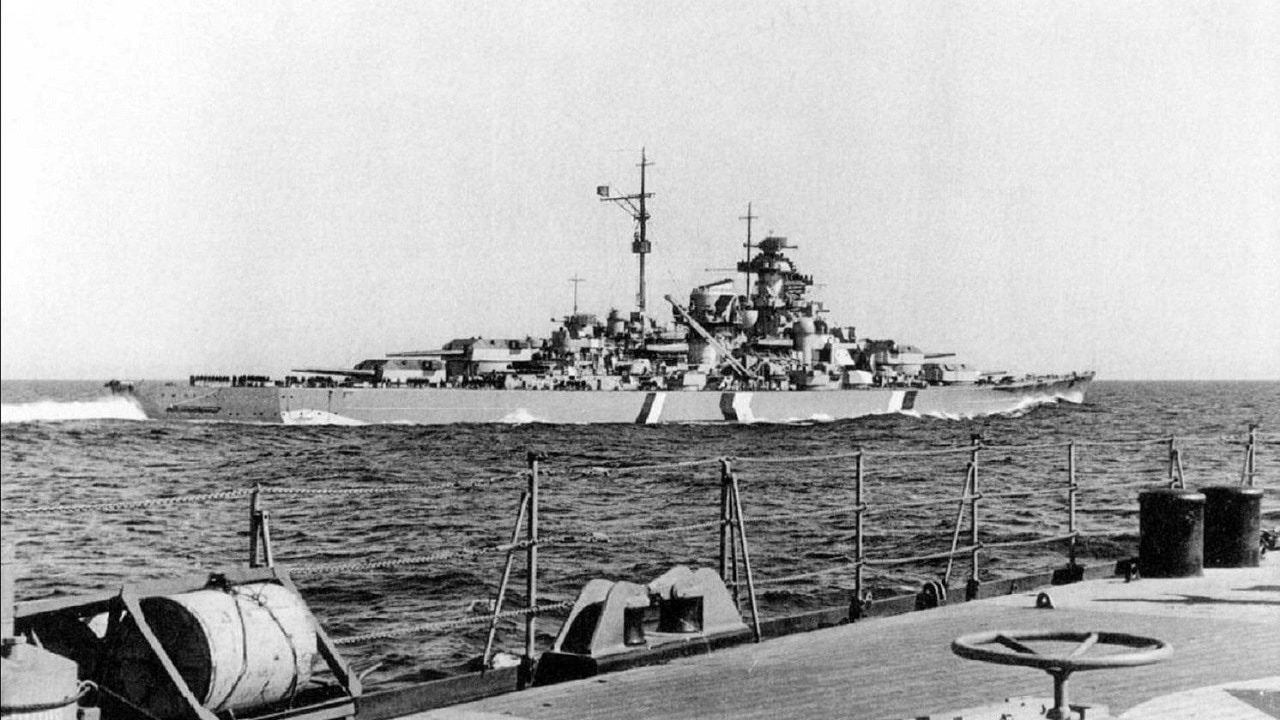
Battleship Bismarck. Image Credit: Creative Commons.
Moreover, the US is running out of time to address these problems before China can fully project dominance in the Indo-Pacific. Once that day comes, there will be no restoring US dominance there, not without a major war (that the Americans are likely to lose at sea because of those A2/AD networks).
About the Author: Brandon J. Weichert
Brandon J. Weichert is the New Senior National Security Editor at 19FortyFive.com. He was previously the Senior National Security Editor at The National Interest. Weichert is the host of The National Security Hour on iHeartRadio, where he discusses national security policy every Wednesday at 8pm Eastern. He hosts a companion show on Rumble entitled “National Security Talk.” Weichert consults regularly with various government institutions and private organizations on geopolitical issues. His writings have appeared in numerous publications, among them Popular Mechanics, National Review, MSN, and The American Spectator. And his books include Winning Space: How America Remains a Superpower, Biohacked: China’s Race to Control Life, and The Shadow War: Iran’s Quest for Supremacy. Weichert’s newest book, A Disaster of Our Own Making: How the West Lost Ukraine, is available for purchase wherever books are sold. He can be followed via Twitter/X @WeTheBrandon.