
Key Points and Summary – Professor Alexander Motyl argues that modern attempts by great powers like the U.S., China, and Russia to establish 19th-century-style spheres of influence are doomed to fail.
-Unlike the era of colonial expansion, today’s world consists of functioning states with modern militaries and populations fiercely dedicated to national self-determination, as demonstrated by Ukrainian resistance.
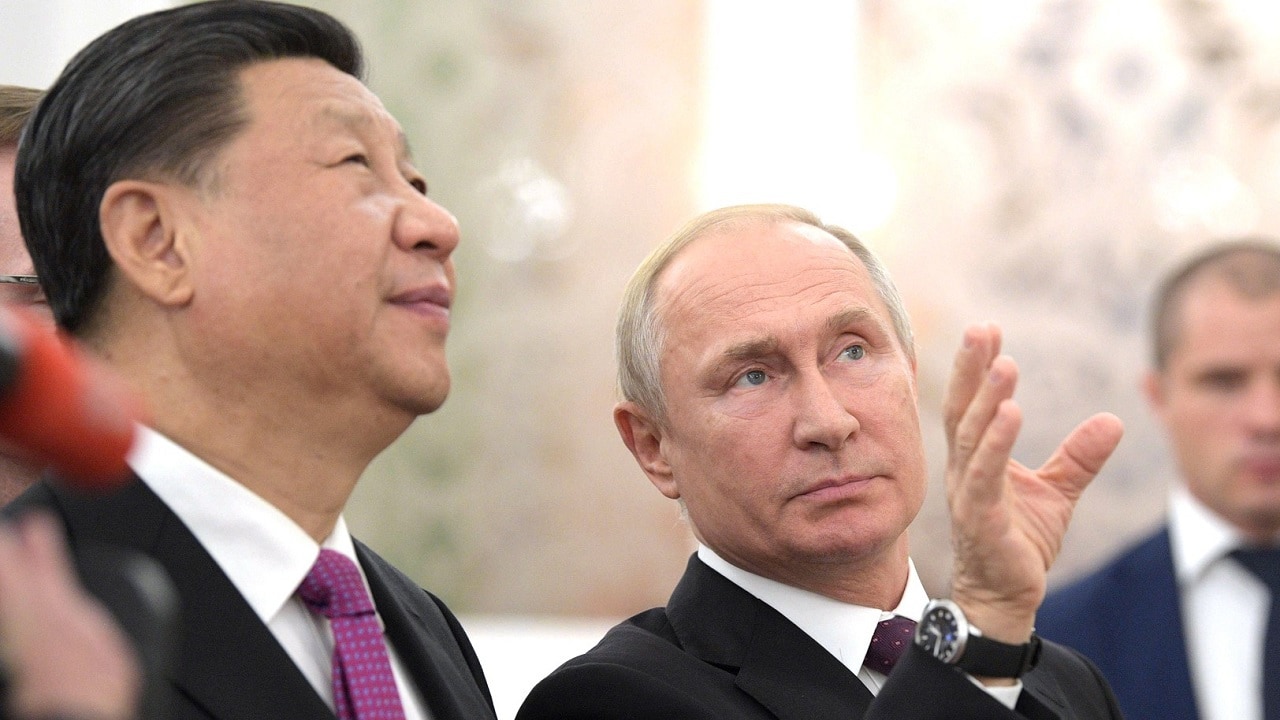
Xi Jinping and Russian President Putin.
-Motyl contends that the economic costs of imperialism, the lack of coercive capacity to hold territory, and the inevitable overlap of “backyards” will lead not to orderly dominance, but to global chaos, instability, and endless warfare that will ultimately backfire on the instigators.
Why the ‘Sphere of Influence’ Strategy Is Destined to Create Global Chaos
Donald Trump may want to create an American sphere of influence, and China and Russia may be happy to follow in his footsteps, but try as they might, they’ll fail.
And for a simple reason: the 21st century is not the 19th. What was possible and relatively easy 200 years ago—imperial expansion, occupation, and exploitation of colonial resources—has become significantly harder today.
Now, unlike then, the world is divided into, for the most part, functioning states with militaries and police forces. Most 18th- and 19th-century European expansion involved confronting traditional societies lacking formal armies and modern equipment. Russia captured Siberia in 100 years. The United States required even less time to seize the territories defined by “manifest destiny.” The Europeans divided Africa, the Middle East, and much of Asia in under a century.
In all these cases, modern states and armies easily defeated non-modern ones. The situation today is markedly different. The countries in America’s, China’s, and Russia’s backyards are no pushovers. The United States received its comeuppance in Iraq: taking Colombia, Venezuela, Cuba, Mexico, and Greenland won’t be a cakewalk.
Russia is learning its lesson in Ukraine and, having suffered staggering losses in personnel and equipment, may be physically incapable of expanding into countries larger than Estonia and Latvia. China may learn its lesson in Taiwan.
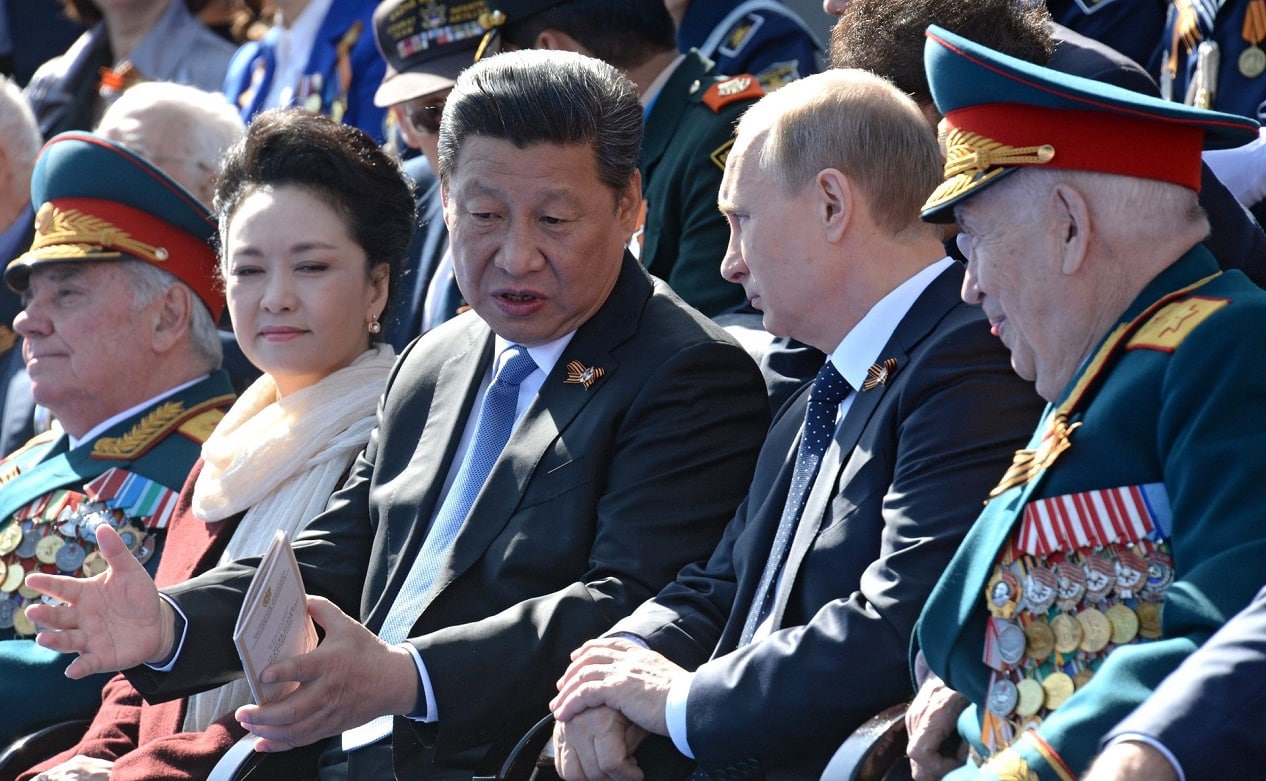
Chinese President Xi Jinping with the first lady during the Moscow Victory Day Parade on 9 May 2015.
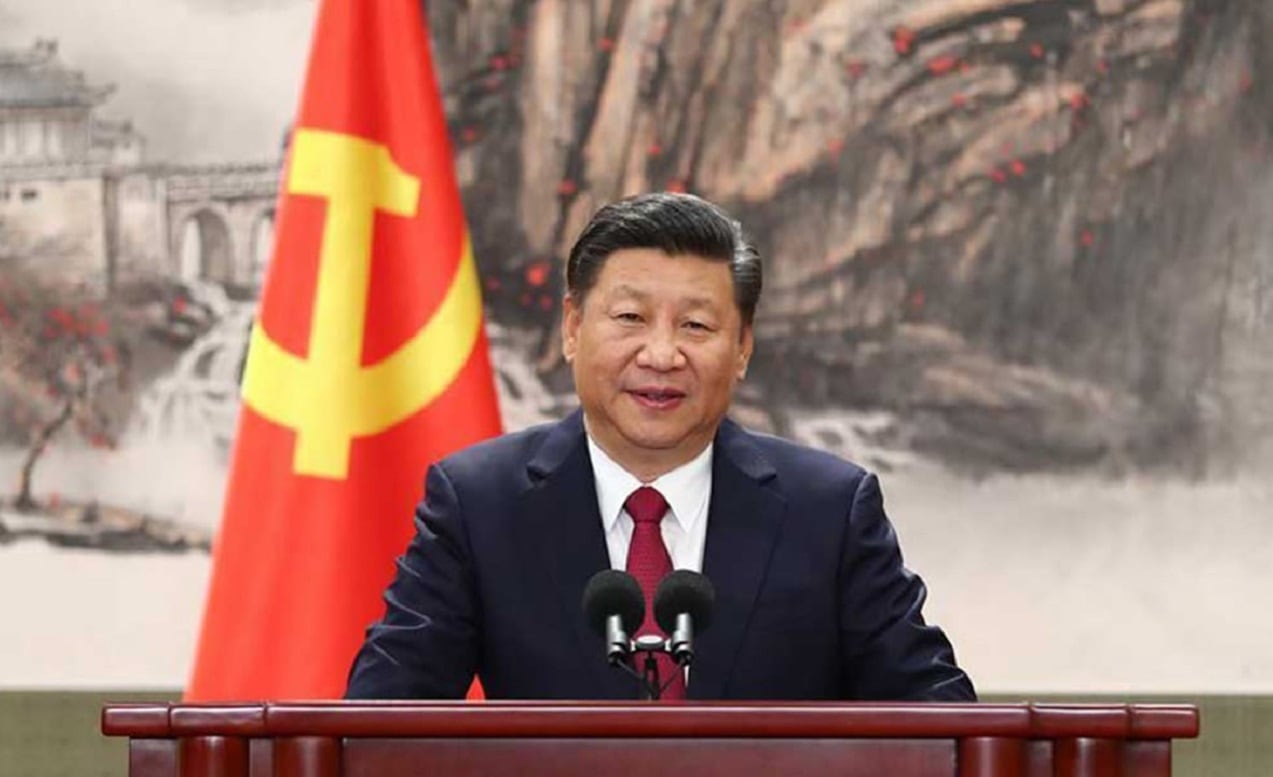
Chinese President Xi Jinping. Image Credit: CCP.
No less critical, contemporary populations believe they are nations with rights to self-determination and are willing to die in defense of their unique nations and independent states. The age of nationalism has defined global identities since at least the French Revolution.
Imperial expansion will immediately run into the willingness of people everywhere to fight for their right to exist as independent political entities with independent identities.
The Ukrainians are a case in point. Widely expected to fold in early 2022 in the aftermath of Russia’s full-scale invasion, Ukrainians proved willing to make enormous sacrifices for their identity and independence—so much so that they are currently on the verge of defeating a far larger country, Russia.
Does anyone doubt that Estonians, Latvians, Lithuanians, Finns, Poles, and many others will resist Russian incursions tooth and nail? Or that the Taiwanese, Japanese, and South Koreans will resist China, just as Latin and Central Americans will resist American hegemony?
Great powers, meanwhile, lack the coercive capacity and economic wherewithal to impose their will wherever they desire: one can’t build an empire by rattling or using nuclear weapons. More importantly, few if any modern states would be willing to follow in the footsteps of historical empires.
The Romans defeated their rivals in building their empire. But it took them centuries of incessant warfare and the wholesale exploitation of a slave economy to do the trick. Rather more apposite is Wilhelmine Germany’s attempt to catch up with the other European imperialists. The Germans established a few colonies but also induced the British and Russians to turn against them, with disastrous results in World War I.
And then there’s the economic cost of imperialism. The Romans willingly paid the price of expansion because their culture glorified war and heroism, while their subsistence economy could produce a surplus only through conquest. In contrast, imperial expansion is unlikely to be borne gladly by modern populations concerned with consumer comfort.
Will Americans support “forever wars” just because they happen to be in their backyard? Even Russians, who have tacitly approved of their war against Ukraine, appear to have grown tired and want some form of peace. Chinese may be happy to spill their own blood for the sake of capturing Taiwan, but would their enthusiasm remain as large if Beijing decided to “run” the Philippines or Indonesia?
Finally, there’s the question of backyards. Where does one begin and another end? The British and the French encountered this problem in Africa. In whose backyard does Greenland belong—America’s, Russia’s, or China’s? No less critical, whose backyard counts as a backyard and whose doesn’t? Strictly speaking, just about every country has a backyard inhabited by its pacific or belligerent neighbors. With so many big and small backyards in play, the result will likely be chaos, not order.
Having pushed the international order to the brink of collapse, Trump has invited real and putative great powers to assert themselves in their spheres of influence. But the result is unlikely to be cleanly defined backyards. Instead, the great powers will provoke resistance among backyard peoples. The backyard project will fail, as instability and warfare spread and eventually even turn on its imperially minded instigators.
About the Author: Dr. Alexander Motyl, Rutgers University
Dr. Alexander Motyl is a professor of political science at Rutgers-Newark. A specialist on Ukraine, Russia, and the USSR, and on nationalism, revolutions, empires, and theory, he is the author of 10 books of nonfiction, including Pidsumky imperii (2009); Puti imperii (2004); Imperial Ends: The Decay, Collapse, and Revival of Empires (2001); Revolutions, Nations, Empires: Conceptual Limits and Theoretical Possibilities (1999); Dilemmas of Independence: Ukraine after Totalitarianism (1993); and The Turn to the Right: The Ideological Origins and Development of Ukrainian Nationalism, 1919–1929 (1980); the editor of 15 volumes, including The Encyclopedia of Nationalism (2000) and The Holodomor Reader (2012); and a contributor of dozens of articles to academic and policy journals, newspaper op-ed pages, and magazines. He also has a weekly blog, “Ukraine’s Orange Blues.”