
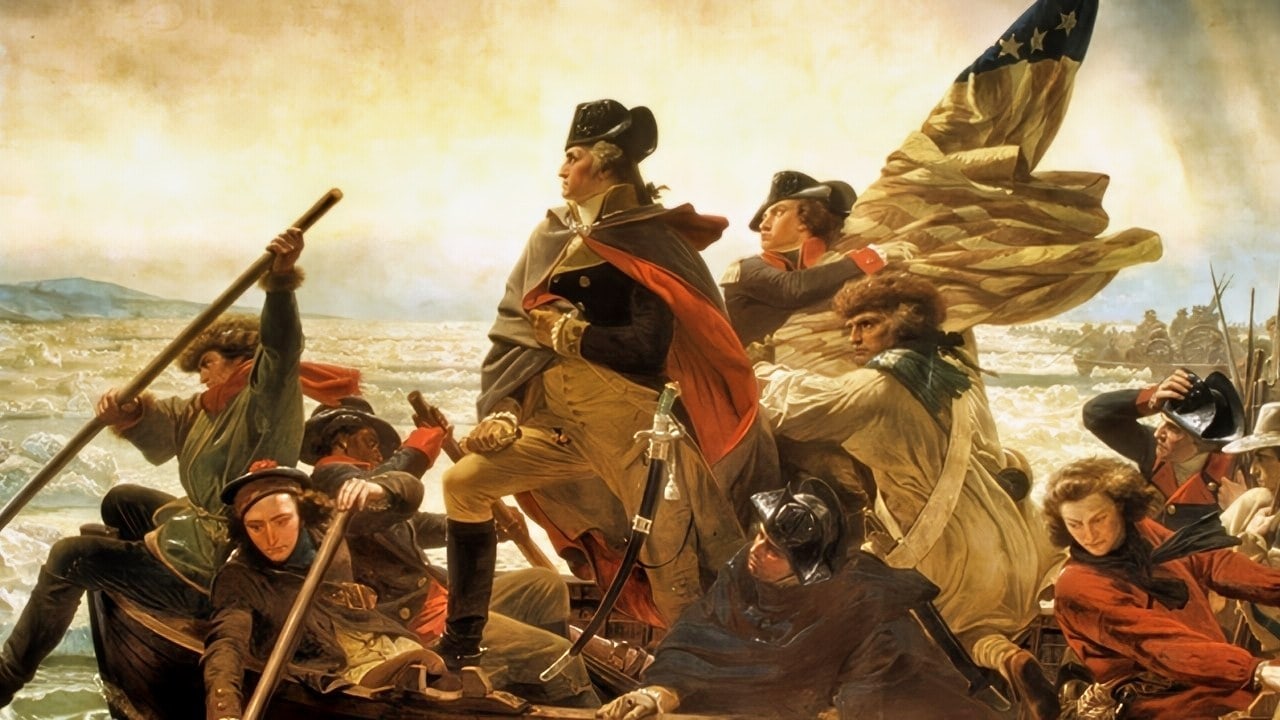
Quote of the Day Presidents Day Weekend Reminder: Washington’s First War Came Before His First Presidency
Summary and Key Points: George Washington’s warning that readiness preserves peace frames a Presidents Day weekend look at the man before Mount Vernon and the Revolution.
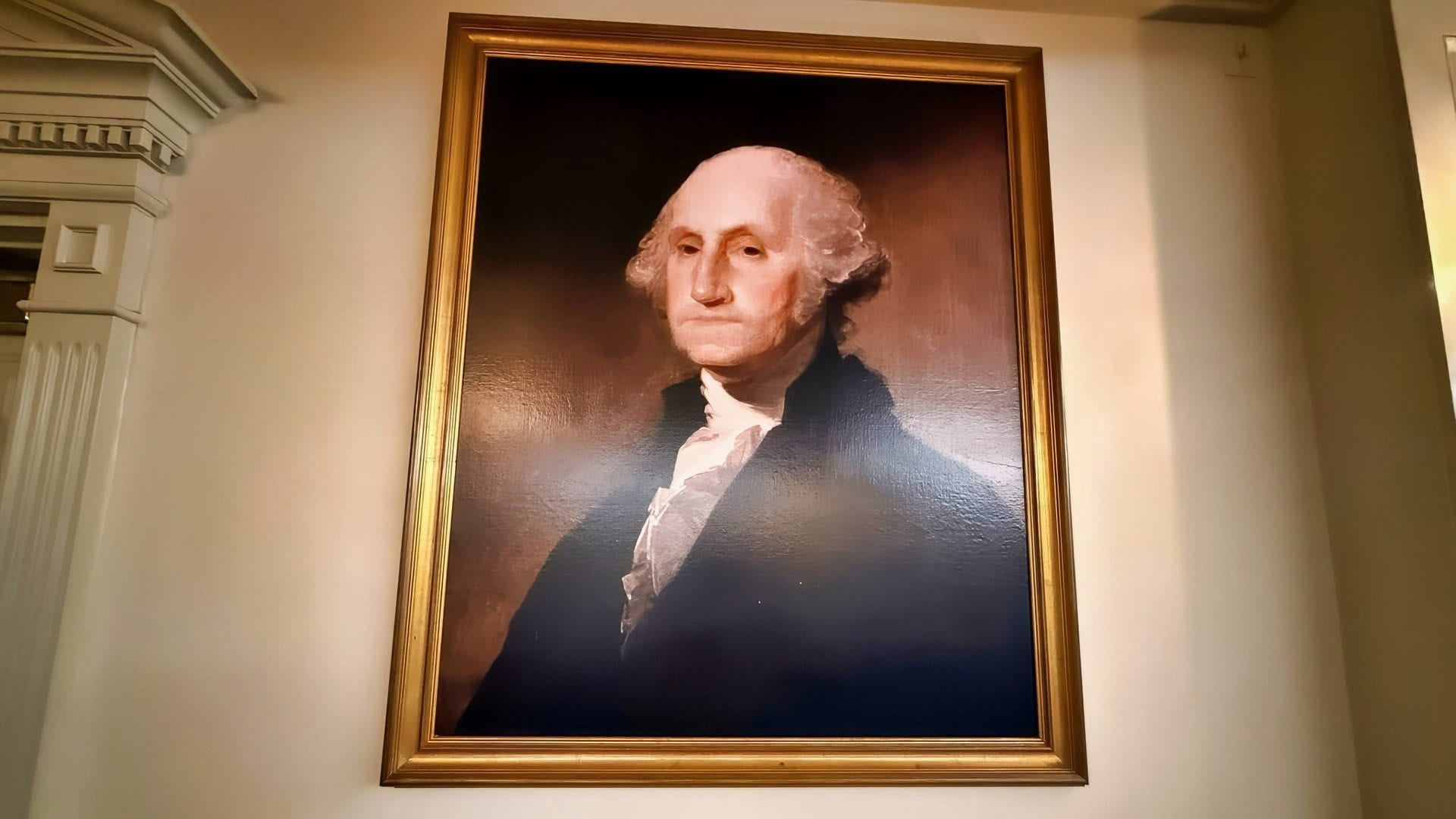
George Washington At Hall of Presidents at Walt Disney World. Image Taken by Harry J. Kazianis for 19FortyFive.com
-Born in Virginia, he lost his father at 11 and leaned on half-brother Lawrence, who shaped his early ambitions.
-At 22, Washington rose quickly in the Virginia militia after an appointment by Lt. Gov. Robert Dinwiddie.
-He fired the opening shot at Jumonville Glen, helping ignite the French and Indian War, then learned hard lessons alongside Gen. Braddock’s doomed campaign.
-By war’s end, Washington’s reputation grew—and so did his life beyond battle, marrying Martha Dandridge Custis in 1759.
Presidents Day Weekend Reminder Quote of the Day: George Washington’s First War Came Before His First Presidency
“ To be prepared for war is one of the most effectual means of preserving peace…” – Quote by George Washington
George Washington uttered this quote during his first Annual Address to both Houses of Congress on January 8, 1790.
It calls to mind the famous Latin saying “Si Vis Pacem, Para Bellum (If you want peace, prepare for war),” which also happens to be the source of the 9mm Parabellum pistol cartridge’s name.
As I type these words, it is the Saturday of Presidents Day Weekend 2026, which, in a general sense, is a day that pays tribute to all U.S. Presidents, but in a more specific sense focuses on the birthdays of George Washington (February 22, 1732), and Abraham Lincoln (February 12, 1809).
In addition to being February babies, both Washington and Lincoln have Nimitz-class supercarriers named in their honor. (There was also the nuclear-powered ballistic missile submarine USS George Washington [SSBN-598]).
Neither of them actually served in the U.S. Navy, though. Abe Lincoln had a brief, lackluster stint as a militia captain in the Black Hawk War of 1832, while George Washington, of course, had a much more prestigious military career as commanding general of the Continental Army during the American Revolution.
“The journey of a thousand miles begins with a single step,” as the saying goes. Before Washington became the successful senior leader of the Continental Army fighting against the British Crown, he was a young officer fighting for the British Crown during the French and Indian War.
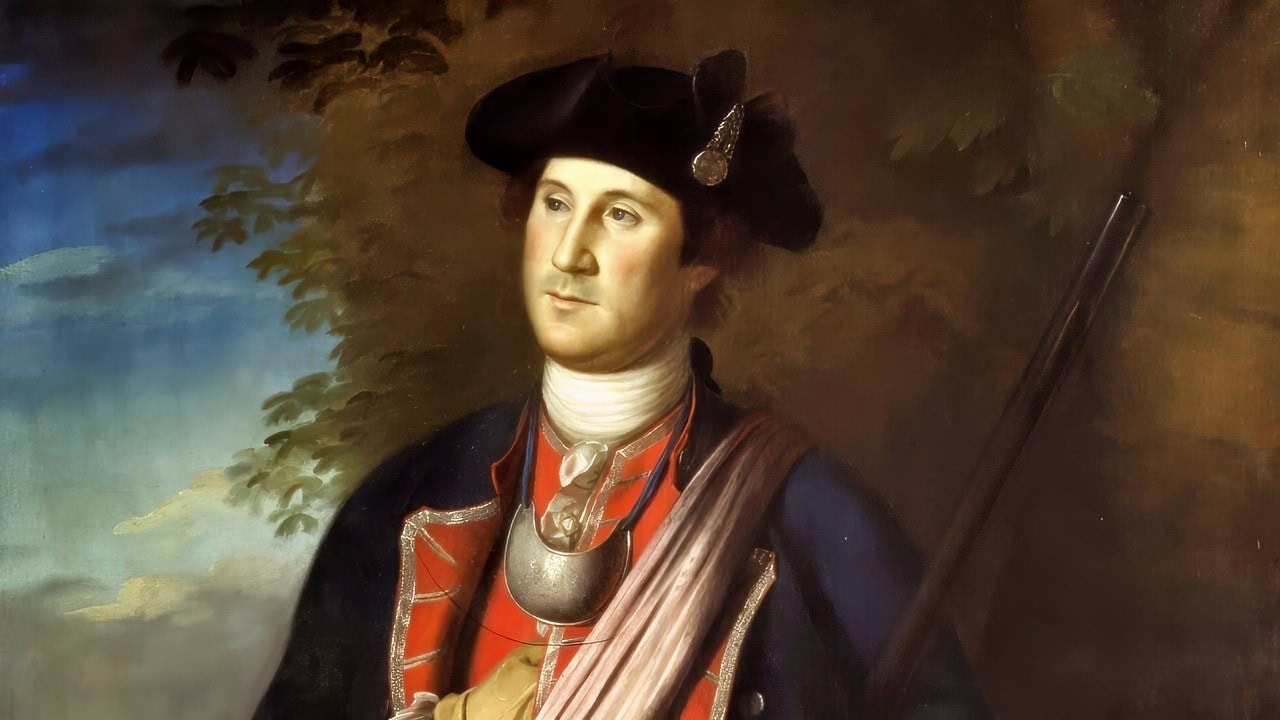
General George Washington Portrait. Image Credit: Creative Commons.
George Washington’s Birth and Toddlerhood
Washington was born at Popes Creek in Westmoreland County, Virginia.
He only lived there until the age of three. His family moved to Little Hunting Creek in 1735 before settling at Ferry Farm near Fredericksburg. George was the first of six children of Augustine and Mary Ball Washington. Augustine (with whom little George did not have a close relationship) was a justice of the peace and a prominent public figure who had four additional children from his first marriage, to Jane Butler.
Adieu Augustine, Long(er) Live Lawrence’s Legacy!
Augustine died when George was only 11 years of age, leaving the preteen lad to inherit Ferry Farm, while George’s half-brother Lawrence Washington (born in 1718)—with whom he did have a close relationship—inherited Little Hunting Creek, renaming it Mount Vernon.
Lawrence made sure his kid brother was taken care of. Among other gentlemanly pursuits, Lawrence trained his familial protégé in the fine arts of swordsmanship early on, as we see in the opening scene of the 1984 biographical CBS-TV miniseries simply titled “George Washington.”
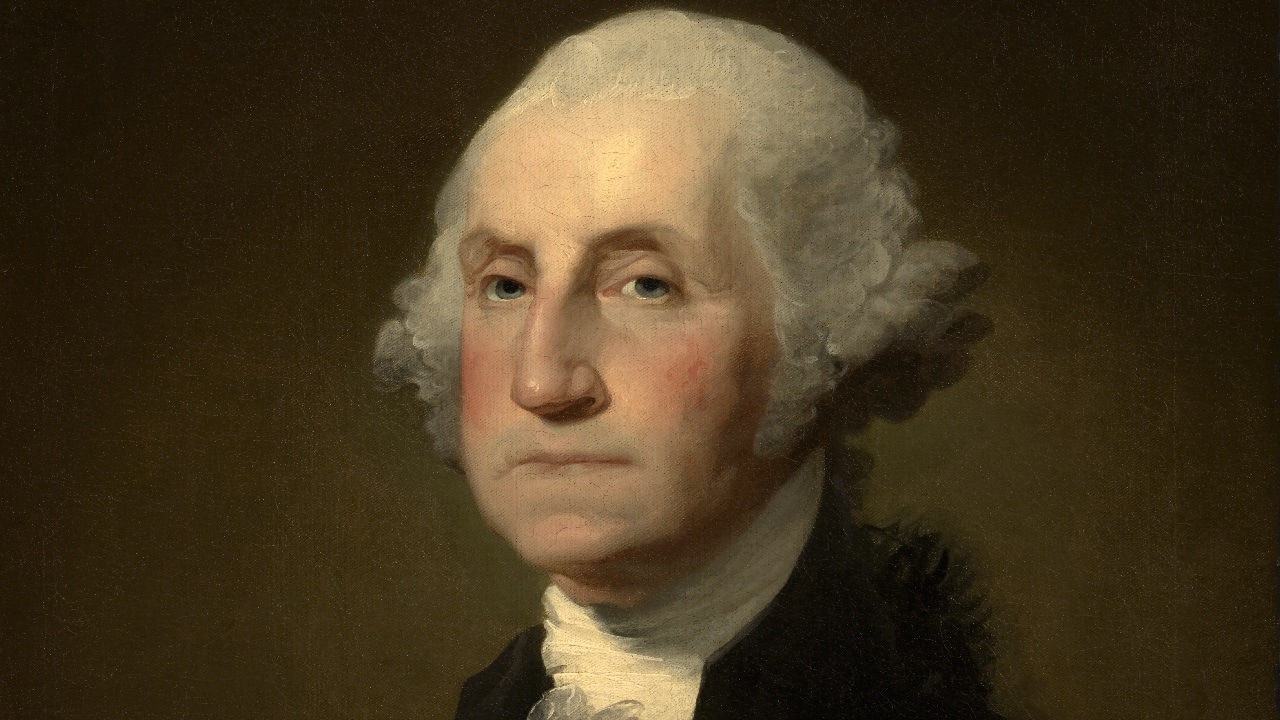
George Washington. Image Credit: Creative Commons.
Sadly, Lawrence Washington died of tuberculosis in 1752 at the age of 34, when George was only 20 years old.
Prelude to Prestige: George Washington’s Military Career Begins
When Virginia’s lieutenant governor, Robert Dinwiddie, appointed the ambitious young man as a major and commander of one of the four militia districts, the stage was set for George Washington’s military meteoric career rise .
The French and Indian War officially lasted from May 28, 1754, to October 7, 1763, and is considered by many historians to be the North American component of the global Seven Years’ War. No less than Winston Churchill went so far as to call it “the first world war.”
Washington’s experience as a soldier in the French and Indian War is summed up concisely in two sources. First is the American Battlefield Trust, from whom we learn that he basically started the war himself(!):“Then on May 28, 1754, a young British American colonist, George Washington, fired the first shot of the French and Indian War at the Battle of Jumonville Glen. This battle ignited an all-out war in the frontier that eventually spread back to Europe and around the world. . . . Colonel George Washington fought in a famous provincial unit: the Virginia Regiment. The condescending attitude of the British Army toward the provincials fueled resentment and eventually contributed to the American Revolution a few years later.”
Colonel Washington was merely 22 years old when he attained that promotion. To put that in perspective, nowadays that’s the average age of a newly commissioned Second Lieutenant in the U.S. Army who didn’t do prior service in the enlisted ranks.
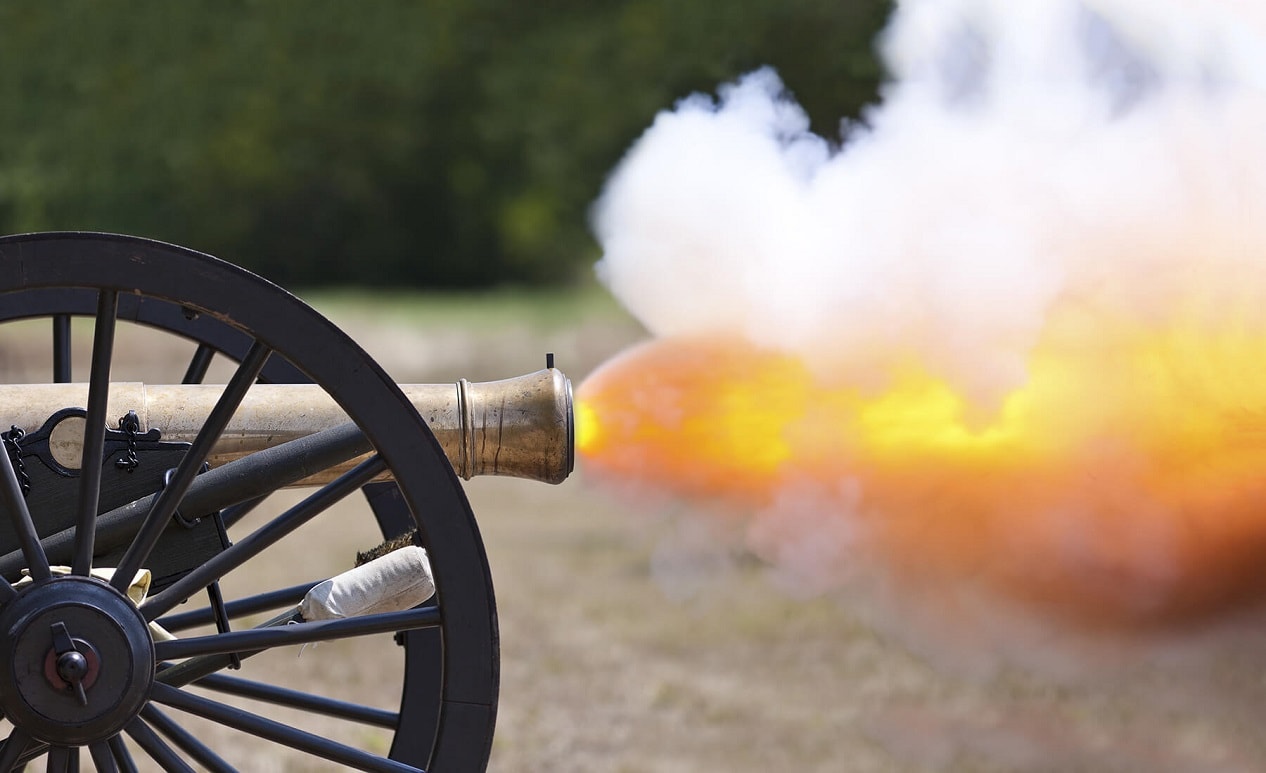
Cannon Firing. Image Credit: Creative Commons.
Meanwhile, Forrest McDonald of The Imaginative Conservative gives us these nuggets: “‘I heard the bullets whistle,’ he wrote to a younger brother, ‘and, believe me, there is something charming in the sound.’ He made mistakes, but in the crucial Battle of the Wilderness, he offered his commanding British general [that being Edward Braddock] advice which, had it been followed, would have saved the day. Instead the British employed conventional tactics—and were slaughtered. Washington emerged as a hero, and was regarded throughout the colonies as a man destined to do great things.”
Despite the initial setbacks in that Battle of the Wilderness (more formally known as the Battle of the Monongahela), the British ended up winning both the French and Indian War and the Seven Years War as a whole (finalized by the Treaty of Paris and Treaty of Hubertusburg, respectively).
And for good measure, George Washington attained a great personal triumph in the midst of the war, marrying his beloved Martha Dandridge Custis Washington on January 6, 1759.
About the Author: Christian D. Orr, Defense Expert
Christian D. Orr is a Senior Defense Editor. He is a former Air Force Security Forces officer, Federal law enforcement officer, and private military contractor (with assignments worked in Iraq, the United Arab Emirates, Kosovo, Japan, Germany, and the Pentagon). Chris holds a B.A. in International Relations from the University of Southern California (USC) and an M.A. in Intelligence Studies (concentration in Terrorism Studies) from American Military University (AMU).