
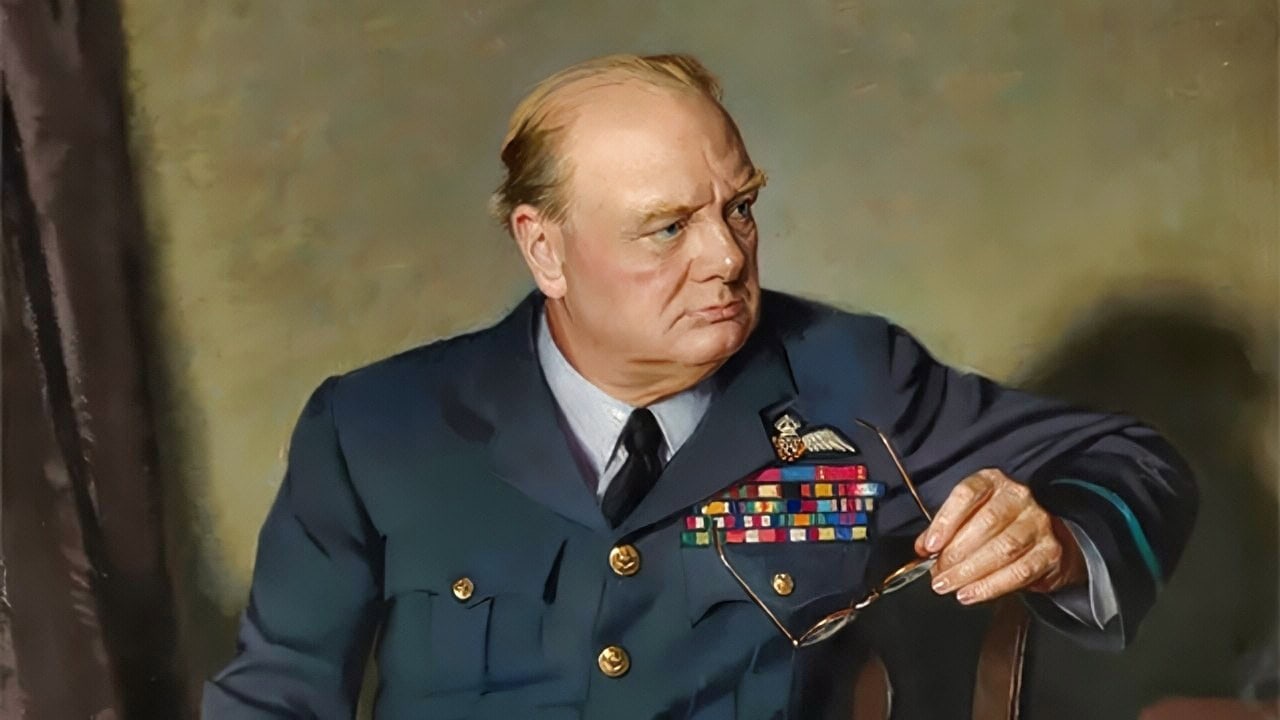
Summary and Key Points: Winston Churchill’s formative years mixed privilege with restlessness: born at Blenheim Palace, trained at Sandhurst, commissioned into the cavalry, and soon chasing combat from Sudan to South Africa, where he became a prisoner of war.
-Elected to Parliament in 1901, he clashed with Conservative orthodoxy and crossed to the Liberals, building a reputation as a driven, contrarian reformer.
-He married Clementine in 1908, then entered World War I as First Lord of the Admiralty—only to be scarred by Gallipoli. Rather than retreat, he returned to uniform and served in the trenches as a major, seeking redemption under fire.
Churchill’s Early Life Summed Up in 1 Thing: He Chased the Fight
“It is a mistake to look too far ahead. Only one link in the chain of destiny can be handled at a time.”—That quote is just one of the many profound quotes belongs to Sir Winston Churchill, whom this writer and history buffs considers to be Great Britain’s all-time greatest political leader (with all due respect to Baroness Margaret Thatcher, King Henry V, and William Pitt ‘The Elder’, 1st Earl of Chatham).
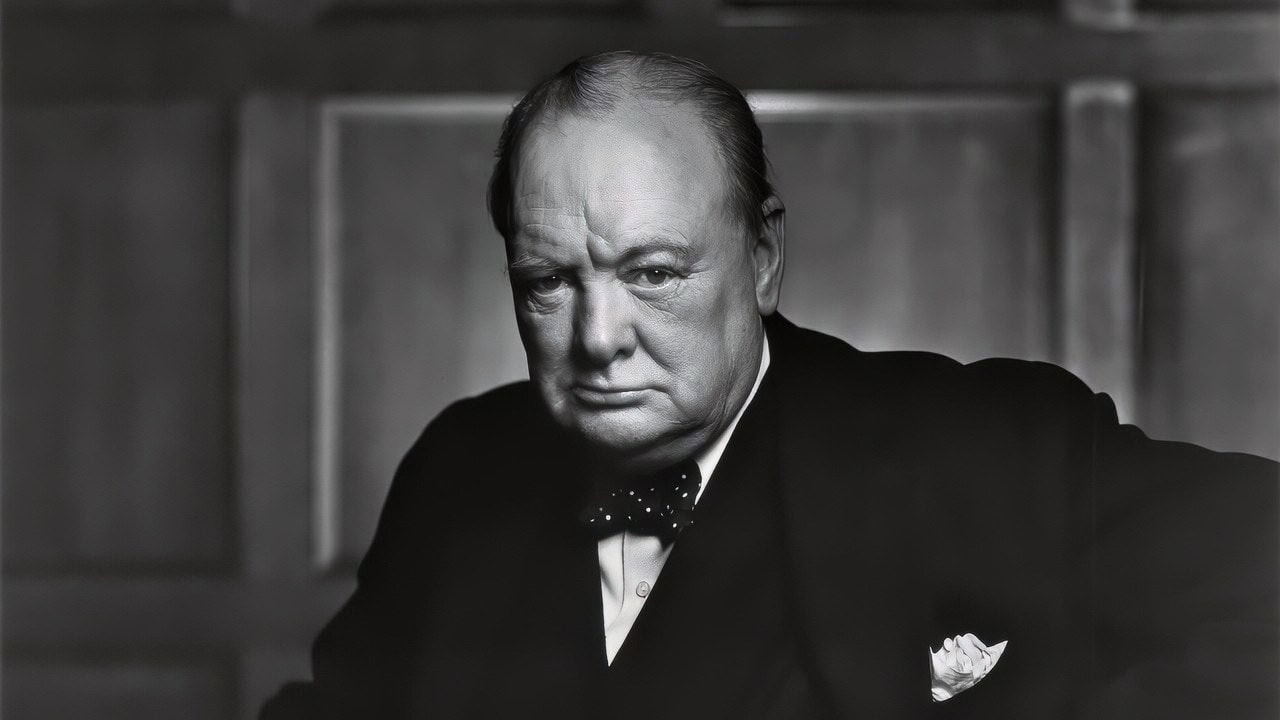
Sir Winston Churchill. Image Credit: Creative Commons.
As a college football fan, I equate that to the philosophy of “One game at a time” as opposed to trying to prognosticate prematurely about the playoffs (I’m sure newly crowned national champion head coach Curt Cignetti would concur with this).
Having previously covered the respective agony and ecstasy (so to speak) of Sir Winston’s career, i.e. his “wilderness years” followed by his epic comeback as UK Prime Minister during World War II, we now look at his formative years, i.e., from his childhood to the First World War.
Childhood and Early Military Career
Winston Leonard Spencer Churchill was born on November 30, 1874 at his family’s ancestral home, Blenheim Palace in Oxfordshire; his father was Lord Randolph Churchill, Member of Parliament (MP) in the Conservative Party (the “Tories”), whilst his mother was Jennie, Lady Randolph Churchill, a daughter of Leonard Jerome (the “King of Wall Street,” a financier and the driving force behind the conception of three major racetracks in the New York City area, one of which—the eponymous Jerome Park—introduced the classic Belmont Stakes).
Lord Randolph wanted his son to prepare for a military career, and accordingly, young Winston gained admission to Royal Military College, Sandhurst, as a cadet in the cavalry, starting in September 1893. Alas, Lord Randolph didn’t live to see his son get commissioned, passing away in January 1895; the following month, Winston was commissioned as a second lieutenant in the 4th Queen’s Own Hussars regiment of the British Army.
“Lef-tenant” Churchill was no shrinking violet, seeking action in war zones whenever and wherever he could, such as: (1) the Battle of Omdurman on September 2, 1898, wherein he used a C96 Broomhandle Mauser (the first military semiautomatic pistol to prove itself both rugged enough and reliable enough for field use) to fight off a charge of Sudanese Dervish cavalry; and (2) the Second Boer War in South Africa, whereupon he became a POW.
MP Churchill (The Next Generation)
‘Twas in February 1901 that Churchill first entered into elected politics, taking his seat as a Conservative MP and thus following in his father’s footsteps. However, he soon found himself butting heads with his fellows Tories over issues such as military funding—he wanted to prioritize the navy over the army (which probably helped him become First Lord of the Admiralty later on)—and international trade (he was pro-free trade whilst many of his Tory colleagues were protectionist; not entirely unlike the pro-tariff vs. anti-tariff factionalism in America’s present day Republican Party).
Hence, in 1904, he jumped ship over to the Liberal Party, where he would spend the next 20 years before finally rejoining the ranks of the Conservatives when he was appointed Chancellor of the Exchequer (a post he held for five years before his wilderness years began).
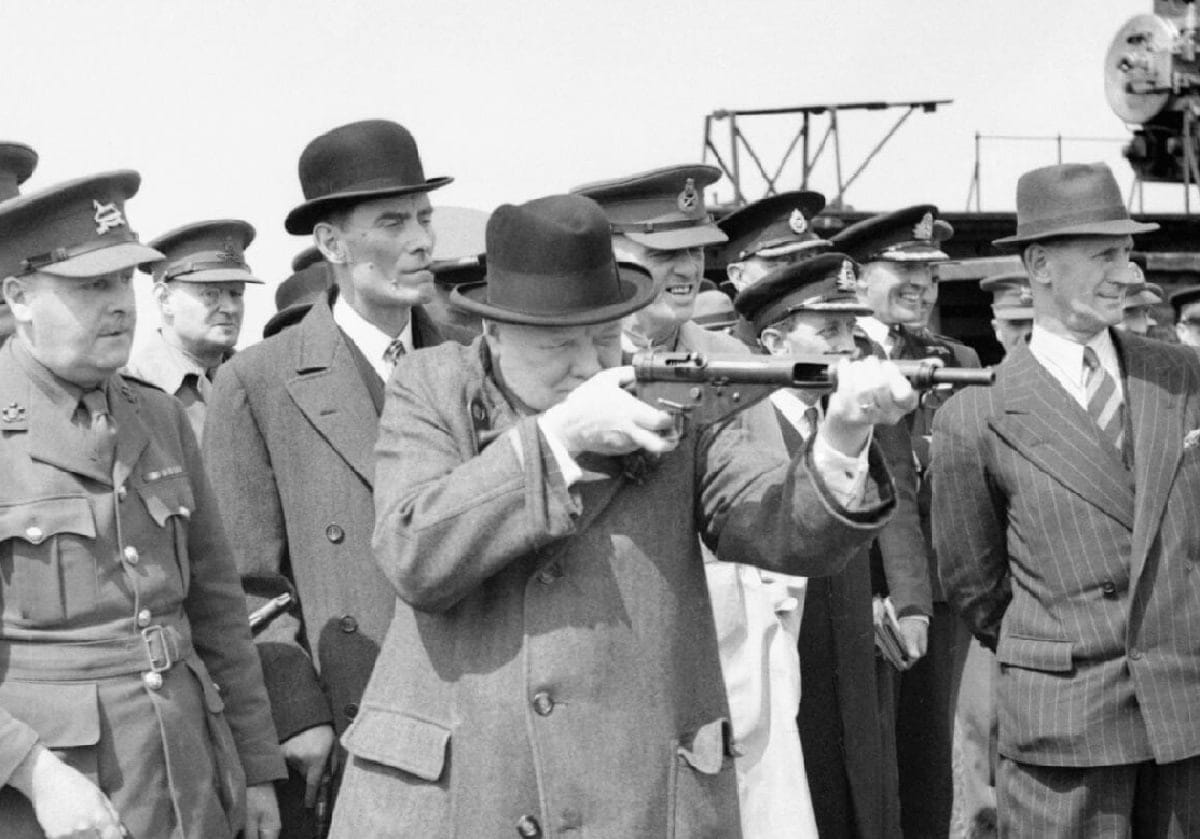
Winston Churchill. Image: Creative Commons.
Marrying Clemmie
On September 12, 1908, Churchill married his beloved Clementine Hozier (who became Clementine Ogilvy Spencer-Churchill, Baroness Spencer-Churchill of Chartwell). Winston affectionately called his wife “Clemmie” and “Cat,” and she returned the favor by nicknaming him “Pug.” They would remain married for 57 years before “Pug’s” death did them party, and they had five children: son Randolph, and daughters Diana, Sarah Tuchet-Jesson (Baroness Audley), Marigold (who sadly died three months shy of her third birthday), and Mary Soames (Baroness Soames).
World War I: From Disgrace at the Dardanelles to Time in the Trenches
Fast-forward to World War I, and by now the Rt. Hon. Winston Churchill was the First Lord of the Admiralty, whereupon he would commit one of his all-time greatest blunders, the disastrous Dardanelles Campaign, which culminated in the horrific Battle of Gallipoli against the Ottoman Turks.
In May 1915, Churchill was sacked from the Admiralty for his failure.
Leadership by example is considered a key leadership virtue, as Commander (USN. Ret.) Richard “Demo Dick” Marcinko, founding C.O. of SEAL Team 6, put it in his Ten Commandments of SpecWar, “I am the War Lord and the wrathful God of Combat, and I will always lead you from the front, not the rear.”
Accordingly, Winston was not content to emulate the “chateau generals.” Instead, he at least partially personally redeemed himself for his galling Gallipoli gaffe by re-donning his military uniform and returning to the front; he did his time in the trenches during the “Great War” with the rank of Major.
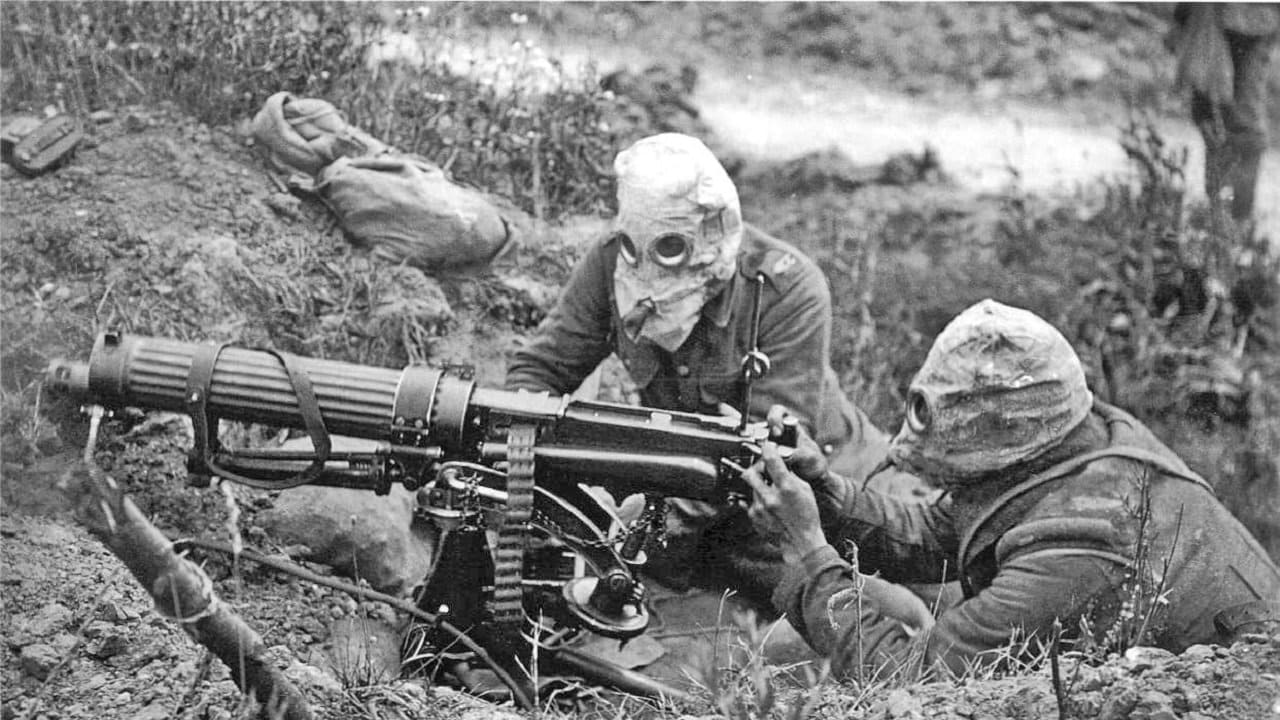
A Maxim Machine Gun Being Used in World War I.
As an interesting sidebar on sidearms, Churchill once again wielded a famous early semiautomatic pistol. This time it was an iconic American-made sidearm, the ubiquitous Colt M1911 .45 ACP caliber service pistol.
This was a classic example of “RHIP (Rank Has Its Privileges),” as the Colt .45 was not the standard-issue sidearm of the British Expeditionary Force (BEF), but rather it was Webley Mk VI top-break revolver.
Chambered in the .455 Webley cartridge, it offered plenty of stopping power just like the .45 ACP (Automatic Colt Pistol) round, but the revolver didn’t offer the magazine capacity, speed of reloads, and hit potential that the semiauto pistol provided.
About the Author: Christian D. Orr, Defense Expert
Christian D. Orr is a Senior Defense Editor. He is a former Air Force Security Forces officer, Federal law enforcement officer, and private military contractor (with assignments worked in Iraq, the United Arab Emirates, Kosovo, Japan, Germany, and the Pentagon). Chris holds a B.A. in International Relations from the University of Southern California (USC) and an M.A. in Intelligence Studies (concentration in Terrorism Studies) from American Military University (AMU). He is also the author of the newly published book “Five Decades of a Fabulous Firearm: Celebrating the 50th Anniversary of the Beretta 92 Pistol Series.”