
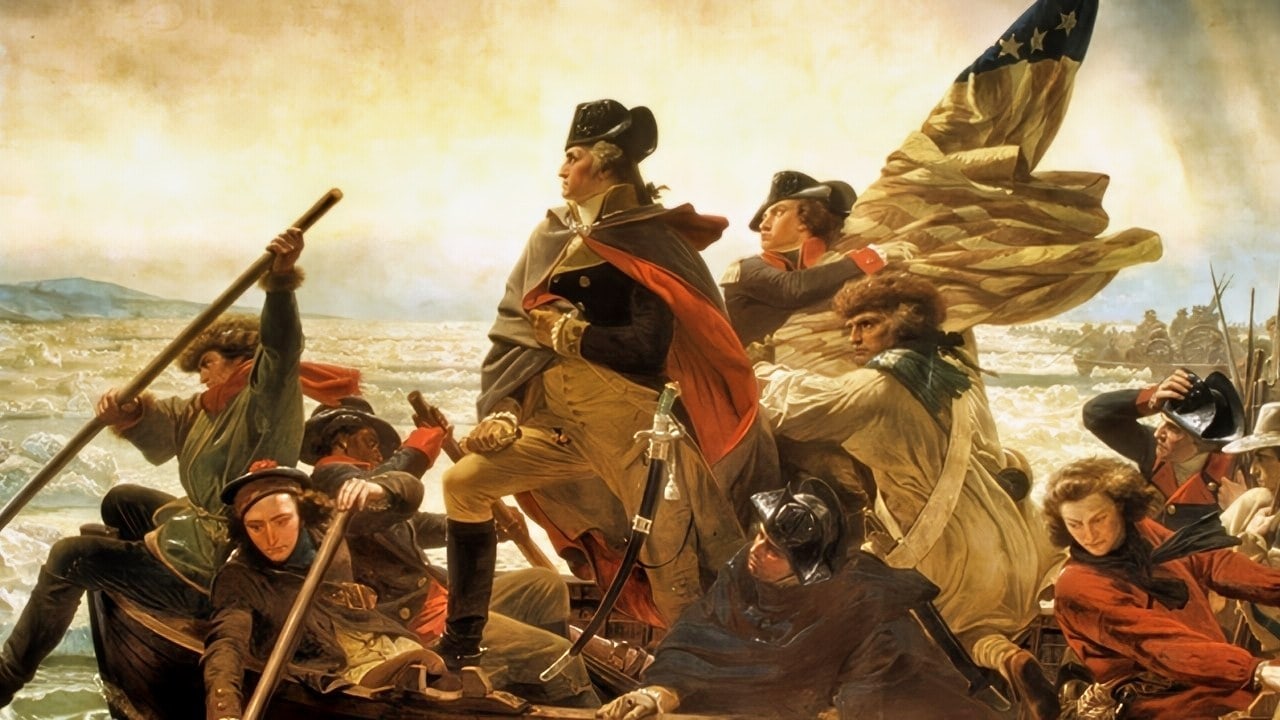
George Washington’s Secret Weapon Was Discipline—And It Started In Childhood
“Discipline is the soul of an army. It makes small numbers formidable; procures success to the weak, and esteem to all.”—This quote is attributed to George Washington.
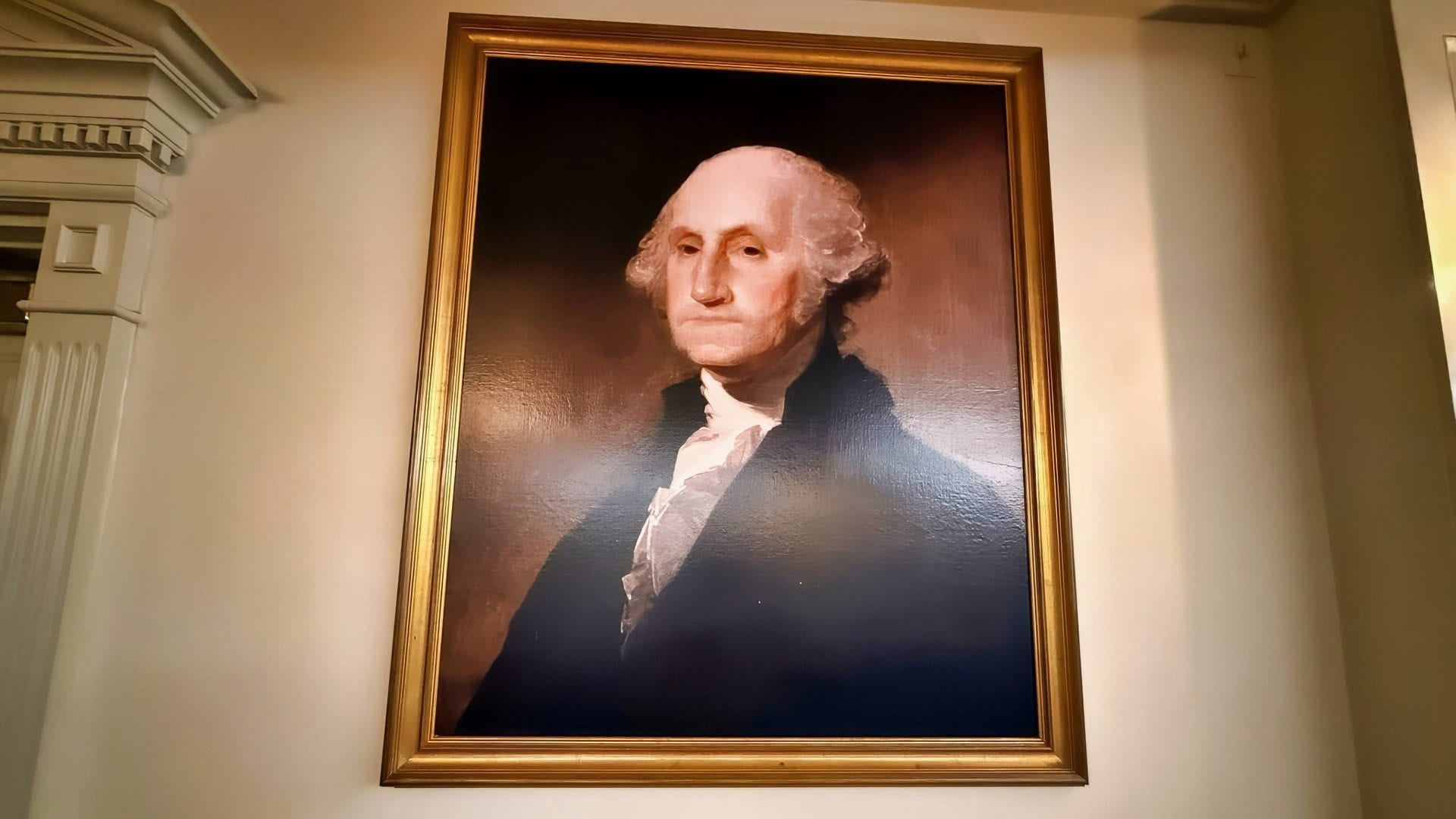
George Washington At Hall of Presidents at Walt Disney World. Image Taken by Harry J. Kazianis for 19FortyFive.com
Washington is rightfully known as not just one of the Founding Fathers of the United States of America but indeed “The*Father Of Our Country” (emphasis added) due to his most famous roles as (1) commanding general of the Continental Army during the American Revolution and (2) first President of the United States (not to mention his face appearing on both the quarter (25 cent) coin and the 1 dollar bill).
But who was George Washington, the younger man, and George Washington the lad, for that matter, and how did discipline shape him during his formative years into the iconic historical figure and “Indispensable Man” we know now?
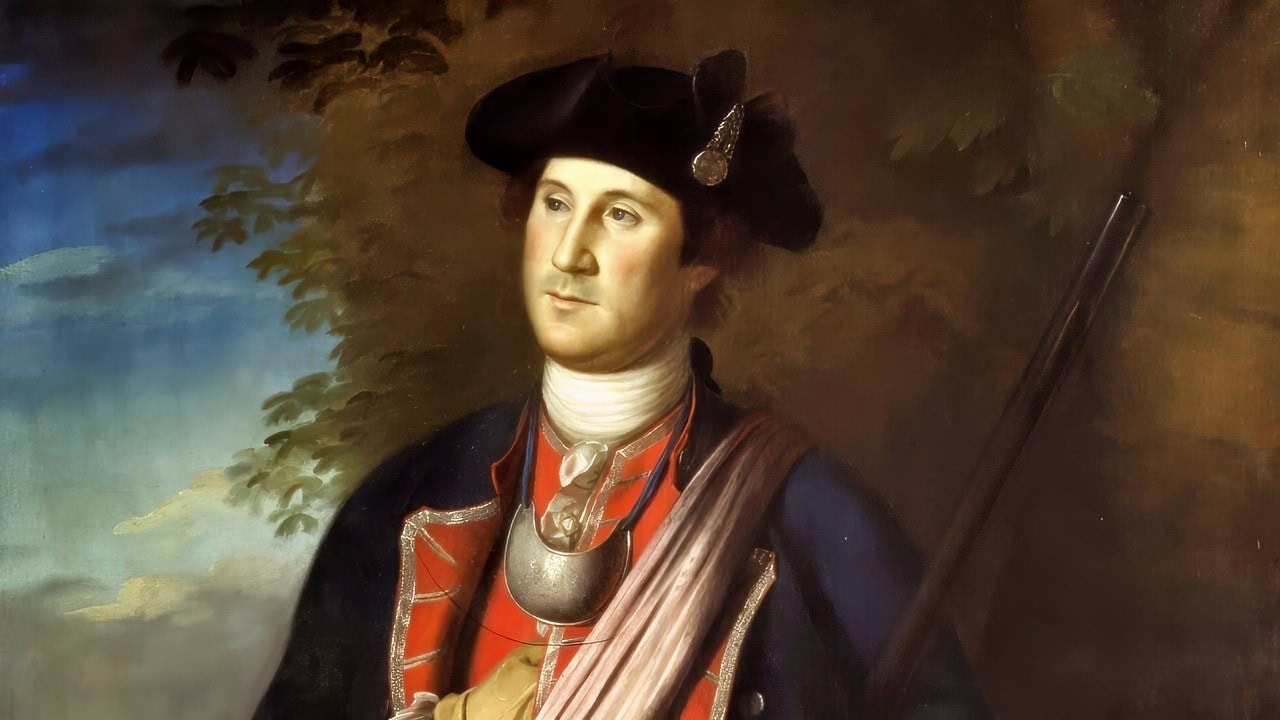
General George Washington Portrait. Image Credit: Creative Commons.
Birth and Childhood
George Washington was born on February 22, 1732, at Popes Creek in Westmoreland County, Virginia, but only lived there until the age of three, when his family moved to Little Hunting Creek in 1735 before settling at Ferry Farm near Fredericksburg, Virginia, in 1738. George was the first of six children of Augustine and Mary Ball Washington.
Augustine (with whom little George did not have a close relationship) was a justice of the peace and a prominent public figure who had four additional children from his first marriage to Jane Butler.
Augustine died when George was only 11 years of age, leaving the preteen lad to inherit Ferry Farm, whilst George’s half-brother Lawrence—with whom he *did* have a close relationship—to inherit Little Hunting Creek, renaming it Mount Vernon.
Because of the close relationship between George and Lawrence, the older half-brother ensured that his protégé was well cared for. Because of the timing of their father’s death, George was unable to receive a classical, Latin-based education at Appleby School in England. Instead, he received private tutoring, who instructed him in reading, writing, and basic legal forms; in addition, he studied geometry and trigonometry, whilst Lawrence taught him how to be a gentleman (and the discipline that goes with such teaching).
That geometry and trigonometry education paid off for George at 16, when he went to work as a surveyor, taking measurements of new land and mapping it in detail.
A few short years later, Washington would go on from applying trigonometry to “trigger-nometry” (if you will), when Virginia’s lieutenant governor, Robert Dinwiddie, appointed the ambitious young man as a major and commander of one of the four militia districts, which would set the stage for his meteoric career rise.
“Blooded” In Battle: The French and Indian War
The French and Indian War, which officially lasted from May 28, 1754 to October 7, 1763 (and is considered by many historians to be part of the global Seven Years’ War) was where George Washington got his “baptism of fire,” i.e. his first combat experience, and undoubtedly proved to be most impactful upon his future generalship during the Revolutionary War.
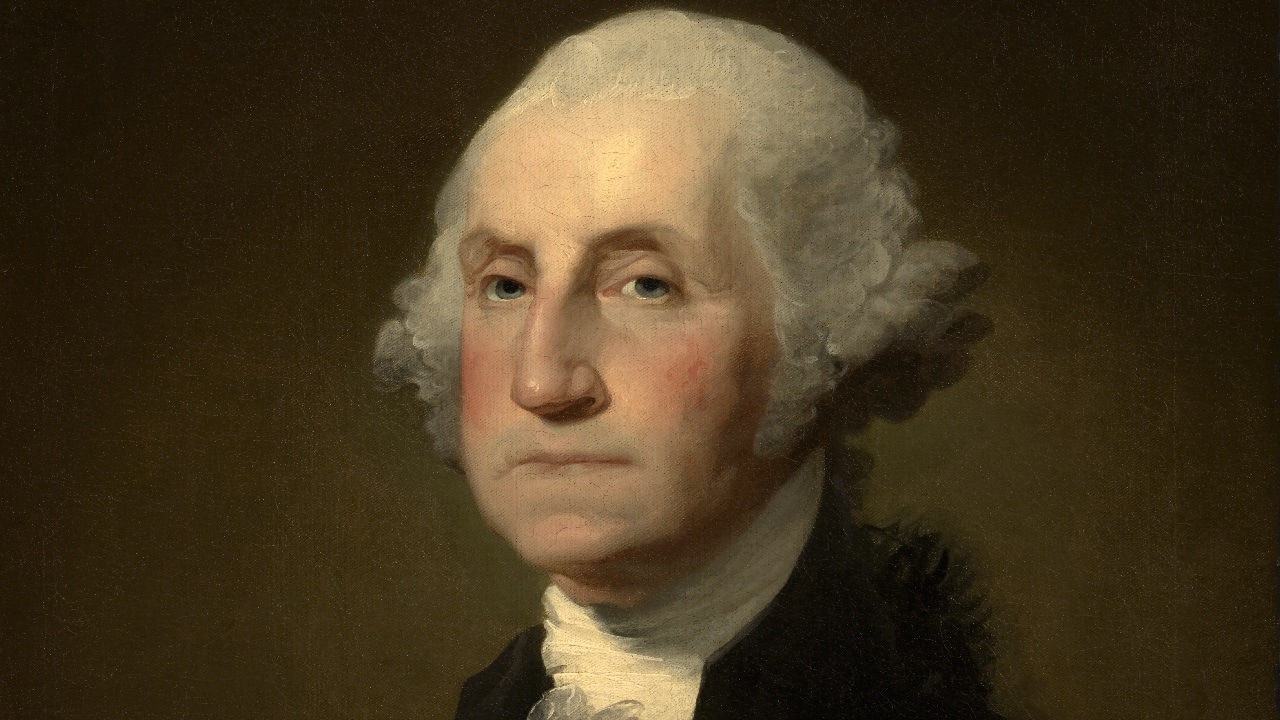
George Washington
(One could presumably draw a parallel between the French and Indian War and the 1846 Mexican-American War: in the former case, British officers like Washington going on to fight the British Crown during the Revolution; in the latter case, U.S. Army officers like Robert E. Lee going on to fight against the Union during the American Civil War [which some go so far as to dub “The Second American Revolution“].)
Washington’s experience in the French and Indian War is summed up concisely in two sources.
First is the American Battlefield Trust (ABT), from whence we learn that “Then on May 28, 1754, a young British American colonist, George Washington, fired the first shot of the French and Indian War at the Battle of Jumonville Glen. This battle ignited an all-out war in the frontier that eventually spread back to Europe and around the world … Colonel George Washington fought in a famous provincial unit: the Virginia Regiment. The condescending attitude of the British Army toward the provincials fueled resentment and eventually contributed to the American Revolution a few years later.”
Colonel Washington was merely 22 years old when he attained the rank of colonel. To put that in perspective, that is now the average age of a newly commissioned 2nd Lieutenant in the present-day U.S. Army (whether via ROTC or West Point) who didn’t do prior service in the enlisted ranks.
And from Forrest McDonald of The Imaginative Conservative, we get these nuggets: “‘ I heard the bullets whistle,’ he wrote to a younger brother, ‘and, believe me, there is something charming in the sound.’ He made mistakes, but in the crucial Battle of the Wilderness, he offered his commanding British general [that being Edward Braddock] advice which, had it been followed, would have saved the day. Instead the British employed conventional tactics—and were slaughtered. Washington emerged as a hero and was regarded throughout the colonies as a man destined to do great things.”
Despite the initial setbacks in the Battle of the Wilderness (more formally known as the Battle of the Monongahela to avoid confusion with the Civil War Battle of the Wilderness), the British ultimately won the French and Indian War.
And along the way, George Washington attained a great personal triumph in the midst of the war: marrying his beloved Martha Dandridge Custis Washington on January 6, 1759.
In Popular Culture
Allowing, of course, for the certain degree of embellishment that’s endemic to any Hollywood historical piece, an excellent filmic depiction of Washington’s earlier years can be found in the 1984 biographical CBS-TV miniseries simply titled “George Washington,” which stars Barry Bostwick in the titular role. (Barry Bostwick is, of course, best remembered as Brad Majors in the 1975 cult classic “The Rocky Horror Picture Show,” which just goes to show Barry’s versatility as an actor).
The miniseries’ all-star cast also includes Patty Duke Astin as Martha Washington, Hal Holbrook as John Adams, and James Mason as General Edward Braddock.
About the Author: Christian D. Orr, Defense Expert
Christian D. Orr is a Senior Defense Editor. He is a former Air Force Security Forces officer, Federal law enforcement officer, and private military contractor (with assignments worked in Iraq, the United Arab Emirates, Kosovo, Japan, Germany, and the Pentagon). Chris holds a B.A. in International Relations from the University of Southern California (USC) and an M.A. in Intelligence Studies (concentration in Terrorism Studies) from American Military University (AMU). He is also the author of the newly published book “Five Decades of a Fabulous Firearm: Celebrating the 50th Anniversary of the Beretta 92 Pistol Series.”