
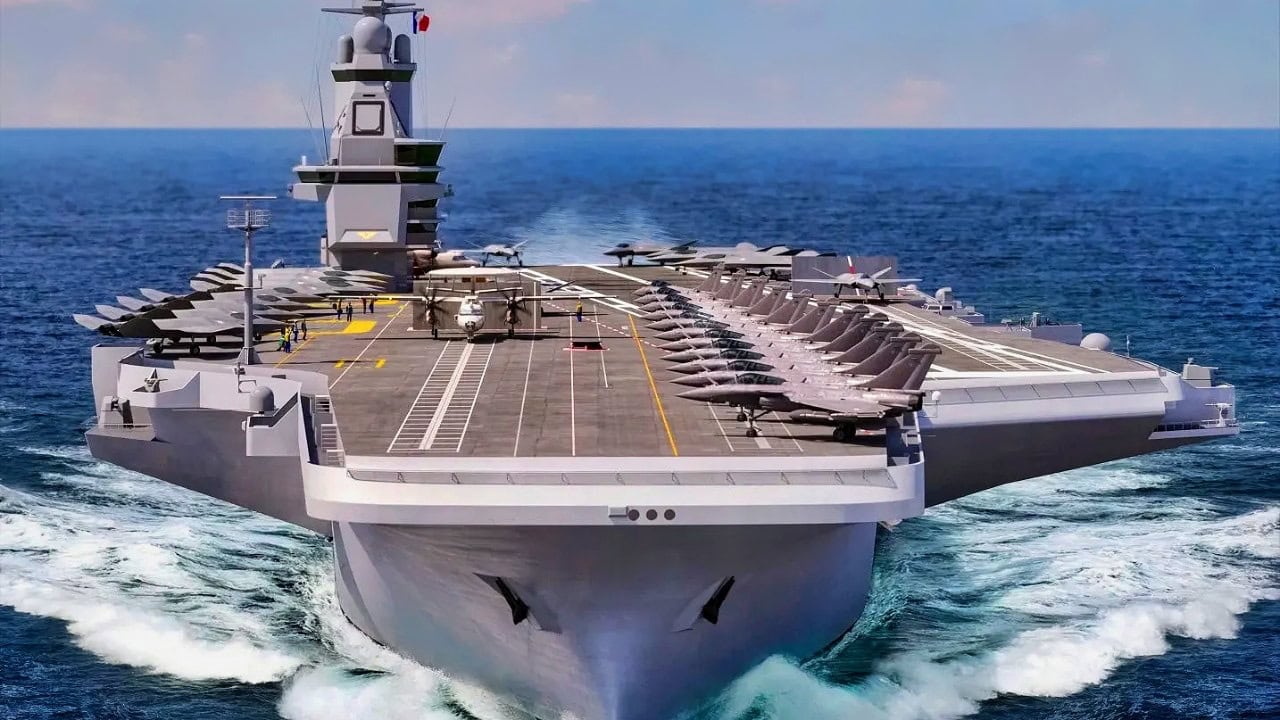
Summary and Key Points: The French Navy’s PANG project has entered its critical implementation phase, aiming for a 2038 service entry to replace the aging Charles de Gaulle.
-Displacing 78,000 tons and stretching 310 meters, this nuclear-powered supercarrier features two K22 reactors and a three-track Electromagnetic Aircraft Launch System (EMALS).
-Designed to carry the Rafale M (F5 standard) and future 6th-generation fighters from the FCAS program, the PANG serves as a mobile command center for the “age of predators.”
-With a crew of 2,000 and advanced sensor fusion, it solidifies France’s position as the only European power operating a nuclear-powered CATOBAR carrier.
Beyond the Charles de Gaulle: Macron’s $12 Billion Bet on the PANG Supercarrier
France’s President Emmanuel Macron usually trumpets the need for more robust collective defense in Europe. He is a stern backer of NATO and the EU and a firm believer in arming Ukraine against Russia. So, when it comes to international security and foreign policy, he is more of a traditionalist rather than an innovator. As a result, Macron usually doesn’t brag about his country’s military, and new defense developments are not often public relations events.
That’s why Macron’s latest military announcement is so jarring and surprising. Macron is downright giddy about an additional piece of defense hardware that will enhance mutual security in Europe. France will be getting a new nuclear-powered aircraft carrier, and judging from an artist rendering, it is sleek and beautiful – just like what you would expect from French designers.
PANG Aircraft Carrier Has Much Potential
The new carrier, known as the PANG, is slated to replace the CVN Charles de Gaulle in 2038. The PANG (New Generation Aircraft Carrier) will launch the most advanced aircraft and be outfitted with the latest technology. This will usher in a new naval era for France and keep its maritime branch operating in style intothe 2060s. Macron could not be happier.
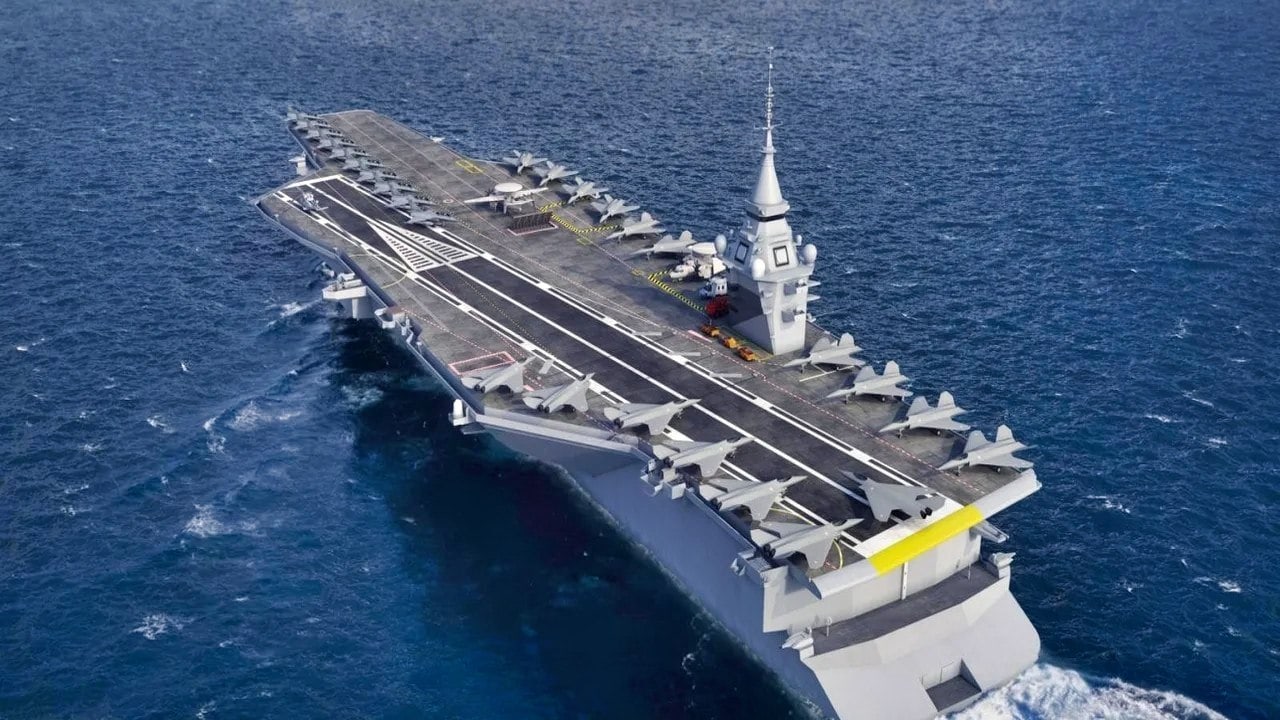
PANG Aircraft Carrier from France. Image Credit: French Navy.
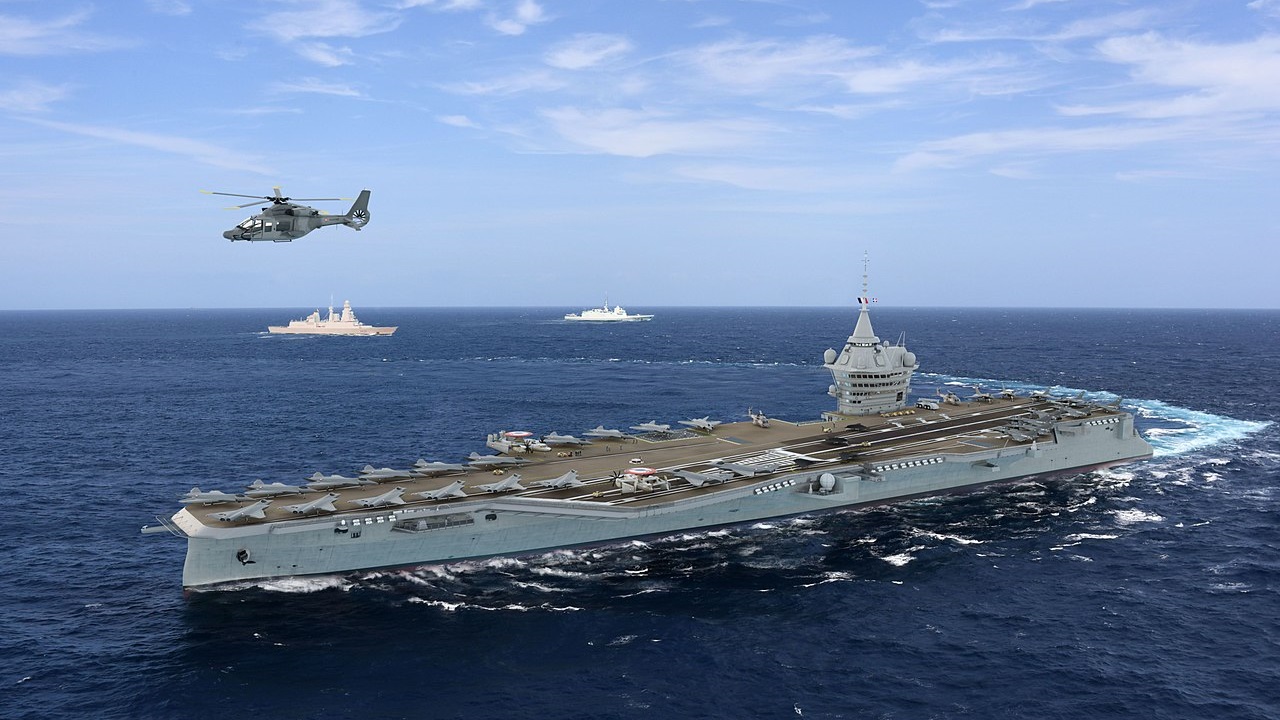
PANG Aircraft Carrier. Image Credit: Creative Commons.
“In this age of predators, we must be strong to be feared. And in particular, strong at sea! That is why, in accordance with the last two military planning laws, and after a thorough and careful review, I have decided to equip France with a new aircraft carrier. The decision to launch the realization of this major program was made this week,” Macron told French troops stationed in Abu Dhabi, as noted by Naval News.
Strong Words Coming From Macron
Notice the choice of words here. The “age of predators” surely refers to Russia and perhaps even China. And he references the need for France to be strong. This shows that the French leader is convinced that aircraft carriers are one of the best ways for a country to project power and defend the Homeland.
French Military Yearns for Power
“This new aircraft carrier will be a testament to our nation’s power, a power of industry and technology. Power at the service of freedom on the high seas. And in the turbulent waters of time,” Macron exclaimed.
This quote is also telling and somewhat out of character for Macron. The president is not known as a defense hawk, and his country doesn’t often produce major end items like aircraft carriers. He sounds patriotic and nationalistic here, which is another departure.
More on the PANG Nuclear Aircraft Carrier
The PANG program goes back to 2020 during its initial design phase. The French Ministry of Defense decided to continue research and development in 2025. Now Macron has given the new carrier the official green light.
This Floating Air Base Has a Message for the World
The PANG will have two K-22 nuclear pressurized water reactors, providing the ship with nearly unlimited range, depending on how well it can be replenished by supply ships.
It will displace 78,000 tons. Like many supercarriers in other countries, the PANG will be over 1,000 feet long with a beam of around 300 feet. Two thousand sailors will be onboard.
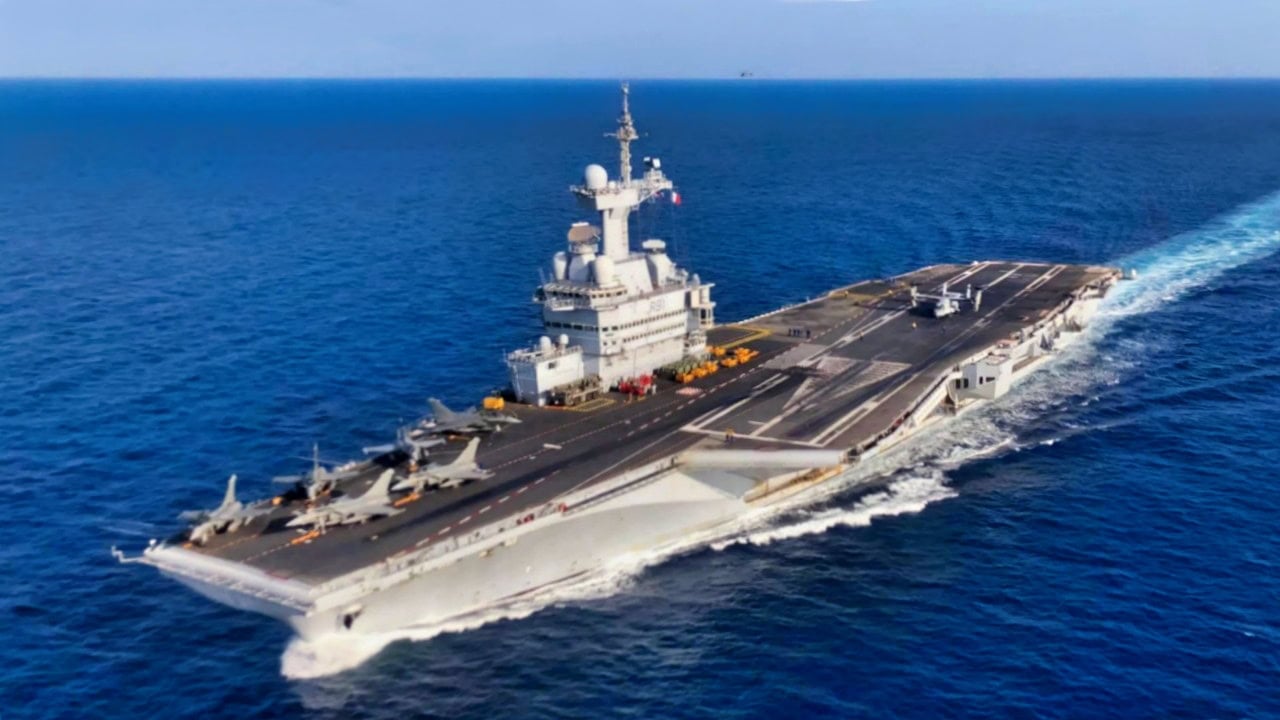
U.S. 5TH FLEET AREA OF OPERATIONS (April 24, 2019) A U.S. Marine MV-22 Osprey assigned to the 22nd Marine Expeditionary Unit sits on the flight deck of France’s Marine Nationale aircraft carrier FS Charles De Gaulle (R 91). This was the second time that Ospreys have landed aboard the French vessel. Marines and Sailors assigned to the 22nd MEU and Kearsarge Amphibious Ready Group are currently deployed to the U.S. 5th Fleet area of operations in support of naval operations to ensure maritime stability and security in the Central region, connecting the Mediterranean and the Pacific through the western Indian Ocean and three strategic choke points. (U.S. Marine Corps photo by Maj. Joshua Smith/Released)
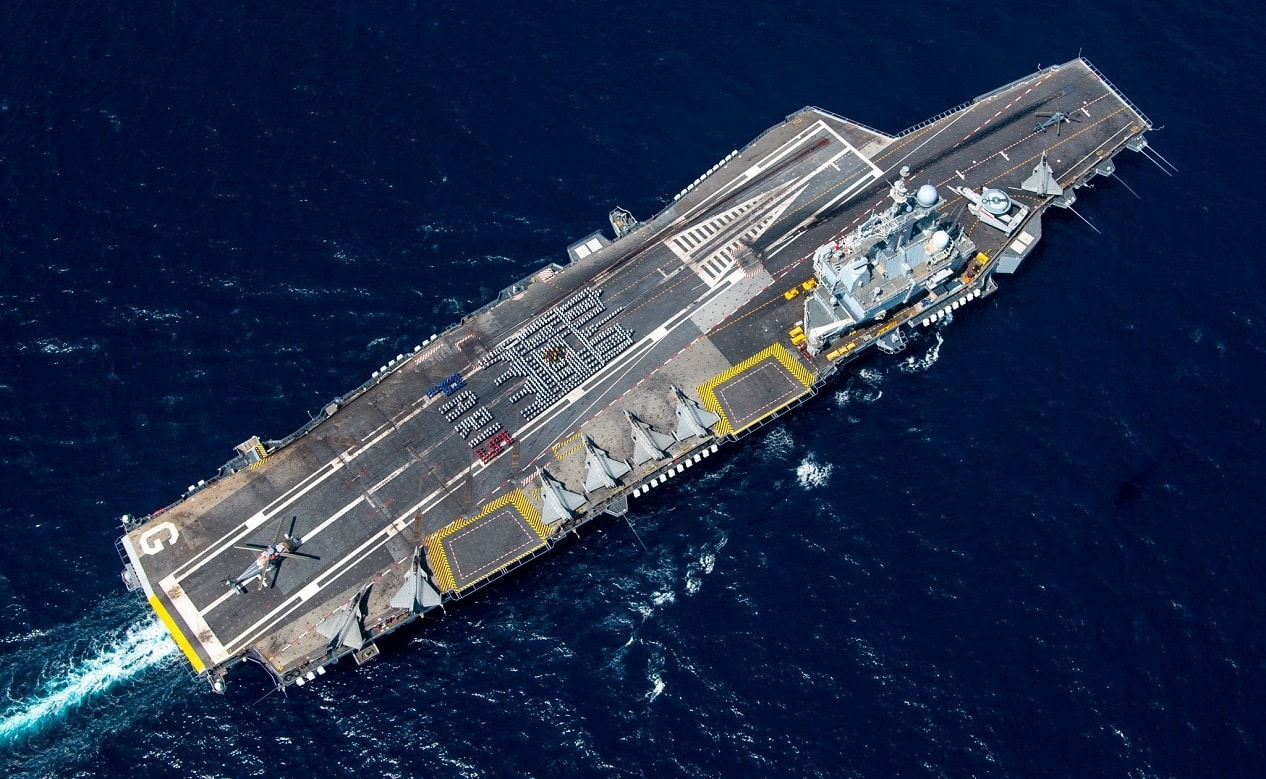
French Aircraft Carrier Charles de Gaulle.
The PANG will feature at least 30 strike aircraft – mainly the Dassault Rafale M – and five to six helicopters. There will be combat drones and three E-2D Advanced Hawkeye Airborne Early Warning airplanes. It will have a next-generation superstructure. The PANG will employ “a three-track Electromagnetic Aircraft Launch System (EMALS), a three-wire Advanced Arrestor Gear (AAG) recovery system, two hangars, and two deck-edge aircraft elevators [each with a 40-ton lift capacity] offset to starboard,” Naval News wrote.
It Will Provide a Boost to the Economy
The carrier will be built at Chantiers de l’Atlantique in St. Nazaire in 2032. Work will be transferred to Toulon in 2035, and sea trials are planned for 2036. France expects a high level of economic development during production, with 800 defense suppliers creating thousands of jobs.
What Does It Mean Strategically?
The PANG carrier will be a godsend for France and NATO. The alliance could use another nuclear-powered aircraft carrier with EMALS. This comes at a time when Europe is wondering whether the U.S. Navy will fully back it in a conflict with Russia.
One geographical area that the carrier will help France is in the Middle East and North Africa. The French are allies of the United Arab Emirates and other Gulf States and have committed to helping keep the Strait of Hormuz open to commerce. France has also deployed troops in Africa before, and the PANG could serve as a flagship during any personnel deployment in that area of operations.
The PANG could also be deployed in East Asia, which would be a big help to the United States and its allies in that region.
China and Russia will be closely watching the development of the PANG. France is being smart with the new carrier program and not over-promising on its timeline. There is much wiggle room for schedule slips.
Supercarrier, Super Price: It Will Not Come Cheap
However, the PANG will be costly. France expects to spend $13 billion on the carrier. This runs in line with the U.S. Navy’s $13.3 billion investment in the USS Gerald R. Ford supercarrier.
France Is Stepping Up to the Plate
This is an important development for the French military. Critics cannot say now that France is afraid to invest significant monetary sums into its navy. The PANG will be a majestic carrier when it is built. It will take several years to produce, and there could be delays and cost overruns, which often happen with carriers, but the ship is sure to become a reality.
Macron is firmly behind it, and his enthusiasm is notable. France will be better able to project power worldwide and defend sea lines of communication and freedom of navigation. The carrier air wing will be strong, and the ship will come loaded with the most advanced systems. Let Macron bask in the glow of this new vessel. He has staked his claim on defense, and now shipbuilders must deliver what will be the most ambitious ship program in France’s naval history.
About the Author: Dr. Brent M. Eastwood
Author of now over 3,000 articles on defense issues, Brent M. Eastwood, PhD is the author of Don’t Turn Your Back On the World: a Conservative Foreign Policy and Humans, Machines, and Data: Future Trends in Warfare plus two other books. Brent was the founder and CEO of a tech firm that predicted world events using artificial intelligence. He served as a legislative fellow for US Senator Tim Scott and advised the senator on defense and foreign policy issues. He has taught at American University, George Washington University, and George Mason University. Brent is a former US Army Infantry officer. He can be followed on X @BMEastwood.