
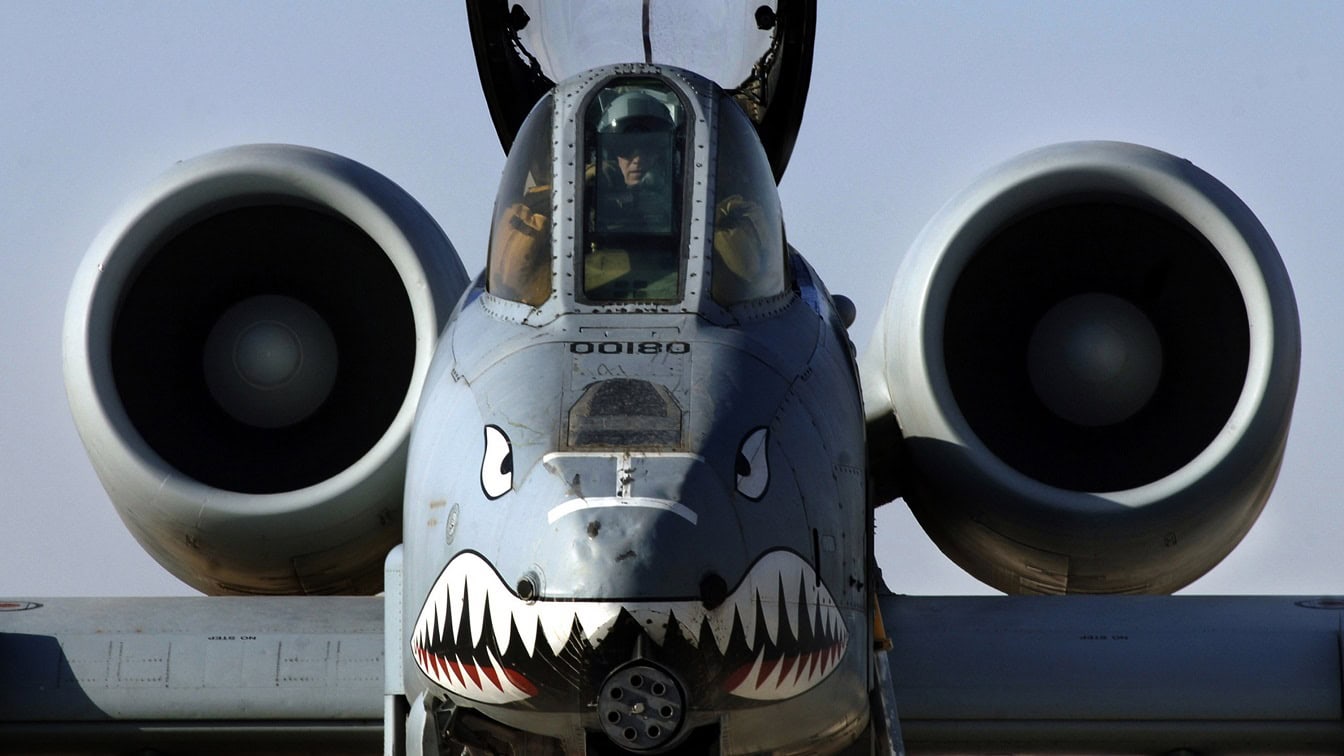
Summary and Key Points: The A-10 Thunderbolt II, famously known as the Warthog, is heading to the “Boneyard” for retirement, but its combat story may not be over.
-As the U.S. Air Force pivots to save costs, a bold proposal suggests transferring these “flying tanks” to Ukraine and Poland to shred Russian armor.
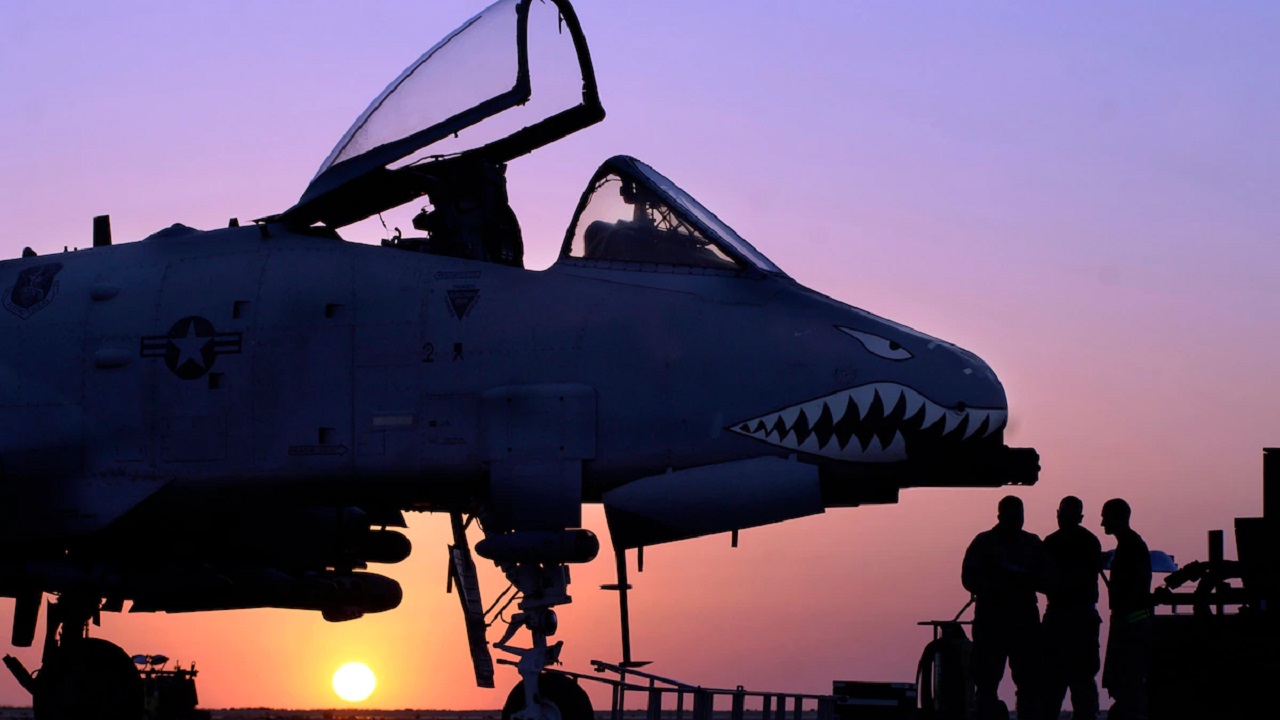
A-10 Warthog Sunset. Image Credit: Creative Commons.
-Armed with a 30mm GAU-8/A Avenger cannon capable of 3,900 rounds per minute, the A-10 remains a peerless close air support beast.
-While critics fear Russian air defenses would turn them into “squeaky targets,” these battle-proven warbirds could be the decisive edge needed to break Putin’s tank columns.
From the Boneyard to Battle? Why the A-10 Warthog Is the “Tank Killer” Ukraine Needs
It’s been in service for nearly 50 years and has an amazing combat record, but its time has come and gone.
The A-10 Thunderbolt II, better known as the Warthog, is being fully retired this year. The idea is to give the money saved to other U.S. Air Force programs.
The Warthog is expensive to keep in the air, requires a high level of maintenance and numerous spare parts, and its mission can be performed by the F-35 Lightning II and other aircraft.
But what if the retired A-10s could be sold to other countries that need the firepower on the battlefield?

A-10 Warthog.
Ukraine would be the obvious choice, and countries in Eastern Europe threatened by Russia, like Poland, would be in the market for such a powerful “flying tank.”
A-10 Warthog: The Transfer Would Not Be Easy
Ukraine and Poland would have to contend with pilot training and ground crew preparation to fly the lethal warbird.
The A-10 isn’t very fast, but it is maneuverable. When it brings the noise in a danger-close situation, it is necessary to control the weapons carefully so friendly fire doesn’t happen.
Ukraine and Poland would have to contend with logistics and spare parts availability for such an old airplane.
Bring Them Back to Life from the “Boneyard’
Some of the A-10s are still ready to fly, though. They will all eventually be retired at the Boneyard at Davis-Monthan Air Force Base in Arizona. So these old A-10s could be cannibalized and stripped of parts. This makes sense, but it could be expensive and difficult since the components would have to be shipped to Eastern Europe on a regular basis.

A-10 Warthog. Image Credit: Creative Commons.
This Warbird Is a Weapons Platform Like No Other
But what a job the Warthog could do against Russian tanks and armored personnel carriers, not to mention saving soldiers on the ground in hairy situations. That 30mm GAU-8/A Avenger cannon can spit out 3,900 rounds a minute, destroying anything that could threaten personnel fighting danger close to the enemy. It can carry eight tons of weapons.
It launches AGM-65 Maverick missiles. Precision-guided munitions like JDAMs are on board. There are Small Diameter Bombs, general-purpose bombs (Mk-82, Mk-84), incendiary bombs, and Hydra 70mm rockets.
Keeping the Weapons Coming
The A-10s in Ukraine and Poland would need a steady supply of weapons replenishment. This could be difficult during warfare. Poland is not the problem, but Ukraine would quickly run out of munitions. There would need to be a concerted effort to keep the ammunition in stock.
The Ukrainian and Polish pilots and ground crews would likely operate the airplane easily, though. If the Ukrainians can learn to fly F-16s, they are surely able to operate the A-10. The main issue is just keeping them resupplied.

A U.S. Air Force A-10 Thunderbolt II flies a routine mission over the U.S. Central Command area of responsibility Dec. 23, 2024. A-10 Thunderbolt II pilots train and operate under night vision, allowing them to conduct presence patrols critical to regional security at any time and under any conditions. (U.S. Air Force photo)
There Is Some Competition
The Air Force could try a program in which a small number of A-10s are transferred to see whether this platform is the right option for Ukraine and Poland. The A-10 is not the only close air support aircraft in service. There is Brazil’s A-29 Super Tucano, which is a turboprop airplane that brings a lot to the table. Ukraine and Poland could also go with the AT-6 Wolverine – another turboprop light-attack/armed-reconnaissance aircraft.
Splendid Combat Record for A-10 Warthog
The Warthog is a better close air support beast and more combat-proven than the others. It entered service in 1977 and was designed to be a Cold War “tank plinker,” if the Soviet and Warsaw Pact hordes ever attacked Western Europe. It earned its stripes in Operation Desert Storm, making mincemeat of Saddam Hussein’s tanks and armored vehicles. Warthogs destroyed 900 Iraqi tanks and 2,000 other military vehicles. Many years later, the A-10 was deployed successfully against ISIS terrorists in Iraq and Syria in 2015 and 2016 during Operation Inherent Resolve
This silenced critics who thought the airplane was too slow for battle and an ugly, unmaneuverable creation that would not survive anti-aircraft fire. But this thing could sure bring some firepower to a battle. It can dip down to around 250 feet, fire its weapons, and boogie out of sight again.
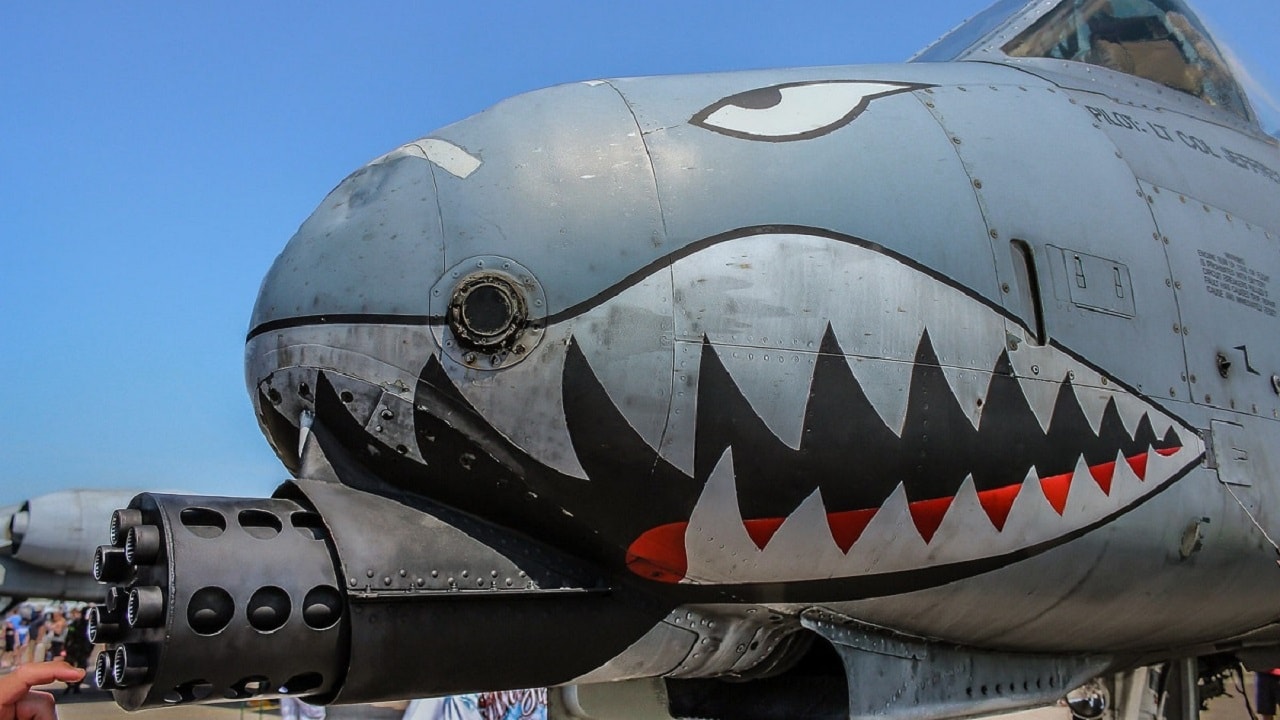
A-10 Warthog. Image Credit: Creative Commons.
Another great aspect of the A-10 is that it can land and take off in unimproved and short runways. It is also armored enough to survive armor-piercing and high-explosive rounds.
The Ukrainians Have Asked Before About the A-10 Warthog
In 2022, Ukrainian Defense Minister Oleksii Reznikov asked then U.S. Secretary of Defense Lloyd Austin for 100 surplus A-10Cs, “noting their significant effectiveness against Russian tank columns,” according to The War Zone.
Austin said that the request would be “impossible” and that Russian air defenses would blast the Warthogs out of the sky since they would be “squeaky targets.”
Let the Trump Team Make the A-10 Transfer
President Donald Trump’s national security team should reconsider. The Warthogs are not doing any good sitting at the Boneyard in Arizona. Yes, this would not be a simple arms transfer like sending anti-tank missiles and drones to Ukraine.
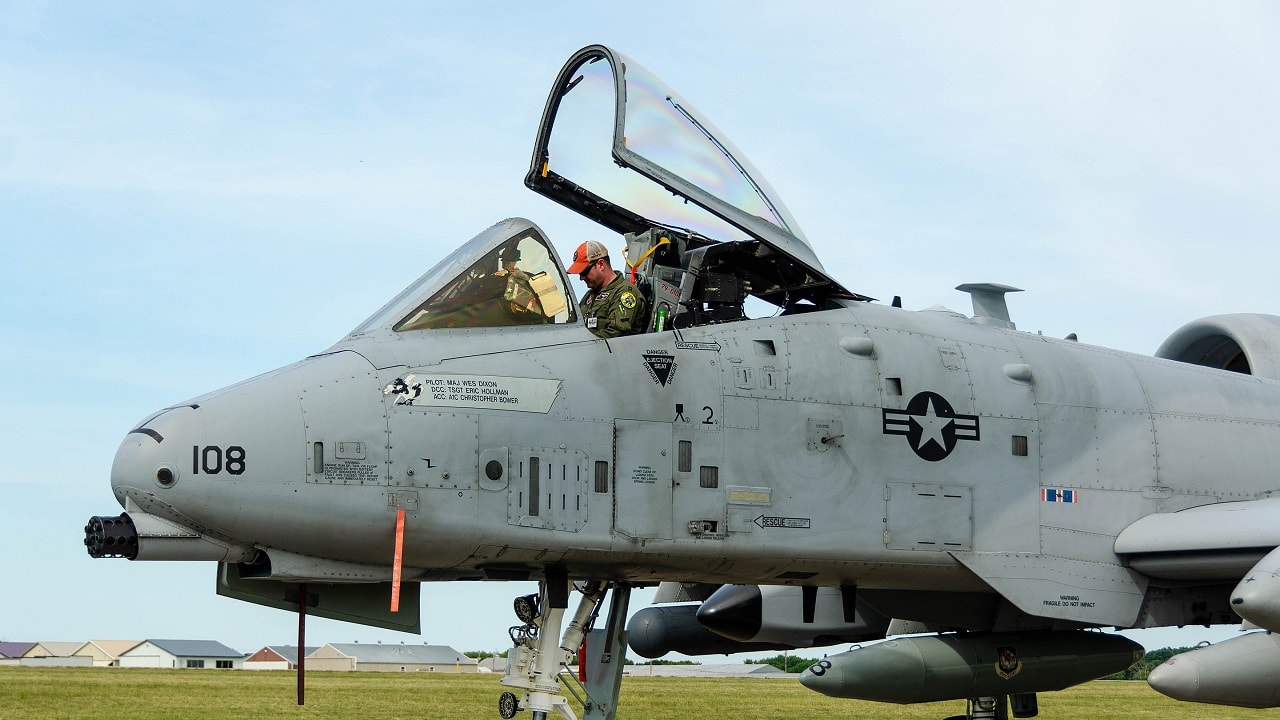
A-10 Warthog. Image Credit: Creative Commons.
This is a major end item after all. But winning the war against Russia takes imagination and ideas that could be decisive on the battlefield.
Perhaps we will not see the end of the A-10 in battle. It is a majestic warplane that stood the test of time and helped win some important operations. Ukraine and Poland would be happy with the Warthog. Supporting allies with the best and most useful weapons systems can teach the Russians a lesson in the sheer power of Air Force airplanes that can bring doom to the enemy on a regular basis.
About the Author: Brent M. Eastwood
Author of now over 3,000 articles on defense issues, Brent M. Eastwood, PhD is the author of Don’t Turn Your Back On the World: a Conservative Foreign Policy and Humans, Machines, and Data: Future Trends in Warfare plus two other books. Brent was the founder and CEO of a tech firm that predicted world events using artificial intelligence. He served as a legislative fellow for US Senator Tim Scott and advised the senator on defense and foreign policy issues. He has taught at American University, George Washington University, and George Mason University. Brent is a former US Army Infantry officer. He can be followed on X @BMEastwood.