
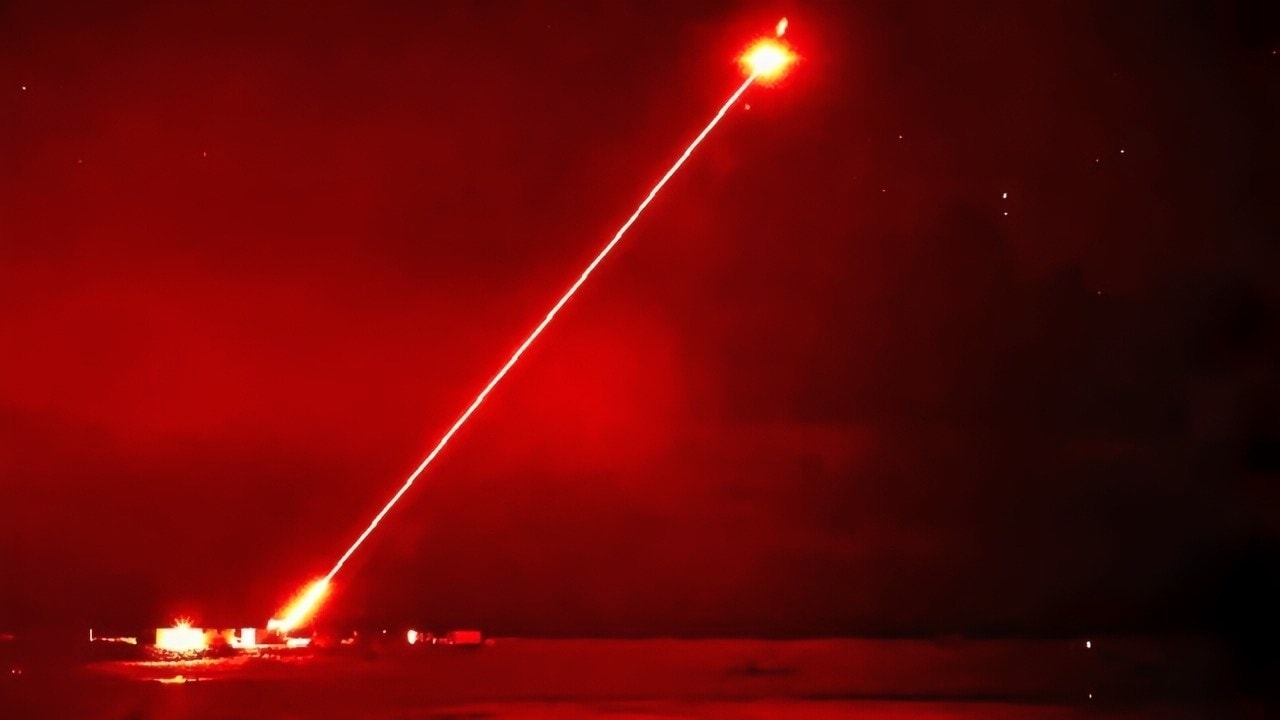
Summary and Key Points: After Red Sea combat against Houthi missiles and drones, the U.S. Navy’s core lesson is that interceptor defense works—but it is financially and industrially hard to sustain at scale. Standard Missiles like SM-2, SM-3, and SM-6 are effective yet expensive, finite, and slow to replace, raising concerns about magazine depletion in a high-end fight. Chief of Naval Operations Admiral Daryl Caudle is pushing directed energy as the antidote, arguing lasers could provide cheap, repeatable shots for ship and base defense.
-With systems like HELIOS being tested aboard USS Preble, the Navy’s new guidance aims to move lasers from experiments to fleet capability. That just might save the U.S. Navy from becoming a bunch of old ‘battleships’ in the future.
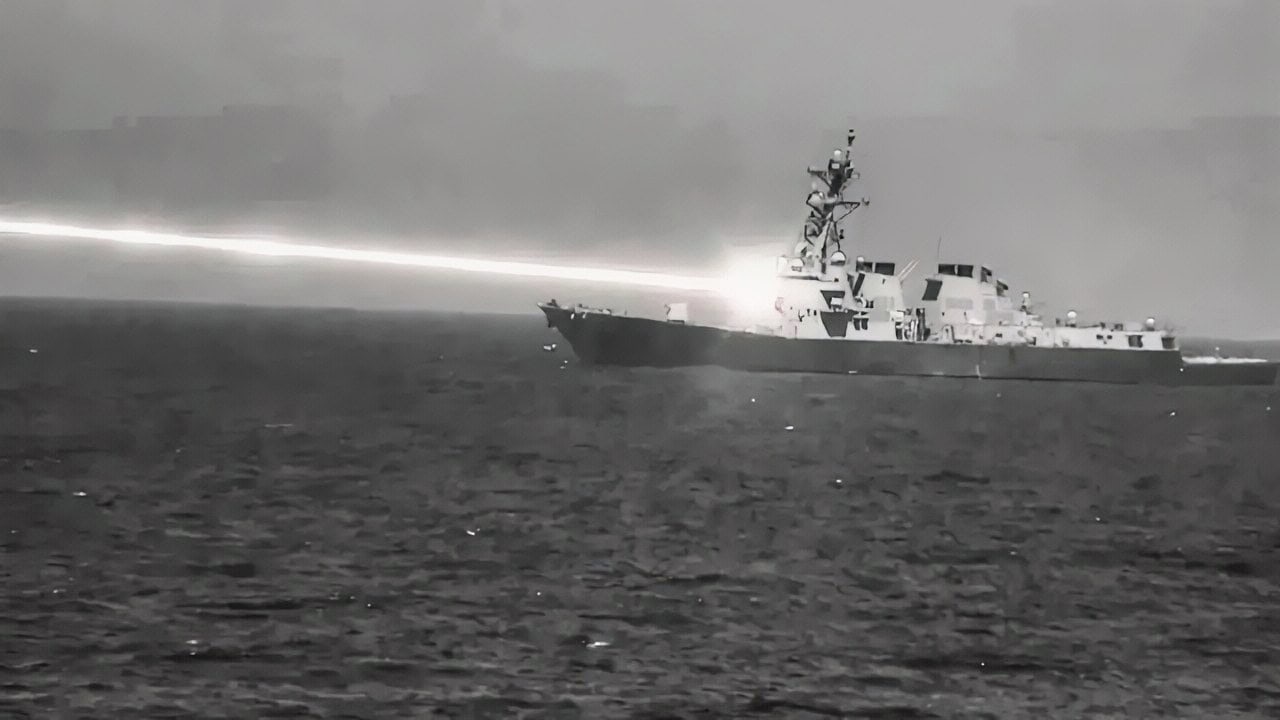
HELIOS Laser Testing U.S. Navy Image.
China’s Missile Salvos vs. Warships: Why The U.S. Navy Thinks Lasers Are The Future
When U.S. Navy warships must respond to enemy missiles and drones, they use interceptors such as the Standard Missile (SM)-2, SM-3, and SM-6. These interceptors featured prominently last year to counter attacks on carrier strike groups by Iranian-backed Houthis in the Red Sea and Gulf of Aden. The Navy’s Aegis Weapon System did its job—all incoming projectiles and loitering munitions were destroyed.
The problem is that this is a costly endeavor. The Standard Missile interceptors run out fast and are expensive, costing millions of dollars apiece. They also take a long time to produce. The Navy chalks this up to an important lesson learned in combat. Even the best interceptors in the world could fail against an adversary such as the Chinese military if it attacks U.S. warships with overwhelming missile and drone salvoes.
Top Naval Officer Is Bullish on Lasers
To solve this problem, Chief of Naval Operations Admiral Daryl Caudle is looking at using lasers for air defenses on ships. He believes the future Trump-class battleship could be equipped with anti-air directed energy systems that would fire cheap, unlimited shots against incoming missiles and drones.
Caudle believes that the research and development conducted by engineers and technicians could be transferred to existing ships as well.
At the WEST 2026 conference in California, the Navy’s chief explained that investments in directed energy weapons will be a “prominent element of the battleship going forward.”
“This is the time for this. This is a vision I have,” he told the media. “I want to get behind this. I want this to work. I see it solving problems not for just shipboard use. I see it solving problems for base protection as well.”
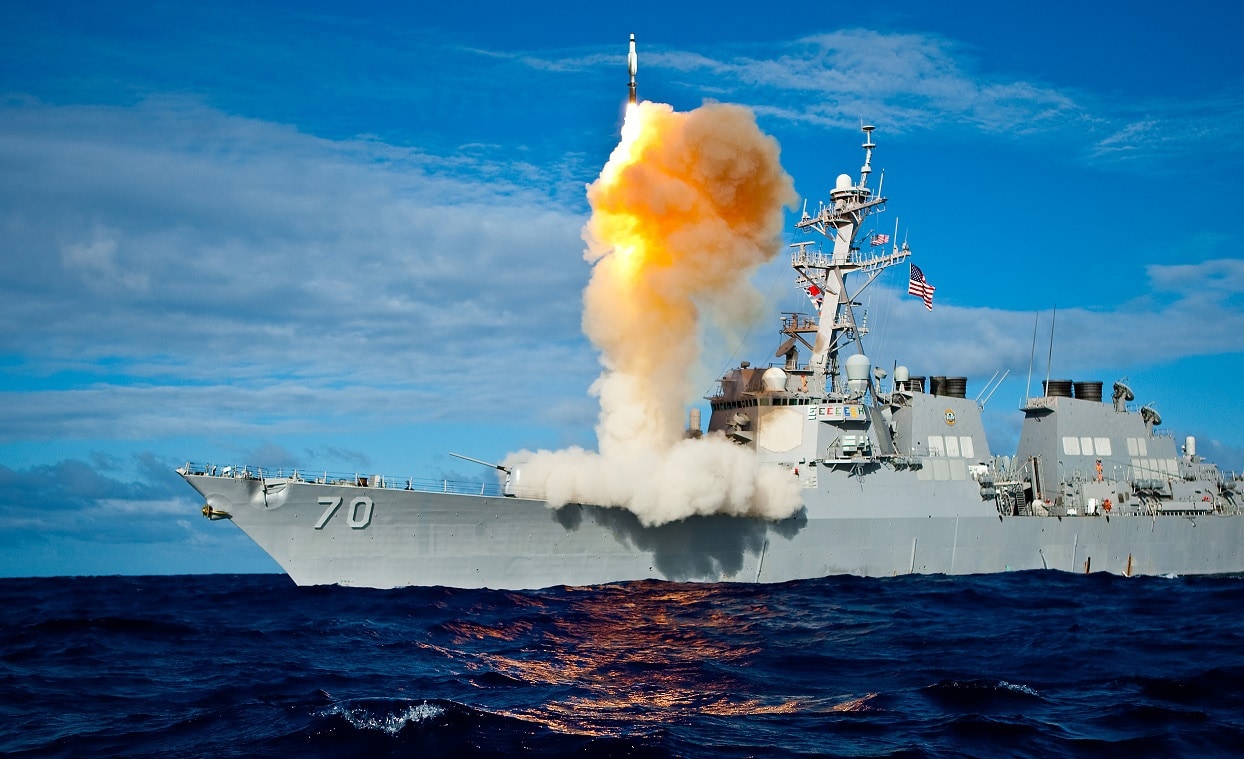
PACIFIC OCEAN (July 30, 2009) During exercise Stellar Avenger, the Aegis-class destroyer USS Hopper (DDG 70) launches a standard missile (SM) 3 Blk IA, successfully intercepting a sub-scale short range ballistic missile, launched from the Kauai Test Facility, Pacific Missile Range Facility (PMRF), Barking Sans, Kauai. This was the 19th successful intercept in 23 at-sea firings, for the Aegis BMD program, including the February 2008 destruction of a malfunctioning satellite above the earthÕs atmosphere. (U.S. Navy photo/Released)
Naval Surface Fleet Laser Transformation
Caudle is a submarine officer by training and has commanded three boats in the past, but he sees the laser as being transformative for the future “Golden Fleet,” current surface vessels, and even installations on shore.
The admiral has been a proponent of lasers since at least last year, when he pointed out that without lasers on ships, the Navy should be “embarrassed.”
The Future Is Now for Directed Energy for the U.S. Navy
I wrote extensively about the use of shipborne lasers in my 2021 book on future warfare. There are downsides to directed energy deployments. Lasers are heavy, generate significant heat, and suck up lots of electricity. These shortcomings may make them difficult to install on older destroyers and frigates.
But there is hope that the future USS Defiant battleship could be a technology demonstrator for lasers, and Caudle has a strategic plan to get there.
New Naval Doctrine Sees Lasers Forthcoming
The CNO unveiled his new “Fighting Instructions” guidance this week. The guidance specifies how the “Navy plans to organize, train, equip and fight,” according to Breaking Defense. “The framework claims the service will establish a ‘comprehensive’ directed energy strategy that will establish priorities, capability thresholds, and timelines to align investments with platforms and the Future Years Defense Program (FYDP),” the media outlet wrote.
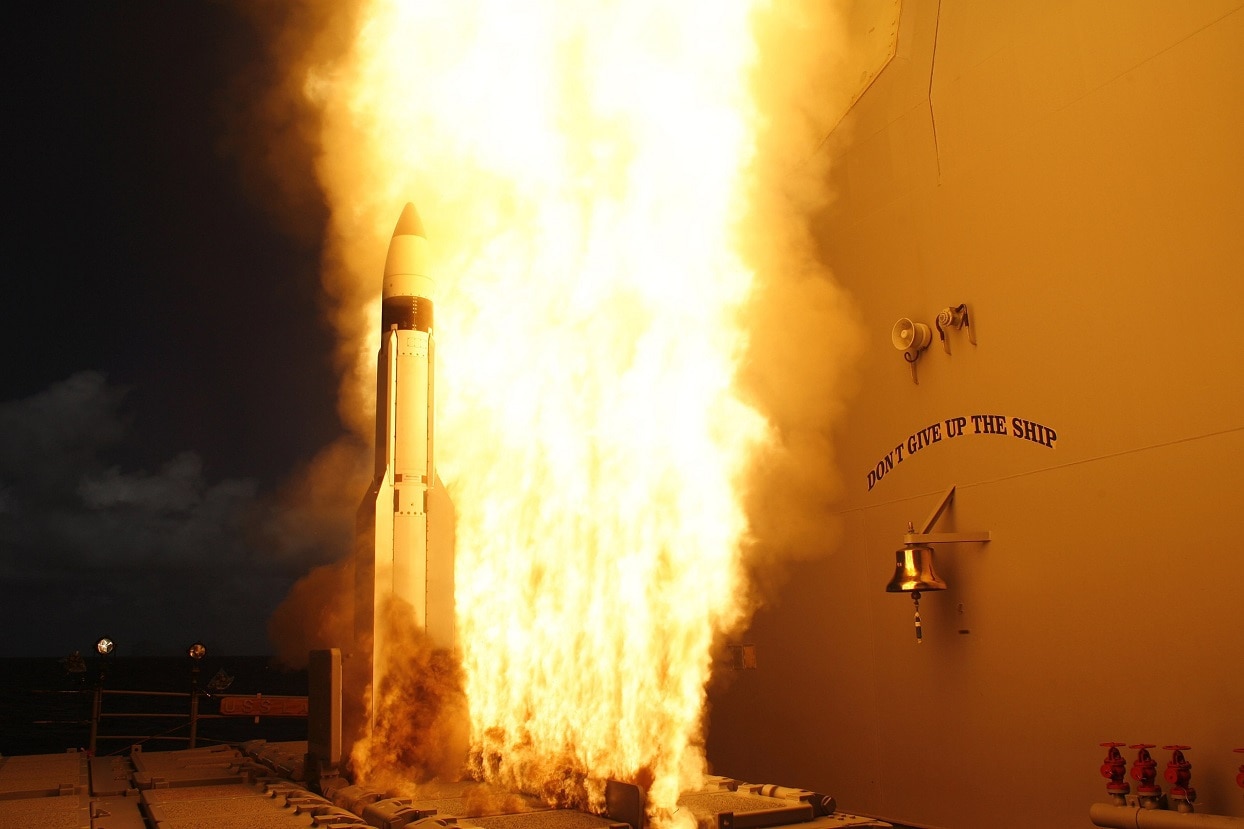
PACIFIC OCEAN (April 26, 2007) – A Standard Missile-3 (SM-3) is launched from the Aegis-class guided missile cruiser USS Lake Erie (CG 70), during a joint Missile Defense Agency, U.S. Navy ballistic missile flight test. Approximately three minutes later, the SM-3 intercepted a unitary (non-separating) ballistic missile threat target, launched from the Pacific Missile Range Facility, Barking Sands, Kauai, Hawaii. Within moments of this launch, the USS Lake Erie also launched a Standard Missile-2 (SM-2) against a hostile air target in order to defend herself. The test was the eighth intercept, in 10 program flight tests. The test was designed to show the capability of the ship and its crew to conduct ballistic missile defense and at the same time defend herself. This test also marks the 27th successful hit-to-kill intercept in tests since 2001. U.S. Navy photo (RELEASED)
Successful Deployment Already
One ship, the USS Preble (DDG-88), is currently trying out the High Energy Laser with Integrated Optical-Dazzler and Surveillance (HELIOS) system. The USS Dewey (DDG-105) and USS Stockdale (DDG-106) are equipped with the Optical Dazzling Interdictor that is designed to attack incoming bogeys and eliminate their sensors with a spoofing effect.
This will “enable deliberate, sustained investment in the power, thermal, and integration upgrades necessary to transition DE [directed energy, a technical term for lasers] from experimentation to Fleet capability,” the guidance said. “A coherent DE strategy will also accelerate industrial base maturation, reduce fielding risk, and establish common standards for sensors, command and control, targeting, and supply chains.”
No Ship Without Lasers
Lasers have not been used in combat. They are still a relatively new technology and are currently in test mode. But if Caudle has his way, lasers are an idea whose time has come. The Preble’s HELIOS has been evaluated and passed tests with flying colors. There could someday be a laser on every ship.
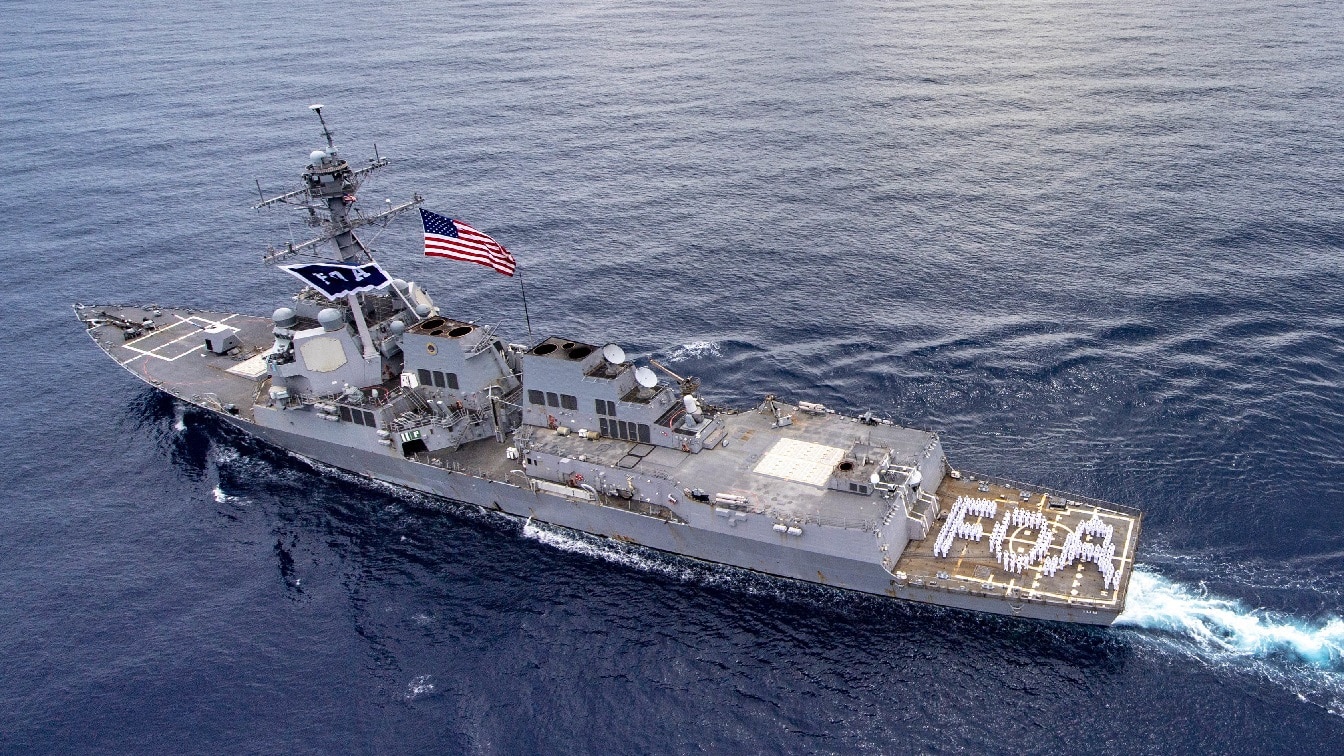
SOUTH CHINA SEA (Oct 2, 2019) The guided-missile destroyer USS Wayne E. Meyer (DDG 108) celebrates the 10th anniversary of the ship’s commissioning while transiting the South China Sea. Named after Rear Adm. Wayne E. Meyer, the Father of Aegis, (FOA), the crew stands in formation in his namesake. Wayne E. Meyer is deployed to the U.S. 7th Fleet area of operations to support regional stability, reassure partners and allies, and maintain a presence postured to respond to any crisis ranging from humanitarian assistance to contingency operations. (U.S. Navy photo by Mass Communication Specialist 2nd Class Rawad Madanat/Released)
The Antidote to the ‘Kinetic Missile Fight”
This would come in handy in any conflict with China that I have predicted will be a “Kinetic Missile Fight” in which U.S. warships have to fend off numerous projectiles. As it stands now, U.S. flattops must operate out of the range of “carrier killing” missiles. This hurts their ability to sail during freedom of navigation missions in the South China Sea and beyond the first island chain.
To better deploy lasers, the Aegis Weapon System must be updated for directed energy. That should happen soon.
Lasers are the way of the future. The SM interceptors are effective, but combining the defensive missiles with directed energy will allow a protective screen around flotillas for better survivability. This is just what the Navy needs to address multiple threat environments from enemy missile and drone attacks. I like the way the Navy is thinking.
About the Author: Brent M. Eastwood
Author of now over 3,000 articles on defense issues, Brent M. Eastwood, PhD is the author of Don’t Turn Your Back On the World: a Conservative Foreign Policy and Humans, Machines, and Data: Future Trends in Warfare plus two other books. Brent was the founder and CEO of a tech firm that predicted world events using artificial intelligence. He served as a legislative fellow for US Senator Tim Scott and advised the senator on defense and foreign policy issues. He has taught at American University, George Washington University, and George Mason University. Brent is a former US Army Infantry officer. He can be followed on X @BMEastwood.