
Summary and Key Points: Russia’s T-14 Armata, once hailed as a revolutionary “super tank” designed to dominate the 21st-century battlefield, has become a high-profile failure.
-Despite advanced features like an unmanned turret, Afganit active protection, and a protected crew capsule, the platform has seen virtually no combat in Ukraine.
-Production has been crippled by sanctions and a lack of serial manufacturing, with fewer than 20 units hand-built by Uralvagonzavod.
-As Russia leans on aging T-72 and T-90 fleets, the Armata serves as a stark reminder of the systemic bottlenecks and over-engineered promises plaguing Moscow’s defense industrial base.
The “Expensive Flop”: Russia’s T-14 Armata Super Tank Summed Up in 2 Words
Oh, how the Russian military has faltered. The country was supposed to have one of the strongest, most lethal defense forces in the world. An attack plan to take Kyiv was designed to happen in weeks, and the Ukrainian military was sure to fail and head for the hills in fear of the marauding Russians. That didn’t happen, and some of Vladimir Putin’s best weapons systems have been a failure.
Look no further than the Russian tank corps as the main problem child. There have been devastating losses to armored vehicles of all makes and models. The Russians can’t seem to buy a break as their esteemed chariots succumb to anti-tank missiles and loitering drones that dive onto the tops of tank turrets and turn them into fiery wrecks.
Fourth-generation T-14 Is Nearly Dead
By now, one Russian tank should have been finding easy success on the battlefield, but it has become an expensive flop. The T-14 Armata, the next-generation battlewagon, was supposed to revolutionize mechanized warfare. It came jammed with features with much promise. But Putin’s generals oversold and under-delivered. This “super tank” has been a huge disappointment.
The T-14 features an unmanned turret for improved firepower and range. The crew capsule is better protected, and survivability was supposed to improve with its Afganit active protection and Malachite dual-explosive reactive armor.
The Gun Is Not the Problem
The powerful 125mm 2A82-1M smoothbore gun can also fire laser-guided anti-tank missiles. There is a capacity of 45 shells for auto-loading. The Russians planned to replace the main armament with a devastating 2A83 152mm gun. The three-man crew operates out of the way of ammunition storage, giving them a better chance of surviving an enemy attack.
Protection Systems Were Planned to Be the Best in the World
“The tank is anticipated to offer up to STANAG 4569 Level 5 protection. Its forward portion is covered with reactive armor, whereas the rear is fitted with bar armor to provide added protection against anti-tank rocket-propelled grenades (RPGs). The tank can also be hinged with additional active and passive armor,” according to Army-Technology.com.
This should be a survivable beast in combat, but it has yet to make a difference in the war.
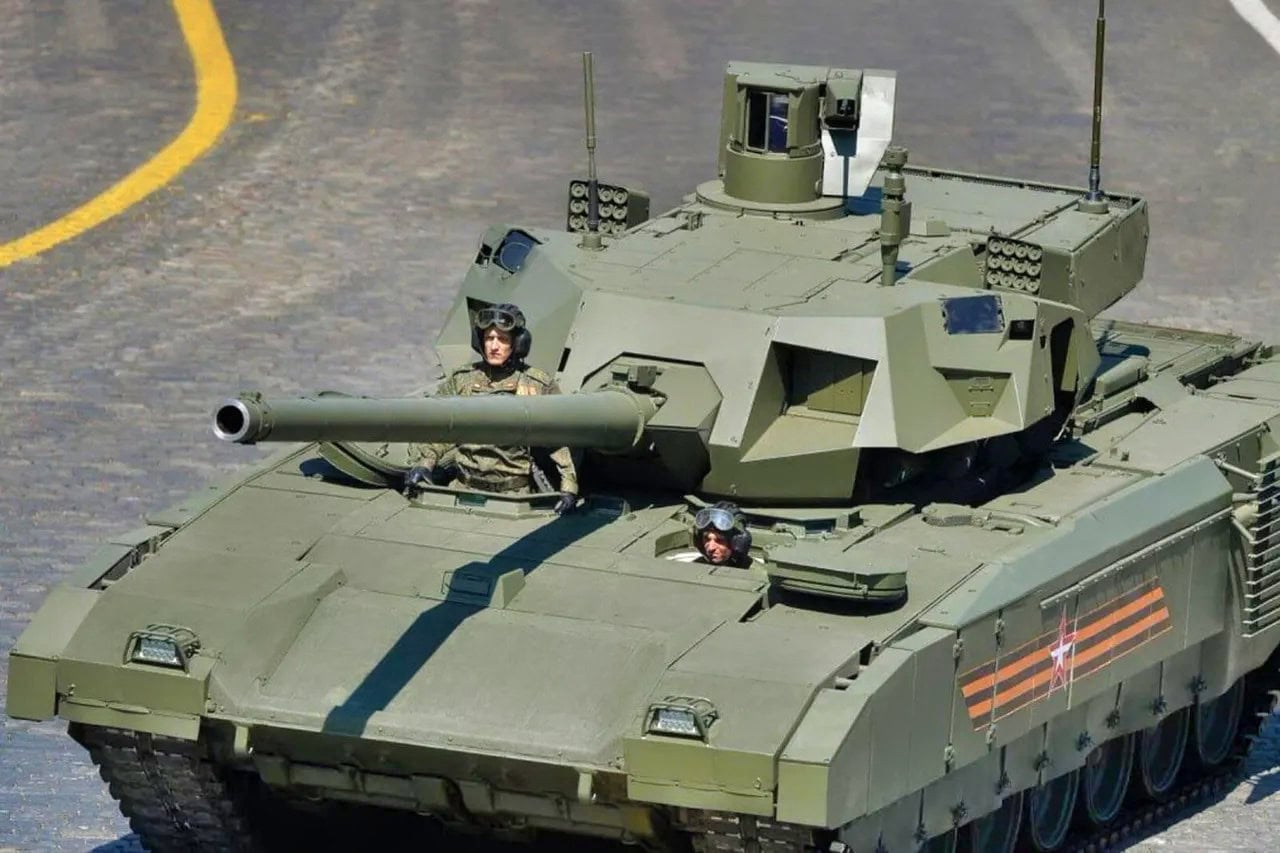
Russian T-14 Armata Tank. Image Credit: Social Media Screenshot.
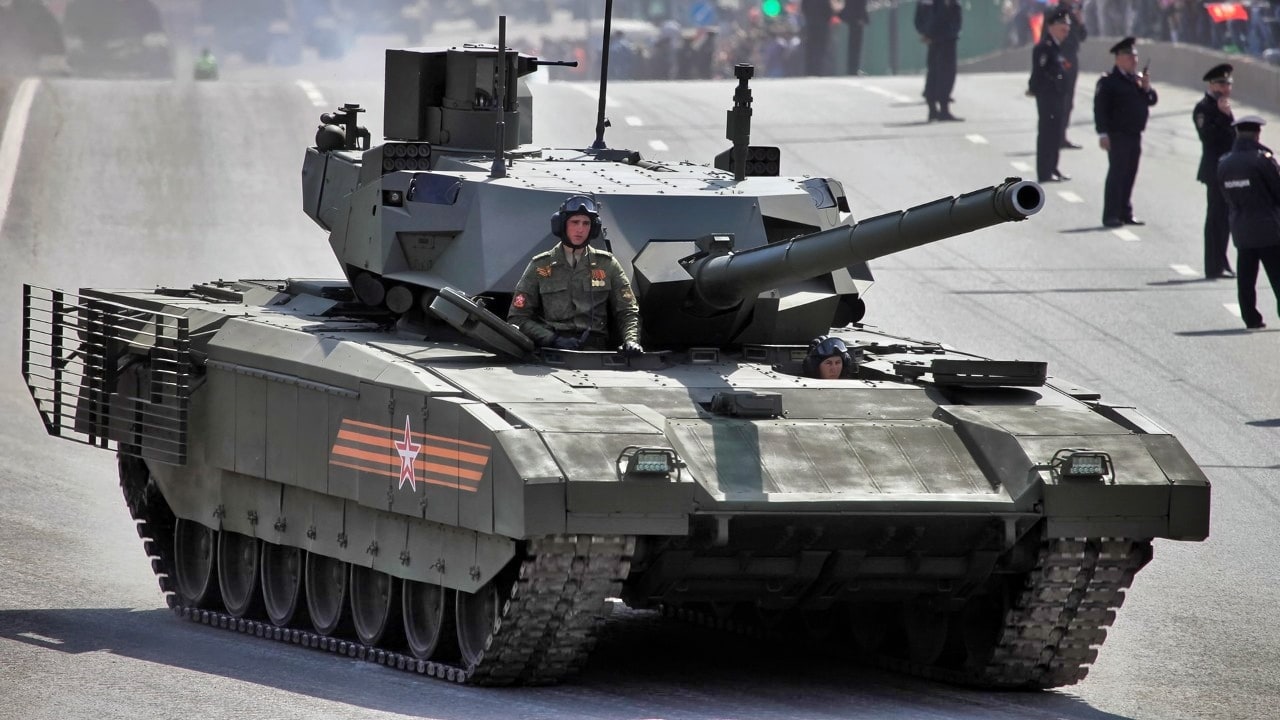
T-14 Armata Tank from Russia
Russia Originally Wanted to Acquire More Than 2,000 T-14s
The T-14 can reach 55 miles per hour on roads and weighs 48 tons. Russian defense firm Uralvagonzavod showed off the tank at a military parade in May 2015. The Russian armed forces wanted to buy over 2,000 T-14s at the time.
They were field-tested in Syria but were seen as expensive hardware, and the priority was on other arms systems. Serial production was delayed until the early 2020s. The Russians were still dedicated to the T-14 to lead an integrated group of advanced armored personnel carriers that desperately needed to be update,d like the older BMP and BTR fighting vehicles.
Next Level Technology
The T-14 is modernized to the gills. “The roof of the turret houses a meteorological mast, satellite communications, global navigation satellite system [GLONASS], data-link and radio communications antennae,” Army-Technology.com wrote.
Where Is the Armata?
Despite all of the whiz-bang specs, the T-14 has not been produced in numbers and has been mostly a no-show on the battlefield. This tank should have been dominant. The protection system has much potential, and it could have been more survivable than other tanks in the fleet.
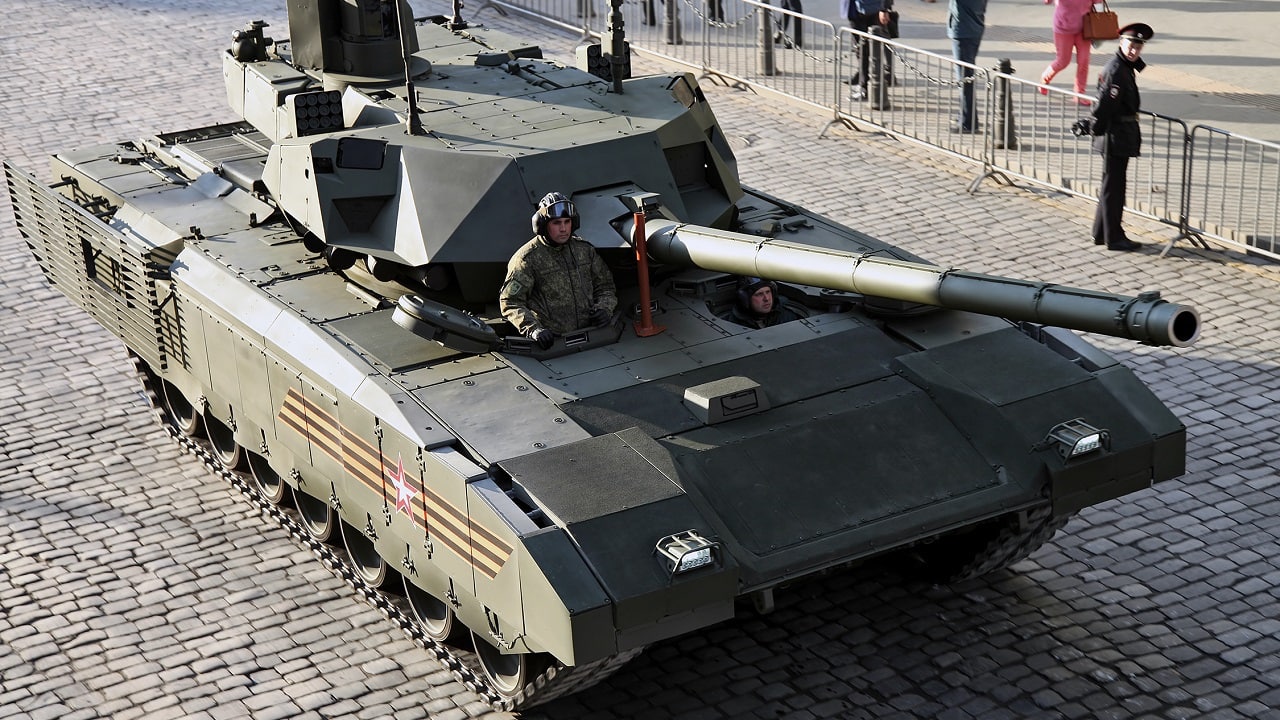
Russian Armata T-14 Tank. Image Credit: Creative Commons.
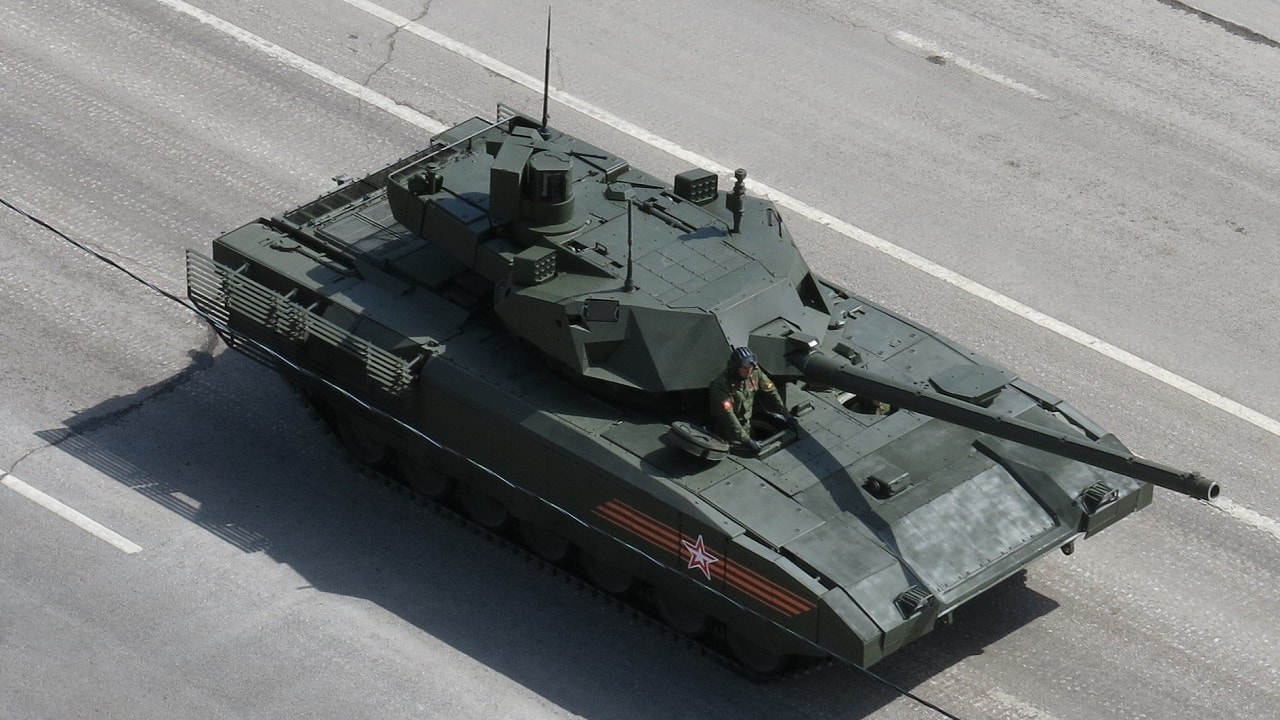
Russian Armata T-14 Tank Prototype from above.
It was meant to replace the existing T-72, T-80, and T-90 main battle tanks, but sanctions hi,t and Russia was stuck with these older models that lacked the promise of the fourth-generation Armata.
Then There Is the Bad News
However, the T-14 was constructed shoddily. It did not test well in Syria. The systems were perhaps over-engineered and too ambitious. Engineers and designers were quickly disappointed in the overall result. Russia also did not have the time and money to produce them in numbers. A 2,000-tank production run was not going to happen.
All of those “revolutionary” features were not that durable or reliable. There were flaws in the design, and many of the systems were barely passable and difficult to integrate.
Only 20 T-14 Armata Tanks
In 2023, the news from Uralvagonzavod was not good. Only about 20 T-14s had been produced. The tank was seen as a poster child for how not to run a new weapons program. The ones that were made had still not passed the minimum state trials.
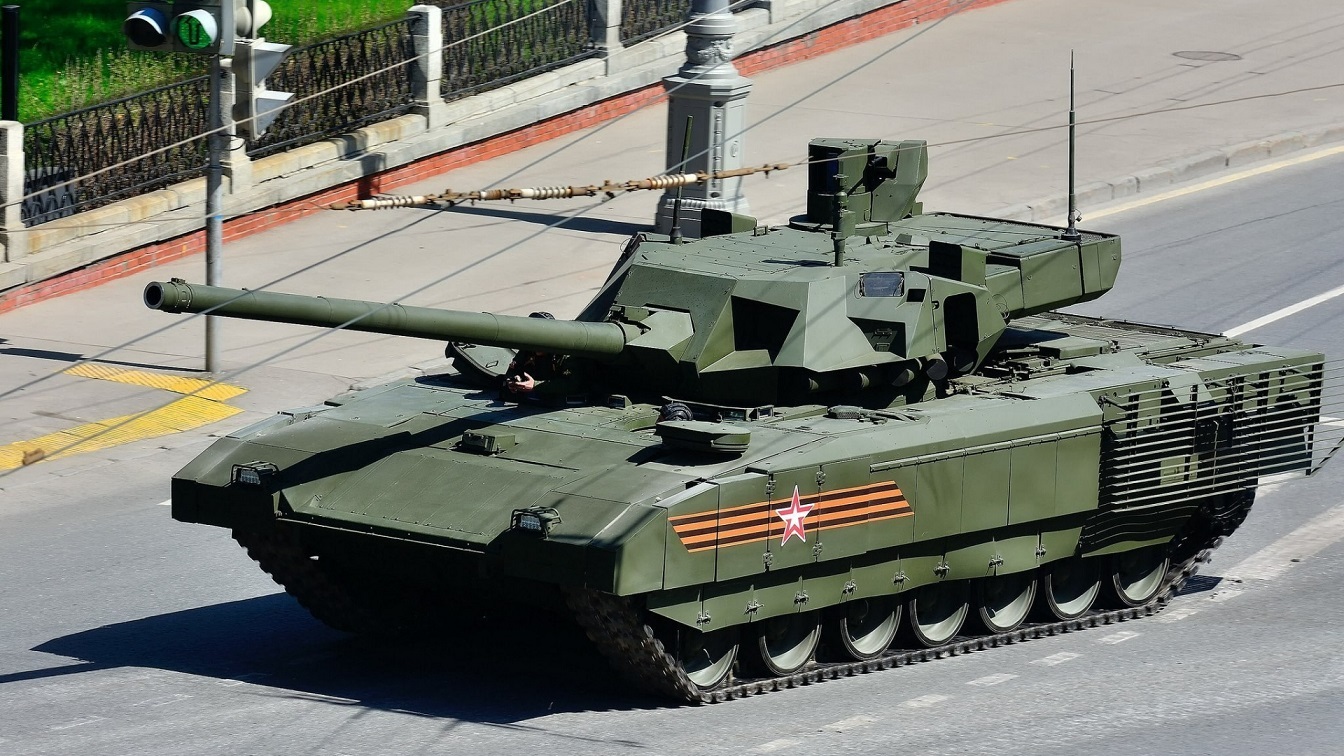
T-14 Armata Tank. Image Credit: Creative Commons.
State-run media said they were too valuable to use in the war, which was one way to put lipstick on the pig. The tank was expensive too – running at millions of dollars apiece. Sanctions hurt with the advanced systems. There was just no means to create economies of scale in the manufacturing process.
Painstaking Manufacturing Practices
“There was no assembly line. Yes, really: every vehicle was hand-built like a luxury car. Sanctions and supply-chain constraints further hindered the manufacture of key components and high-end electronics required for the platform,” as my colleague Jack Buckby wrote.
The T-14 has been a failure. This tank will never be a factor; it’s more of a paper tiger. This has been a disappointment for the Russian army, which was supposed to bring in “super weapons” that were sure to make the Ukrainians pay.
This Is A Difficult Lesson to Learn
The Russians are not known for being self-reflective or introspective, but they need to treat this as an opportunity to learn lessons in defense procurement. The engineers, designers, and technicians did not pull their weight. This came at a time when their countrymen desperately needed an advanced tank that could punch holes in the enemy lines and form an armored spearhead to take and hold key terrain.
That hasn’t happened, and Putin must be frustrated that one of his weapon systems that had so much potential failed to materialize. This is another example of Russia’s problematic defense industry that has not delivered the goods. It’s a case of promises made and promises broken.
About the Author: Brent M. Eastwood
Author of now over 3,000 articles on defense issues, Brent M. Eastwood, PhD is the author of Don’t Turn Your Back On the World: a Conservative Foreign Policy and Humans, Machines, and Data: Future Trends in Warfare plus two other books. Brent was the founder and CEO of a tech firm that predicted world events using artificial intelligence. He served as a legislative fellow for US Senator Tim Scott and advised the senator on defense and foreign policy issues. He has taught at American University, George Washington University, and George Mason University. Brent is a former US Army Infantry officer. He can be followed on X @BMEastwood.