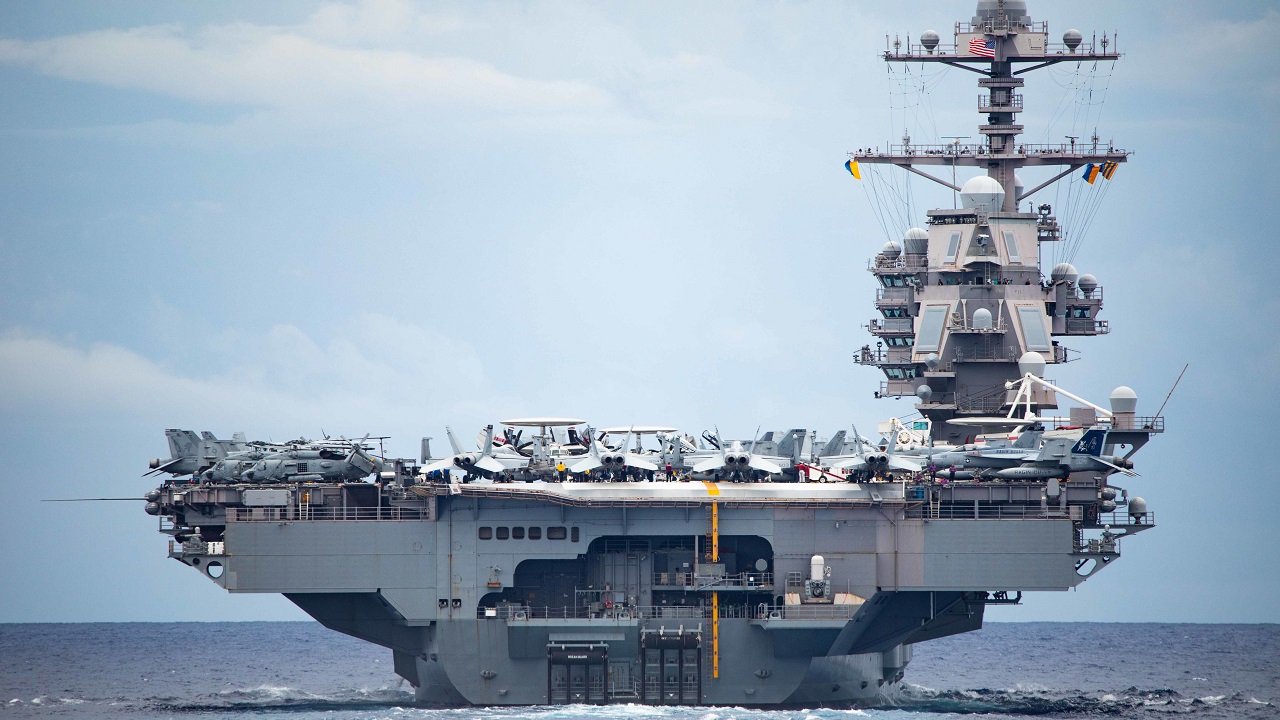
Summary and Key Points: The Ford-class is moving from concept to reality, and USS John F. Kennedy (CVN-79) is the proof point.
-After completing sea trials, the Navy is signaling confidence that the ship’s defining bet—automation, analytics, and reduced workload—actually works at sea.
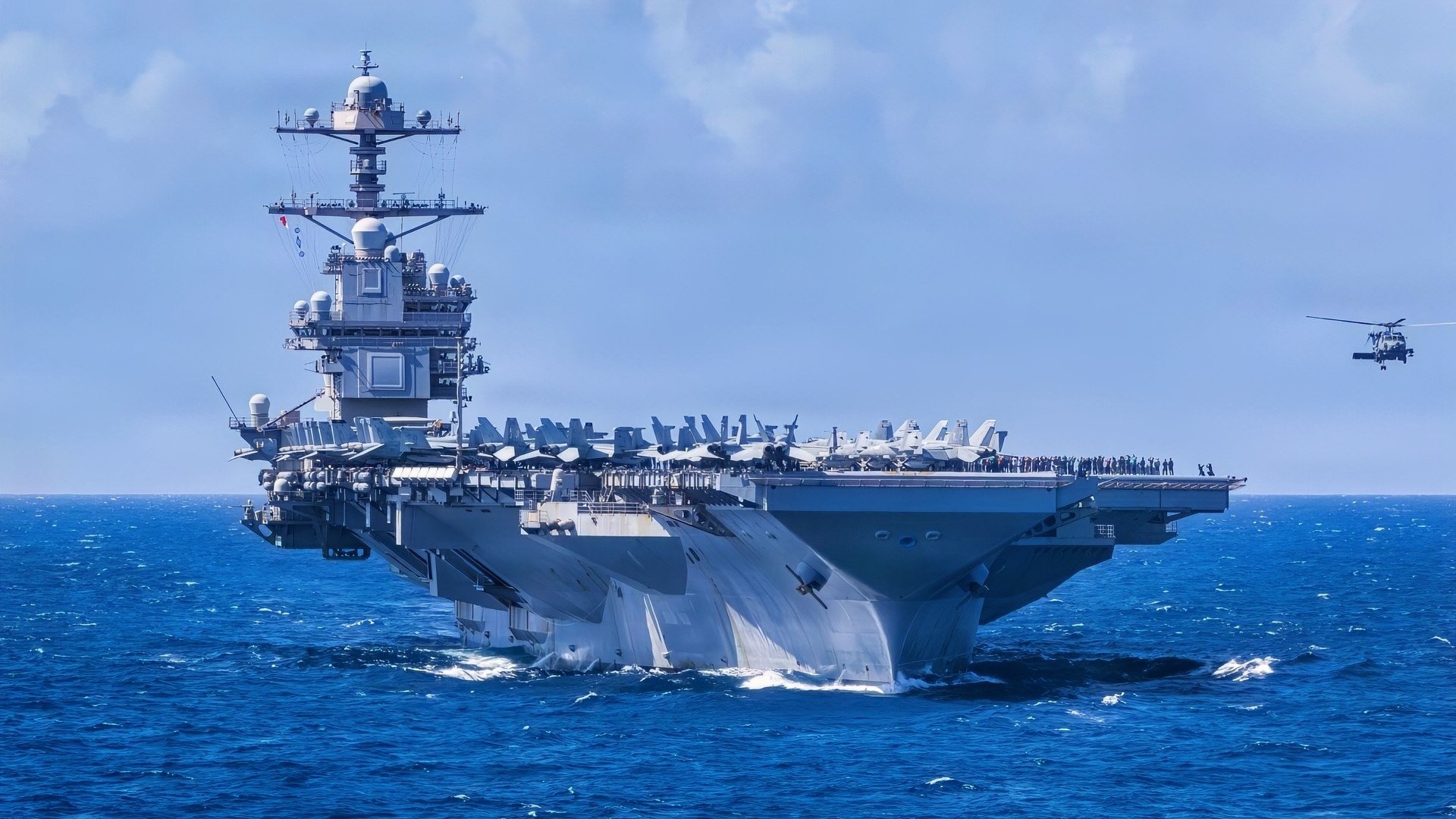
U.S. Navy Carrier Air Wing 8 aircraft fly in formation over the world’s largest aircraft carrier, Ford-class aircraft carrier USS Gerald R. Ford (CVN 78), during Carrier Air Wing 8’s aerial change of command ceremony while underway in the Caribbean Sea, Jan. 19, 2026. U.S. military forces are deployed to the Caribbean in support of the U.S. Southern Command mission, Department of War-directed operations, and the president’s priorities to disrupt illicit drug trafficking and protect the homeland. (U.S. Navy photo)
-The payoff is big: a smaller crew than Nimitz-class carriers, fewer watch-stander burdens, and more internal space for weapons, computing, sensors, and aircraft support.
-Kennedy’s next steps will include additional integration and potentially shock trials to validate survivability.
-With higher electrical output and systems like electromagnetic catapults and advanced elevators, the Ford-class is built for a faster, sustained operational tempo.
The U.S. Navy’s Next Ford-Class Supercarrier: USS John F. Kennedy Just Cleared a Major Hurdle
The U.S. Navy is poised to support two operational Ford-class carriers within the next few years, and the famous USS John F. Kennedy (CVN-79) has now completed its sea trials with reported success.
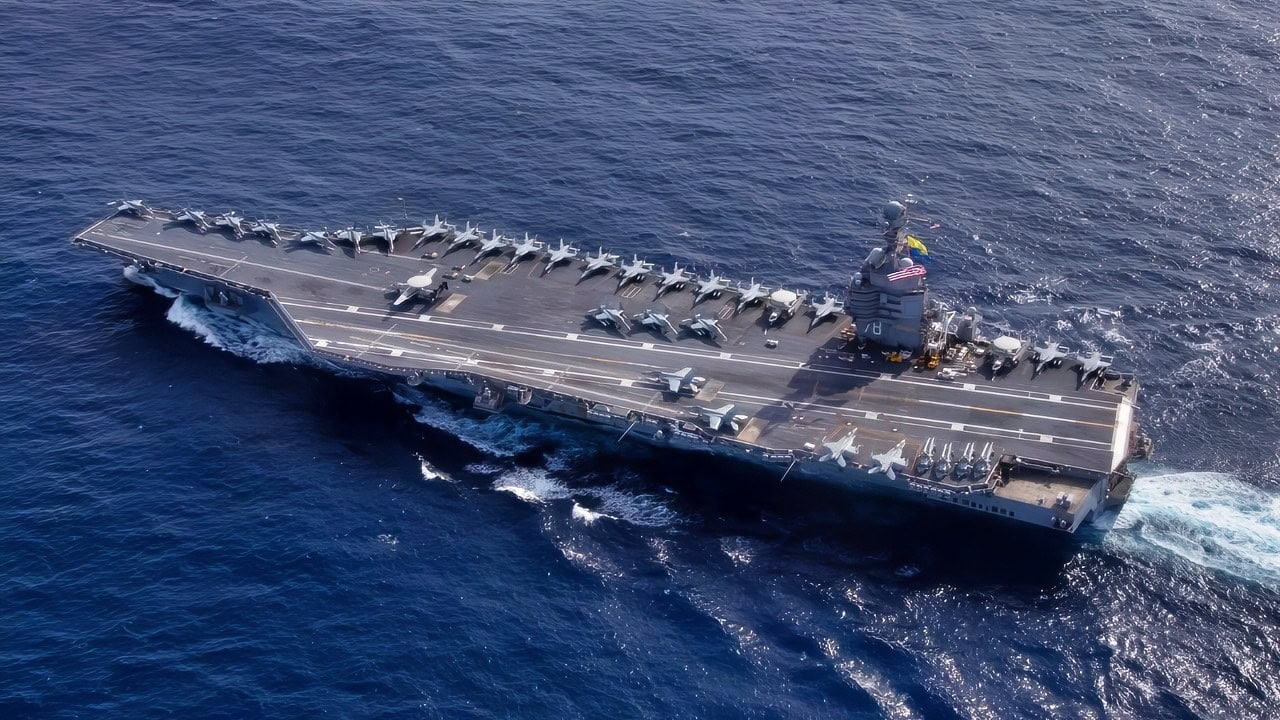
The first-in-class aircraft carrier USS Gerald R. Ford (CVN 78) steams in the Atlantic Ocean, Nov. 7, 2022. Exercise Silent Wolverine is a U.S.-led, combined training exercise that tests Ford-class aircraft carrier capabilities through integrated high-end naval warfare scenarios alongside participating allies in the Eastern Atlantic Ocean. The Gerald R. Ford Carrier Strike Group is conducting their first deployment in the U.S. Naval Forces Europe area of operations. (U.S. Navy photo by Mass Communication Specialist 3rd Class Jacob Mattingly)
It does not seem long ago when the USS Ford itself seemed “futuristic” and “far away,” yet the ship is now surging to the Middle East following its combat mission off the coast of Venezuela.
Meanwhile, the soon-to-be-famous USS Kennedy is taking new steps in the activation and pre-commissioning process, anticipating becoming fully operational in the next several years. Additional integration, building, and weapons interface will take place next as the ship prepares to hit the ocean for further preparations.
The Kennedy may also go through what’s known as “shock trials,” wherein bombs are exploded near the ship to assess its defenses, survivability, and overall ability to withstand nearby explosions.
Automation & AI Progress for Ford-Class Aircraft Carrier
There were many reported successes associated with the USS Kennedy’s recently completed “sea trials,” as the expectation was that it would demonstrate proficiency with many of the advanced technologies initially woven into the USS Ford.
For instance, one of the early promises of the USS Ford was the advanced application of computer automation, measurements, and data analytics to reduce the ship’s crew by as many as 900 sailors.

Aircraft Carrier USS Gerald R. Ford Diagram. Image Credit: Creative Commons.
By automating more tasks through advanced computing and analytics, the USS Ford has been able to perform its functions with roughly 900 fewer crew members than the preceding Nimitz-class, a move designed to streamline operations and save as much as $4 billion per carrier over the life of the ship.
U.S. Navy experts and senior leaders analyzing the Kennedy sea trials report that the computer automation indeed performed as hoped on the ship.
Mr. Deron Hathaway, with Fleet Power Plant Engineering, Navy Nuclear Laboratory, has been in his current role for 30 years and was impressed with the changes he saw during his first time underway on a Ford-class aircraft carrier, according to a U.S. Navy essay on the USS Kennedy sea trials.
Navy Praises Ford-Class Computing
“I have been on a number of trials, but this steam plant impressed me in several ways,” said Hathaway. “The overall capability, the automation, the reduced workload on watch standers is a notable improvement from [the Nimitz-class aircraft carriers]. There has been plenty of learning in [Builder’s Sea Trials] and my team appreciated the hospitality from the crew and just bringing us in on this special occasion.”
Computer automation can reduce workload by conducting logistical tasks, checking equipment, taking measurements, and organizing otherwise disconnected pools of critical maintenance information aboard the ship.
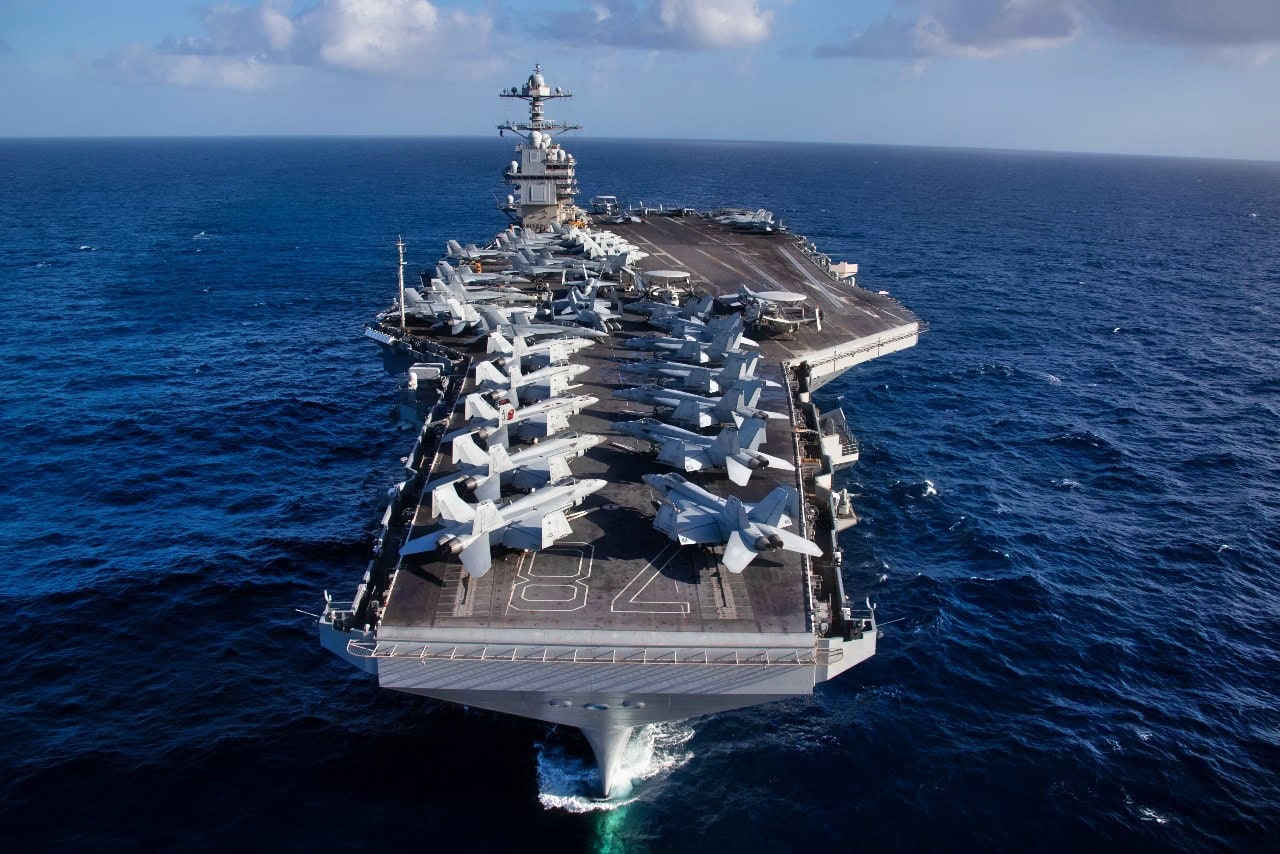
The world’s largest aircraft carrier USS Gerald R. Ford (CVN 78), steams in the Mediterranean Sea, Dec. 24, 2023. The Gerald R. Ford Carrier Strike Group is currently operating in the Mediterranean Sea. The U.S. maintains forward-deployed, ready, and postured forces to deter aggression and support security and stability around the world. (U.S. Navy photo by Mass Communication Specialist 2nd Class Jacob Mattingly)
Critical variables such as temperature, pressure, distance, and sensor input can be aggregated, organized, and analyzed to support human decision-makers in controlling them.
This reduces manual labor requirements and enables the ship to allocate more space to weapons, computing, advanced technologies, and aircraft. In this respect, the addition of space supports the concept of operation woven into the Ford-class, as they are grounded in the idea of a larger-deck carrier able to operate with more aircraft and sustain a much higher op-tempo and sortie rate.
The Ford-class carriers need more space for weapons, electronics, command and control, and, quite simply, attack aircraft, given that the larger flight deck enables a 33-percent increase in sortie rate compared to the existing Nimitz-class carriers.
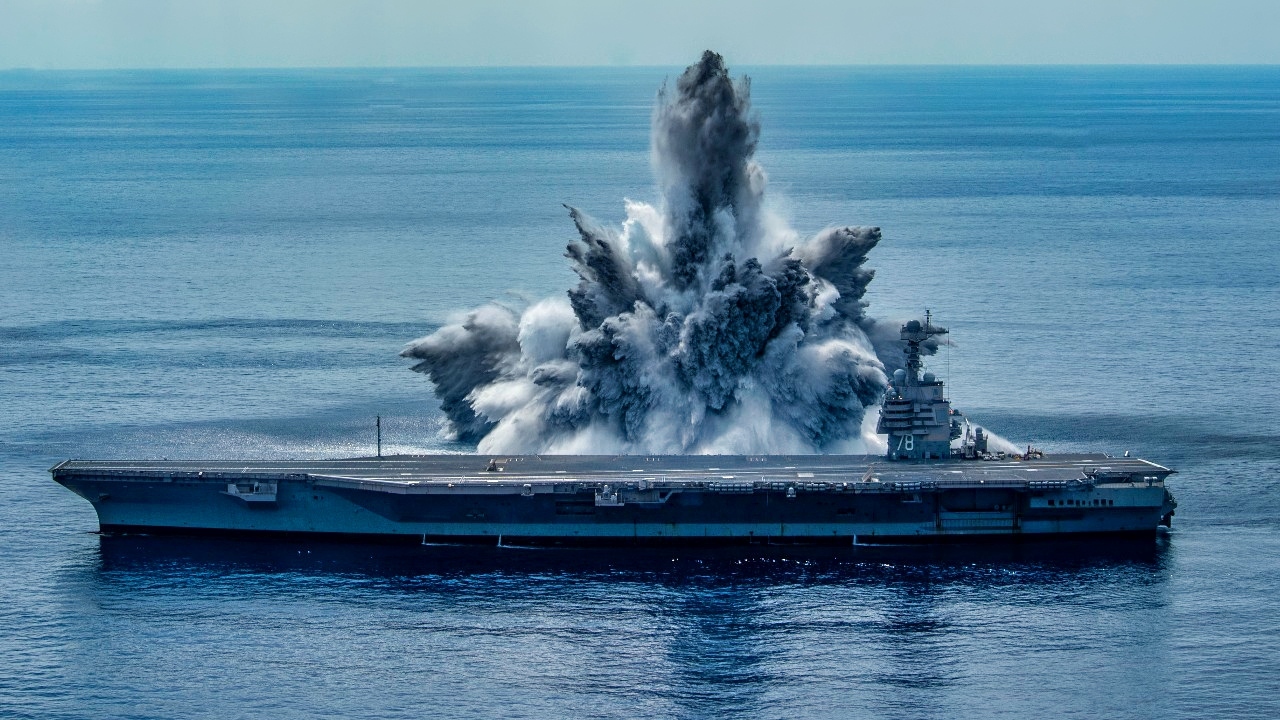
The aircraft carrier USS Gerald R. Ford (CVN 78) successfully completes the third and final scheduled explosive event of Full Ship Shock Trials while underway in the Atlantic Ocean, Aug. 8, 2021. The U.S. Navy conducts shock trials of new ship designs using live explosives to confirm that our warships can continue to meet demanding mission requirements under harsh conditions they might encounter in battle. (U.S. Navy photo by Mass Communication Specialist 3rd Class Novalee Manzella)
More on-board power is needed as well, given that the Ford-class not only operates an electromagnetic catapult but also runs electric elevators and an entirely new generation of sensing, computing, electronics, and command-and-control systems. To support all of this, the Ford-class carriers operate four on-board generators capable of delivering more than 125 Megawatts, a paradigm-changing amount of on-board power.
About the Author: Kris Osborn, Warrior Maven President
Kris Osborn is the President of Warrior Maven – Center for Military Modernization. Osborn previously served at the Pentagon as a highly qualified expert in the Office of the Assistant Secretary of the Army—Acquisition, Logistics & Technology. Osborn has also worked as an anchor and on-air military specialist at national TV networks. He has appeared as a guest military expert on Fox News, MSNBC, The Military Channel, and The History Channel. He also has a Masters Degree in Comparative Literature from Columbia University.