
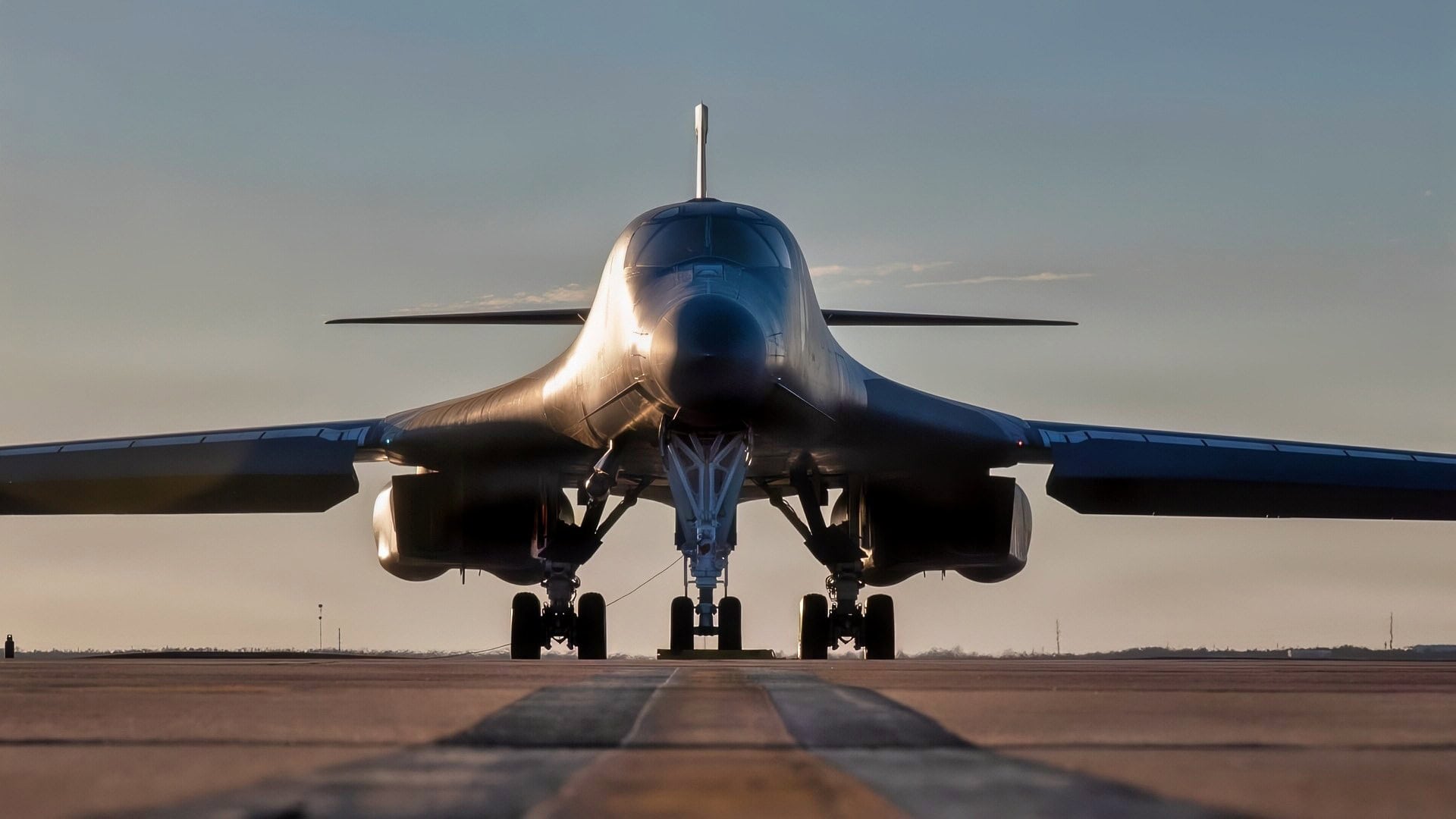
Summary and Key Points: Despite the arrival of the B-21 Raider, the U.S. Air Force is investing in a major upgrade for its remaining 44 B-1B Lancer bombers to serve as a critical bridge through the 2030s.
-The integration of Load Adaptable Modular (LAM) pylons will transform the “Bone” into a “missile truck,” increasing its capacity from 24 to 36 missiles by allowing external carriage of JASSM, LRASM, and future hypersonic weapons.
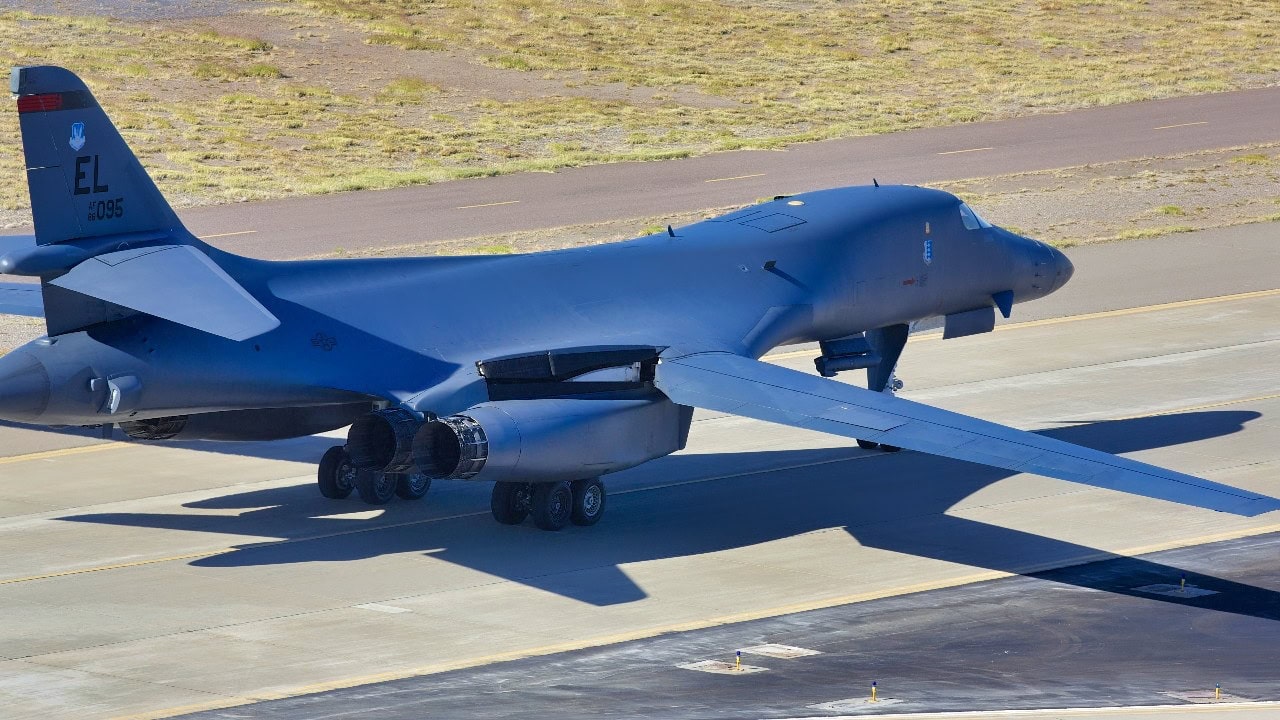
B-1B Lancer Bomber. Image Credit: Creative Commons.
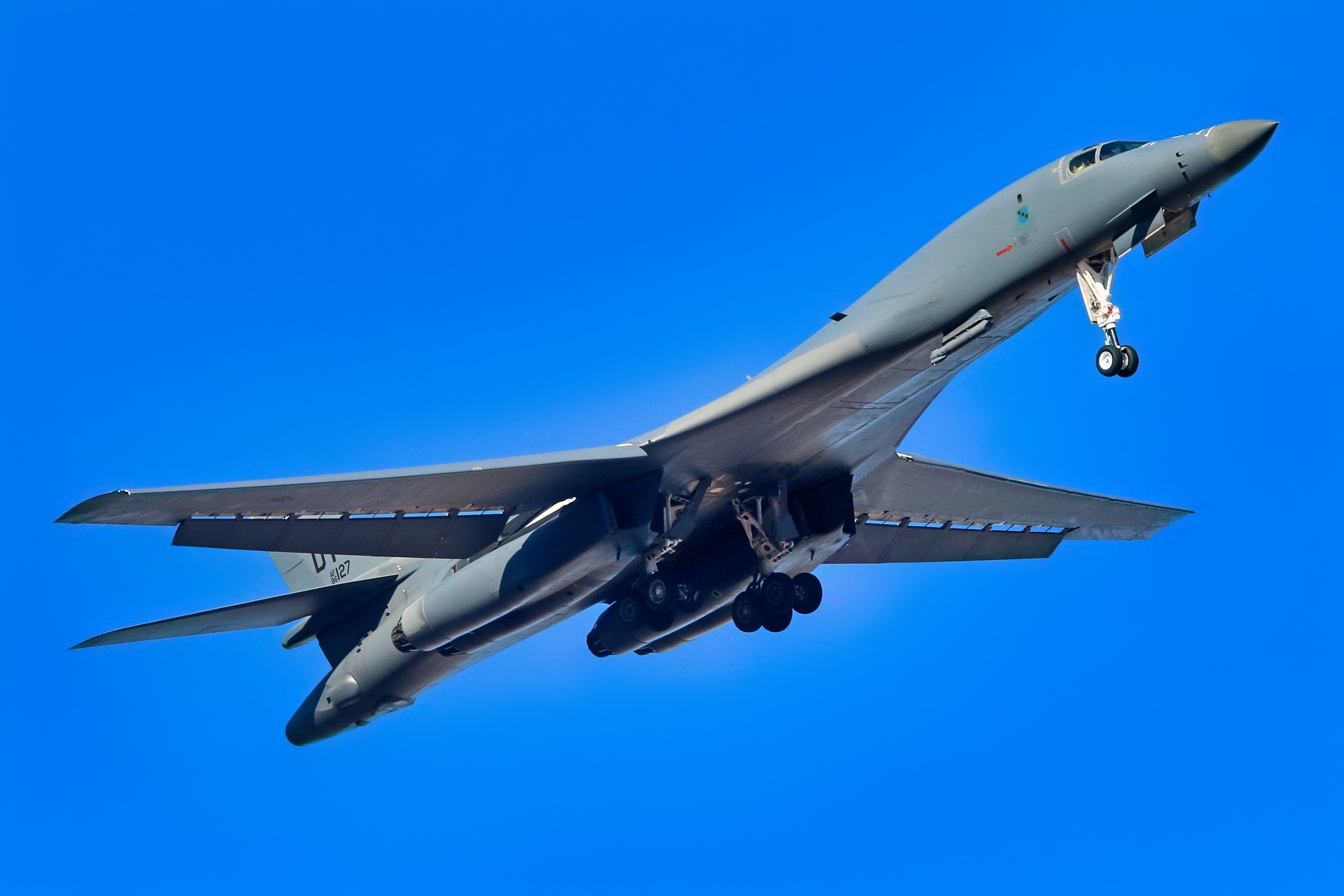
B-1B Lancer. Image Credit: Creative Commons.
-This modification ensures mass firepower and standoff capability, mitigating the risks of a potential “bomber gap” while B-21 production ramps up.
In 2 Words: More missiles.
Is The B-1B Bomber Upgrade Worth It With The B-21 In Production?
The B-1 Lancer, known to its pilots as the “Bone” for B-One, has undergone several changes throughout its service life. Today, she is part of the triad of long-range bombers in the US Air Force’s fleet.
Together with the B-52 BUFF (Big, Ugly, Fat, F***er) and the B-2 Spirit stealth bomber, they still pack a mighty punch against America’s enemies.
However, the B-1B and B-2 are slated eventually for retirement.
The US Air Force currently has 44 B-1B Lancer bombers in active service. This number has been maintained due to Congressional mandates. The fleet initially comprised 100 aircraft, but the number has been reduced by retirements and crashes.
The B-1B bomber is being phased out and replaced by the B-21 Raider. However, those 45 bombers still in service are getting an upgrade that will increase their payload. The Air Force is using the upgraded B-1B bomber as a bridge until the B-21 Raiders are produced in sufficient numbers to take over.
B-1B Lancer History
The B-1 bomber was first developed in the 1970s as a supersonic replacement for the B-52 Stratofortress.
Her mission was to penetrate Soviet airspace flying low and fast, and when approaching a nuclear weapon target, pop up to an appropriate altitude, deliver her atomic bombs, and then drop her altitude using her speed to get away.
The original design could fly at speeds of Mach 2.2 (1,688 mph). However, President Carter cut the program in 1977 due to its high cost, the introduction of the AGM-86 cruise missile that flew the same essential speed and distance, and the development of the B-2 stealth bomber.
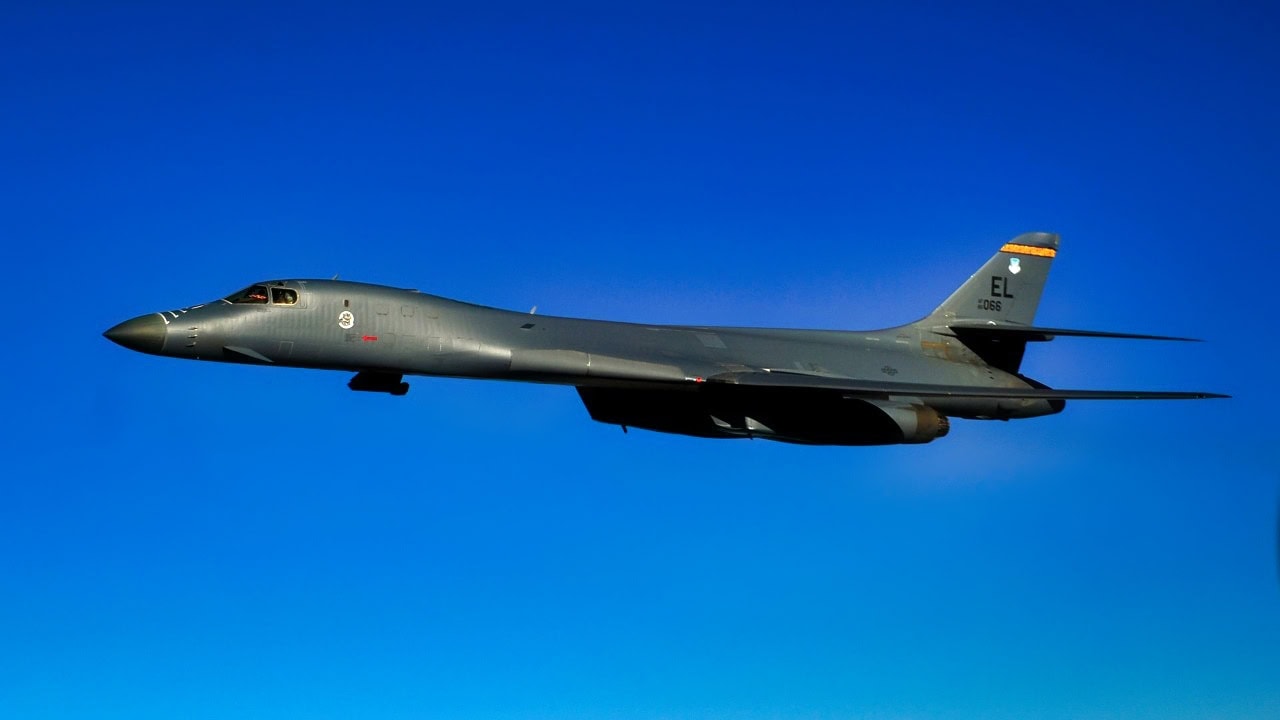
B-1B Lancer Bomber. Image Credit: Creative Commons.
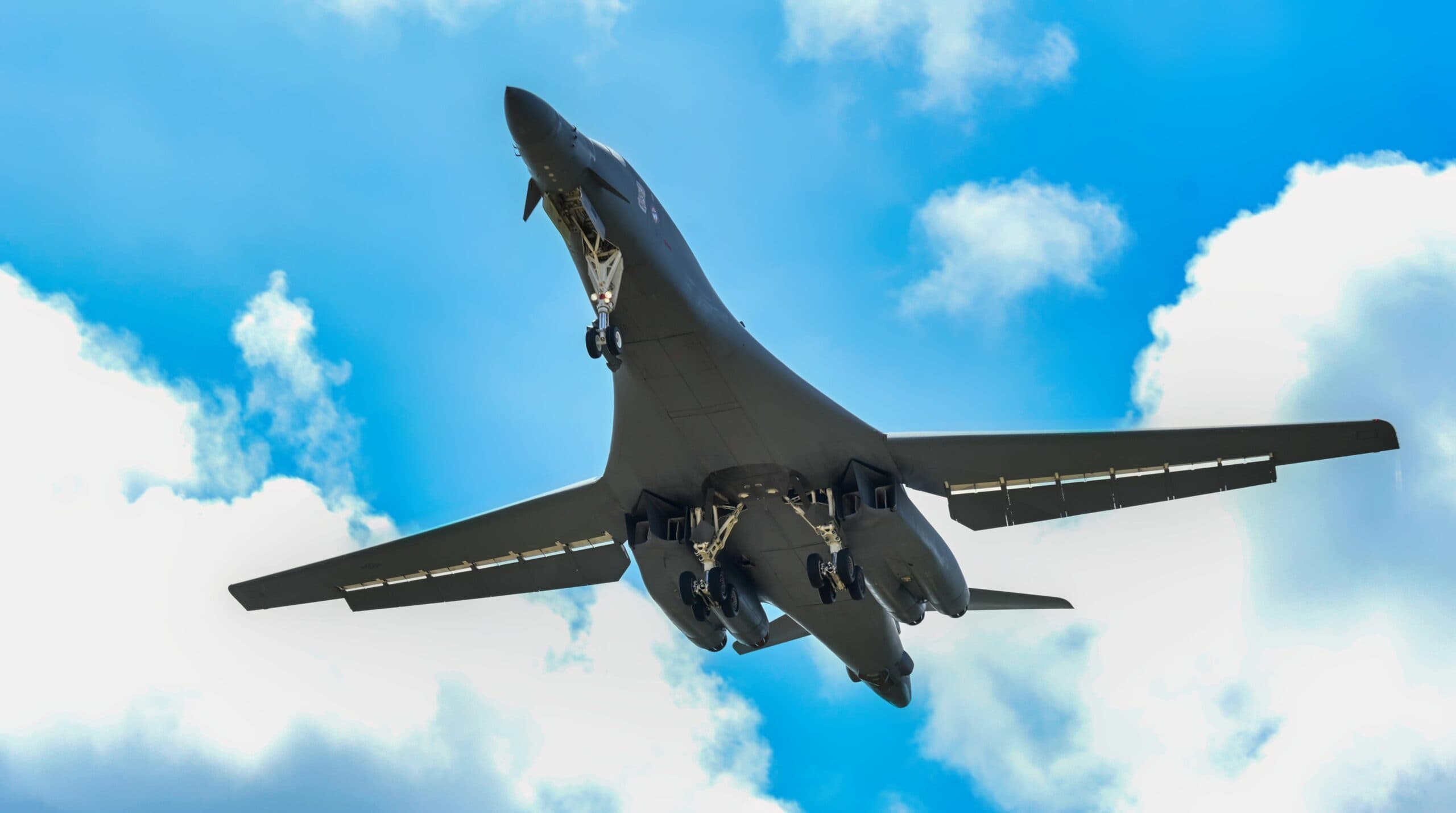
A U.S. B-1B Lancer assigned to the 34th Expeditionary Bomb Squadron, Ellsworth Air Force Base, S.D., ascends into the sky after conducting a “touch and go” maneuver during Bomber Task Force 25-1 at Andersen Air Force Base, Guam, Feb. 24, 2025. Bomber Task Force missions provide opportunities to train and work with our Allies and partners in joint and coalition operations and exercises. (U.S. Air Force photo by Airman 1st Class Alec Carlberg)
President Reagan restarted the program in 1981, and it underwent some changes. The payload was increased to 74,000 pounds, an improved radar was added, and the radar cross-section was reduced, lowering the top speed to Mach 1.2 (920 mph).
The first B-1B bomber, “The Star of Abilene,” was delivered in 1985. By 1988, all 100 orders had been delivered, and production had stopped. The US had a bomber force that could penetrate Soviet airspace and take out targets inside the Soviet Union in a nuclear confrontation.
Air Force Modifying B-1B Lancers To Be A Missile Truck
The Air Force is equipping its B-1B Lancer bombers with new external pylons, specifically the Load Adaptable Modular (LAM) pylons, to enhance their weapons carriage capabilities.
This upgrade allows the B-1B to carry a wider variety of munitions, including larger weapons and hypersonic missiles, potentially transforming it into a hypersonic weapons testbed. But could this increase the load on a hypersonic missile truck?
“The B-1 LAM pylon is going to be used to allow us to carry a variety of different weapons and different weapons configurations on the external pylons of the B-1,” said Lt. Col. Scott Pontzer, 419th Flight Test Squadron Commander.
“That will enable weapon delivery and testing in a variety of different configurations and include new weapon release profiles.”
The Air Force’s upgrade of the B-1B Lancer is considered worthwhile because it bridges a critical “bomber gap” before the B-21 Raider is fully operational, providing essential, high-payload conventional strike capability through at least the 2030s.
These upgrades ensure the B-1B remains relevant for hypersonic weapon carriage and stand-off missions, offering a cost-effective, proven alternative to relying solely on the emerging, smaller B-21 fleet.
Joint Air-To-Surface Standoff Missiles, Anti-Ship Missiles
According to Business Insider, the Air Force is working to increase the number of Long-Range Anti-Ship Missiles (LRASM) and Joint Air-to-Surface Standoff Missiles (JASSM) a B-1B bomber can carry. Currently, the bomber can be loaded internally with up to 24 missiles. The service is now developing the means to externally carry an additional 12 missiles for a total of 36.
The JASSM was developed in the 2000s as a stealthy, subsonic cruise missile. It typically uses GPS to fly to a midpoint and then an imaging infrared seeker and pattern recognition system to identify the target.
Once a target is identified and locked on, JASSM flies toward it, exploding its 1,000-pound high-explosive warhead. The warhead can be programmed to airburst the target, showering the ground below with shrapnel, or dive into it and penetrate hardened targets such as bunkers or other protective defenses.
The LRASM was designed to replace the aging Harpoon anti-ship missile. It was developed from the extended-range version of JASSM, JASSM-ER.
Visually, the two appear very similar, but the LRASM incorporates satellite data link targeting—the ability to detect and then fly around enemy air defenses, and ship target recognition to ensure it homes in on the correct target.
The Load Adaptable Modular (LAM) Pylons
The Load Adaptable Modular (LAM) pylon is a new, modular weapons pylon developed by Boeing for the B-1B Lancer bomber. It’s designed to be adaptable, allowing for the seamless integration and testing of a wide range of existing and emerging weapons, including hypersonic missiles.
The LAM pylon streamlines weapons tests because its modular attachment points can be repositioned, reducing the need for unique pylons and making it possible to test weapons for which an appropriate pylon may not exist. Designers and testers liken it to a “Lego” pylon.
The LAM pylons offer greater flexibility in terms of weapon types and configurations.
The new pylons will significantly increase the B-1B’s payload capacity and allow it to carry a wider range of weapons, including hypersonic missiles.
The Air Force Is Hedging Against Potential Delays For The B-21
This move by the Air Force is smart, as it offers twofold value. First, if the B-21 Raider, currently in low-rate initial production (LRIP) and undergoing flight testing, is delayed, the LAM has breathed new life into the B-1B. And it can continue to give the Air Force 44 viable bombers.
However, the LAM can extend the B-1B’s life span even further. With a B-1B potentially armed with 36 hypersonic missiles, it would be an incredibly standoff weapons platform.
The AF’s budget request, as reported by TWZ, noted, “Maximum carriage of existing standoff munitions on the B-1B provides near-term increased volume of fires from standoff ranges and serves to mitigate transition risk of the Air Force bomber fleet prior to the emergence of the B-21 as a combat bomber.”
“The Hypersonic Integration Program successfully demonstrated the B-1’s ability to execute a captive carry of a 5,000-pound class store and the release of a proven weapon shape from a Load Adaptable Modular (LAM) pylon,” the budget documents added.
Increased Payload For the “Bone”
The B-1B, with its new pylons, is being eyed as a platform for hypersonic weapons testing. The initial plans for the B-1 bomber included six pylons with hardpoints to carry nuclear cruise missiles externally.
However, after the collapse of the Soviet Union and the end of the Cold War, the hardpoint pylons were no longer used due to the nuclear treaties (SALT II). However, the bombers do now use one of those stations to carry a Sniper Advanced Targeting Pod (ATP).
The pylons are expected to allow the B-1B to carry a significant number of weapons, potentially including 24 internally and 12 externally. The B-1B could also carry 144 Small Diameter Bombs (SDBs), with 48 externally and the rest internally.
Placing the Hypersonic Attack Cruise Missile on the B-1B, with the potential to carry 36 missiles as a standoff delivery platform, will certainly draw the attention of China and Russia, which are developing hypersonics.
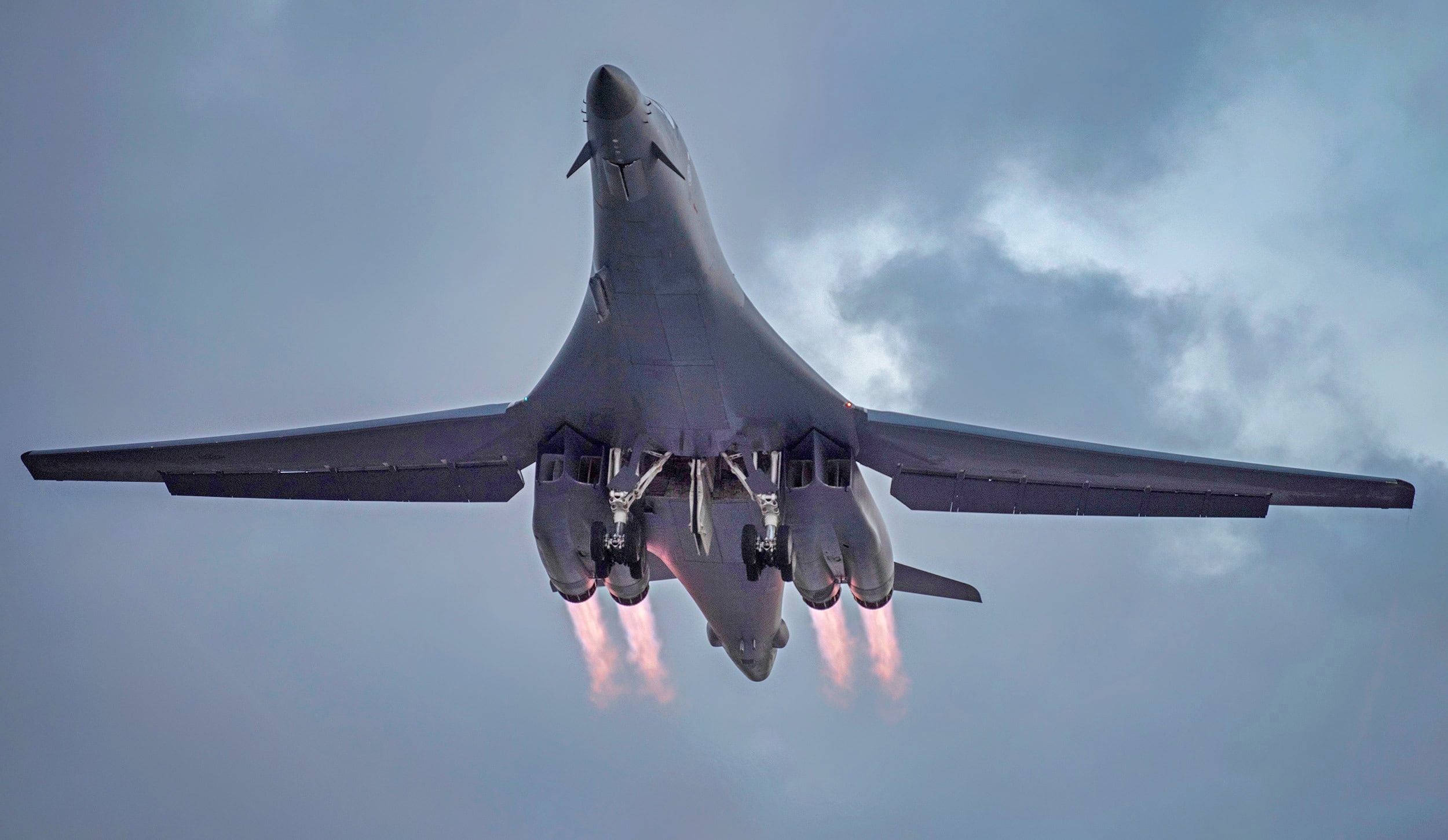
B-1B Lancer Bomber. Image Credit: Creative Commons.

A B-1B Lancer assigned to Ellsworth Air Force Base, S.D, takes off in support of a Bomber Task Force mission at Naval Support Facility Diego Garcia, Nov. 2, 2021. Bomber missions provide opportunities to train and work with our allies and partners in joint and coalition operations and exercises. (U.S. Air Force photo by Staff Sgt. Hannah Malone)
While the B-21 Raider will eventually replace the B-1B due to its superior stealth and technology, the B-1B provides necessary, immediate, and heavy-hitting capabilities that are crucial for strategic deterrence until the new bomber is fully fielded. This avoids the so-called “bathtub effect” where legacy aircraft retire faster than replacements are fielded at scale.
Current Air Force procurement plans cap the number of B-21 Raiders at 100. No one believes that number will be sufficient. Most Air Force officers and aviation analysts believe that numbers closer to 175-200 Raiders, or even upwards of 225, would better align with expected strategic requirements and ensure adequate capacity.
The plan to upgrade the B-1B bombers, while not the preferred option, may be the correct one until the US can produce enough B-21s to meet the Air Force’s requirements.
About the Author: Steve Balestrieri
Steve Balestrieri is a National Security Columnist. He served as a US Army Special Forces NCO and Warrant Officer. In addition to writing on defense, he covers the NFL for PatsFans.com and is a member of the Pro Football Writers of America (PFWA). His work was regularly featured in many military publications.