

Summary and Key Points: The B-52 Stratofortress earned its legend in Vietnam during Operation Arc Light, where its thunderous bombing runs became one of the war’s most unforgettable images.
-First fielded in the 1950s, the bomber evolved through multiple variants, from early “straight bombers” to the still-serving B-52H and the future B-52J.

A modified B-52H Stratofortress departs Edwards Air Force Base for an evening training mission on June 25, 2025. The aircraft is assigned to the 419th Flight Test Squadron, Global Power Bombers Combined Test Force, tasked with supporting developmental testing across the B-52, B-1, and B-2 bomber portfolio. Along with most 412th Test Wing aircraft, B-52H bombers at Edwards include special instrumentation to conduct a variety of testing activities. (Air Force photo by Chase Kohler)
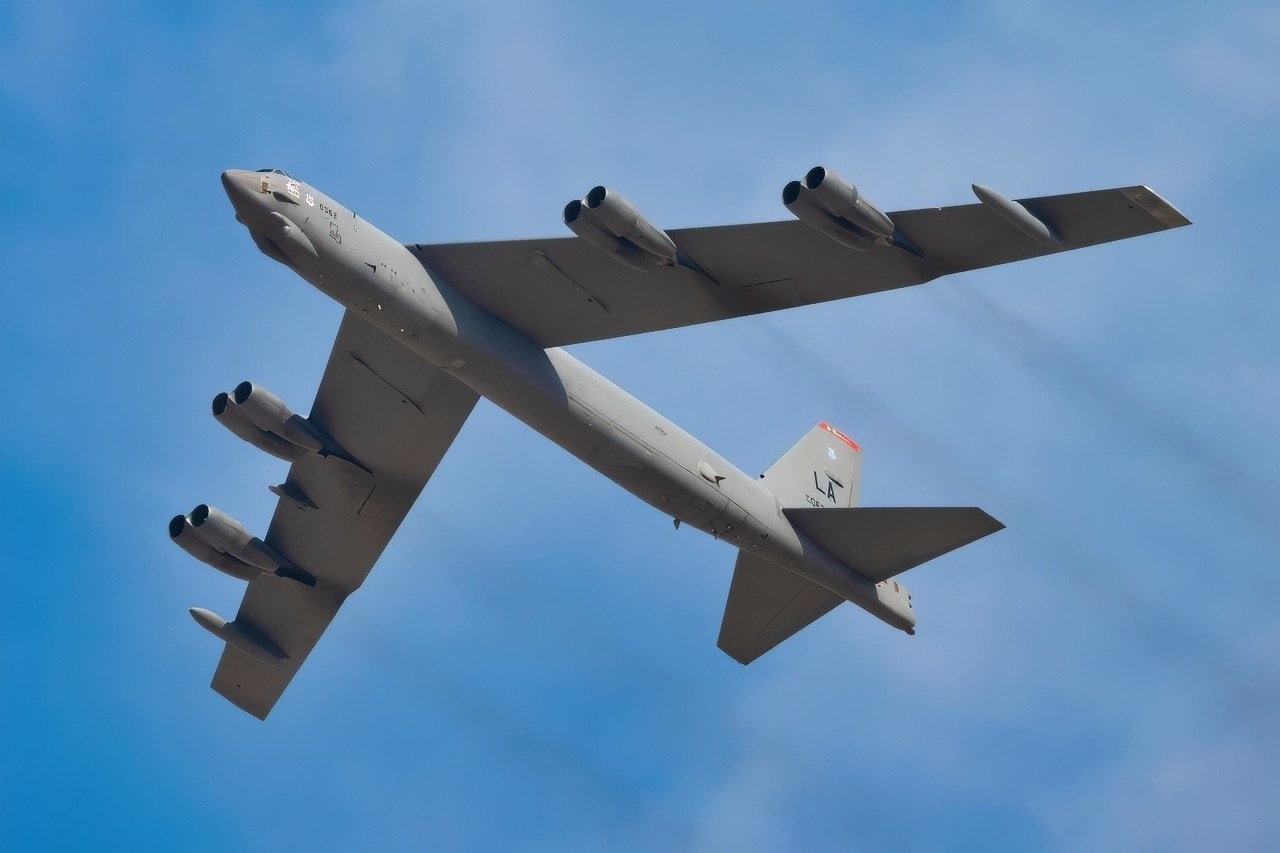
A U.S. Air Force B-52 Stratofortress aircraft, assigned to the 96th Bomb Squadron from Barksdale Air Force Base, Louisiana, flies over spectators at the Dubai Airshow 2025, Nov. 17, 2025, at the Al Maktoum International Airport in Dubai, United Arab Emirates. The B-52 flew from Rota, Spain, to participate in the event, showcasing U.S. airpower on a global stage. (U.S. Air Force photo by Staff Sgt. Tylin Rust)
-Over time, it shifted from mass bombing to a stand-off strike role, launching advanced cruise missiles from safer distances.
-New engines, upgraded radar, and modern weapons are set to keep the BUFF flying for decades. The result is a rare combat aircraft with a service life that could stretch into the 2050s.
The B-52 Bomber’s 70-Year Run: From Vietnam Bombing Raids to Stand-Off Missile Strikes
When I first saw the movie Apocalypse Now, I was confronted with a memorable scene during the Vietnam War. There was one ominously thunderous trail of explosions that looked to shake the ground. “What was that?” the characters asked. “Arc Light. B-52 strikes,” Martin Sheen’s character replied.
This made me wonder as a young child, just what the B-52 was, and if the airplane was named Arc Light? It turns out that Arc Light was also the moniker of a B-52 bombing operation during the war. It lasted from 1965 to 1973. The bombing was for the support of troops on the ground during close air support missions and the destruction of enemy bases, supply depots, and command and control centers.
It Puts the ‘Fortress’ in B-52 Stratofortress
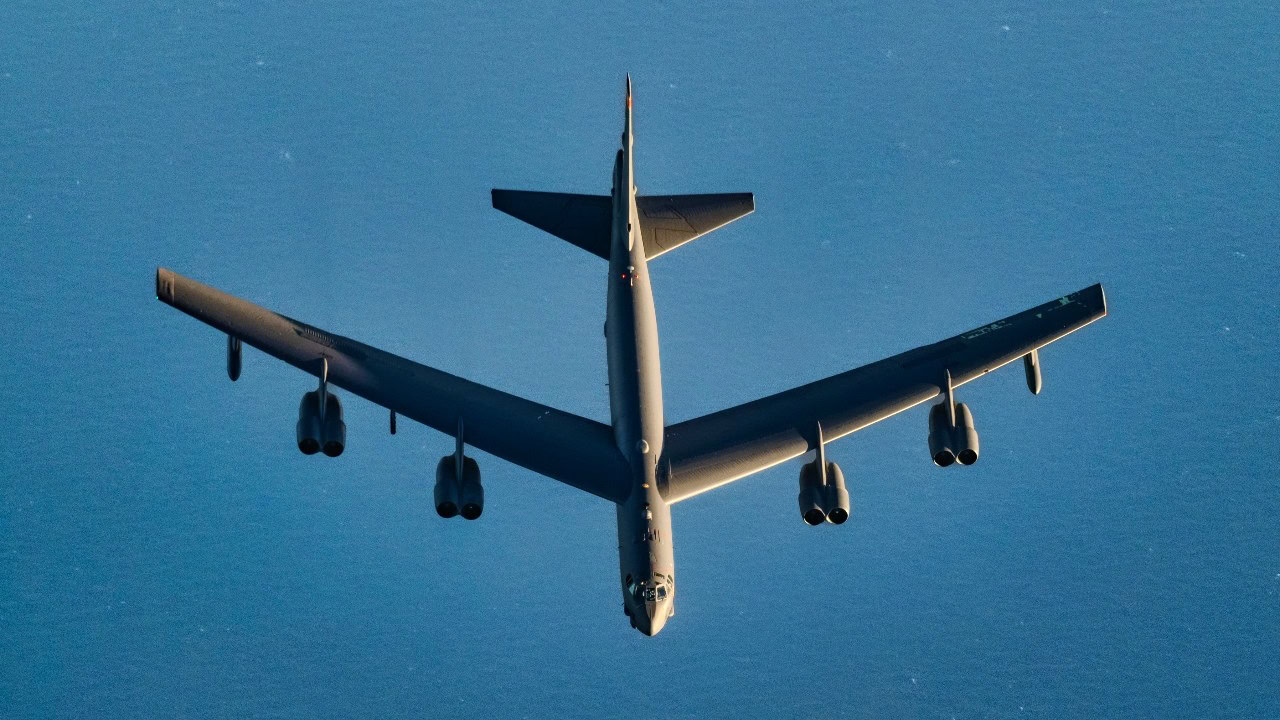
A U.S. Air Force B-52H Stratofortress flies a show of presence mission over the U.S. Central Command area of responsibility, Feb. 20, 2025. Strategic bombers contribute to stability in the CENTCOM theater by demonstrating the credibility, capability, and readiness of the U.S. bomber force, which is critical to deterring attacks against the U.S. and its allies and partners. (U.S. Air Force photo by Staff Sgt. Jackson Manske)
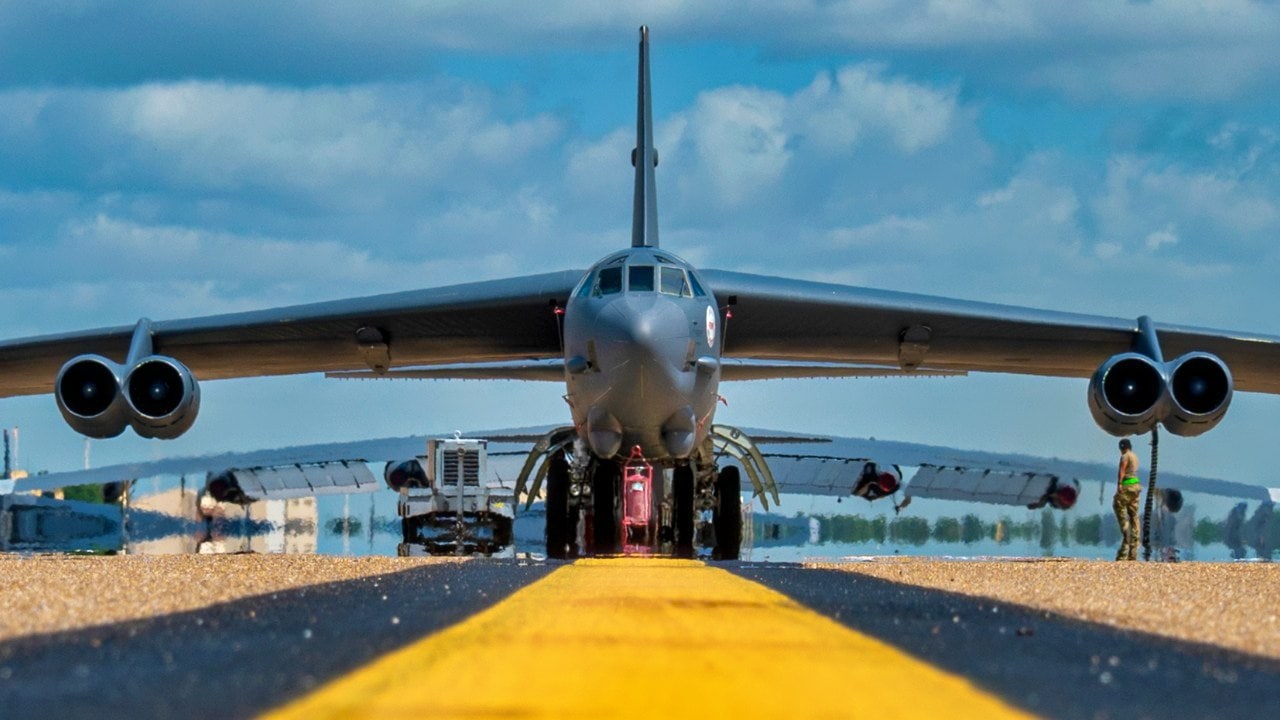
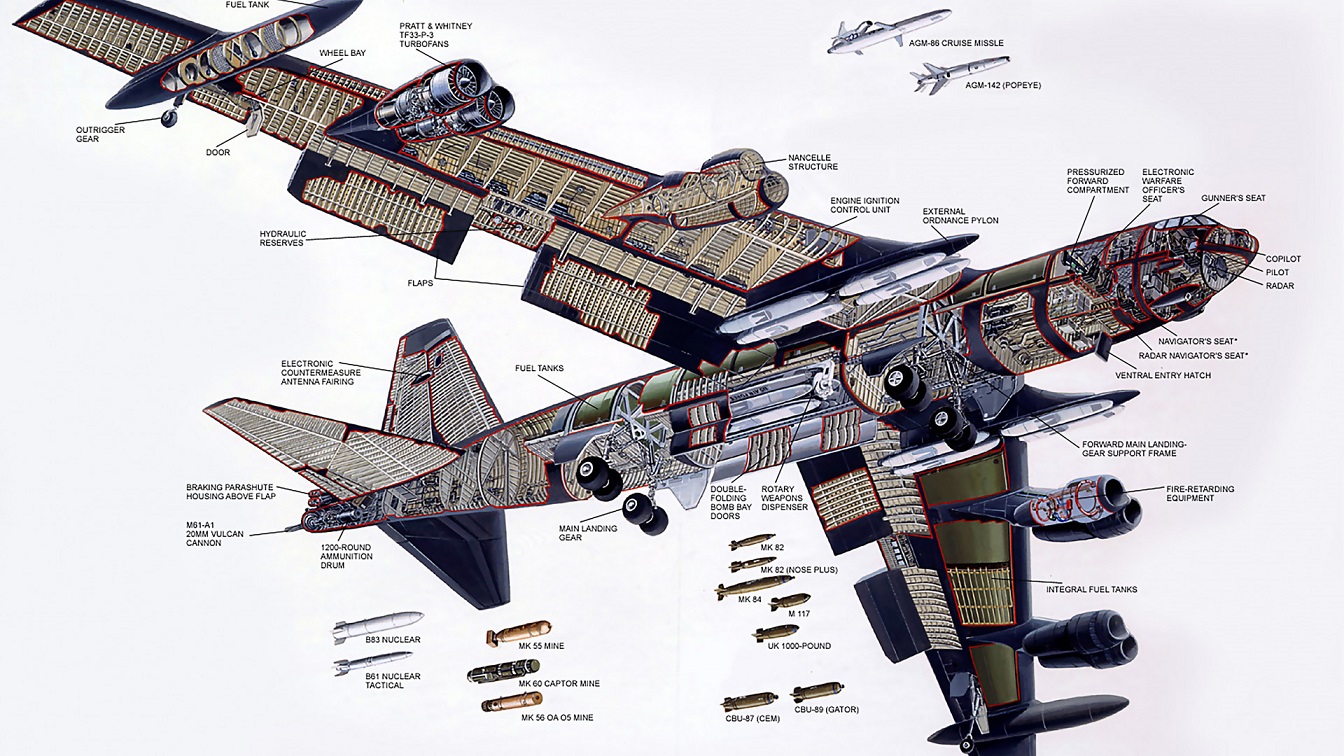
A U.S. Air Force B-52H Stratofortress bomber assigned to the 307th Bomb Wing goes through an engine check June 24, 2021, at Barksdale Air Force Base, Louisiana. Eight Pratt & Whitney TF33 engines power the B-52H to give it the capability of flying at high subsonic speeds. (U.S. Air Force photo by Senior Airman Kate Bragg)
I later found out that the B-52 is known as the Stratofortress, and it was this bomber that carried out the Arc Light strikes that were so effective during the Vietnam War. That meant that the B-52 was an old airplane.
Indeed, the B-52 dates back to the 1950s and entered service in 1955. There have been seven decades of awesome firepower from the airframe. This bomber just won’t quit. These days, it is more of a stand-off cruise missile launching platform, but there was no way that the original designers and engineers thought that it could last this long. It may even fly into the 2050s.
The BUFF Just Won’t Die
The latest upgrade will give the B-52 new engines – TF33s to Rolls-Royce F130s. The “’Radar Modernization Program’ will improve the reliability of sensors used for navigation, weather avoidance and air refueling,” The Air Force revealed in a news release. And the B-52 will replace older cruise missiles with the Long-Range Standoff nuclear cruise missile.
Affectionately known as the “BUFF,” the bombers have produced a trail of modernized versions over the decades that have impressed the international aviation community.
B-52A and B-52B Arrive on the Scene
The first B-52A flew in August 1954. Twenty-seven airplanes were produced and became known as “straight” bombers, designated B-52B. The B-52B had a twin 20-mm cannon tail gun. The B-52Bs were mainly used to get crewmen used to flying the huge platform. This wasn’t easy due to the airframe’s size and the crew configuration on board.
B-52C Was a Stalwart
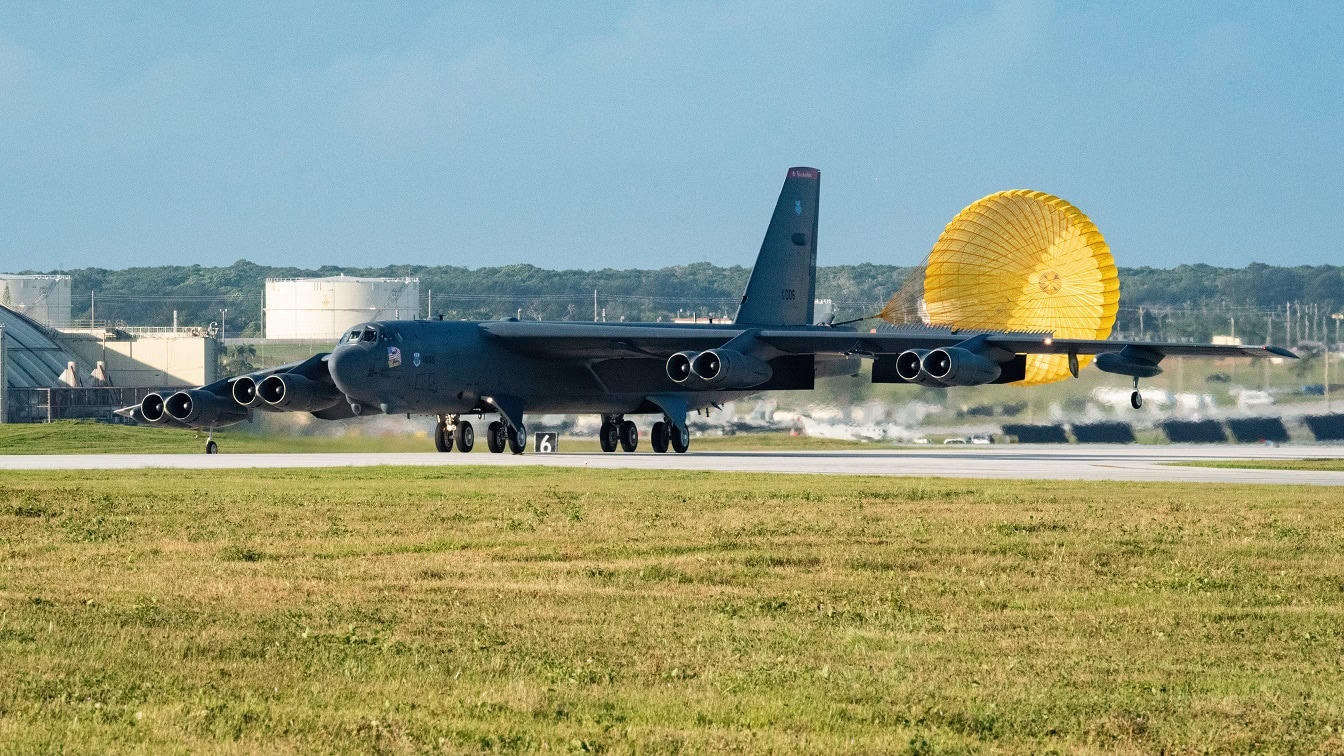
A B-52 Stratofortress from Barksdale Air Force Base, prepares to land on a flightline in support of a Bomber Task Force mission at Andersen Air Force Base, Guam, Feb. 9th, 2022. BTF missions demonstrate lethality and interoperability in support of a free and open Indo-Pacific. (U.S. Air Force photo by Senior Airman Jonathan E. Ramos)
B-52 bomber. Image Credit: Creative Commons.
Then, 35 more bombers were built that carried the B-52C name. These employed the J57-P-19W or J57-P-29WA engines. The auxiliary fuel tanks had 3,000 gallons of fuel. The B-52C also featured the AN/ASB-15 navigation/bombing system. The 42nd and 99th Bomb Wings were populated with the B-52C in December 1956.
The B-52D Graced the Skies Over Vietnam
The B-52D was optimized for lower-level bombing runs. These BUFF models had “tail clearance radar, Doppler, and low-altitude radar altimeters. At the same time, structural modifications ensured the aircraft was able to operate ‘down in the weeds,’” according to The War Zone.
When the war in Vietnam started, the B-52D was the main model that tried to bomb Viet Cong and North Vietnam Army personnel into the Stone Age. It received the “Big Belly” upgrade to carry 84 500-pound or 42 750-pound bombs.
The B-52E Was More Cost Effective
One hundred B-52Es were built, and because of the large numbers and economies of scale, they were cheaper to produce. Each B-52E only cost $1.4 million. The B-52E carried the “GAM-77 (later AGM-28) Hound Dog nuclear-tipped standoff missile, and the GAM-72 (later ADM-20) Quail decoy,” The War Zone explained.
The B-52F Was a Strategic Stalwart
The B-52F variant had more powerful engines. These were delivered to the Air Force in 1959. This time, bombs could be dropped from underneath pylons, giving the BUFF an additional 24 750-pound bombs. However, the B-52F variant was mainly used for nuclear weapons delivery rather than as a day-to-day bomber in the skies over Vietnam.
How ‘Super’ Was the B-52G?
The “Super” B-52G came next. This was made with a newly redesigned wing and the inclusion of eight non-afterburning versions of the Pratt & Whitney J75. These were the same engines on the F-105 and F-106. The airplane saved weight with smaller external fuel tanks. The tail size was reduced ,and the tail gunner was removed. The Air Force acquired 193 B-52Gs. Night-flying was made possible by the AN/AQS-151 Electro-optical Viewing System.
Say Hello to the B-52H
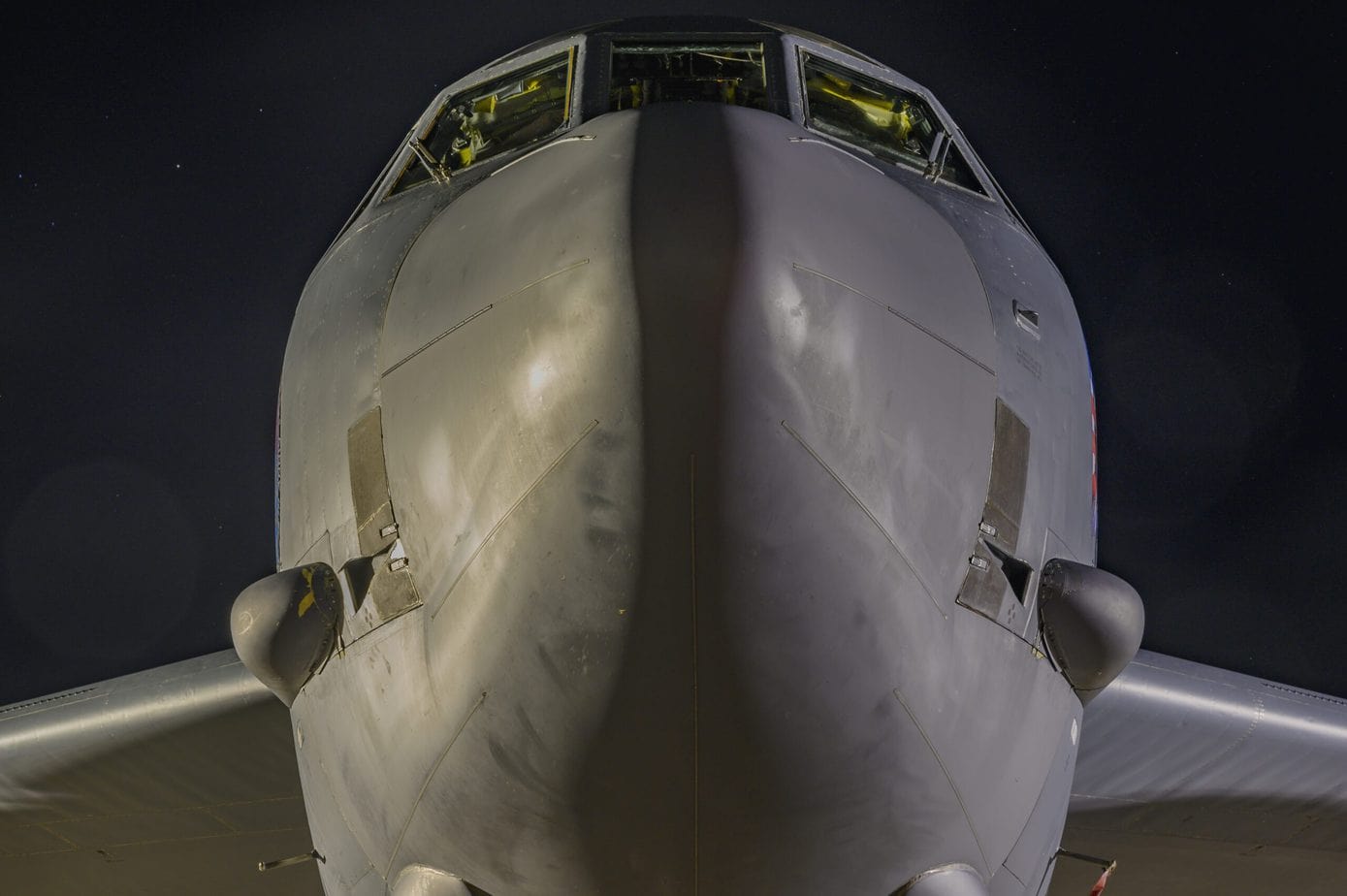
A U.S. Air Force B-52 Stratofortress assigned to Barksdale Air Force Base, La., is prepared for a Mark-82 munitions load, in support of a Bomber Task Force deployment, Feb. 1, 2020, at Andersen Air Force Base, Guam. The bomber deployment underscores the U.S. military’s commitment to regional security and demonstrates a unique ability to rapidly deploy on short notice. (U.S. Air Force photo by Senior Airman Jacob M. Thompson)
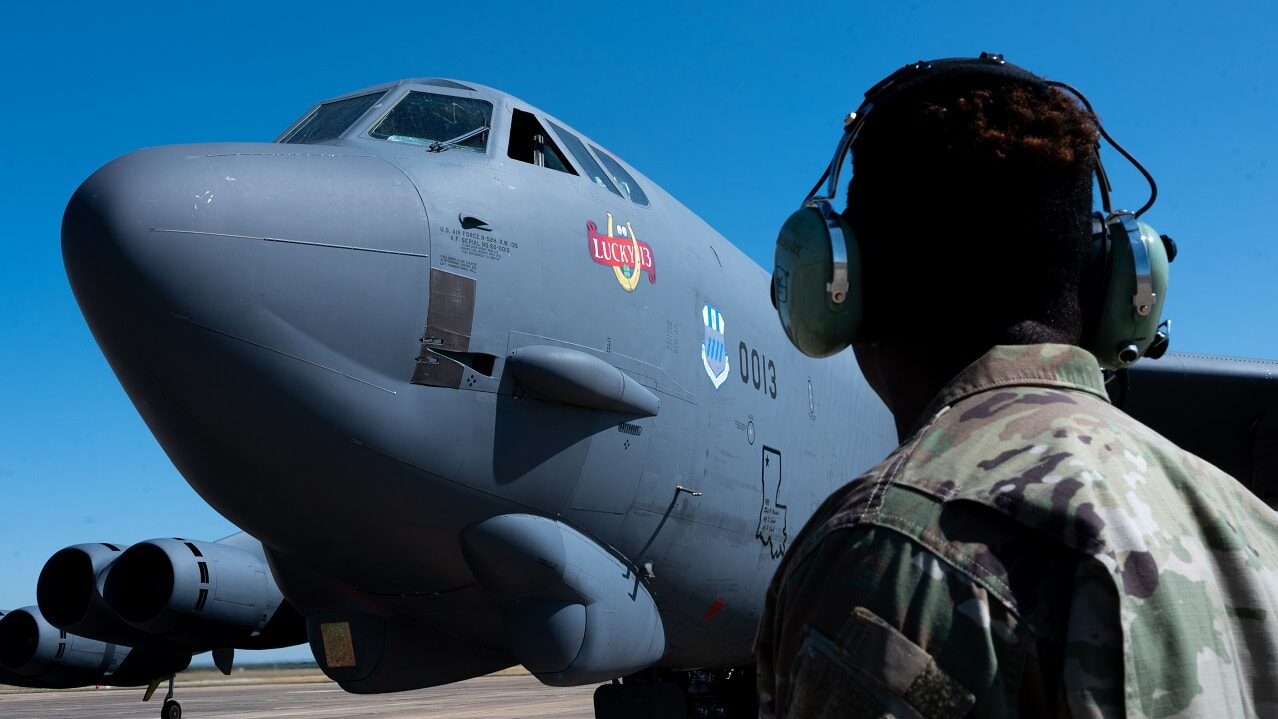
A U.S. Air Force maintainer conducts a visual inspection of a B-52H Stratofortress at Morón Air Base, Spain in support of Bomber Task Force 21-3, May 24, 2021. Strategic bomber missions enhance the readiness and training necessary to respond to any potential crisis or challenge across the globe. (U.S. Air Force photo by Staff Sgt. Jason Allred)
The most famous BUFF was the B-52H that is still in service today. It had new Pratt & Whitney TF33 turbofan engines. The tail turret had a M61A1 Vulcan 20-mm rotary cannon. There was an Advanced Capability Radar. The B-52H was mainly designed for delivering nuclear weapons. However, by 1994, it could carry more conventional weapons. It deployed precision-guided munitions like laser-controlled bombs. It also had AESA radar and a partial glass cockpit, The War Zone wrote.
Now the B-52J Is the Main Player
The B-52J could live until the 2050s if all goes according to plan. This should be able to launch hypersonic missiles that are both conventional and nuclear-tipped. It will also carry the JASSM-ER and the LRASM. The Long-Range Standoff Missile will also be onboard, as mentioned earlier. The new engines will be welcome, and the radar systems will be top-notch.
The B-52 was made at a time when the Cold War was raging, and the Soviet Union and the global fight against Communism were the main threats. It is amazing that the airplane is still flying, answering many different threats today. It has been a long ride for the BUFF, and it appears to have many years left in its service life.
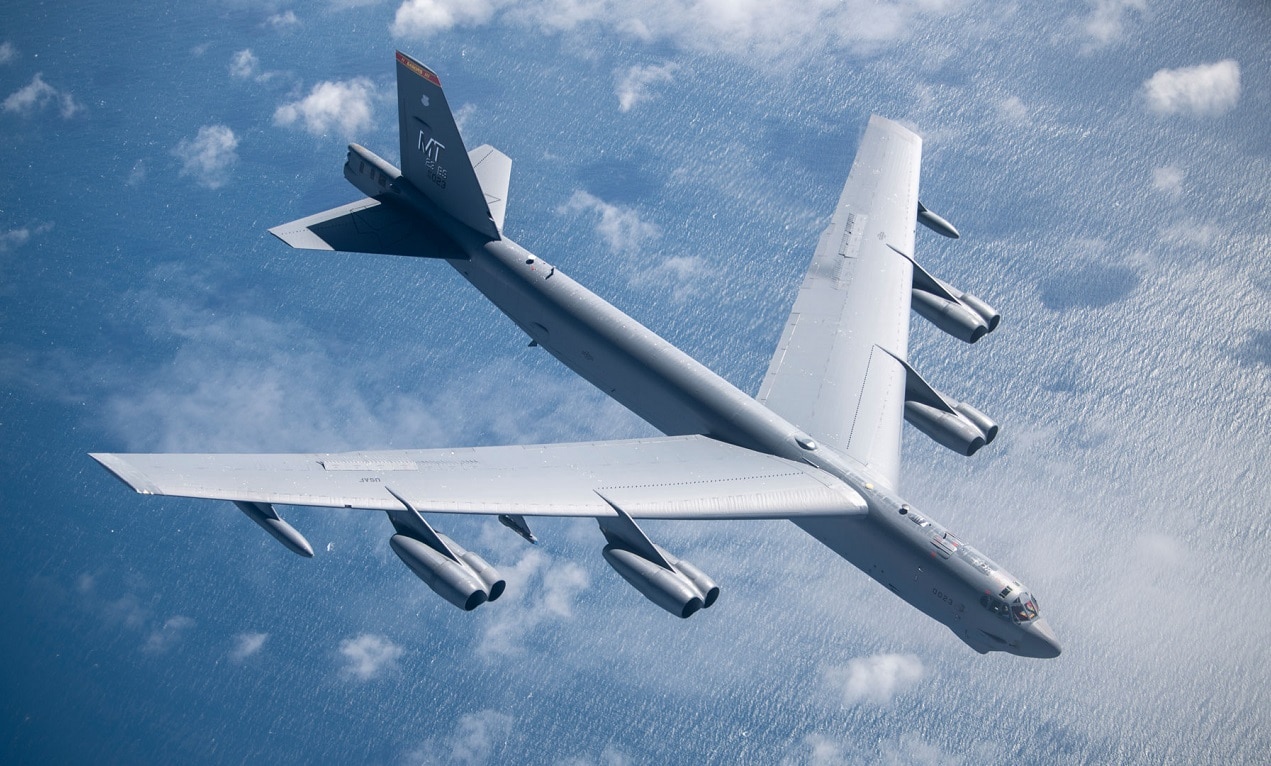
B-52 Bomber. Image Credit: US Air Force.
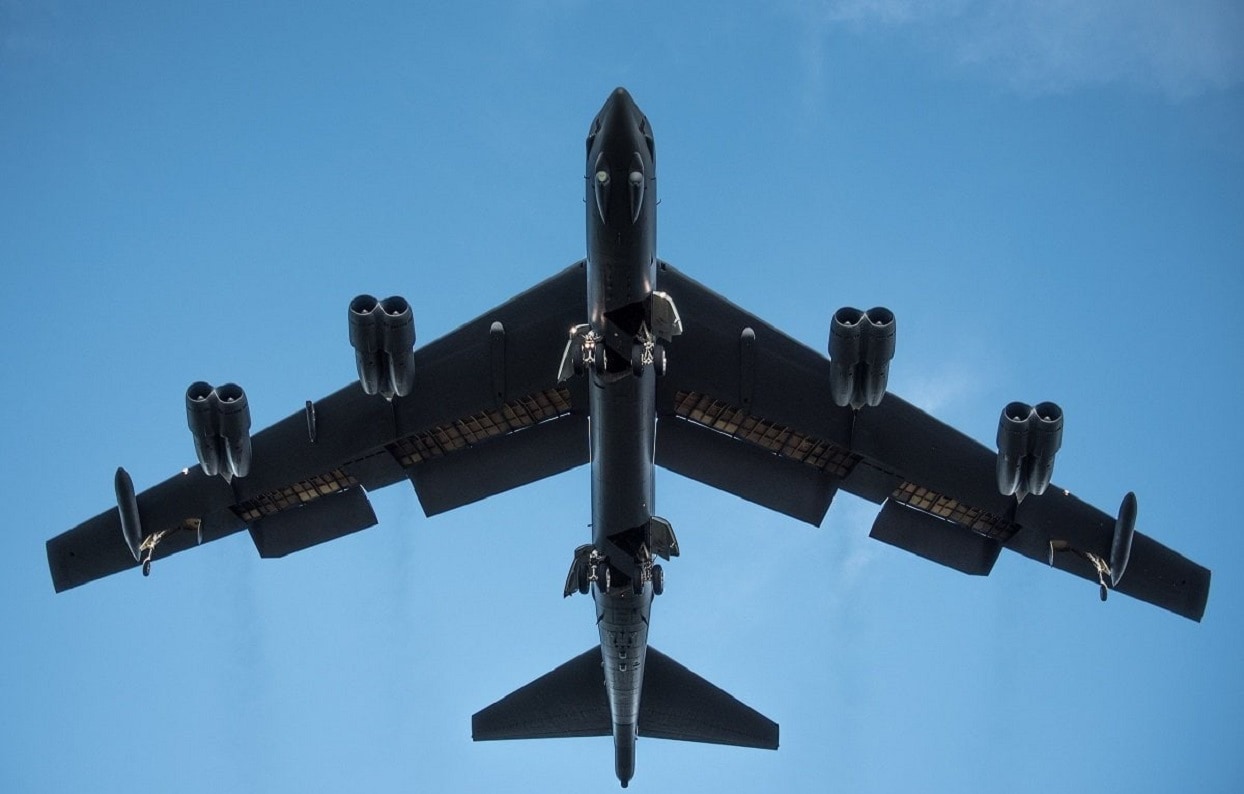
B-52 Bomber. Image: Creative Commons.
There will be no more Operation Arc Lights, as the B-52 is obviously not stealthy and cannot remain over targets with modern air defenses like the S-400 or S-500. Its job now is to fire stand-off weapons from uncontested airspace. But the BUFF is not out of action yet and will be an important leg of the U.S. nuclear triad for decades to come. Who knows? More movies could be made about awe inspiring airplane, and it deserves a Hollywood portrayal that shows off their astounding service life.
About the Author: Brent M. Eastwood
Author of now over 3,000 articles on defense issues, Brent M. Eastwood, PhD is the author of Don’t Turn Your Back On the World: a Conservative Foreign Policy and Humans, Machines, and Data: Future Trends in Warfare plus two other books. Brent was the founder and CEO of a tech firm that predicted world events using artificial intelligence. He served as a legislative fellow for US Senator Tim Scott and advised the senator on defense and foreign policy issues. He has taught at American University, George Washington University, and George Mason University. Brent is a former US Army Infantry officer. He can be followed on X @BMEastwood.