
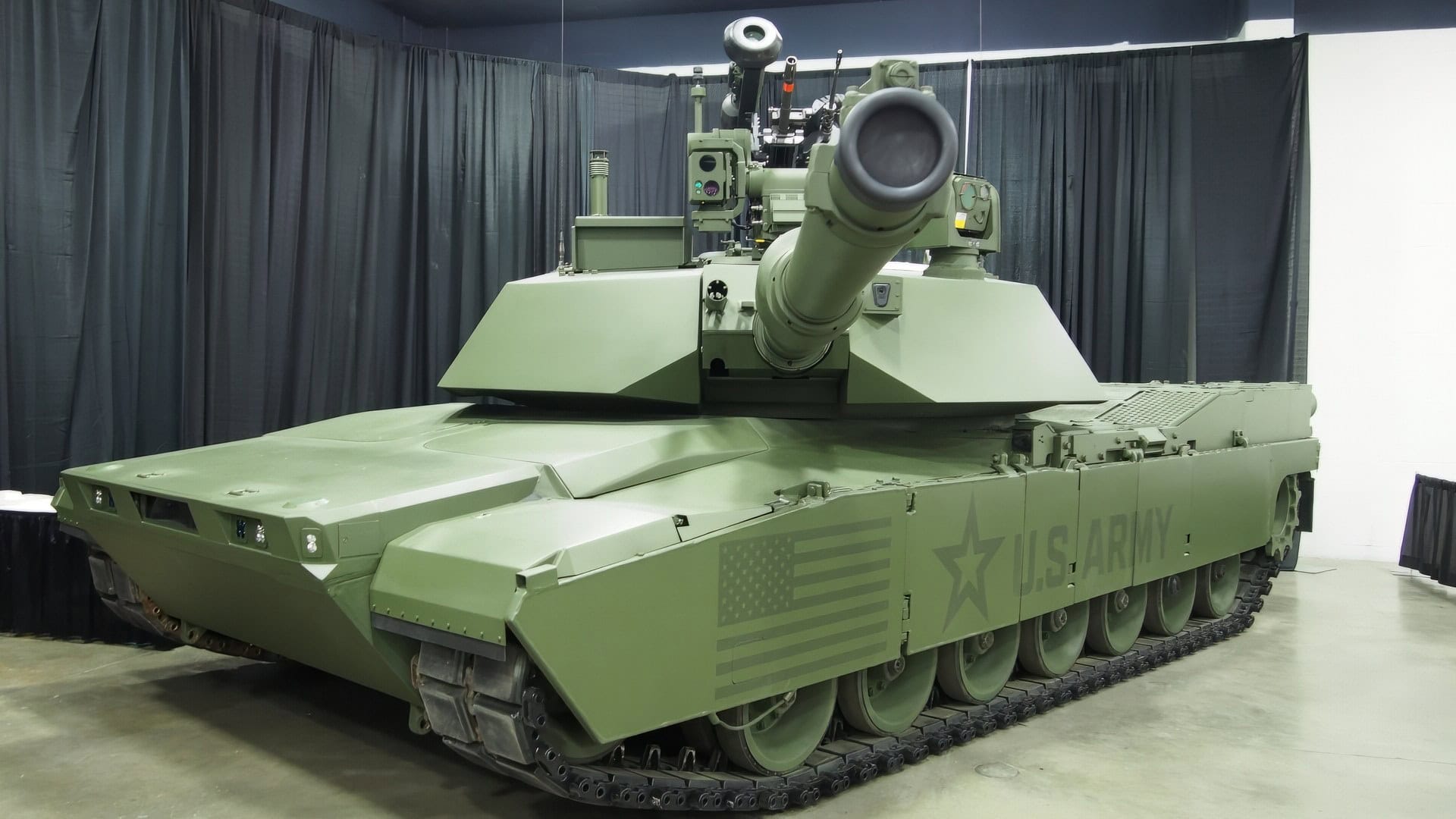
Summary and Key Points: The M1E3 Abrams pre-prototype is the Army’s response to the drone-saturated environments of modern warfare, focusing on low-visibility rather than pure invisibility.
-Its defining feature, the hybrid diesel-electric drive, allows for “silent watch” operations and a significantly reduced thermal footprint, making it nearly undetectable to infrared-equipped drones while stationary or moving slowly.
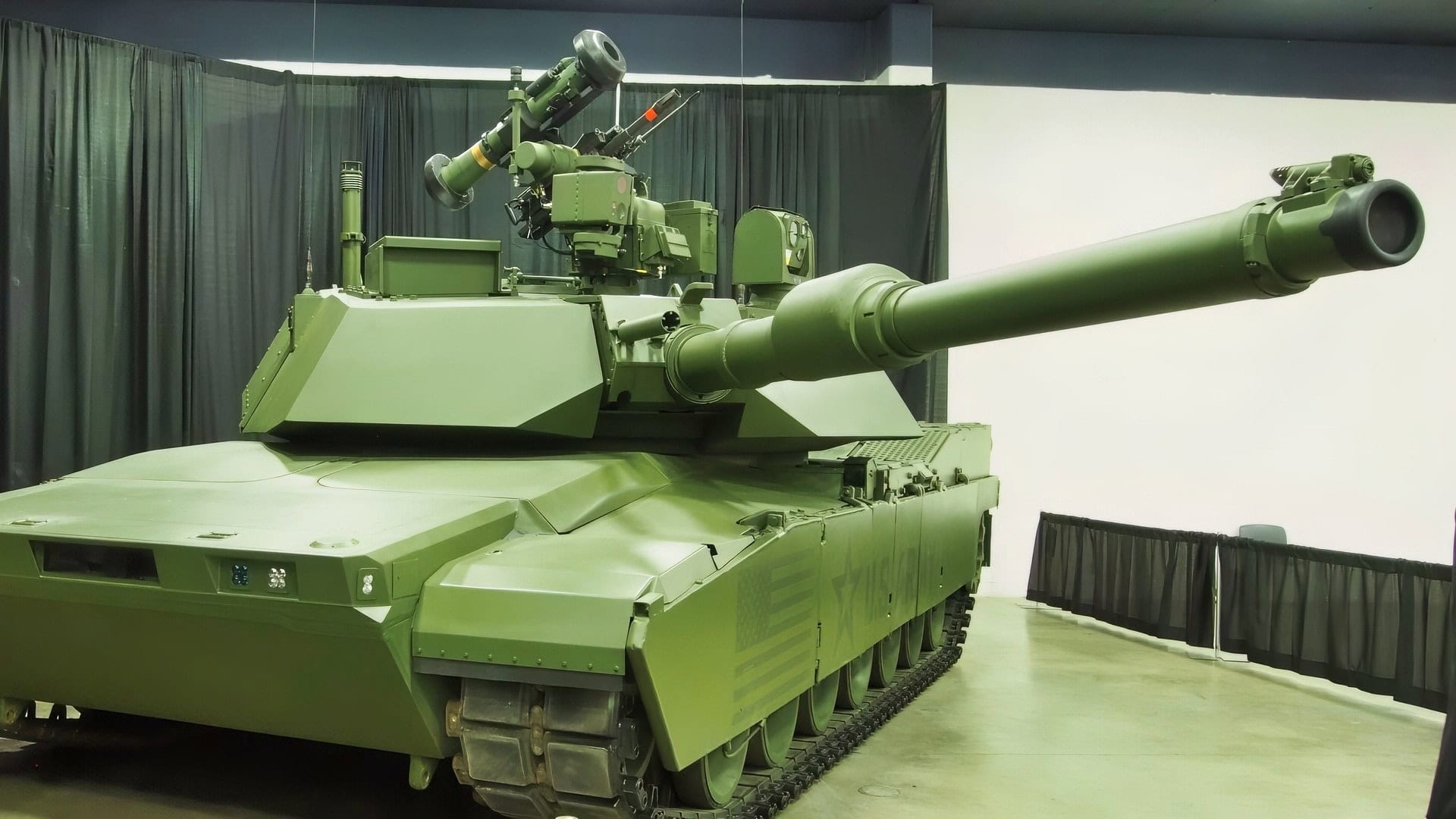
M1E3. 19FortyFive Image from the Detroit Auto Show.
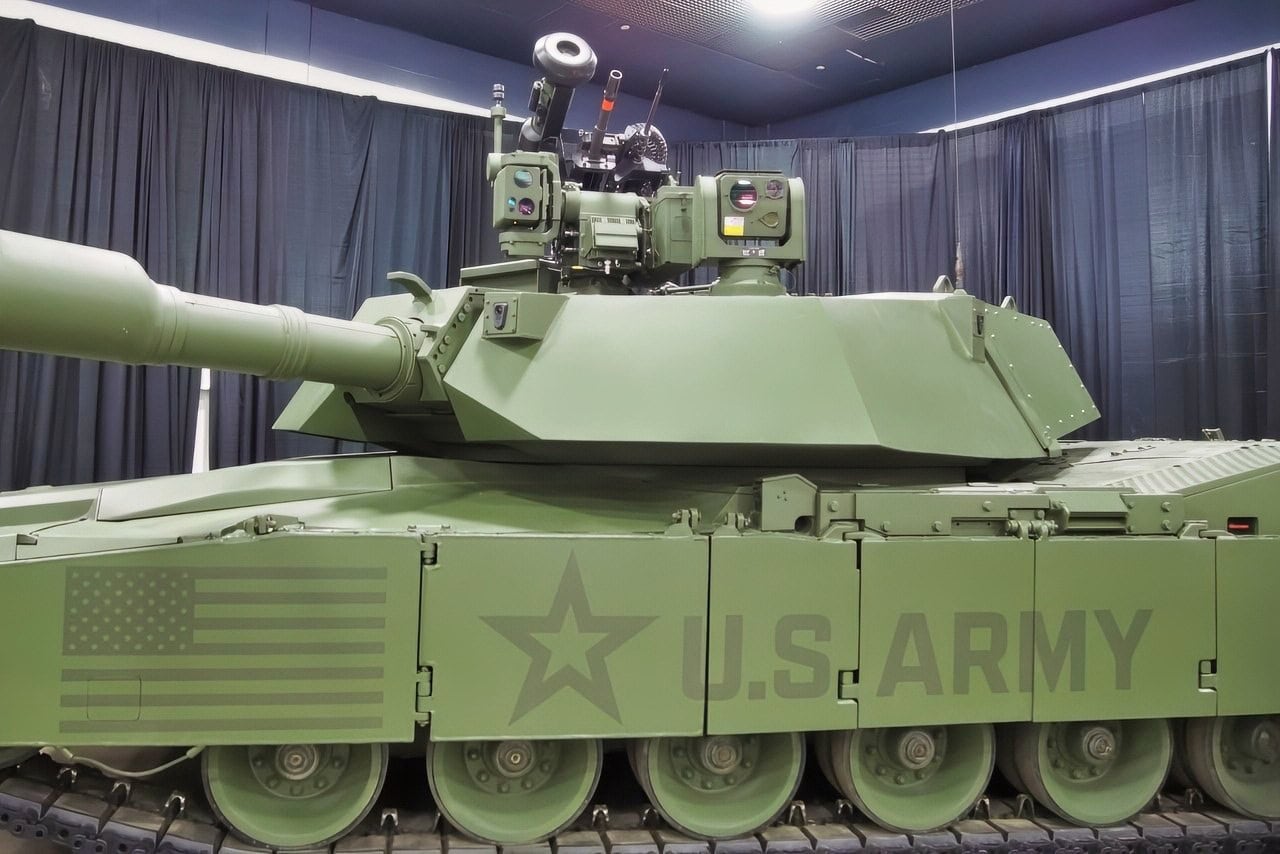
M1E3 from the Detroit Auto Show. Taken by 19FortyFive.com on 1/17/2026.
-While these advancements provide a decisive edge in urban and forested ambushes, limitations remain: the mechanical noise of caterpillar treads and the massive thermal bloom of a main gun discharge mean the M1E3 is less a “stealth tank” and more a master of signature management.
-BONUS: 19FortyFive visited the Detroit Auto Show to see the M1E3 Abrams. We have included photos from that visit in this article.
Why the U.S. Army’s New M1E3 “Stealth Tank” Isn’t Actually Invisible
The M1E3 has generated a lot of media buzz since the reveal of the pre-prototype model. Many analysts and experts, myself included, have speculated about what the tank will be capable of. Some major outlets have highlighted the tank’s “stealth” features, so let’s talk about the M1E3’s low visibility features.
The M1E3 incorporates a number of features to reduce its acoustic and radar signatures across multiple channels. From a new quieter engine to several electronic warfare suites, the tank takes several steps to minimize its visibility. But is it really accurate to call the M1E3 a stealth tank, or is everyone already jumping the gun?
The M1E3 “Stealth Tank”
Even before the M1E3 was revealed, various experts and enthusiasts had been speculating about the tank’s low visibility features. Various documents noted that the tank would include “masking capabilities to reduce the vehicle’s thermal and electromagnetic signatures.”
However, no details have been provided about the specifics of these systems. However, the Army does not market the M1E3 as a “stealth tank,” many of its engineering decisions clearly prioritize reducing detectability across multiple spectrums. The hybrid-electric propulsion significantly reduces the thermal signature by reducing waste heat emissions that would otherwise be easily detectable by drone-mounted infrared cameras.
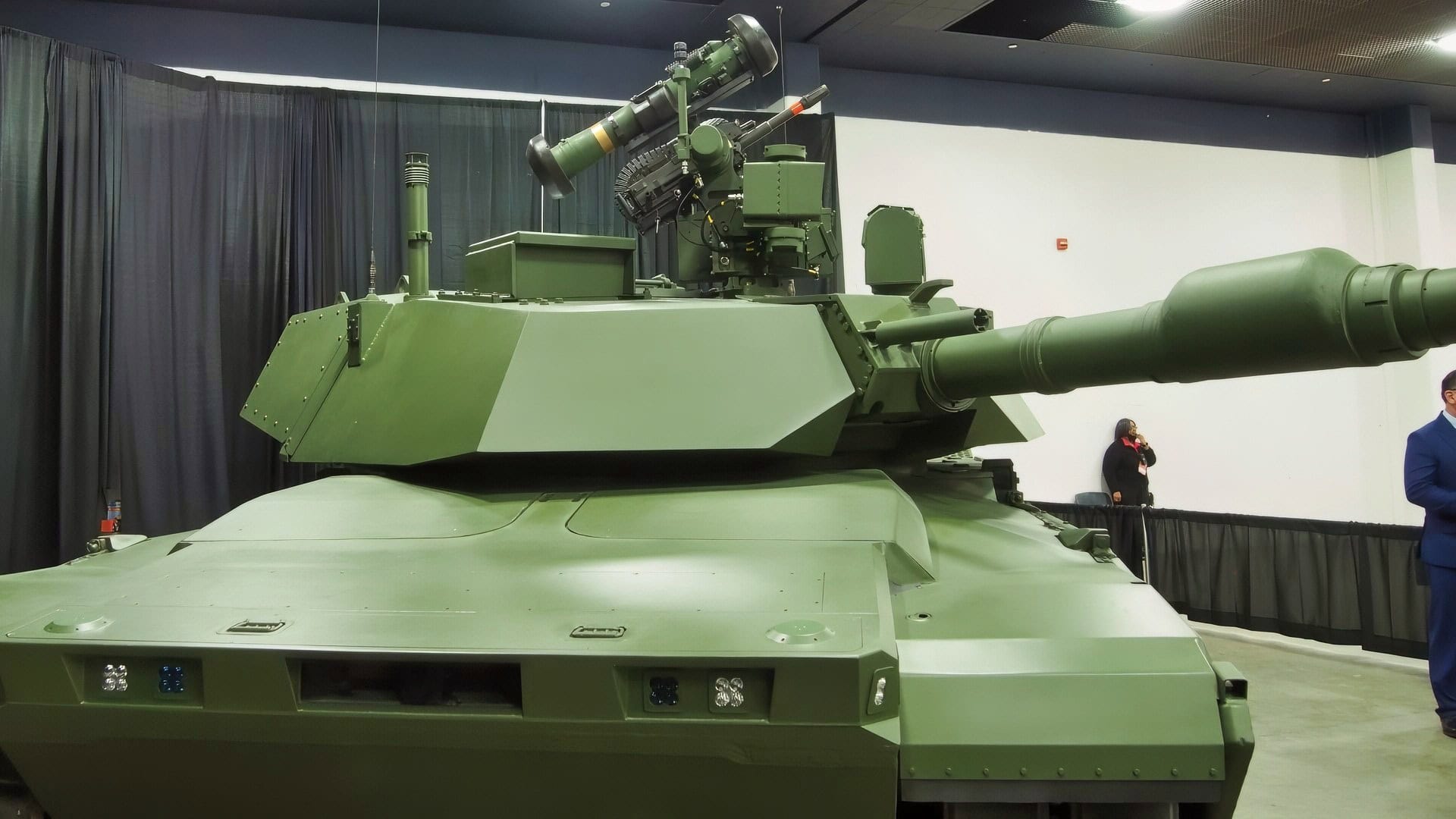
M1E3 Tank from the Detroit Auto Show. Photo Taken By 19FortyFive Staff on 1/17/2026.
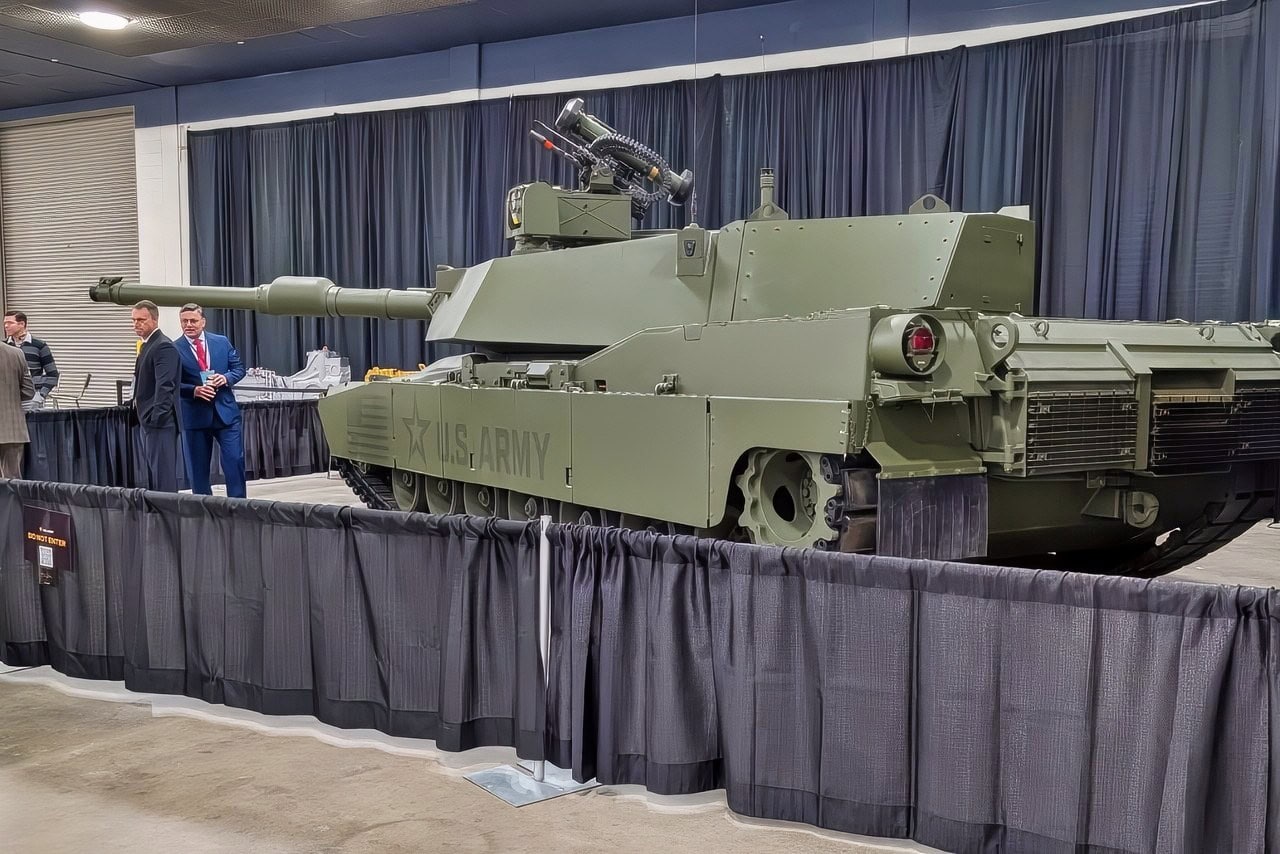
M1E3 Tank at the Detroit Auto Show. Image Credit: 19FortyFive.
The hybrid diesel-electric propulsion, in particular, is a major departure from the turbine engines used on earlier Abrams tanks. A hybrid drive provides several advantages: reduced fuel consumption, improved operational range, lower acoustic output, and a significantly reduced heat signature.
The hybrid engine is expected to make the tank quieter and harder to identify, both in the audible spectrum and in thermal imaging. The ability to operate its onboard systems without running the main engine is an important tactical advantage when attempting to avoid detection in contested environments. A similar hybrid-electric direction was also observed in the AbramsX demonstrator, which many have speculated influenced the development of the M1E3.
The Army’s New Silent Killer
The reduction in acoustic signature is equally important. Traditional gas-turbine Abrams tanks are renowned for their distinctive, extremely loud engine noise, which can be detected from long distances.
The hybrid system quiets the tank considerably, giving it greater freedom of movement in urban or forested environments and making it significantly more challenging for enemy forces to identify acoustically. This makes the M1E3 ideal for surprise attacks and ambushes, thereby enhancing its versatility.
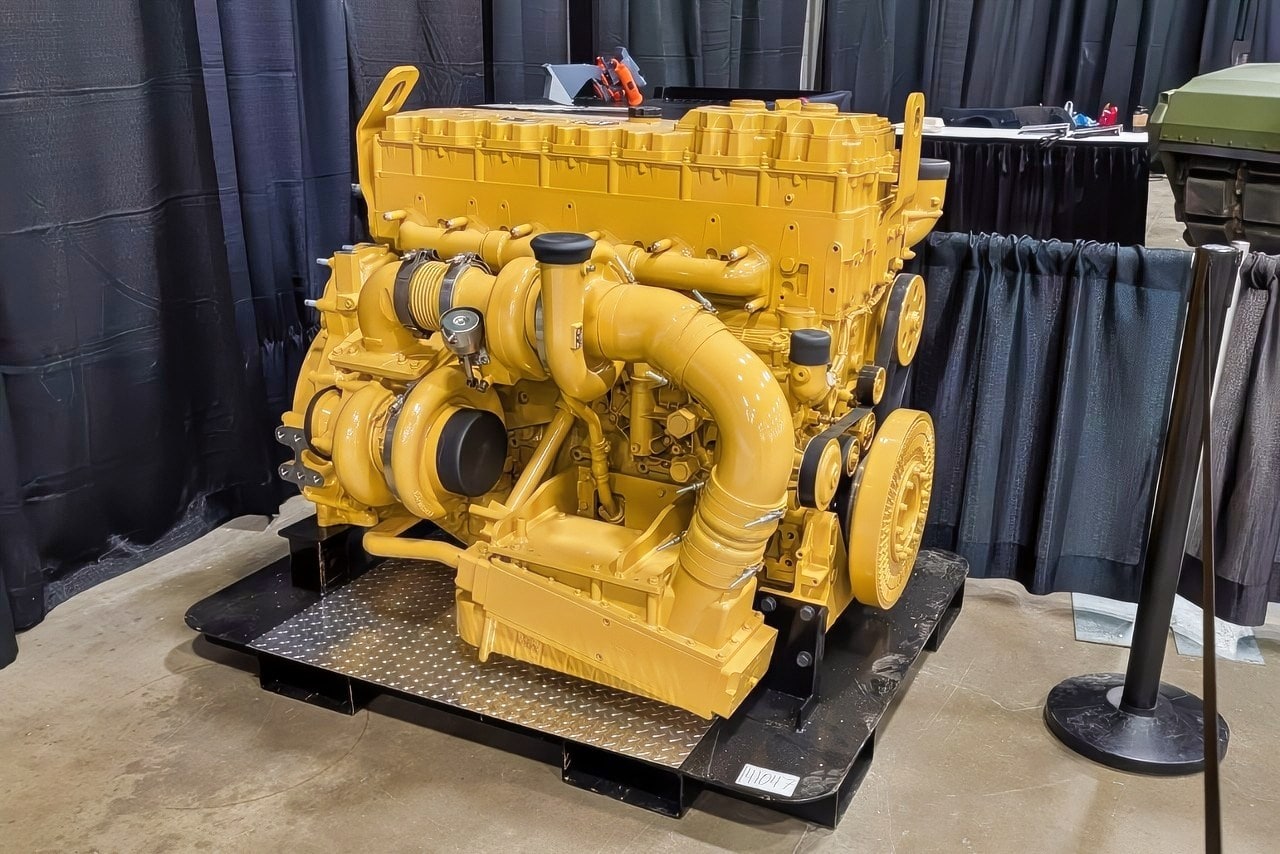
M1E3 Tank at the Detroit Auto Show. Image Credit: 19FortyFive.
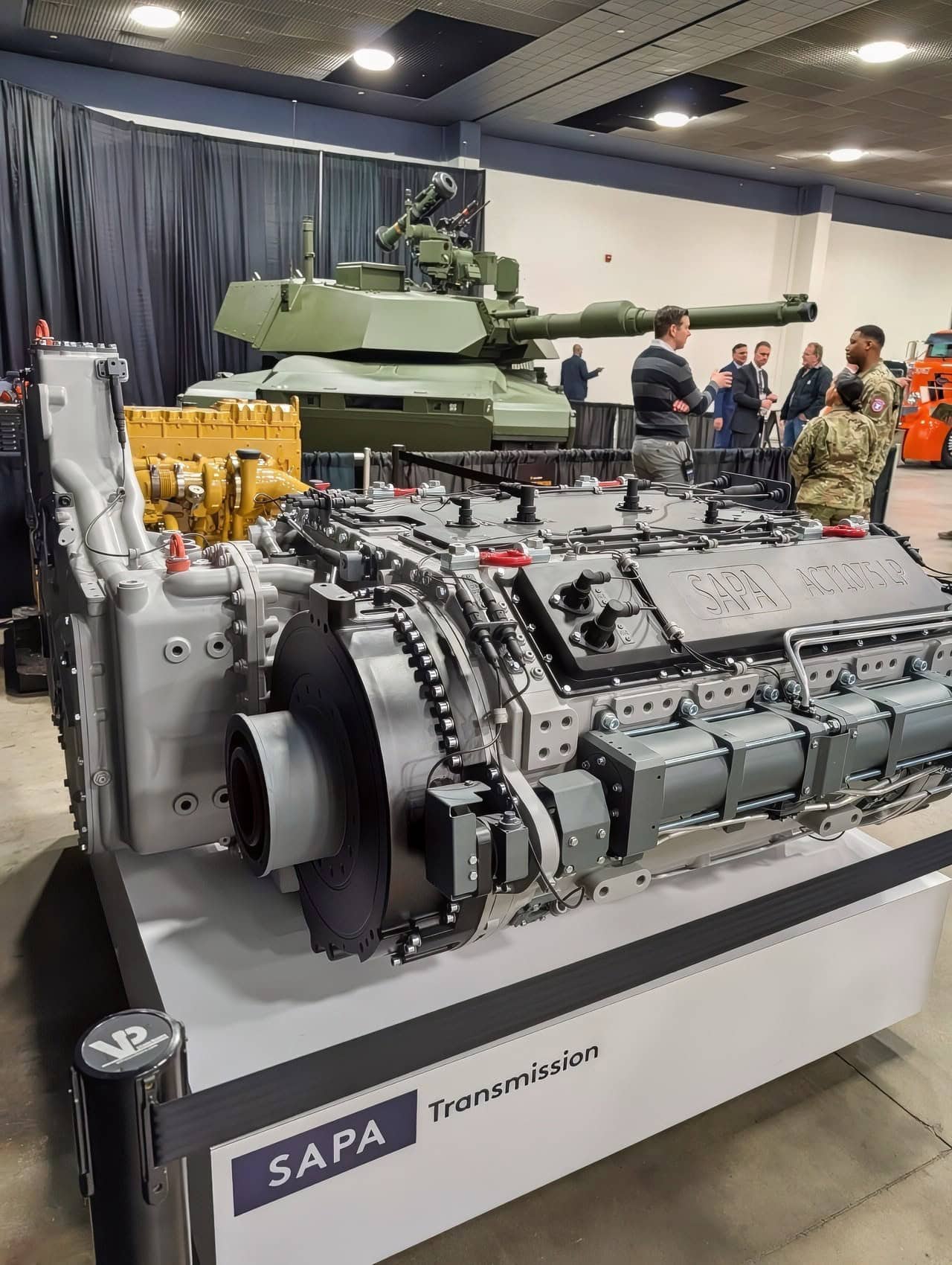
M1E3 Tank at the Detroit Auto Show. Image Credit: 19FortyFive.
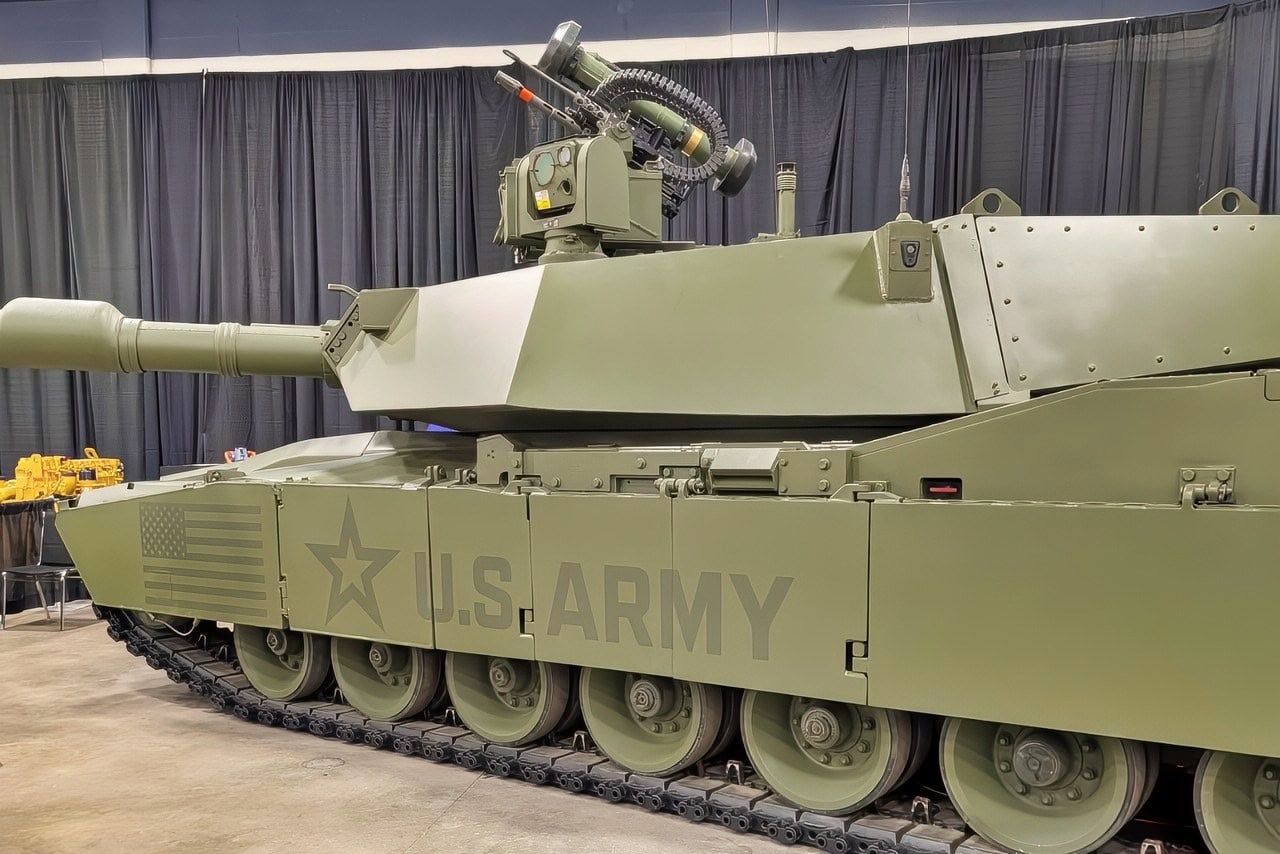
M1E3 Tank at the Detroit Auto Show. Image Credit: 19FortyFive.
The tank’s overall emissions profile is therefore significantly lower than that of previous Abrams iterations. While publicly available sources do not explicitly confirm the presence of emission-control modes or electronic signature management systems, the strong emphasis on digital integration and battlefield adaptation suggests that the M1E3 was conceived with electronic warfare environments in mind.
Given how prominently EW has featured in Ukraine, it is reasonable to infer that the M1E3 incorporates design choices meant to minimize unnecessary electromagnetic emissions. The Army’s insistence on integrated, native protections rather than externally bolted-on systems further implies a cohesive effort to streamline its observable footprint.
The Limitations of Stealth Technology on Tanks
With all that said, the mere idea of a stealth tank has some issues. Unlike aircraft, which can travel at Mach 2 or higher and engage targets beyond line of sight, tanks are large metal boxes with large guns. Minimizing a tank’s acoustic and visual signature can only go so far with current technology.
The biggest problem with stealth features on a tank is that once the main gun fires, everyone on the battlefield knows it’s there. While some militaries have created special camouflage covers to reduce the tank’s signature, these measures are undermined once the gun fires, as the heat generated by the gun makes the tank light up like a Christmas tree on thermal cameras.
Limiting a tank’s acoustic signature has a bit more weight, but this approach also has its limitations. Enabling silent watch makes the tank much harder to hear; this is true. However, if anyone has ever seen tanks in action, then you know there is a lot more than just the engine making noise.
M1E3 Tank at the Detroit Auto Show. Image Credit: 19FortyFive.
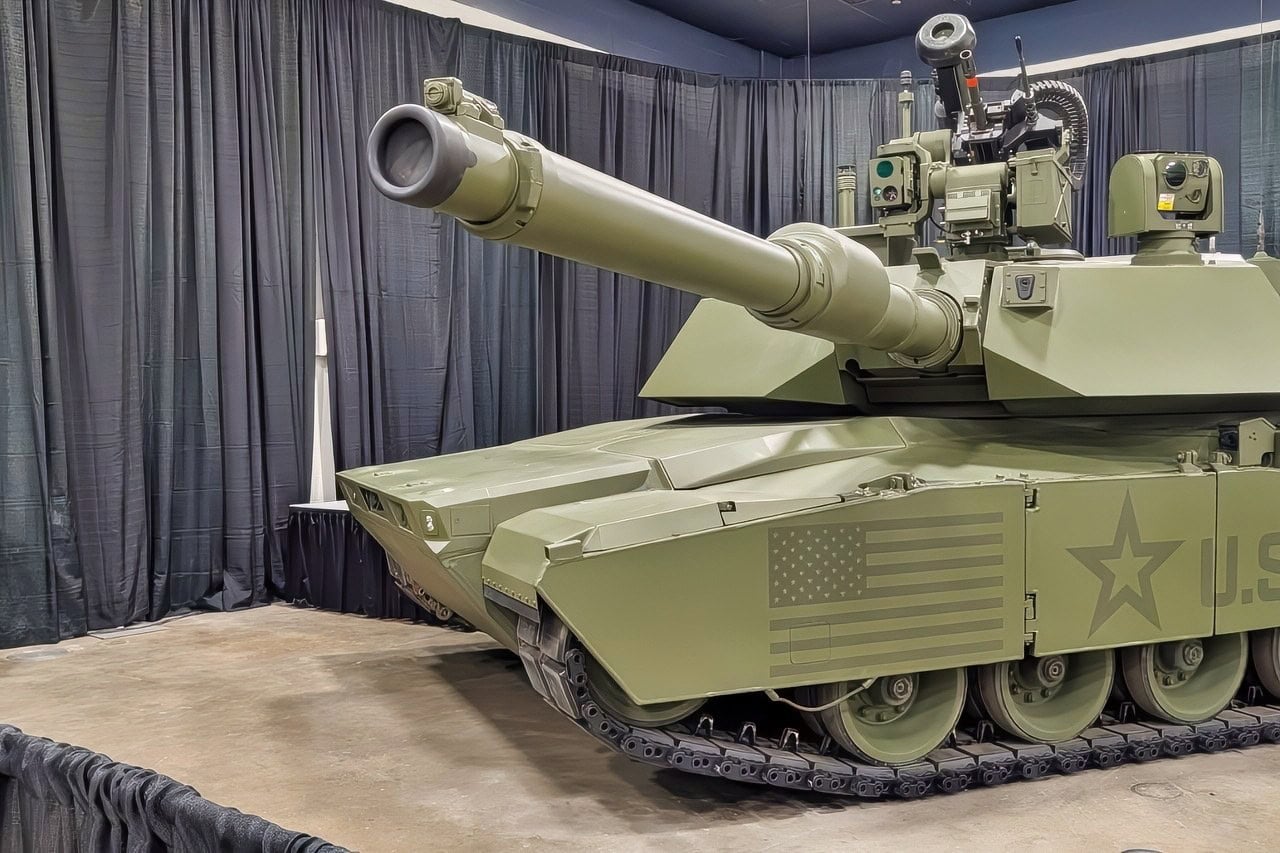
M1E3 Tank at the Detroit Auto Show. Image Credit: 19FortyFive.com
The creaking of caterpillar treads and the squeaking of roadwheels generate a surprising amount of noise, and as tanks are currently, there is no way to completely silence them. Of course, there is the issue of the gun. Once the gun fires, the element of surprise is lost unless you’re firing from beyond visual range, in which case engine noise is hardly a factor anyway.
I am not saying that stealth features on a tank are useless and are a waste of money. Camouflage coverings like the Barracuda or the Russian Nakidka are good at reducing thermal signatures. Furthermore, a hybrid powerpack makes the M1E3 ideal for ambushes and surprise attacks.
My point, however, is that no stealth system is absolute. Tanks are extremely difficult to conceal, and no system will ever fully succeed in making them completely invisible. The tank, by nature, is a large system that touts a large gun (there is a possibility that they will get even larger in the future).
Future technology will inevitably make the tank harder to see on thermal imagers and harder to hear, but it will never be invisible.
About the Author: Isaac Seitz
Isaac Seitz, a Defense Columnist, graduated from Patrick Henry College’s Strategic Intelligence and National Security program. He has also studied Russian at Middlebury Language Schools and has worked as an intelligence Analyst in the private sector.