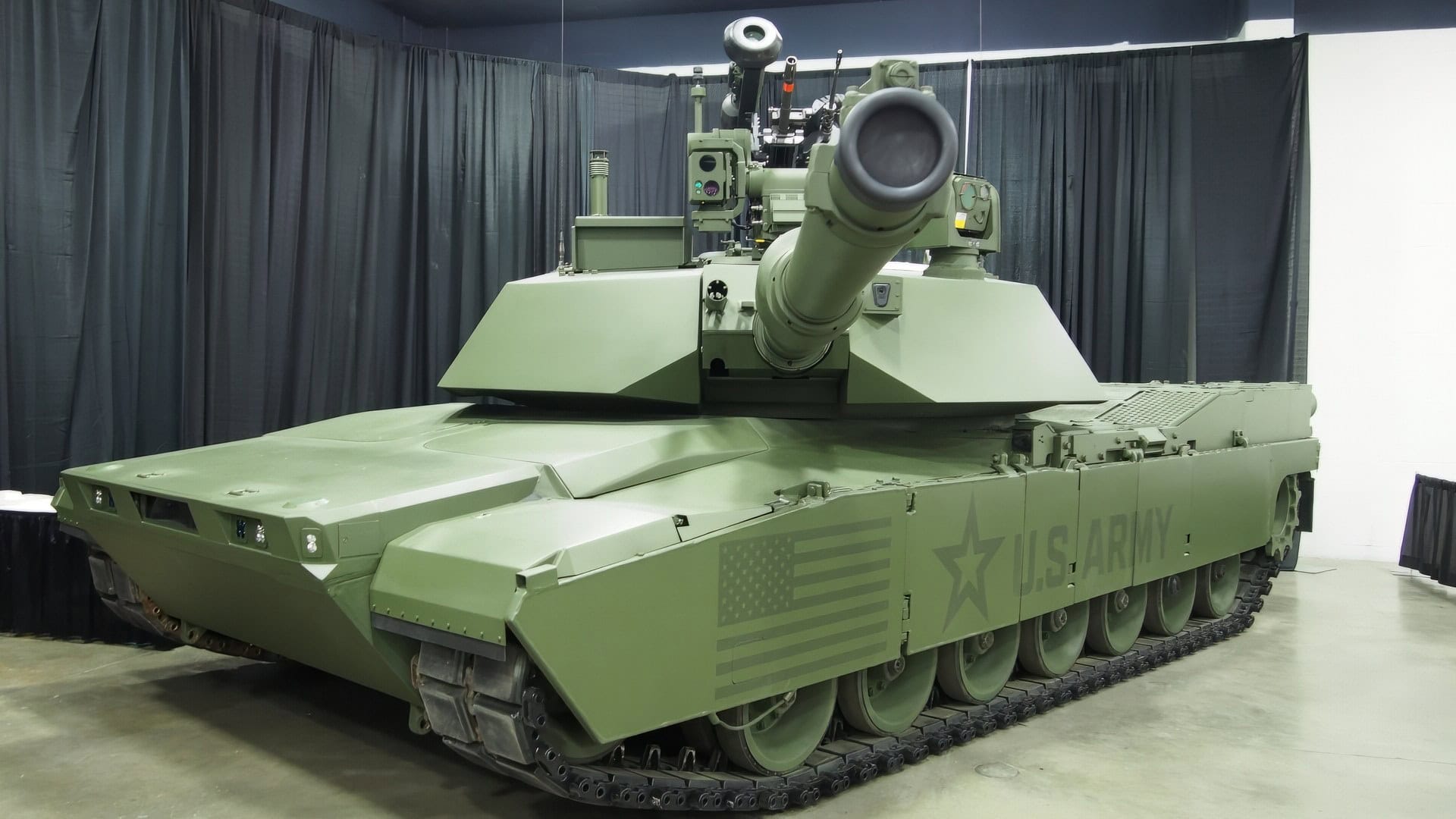
Summary and Key Points: The U.S. Army is aggressively accelerating the development of its next-generation M1E3 Abrams, launching field tests five years ahead of schedule.
-19FortyFive recently viewed the M1E3 Abrams tank prototype and has included original pictures of that photoshoot in this article.
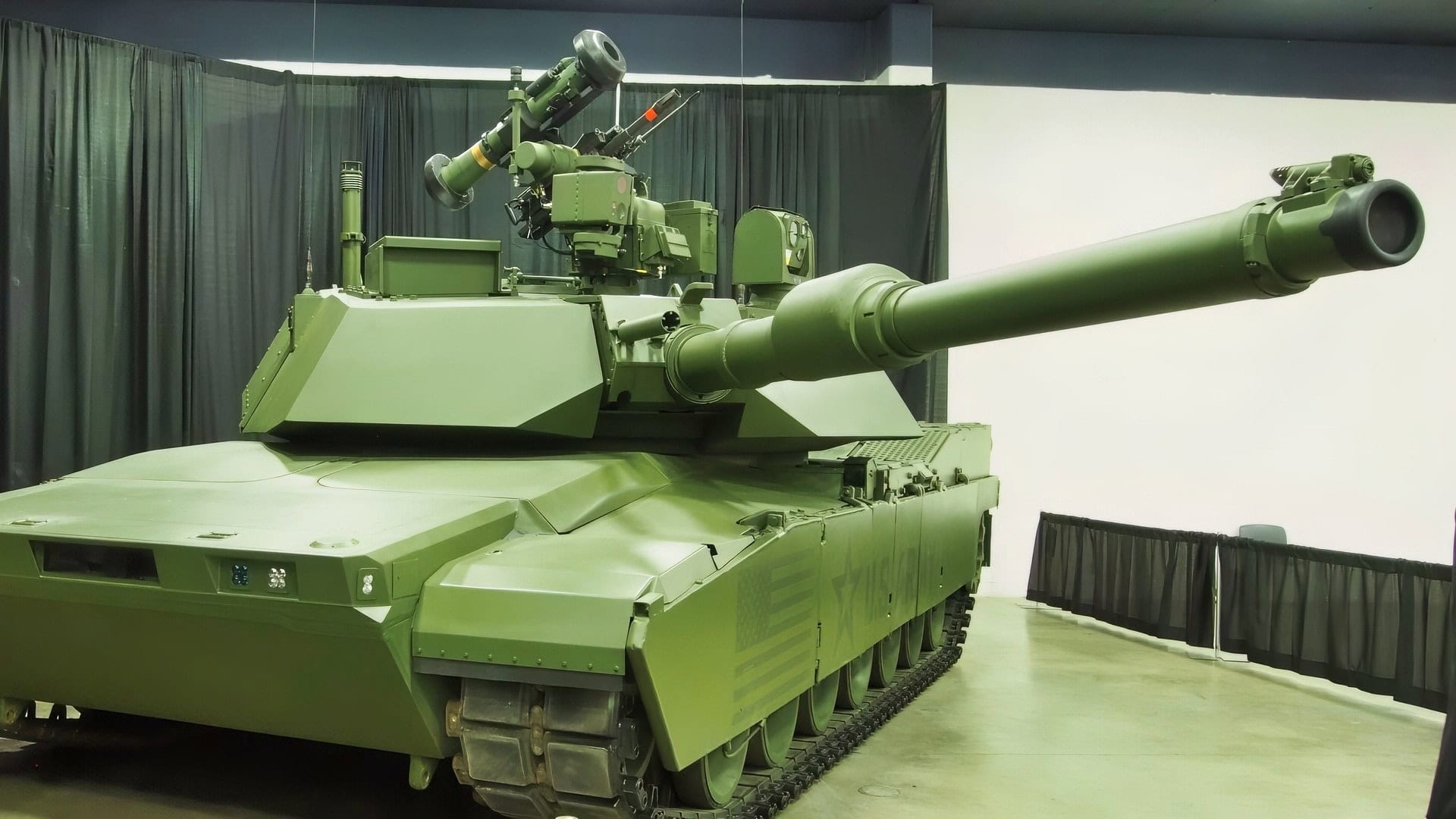
M1E3. 19FortyFive Image from the Detroit Auto Show.
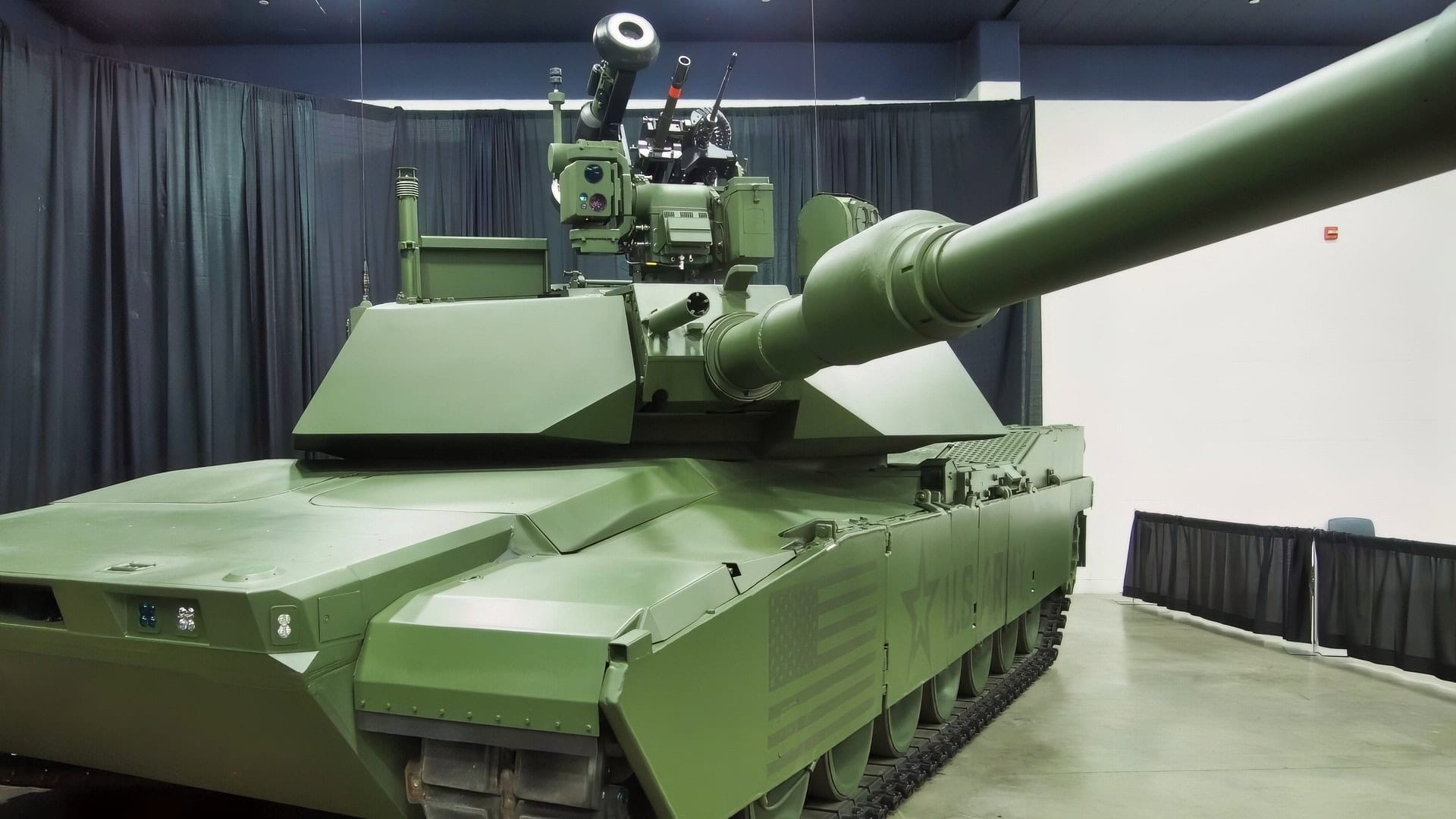
At the Detroit Auto Show, 19FortyFive visited the new M1E3 tank. Image Credit: 19FortyFive.com.
-In a major departure from traditional procurement, the Army will evaluate four prototypes in a “transitional configuration” that is up to 20% incomplete.
-Built on a Modular Open Systems Approach (MOSA), the M1E3 features a “plug-and-play” architecture allowing for rapid software and hardware swaps in the field.
The U.S. Army’s New M1E3 Abrams “Super Tank” Has 1 Mission: Field Testing 5 Years Early
This revolutionary design potentially allows a single crewmember to operate the tank and enables “app-style” upgrades, ensuring the platform evolves as fast as modern battlefield threats like anti-tank drones.
The U.S. Army is moving forward aggressively with the development of its next-generation M1E3 main battle tank. It is putting the tank into field test validation far ahead of the original program schedule. The Army’s program office will put four M1E3 prototypes through their paces by this summer, five years ahead of the original program schedule.
The initial phases of the program are a dramatic change from past Army procedure. The biggest departure is that the prototypes will go into field evaluation not only ahead of schedule, but in a configuration that would otherwise be considered incomplete.
The initial platoon of M1E3s will be handed over for test runs in what is being called a “transitional configuration.” The Army says these vehicles will lack several planned components that are not available yet.
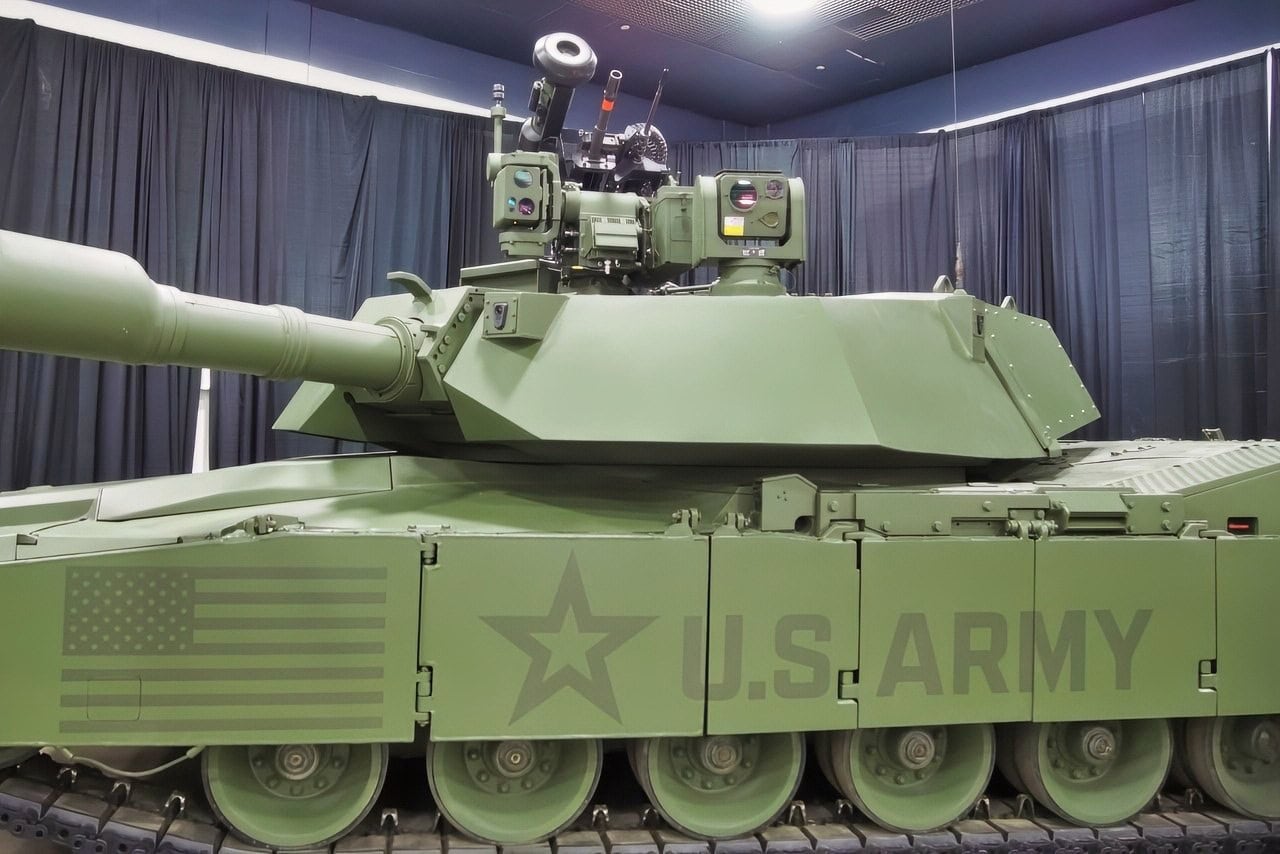
M1E3 from the Detroit Auto Show. Taken by 19FortyFive.com on 1/17/2026.
Overall, it is anticipated that the vehicles will be up to 20 percent incomplete, but will be able to integrate the “missing” components at a later date.
Advantages of Open Architecture
The M1E3 is being designed around what the Army calls the Modular Open Systems Approach (MOSA)—a methodology that aims to ensure a platform can be rapidly reconfigured as the modern battlefield evolves, for example through the introduction of anti-tank drones or next-generation anti-armor systems.
This adaptive technique supports an easy, fast, and cost-effective integration of new software and hardware without requiring a total vehicle redesign.
The Army will use the early prototypes to test different equipment and software options, selecting optimal solutions supported by the vehicle’s open architecture. New subsystems or innovations that will have to be inserted into the vehicle in the coming years due to changes in the threat environment will be incorporated with minimal effort thanks to the “plug and play” nature of this technology.
By initiating testing five years earlier than normal, the original developmental timeline will allow testing of different onboard equipment and the software that drives it.
Accelerated Development and Testing
The open architecture is also a force multiplier in the design and test process. It facilitates trial-and-error approach to validating the configuration—swapping out different components so that an “A v B option” approach can be taken.
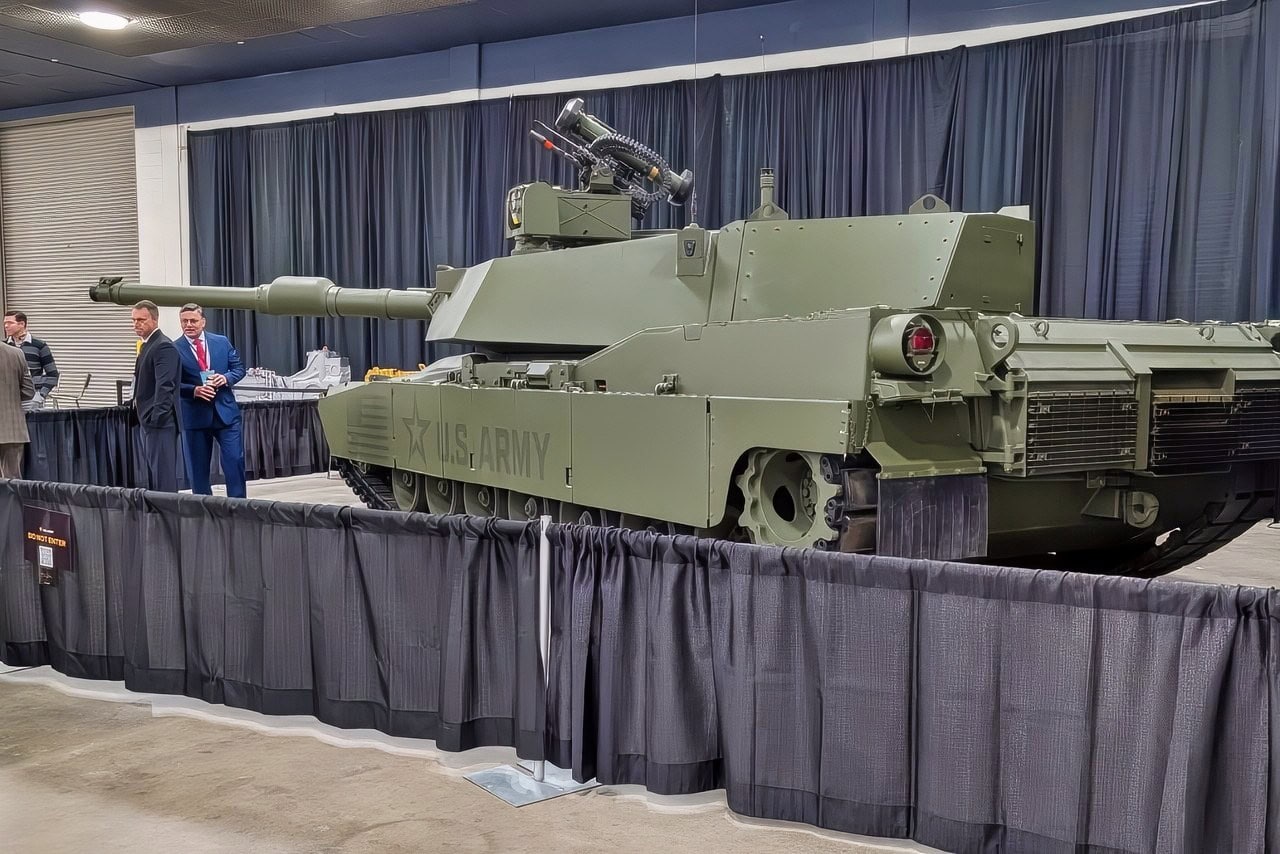
M1E3 Tank at the Detroit Auto Show. Image Credit: 19FortyFive.
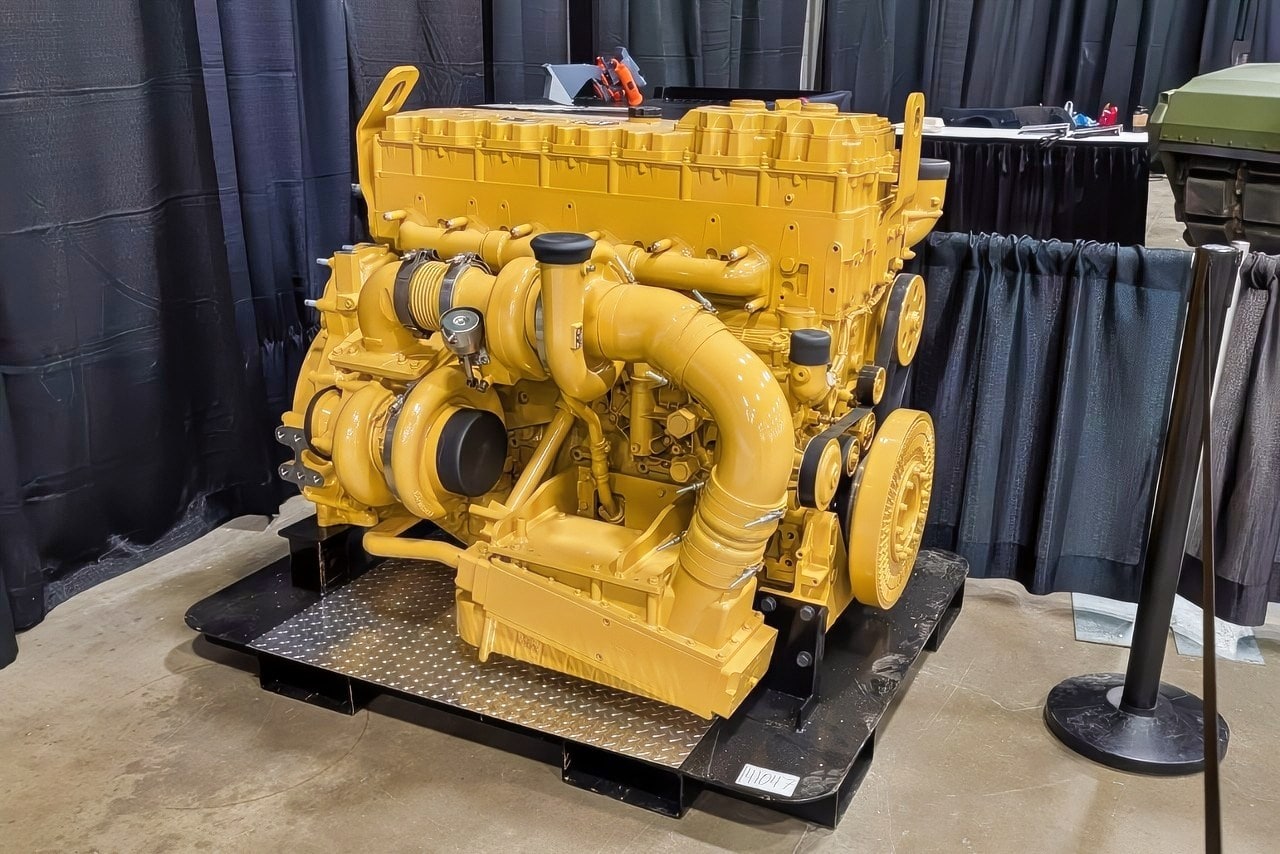
M1E3 Tank at the Detroit Auto Show. Image Credit: 19FortyFive.
This design technique will allow upgrades in the field that are similar to the regular updates of modern electronic devices, rather than relying solely on mechanical servicing. Servicemen and officers will not have to return a tank to a depot where it would have to be out of service for days or even weeks while old hardware is swapped out for new systems.
Instead, the tank operators themselves will install new apps that provide the necessary enhanced capabilities. This eliminates not only the time required at a depot for a retrofit, but also the need for laborious and extensive testing of any new mission profiles.
The level of technology being designed into the platform will permit never-before-seen functionality. Commentators who understand how the M1E3 will operate say that, if necessary, the tank can shoot and maneuver while being operated by only a single crewman. This is thanks to the so-called “software-designed” functionality of the reconfigurable crew stations.
Last but not least, the revolutionary procurement model the Army has adopted for this program deserves a mention. The tank’s development is being carried out without a single prime contractor—more than ten companies are involved in the program development.
Caterpillar is reported to be designing the engine, SAPA the transmission, Recaro the crew seating, and Roush the crew compartment design. The U.S. subsidiary of Germany’s Rheinmetall will design and build the lightweight tracks, Moog will make a new slip ring, and General Dynamics will supply one of the older Abrams hulls for conversion.
The tank that will become the next generation of U.S. heavy armor will not only be a first of its kind in design and technology. Its development model also will open a new chapter in the creation of modern weapon systems.
About the Author: Reuben F. Johnson
Reuben F. Johnson has thirty-six years of experience analyzing and reporting on foreign weapons systems, defense technologies, and international arms export policy. Johnson is the Director of Research at the Casimir Pulaski Foundation. He is also a survivor of the Russian invasion of Ukraine in February 2022. He worked for years in the American defense industry as a foreign technology analyst and later as a consultant for the U.S. Department of Defense, the Departments of the Navy and Air Force, and the governments of the United Kingdom and Australia. In 2022-2023, he won two awards in a row for his defense reporting. He holds a bachelor’s degree from DePauw University and a master’s degree from Miami University in Ohio, specializing in Soviet and Russian studies. He lives in Warsaw.