
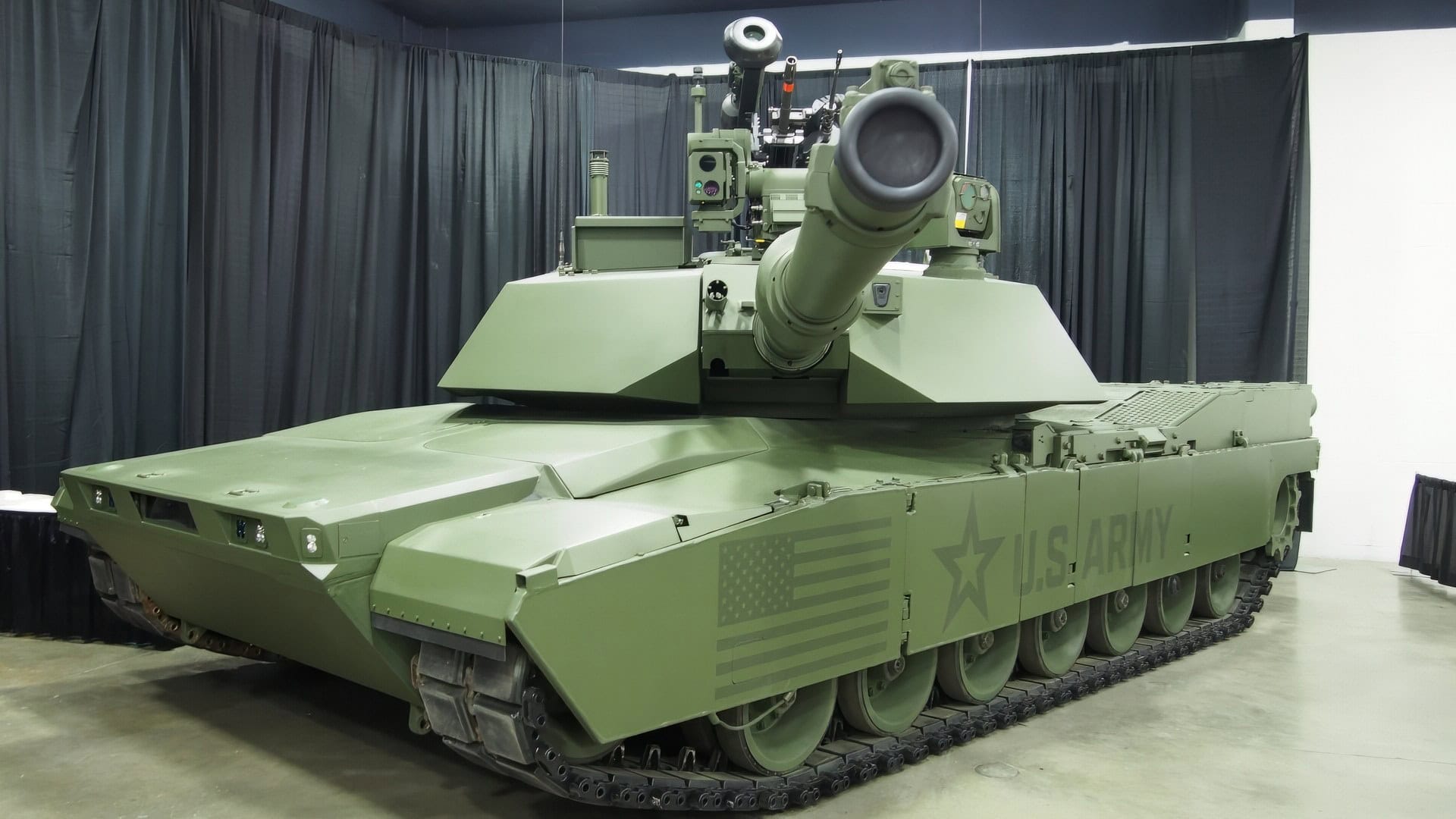
Summary and Key Points: The U.S. Army has debuted the M1E3 Abrams prototype in Detroit, showcasing a lighter, faster, and more maneuverable tank designed to survive the drone-saturated battlefields seen in Ukraine.
-Key upgrades include a hybrid diesel-electric engine, which reduces heat signatures and noise, and the integrated Trophy Active Protection System (APS), which counters anti-tank missiles and loitering munitions.
New U.S. Army M1E3 Abrams Tank Means New Armored Warfare Doctrine
The U.S. Army is rightly excited about the new M1E3 Abrams.
And, indeed, we are too: we saw it in Detroit when it debuted at one of the country’s largest auto shows.
This tank is designed for the modern battlefield, which should help address the thorny problems learned during the Russo-Ukrainian war.
It will be better protected against drones and anti-tank missiles.
The Trophy Active Protection System is highly effective, with advanced software that addresses incoming threats. The smoothbore 120mm will dish out high levels of punishment.
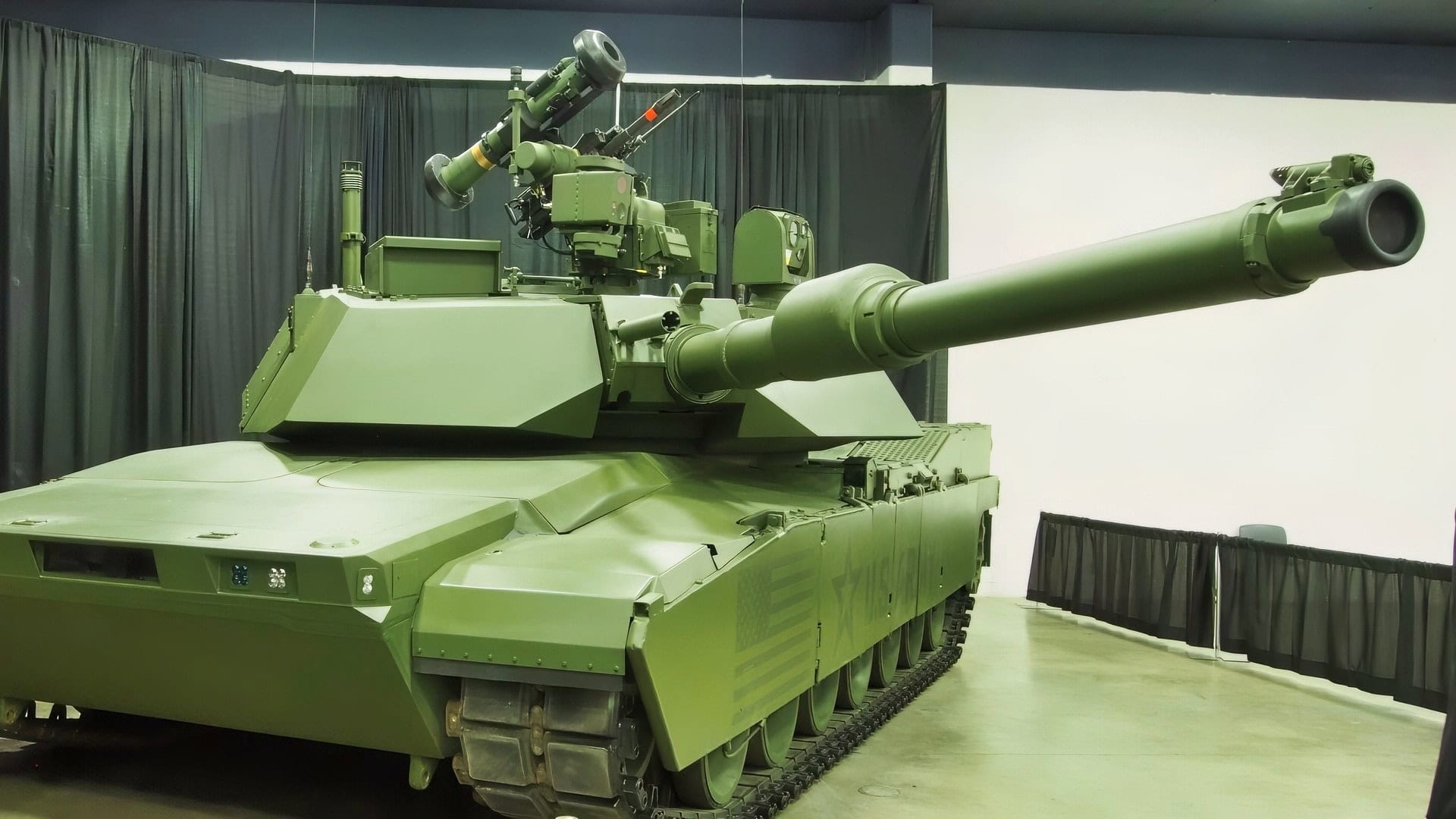
M1E3. 19FortyFive Image from the Detroit Auto Show.
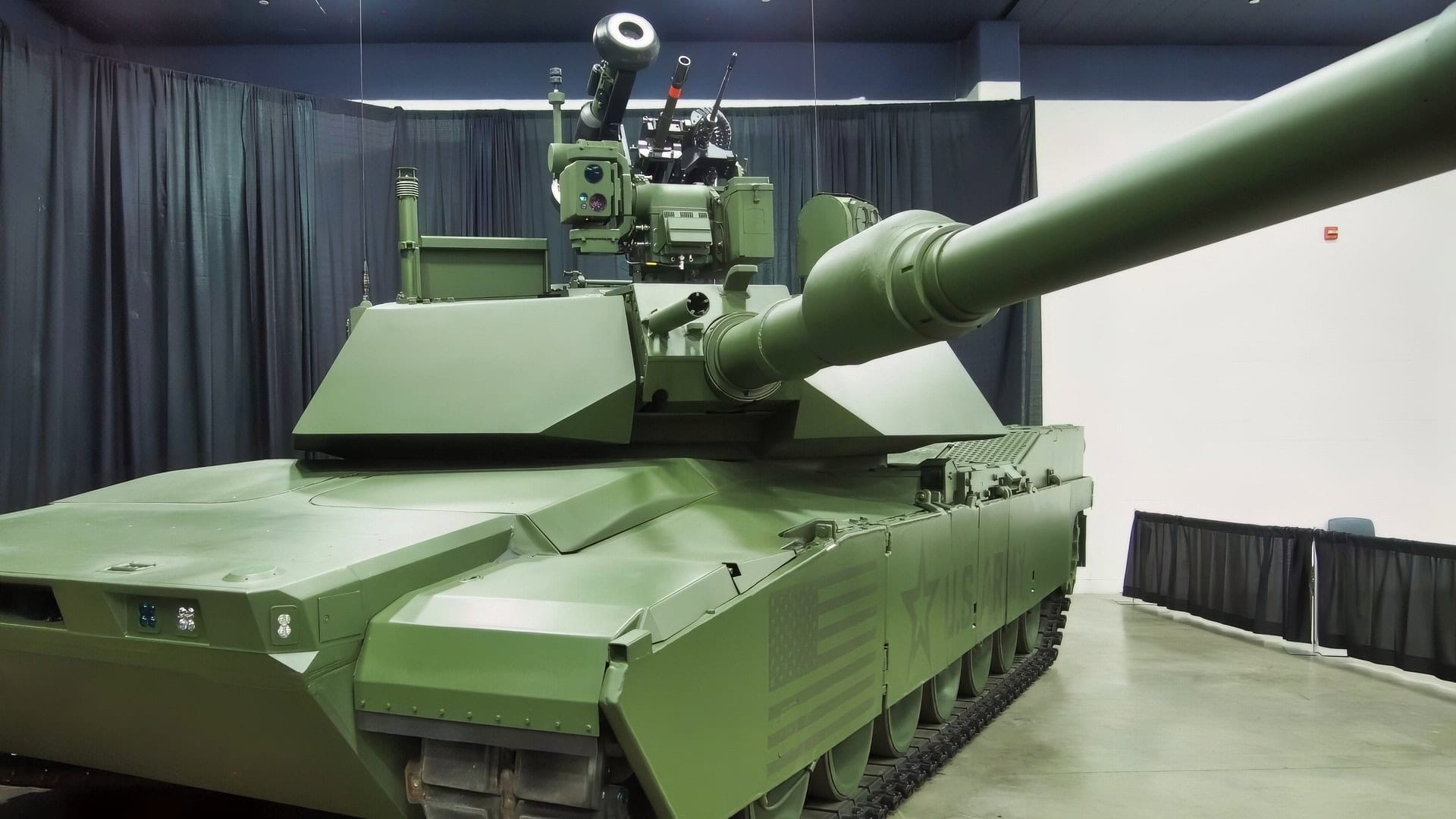
At the Detroit Auto Show, 19FortyFive visited the new M1E3 tank. Image Credit: 19FortyFive.com.
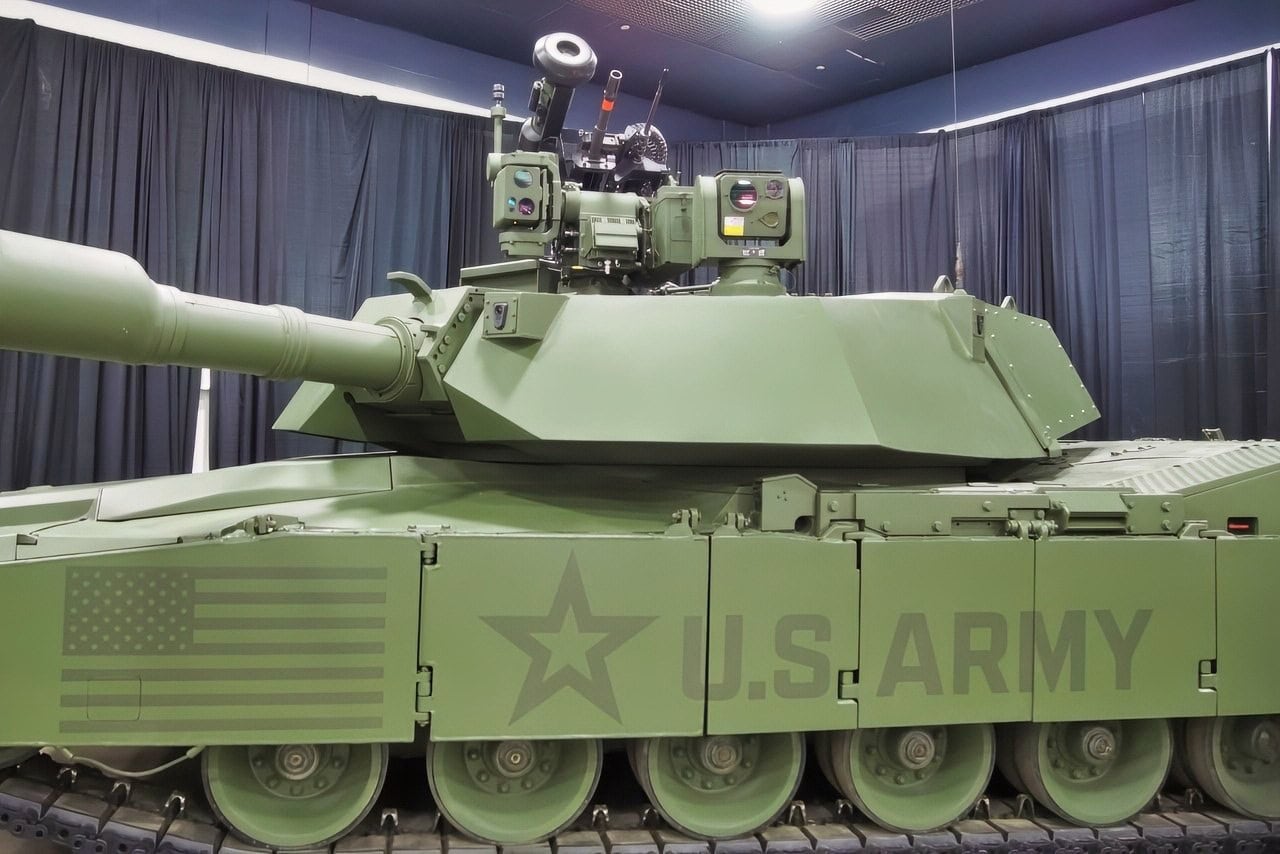
M1E3 from the Detroit Auto Show. Taken by 19FortyFive.com on 1/17/2026.
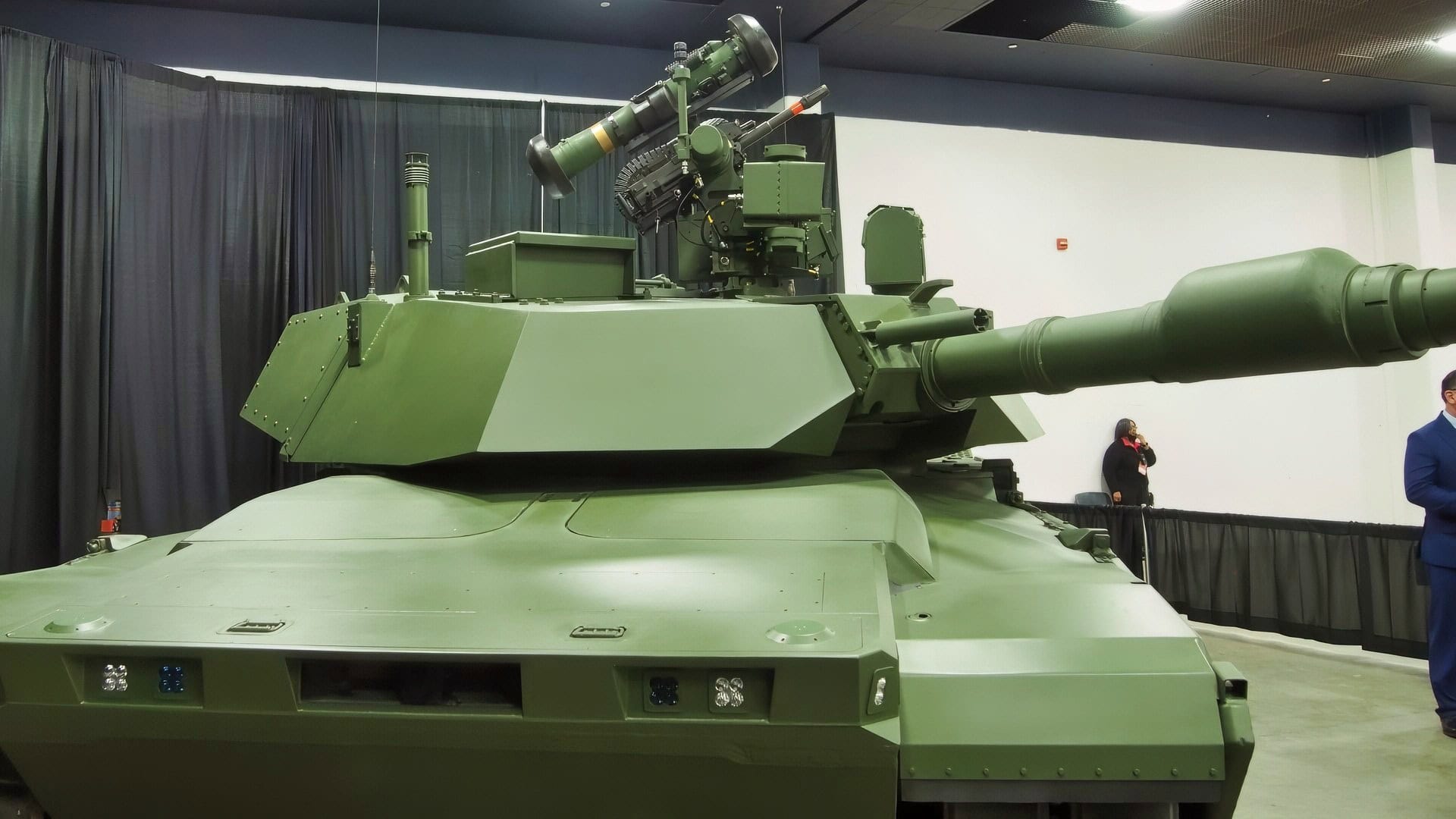
M1E3 Tank from the Detroit Auto Show. Photo Taken By 19FortyFive Staff on 1/17/2026.
The armored beast will be lighter, faster, and more maneuverable. A new powerplant will have better fuel efficiency and less noise than older Abrams tanks. The three-person crew will be busy adapting to incoming drones and anti-tank missiles, but the Trophy Active Protection System should make the M1E3 more survivable against the enemy’s most capable weapons.
Can The New Abrams Tank Make a Difference?
The propulsion will depend on a newfangled hybrid diesel-electric engine. This will reduce the heat signature and emissions, making the tank harder to identify and track.
But any tank, regardless of modern upgrades, could still be a liability on the battlefield.
Ukrainians Are Accepting More Donated Abrams Tanks
The swarming, loitering drones are a major problem, and it is difficult to find a Russian or Ukrainian tank without the improvised steel “cope cages” that are fashioned above the turret.
The M1A2 Abrams tanks gifted to Ukraine had difficulty against Russian forces. But Australia is undeterred.
The Aussies are donating outdated Abrams M1A1 models to the Ukrainians in a broader arms package that will be worth $1.5 billion. This is a force of 49 tanks, each with the ubiquitous rooftop cages.
We Saw the M1E3 Up Close and Personal
Last month, the U.S. Army displayed the M1E3 in Detroit at the North American International Auto Show. We were there to document the arrival. This will be a more lethal tank at a time when some question whether armored vehicles remain necessary in the 21st century.
There are valid arguments against the tank. These are fat targets that can be “plinked” by drones and anti-tank missiles such as the Javelin. Precision fires from modern artillery are also a threat. Strike aircraft can make a tank crew pay the price. They can even get stuck in the mud for easy pickings by enemy gunners.
Tanks Still Have a Place in the 2020s
But the tank still has a purpose that allows an army to hold ground. They can even serve as mobile artillery in the rear and form the basis of a defensive formation. Tanks are still needed to lead armored spearheads that can blast through enemy lines. Troops can be disbursed and dismounted from cavalry units to root out enemy anti-tank missile teams and frighten soldiers armed with drones.
However, this will likely be the last tank built by the Americans, and it will remain in service for at least two more decades in armored units. The M1E3 will be the primary instrument of maneuver warfare in future land battles.
Russian Best In Class Tank Has Been a Failure
The United States needs to be careful, though. The Russians thought that their T-14 Armata tank would be decisive in Ukraine, and it has mostly failed. This was supposed to be the most advanced tank ever. It also has active protection systems and an unmanned turret and was considered survivable, but the T-14 has not made much difference against Ukraine.
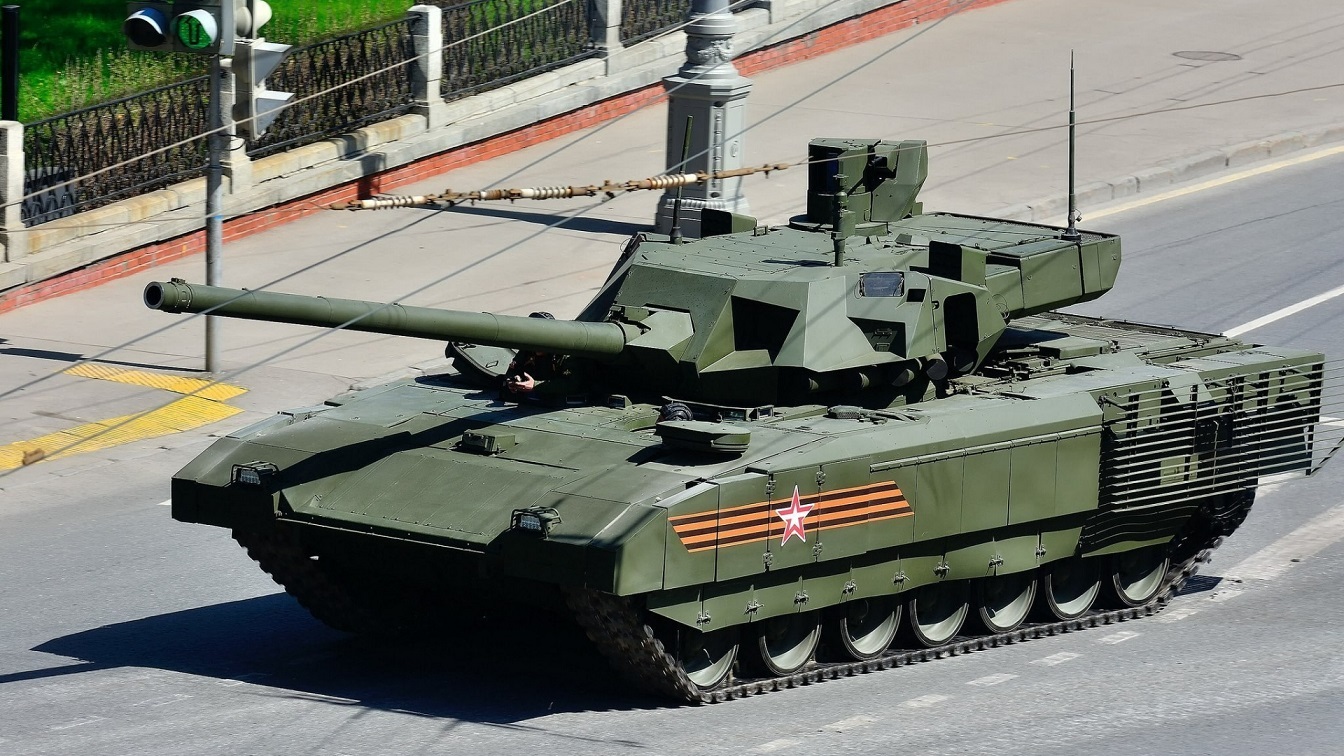
T-14 Armata Tank. Image Credit: Creative Commons.
The U.S. Army is learning lessons quickly from the war. There will likely be no more long columns of exposed armor. The turret on the M1E3 must be reinforced, as it is the primary weak point of all tanks and the primary target for anti-tank missiles and drones.
New Battlefield Realities Endanger Even the Best Tanks
The tank still has ample firepower, mobility, and the ability to take ground from the enemy. This will not change, but tactics must be adjusted. Staging a large number of tanks in assembly areas before a main attack thrust is dangerous. Drones and artillery will destroy those battlewagons like ducks on a pond.
As the Defense Horizon Journal pointed out, “optical, thermal and electronic sensors” have proliferated on the battlefield. This makes tanks especially vulnerable to quick identification and tracking. If an attack is planned, it must be multi-pronged without a large build-up that could be discovered easily.
I Predicted a Drone-Filled Battlefield Over Two Decades Ago
The best way to protect tanks is to deploy friendly armed reconnaissance drones ahead of mechanized units. I called for that practice in an article I wrote for the U.S. Army in 2002. Unmanned aerial systems, I wrote 24 years ago, needed to be deployed in large numbers to help find a safe path for armored units like the new interim brigade combat teams being created before the invasion of Iraq.
The drone battlefield did not emerge as I predicted until years later, but now the Army must pay heed to warnings like mine that presaged a multi-threat environment from enemy efforts to take out numerous tanks with loitering munitions.
Having drones fly ahead of armored forces need not be complicated or expensive, but it is necessary to improve survivability. The new Abrams model can then fulfill its primary mission of destroying enemy armor and breaching enemy defenses for deep strikes into the rear.
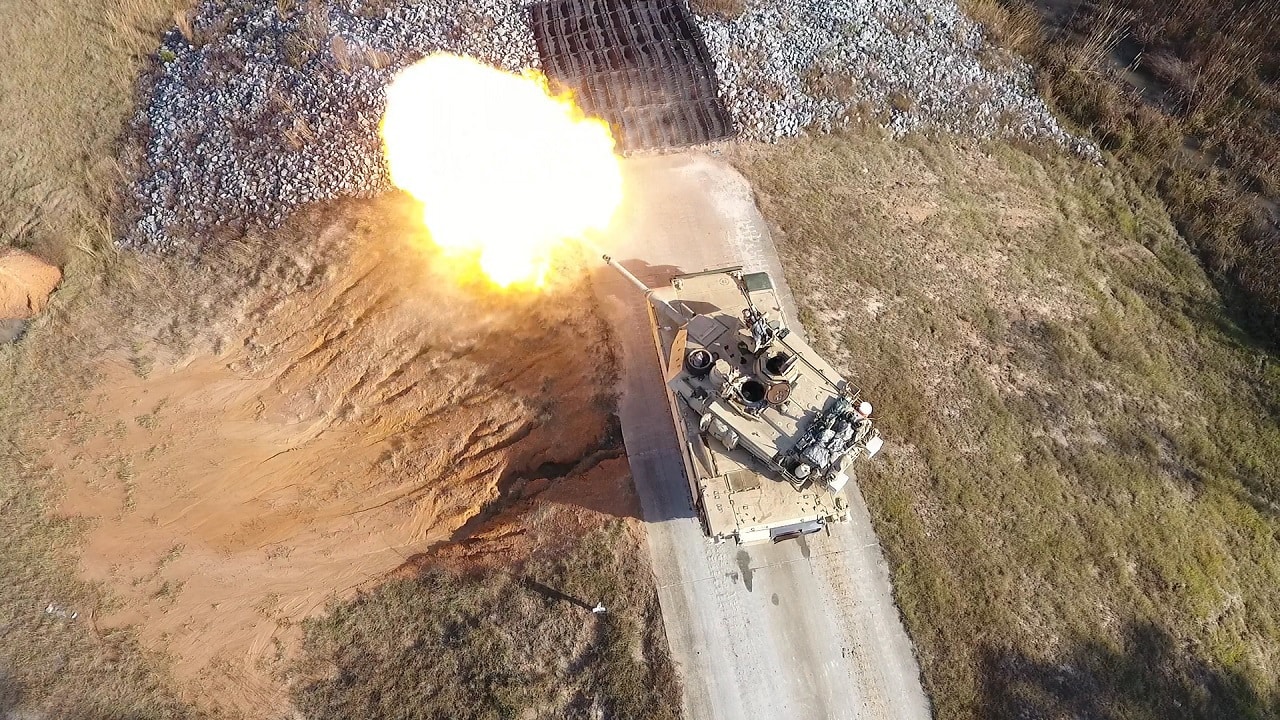
Aerial drone image of an M1A2 Abrams Main Battle Tank crew, from the 1st Armor Brigade Combat Team, 3rd Infantry Division, conducting Table VI Gunnery at Fort Stewart, Ga. December 6, 2016.
However, the days of tanks rapidly dashing through hundreds of miles of territory to scare the enemy into submission are likely gone. Progress in mechanized warfare will be incremental and slow. They must be protected by artillery fire as they advance and regularly replenished with fuel and ammunition in a war of attrition. Look for heavy tank losses if the United States entered into a ground war with Russia.
With new doctrine and adjusted tactics, techniques, and procedures, the M1E3 can still be successful. This will require a mindset shift and a refocus on applying lessons learned from Ukraine and Russia.
There is no need to diversify away from tanks yet, but any mechanized fight will be deadly, and numerous tanks will be lost. Look for armed reconnaissance drones to fly ahead of mechanized forces and dismounted infantry to root out enemy tank defenses. This is the only way to survive in the future armored fight.
About the Author: Brent M. Eastwood
Author of now over 3,000 articles on defense issues, Brent M. Eastwood, PhD is the author of Don’t Turn Your Back On the World: a Conservative Foreign Policy and Humans, Machines, and Data: Future Trends in Warfare plus two other books. Brent was the founder and CEO of a tech firm that predicted world events using artificial intelligence. He served as a legislative fellow for US Senator Tim Scott and advised the senator on defense and foreign policy issues. He has taught at American University, George Washington University, and George Mason University. Brent is a former US Army Infantry officer. He can be followed on X @BMEastwood.