
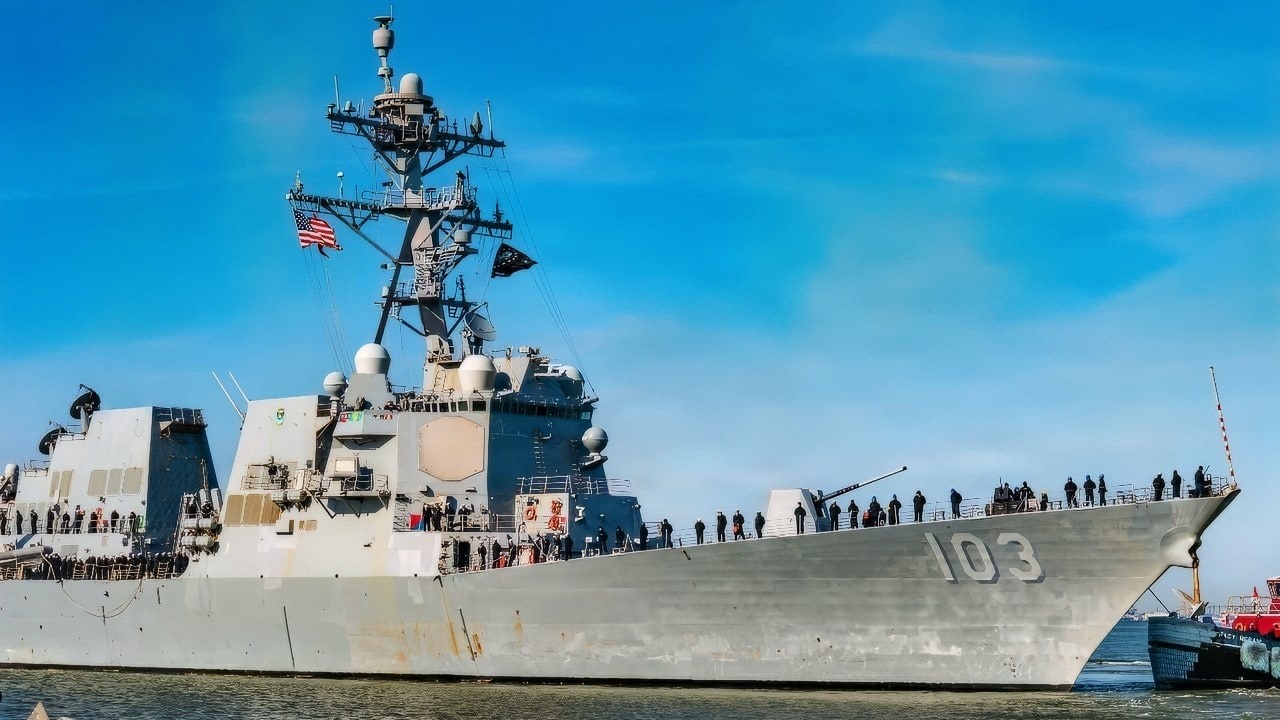
Summary and Key Points: Post–Cold War U.S. Navy cuts set the stage, but today’s delays stem from a recurring pattern: unstable requirements, starting construction before design maturity, and integrating immature technologies and software at scale.
-Constellation-class frigates gained about 759 metric tons (roughly 13 percent) and slid to a 2029 first delivery as U.S.-unique changes piled onto the FREMM baseline, triggering cancellations.
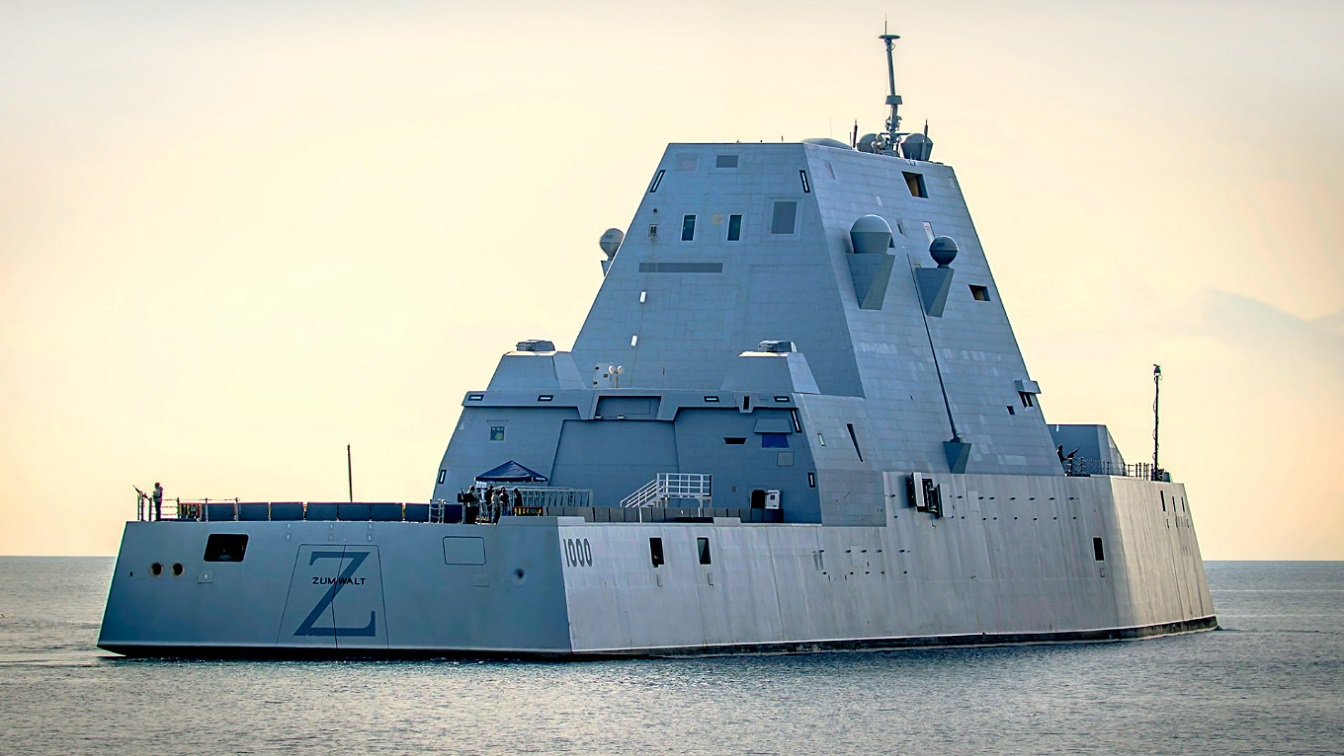
Zumwalt-Class, the largest destroyer on Earth today.
-Zumwalt’s land-attack promise collapsed when its primary munition soared near $1 million a round, driving a hypersonic pivot.
-LCS reliability fixes and early retirements, plus Columbia-class schedule slips and workforce/supplier fragility, indicate that the maritime industrial base is stretched beyond its limits.
-And budget pressure keeps pushing future hulls right.
Zumwalt, LCS, Constellation: How “Low-Risk” U.S. Navy Programs Turn Into Cancellations
Since the end of the Cold War, the U.S. Navy has appeared to be in decline.
This is partly to be expected given the post-Cold War Peace Dividend, but this decline has become more noticeable in the past ten years or so.
Multiple projects have been cancelled, orders have been cut down, and many projects have been delayed. While the Navy remains one of the best fighting forces on the seven seas, these issues have been slowly eroding its overall readiness and, if left unaddressed, could hinder operations in the Pacific in the near future.
But what exactly is happening in the Navy to cause all these delays?
According to reports from the Government Accountability Office (GAO) and others, the U.S. is experiencing inertia, a broken requirements system, a tight budget, and other various challenges.
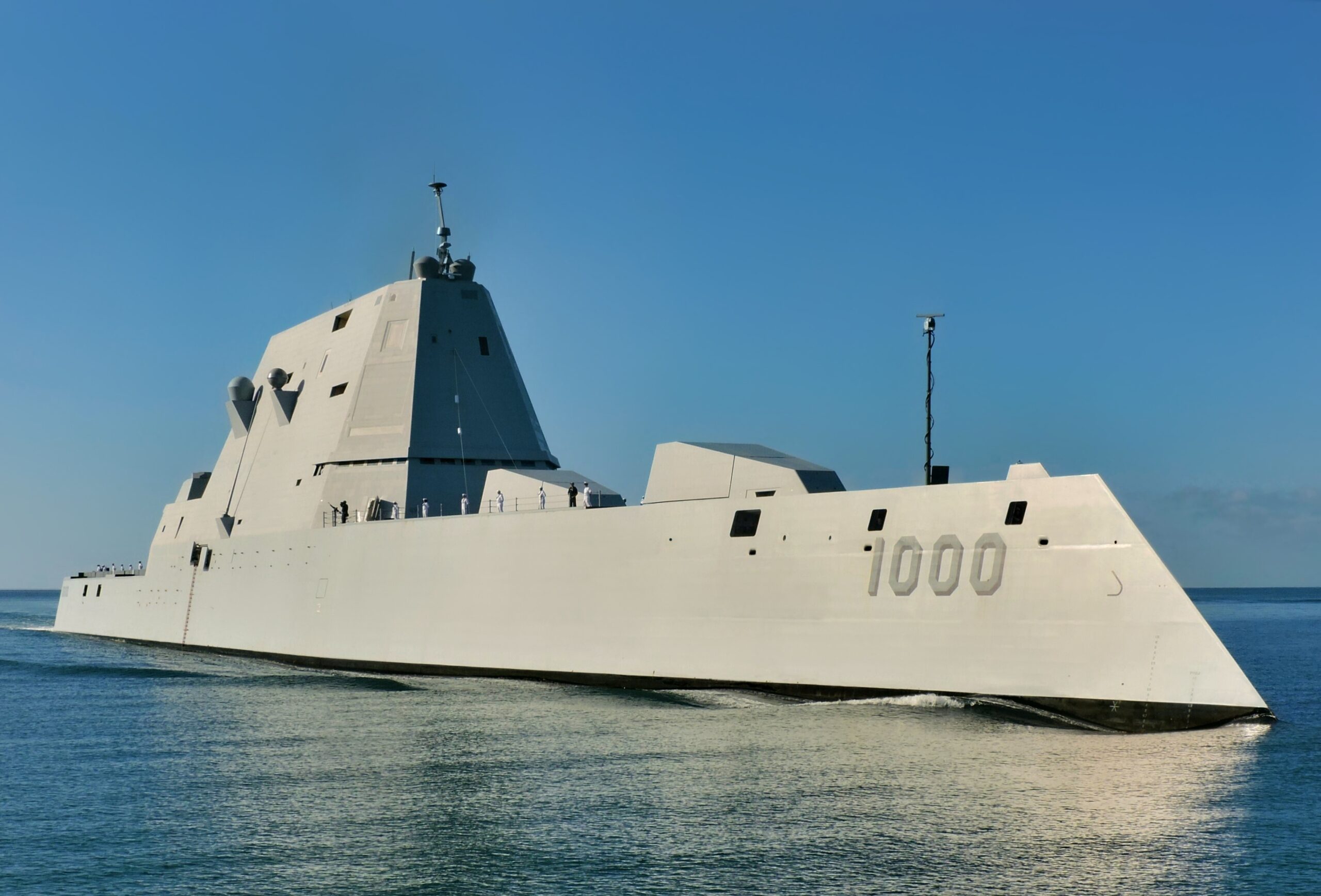
Zumwalt-Class Destroyer U.S. Navy. Image Credit: Creative Commons.
What’s Happening in the Navy?
The Constellation-class experience illustrates how a low-risk plan can go awry when U.S.-unique requirements are layered onto a foreign “parent” design.
In mid-2025, GAO reported that the frigate’s design had gained roughly 759 metric tons (which is about a 13 percent weight increase), stemming partly from underestimating the effect of U.S. technical requirements on the FREMM baseline, with the Navy now expecting the first delivery in 2029 rather than 2026.
The additional weight threatened performance margins and growth capacity. Months later, the Navy executed a dramatic truncation: four contracted frigates were canceled, leaving only the two hulls already under construction at Marinette, a move justified by senior leaders as part of a larger push to deliver capability faster after prolonged redesign and cost escalation.
The Zumwalt-class similarly demonstrated what happened when you stack too many advanced concepts in one frame. The signature 155mm Advanced Gun System lost its primary munition when the Long-Range Land Attack Projectile’s unit price soared close to a million dollars per round.
This, in turn, undermined the class’s primary appeal and reduced the fleet from the original thirty-two ships to only three.
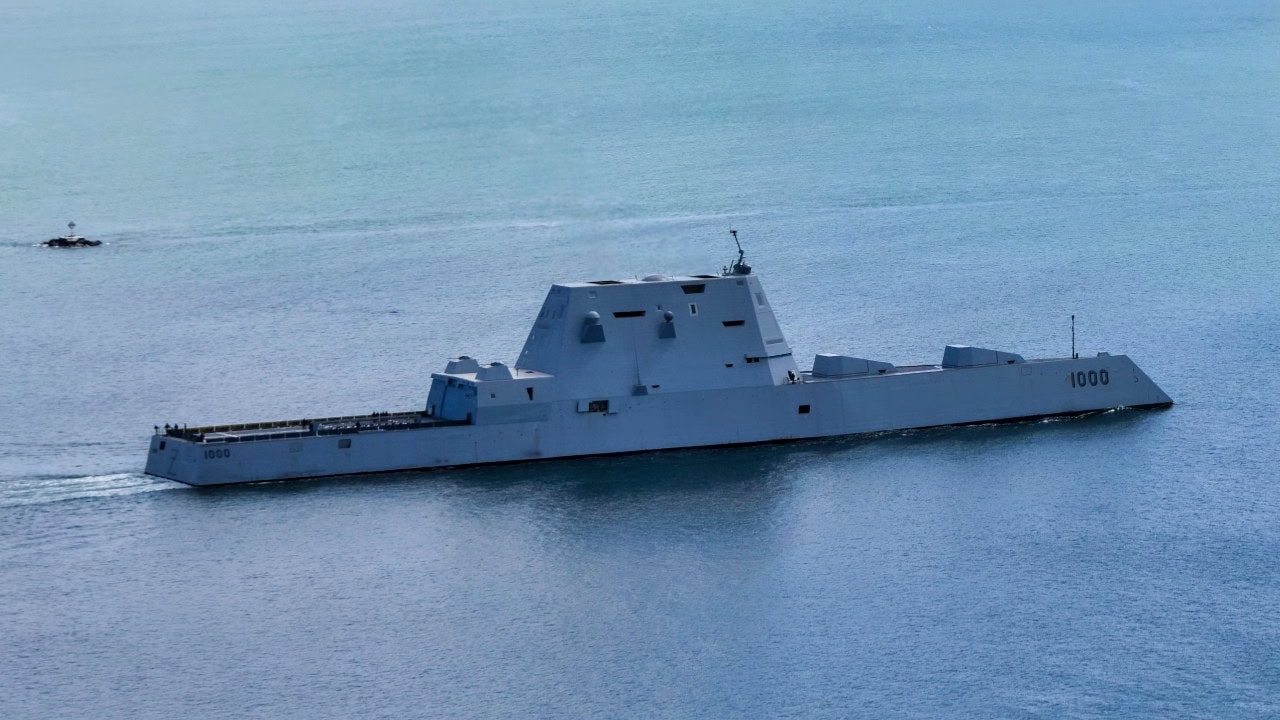
The Guided-missile destroyer USS Zumwalt (DDG 1000) departs San Diego as part of an operational underway. The milestone demonstrates the U.S. Navy’s commitment to advancing the lethality of its surface combatants by integrating cutting-edge technologies in Zumwalt’s combat systems, weapons, and engineering plants. (U.S. Navy photo by Mass Communication Specialist 2nd Class Natalie M. Byers)
The Navy later repurposed the class for hypersonic Conventional Prompt Strike, removing both gun houses and installing CPS launchers during lengthy yard periods. That pivot may produce a potent long-range strike platform, but it also underscores how initial overreach, followed by mission changes, translates directly into schedule and budget pain.
Delays, Cancelations, and More Delays
The Littoral Combat Ship encountered various problems, but ultimately resulted in the same outcome. GAO’s 2022 report assessed that the LCS had not demonstrated the operational capabilities needed for its missions, identified significant reliability problems, and documented the lagging development of mission modules that were supposed to be the ship’s defining feature.
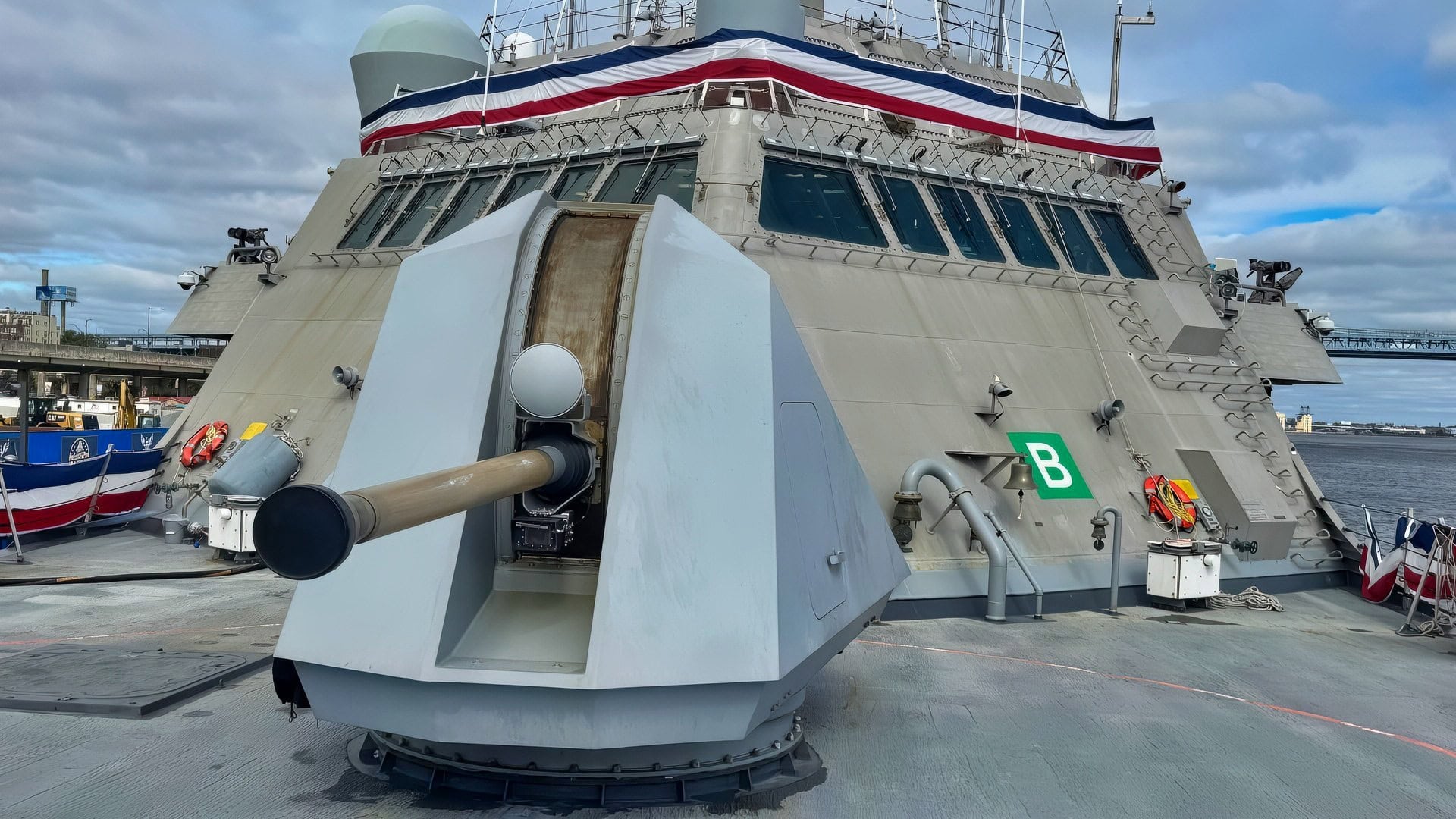
Littoral Combat Ship USS Cooperstown. Image Credit: 19FortyFive.com
The Freedom-variant’s defective combining gear required an extensive retrofit campaign on delivered ships, and the Navy decommissioned multiple hulls well before their expected service life. Reports on the combining gear fix costs and scope revealed how haste to field hulls without mature combat systems yielded ships that crews often struggled to keep underway and that commanders could not credibly employ in higher-end fights.
Various naval publications, such as Proceedings, have since cautioned against overpromising mission modularity in the absence of operational and logistics discipline.
On the Columbia-class submarines, the Navy’s top acquisition priority, the schedule is already slipping. A report in 2024 assessed the lead boat as running twelve to sixteen months late, with delivery projected between October 2028 and February 2029.
Because the Ohio-class retirements are dictated by reactor life and hull age, a late Columbia risks a deterrent patrol gap in 2030–2031. The report also detailed persistent cost and schedule underperformance on critical work packages and warned that supplier shortfalls could add risk even if the prime yards improve.
Shifting Designs and Requirements
So, what is behind these strings of failures and delays?
Firstly, beginning construction before the design is ready has been a recurring and costly choice. In a 2025 statement to the Senate, GAO concluded that despite nearly doubling the shipbuilding budget over two decades, the Navy has not achieved its planned fleet growth, in large part because it has launched programs with weak business cases and commenced construction prior to completing design work.
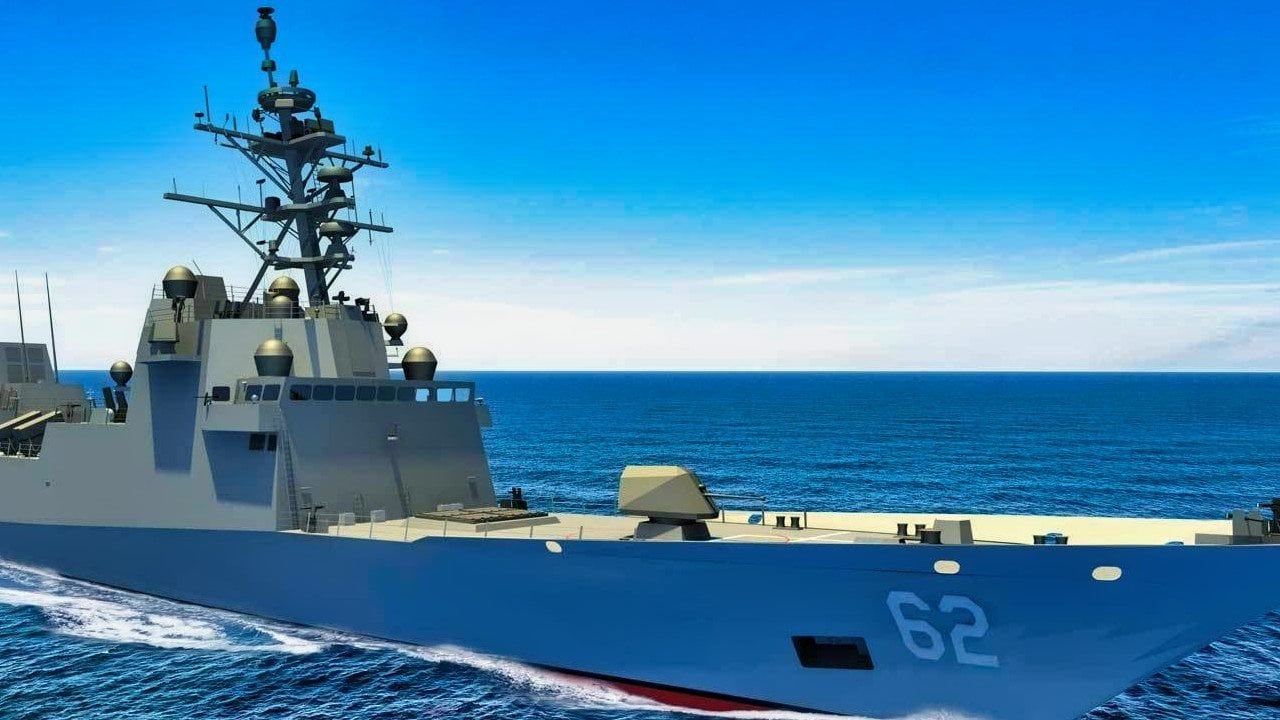
Constellation-Class Frigate. Image Credit: Creative Commons.
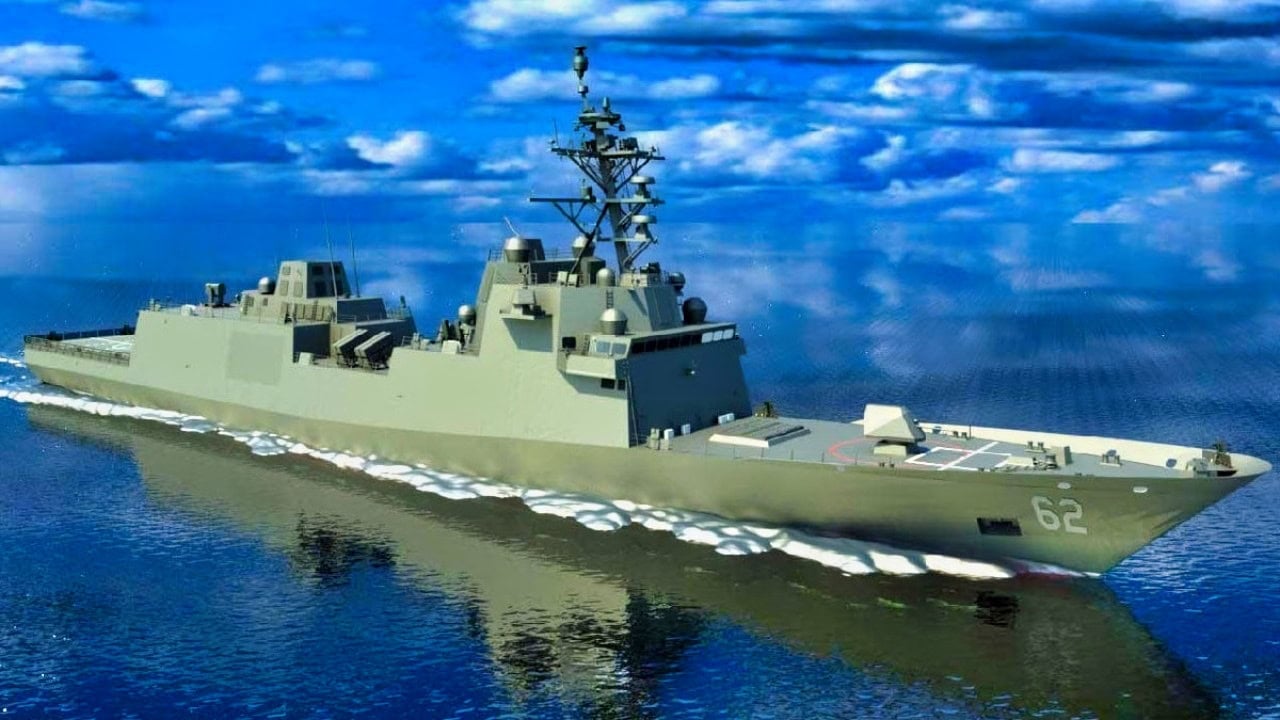
Constellation-Class Frigate. Image Credit: Creative Commons.
As one concrete example, GAO flagged the Constellation-class for starting the lead ship before the design was stable and now projecting the first delivery at least three years late. GAO explicitly linked those practices to earlier problems on the Littoral Combat Ship and Zumwalt classes, which promised more than they could deliver and then suffered cost and schedule consequences. The same report urged the Navy to adopt commercial leading practices for ship design and product development to regain predictability.
Another recurring source of friction is the broken requirements system. LCS, for example, emerged from a post-9/11 concept focused on permissive littorals and modular loadouts. As great-power competition returned, the class’s thin protection and magazine depth became disqualifying for contested seas.
Proceedings’ cautionary essays on modularity capture the institutional temptation to let a flexible concept substitute for hard choices about survivability and integrated design. DDG-1000’s transition from land-attack to blue-water surface strike, and then to a hypersonic platform with both guns removed, is a dramatic example of mission evolution inducing significant and time-consuming rework. Constellation, which began as a low-risk “parent design” adaptation, became a redesign program once U.S. survivability, power, sensor, and combat system requirements were fully applied. All three cases reaffirm that changing requirements in mid-build breed schedule and cost shocks.
Hardware and Software Integration Problems
Additionally, advanced technology and software are often planned and integrated before they are ready. GAO’s assessments found that, across DOD’s costliest programs, “slow, linear development approaches persist.” Software integration hurdles are pervasive, and the average time to deliver even an initial capability now stretches to a decade or more.
Even programs using newer “rapid” pathways experienced schedule slips because they still undertook low-maturity efforts and struggled to transition prototypes into production. In shipbuilding, where platform power, sensors, and software are interdependent, concurrency increases rework. If the sensor or power architecture changes, the software and combat system must adapt, thereby shifting the program timeline.
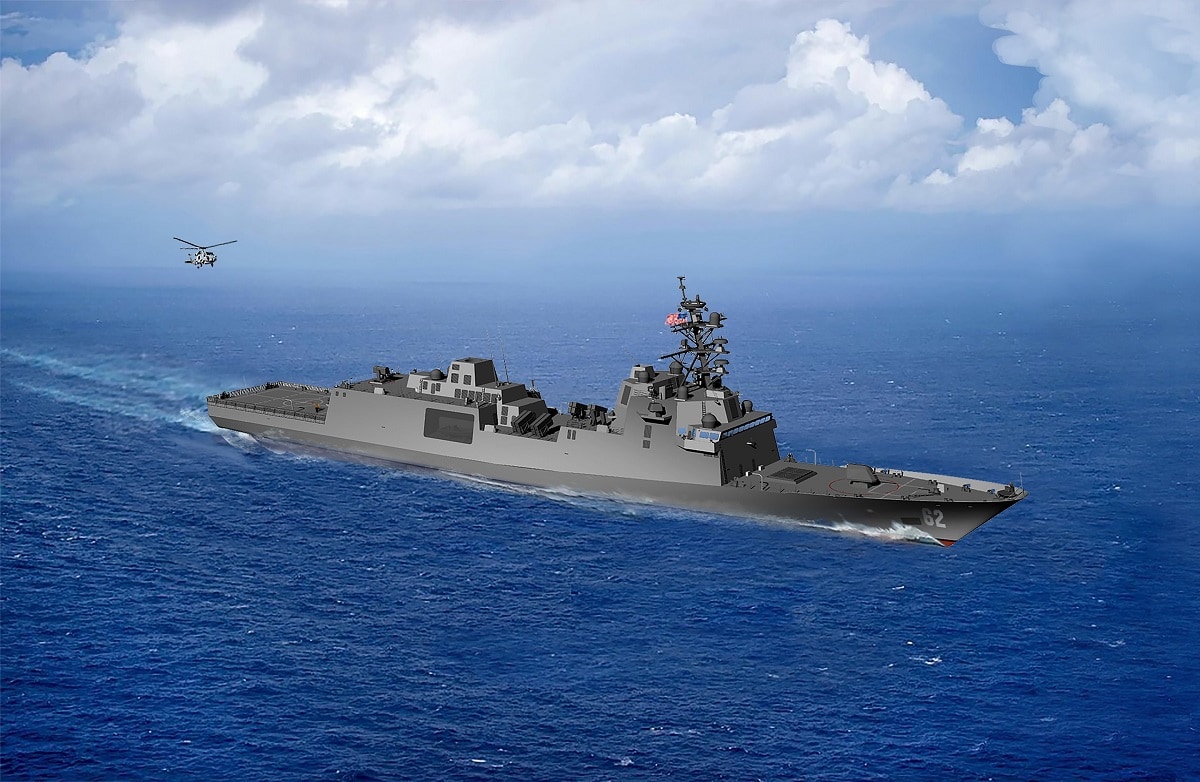
An artist rendering of the U.S. Navy guided-missile frigate FFG(X). The new small surface combatant will have multi-mission capability to conduct air warfare, anti-submarine warfare, surface warfare, electronic warfare, and information operations. The design is based on the FREMM multipurpose frigate. A contract for ten ships was awarded to Marinette Marine Corporation, Wisconsin (USA), on 30 April 2020.
Software and digital integration continue to outpace governance and test discipline. GAO has urged the Navy to adopt more iterative, commercial-style product development, with stable baselines entering production and spiral upgrades timed to mature prototypes. Instead, programs often lock in long, linear development flows that defer discovery and make integration problems expensive to fix once ships are in the water.
In parallel, test sufficiency remains uneven. DOT&E reporting and subsequent coverage of DDG-1000, for instance, emphasize that full-ship shock trials have not yet been funded or scheduled for the CPS-modified configuration, leaving unanswered questions about combat resilience in a configuration materially different from the as-built design. The broader lesson is that pushing critical test events late in the program trades calendar time today for operational risk tomorrow.
Budget and Labor Issues for the U.S. Navy
Another major issue is that naval projects tend to exceed their budgets more often than those of other branches.
The Congressional Budget Office’s analyses of the Navy’s FY2023–FY2024 shipbuilding plans show that the long-run cost to achieve even the lower-end fleet alternatives substantially exceeds historical averages.
This places significant pressure on programs to defer, stretch, or cancel when appropriations fall short, or inflation erodes purchasing power. That environment has already pushed high-end initiatives to the right.
The Navy has officially deferred the first SSN(X) procurement from FY2035 to FY2040, citing total budget limits and the need to manage the submarine design industrial base, as the Columbia and Virginia programs consume near-term resources. Reports now warn that repeated deferrals could undercut future undersea programs, especially if unit cost estimates in the $7–$9 billion range hold.
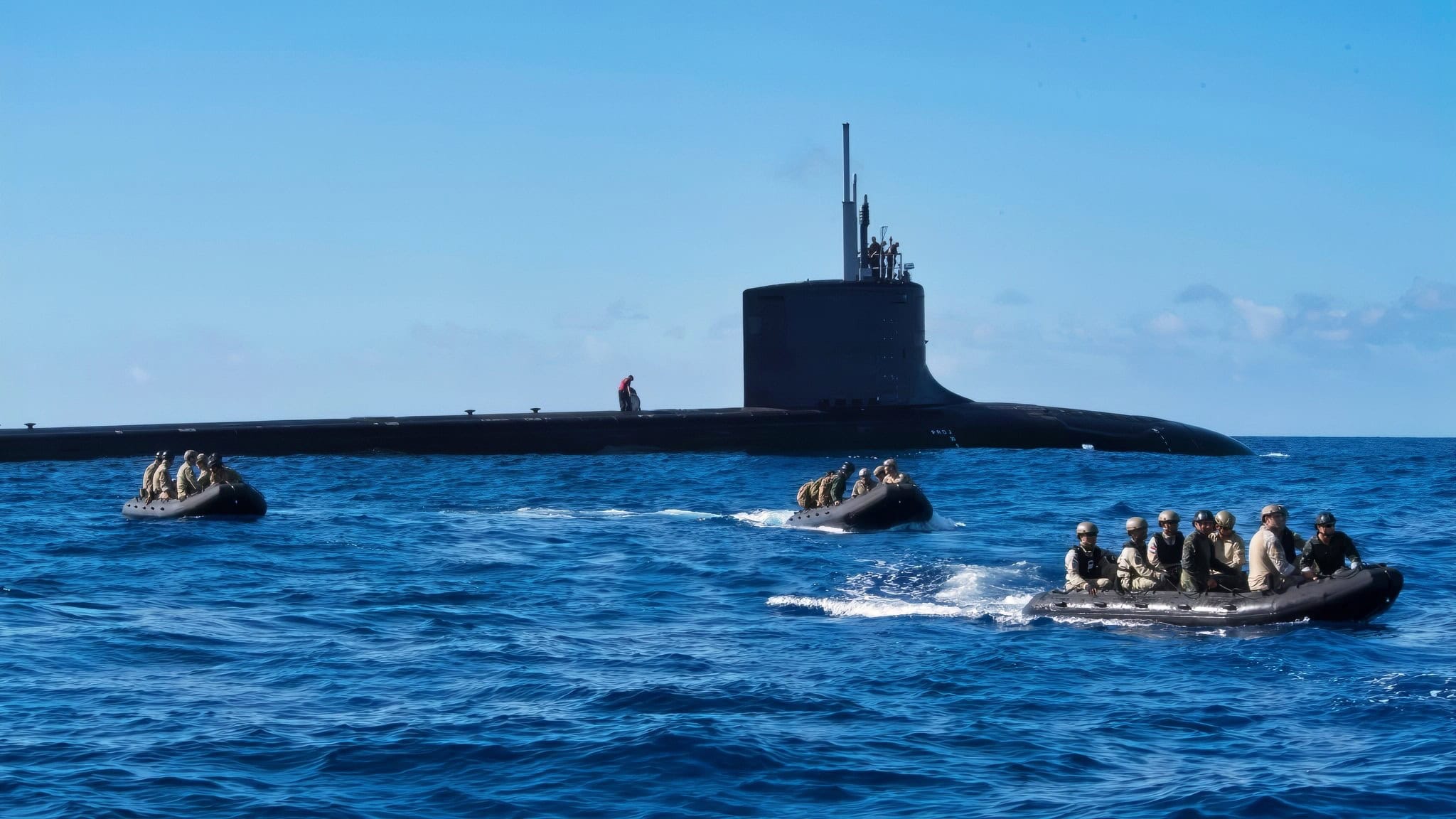
PEARL HARBOR (July 9, 2018) – Multi-national Special Operations Forces (SOF) participate in a submarine insertion exercise with the fast-attack submarine USS Hawaii (SSN 776) and combat rubber raiding craft off the coast of Oahu, Hawaii during Rim of the Pacific (RIMPAC) exercise, July 9. Twenty-five nations, 46 ships and five submarines, about 200 aircraft, and 25,000 personnel are participating in RIMPAC from June 27 to Aug. 2 in and around the Hawaiian Islands and Southern California. The world’s largest international maritime exercise, RIMPAC provides a unique training opportunity while fostering and sustaining cooperative relationships among participants critical to ensuring the safety of sea lanes and security of the world’s oceans. RIMPAC 2018 is the 26th exercise in the series that began in 1971. (U.S. Navy photo by Lt. j.g. Michelle Pelissero)
All of these issues are further compounded by the U.S. crippled shipbuilding industry. The post–Cold War collapse of the maritime industrial base is a decisive, structural constraint. The supplier ecosystem that once numbered around 17,000 firms during the Ohio-class ramp is a fraction of that today.
Skilled trade pipelines have thinned, public yards shrank from eight to four, and only two private yards can build nuclear ships.
Navy and GAO documents acknowledge that recent long-range shipbuilding plans have not met their intended output targets.
Investigations from both Naval and independent sources all point to the same conclusion: capacity, workforce, and supplier fragility are now the pacing factors for schedules and must be rebuilt deliberately.
About the Author: Isaac Seitz
Isaac Seitz, a Defense Columnist, graduated from Patrick Henry College’s Strategic Intelligence and National Security program. He has also studied Russian at Middlebury Language Schools and has worked as an intelligence Analyst in the private sector.