

Summary and Key Points: The J-15 “Flying Shark,” China’s first operational carrier-based fighter, serves as a critical bridge toward maritime aviation competence.
-Derived from the Soviet Su-33, the J-15 provides the People’s Liberation Army Navy (PLAN) with a heavy, long-range interceptor optimized for fleet air defense.
-However, operating from ski-jump carriers like the Liaoning and Shandong imposes severe weight penalties, limiting weapons and fuel loads.
-While recent upgrades—including AESA radar and improved datalinks—enhance its role as a networked defense node, the J-15 remains a transitional platform as China prepares for catapult-launched, 5th-generation carrier air wings.
Beyond the Ski Jump: How Upgraded J-15 Fighters Are Redefining Supercarrier China’s Fleet Defense
China has upgraded variants of the J-15 over time, emphasizing increased range, heavier weapons, and enhanced fleet-defense capabilities. The J-15 is China’s first operational carrier-based fighter, not the end state, and its primary value lies in enabling carrier operations at scale.
In light of the upgrades, the question is what the J-15 is actually capable of and how it fits into China’s naval airpower strategy.
China and the J-15
China’s carrier program required a fast way to field a carrier-capable fighter. But indigenous naval aviation experience was limited. The solution: a derivative, rather than a clean-sheet design, the J-15, which provided a rapid bridge to carrier aviation competence.
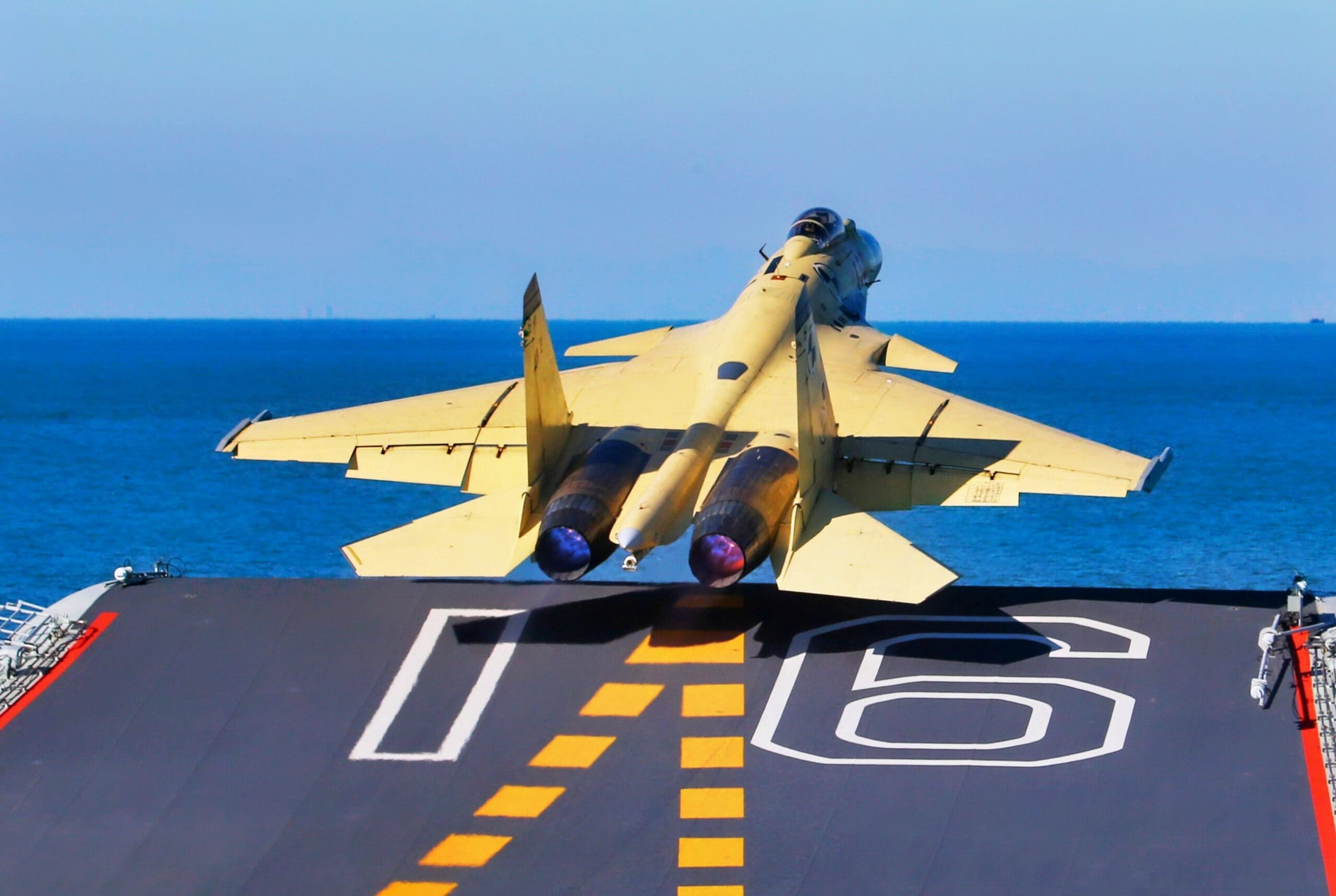
J-15 Fighter from China. Image Credit: Creative Commons.
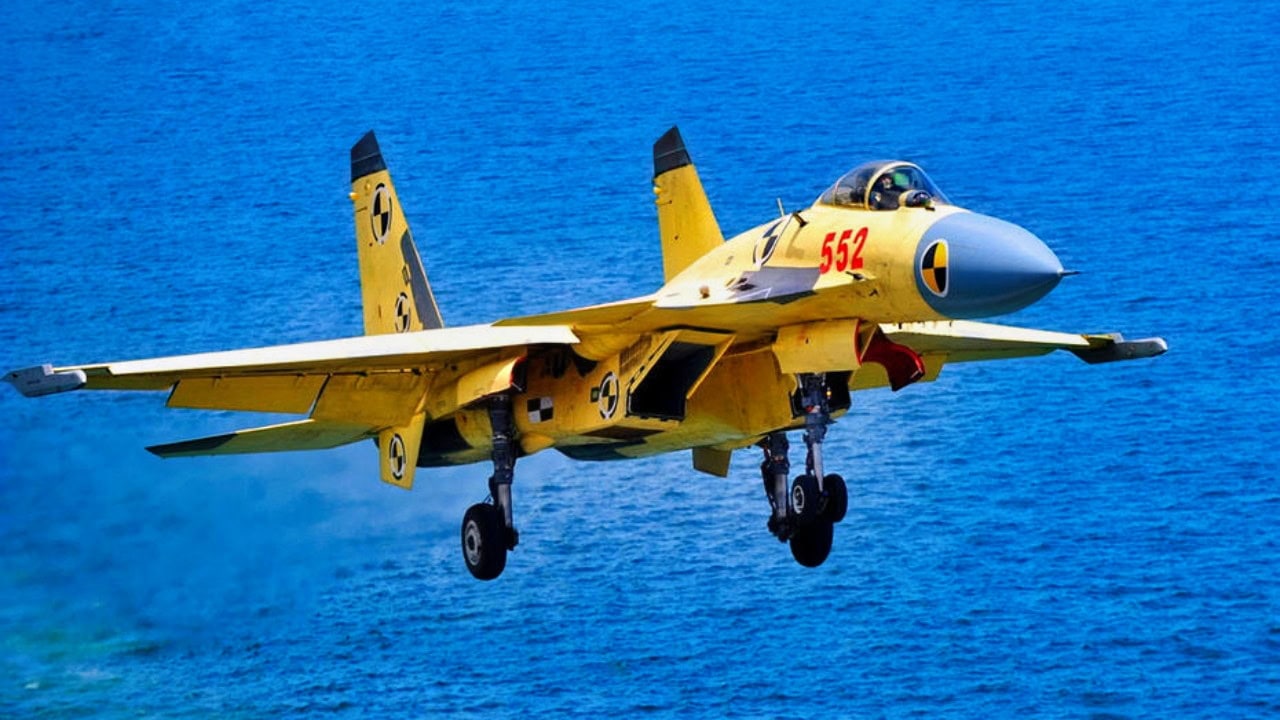
J-15 Flying Shark Fighter from China.
Derived from the Soviet Su-33 lineage, the J-15 design inherited a large airframe, twin engines, and high payload and range. Adapted for ski-jump operations rather than catapult launch, the J-15 was immediately compatible with China’s still maturing carrier technology.
Initial J-15 operations focused on pilot training, deck handling, and daytime launch and recovery.
The aircraft served as a functional learning platform, not a fully operational combat system, allowing China to cut its teeth in carrier aviation. Still, early accidents underscored the learning curve and inherent difficulties of carrier aviation.
Tech Specs of the J-15
The J-15 is a large, heavy fighter optimized for fleet air defense and long-range interception. The jet has a high top speed but limited acceleration and agility due to its weight. Its strengths include payload capacity, fuel volume, and high-altitude performance.
Its weaknesses are weight penalties from ski-jump launch (which affect fuel and weapons loads, climb rate, combat radius, etc.) and a limited bring-back payload compared to CATOBAR fighters.
Upgraded versions of the J-15 place greater emphasis on longer-range air-to-air missiles, improved sensors, and better datalinks. These changes signal a shift away from early multirole experimentation toward a more focused fleet defense role.
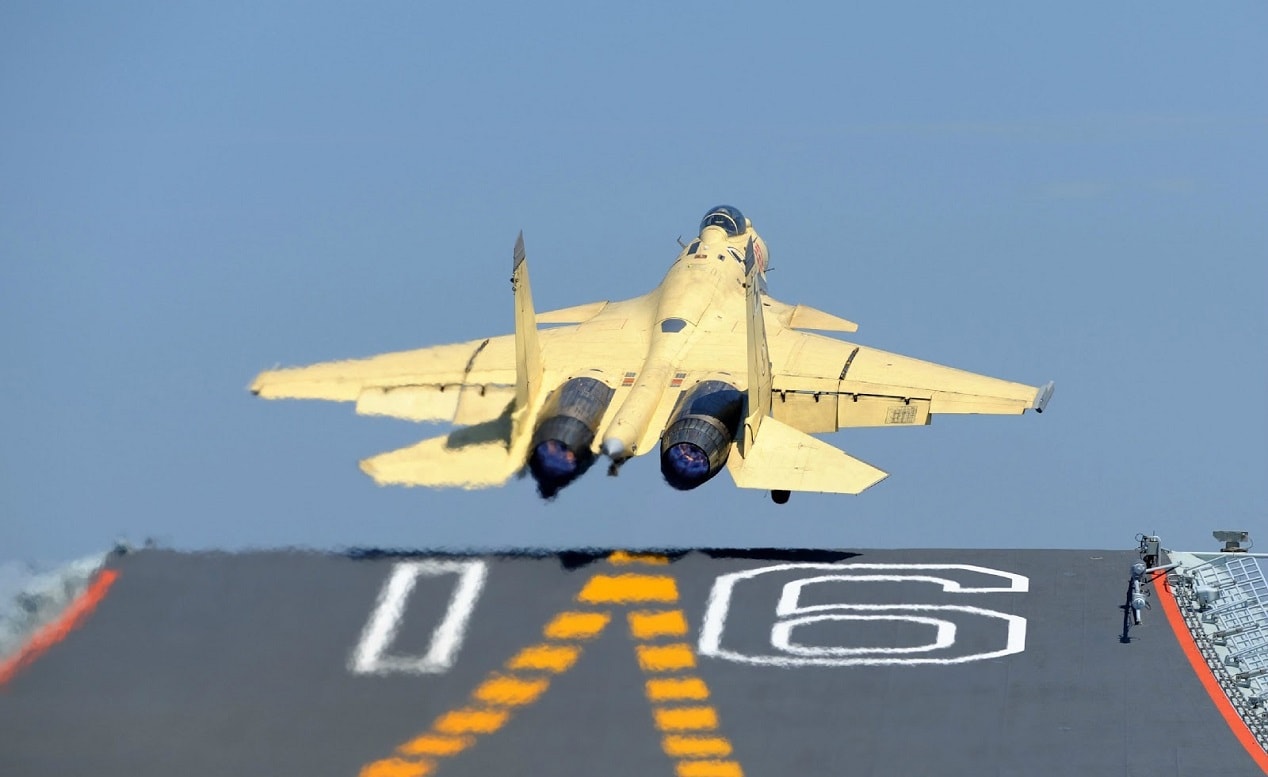
J-15 fighter. Image Credit: Chinese Internet.
Sensor and Avionics Upgrades
The introduction of modern radar systems, including AESA on newer variants, along with improved electronic warfare and targeting systems, demonstrates that the J-15 platform has matured.
Enhanced networking with early-warning aircraft and surface combatants further increases the effectiveness of the J-15, bringing it closer to a node within the carrier battle network.
Aircraft Carrier Operations and Constraints
The J-15 operates from China’s ski-jump carriers, which fundamentally shape how the aircraft is used. Ski-jump launches impose hard limits on maximum takeoff weight. As a result, fuel and weapon loads must be carefully balanced for each sortie. Unlike catapult-launched fighters, the J-15 cannot be fully fueled for maximum payload.
This reduces endurance and flexibility during strike or recovery operations, while limiting the bring-back payloads. These constraints compound, negatively affecting mission planning and generally reducing the aircraft’s effectiveness.
Employing the J-15
In practice, the J-15’s primary mission is fleet air defense. Typical tasks include combat air patrols around the carrier group, intercepting approaching aircraft, and contributing to layered maritime air defense. The aircraft is not optimized for deep strike against heavily defended land targets. Instead, the aircraft extends the carrier’s defensive perimeter.
Limitations of the Platform
The J-15 is not a stealth aircraft and is detectable to modern sensors. Accordingly, the fighter is vulnerable in highly contested airspace without strong supporting systems. High pilot workload and the physical demands of carrier operations remain challenges as well. The aircraft’s size and weight reduce its agility compared with light fighters.
These constraints do not negate the aircraft’s usefulness—but they do define its operational ceiling.
The J-15 Fighter Is a Transitional Platform
The fighter was never intended to be the final form of Chinese naval aviation. Its primary contribution has been experiential rather than transformational. The platform enabled China to train naval aviators, refine carrier doctrine, and normalize sustained carrier flight operations.
Incremental upgrades have improved effectiveness without altering the aircraft’s basic character.
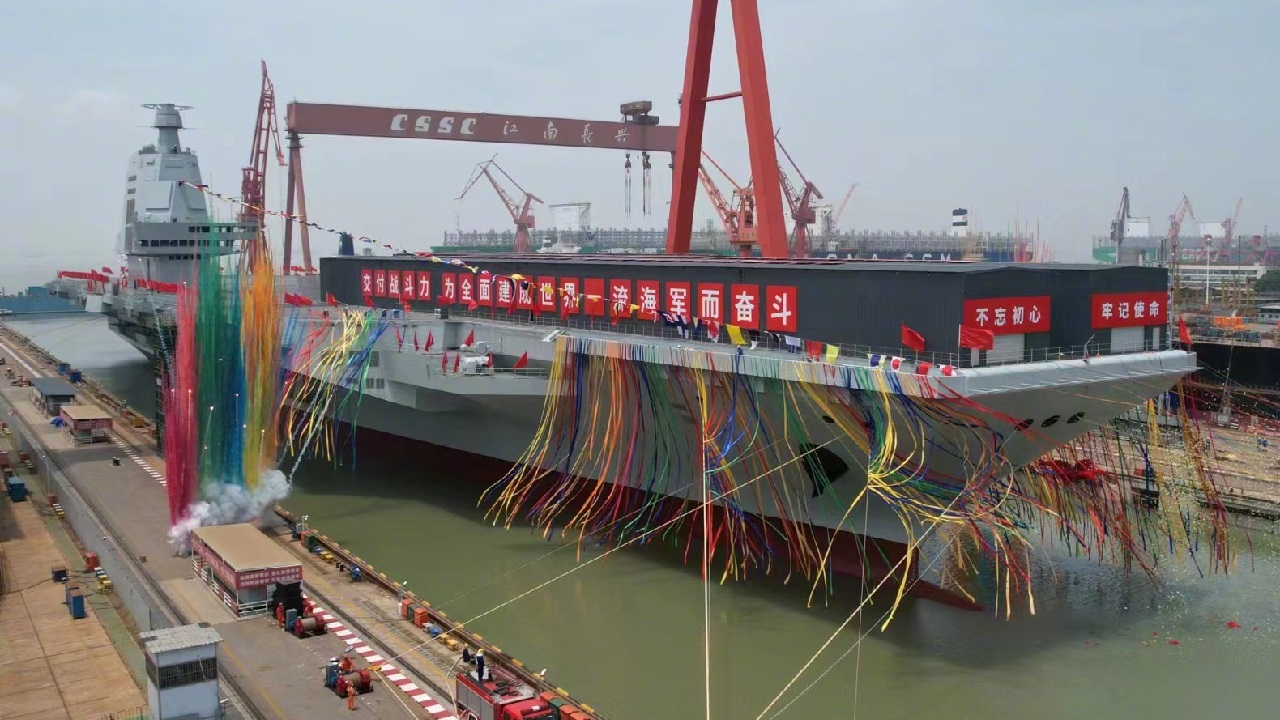
Fujian, China’s New Aircraft Carrier. Image Credit: Chinese Internet.
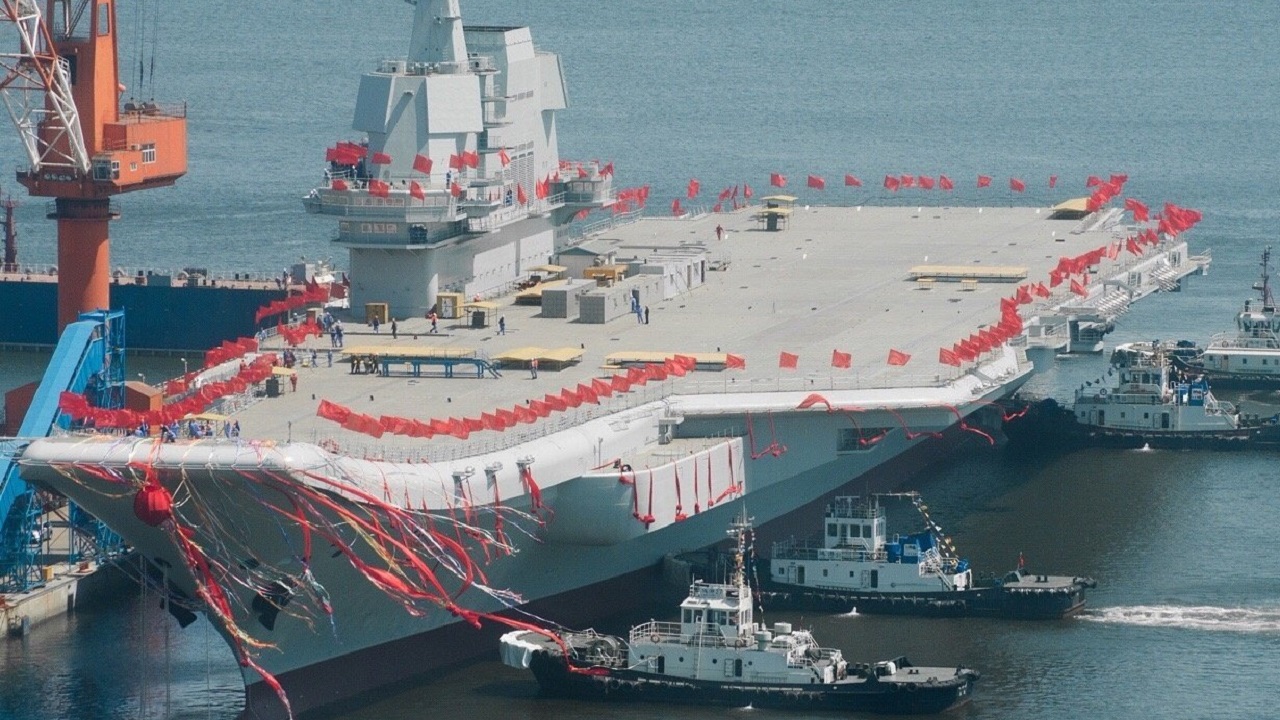
Fujian, China’s new aircraft carrier. Image Credit: Chinese Internet.
Ultimately, the fighter is a capable, if constrained, carrier-based fighter. It is best understood as a bridge between China’s initial carrier ambitions and more advanced future designs.
While upgraded sensors and weapons enhance its utility, the aircraft remains shaped by the limitations of its launch platform. Its real significance lies not in headline capabilities, but in how it enables China to build a functioning carrier air wing.
About the Author: Harrison Kass
Harrison Kass is an attorney and journalist covering national security, technology, and politics. Previously, he was a political staffer and candidate, and a US Air Force pilot selectee. He holds a JD from the University of Oregon and a master’s in global journalism and international relations from NYU.