
U.S. Navy Supercarriers are Floating Cities That are Raw Military Power
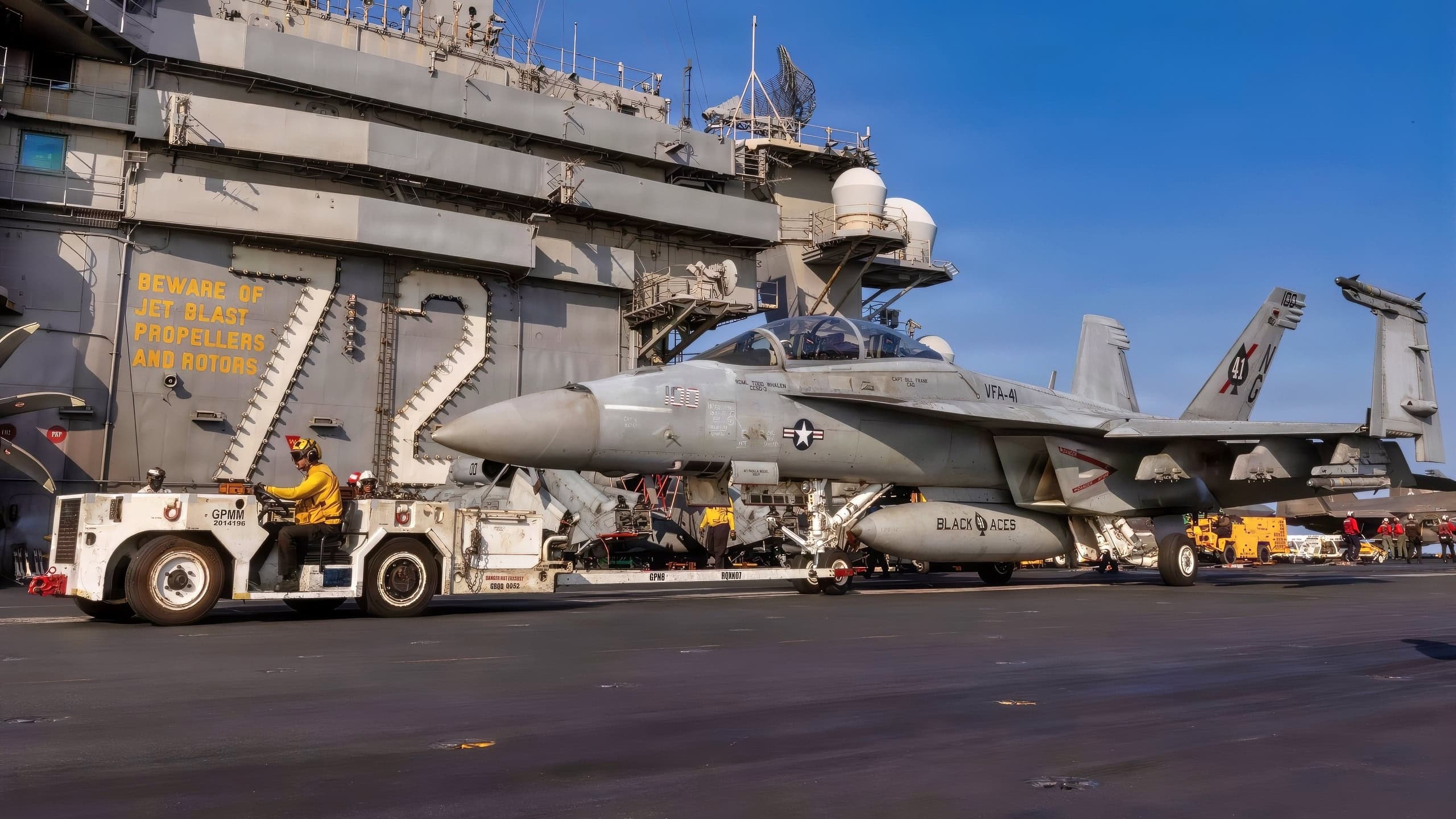
The United States Navy’s Nimitz-class nuclear-powered aircraft carriers are known as “supercarriers” for a reason.
The label is generally applied to “flattops” (that in turn is a slang term that dates back to World War I and became truly popularized in WWII) with a displacement of 75,000 tons or greater, and at 100,000 tons fully laden, the Nimitz(CVN-68) and sister ships easily exceed that standard.
For good measure, they have a hull length of 252 feet. Though nuclear power isn’t a must for supercarrier status, these mighty warships’ 2 × Westinghouse A4W nuclear reactors—generating 260,000 shp (194 MW)—certainly add to their behemoth nature.
Moreover, the anchor chain alone weighs 365 tons, with a single link weighing 360 pounds.
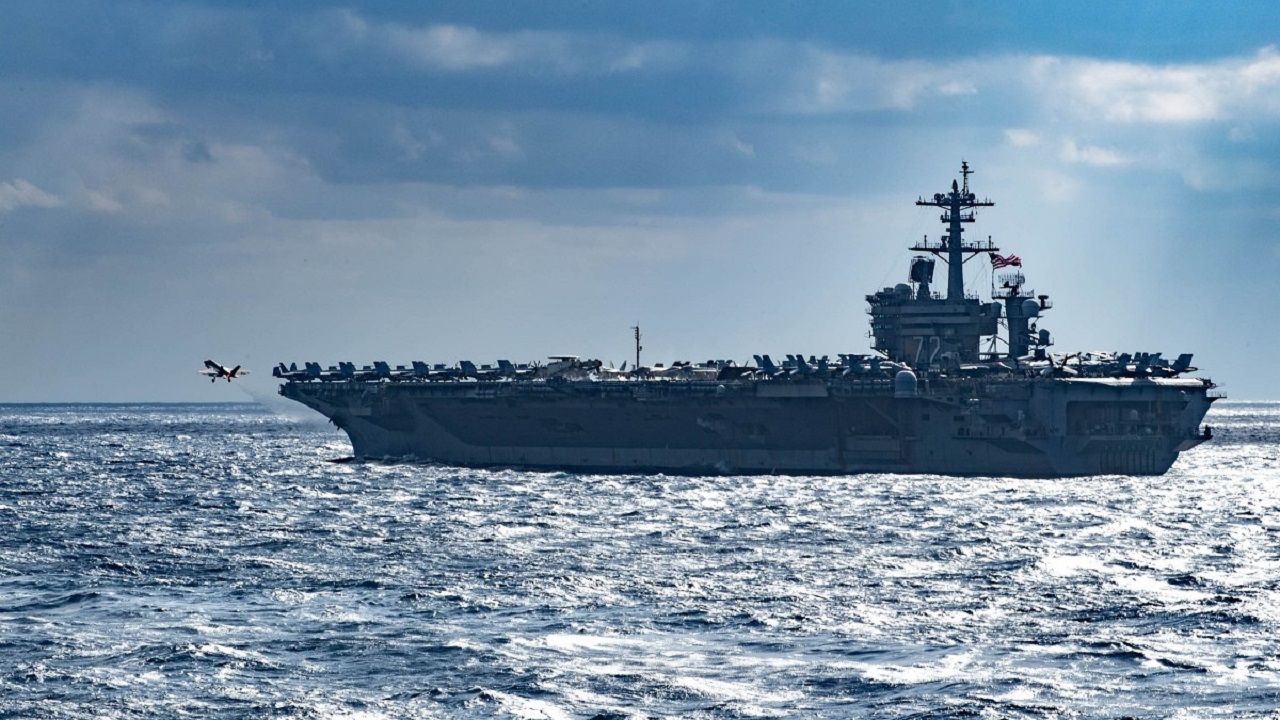
USS Abraham Lincoln. Image Credit: Creative Commons.
But beyond that supercarrier label and accompanying tech specs, the Nimitzes are also quite literally floating cities.
So, what exactly makes them floating cities in the literal sense as opposed to mere metaphors or hyperbole?
Aircraft Carrier As a Population Center
On terra firma, a municipality with a population of 5,000 to 9,999 people is typically considered a midsize town.
Of course, “floating midsize town” doesn’t have the same ring to it as “floating city” (not to mention the former phrase is more of a mouthful than the latter, and military jargon values brevity, hence the veritable alphabet soup of acronyms).
In any event, with its populace of 5,000+ (3,500 commissioned officers and enlisted seamen in the ship’s company; 2,480 in the air wing), a Nimitz-class warship certainly meets that criteria.
“Please Mr. Postman …”
(Or for the benefit of my fellow Elvis fans, “Return to Sender, address unknown …”)
Any American city has to have at least one ZIP Code and a post office of its own. Accordingly, CVN-68’s Fleet Post Office (FPO) processes more than one million pounds of mail each year! (How much of that qualifies as junk mail, I’m not sure.) For the benefit of our dear readers who have loved ones aboard the Nimitz but for whatever reason don’t have their mailing address handy, here ya go:
USS Nimitz (CVN 68)
UNIT 100103 BOX 1
FPO AP 96620-0300
… From Mail to Jail …
(Cue another Elvis song: “Warden threw a party in a county jail …”)
When you have a municipality with a population of 5,000+, it’s a sad fact of human nature that some members of that society will end up breaking the law (cue Judas Priest and Beavis & Butthead) at some point, so that in turn necessitates a jail, or to use the naval term, the “brig.”
On Nimitz-class (and Ford-class for that matter) carriers, the brig facility is typically sized to hold about 8–12 inmates in secure cells at one time.
“Doctor, Doctor, Give Me the News …”
Proper medical facilities and medical professionals are a must for any city’s survival, especially a military city whose populace is required to be mentally and physically fit to fight.
Accordingly, the USS Nimitz’s Medical Department is manned by six doctors, including a surgeon, who provide everything from surgery to hydrotherapy. The vessel features an 80-bed hospital ward and a fully equipped dental facility staffed by five dentists.
Food & Drink on the Aircraft Carrier
Proper nutrition and hydration are, of course, another survival necessity for any city (otherwise those aforementioned USN medical professionals are going to be really overworked).
Nimitz’s Food Services Department (which won the 2020 Captain Edward F. Ney Memorial Food Service Award for best aircraft carrier galley) provides 18000 – 20000 meals a day, and can stock at least 90 days’ worth of refrigerated and dry storage goods (including MREs presumably).

120511-N-WO496-003 STRAIT OF HORMUZ (May 11, 2012) Guided-missile cruiser USS Cape St. George (CG 71) and aircraft carrier USS Abraham Lincoln (CVN 72) transit the Strait of Hormuz. Both ships are deployed to the U.S. 5th Fleet area of responsibility conducting maritime security operations, theater security cooperation efforts and support missions as part of Operation Enduring Freedom. (U.S. Navy Photo by Mass Communication Specialist 3rd Class Alex R. Forster/Released)
Meanwhile, four distilling units enable the ship’s engineers to convert seawater around the ship into over 400,000 gallons of fresh water per day. Mind you, not all of this is drinking water; it’s also for use by the vessel’s propulsion plants and catapults.
And speaking of catapults, that makes a convenient segue to our next segment.
“Come Fly With Me …”
Any major city is going to have at least a regional airport if not an international one, and an aircraft carrier is, by definition, a floating international airport (though you’re not going to find any TSA employees aboard).
The flight deck on the Nimitz is 4.5 acres; for comparison, Washington Dulles International Airport (ICAO code: IAD) is a 13,000-acre facility.
Barbershop Quartet (or Barbershop Duo Anyway)
A barbershop isn’t a legal requirement for a city, unless of course you’re talking about a military city whose populace must meet grooming standards.
Accordingly, USS Nimitz’s barber shop trims over 1,500 heads each week. (Cue the Beatles this time: “Penny Lane,d the barber shaves another customer …)
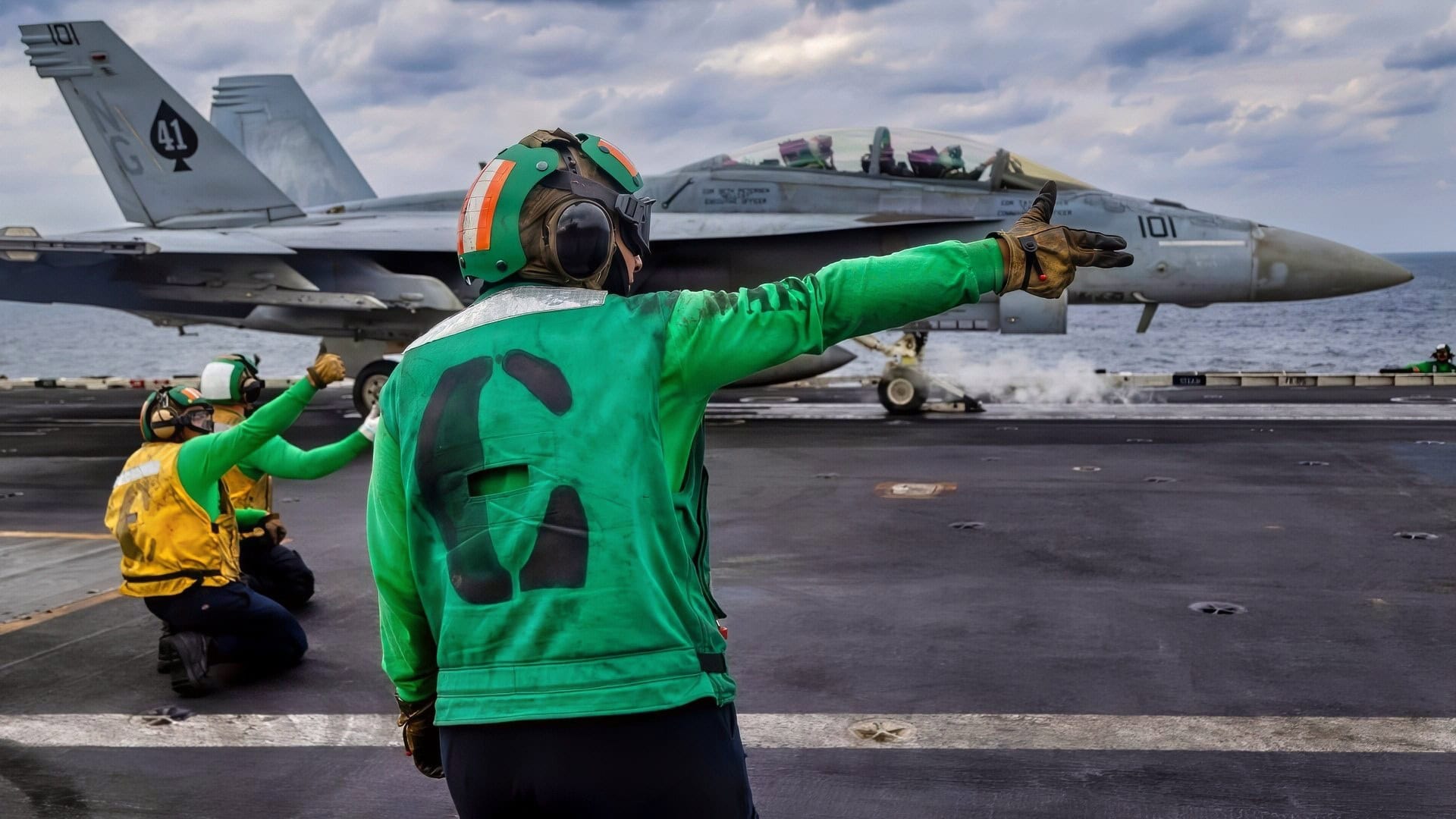
ARABIAN SEA (Jan. 28, 2026) An F/A-18F Super Hornet, attached to Strike Fighter Squadron (VFA) 41, prepares to launch from the flight deck of Nimitz-class aircraft carrier USS Abraham Lincoln (CVN 72) in the Arabian Sea, Jan. 28. Abraham Lincoln is deployed to the U.S. 5th Fleet area of operations to support maritime security and stability in the CENTCOM area of responsibility. (U.S. Navy photo by Mass Communication Specialist Seaman Zoe Simpson)
Impressed yet, ladies & gents?
About the Author: Christian D. Orr
Christian D. Orr is a Senior Defense Editor. He is a former Air Force Security Forces officer, Federal law enforcement officer, and private military contractor (with assignments worked in Iraq, the United Arab Emirates, Kosovo, Japan, Germany, and the Pentagon). Chris holds a B.A. in International Relations from the University of Southern California (USC) and an M.A. in Intelligence Studies (concentration in Terrorism Studies) from American Military University (AMU). He is also the author of the newly published book “Five Decades of a Fabulous Firearm: Celebrating the 50th Anniversary of the Beretta 92 Pistol Series.”