
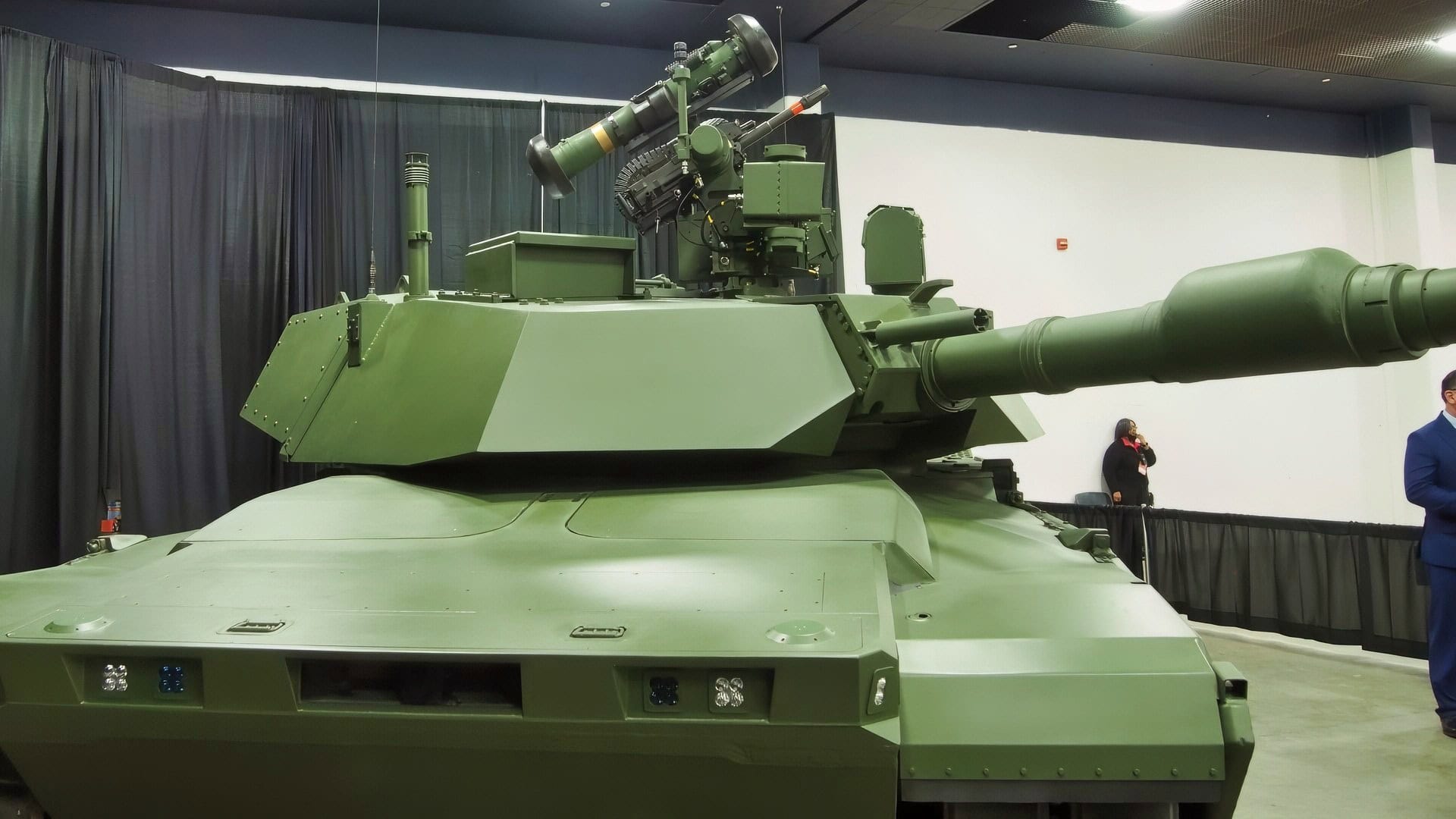
Summary and Key Points: National security columnist Steve Balestrieri evaluates the M1 Abrams‘ transition from a Cold War Soviet-killer to the M1E3 next-generation platform.
-Developed following the MBT-70 failure, the Abrams dominated Desert Storm with its 120mm M256 gun and Chobham armor.
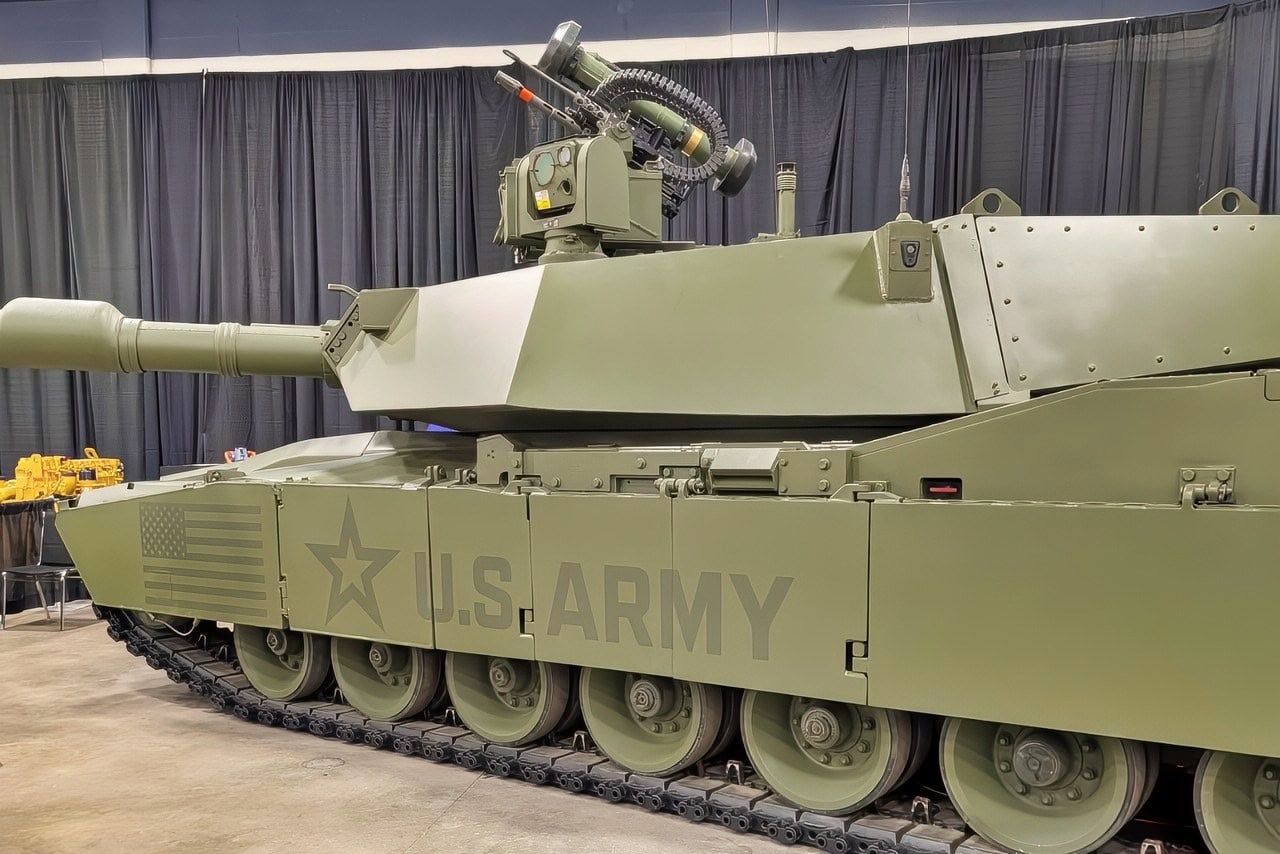
M1E3 Tank at the Detroit Auto Show. Image Credit: 19FortyFive.
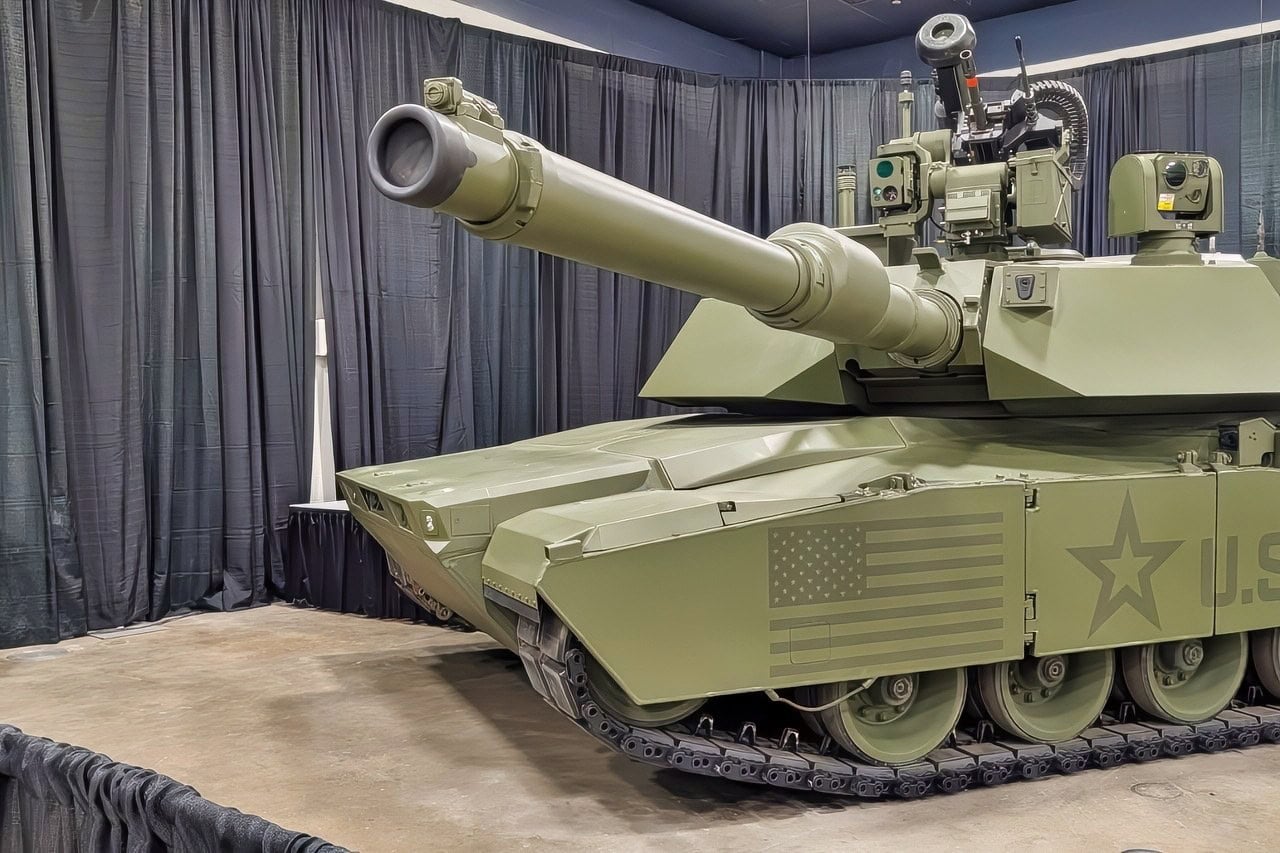
M1E3 Tank at the Detroit Auto Show. Image Credit: 19FortyFive.com
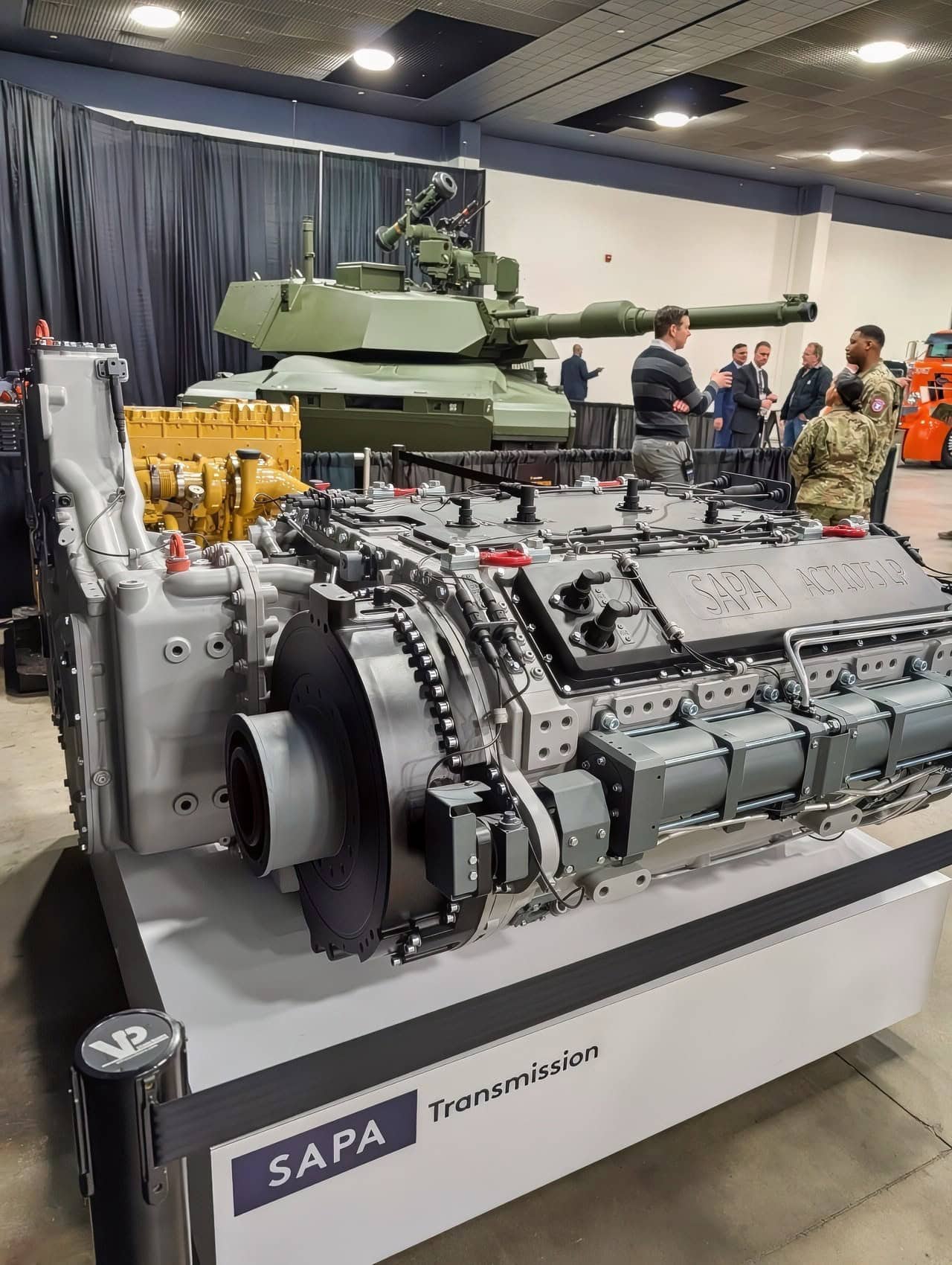
M1E3 Tank at the Detroit Auto Show. Image Credit: 19FortyFive.
-However, the Army Science Board (ASB) warns that current 80-ton variants are too heavy and logistically strained for 2040 warfare.
-The new M1E3 features a hybrid-electric drivetrain, a 3-person crew in the hull, and an unmanned turret with an autoloader, specifically designed to counter FPV drone threats and “near transparency” in modern combat zones.
Why The Army’s M1 Abrams Main Battle Tank Was Developed
The U.S. built the M1 Abrams tank in the 1970s to counter the Soviet Union’s massive, superior armored forces during the Cold War, replacing the aging M60 tank.
The Army designed the tank for superior speed, firepower, and survivability (using composite armor) following the failure of the joint U.S.-West German MBT-70 project.
Following the cancellation of the heavy, expensive MBT-70 and the subsequent XM803 projects, the Army needed a viable, advanced main battle tank.
The M1 Abrams has seen numerous changes through the years. The revolutionary design has been a mainstay of the U.S. Army’s armored forces for 46 years and shows no sign of ending.
From the initial stages of development and the so-called “Whispering Death” M1 to the upcoming M1E3 Abrams, the tank has served U.S. armored troops extremely well and has been battle-tested in combat.
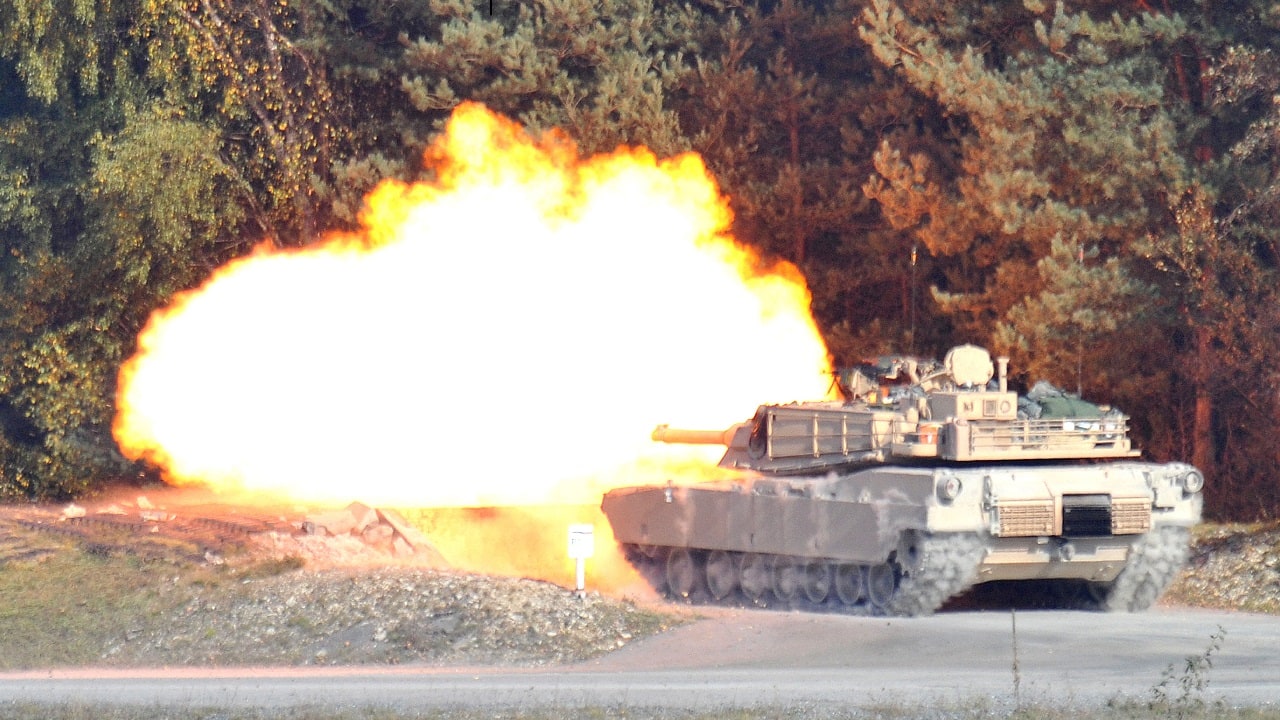
M1 Abrams. Image Credit: Creative Commons.
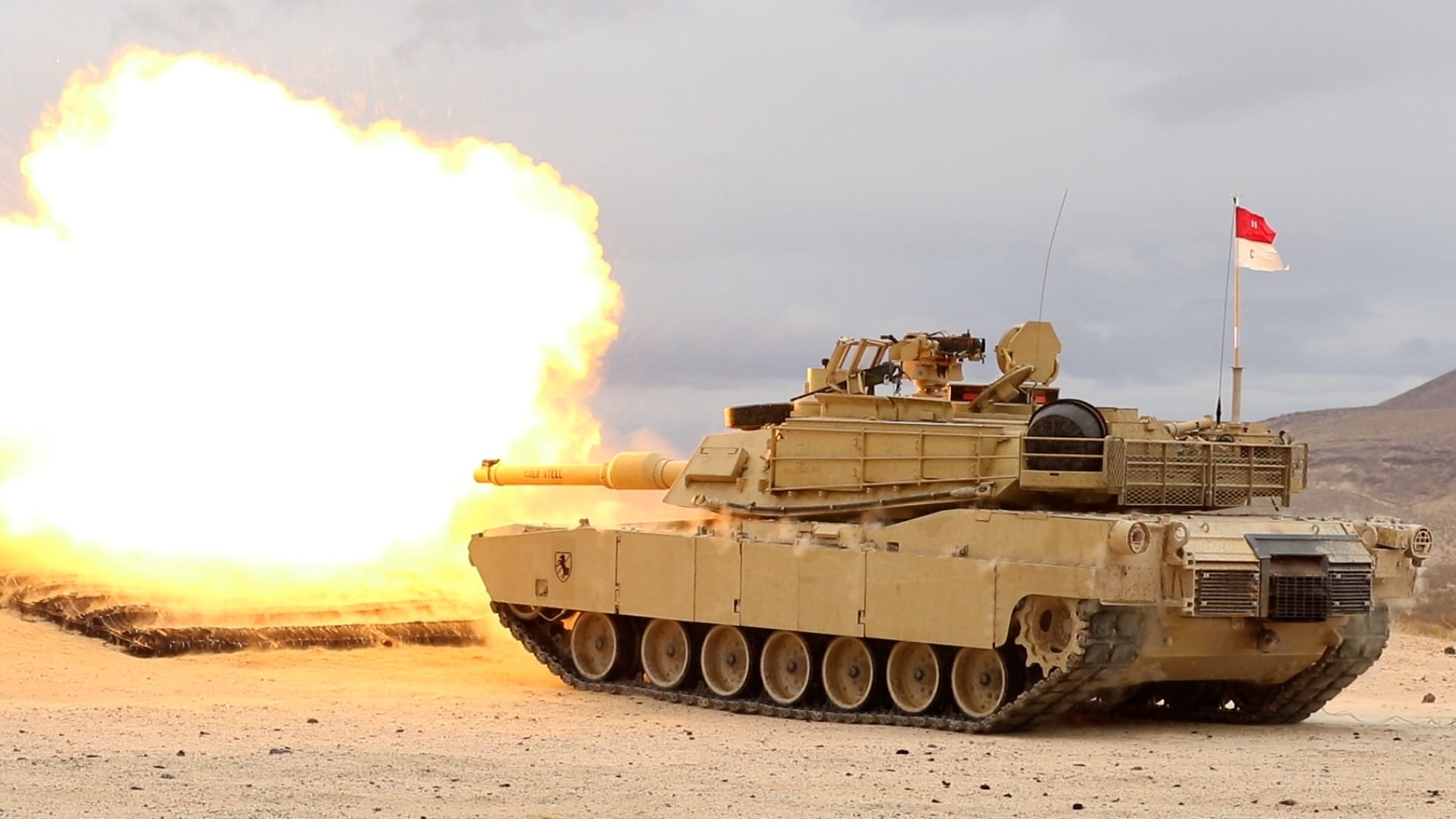
An M1A2 Abrams SEP V2 main battle tank, assigned to Cold Steel Troop, 1st Squadron, 11th Armored Cavalry Regiment, fires a M865 target practice cone stabilized discarding sabot with tracer on December 9, 2021, at the National Training Center and Fort Irwin training area.
M1 Abrams Development History
Back in the 1960s, the U.S. Army and West Germany decided to jointly develop a new main battle tank (MBT) designed to defeat the Soviet Union’s T-62 tanks.
This new MBT, dubbed the MBT-70, would replace the American M60 and the West German Leopard I.
The MBT-70 would be armed with a 152mm gun and feature a 1,500 hp engine with a hydropneumatic suspension. But its costs were prohibitive, and the Army decided to drop out and design its own tank. The Germans did likewise, and their design eventually became the outstanding Leopard II.
The Americans began the XM1 Project in 1973.
The Revolutionary Design of the XM1
The Army’s MG William Desobry, who was in charge of the project, learned that American scientists at Aberdeen Proving Grounds were working on improvements to the British Chobham armor. Pound for pound, it was better than cold-rolled steel and chosen as the armor protection for the new tank.
Chrysler chose a 1,500 hp gas turbine Lycoming AGT1500 engine. Interestingly enough, the XM1 would be armed with the license-built M68A1 version of the 105mm Royal Ordnance L7 gun.
During the development, it was decided to adopt the German Rheinmetall Rh-120 L44 gun, known as the M256. The 120mm smoothbore gun was superior to the 105mm, but the ammunition was not ready, so the gun was not adopted until 1984.
In May 1979, the Secretary of Defense approved the XM1 for low-rate initial production for 110 vehicles. In February 1980, Creighton Abrams’ widow christened the first M1 tank at the plant in Lima, Ohio.
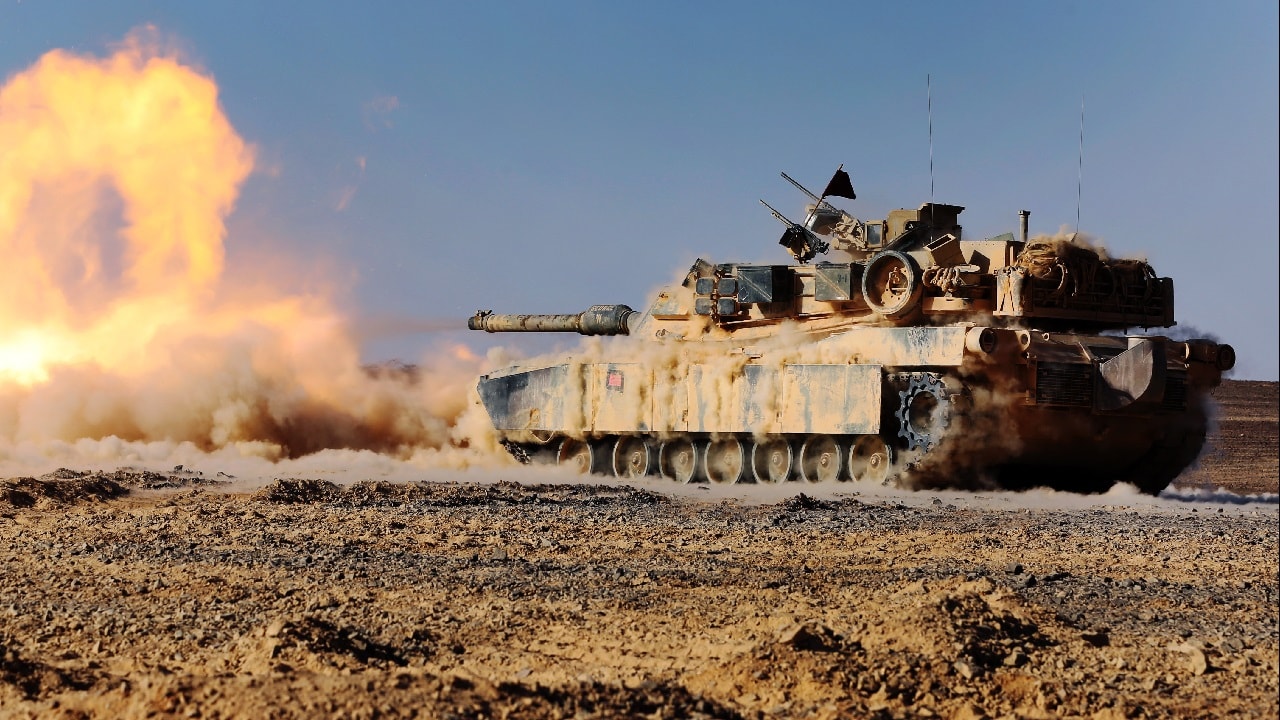
(U.S. Marine Corps photo by Sgt. Devin Nichols/Released)
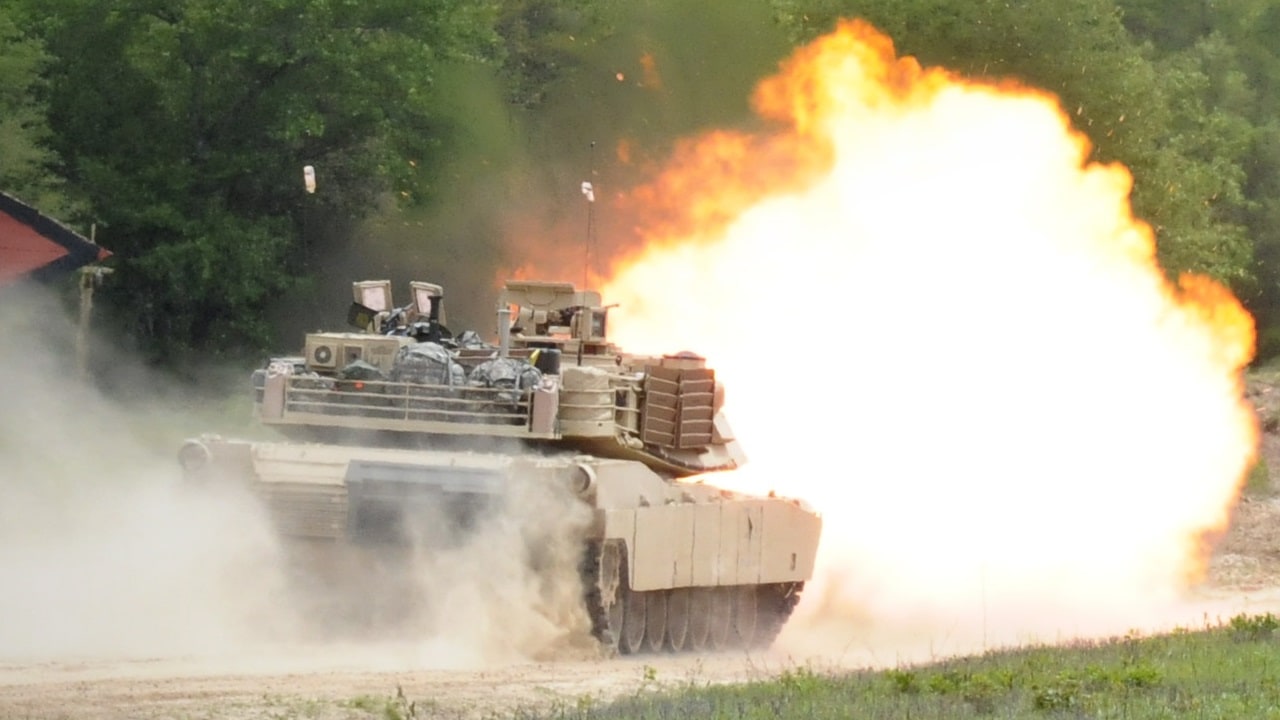
M1 Abrams Tank like in Ukraine. Image Credit: Creative Commons.
The M1 Abrams MBT
A total of 3,273 M1 Abrams tanks were produced during 1979–1985 and first entered U.S. Army service in 1980. In 1982, General Dynamics Land Systems acquired Chrysler Defense.
The main armament of the original model M1 was the M68A1 105 mm rifled tank gun, firing a variety of armor-piercing fin-stabilized discarding-sabot (APFSDS), high-explosive anti-tank (HEAT), high-explosive, white phosphorus rounds, and an anti-personnel (multiple flechette) round.
The M1A1 Abrams In The Gulf War
The plan had always been to retrofit the 120 mm gun to older Abrams tanks.
Finally, the M1A1 with its 120 mm gun was standardized in August 1984.
About 6,000 M1A1 Abrams were produced from 1986 to 1992 and featured the M256 120 mm smoothbore cannon developed by Rheinmetall AG of Germany for the Leopard 2, improved armor, and a CBRN protection system.
The M1A1 could kill other tanks at ranges exceeding 2,500 meters. This range was crucial in combat against Soviet-designed tanks in Desert Storm, as the effective range of the Iraqi tanks’ main guns was less than 2,000 meters.
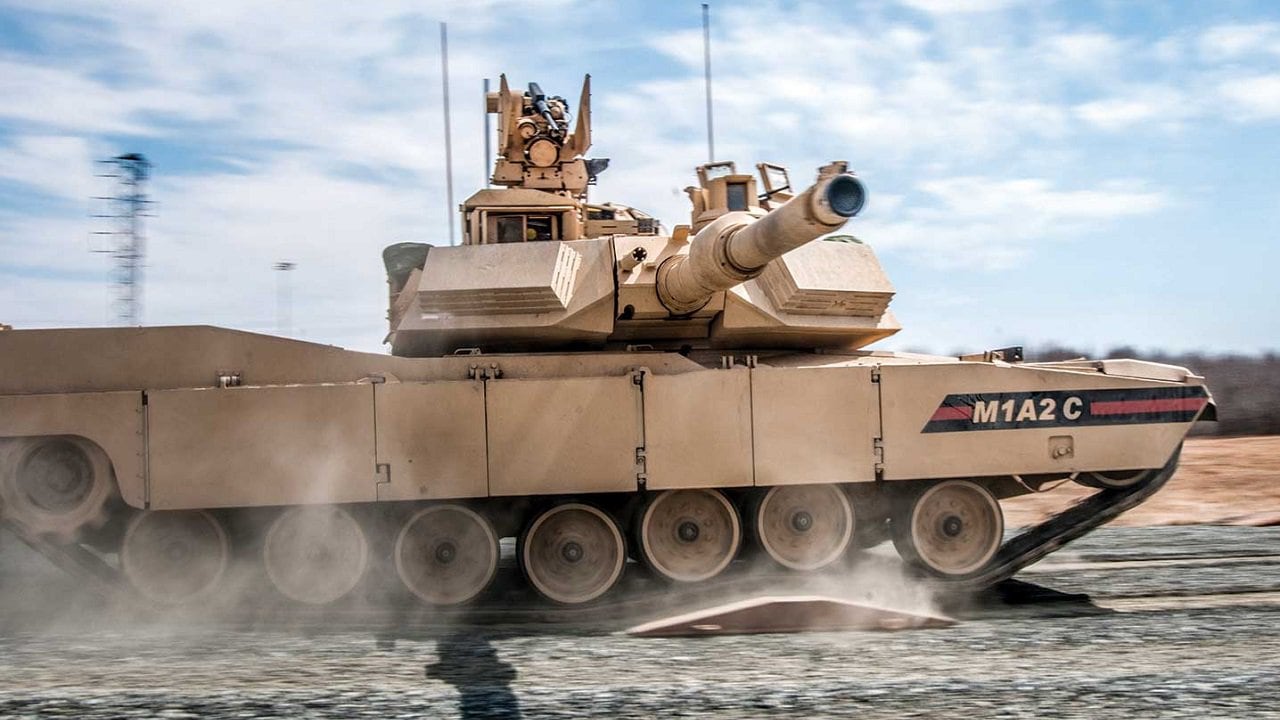
The Abrams Main Battle Tank closes with and destroys the enemy using mobility, firepower, and shock effect.
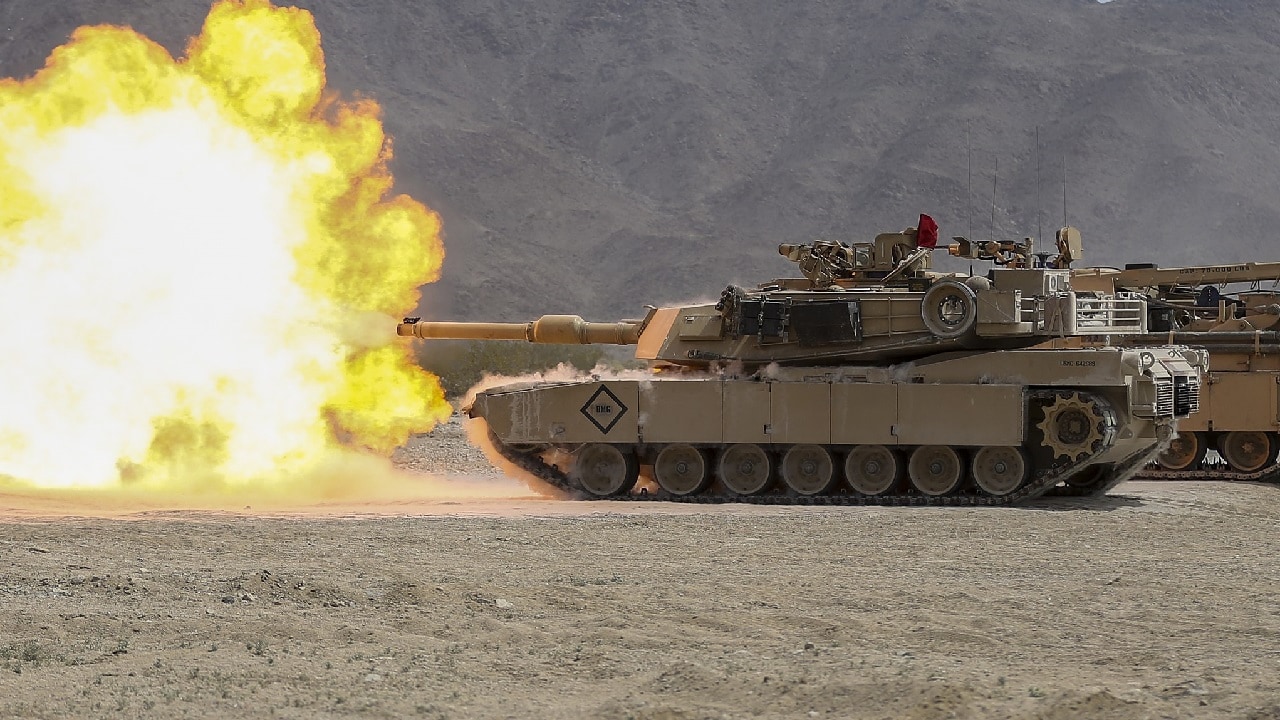
An M1A1 Abrams Tank fires off a round as a demonstration during 1st Tank Battalion’s Jane Wayne Spouse Appreciation Day aboard the Marine Corps Air Ground Combat Center, Twentynine Palms, Calif., April 3, 2018. The purpose of the event is to build resiliency in spiritual well being, the will to fight and a strong home life for the 1st Tanks Marines and their families. (U.S. Marine Corps photo by Lance Cpl. Rachel K. Porter)
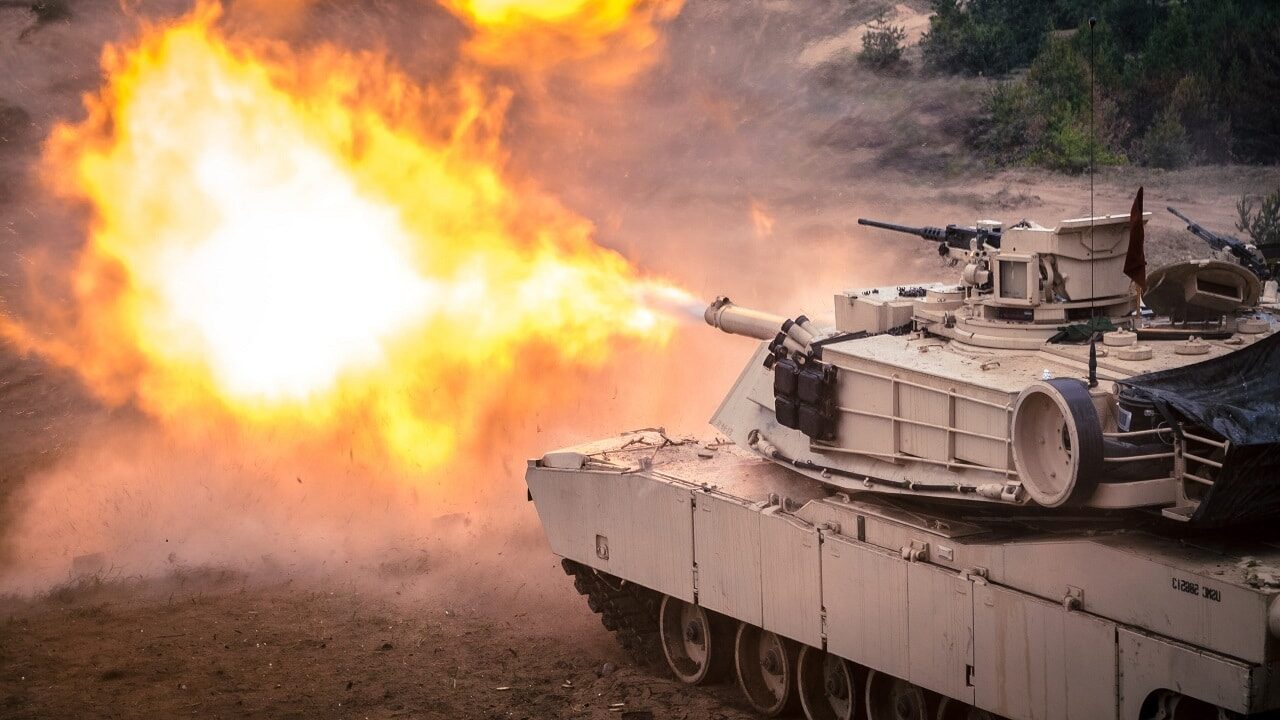
M1 Abrams Tank firing. Image Credit: Creative Commons.
A friend of mine who was an SF NCO and an advisor with the Saudis said they engaged and destroyed T-72s from 4000 meters during Desert Storm. The Iraqi Republican Guard was dug in in defilade but couldn’t see the tanks using their Soviet sights.
No M1s were lost to enemy tank fire. Some others took minor combat damage, with little effect on their operational readiness.
M1A2 Abrams MBT
The Army then upgraded the M1A1 to the M1A2, which was a further improvement with a commander’s independent thermal viewer and weapon station, position navigation equipment, a digital data bus, and a radio interface unit.
The M1A2 SEP (System Enhancement Package) added digital maps, FBCB2 (Force XXI Battlefield Command Brigade and Below) capabilities, and an improved cooling system to maintain crew compartment temperature, along with multiple computer systems, to the M1A2 tank.
Other upgrades include depleted uranium armor for all variants, a system overhaul that returns all A1s to like-new condition (M1A1 AIM), a digital enhancement package for the A1 (M1A1D), a commonality program to standardize parts between the U.S. Army and the Marine Corps (M1A1HC), and an electronic upgrade for the A2 (M1A2 SEP).
Meet The M1E3 Abrams
The M1E3 Abrams is a next-generation version of the M1 Abrams tank under development by the U.S. Army to be lighter, more technologically advanced, and more survivable than its predecessors. And, in fact, the 19FortyFive.com crew saw the M1E3 Abrams in person at the Detroit Auto Show months back.
It will feature a hybrid-electric drivetrain, an unmanned turret with an autoloader, and a modular open systems architecture for easier upgrades, and is designed to counter threats like drones and advanced anti-tank weapons.
The Army expects to receive the initial prototypes in 2026, with initial operational capability anticipated in the early 2030s.
The M1A2 SEP V3 tank features advanced technologies, including enhanced infrared detection and a more powerful 120mm cannon. It will also include some of the SEPv4’s features and have a modular design, which makes it easier to incorporate new technology into an older weapon system.
Once testing is complete, it will be named the M1E3 Abrams.
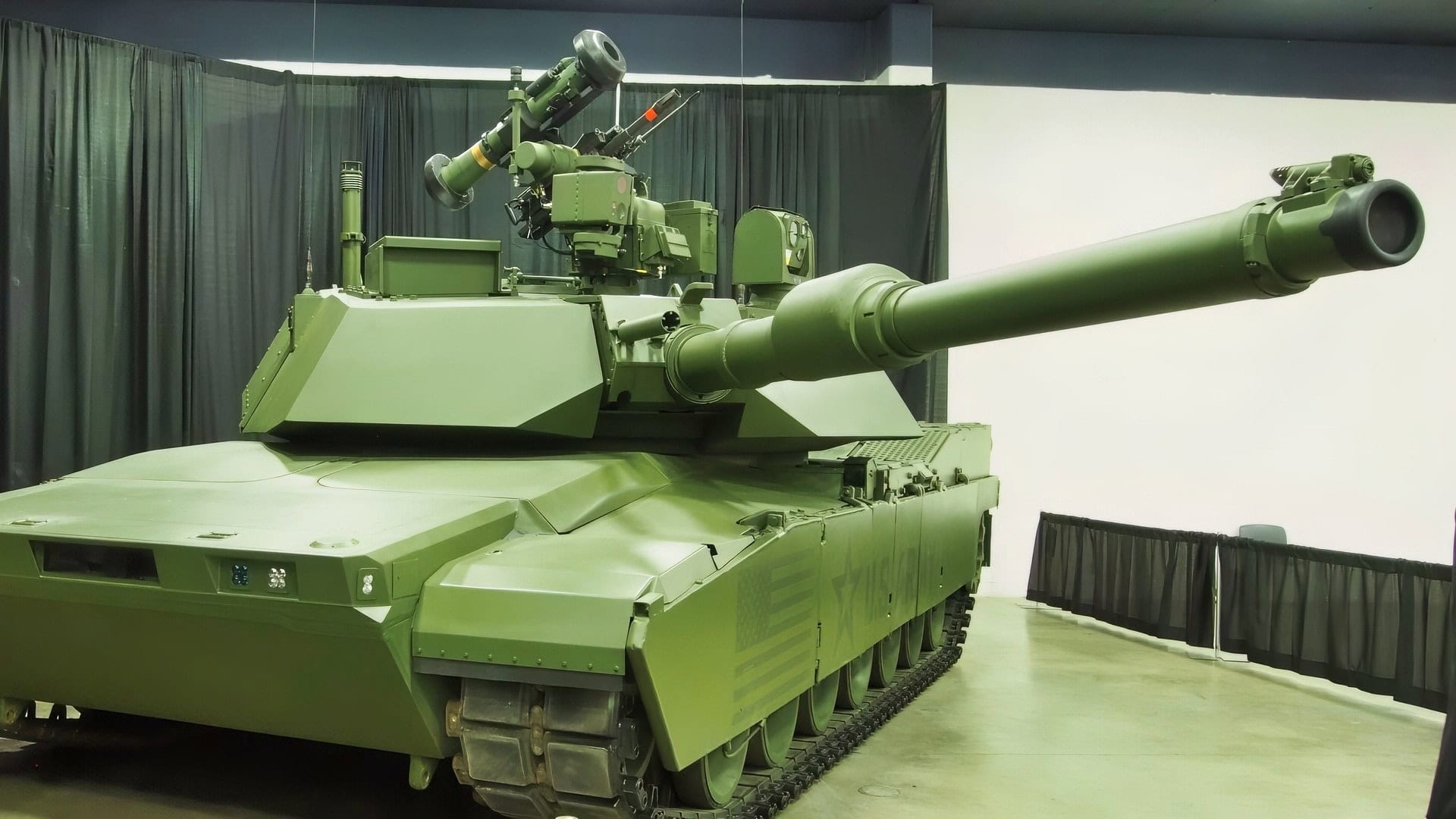
M1E3. 19FortyFive Image from the Detroit Auto Show.
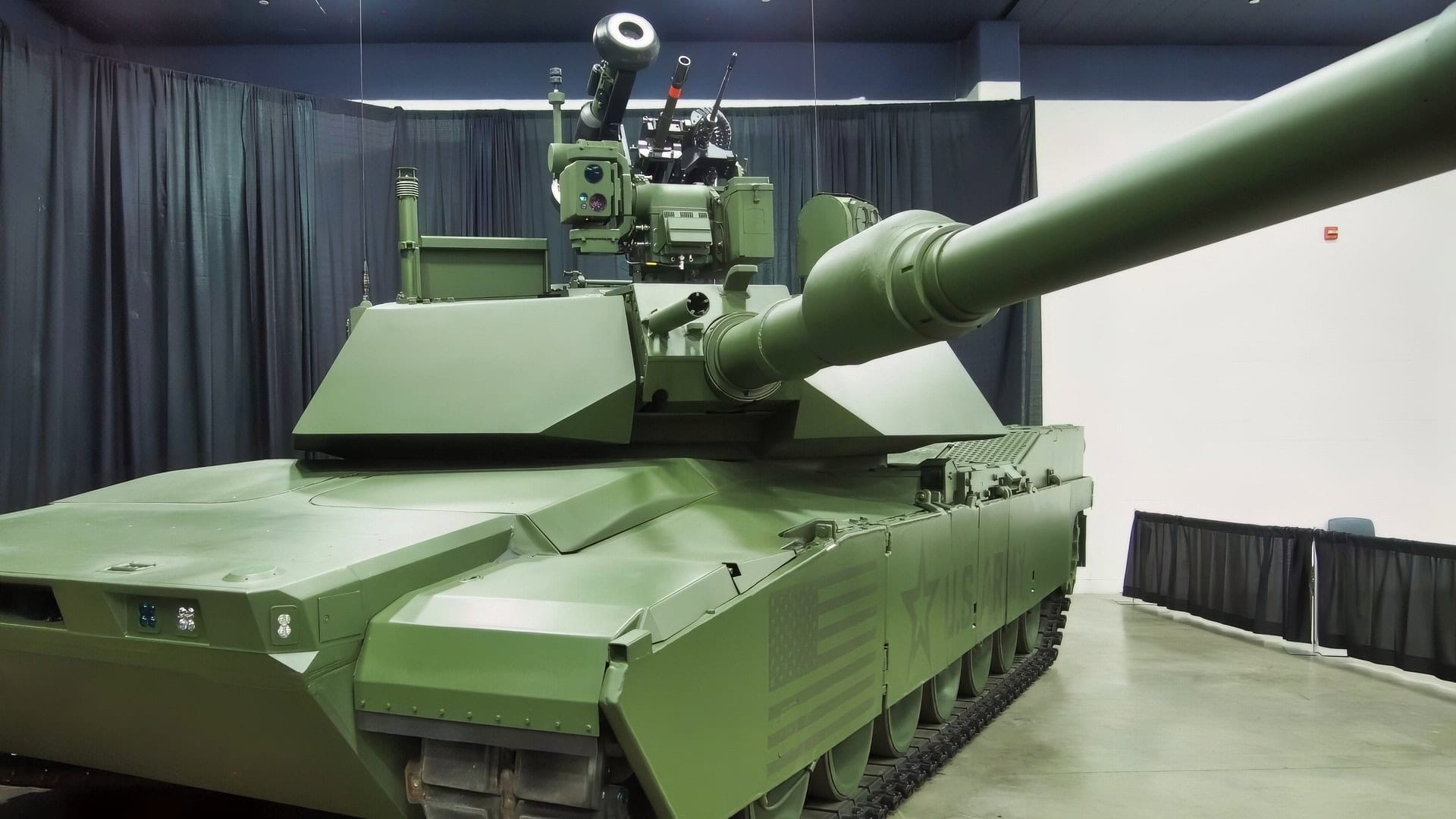
At the Detroit Auto Show, 19FortyFive visited the new M1E3 tank. Image Credit: 19FortyFive.com.
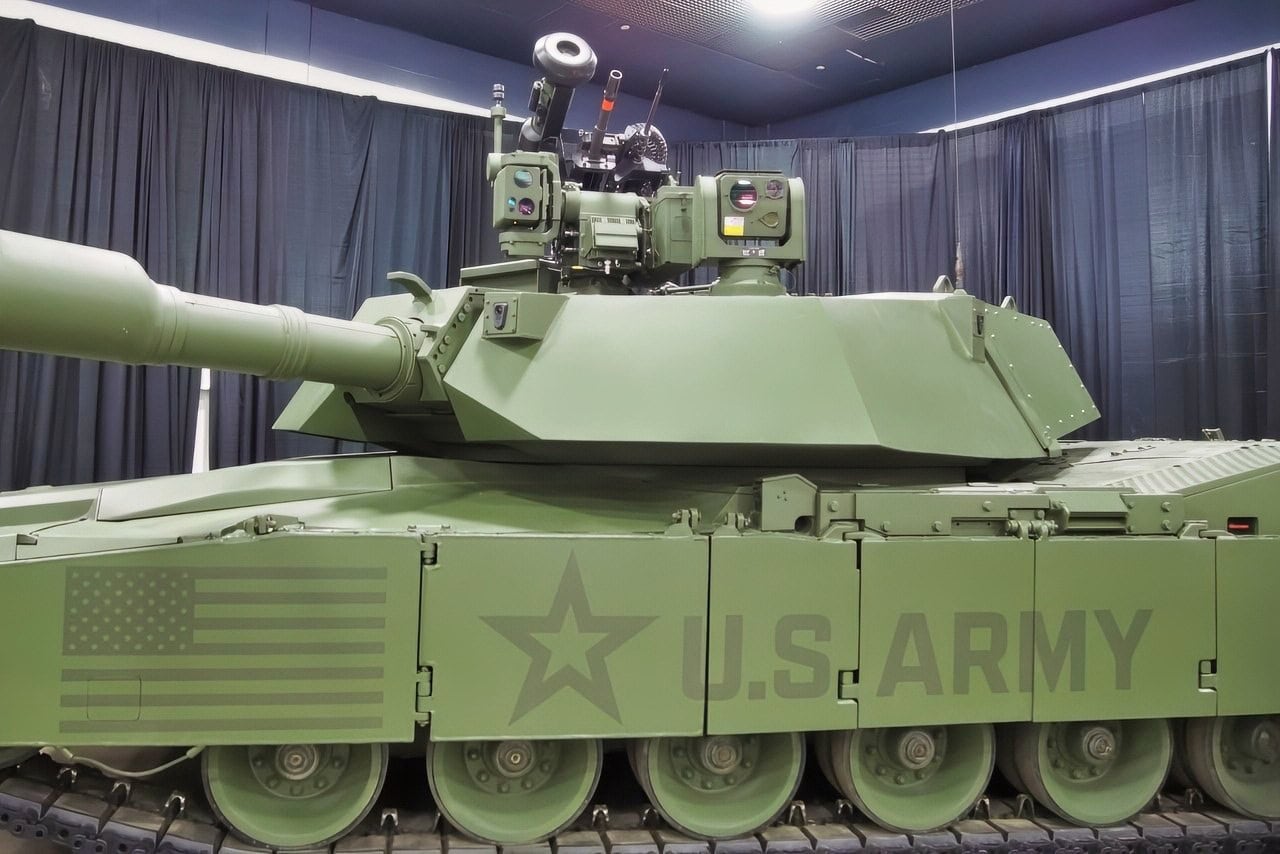
M1E3 from the Detroit Auto Show. Taken by 19FortyFive.com on 1/17/2026.
The Army has stated that the M1E3 Abrams will be the service’s first hybrid-electric combat vehicle.
The objective of this revolutionary change in basic armored vehicle propulsion technology will be to reduce the Army’s armored corps’ fuel consumption and extend the battlefield endurance of the entire M1 fleet.
Some Enhancements And Upgrades of the M1A3 Abrams
A weight reduction of approximately 10 tons from the current SEPv3.
A hybrid-electric diesel engine that will produce some 50 per cent improved fuel efficiency.
An unmanned turret similar to those in contemporary MBT designs is seen in both Europe and Russia. This could reduce crew size from 4 to 3 by incorporating a compact MEGGITT autoloader. The three crewmen will be seated in the hull.
An advanced set of armor protection developments designed to defeat drone-deployed munitions.
A command and control system that permits Integration with unmanned aerial vehicles (UAVs)
An AI-powered threat detection and fire control system.
A modular open systems architecture (MOSA) will enable faster, easier integration of future technology upgrades.
Advanced protection: The tank will feature active and passive systems to defend against threats, including drones and missiles.
TWZ recently wrote that “the service has already integrated the Israeli-designed and combat-proven Trophy APS onto a portion of its existing Abrams tanks. Trophy is a so-called hard-kill APS that uses a burst of kinetic projectiles to defeat, or at least disrupt, incoming anti-tank guided missiles (ATGMs) and other infantry anti-armor weapons, such as shoulder-fired rockets and rocket-propelled grenades. A version of the system now exists that also offers protection against drones.”
The Abrams Days Are Numbered, The ASB Says
The Army Science Board, a sanctioned independent group of experts that advises the Secretary of the Army, was candid in its report. The ASB explained in detail why the planned SEPv4 variant is inadequate for future warfare.
The study, which took several years to complete, concluded that the Abrams tank would not be usable in operations after 2040 and recommended developing additional fifth-generation armored vehicles.
The Army Science Board (ASB) published a report that cited several factors the Army considered. The ASB is concerned that the M1 Abrams SEPv4 will no longer be a dominant tank by 2040 and will be inadequate for future warfare.
The report cited the M1’s declining advantages in mobility, firepower, and protection against evolving threats. The ASB recommended developing fifth-generation armored vehicles. Meanwhile, the Army will continue to fund the M1 Abrams SEPv3 (System Enhancement Package Version 3) variant.
“Based on our findings, the M1 Abrams will not dominate the 2040 battlefield. All of the M1’s advantages in mobility, firepower, and protection are at risk.
“The M1A2 SEP V3&4 upgrades will improve effectiveness but will not restore dominance. Near transparency in all domains will significantly increase the lethality our forces will experience. China and Russia have studied our forces and doctrine and are fielding countermeasures.”
The ASB report added, “We will continue to be outnumbered, which is exacerbated by a low MBT operational readiness rate and an aging fleet.”
“The Abrams Tank can no longer grow its capabilities without adding weight, and we need to reduce its logistical footprint,” said Major General Glenn Dean, Program Executive Officer for Ground Combat Systems.
“The war in Ukraine has highlighted a critical need for integrated protections for Soldiers, built from within instead of adding on.”
The Abrams Has Been A Great Tank, But It Is Time To Look Ahead
It is a well-known fact that logistics wins wars. The introduction of the modular M1E3 variant aims to create a lighter, more lethal platform that could last another couple of decades, eventually transitioning to future combat vehicles.
The Abrams has been an outstanding tank and still is the best tank in the world, but the Army must now develop the next-generation tank. 2040 isn’t that far away. And our enemies continue to develop their own armor.
About the Author: Steve Balestrieri
Steve Balestrieri is a National Security Columnist. He served as a U.S. Army Special Forces NCO and Warrant Officer. In addition to writing on defense, he covers the NFL for PatsFans.com and is a member of the Pro Football Writers of America (PFWA). His work was regularly featured in many military publications.