
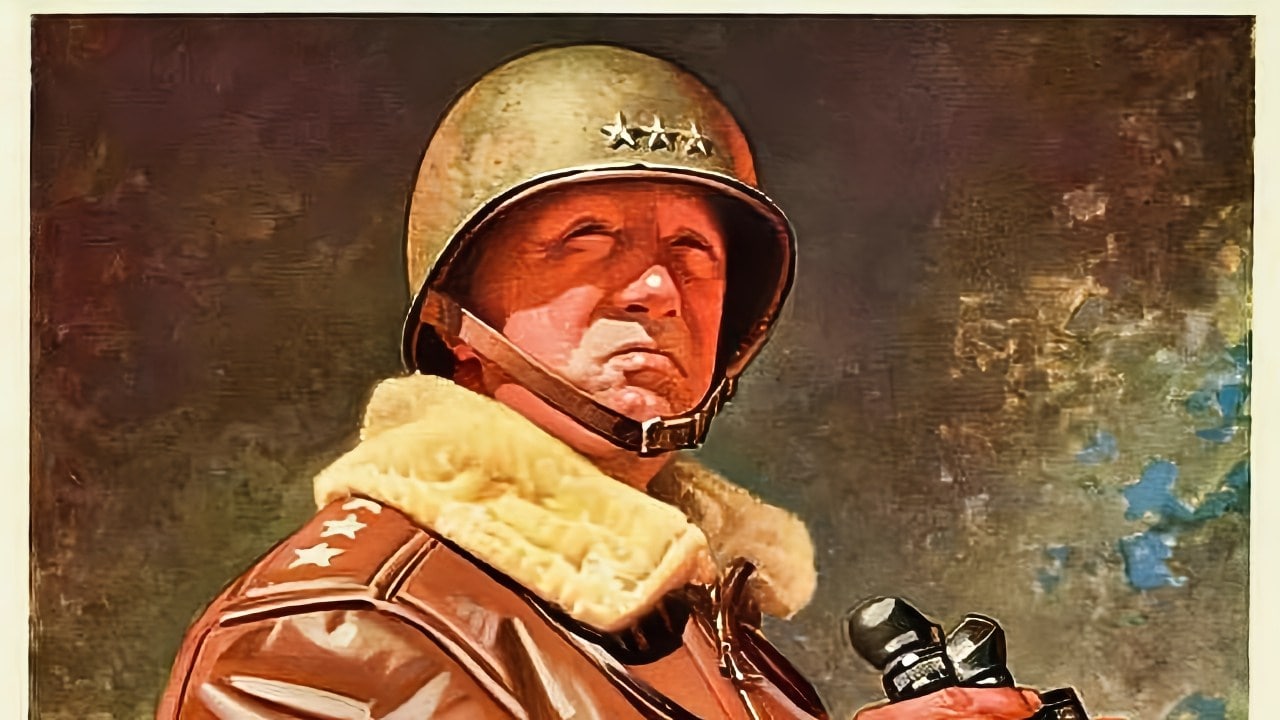
Summary and Key Points: Isaac Seitz, a strategic intelligence analyst and defense columnist, evaluates General George Patton’s pivotal leadership during the North African campaign, using a key quote to set the story.
-Following the disastrous American defeat at Kasserine Pass, Patton assumed command of the U.S. II Corps in March 1943.
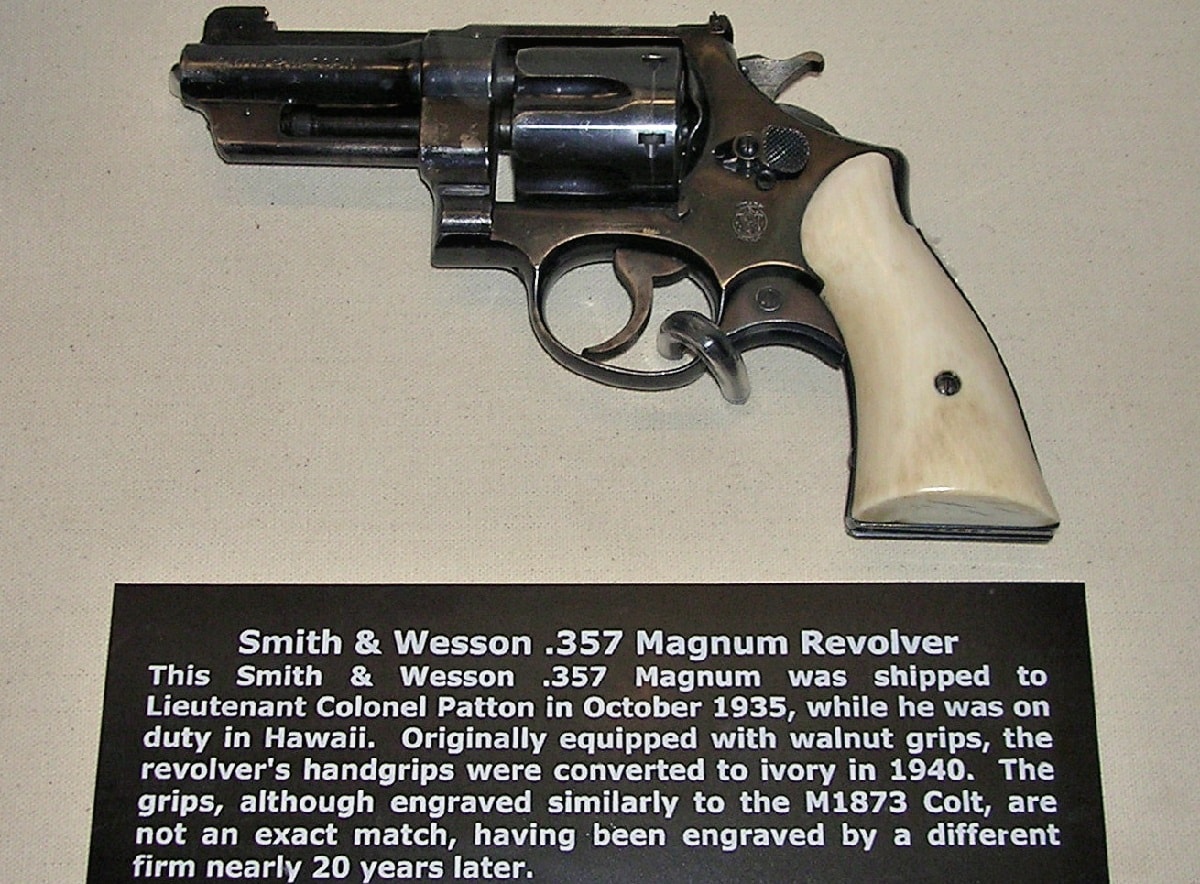
Patton’s well-known custom ivory-handled revolver.
-This report analyzes Patton’s imposition of strict military discipline and his tactical success at the Battle of El Guettar, where U.S. forces first defeated elite German Panzers in direct combat.
-Seitz concludes that Patton’s ability to synchronize infantry, armor, and artillery erased the stigma of early Allied setbacks and validated American fighting capability for the remainder of World War II.
Beyond Kasserine Pass: Analyzing Patton’s Masterclass in Military Discipline
Quote of the Day: “Better to fight for something than live for nothing.” – General George Patton, U.S. Army
When the U.S. first launched its invasion of Africa, the Allies encountered several setbacks. Not only was coordinating among multiple coalitions difficult, but the German Afrika Korps, led by Erwin Rommel, offered harsher resistance than the Allies had expected.
Patton entered North Africa during Operation Torch, during which he seized Morocco from Vichy France.
After the U.S. II Corps was beaten by Rommel, he took command and immediately restored order and discipline to the troops, transforming them back into a capable fighting force.
From there, he continually beat back the Germans, culminating in the Battle of El Guettar. Unfortunately for Patton, he was reassigned before the fighting in Africa could end, and he never got the pride of beating Rommel in person.
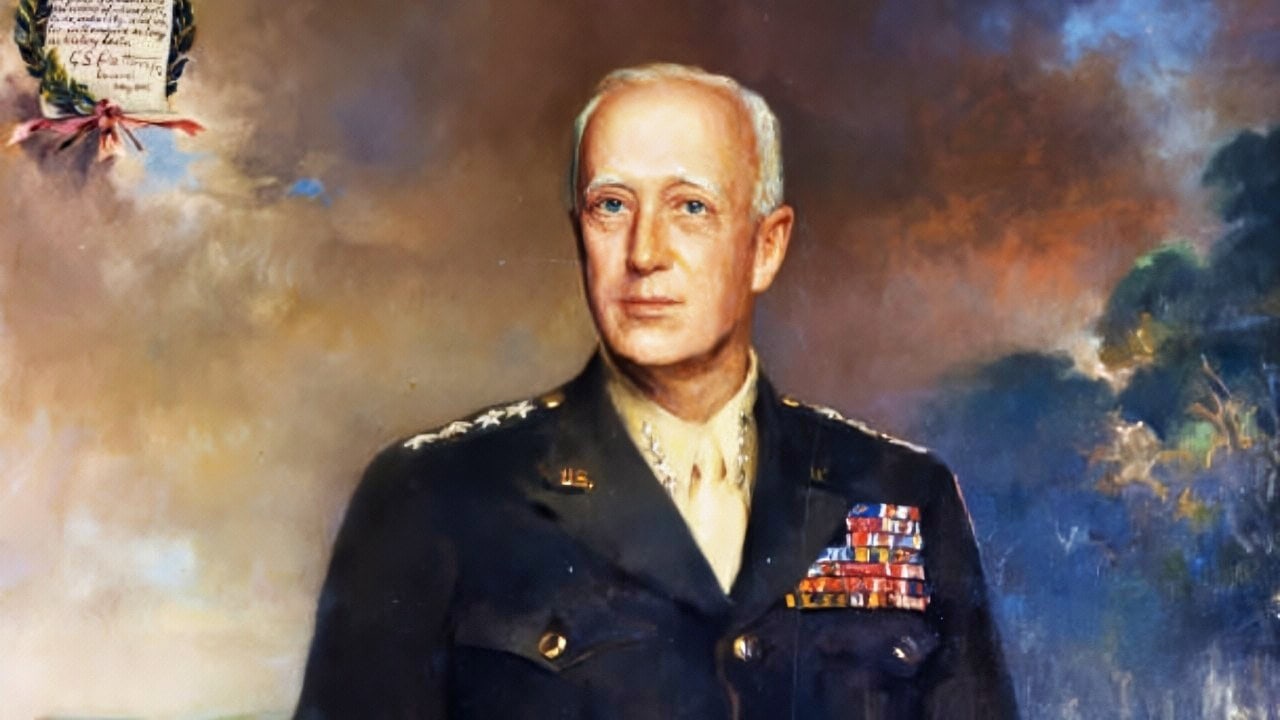
Portrait of Army General Patton. Image Credit: Creative Commons.
George S. Patton Quote of the Day. Creative Commons Image.
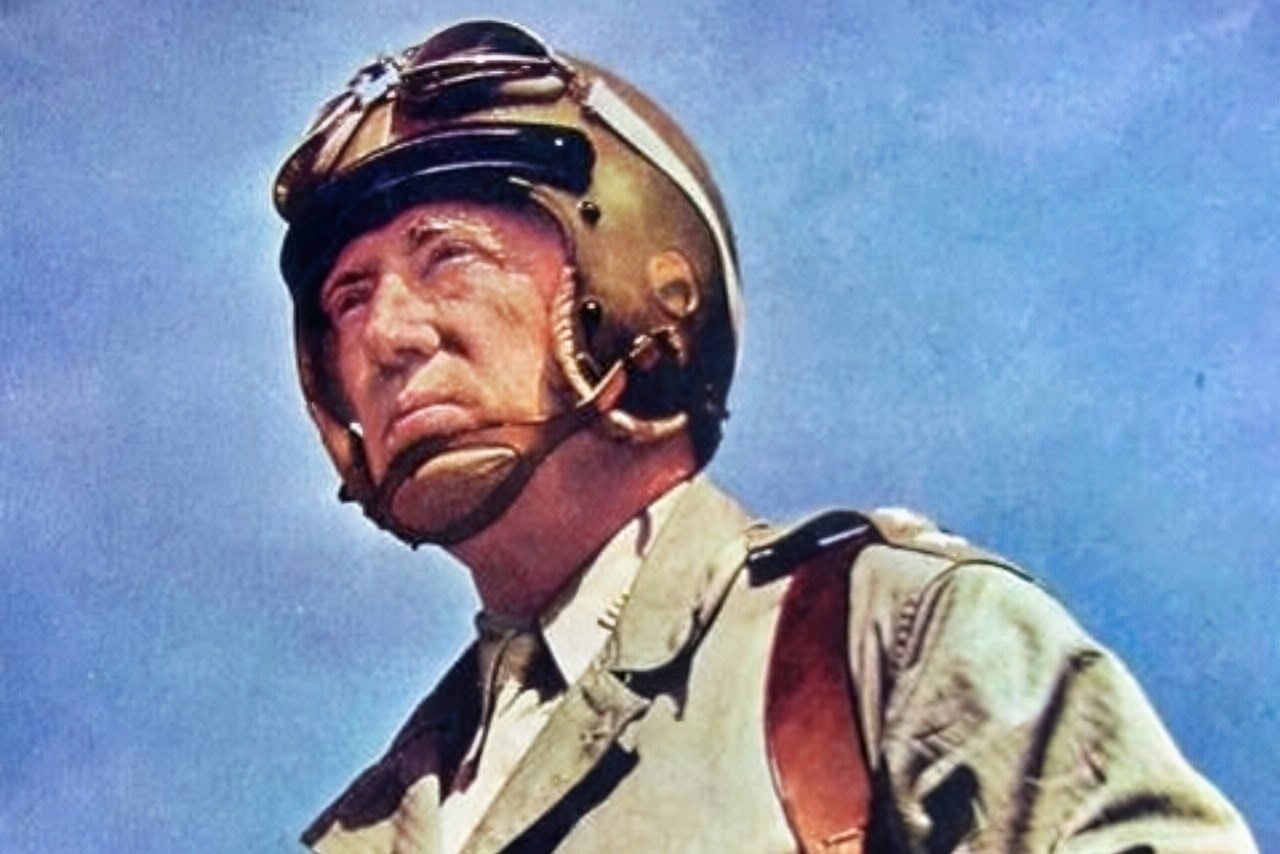
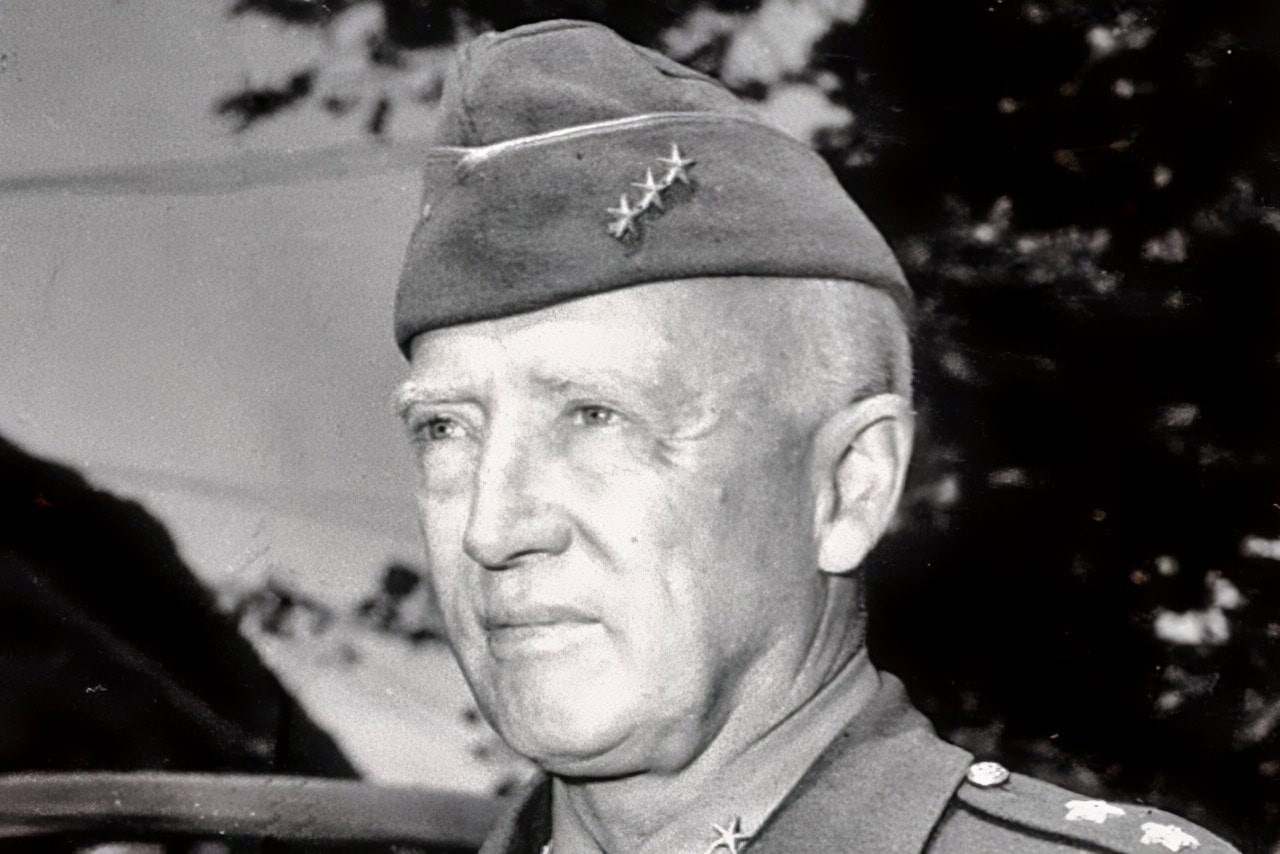
General George Patton of the U.S. Army. Image Credit: Creative Commons.
Operation Torch
Patton first entered the North African theater as commander of the Western Task Force during Operation Torch, the Allied invasion launched on November 8, 1942.
His mission was to seize Vichy-controlled Morocco, neutralize French resistance, and secure a foothold for future operations.
He executed the landings with speed and precision, directing amphibious assaults at multiple coastal points and coordinating ground advances inland. After three days of fighting, Patton received the surrender of the Vichy French forces, effectively bringing Morocco under Allied control. This achievement established a vital operational base for the forthcoming push into Algeria and Tunisia and demonstrated Patton’s ability to conduct complex combined operations.
While Patton temporarily shifted to administrative responsibilities in Casablanca following the Moroccan campaign, the situation in Tunisia deteriorated rapidly.
In early 1943, American forces suffered severe defeats at Sidi Bou Zid and the Kasserine Pass, where German units under General Jürgen von Arnim and Field Marshal Erwin Rommel overwhelmed the inexperienced II Corps. As a result, II Corps sustained heavy casualties, extensive equipment loss, and suffered a serious blow to American confidence. Allied commanders began to doubt the readiness of U.S. forces for sustained combat against seasoned Axis troops.
Patton Takes Command of II Corps
Faced with this crisis, General Dwight D. Eisenhower sought a commander capable of restoring order, discipline, and combat effectiveness to the shaken II Corps.
After other senior officers declined the assignment, Eisenhower appointed Patton, who arrived on March 5, 1943. Eisenhower gave Patton a clear directive: II Corps was to apply pressure on German units from the west while British forces advanced from the north and south. Patton was specifically charged with tying down as many Axis units as possible and preparing the way for an advance toward the critical port of Gafsa, which British General Bernard Montgomery planned to use as a supply hub.
One of Patton’s immediate and most influential contributions was the imposition of strict military discipline.
The defeats at Kasserine had exposed deep organizational flaws, including lax leadership, poor coordination, and low morale.
Patton responded swiftly by enforcing uniform standards, reprimanding officers and enlisted men alike for appearing sloppy or unprepared, and emphasizing the importance of readiness even in desert conditions. According to some accounts, he would frequently chastise his soldiers for wearing wool caps instead of steel helmets and insisting that officers wear ties and leggings even in combat, all to reinforce a sense of professionalism and accountability within the ranks. These methods quickly reestablished order and raised morale across II Corps.
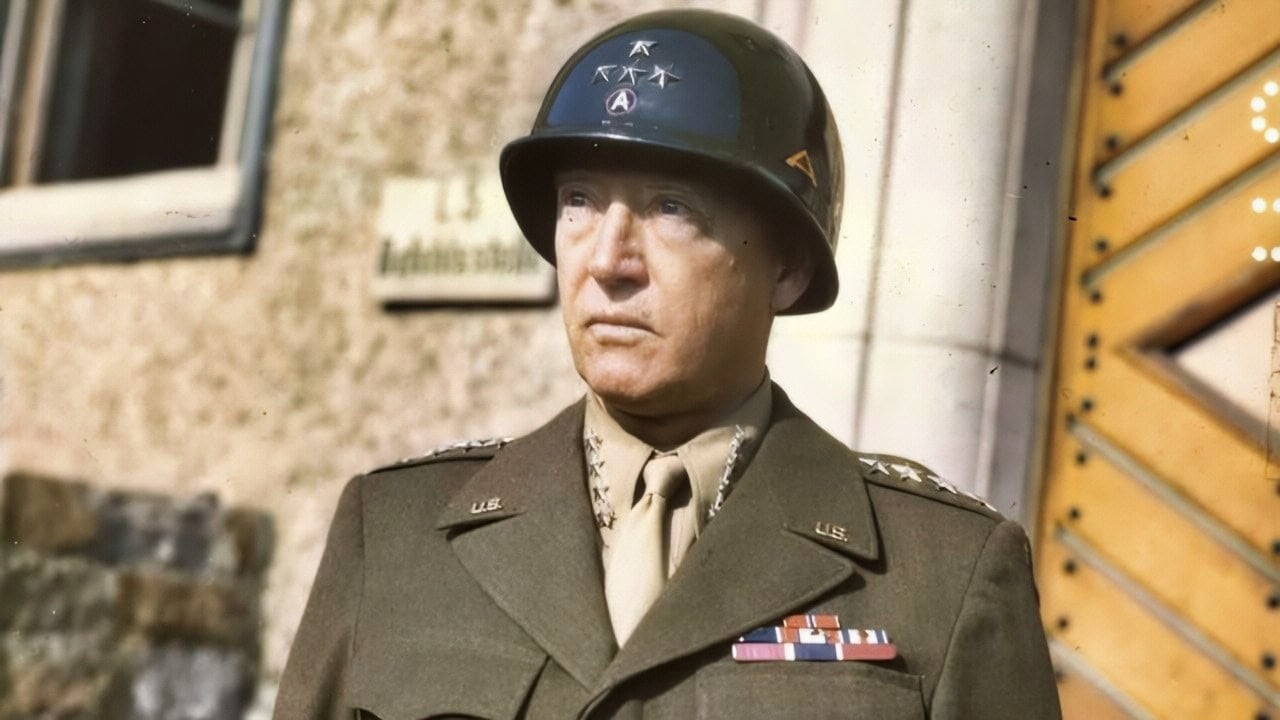
General George Patton U.S. Army Photo
Beyond discipline, Patton reorganized command structures and improved cooperation between infantry, armor, artillery, and support units. His reforms addressed several of the shortcomings revealed at Kasserine, where American forces had been poorly positioned and inadequately supported.
The renewed structure gave II Corps the cohesion it needed for renewed offensive action. His insistence on tighter communication and better coordination also helped mitigate issues of inter-Allied friction. American resentment had grown as British commanders attempted to impose their own training systems and battlefield instructions, but Patton’s presence demonstrated that American units, when properly led, were fully capable of decisive action. His leadership encouraged Eisenhower to assign II Corps a more significant role in the upcoming operations.
The Battle of El Guettar
Patton’s revitalized II Corps soon turned to offensive operations in southern Tunisia, with a major objective being the capture of Gafsa.
In pursuing this goal, the corps engaged Axis forces in what became Patton’s most significant battle of the North African campaign: the Battle of El Guettar, fought from March 23 to April 3, 1943. This battle holds particular significance because it marked the first time American forces successfully defeated experienced German armored units in direct combat.
Patton’s troops, including the 1st Infantry Division and elements of the 1st Armored Division, faced German and Italian units from Army Group Africa under General von Arnim.
The German attack on March 23 tested the mettle of Patton’s reorganized forces. However, the American defensive lines held firm.
Anti-tank units, including the nimble M3 Gun Motor Carriages, played a crucial role in repelling the German armor. These lightly armored vehicles, though inferior to German Panzers in direct combat, were effectively deployed and helped halt the Axis advance. The success of the American defense surprised both sides and proved that U.S. forces could stand against the Wehrmacht when properly led and positioned.
After stopping the German assault, Patton began transitioning from defense to offense. He coordinated infantry advances supported by heavy artillery fire, gradually pushing Axis forces back from their positions around El Guettar.
Although the final outcome of the battle was technically inconclusive due to operational constraints and the broader strategic withdrawal of Axis forces, its effects were far-reaching. The battle restored faith in American fighting capability, erased the stigma of Kasserine, and validated Patton’s leadership.
It also fulfilled Eisenhower’s strategic requirement to engage and pin down Axis units, allowing the British Eighth Army and First Army to press their coordinated offensives.
About the Author: Isaac Seitz
Isaac Seitz, a Defense Columnist, graduated from Patrick Henry College’s Strategic Intelligence and National Security program. He has also studied Russian at Middlebury Language Schools and has worked as an intelligence Analyst in the private sector.