Summary and Key Points: Caleb Larson, a Berlin-based security journalist and former POLITICO Europe defense reporter, evaluates the enduring legacy of the Dassault Mirage 2000 as it transitions from a Cold War interceptor to a 2026 combatant in Ukraine.
-Despite being overshadowed by the Rafale, the single-engine delta-wing fighter remains a cornerstone of French strategic sovereignty and a successful export to nations like India, Greece, and Taiwan.
-This report analyzes the aircraft’s evolution into a multi-role platform capable of nuclear strike and air defense.
-Larson concludes that while the Mirage 2000-5s arriving in Kyiv provide critical defense against Russian cruise missiles, they are unlikely to independently shift the war’s balance of power.
The Mirage 2000 Legacy: Why Dassault’s Delta-Wing Fighter Still Defends Global Skies in 2026
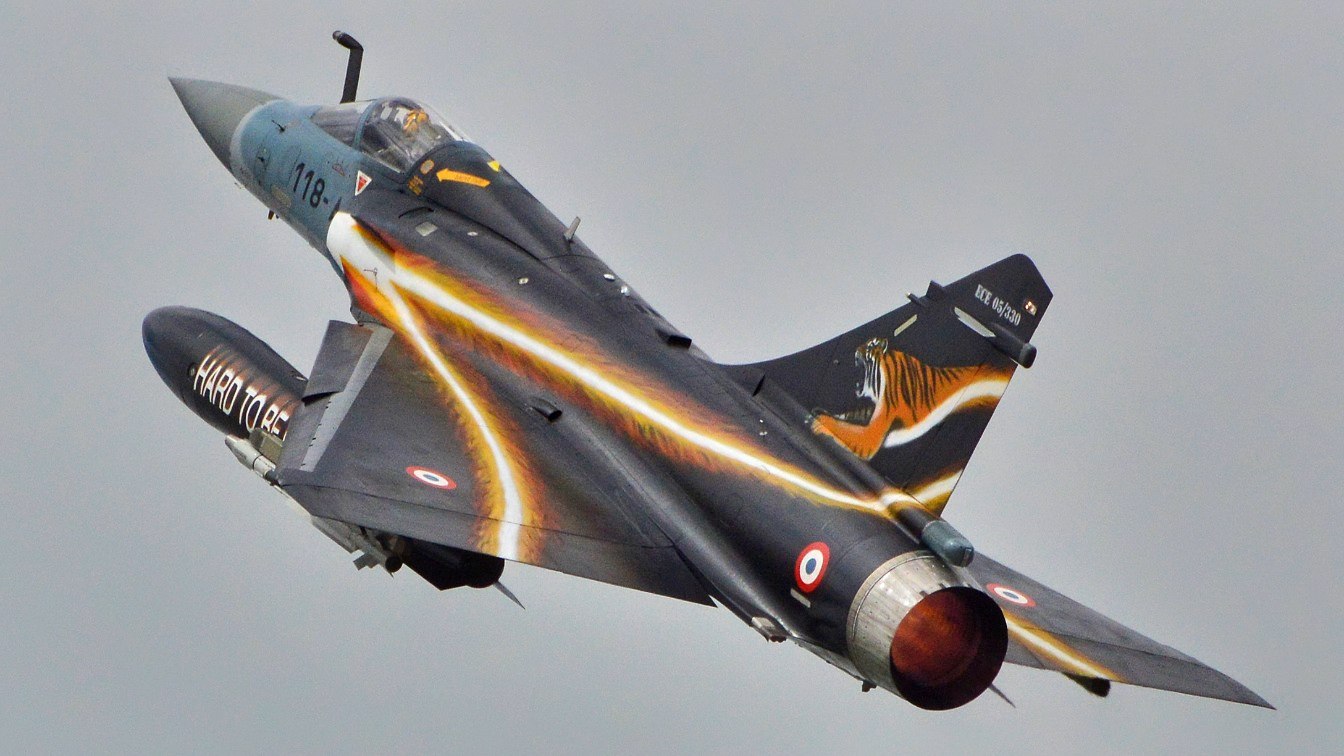
The Dassault Mirage 2000 is a single-engined fourth-generation fighter developed by Dassault Aviation in the 1970s and introduced into French service in the 1980s.
Though the jet was initially developed as an air-defense and interceptor aircraft, it eventually evolved to serve a number of specialized roles for France and, more successfully, for international operators—indeed, the Mirage became one of France’s more successful fighter exports.
In the Beginning
The origins of the Dassault Mirage 2000 are in the 1970s, a period of strategic uncertainty in Europe. The aircraft’s development stemmed from Paris’ strong incentive to maintain a robust aerospace industry and continue French strategic sovereignty.
The Mirage 2000 emerged from the ashes of a failed multinational fighter project to become a significant success story for Dassault.
During the late 1960s and early 1970s, France partnered with the United Kingdom in a project called the Anglo-French Variable Geometry. France withdrew from that initiative because of disagreements over the jet’s specifications.
That aircraft would eventually produce the Panavia Tornado, which is still in service with Italy, Germany, and Saudi Arabia.
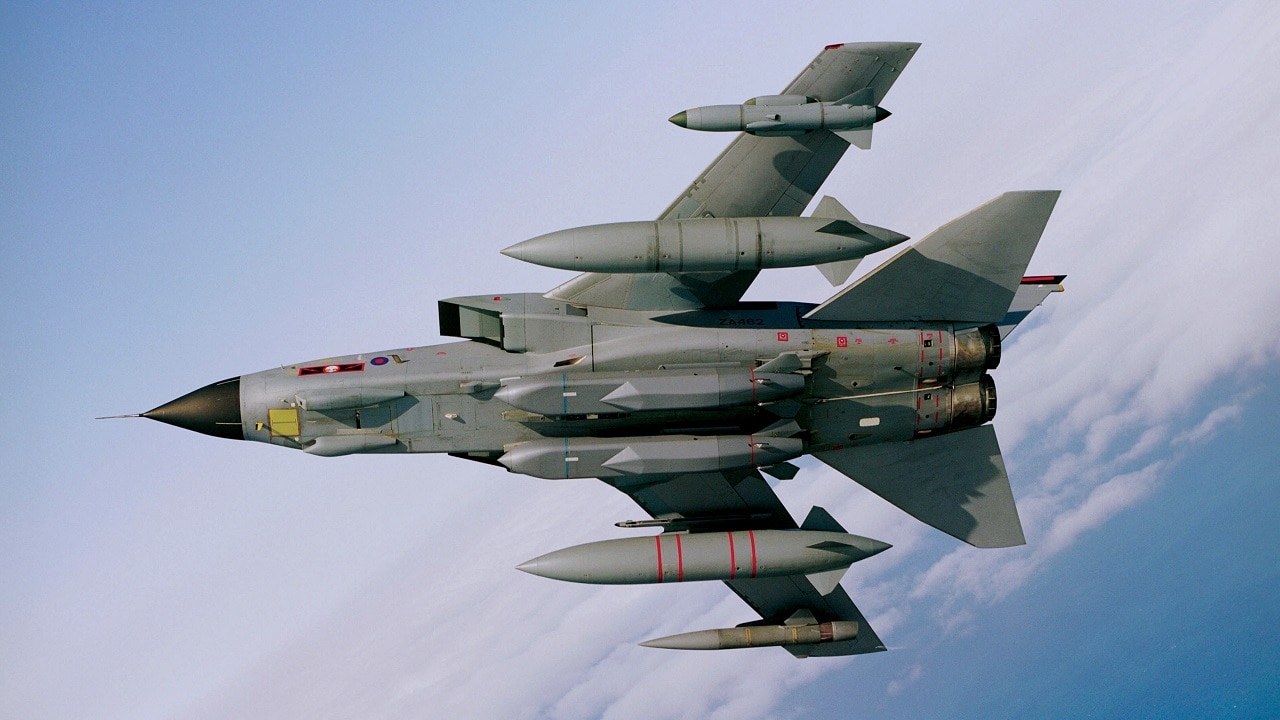
An RAF Tornado GR4 aircraft carrying two Storm Shadow missiles under the fuselage.
The Design
At first blush, the Mirage 2000 looks much like its predecessor, the Mirage III. Both sport a relatively large, clean, thin delta wing. They lack a horizontal tailplane and feature a prominent vertical fin. But aerodynamically and operationally, the two aircraft diverge significantly.
The Mirage 2000’s delta wing makes for a relatively simple design, efficient flight at supersonic speeds, and good performance at high altitudes. Though earlier aircraft with delta wings experienced teething issues with flight stability, the Mirage 2000’s fly-by-wire controls and analogue computers with redundancy solved the problem of a relaxed stability design.
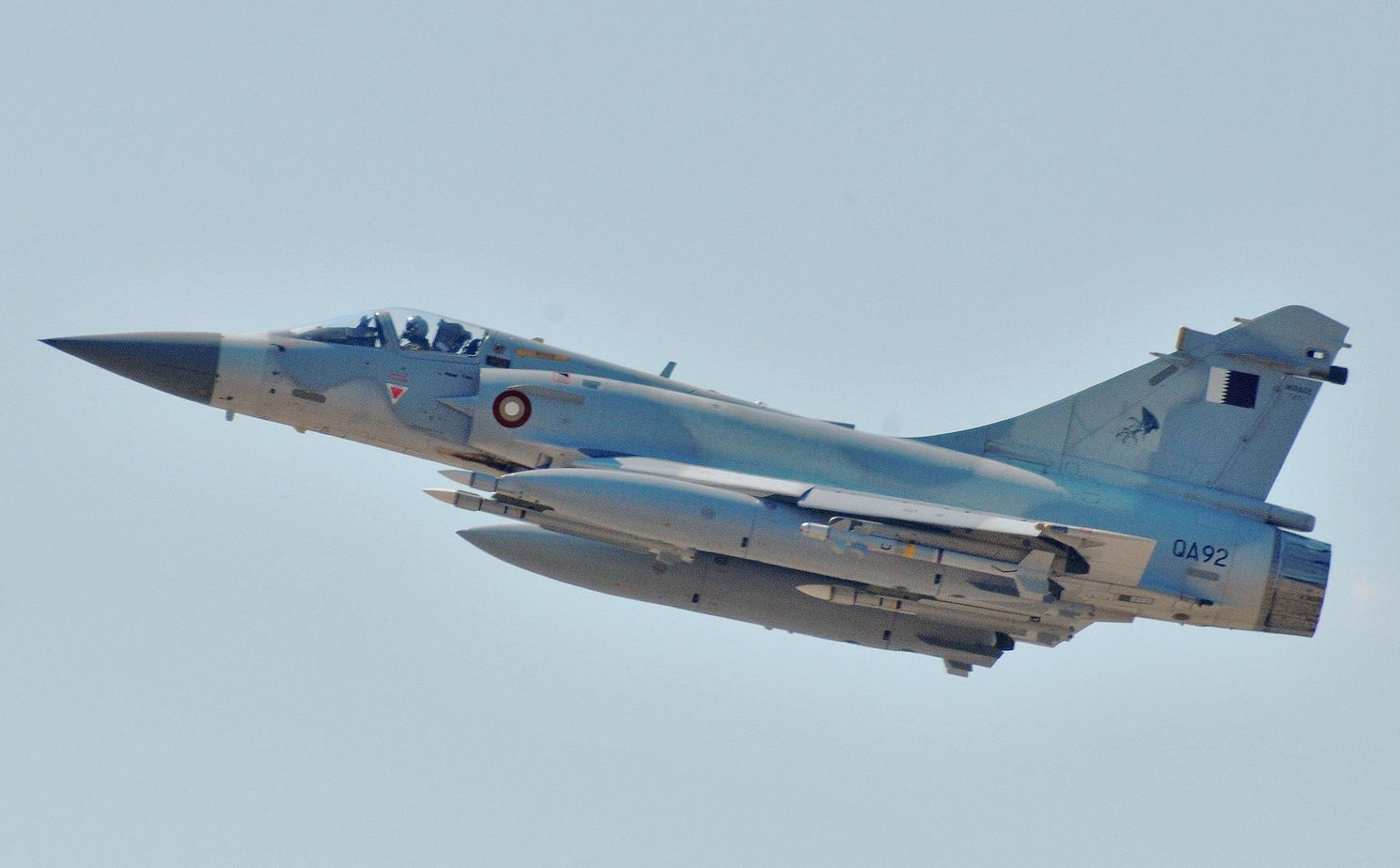
Mirage 2000-5.
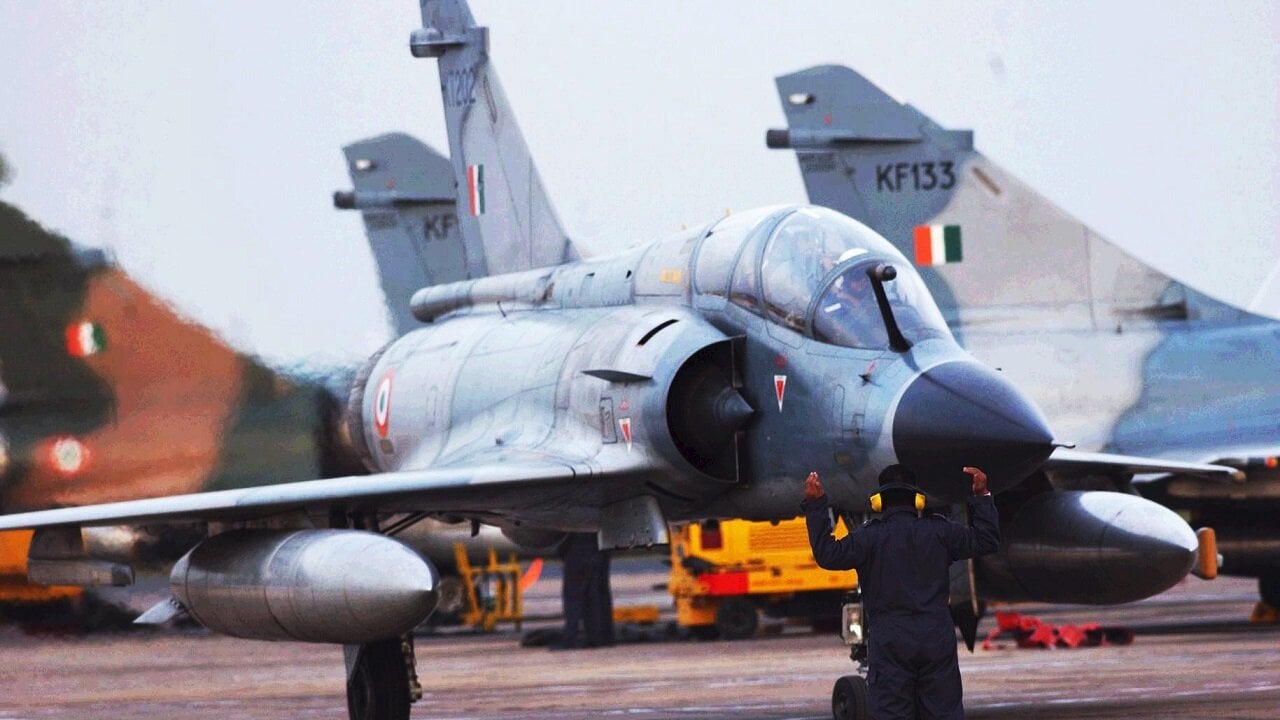
Mirage 2000. Image Credit: Creative Commons.
Precisely thanks to that unstable design, the Mirage 2000 was also highly agile and retained maneuverability across a wide range of flight profiles. The jet is powered by the M53 turbofan, which, in its final iteration, kept the Mirage 2000 relatively simple compared to comparable jet engines, and gave it sufficient thrust.
Avionics
The Mirage 2000’s pulse-Doppler radar gives the jet a look-down/shoot-down capability, which is crucial for tracking and engaging low-flying targets trying to hide from radar by hugging the ground and blending into terrain. The jet’s cockpit, when it was introduced, was quite modern, and later builds featured increasingly digitized instrumentation.
Diversification
Over time, the Mirage 2000 family expanded and diversified to take on to offer a wider range of capabilities. One of the more notable variants was the Mirage 2000N, which is optimized for nuclear strike. It has a two-man cockpit and carries a single Air-Sol Doyenne Portée, France’s nuclear stand-off missile. The jet’s wings were strengthened to withstand the increased rigors of low-level penetration flights, aided by a terrain-following radar.
The Mirage 2000-5 incorporated a number of upgrades, including a modernized radar and the ability to fire MICA missiles, a potent air-to-air weapon that transformed the Mirage 2000 platform into a true multi-role fighter. Export variants of the Mirage 2000 were customized for the individual needs of foreign operators, including Egypt, India, Greece, Taiwan, Peru, the United Arab Emirates, and Qatar. Differences affect cockpit layouts, avionics, and weapon packages.
War in Ukraine
France committed to transferring Mirage 2000-5 fighters to Ukraine as part of France’s military air support to help Ukraine’s defenders counter Russian aircraft, drones, and cruise missiles—primarily as an air defense platform rather than one expected to fly head-to-head against Russian aircraft. The first of this tranche of jets arrived in Ukraine in early 2025 after Ukrainian pilot and ground crew training in France, and additional deliveries are expected through this year. Ukraine has already lost at least one Mirage 2000. It is unclear how many Mirage 2000-5s France will provide Ukraine, though it is unlikely the French jets will significantly alter the balance of power in Ukraine’s favor.
Flying into the Future and Legacy
The Mirage 2000 was an important bridge for the French between older third-generation aircraft and the more modern Rafale fighter—but it is a capable aircraft in its own right and still flies in the air forces of a number of countries. Though the Rafale would ultimately overshadow and outclass the Mirage 2000, the jet proved that a relatively small, single-engine fighter could be a credible air superiority platform and precision strike aircraft, as well as a potent nuclear deterrent.
And while the Mirage 2000 is outclassed by today’s fourth- and fifth-generation aircraft, it is likely to continue in service, particularly for air forces that do not anticipate combat against opponents with modern aircraft. In these lower-threat environments, the Mirage 2000 and its variants could conceivably continue to fly for years to come.
About the Author: Caleb Larson
Caleb Larson is an American multiformat journalist based in Berlin, Germany. His work covers the intersection of conflict and society, focusing on American foreign policy and European security. He has reported from Germany, Russia, and the United States. Most recently, he covered the war in Ukraine, reporting extensively on the war’s shifting battle lines from Donbas and writing on the war’s civilian and humanitarian toll. Previously, he worked as a Defense Reporter for POLITICO Europe. You can follow his latest work on X.