
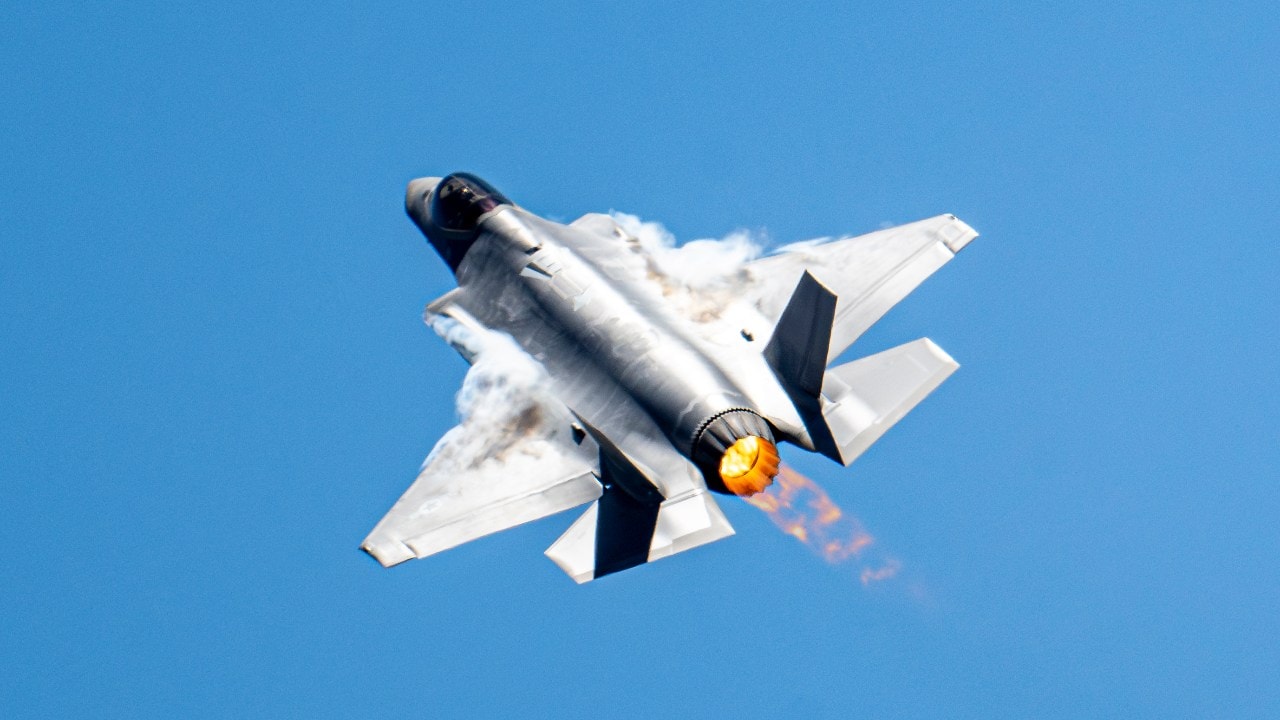
Summary and Key Points: Saudi Arabia’s Royal Saudi Air Force fields a large, modern fleet built for air defense, long-range strike, reconnaissance, and rapid support across the Gulf, Red Sea, and Arabian Peninsula.
-The force’s core combat power centers on F-15 variants—especially the advanced F-15SA—alongside Eurofighter Typhoons and legacy Tornado IDS aircraft still used for deep-strike missions.
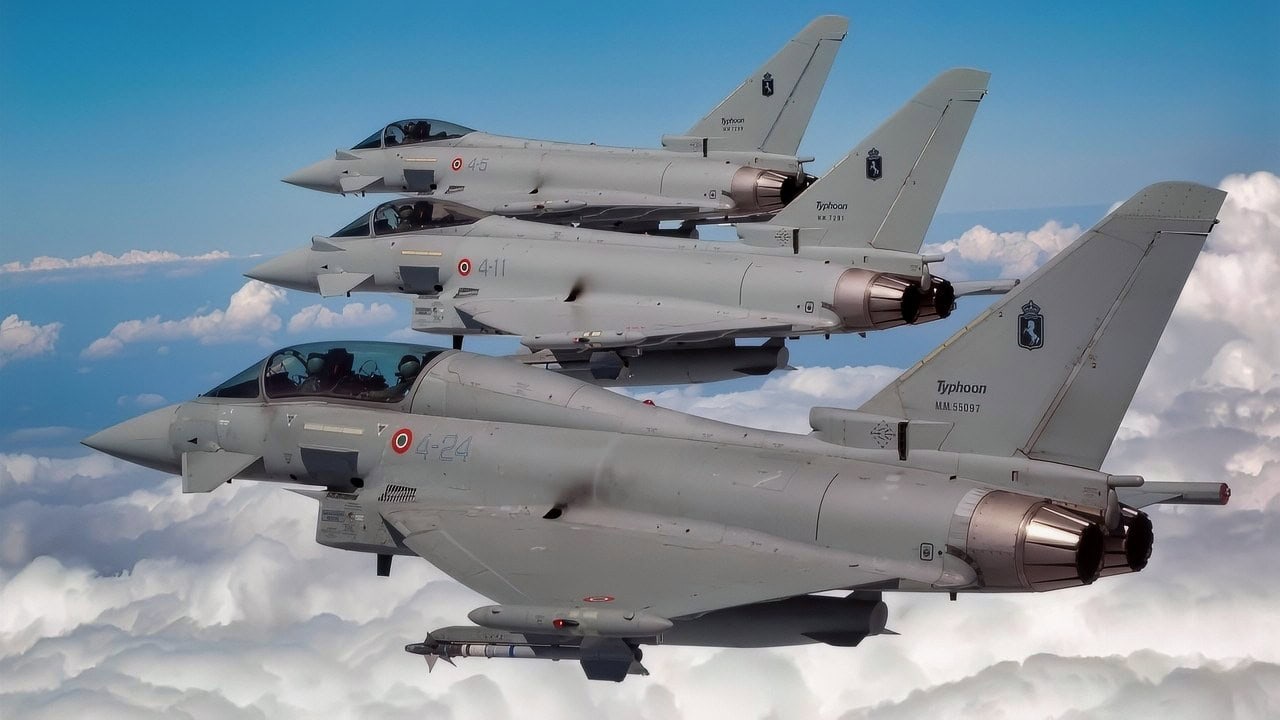
Eurofighter Typhoon Aircraft NATO. Image Credit: Creative Commons.
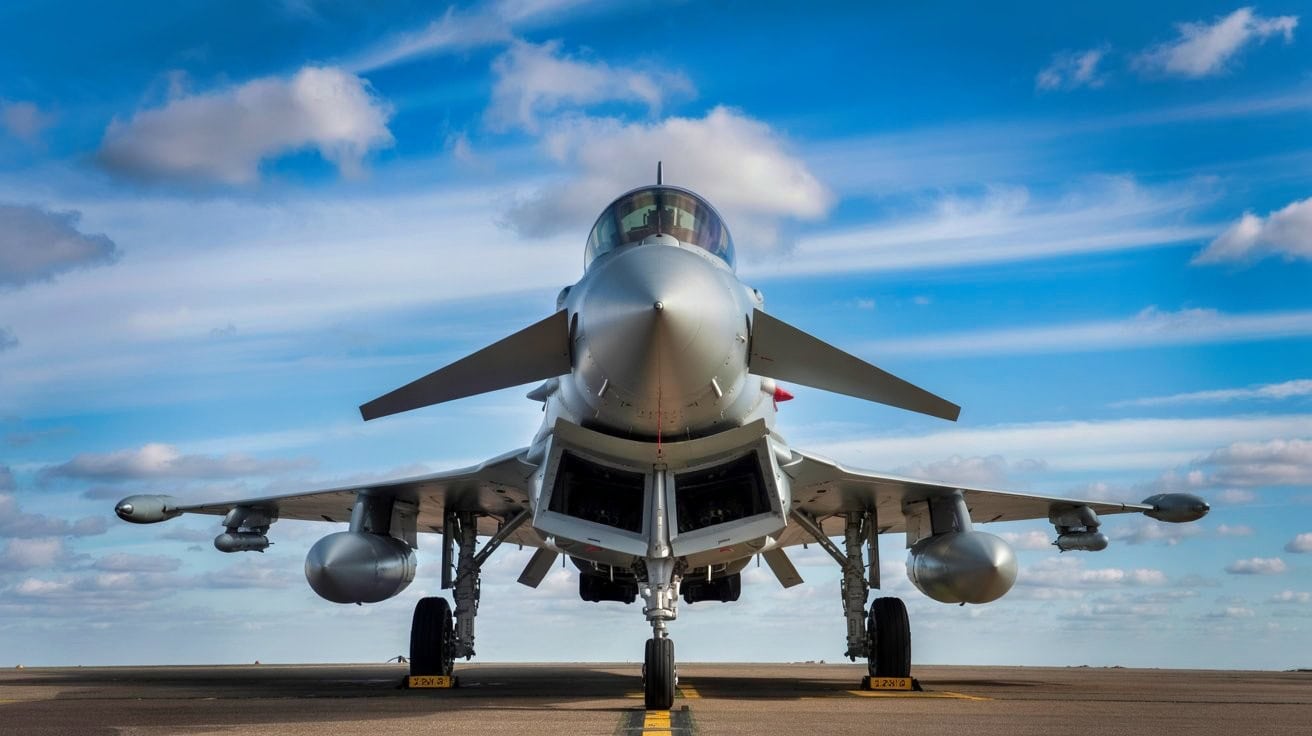
Eurofighter Typhoon. Image Created by Ideogram.
-AWACS, aerial refueling, transports, and a sizable helicopter inventory expand reach and sustain operations.
-U.S. and U.K. training and contractor-backed maintenance help drive readiness, but also create dependency. Yemen has sharpened combat experience while exposing wear, targeting challenges, and vulnerability to drones and missiles.
The RSAF Eagle Fleet: Why Saudi Arabia’s 150+ F-15 Fighter Variants Rule the Gulf Skies
The Royal Saudi Air Force (RSAF) is one of the most capable and well-resourced air forces in the Middle East, combining a large, modern fleet, extensive foreign partnerships, and decades of operational experience.
Its capabilities reflect Saudi Arabia’s strategic priorities of deterring regional rivals, protecting vital oil and infrastructure sites, and projecting power across the Gulf, Red Sea, and Arabian Peninsula. With 914 active aircraft and a global ranking of #6 in overall air power capability, the RSAF stands as a central pillar of Saudi national defense.
Strategic Role and Force Structure
The RSAF plays a decisive role in Saudi Arabia’s defense posture. It is responsible for air defense, offensive strike operations, reconnaissance, and support missions across a vast territory that includes major oil fields, long coastlines, and borders with conflict zones. The force includes roughly 30,000 personnel and operates from multiple major air bases positioned to cover the Persian Gulf, Red Sea, and southern border regions.
Its strategic mission set includes maintaining air superiority over Saudi territory, conducting long-range precision strikes, supporting coalition operations abroad, monitoring borders and maritime approaches, and providing rapid transport and humanitarian support.
This broad mission profile requires a diverse and technologically advanced fleet, which Saudi Arabia has invested in for decades.
Aircraft Inventory and Combat Capabilities
Saudi Arabia fields one of the largest and most modern combat aircraft fleets in the region.
According to the Global Air Force Index, the RSAF operates 914 active aircraft, including 384 combat aircraft, 262 helicopters, and 46 transport aircraft. Other assessments list over 1,000 total aircraft when including all branches and categories, reflecting differences in reporting standards.
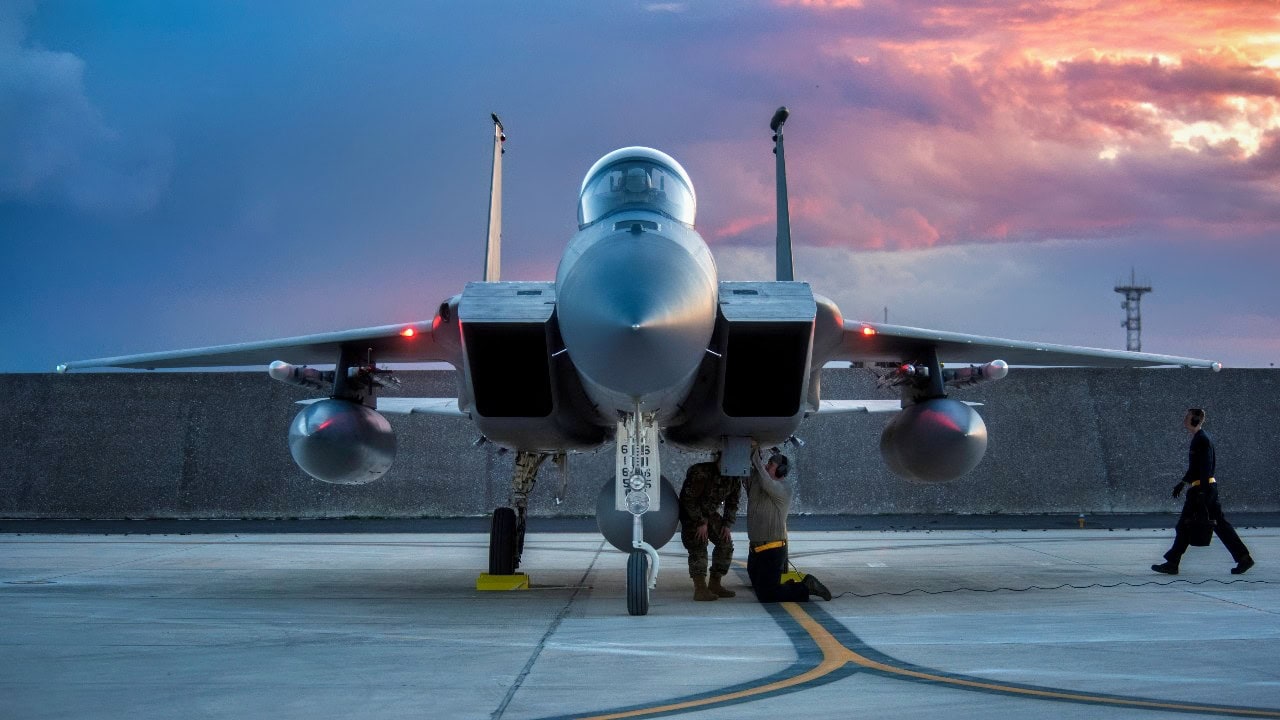
Airmen from the 48th Fighter Wing perform post flight checks on an F-15C Eagle at Amendola Air Base, Italy, Nov. 16, 2018. F-15C Eagles and an F-15D Eagle will be participating in the NATO Tactical Leadership Programme 18-4. TLP has prepared hundreds of NATO and allied forces’ flight leaders to be mission commanders. (U.S. Air Force photo/ Senior Airman Malcolm Mayfield)

A formation of F-15C/D Eagles assigned to the 44th and 67th Fighter Squadrons, a KC-135 Stratotanker assigned to the 909th Air Refueling Squadron, an E-3 Sentry assigned to the 961st Airborne Air Control Squadron, and an HH-60 Pavehawk assigned to the 33rd Rescue Squadron taxi during a routine wing readiness exercise at Kadena Air Base, Japan, March 2, 2022. The large formation movement was part of a routine exercise scenario that tested the 18th Wing’s ability to generate airpower in support of the defense of Japan and other partner nations, ensuring the stability and security of a free and open Indo-Pacific. (U.S. Air Force photo by Senior Airman Stephen Pulter)
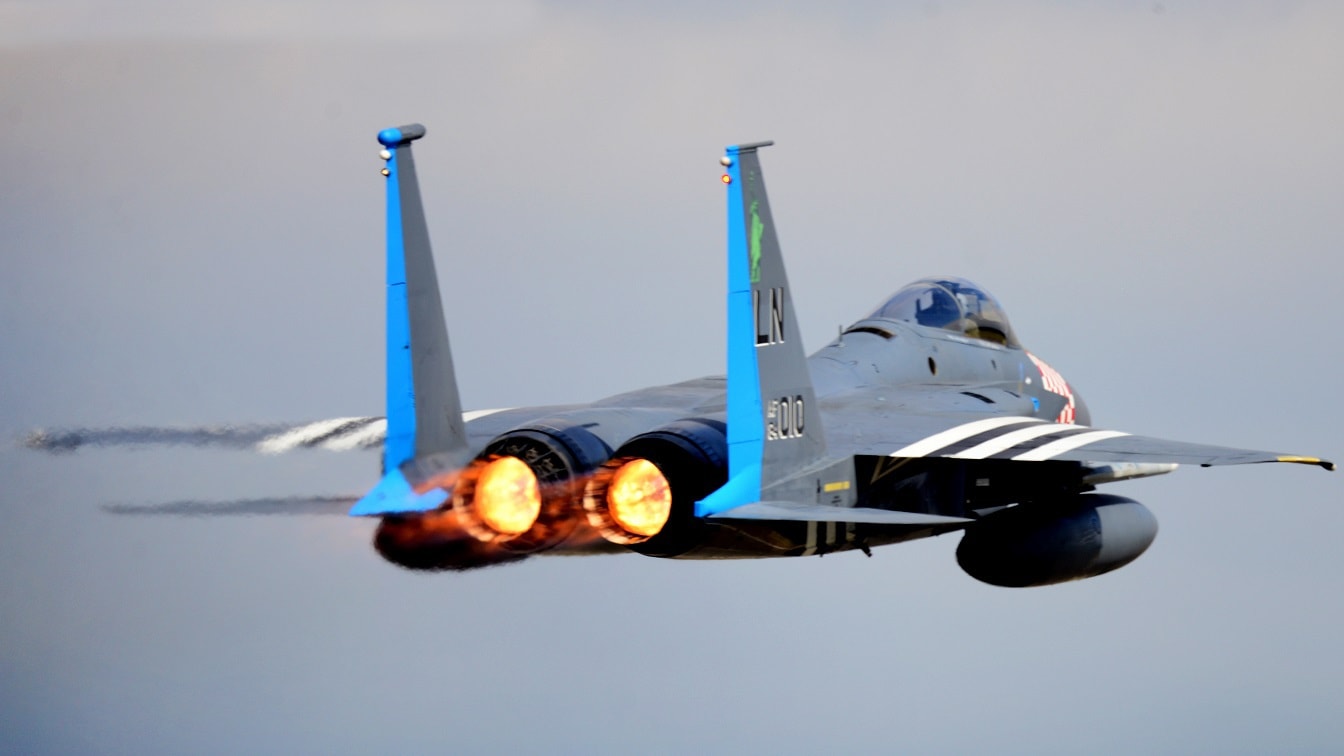
An F-15C Eagle painted in the heritage colors of it’s P-47 Thunderbolt predecessor makes a high-speed pass April 11, over Royal Air Force Lakenheath, England. The 493rd Fighter Squadron conducts routine training daily to ensure RAF Lakenheath brings unique air combat capabilities to the fight when called upon by United States Air Forces in Europe-Air Forces Africa. (U.S. Air Force photo/ Tech. Sgt. Matthew Plew)
The RSAF’s fighter fleet is built around three major platforms. The F-15SA, F-15C, and F-15S form the backbone of Saudi air power. The F-15SA is one of the most advanced F-15 variants ever produced, equipped with an AESA radar, advanced electronic warfare systems, and modern avionics, giving Saudi Arabia long-range strike and air-superiority capabilities.
The Eurofighter Typhoon provides exceptional air-to-air performance and precision strike capability, and Saudi Arabia operates one of the largest Typhoon fleets outside Europe. The Tornado IDS, though aging, remains valuable for deep-strike missions and has been heavily used in Yemen.
The Potential F-35 Deal
The RSAF’s capabilities are set to be further bolstered by a potential acquisition of F-35 fighter jets from the U.S. In an unusual policy shift, the U.S. announced that it was exploring the possibility of exporting the Advanced fifth-generation stealth fighter.
The sale of the jets to the RSAF would massively boost Saudi Arabia’s capabilities and pose a major threat to other air forces in the region, particularly Israel’s and Iran’s.
Obviously, the deal still has a long way to go before the aircraft can be transferred. Given the U.S.’s historical distrust of nations in the Middle East (excluding Israel), it is likely that the deal will get struck down somewhere and ultimately cancelled. If it does not, then the Saudi’s will boost their status as a major player in the region, which Israel is not likely to be happy about.
The RSAF’s combat effectiveness is enhanced by a range of support aircraft, including AWACS platforms that provide airborne early warning and command-and-control, aerial refueling tankers that extend the range and endurance of strike aircraft, and transport aircraft such as the C-130 that support logistics and humanitarian operations. Saudi Arabia also operates a large helicopter fleet supporting border security, special operations, and internal defense.
Training, Personnel, and International Partnerships
The RSAF benefits from deep, long-standing partnerships with the United States and the United Kingdom. These relationships shape training, doctrine, and maintenance practices. Saudi pilots train domestically and abroad, including in U.S. Air Force programs for F-15 pilots and U.K. training pipelines for Typhoon operations. Advanced simulator-based training within Saudi Arabia further enhances pilot proficiency.
Maintenance and logistics for the RSAF’s advanced aircraft require complex technical support. Much of this work is performed by foreign contractors, particularly from the U.S. and U.K. This arrangement ensures high readiness but also creates a dependency that could become a vulnerability during geopolitical crises.
Operational Experience
The RSAF has accumulated significant operational experience over the past three decades. During the Gulf War in 1991, Saudi aircraft participated in coalition operations against Iraq, gaining exposure to large-scale, high-intensity air campaigns. Saudi aircraft also contributed to the international coalition against ISIS, conducting reconnaissance and strike missions.
The most extensive operational test for the RSAF has been the ongoing Yemen conflict since 2015. Saudi aircraft have conducted thousands of sorties targeting Houthi forces and supporting coalition ground operations.
This conflict has tested the RSAF’s endurance and highlighted both strengths and weaknesses. It has exposed challenges such as civilian casualties linked to airstrikes, strain on aircraft readiness due to sustained operations, and vulnerability to asymmetric threats such as drones and ballistic missiles. Despite these issues, the conflict has provided the RSAF with real-world combat experience unmatched by many regional air forces.
Strengths and Weaknesses of the RSAF
Saudi Arabia’s air force possesses several key strengths. Its modern, high-end aircraft fleet, like the F-15SA and Eurofighter Typhoon, gives it one of the most sophisticated air arsenals in the region. Strong international support ensures access to cutting-edge technology, training, and maintenance. Saudi Arabia’s large defense budget, consistently among the world’s highest, enables continuous modernization and expansion. The RSAF’s geostrategic reach, supported by aerial refueling and long-range fighters, allows it to project power across the Middle East.
At the same time, the RSAF faces several weaknesses that still constrain it from becoming a regional powerhouse.
Its dependence on foreign contractors for maintenance and technical support creates potential vulnerabilities, especially during crises. Rapid fleet expansion sometimes outpaces the pilot training pipeline, creating bottlenecks. Sustained operations in Yemen have increased aircraft wear and exposed gaps in intelligence and targeting.
Additionally, Saudi Arabia’s domestic defense industry remains limited, though the government is investing heavily in local production under Vision 2030.
About the Author: Isaac Seitz
Isaac Seitz, a Defense Columnist, graduated from Patrick Henry College’s Strategic Intelligence and National Security program. He has also studied Russian at Middlebury Language Schools and has worked as an intelligence Analyst in the private sector.