
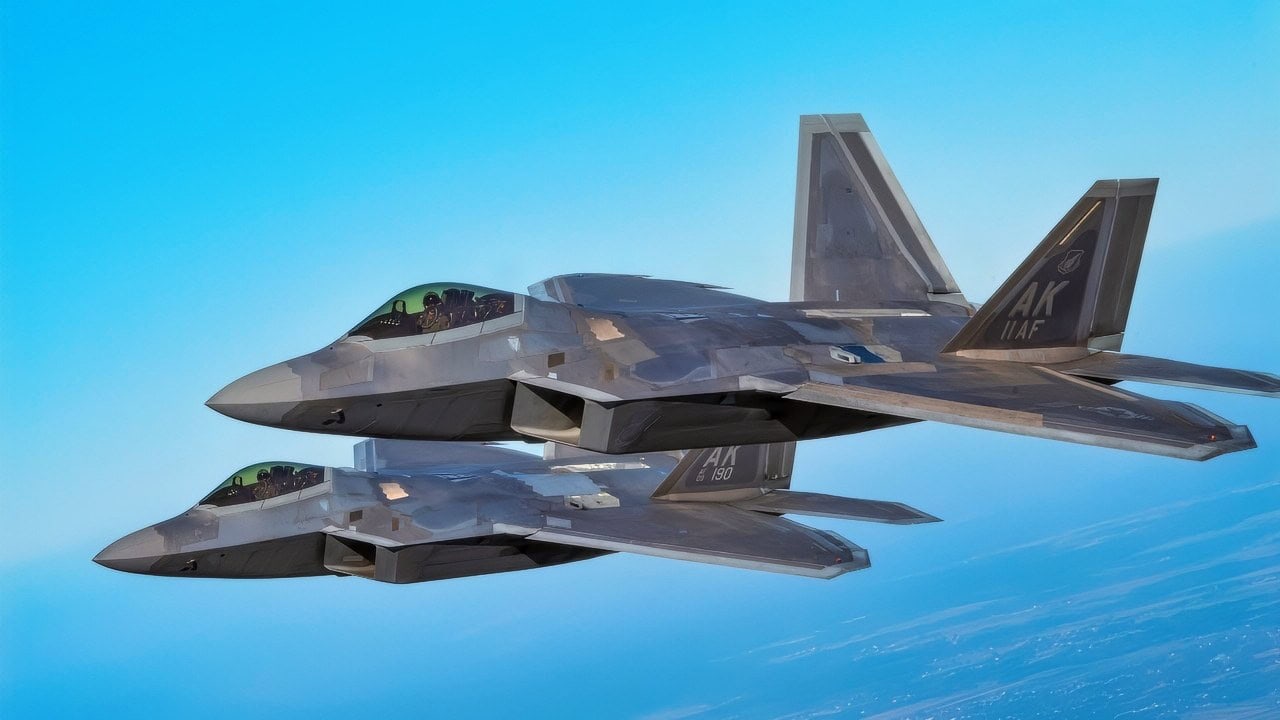
Summary and Key Points: Isaac Seitz, a Defense Columnist and Strategic Intelligence expert, breaks down the infamous 2012 Red Flag Alaska engagement between the F-22 Raptor and the German Luftwaffe’s Eurofighter Typhoon.
-While the Raptor remains the premier 5th-generation stealth fighter, this analysis explores how Basic Fighter Maneuvers (BFM) and within-visual-range (WVR) constraints neutralized the F-22’s stealth advantage.
-By analyzing the aerodynamic impact of external fuel tanks and the Typhoon’s high thrust-to-weight ratio, Seitz explains why these mock dogfights—though resulting in “kill markings” on German jets—don’t reflect the Raptor’s true combat dominance in 2026.
“Raptor Salad”: The Day a German Eurofighter Typhoon “Shot Down” the F-22 Raptor
In 2012, an American F-22 Raptor was shot down by a Eurofighter Typhoon flying for the German Luftwaffe, sort of.
The F-22 was “shot down” during an exercise to simulate close-quarters dogfighting; obviously, German fighters did not actually shoot down an American stealth fighter.
Nevertheless, the result of these exercises was a shock to everyone. How had a European aircraft managed to shoot down one of the best fighter jets in the USAF? Were the German pilots exceptionally skilled?
Did they get lucky, or is the F-22 actually not the invincible jet that many claim it is?
F-22 Raptor: A Story In Photos
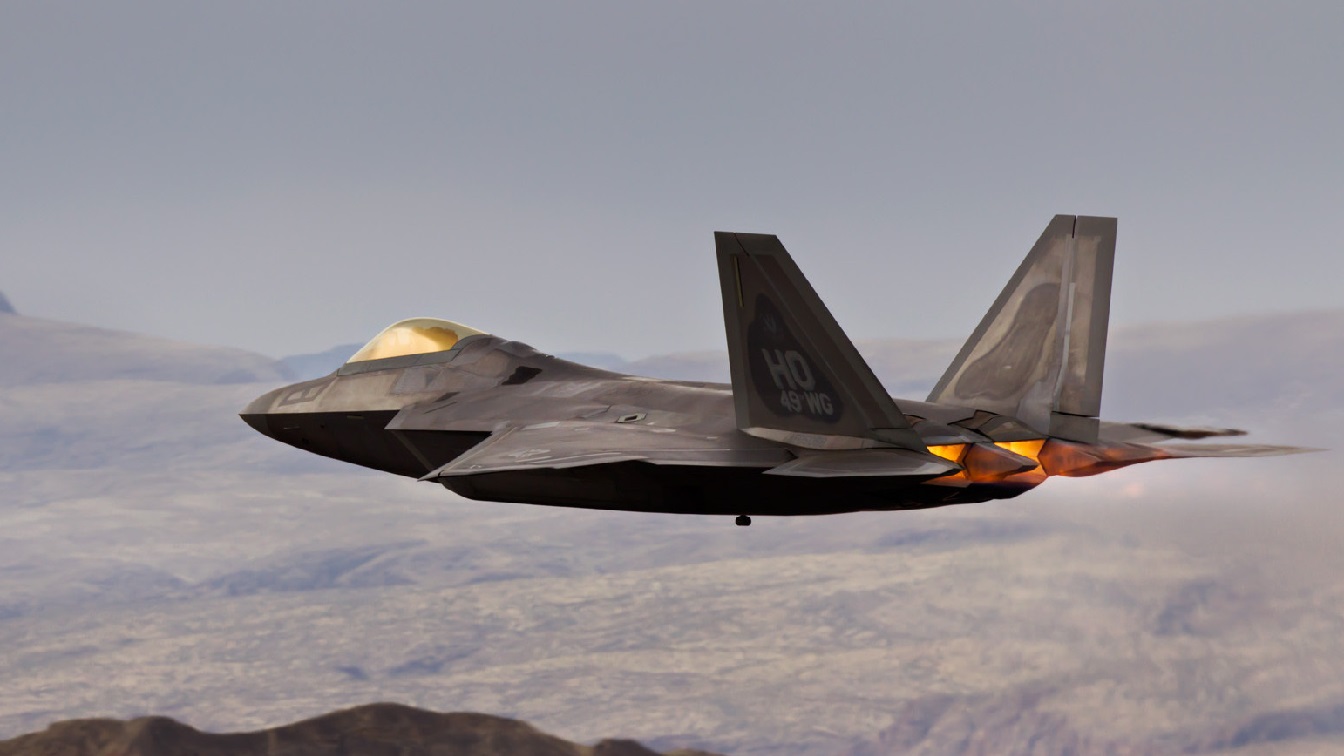
F-22 Raptor. Image Credit: Creative Commons.

F-22 Raptor. Image: Creative Commons.
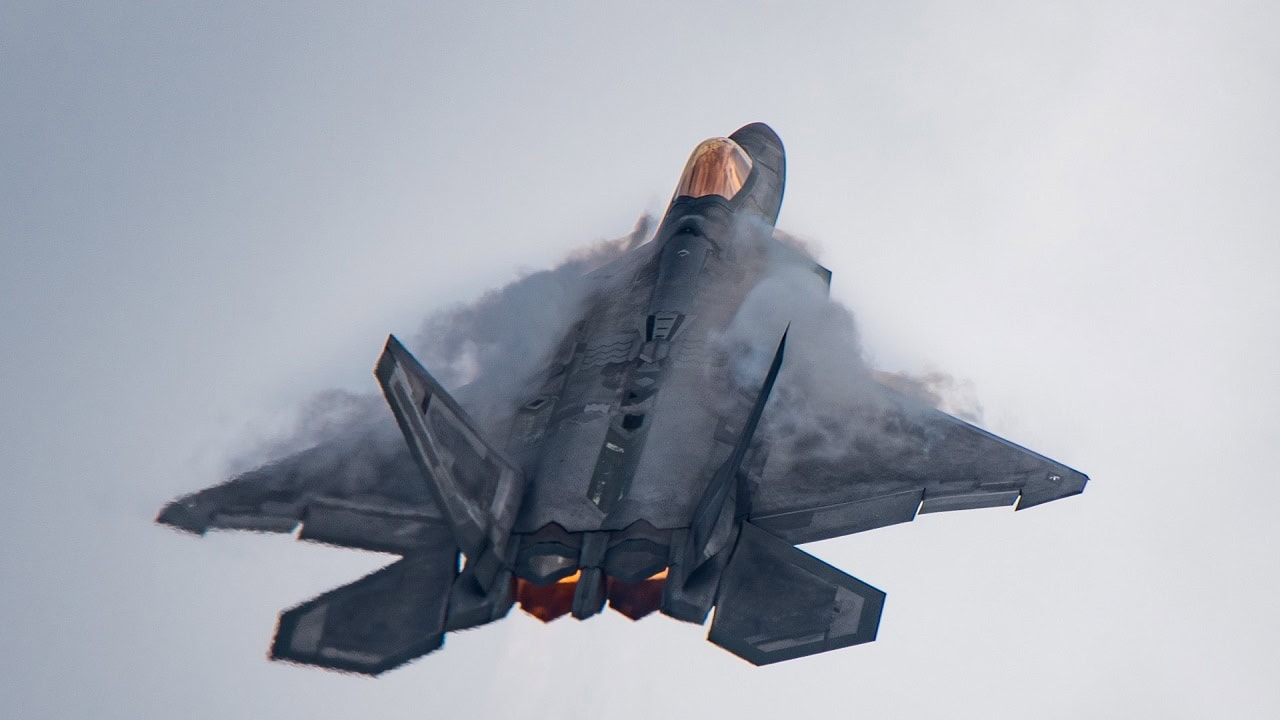
F-22 Raptor. Image Credit: Creative Commons.
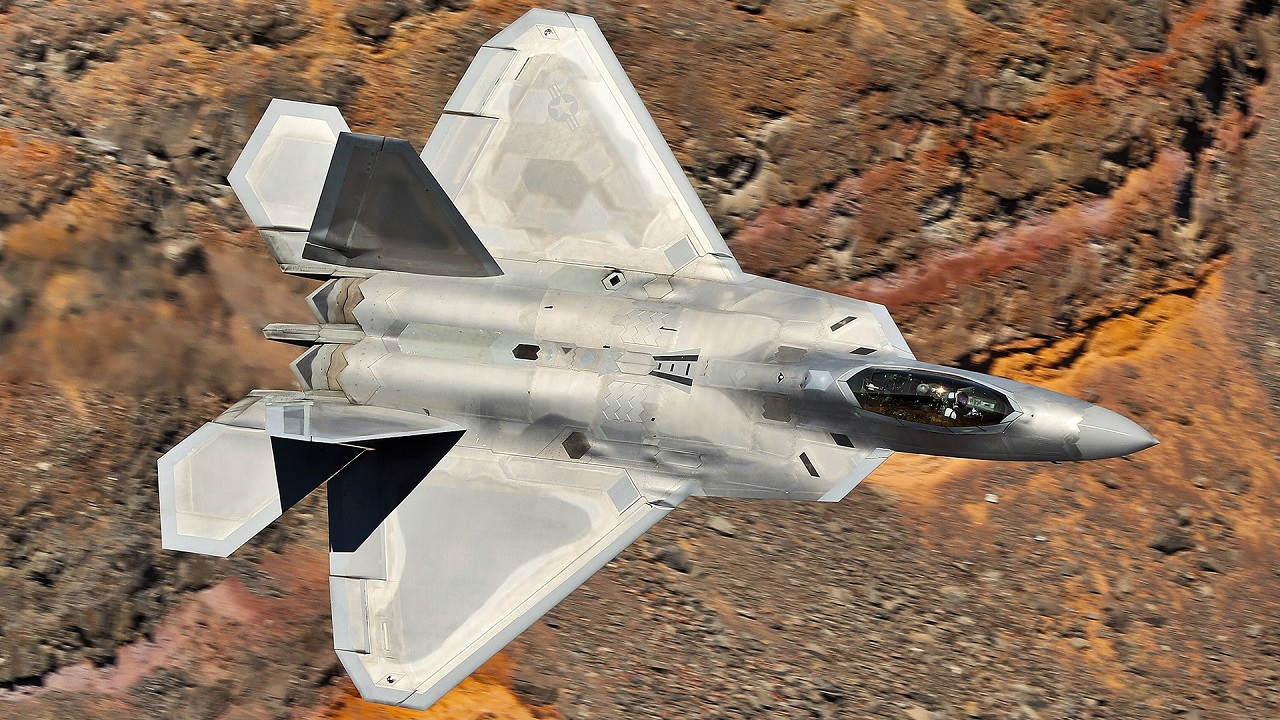
F-22 Raptor. Image Credit: Creative Commons.
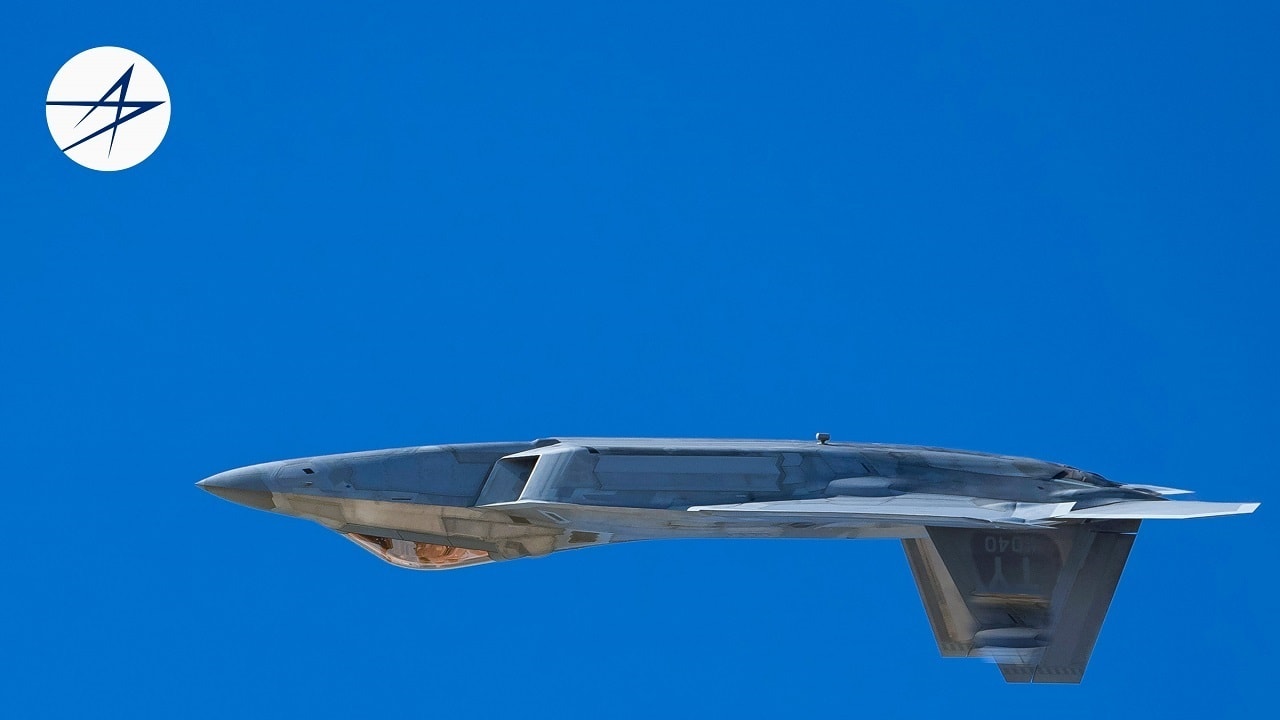
F-22 Raptor as depicted on a Tweet from Lockheed Martin.
Background: Why American Jets Were Fighting German Fighters
The backdrop for this incident was the prestigious Red Flag Alaska training exercise held at Eielson Air Force Base, where the U.S. routinely hosts allied air forces for advanced combat simulations. These exercises are designed to replicate the pressures and complexities of near-peer warfare.
In 2012, Germany sent eight Eurofighter Typhoons and roughly 150 personnel from Jagdgeschwader 74 (JG 74), the 74th Tactical Air Force Wing, to participate in a series of scenarios that included offensive and defensive counter-air operations. Among these were Basic Fighter Maneuver drills (dogfighting) with the F-22.
These engagements were deliberately set within visual range. In such a scenario, the F-22 forfeits one of its defining advantages: the ability to detect and destroy opponents at long distances while remaining unseen. Instead of relying on stealth and long-range sensors, the Raptor had to fight in close-quarters combat, emphasizing maneuverability and pilot skill.
Complicating matters further was the Raptor’s configuration. During these drills, the F-22 carried external fuel tanks (EXTREMELY important), which compromised its normally exceptional agility.
According to subsequent accounts, these tanks significantly affected the aircraft’s ability to maintain energy in hard turns. German pilots later noted that the Eurofighter’s superior agility in these conditions allowed them to exploit moments when the Raptor lost airspeed, turning those temporary disadvantages into simulated kill opportunities.
The F-22 Lost an Air Battle?
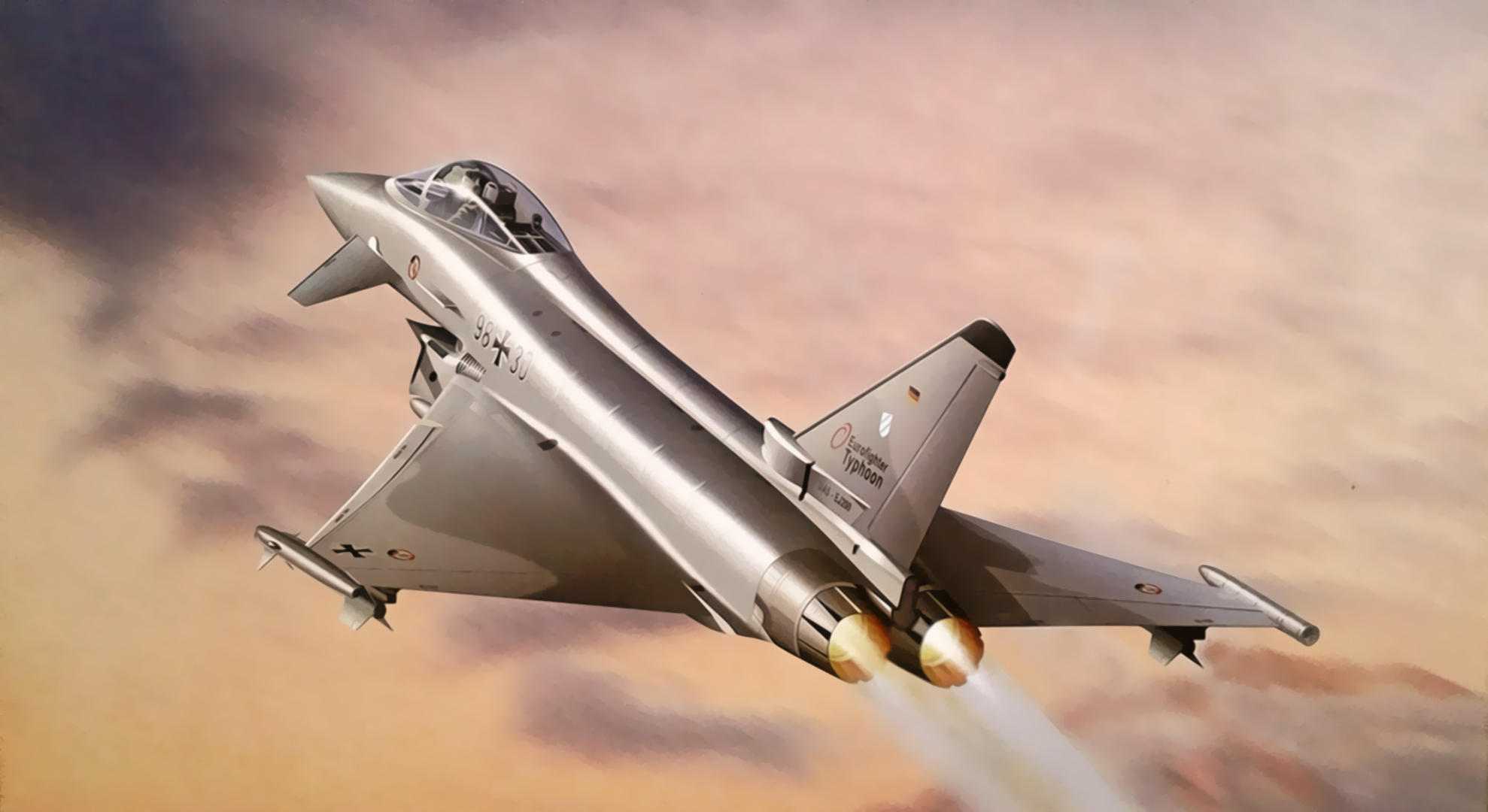
Eurofighter Typhoon. Image Credit: Creative Commons.
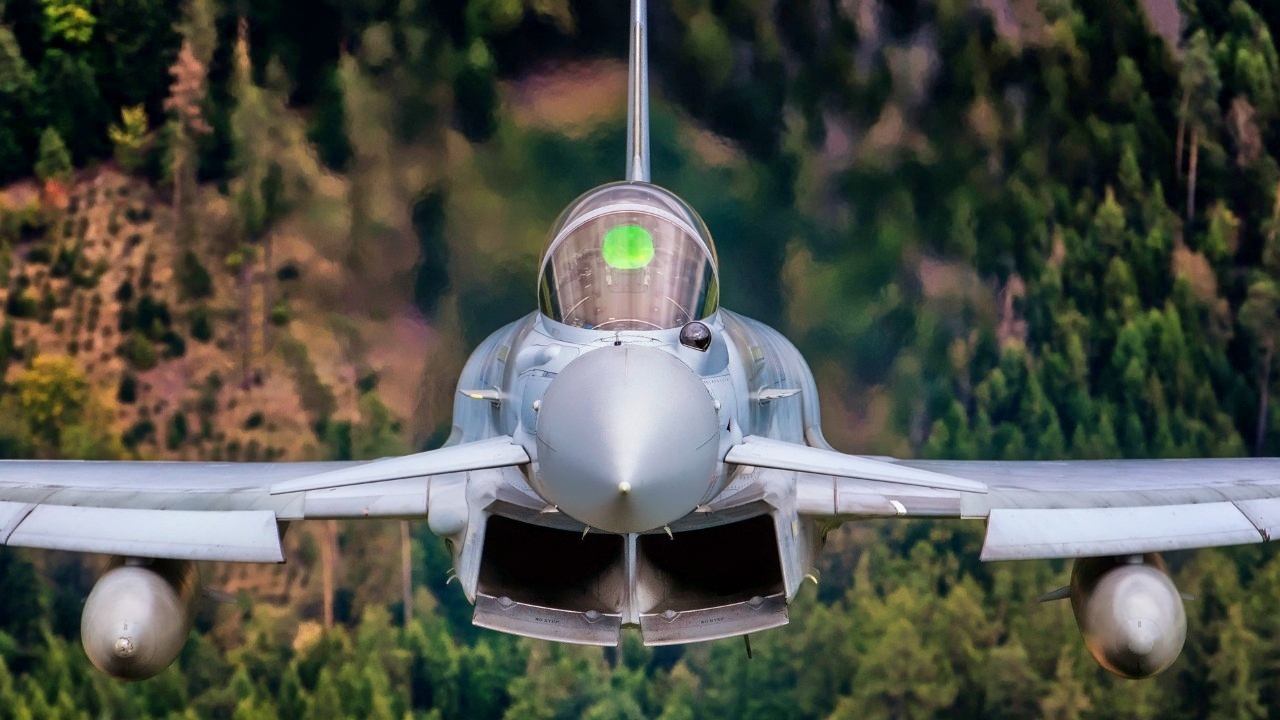
Eurofighter Typhoon. Image Credit: Creative Commons.
The Eurofighters, by contrast, flew clean, without drop tanks. This meant they enjoyed full aerodynamic performance. The Typhoon’s powerful twin engines, delta-canard design, and high thrust-to-weight ratio enabled it to retain energy during aggressive maneuvers. During one described engagement, for example, the F-22 used its thrust vectoring to swing its nose toward an approaching Eurofighter, which would normally allow it to dominate the merge. An important note about thrust vectoring is that it can enable some insane midair maneuvers, but can also sharply decelerate the aircraft. At Red Flag, this loss of energy became a liability. The German pilot maintained speed, maneuvered behind the now-slower Raptor, achieved a positional lock, and scored a simulated missile strike.
This was not an isolated incident, oddly enough. Reports indicated that the Eurofighter pilots managed multiple simulated kills during their time in Alaska. They openly discussed these results afterward, especially at the 2012 Farnborough International Air Show, where their candor helped the story gain international traction. One of their aircraft even displayed F-22 kill markings on the fuselage.
To add insult to injury, one of the Eurofighters stated, “Yesterday we had Raptor salad for lunch” after dogfighting an F-22. How could a 4.5-generation aircraft take down one of America’s greatest fighter jets?
F-22 Fighting With One Hand Tied Behind Its Back
There is a lot of context to these exercises that needs to be considered. As several analyses later noted, the training rules used during Red Flag deliberately remove or restrict many real-world capabilities to force pilots to fight in a variety of scenarios.
In real combat, the F-22 would rarely, if ever, dogfight an enemy aircraft within visual range. Its design philosophy is built around preventing such encounters from occurring in the first place. Stealth, sensor fusion, and long-range missiles allow the Raptor to detect, track, and engage opponents long before a traditional dogfight becomes necessary.
By requiring the F-22 to merge visually and engage in close-range maneuvering, the exercise neutralized its most decisive advantages. Analysts from later years reiterated that these constraints often determine training outcomes far more than raw aircraft performance.
Moreover, the external fuel tanks that hampered the Raptor were intentionally set.
They were central to understanding its diminished performance. Pilots familiar with the aircraft noted that when the F-22 flies clean without any tanks, it becomes vastly more maneuverable. German pilots themselves acknowledged that the Eurofighter had no chance against a clean F-22 in a close-range engagement. Their victories occurred only under specific conditions that removed or weakened the Raptor’s advantages while enhancing the Typhoon’s strengths.
To throw a bone to all the Typhoon fans out there, the Eurofighter’s achievements were commendable. They demonstrated that even in an era dominated by stealth and networked warfare, traditional aerodynamic performance still mattered.
The Typhoon’s agility, acceleration, and ability to retain energy through a turn enabled it to capitalize on fleeting opportunities. The Luftwaffe pilots executed their game plan effectively, showing that skill and tactical awareness remain decisive factors in air combat, even against the most advanced aircraft in the world. Even in the best circumstances, no aircraft is invisible. Even a clean sheet F-22 could lose to a Eurofighter if the conditions are right and if the Typhoon’s pilot is skilled enough.
About the Author: Isaac Seitz
Isaac Seitz, a Defense Columnist, graduated from Patrick Henry College’s Strategic Intelligence and National Security program. He has also studied Russian at Middlebury Language Schools and has worked as an intelligence Analyst in the private sector.