
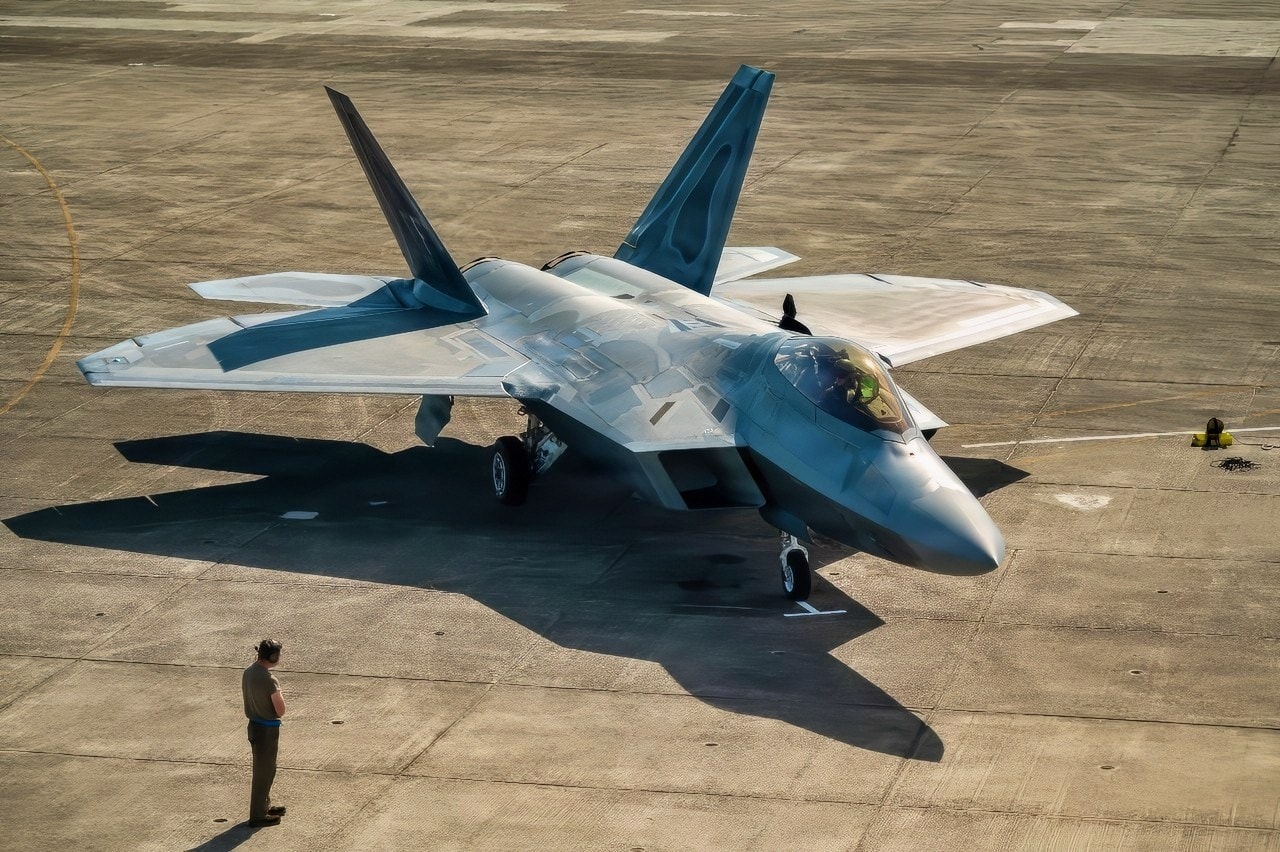
Summary and Key Points: Brent M. Eastwood, PhD, a former tech CEO and legislative fellow for Senator Tim Scott, analyzes the evolution of the Lockheed Martin F-22 Raptor into the “Super” Raptor standard.
-First introduced in 1997 and operational at Langley AFB since 2005, the F-22 is undergoing a massive $9 billion modernization effort.
-Key upgrades include the Reliability, Availability, and Maintainability Program (RAMP), the AIM-260 Joint Advanced Tactical Missile (JATM), and advanced IRST systems.
-This 19FortyFive analysis explores how these 2026 transformations ensure air superiority against China and Russia while the Air Force bridges the gap to the sixth-generation F-47 NGAD.
From 1997 to 2026: How the F-22 Raptor Fighter Is Transforming into a 5th-Gen+ Powerhouse
The first time I saw the F-22 Raptor up close, it was awe-inspiring and one of the highlights of my visit to the National Museum of the U.S. Air Force at Wright-Patterson Air Force Base in Ohio. The Raptor’s design is so sleek and beautiful. The lines are just right. The shape is obviously meant for stealth. This airplane has the right stuff, and if I were an Air Force pilot, I would have loved to hop in and fly away.
The F-22 has undergone significant updates over the years. The F-22 is probably the most stealthy airplane in the world, but its radar-evading capabilities have improved over time. The airplane has supercruise for those long missions to eliminate enemy airplanes. Envisioned mostly as an air superiority stealth fighter, the Raptor now has some ground attack capability too.
The F-22 Program Goes Back to When Bill Clinton Was President

An F-35A Lightning II flown by a 65th Aggressor Squadron (AGRS) pilot takes off for its first flight with a new paint scheme at Nellis Air Force Base, Nevada, May 26, 2022. The mission of the 65 AGRS is to know, teach and replicate fifth-generation air adversaries tactics. (U.S. Air Force photo by Airman 1st Class Josey Blades)
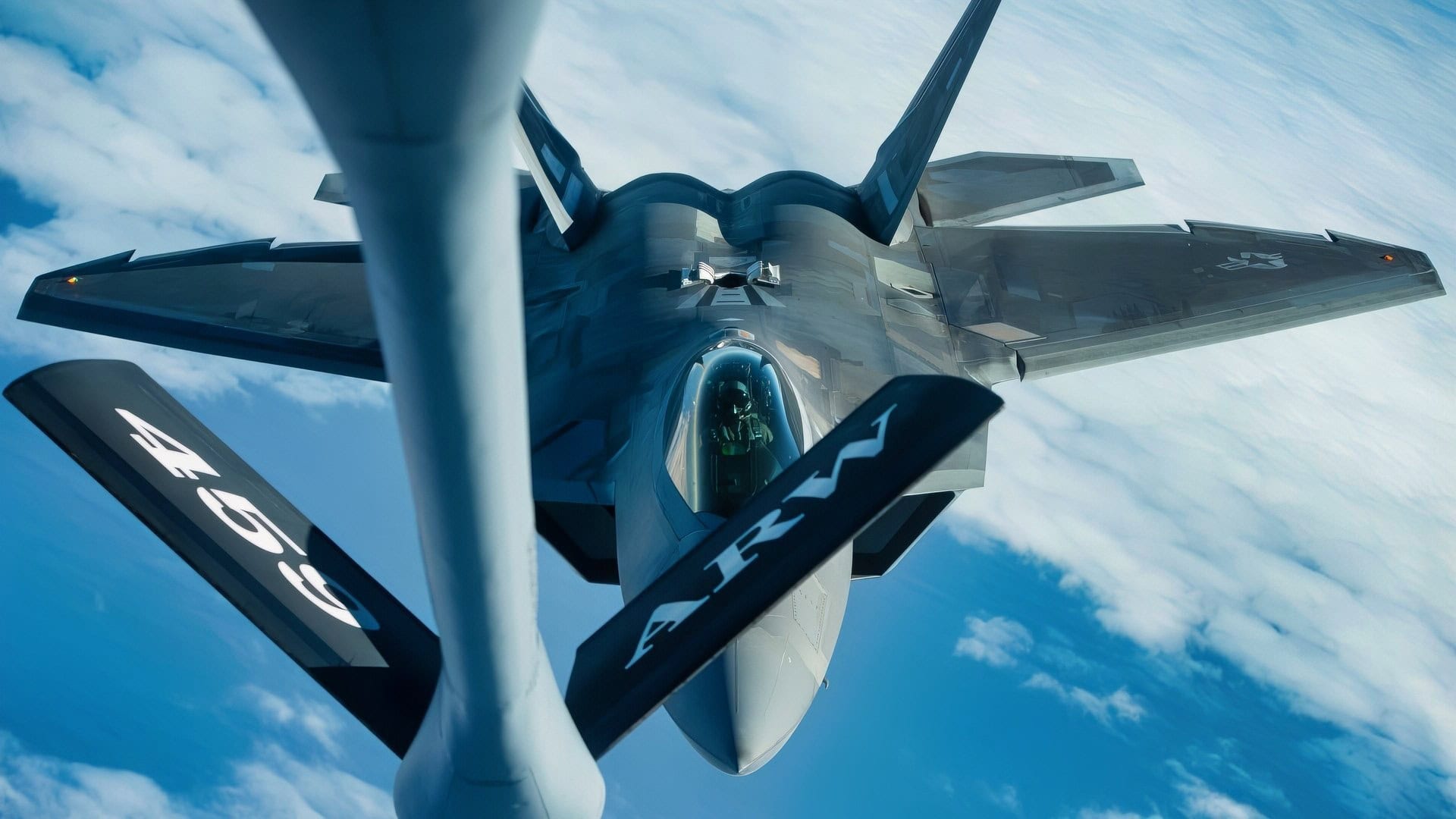
An F-22 Raptor from the Hawaii Air National Guard’s 199th Fighter Squadron, conducts aerial refueling with a KC-135 Stratotanker near Joint Base Pearl Harbor-Hickam, Hawaii, Jan. 15, 2019. The F-22 Raptors conducted interoperability training with the B-2 Spirit bomber deployed here from Whiteman Air Force Base, Missouri. The bombers and more than 200 Airmen are deployed in support of U.S. Strategic Command’s bomber task force mission. Bomber aircraft regularly rotate through the Indo-Pacific region to integrate capabilities with key regional partners and maintain a high state of aircrew proficiency. (U.S. Air Force photo by Master Sgt. Russ Scalf)
It is difficult to believe that the Raptor was first introduced to the world in 1997. That was a different era for international security. The Cold War had long been over. The airframe emerged as the U.S. entered a period when defense budgets were crimped, and personnel were being removed from the military through reduction-in-force efforts. The Global War on Terror was four years away. China had not revolutionized its own military. North Korea was the biggest hotspot, and Russia’s defense forces were hollowed out.
Delivered During the Global War on Terror
By the time the first Raptor became operational in 2005 at the 27th Fighter Squadron, 1st Fighter Wing, at Langley Air Force Base, Virginia, the times had changed again. The war in Iraq was raging, and terrorists were being hunted in Afghanistan. The F-22 was geared more toward a near-peer adversary. China had greatly improved its military, and Russia was spending more on its defense. But an air superiority dogfighter was not needed much during the Global War on Terror, when air dominance was assured.
Upgradable Software Architecture

The F-22 Raptor Demonstration Team uniform is worn during a practice demonstration at Langley Air Force Base, Virginia, Nov. 13, 2025. The all-black flight suit is a signature look for Air Combat Command demonstration teams. (U.S. Air Force photo by Staff Sgt. Lauren Cobin)
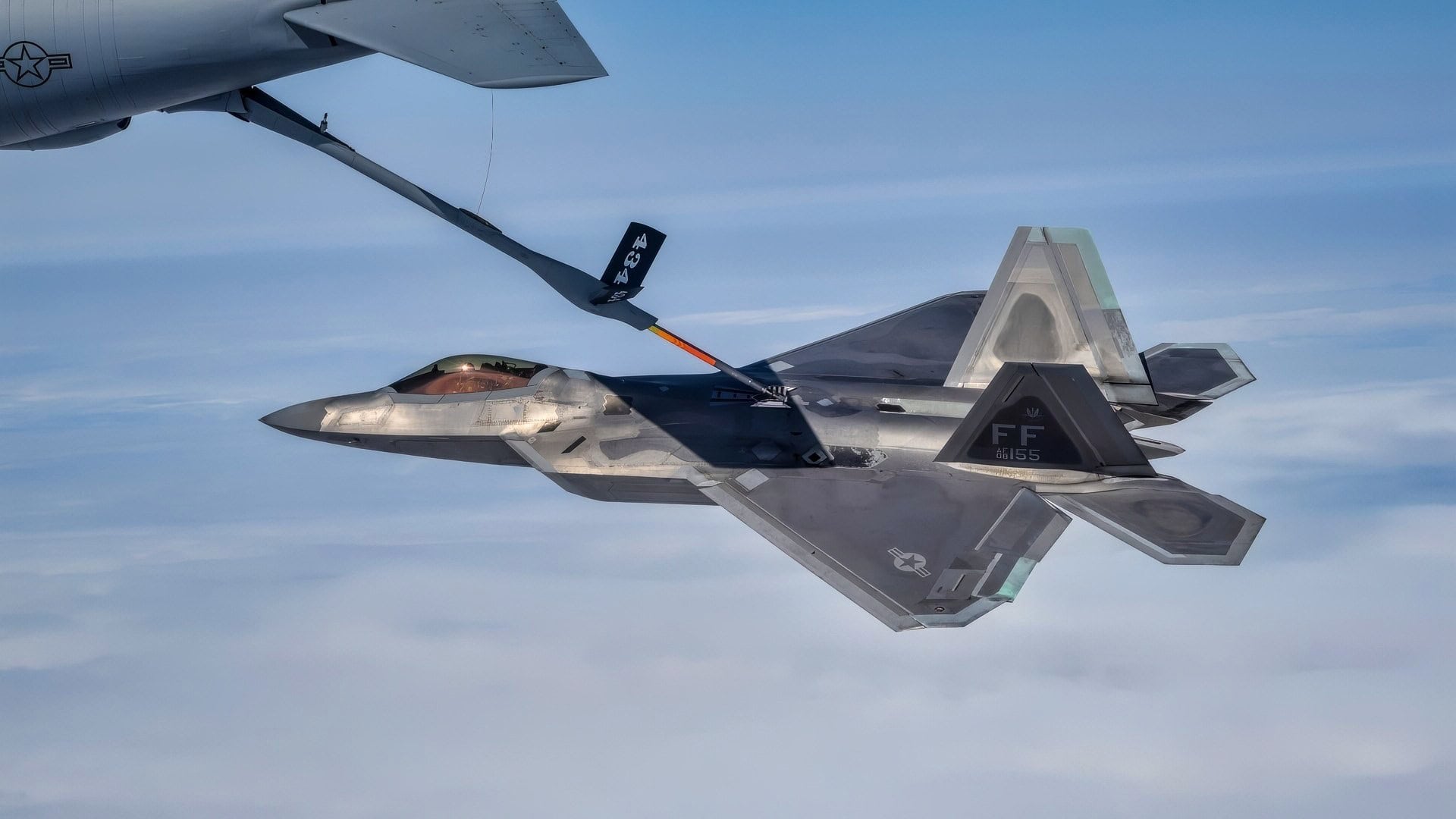
A U.S. Air Force F-22 Raptor and a KC-135 Stratotanker, assigned to the 434th Air Refueling Wing, Grissom Air Reserve Base, Ind., conduct aerial refueling over the continental United States, Aug. 21, 2018, during the Northern Lightning 18-2 exercise. Northern Lightning is one of seven Air National Guard joint accredited exercises held at a Combat Readiness Training Center and provides tailored, cost-effective and realistic combat training for participating units in a joint and multinational environment. (U.S. Air National Guard photo by Tech. Sgt. Mary E. Greenwood)
The Raptor needed to remain relevant, so more improvements were necessary. One of the biggest upgrades occurred in 2014, when the entire fleet had its software renewed as part of the Inc. 3.2b effort. This helped the performance of its air-to-air missiles. The effort enhanced range, fire control, and targeting precision, according to Warrior Maven. These upgrades are still working well 12 years later.
Rapid Raptor Knows No Bounds
The Air Force also created the “Rapid Raptor” program, which could deliver the F-22 anywhere within 24 to 48 hours. This ability is highly important in today’s multi-threat environment and to balance against the strength of Russia and China when a deployment across the globe could be needed at any time. The military build-up in preparation for strikes against Iran that could happen soon is an example of how the Raptor could end up fighting against Iranian aircraft.
The Best Way to ‘Talk’ With an F-35
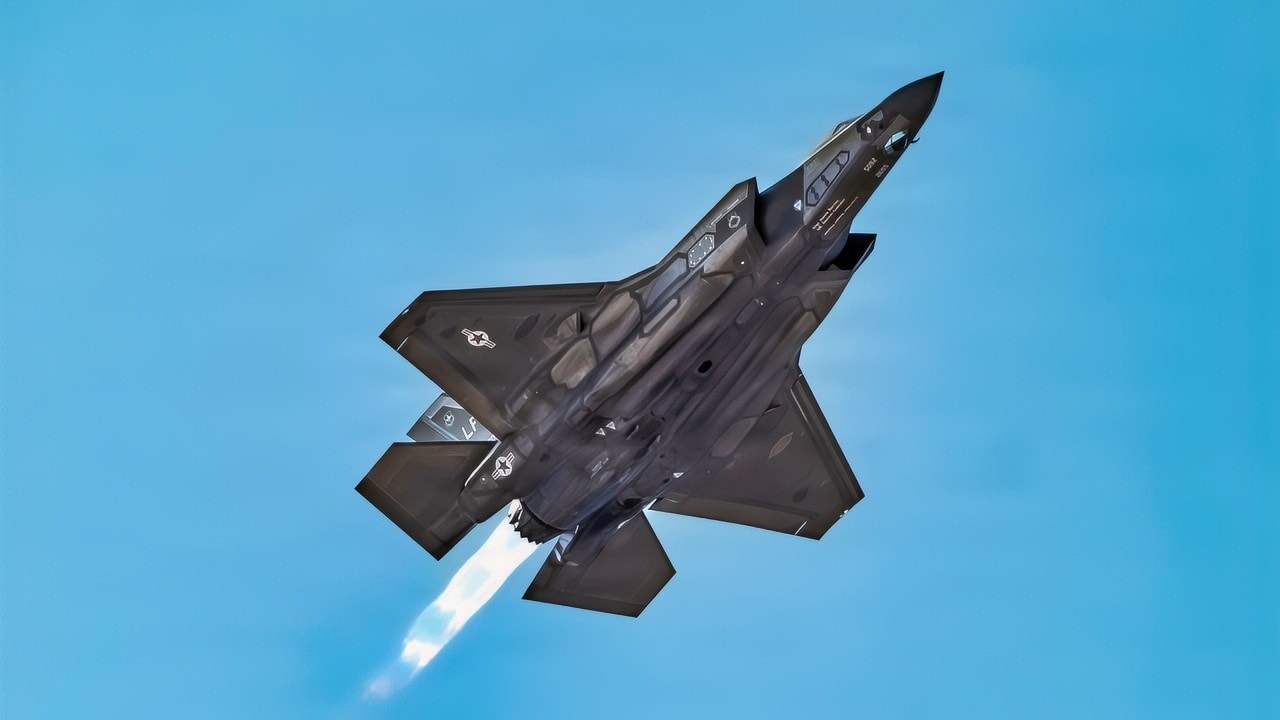
A U.S. Air Force F-35A Lightning II, assigned to the 56th Fighter Wing, takes flight, Nov. 26, 2025, at Luke Air Force Base, Arizona. The F-35A’s is designed for missions ranging from air superiority and electronic warfare. The 56th FW’s training programs emphasize interoperability, ensuring F-35A pilots can effectively collaborate with partner nations to achieve shared objectives. (U.S. Air Force photo by Airman 1st Class Belinda Guachun-Chichay)
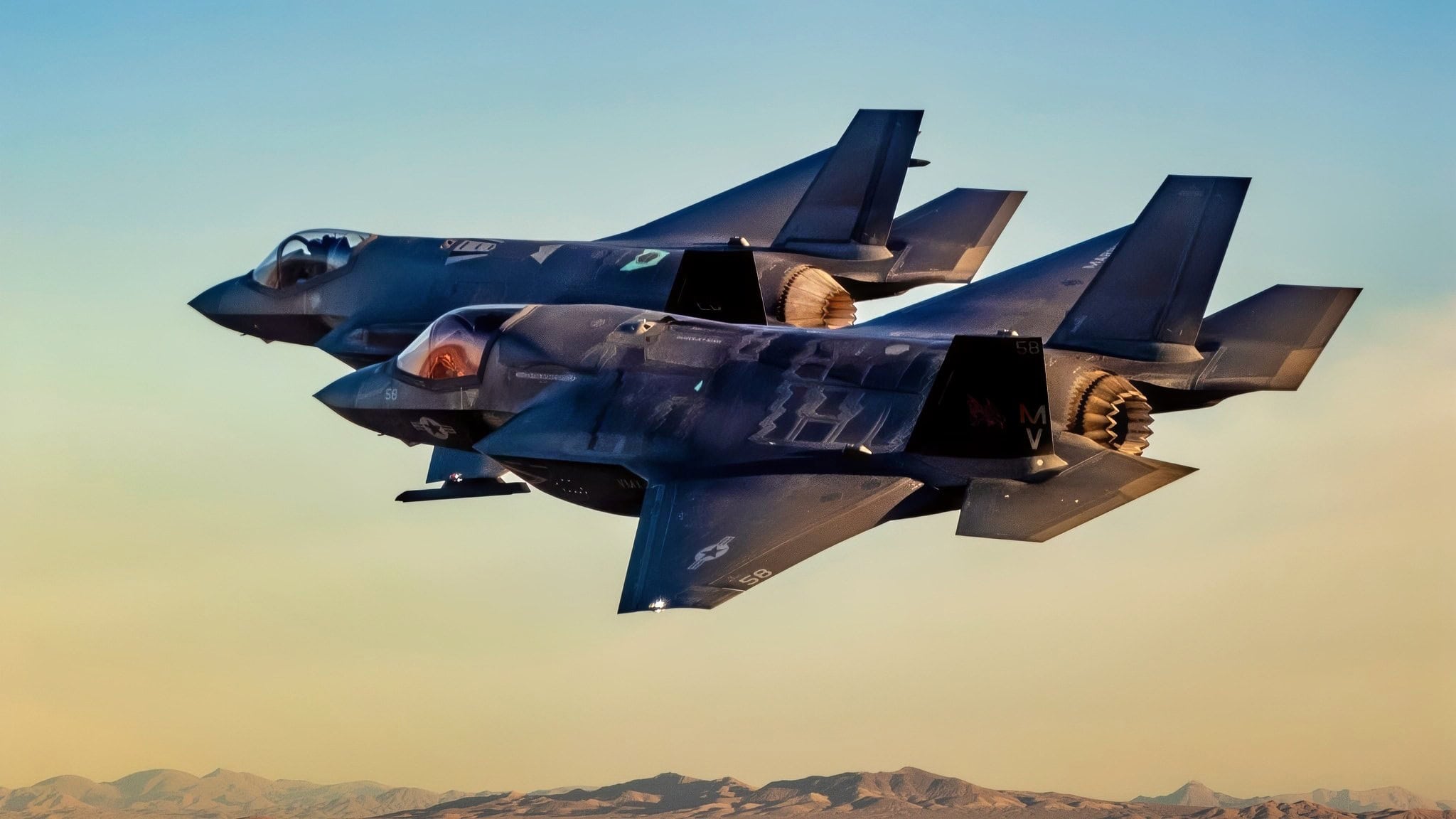
Test pilots with the 461st Flight Test Squadron, 412th Test Wing, return to Edwards Air Force Base, California, on January 21 after conducting a TR-3 AIM-120 live fire mission over the Pacific Test Range. The F-35 Integrated Test Force at Edwards is responsible for developmental testing of all three F-35 aircraft variants across the joint-services. (Courtesy Photo)
Over the years, the Raptor has integrated more closely with the F-35 Lightning II family of stealth fighter jets. This is another improvement that increases interoperability with partner nations that fly the F-35. There is now better data-link interconnectivity between the two airplanes.
The F-22 has a much better AESA radar for excellent situational awareness and survivability. This enables improved “see first-shoot first” capabilities, leading to greater success in aerial combat.
Improvements During the 2010s
Other updates, known as the “Inc. 3.1 and 3.2” modernizations, gave the F-22 superior specifications and capabilities. There were new synthetic aperture radars between 2010 and 2020. These were optimized with exceptional software updates. Inc. 3.2A resulted in electronic warfare advantages. Radar algorithms were derived much faster.
RAMP Program Heats Up
“Ongoing efforts include IRST to stealthily track and target airborne threats, and stealthy external fuel tanks/pylons to extend unrefueled range. Other significant efforts include the Reliability, Availability, and Maintainability Program (RAMP), Link 16, and IFF enhancement. RAMP improves electrical power, replaces avionic fiber optics, adds more durable LO, and fixes structures and wiring. Link 16 will enable two-way networking with legacy aircraft via Multifunctional Information Distribution System/Joint Tactical Radio System (MIDS/JTRS). Initial installs began in FY22, and fleetwide upgrade is now planned for FY25,” according to Air and Space Forces Magazine.
How Super Will the F-22 Be?
New key upgrades for the “Super” F-22 could include “next-generation infrared search-and-track (IRST) systems, advanced electronic warfare capabilities, and integration of the AIM-260 Joint Advanced Tactical Missile (JATM),” as my colleague Maya Carlin wrote.
This would make the F-22 into a fifth-generation “+” fighter. The F-22 Super can serve as a transition to the new F-47 NGAD and help bolster the Air Force as it also waits for the next-generation B-21 Raider bomber.
Unfortunately, only 195 F-22s were built, and about 187 are operational. The airframe will have to keep improving to remain dominant. It is still a beautiful warbird and not as big as you would think if you saw it in person. The F-22 could be the most stealthy fighter in the world, though. It has a bright future ahead, and many pilots rejoice when assigned to fly it. It will never be exported and is not meant for allied nations like the F-35 is, but the Air Force will continue to deploy it when the chips are down, and you should be relieved that the F-22 can grace the skies, dogfight, and conduct surface strikes with the best of them.
About the Author: Brent M. Eastwood
Author of now over 3,000 articles on defense issues, Brent M. Eastwood, PhD is the author of Don’t Turn Your Back On the World: a Conservative Foreign Policy and Humans, Machines, and Data: Future Trends in Warfare plus two other books. Brent was the founder and CEO of a tech firm that predicted world events using artificial intelligence. He served as a legislative fellow for US Senator Tim Scott and advised the senator on defense and foreign policy issues. He has taught at American University, George Washington University, and George Mason University. Brent is a former US Army Infantry officer. He can be followed on X @BMEastwood.