Summary and Key Points: Brandon J. Weichert, Senior National Security Editor and author of The Shadow War, evaluates the catastrophic deconfliction failure during Operation Epic Fury and the war in Iran.
-Despite the F-15E Strike Eagle’s sophisticated EPAWSS electronic warfare suite and AN/APG-70 radar, three aircraft were misidentified and destroyed by Kuwaiti Air Defense during an intense Iranian missile strike.
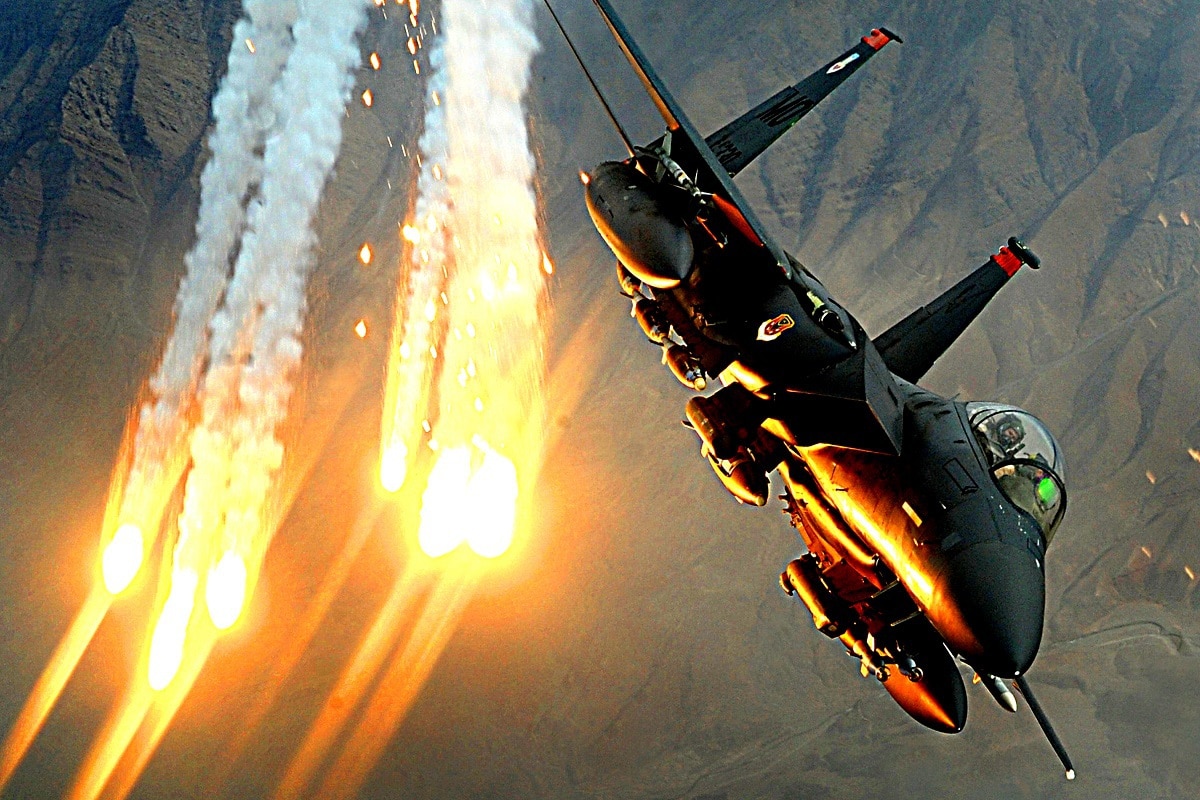
An F-15E Strike Eagle from the 391st Expeditionary Fighter Squadron at Bagram Air Base, Afghanistan, launches heat decoys Dec. 15 during a close-air-support mission over Afghanistan. (U.S. Air Force photo/Staff Sgt. Aaron Allmon)
-This 19FortyFive report analyzes the technical specs of the Pratt & Whitney F100-powered birds and the broader strategic fallout, exploring how the administration’s claims of air superiority are being challenged by a chaotic, multi-front regional conflict that has turned local populations against American intervention.
Beyond the Mach 2.5 Speed: The Tragic Inauspicious End for Three F-15E Strike Eagles in Iran War
As we enter day three of what appears to be a much longer war than what President Donald J. Trump had anticipated in the Middle East, a harrowing event in the skies of besieged Kuwait reminds us about the dangers of war—and the justifiable outrage felt amongst most Americans over the unnecessary nature of Trump’s war of choice.
The Situation: Iran War and Fog of War
The United States Central Command now reports that three United States Air Force F-15E Strike Eagle fighter jets were downed by friendly fire in Kuwait. The aircraft were flying as part of the ongoing “Operation Epic Fury.” During active combat operations involving incoming Iranian missiles and drones, Kuwaiti air defense (AD) systems mistakenly engaged the American birds.
All six aircrew members (three pilots and three weapons systems officers) ejected safely and were recovered in stable condition. Kuwait has officially acknowledged the error on its part. Let’s just all chalk this up to the fog of war.
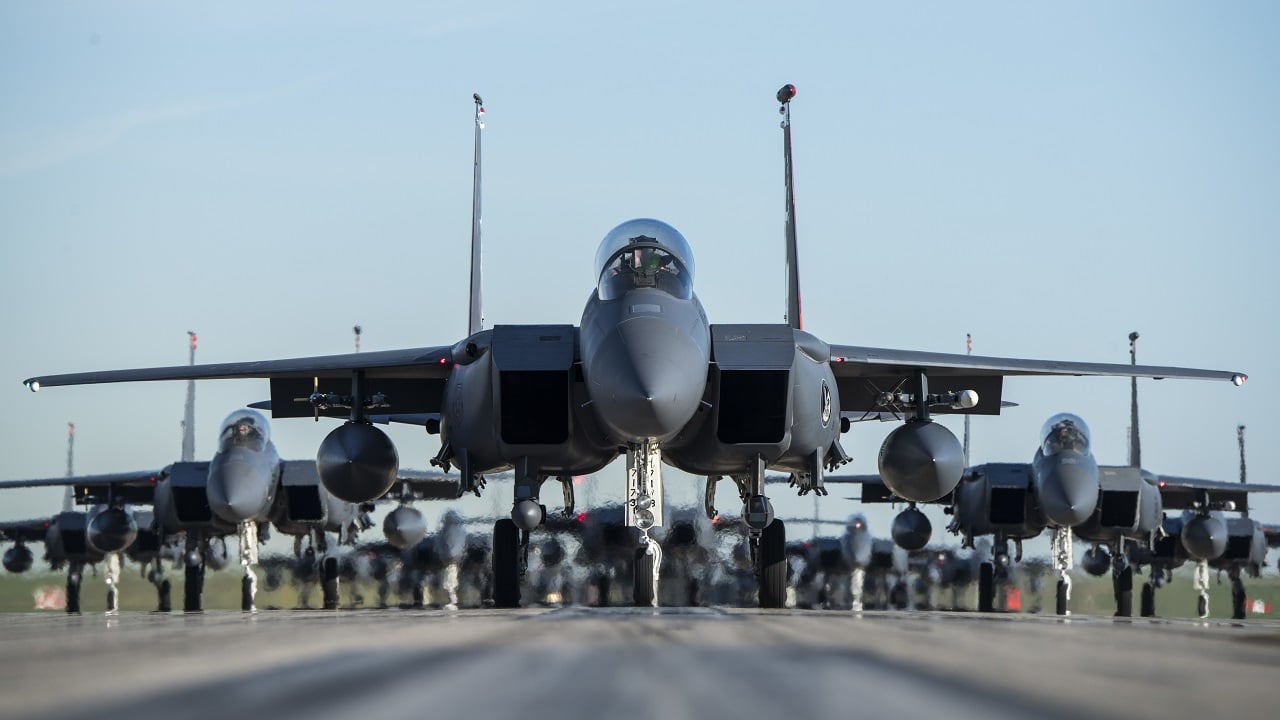
F-15E Strike Eagles taxi into formation June 12, 2019, at Mountain Home Air Force Base, Idaho. This was a rare opportunity to capture the Gunfighter family, including the 391st, 389th and 428th Fighter Squadrons, before a morning flight. (U.S. Air Force photo by Staff Sergeant Jeremy L. Mosier)
As an aside, though, we must acknowledge the raging crowds that assembled around some of the pilots who had ejected from their terminally wounded birds. These were not the images of locals who were compassionate toward the plight of America’s airmen. These were, in some cases, pipe-wielding locals who were enraged that the Americans opted, in their minds, to poke the Iranian tiger needlessly, resulting in the devastation of basically the entire Mideast.
This is the first reported downing of US combat aircraft since the broader US-Israeli strikes on Iran escalated into a regional conflict earlier this week. The incident raises deeper questions about deconfliction procedures for airspace between American and Gulf partner defense systems during intense air combat.
What’s more, it highlights the fact that the administration’s claims about this being an essentially one-sided fight favoring the US and Israeli side are exaggerated claims, at best.
At a time when the United States and Israeli governments are claiming that the Iranians are on their knees, that US and Israeli airstrikes directed against key Iranian targets have successfully degraded the Iranian offensive capability, the Islamic Republic has unleashed such a furious (and continuous) fusillade against the entire region that the US and its regional partners are now accidentally shooting each other in the chaos of the Iranian response to US and Israeli attacks.
The Plane
The US Air Force’s F-15E Strike Eagle is one of America’s most iconic birds. A fourth-generation warplane, the F-15E Strike Eagle is powered by twin Pratt & Whitney F100-PW-220/229 engines (up to 29,000 pounds of thrust each) that enable these dynamic birds to exceed Mach 2.5. They fly at an operational ceiling of 60,000 feet.
Possessing an advanced AN/APG-70 radar for air-to-air and air-to-ground mapping, LANTIRN navigation and targeting pods, and EPAWSS electronic warfare (EW) suites, the F-15E Strike Eagle is a serious player in any American air war. That EPAWSS system is key for self-defense in high-threat environments like in Iran.

The F-15EX isn’t stealth, but it brings speed and massive payload—built for homeland defense, standoff strikes, and teaming with F-35s and drones.
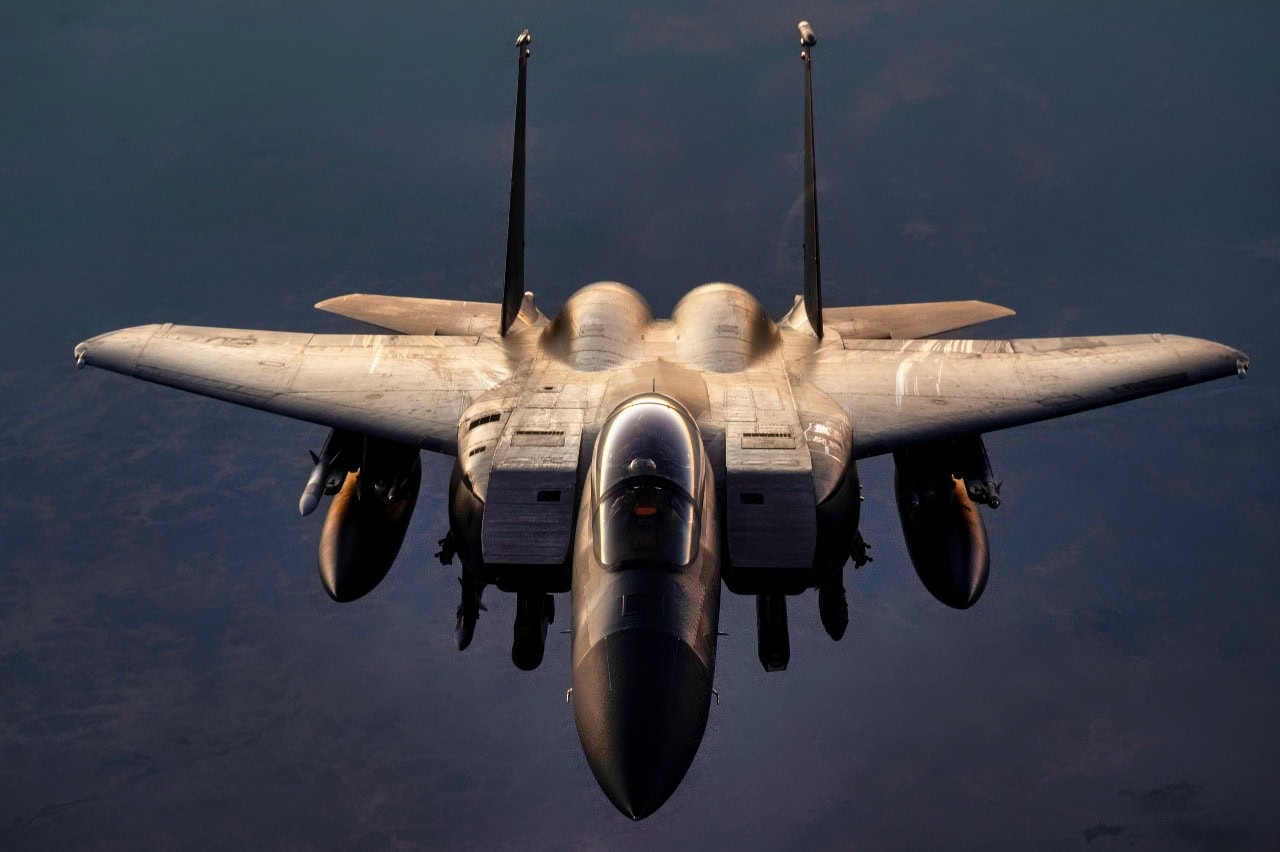
A U.S. Air Force F-15E Strike Eagle flies over the U.S. Central Command area of responsibility, Jan. 7, 2025. The F-15E’s superior maneuverability and acceleration are achieved through its high engine thrust-to-weight ratio and low-wing loading. (U.S. Air Force photo by Staff Sgt. William Rio Rosado)
The Air Force has spent large sums of US tax dollars upgrading the processing power for the plane’s sensors and integrating Infrared Search and Track (IRST) systems, along with a next-generation SATCOM system.
Further, this plane comes in a two-seat configuration with a pilot and a Weapon Systems Officer (WSO) operating the plane for maximum maneuverability and combat effectiveness.
Armaments on this incredible plane include a 20mm M61A1 cannon, AIM-9, AIM-120, AGM-65, AGM-84, and specialized munitions, such as the B61 or B83 nuclear weapon (known as “gravity bombs”).
An Inauspicious End to a Great Plane
Despite its legendary status, the F-15E Strike Eagle is getting old. The Air Force is slowly replacing these birds with the newer, more expensive F-15EX Eagle II. But that process is slow-going, mainly due to bureaucratic hurdles, industrial base delays, and the higher-than-expected cost of the F-15EXs.
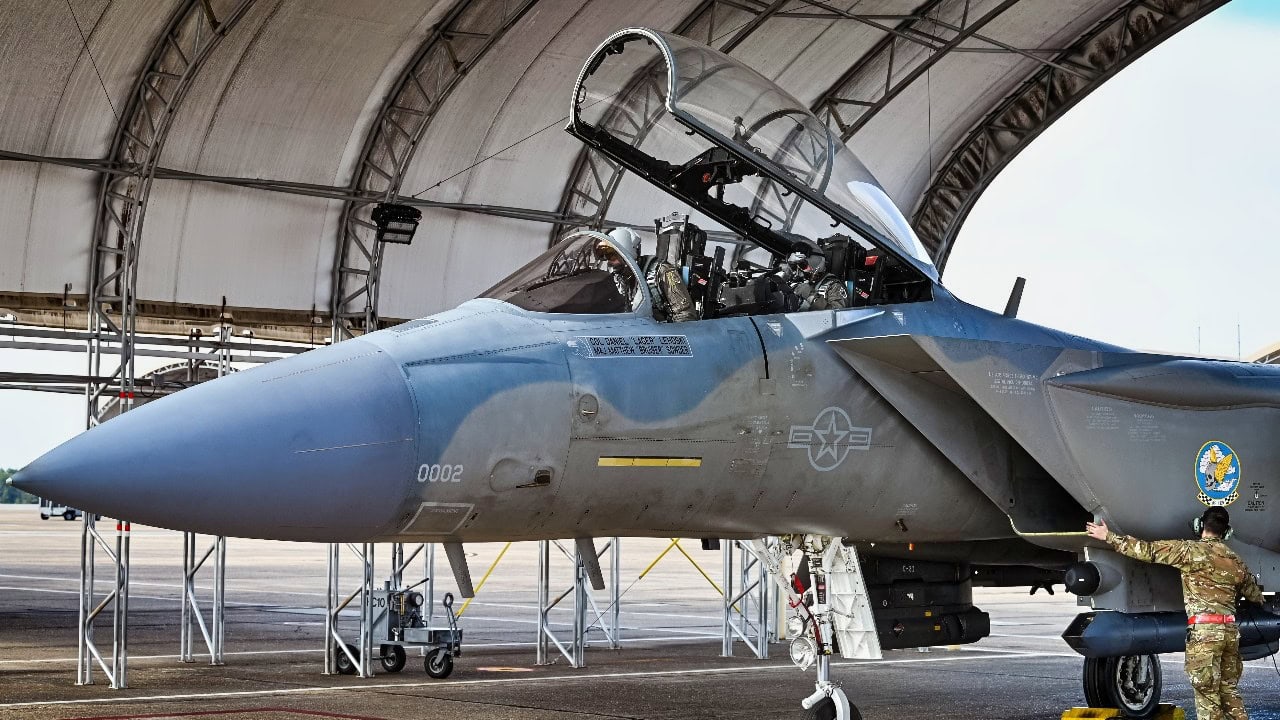
U.S. Air Force Maj. Aaron Eshkenazi, F-15EX Test Director for the 84th Test and Evaluation Squadron, performs preflight procedures for the F-15EX with Lt. Gen. Michael Koscheski, deputy commander of Air Combat Command, at Eglin Air Force Base, Florida, January 29, 2025. During his visit, Koscheski gained valuable insights from the 84th TES and 85th TES to help inform future decisions regarding the platform. The future F-15 fleet will complement 5th generation aircraft, bringing substantial additional capacity for over-sized long-range fires, sensors, and electronic warfare capabilities to defend critical locations in highly contested areas. (U.S. Air Force photo by 1st Lt. Rebecca Abordo)
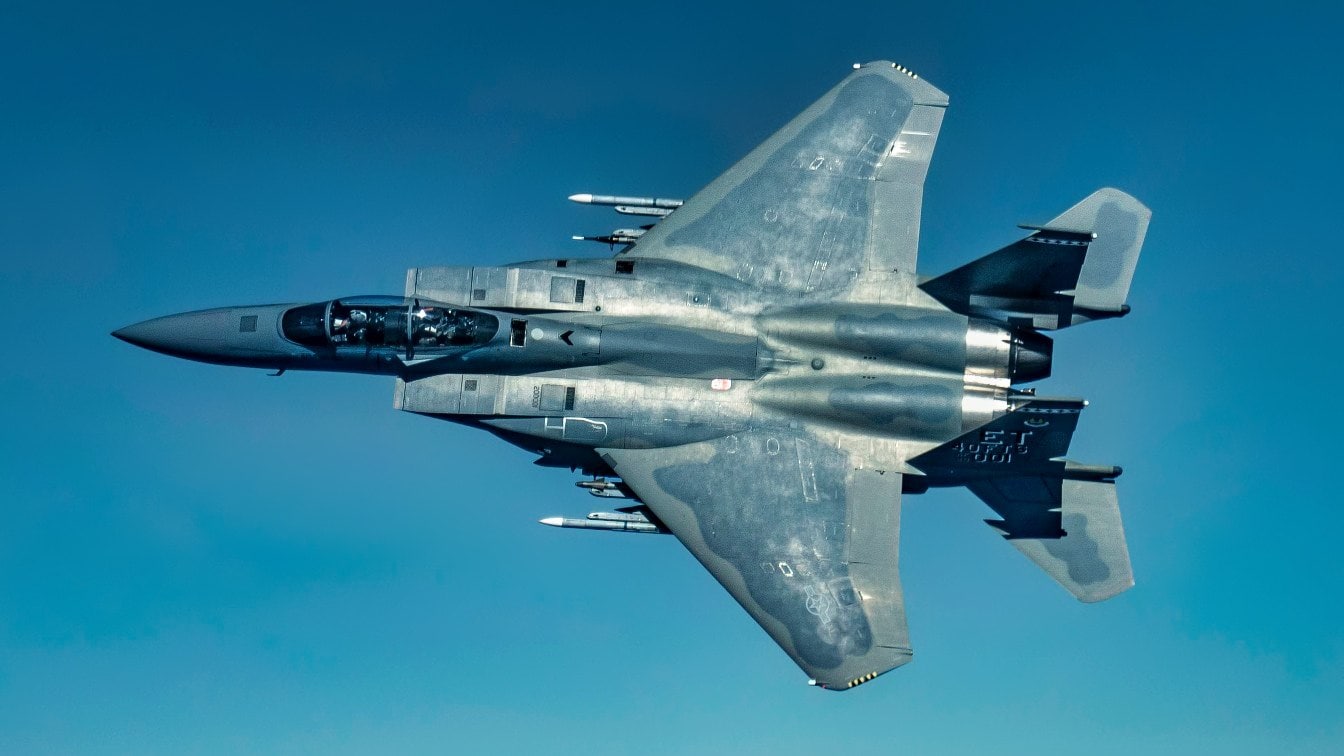
U.S. Air Force Lt. Col. Richard Turner, 40th Flight Test Squadron commander flies 40 FLTS Senior Enlisted Leader, MSgt Tristan McIntire during a test sortie in the F-15EX Eagle II over the Gulf of Mexico on Jun. 14, 2022. Assigned to the 96th Test Wing at Eglin Air Force Base, Fla., the F-15EX Eagle II is the Air Force’s newest 4th generation fighter being tested at the 40 FLTS. (U.S. Air Force photo by Tech. Sgt. John McRell)
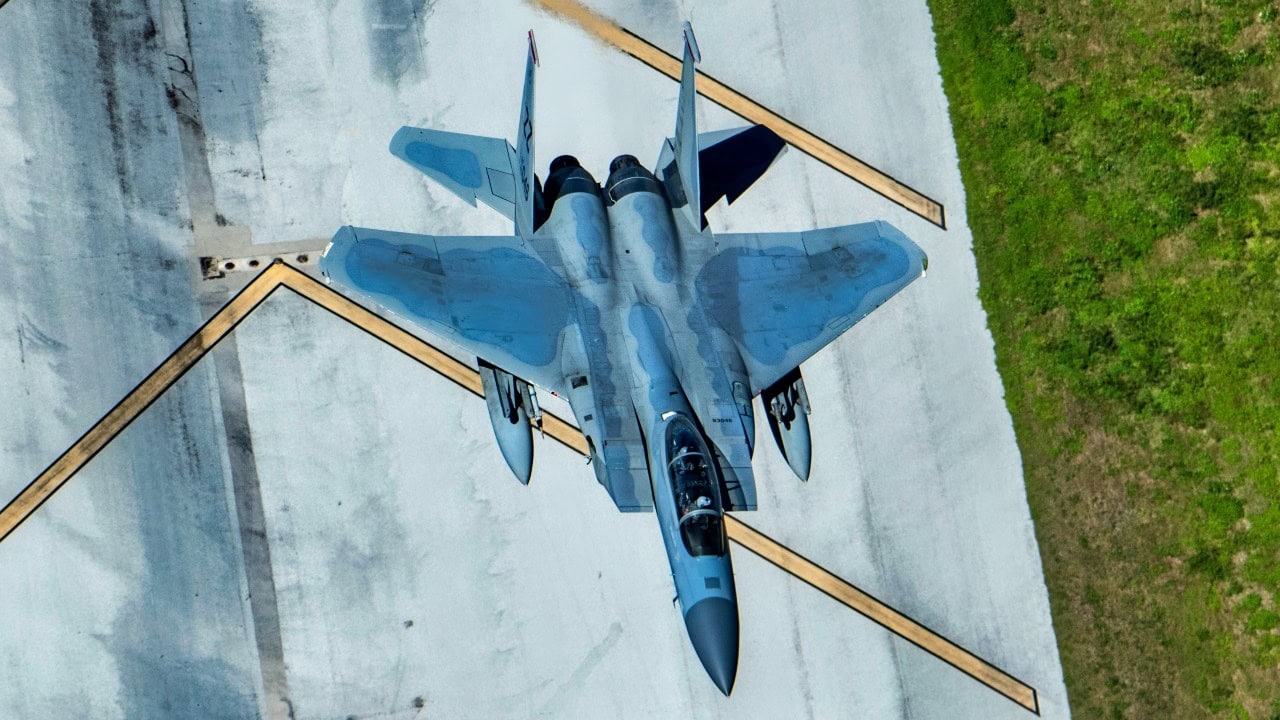
A U.S. Air Force F-15 Eagle II flies during a large show-of-force formation over Andersen Air Force Base, Guam, Mar. 6, 2019. CN19 is a long-standing exercise designed to enhance multilateral air operations amongst partner nations and includes humanitarian assistance and disaster relief airlift operations as well as large-force employment. Approximately 2,000 U.S. Airmen, Marines, and Sailors participated alongside approximately 800 RAAF and JASDF members during the exercise. (U.S. Air Force Photo by Senior Airman Xavier Navarro)
But there’s nothing sadder than seeing such an iconic plane go out in such an embarrassing way, like being shot down by friendly fire in an Iran war that no one wanted, and that the US is clearly experiencing complications.
About the Author: Brandon J. Weichert
Brandon J. Weichert is the Senior National Security Editor at 19FortyFive.com. He was previously the senior national security editor at The National Interest. Weichert is the host of The National Security Hour on iHeartRadio, where he discusses national security policy every Wednesday at 8pm Eastern. He hosts a companion show on Rumble entitled “National Security Talk.” Weichert consults regularly with various government institutions and private organizations on geopolitical issues. His writings have appeared in numerous publications, among them Popular Mechanics, National Review, MSN, and The American Spectator. And his books include Winning Space: How America Remains a Superpower, Biohacked: China’s Race to Control Life, and The Shadow War: Iran’s Quest for Supremacy. Weichert’s newest book, A Disaster of Our Own Making: How the West Lost Ukraine, is available for purchase wherever books are sold. He can be followed via Twitter/X @WeTheBrandon.