

Summary and Key Points: Drawing on his extensive background as an award-winning national security journalist, Stephen Silver examines the U.S. Army’s radical new approach to overcoming its years-long recruiting slump.
-By raising the maximum enlistment age to 42, relaxing restrictive marijuana waivers, and actively recruiting older, tech-savvy professionals straight into the officer ranks, the military is fundamentally transforming its demographic makeup.

Gunnery Sgt. Shawn D. Angell is a drill instructor at the Officer Candidate School aboard Marine Corps Base Quantico, Va., dedicated to training, educating, evaluating and screening the many candidates who go through the course and turning them into Marine leaders.
-As Operation Epic Fury in Iran continues in the Middle East, these sweeping policy changes are designed to ensure an all-volunteer force remains fully capable, actively modernizing the ranks while quietly quelling public fears of a reinstated military draft.
The 42-Year-Old Recruit: Inside the U.S. Army’s Radical Age Limit Increase
The U.S. Army announced this week that it will accept older enlistees than before.
According to Stars and Stripes, the Army has raised its maximum enlistment age to 42, which puts it closer in line with the other branches. The Air Force and Coast Guard have a maximum enlistment age of 42; the Navy uses 41; and the Marine Corps has it lower, at 28.
Stars and Stripes cited newly published Army regulations. The new maximum age applies to the Regular Army, the Army National Guard, and the Army Reserve.
“The Army in recent years had capped the enlistment age at 35, although it did accept some older recruits with waivers, officials said,” according to Stars and Stripes. ”The policy did not change the Army’s minimum ages for enlisting, which remain 17 with parental permission or 18.”
The Army did, however, temporarily raise the age to 42 in 2006, during the Iraq and Afghanistan wars, but it was dropped back to 35 in 2016, per the report.
“The Air Force and Space Force were the most recent services to raise their max enlistment age in 2023 when they moved it from 39 to 42 amid a yearslong recruiting slump that saw Air Force recruiters fall short of their enlistment goals for multiple years,” Stars and Stripes reported.
The change is “meant to better align the service with Defense Department standards,” according to the outlet, which characterized comments by an Army spokesperson.
“Army recruiting officials have noted in recent years that the average age of recruits is increasing, with officials telling reporters in 2024 that the average recruit was 22 years, 4 months, and that it was still ‘going up,’” Task & Purpose reported.
Stars and Stripes also quoted a 2022 RAND study that suggested older recruits might perform better. Older recruits, RAND said in that report, are seen by recruiters as “of higher quality, more focused, and more motivated, as well as being ready to ship to basic training more quickly.”

the Army’s goals are to train incoming civilians to become more than they once were — warfighters capable of managing the stresses of their role within the defense apparatus.
Weed Restriction Relaxed
There was one other change announced: The new regulation “allows recruits who have a single marijuana possession or drug paraphernalia possession conviction to enlist without a waiver. Such convictions previously would have technically barred potential recruits from enlisting, but those with such convictions were often granted waivers to join the service.”
“Under the previous regulation, a recruit with one conviction for possession of marijuana or drug paraphernalia required a waiver from officials in the Pentagon,” T&P reported. “Recruits also previously had to wait 24 months to enlist, and would have to pass a drug test at a Military Entrance Processing Station’s facility before their waiver could be approved.”
“The updated regulation allows for one mistake, which likely represents the bulk of potential recruits who previously needed a waiver for marijuana use considering use in the Army,” Kate Kuzminski, who studies recruitment for the Center for a New American Security, told T&P. “Reducing the number of characteristics that need to be reviewed for waivers frees up capacity for other candidates who need waivers, thus speeding up the process across the board and helping to ensure that the Army does not lose interested candidates.”
A Revolution in Recruiting
According to Task & Purpose, the raising of the age limit represents the latest stage in the military’s major overhaul in recruiting.
“The Army, the largest branch in the military, failed to meet annual recruiting goals in 2022 and 2023,” Task & Purpose reported. “Changes in recent years to the Army’s recruiting enterprise include installing a pre-boot camp prep course for recruits who do not initially meet fitness and academic standards and creating marketing schemes to move the Army’s messaging past the post-9/11 wars and appeal to Gen Z.”
The goal has also been established for more of the service to hold college degrees. And earlier this month, the Army announced that it would grant commissions to some civilian tech workers, with some even joining as captains.
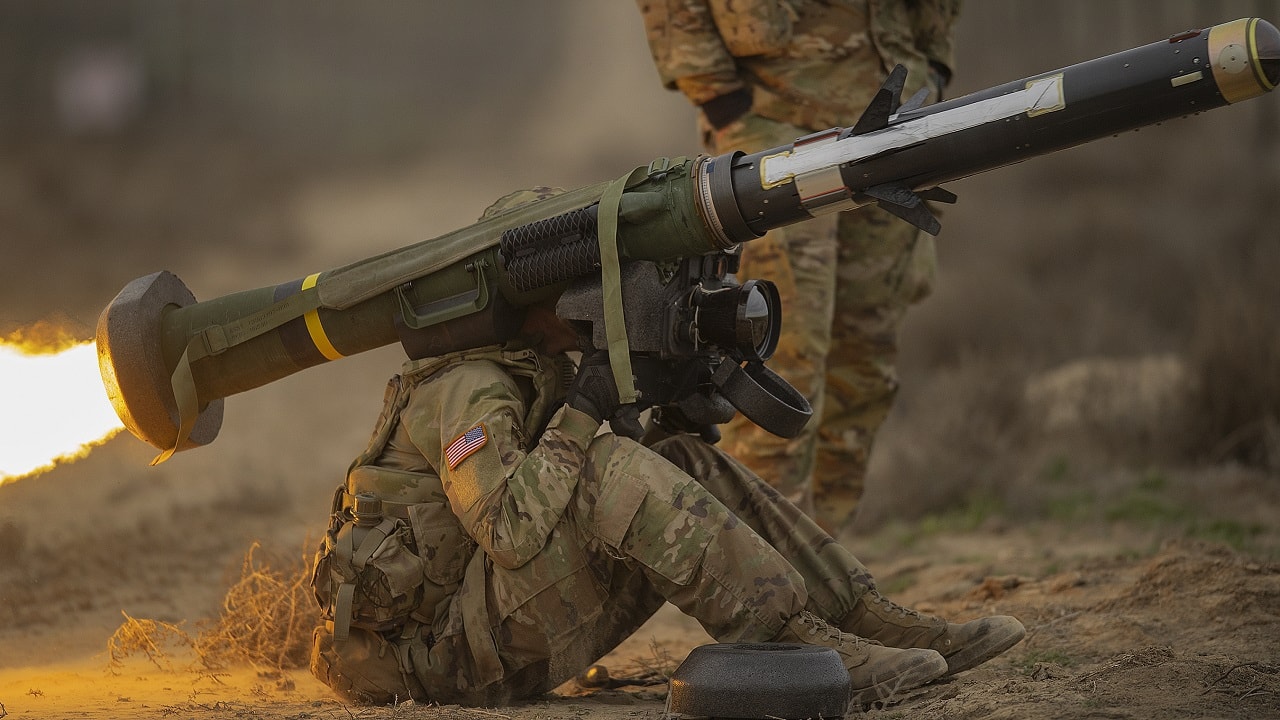
A soldier from the Idaho Army National Guard, Charlie Company, 2-116th Combined Arms Battalion, 116th Cavalry Brigade Combat Team makes Idaho National Guard history with the first firing of a Javelin anti-tank missile.
In a historic moment of training for the Idaho Army National Guard, soldiers from Charlie Company, 2-116th Combined Arms Battalion, 116th Cavalry Brigade Combat Team, fired the FGM – Javelin portable anti-tank missile on Sunday while conducting a series of field training exercises scheduled for the week on the Orchard Combat Training Center ranges.
“The [Detachment 201] folks are tech CEOs. They’re high-level individuals with a lot of experience,” Brig. Gen. Gregory Johnson, director of military personnel management, told Task & Purpose of the tech workers joining up as part of that program. “In this case, the direct commissioning program, we’re really focused on folks coming in at the lieutenant and the captain level to help us in the technical areas in our operational units.”
“If someone has been working in the tech space for three to five years, has a great degree from a great university, has technical skills, certifications, practical experience, we want to utilize that in the Army,” Johnson told reporters.
No Draft Required
With the U.S. engaged in an open-ended military campaign in Iran, there are once again worries bubbling up in some quarters that a military draft could be reinstituted.
White House Press Secretary Karoline Leavitt was asked about this in an early March Fox News appearance.
“Mothers out there are worried that we’re going to have a draft, that they’re going to see their sons and daughters get involved in this,” Fox host Bartiromo asked Leavitt. “What do you want to say about the president’s plans for troops on the ground? As we know, it’s been largely an air campaign up until now.”
“It has been, and it will continue to be,” the press secretary answered. “President Trump wisely does not remove options off of the table. I know a lot of politicians like to do that quickly, but the president as commander in chief wants to continue to assess the success of this military operation.”
military.com examined whether a draft could actually return.
“For now, the United States continues to rely on an all-volunteer military, a system that has been in place since 1973. But the machinery for conscription has never disappeared. In fact, recent policy discussions in Washington are quietly modernizing how the system would work if a draft were ever required,” the report said.
All that said, the U.S. was at war for a long time in Iraq and Afghanistan, with ground troops utilized, and the draft was never reinstituted or anything close to it in those years.
About the Author: Stephen Silver
Stephen Silver is an award-winning journalist, essayist, and film critic, and contributor to the Philadelphia Inquirer, the Jewish Telegraphic Agency, Broad Street Review, and Splice Today. The co-founder of the Philadelphia Film Critics Circle, Stephen lives in suburban Philadelphia with his wife and two sons. For over a decade, Stephen has authored thousands of articles that focus on politics, national security, technology, and the economy. Follow him on X (formerly Twitter) at @StephenSilver, and subscribe to his Substack newsletter.