
Key Points and Summary – A Pentagon Inspector General review found the Army and Navy miscalculated Category IV enlistments—AFQT scores in the 10th–30th percentile—by using improved prep-course scores instead of initial results.
-That approach let both services exceed the 4% statutory cap without required Secretary approval and congressional notification.
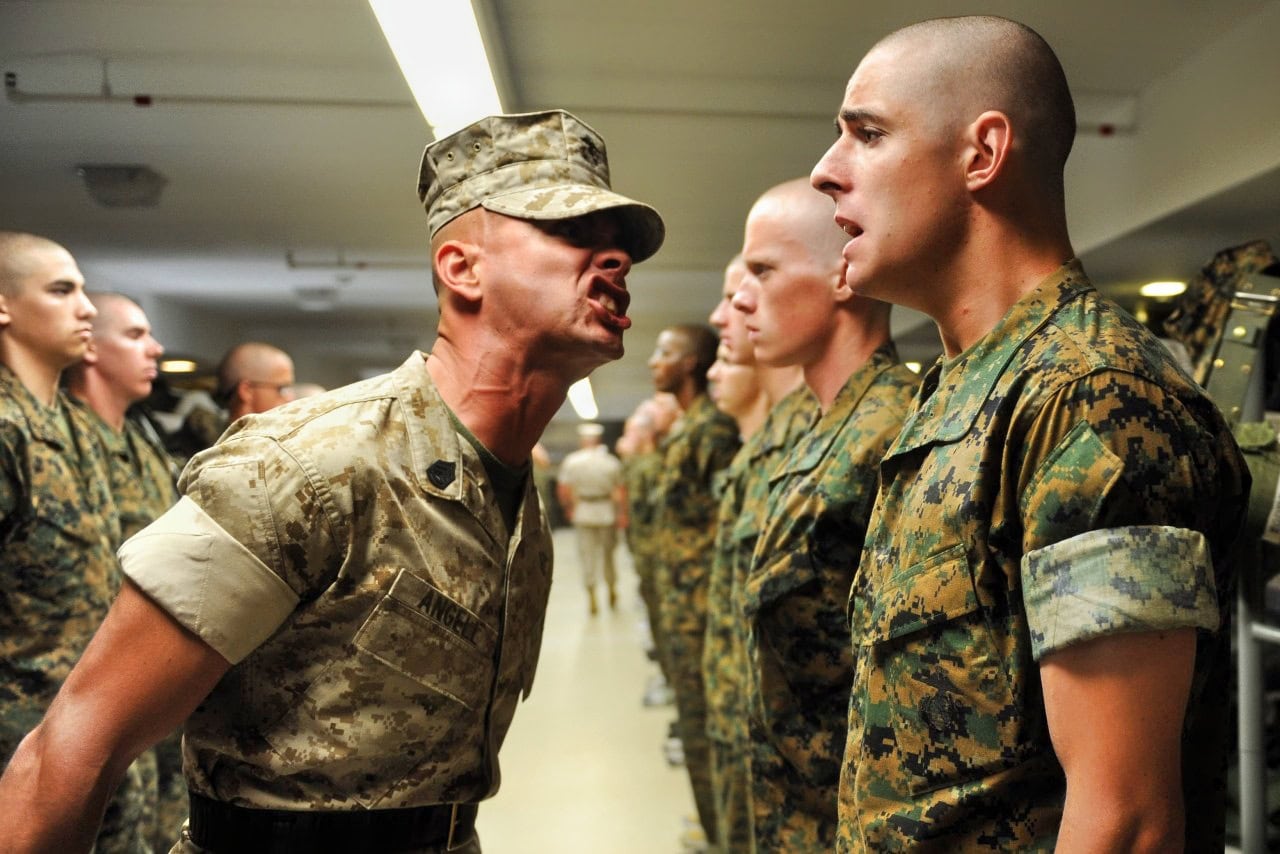
Gunnery Sgt. Shawn D. Angell is a drill instructor at the Officer Candidate School aboard Marine Corps Base Quantico, Va., dedicated to training, educating, evaluating and screening the many candidates who go through the course and turning them into Marine leaders.
-The Navy also ran a pilot to accept more Category IV recruits to meet goals, but internal data showed higher basic-training attrition among the lowest scorers.
-Critics warn that quantity-first recruiting can strain readiness and unit leadership time. The report argues for tighter tracking, reporting, and a renewed focus on standards across recruiting, training, and retention.
Army And Navy Allowing Too Many CAT IV Candidates Into Service
A recent report by the Pentagon Inspector General found that the Army and Navy exceeded the legal limits of the number of Category IV candidates allowed into service.
Category IV refers to recruits who score in the 10th to 30th percentile on the Armed Forces Qualification Test (AFQT), indicating below-average cognitive ability or “trainability.” Those scoring in Category V (below the 10th percentile) are ineligible to serve.
In the report, the Pentagon’s Office of the Inspector Generals (OIG) found:
“During these oversight projects, the DoD OIG identified that the Army and the Navy were not properly calculating the number of recruits enlisted with an Armed Forces Qualification Test (AFQT) score between the 10th and 30th percentile, also known as Category IV enlistments.
“Specifically, the Army and the Navy improperly used AFQT scores obtained during the preparatory courses, to calculate the number of Category IV enlistments. By incorrectly calculating the number of Category IV enlistments, the Army and the Navy circumvented the section 520, title 10, United States Code (10 U.S.C. § 520) requirement to obtain Secretary of Defense (War) approval to exceed the statutory limit of Category IV enlistments.
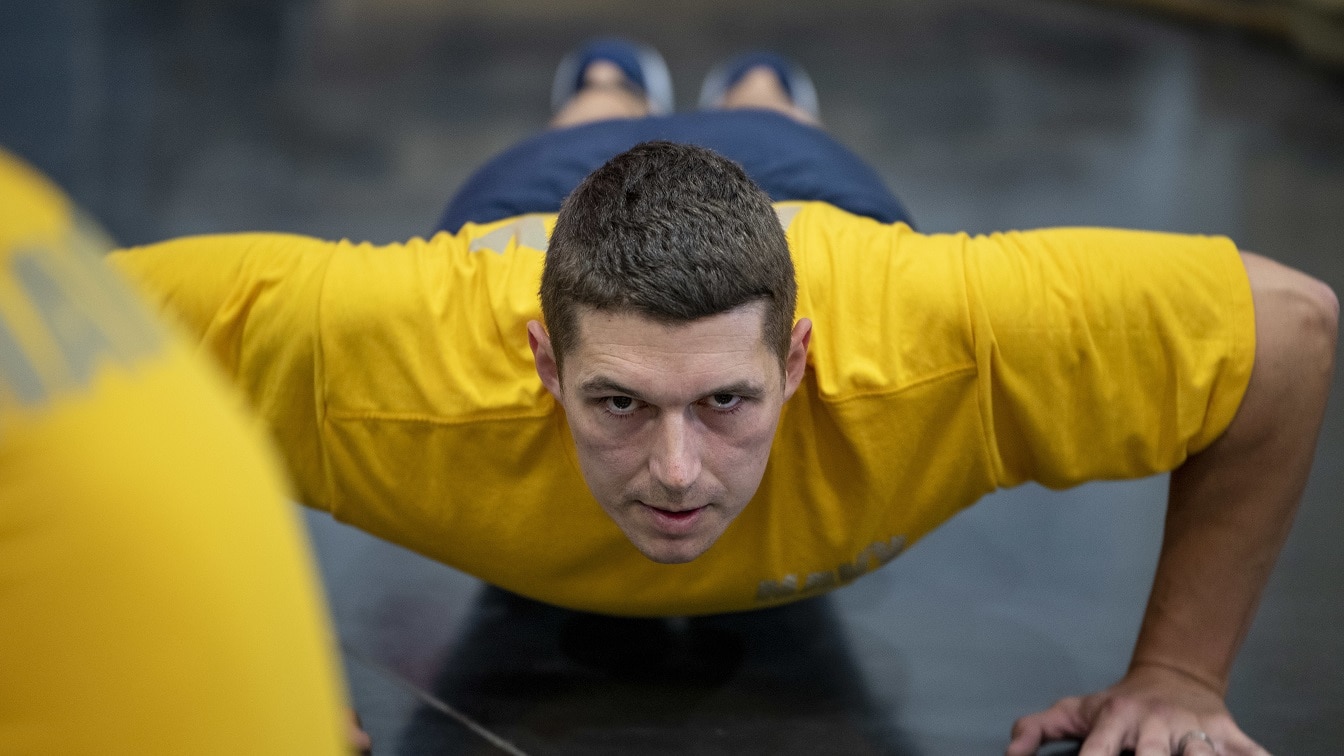
191009-N-WB795-1126 GREAT LAKES, Ill. (Oct. 9, 2019) Electronics Technician 1st Class Troy Kruyer performs the push-ups portion of the physical readiness test inside Pacific Fleet Drill Hall at Recruit Training Command. More than 35,000 recruits train annually at the Navy’s only boot camp. (U.S. Navy photo by Chief Mass Communication Specialist Brandie Nix/Released)
“Additionally, the Army and the Navy did not notify the Committees on Armed Services of the Senate and the House of Representatives, as required by 10 U.S.C. § 520, for exceeding the statutory limit of Category IV enlistments.”
The Armed Services Vocational Aptitude Battery Tests
According to CNA, prospects who want to join the military and meet initial qualifications first take the ASVAB—a battery of tests used by the Department of Defense to determine enlistment eligibility and qualifications for military occupations.
It consists of 10 tests, four of which comprise the AFQT: arithmetic reasoning, mathematics knowledge, word knowledge, and paragraph comprehension. The AFQT is a predictor of on-the-job performance and the primary index of recruit aptitude. AFQT scores, expressed on a percentile scale, reflect an applicant’s standing relative to the national population of men and women aged 18 to 23.
The scores are grouped into five categories based on percentile ranges. Persons who score in Categories I and II tend to be above average in trainability; those in Category III, average; those in Category IV, below average; and those in Category V, markedly below average.
By law, Category V applicants and those in Category IV who have not graduated from high school are not eligible for enlistment. In addition to these legal restrictions, each service prescribes its own eligibility criteria for aptitude and education. Each service uses combinations of ASVAB test scores to determine an applicant’s aptitude and eligibility for different military occupations.
|
Table 2.1. Armed Forces Qualification Test (AFQT) Categories and |
|
|
AFQT Category |
Percentile Score Range |
|
I |
93 -99 |
|
II |
65-92 |
|
IIIA |
50-64 |
|
IIIB |
31-49 |
|
IV |
10-30 |
|
V |
1-9 |
Legal Limits Are Quite Clear
By law, no more than 4 percent of an annual enlistment cohort may come from Category IV without specific notification to and approval from the Secretary of Defense and Congress.
The Inspector General determined that the services were improperly using the improved test scores from preparatory courses—which are designed to help recruits meet academic and physical standards—rather than their initial scores when they first enlisted.
Using the correct initial scores, the report found that both the Army and Navy had exceeded the 4 percent limit, with Category IV enlistments accounting for more than 10 percent of their accessions for the fiscal year.
Navy Policy Began in 2022
Separately, the Navy adopted a pilot program in December 2022 to accept a higher percentage of Category IV recruits—up to 20 percent—to help meet recruiting goals amid a challenging environment. The Navy announced this publicly, and it was done under a provision allowing a limit increase with congressional notification.
Consequences Of The Service’s Actions:
Category IV recruits who enter into service often have required more extensive academic and physical preparatory training to meet baseline standards for their specific roles.
Data from the Navy showed that while most recruits succeeded, the low-scoring group had a higher rate of enlistees who did not complete boot camp (11.4 percent) than high-scoring sailors (less than 6.5 percent).
Some internal critics and commanders raised concerns that focusing on quantity over quality could negatively impact unit readiness and force commanders to spend more time addressing issues related to underprepared service members.
During my time in Special Forces, SOCOM adopted the SOF Truths, and these have served the Special Operations Command well through the years. The first two truths apply here:
Truth I: Humans are more important than hardware.
People—not equipment—make the critical difference. The right people, highly trained and working as a team, will accomplish the mission with the equipment available. On the other hand, the best equipment in the world cannot compensate for a lack of the right people.
Truth II: Quality is better than quantity.
A small number of people, carefully selected, well trained, and well led, are preferable to larger numbers of troops, some of whom may not be up to the task.
Subsequent Actions
Following the review and due to an influx of applicants, the services were forced to adjust their policies.
The Category IV programs were subsequently closed or significantly restricted, with reports from early 2025 indicating they were indefinitely closed.
A renewed focus on merit and standards must be upheld. The War Department leadership under Secretary Pete Hegseth ordered a renewed focus on meritocracy and standards across the military, emphasizing the importance of qualified candidates.
The services were directed to follow proper reporting procedures and calculations to ensure they comply with legal limits on the number of low-aptitude recruits.
About the Author: Steve Balestrieri
Steve Balestrieri is a National Security Columnist. He served as a US Army Special Forces NCO and Warrant Officer. In addition to writing on defense, he covers the NFL for PatsFans.com and is a member of the Pro Football Writers of America (PFWA). His work was regularly featured in many military publications.