

Russia and China are Competiting with the U.S. Military To Build the Most Advanced Hypersonic Weapons
You may be surprised to learn that the U.S. military has been developing hypersonic weapons for nearly 25 years.
The plus-MACH 5 projectiles are a key part of next-generation warfare and are super-evasive and difficult to intercept.
Several modes of propulsion, such as air-breathing and scram jets, are present across the various types of hypersonics.
The United States has deemed its overall effort the Conventional Prompt Global Strike Program.
However, it seems America might not be the hypersonic missile leader after all of that effort.
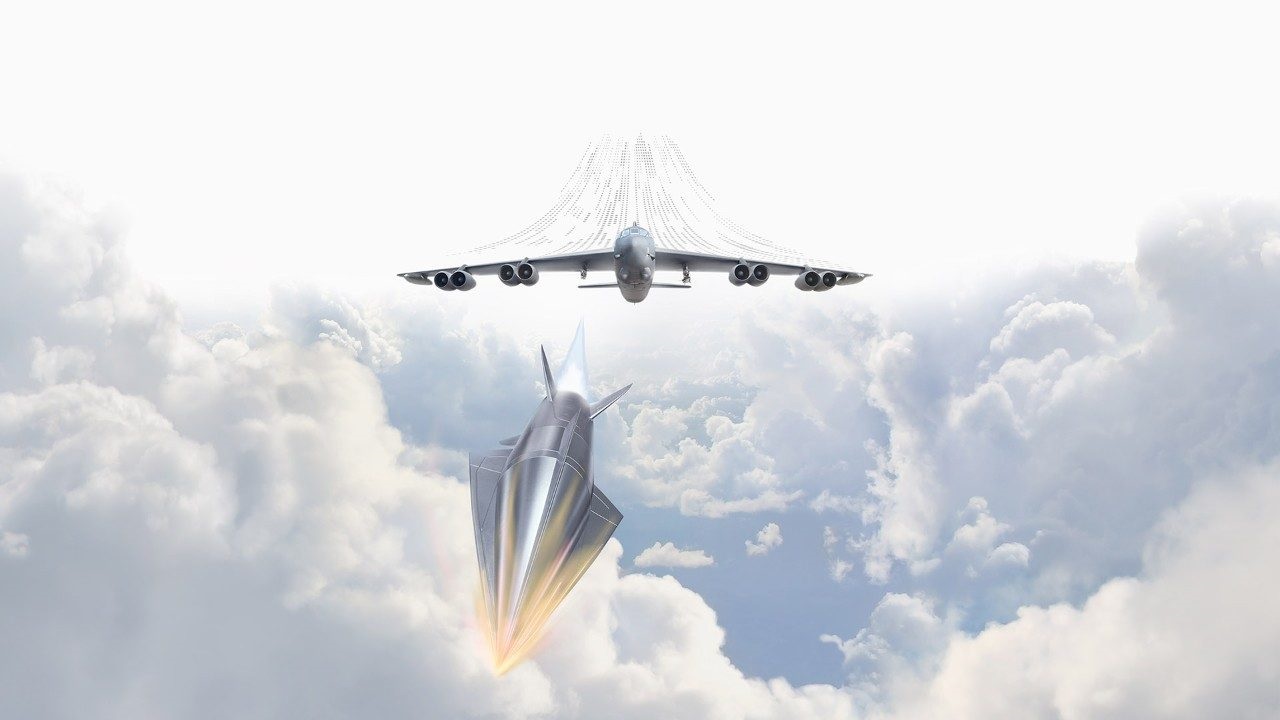
Hypersonic Missile VIA artist rendering. Image Credit: Lockheed Martin.
Tactical Use Case
To give you a better sense of a hypersonic use case, take a target like a road-mobile missile launcher that can “shoot and scoot.”
These can sometimes be difficult for a standard airplane strike mission to destroy.
But a hypersonic weapon can be quickly deployed, with long-range and reduced time-to-target.
Eliminating these types of missile launchers is a high tactical priority for the U.S. war against Iran.
Having hypersonics during Operation Epic Fury would be, well, “epic.”
China and Russia’s Hypersonics Are Nuclear-equipped
However, various U.S. hypersonic weapons programs are in different stages of development and are still being tested and evaluated.
Congress and the Department of Defense have made hypersonic development a high priority to keep up with Russia and China.
Many military analysts have claimed that these two countries have forged ahead of the United States.
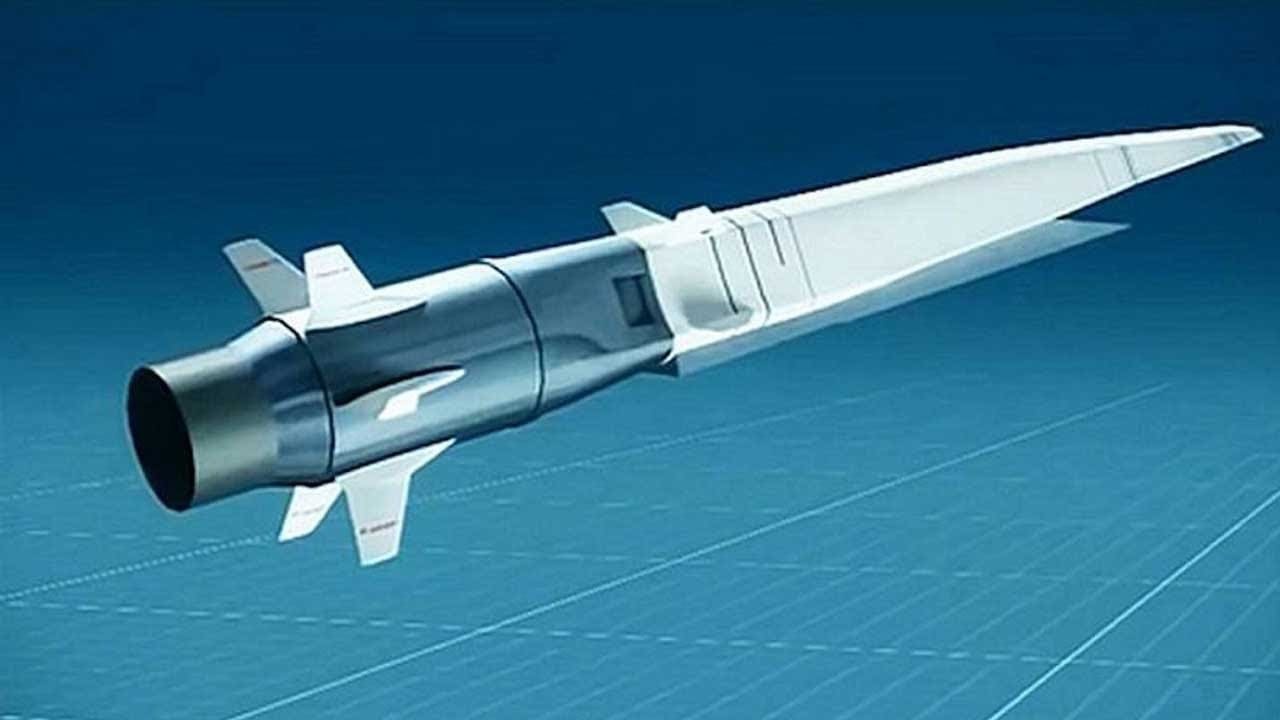
Tsirkon Hypersonic Missile. Image Credit: Creative Commons.
Russia and China already have operational hypersonic glide vehicles that could be outfitted with nuclear warheads.
U.S. Funding Has Been Cut for R&D
Last summer, the Department of Defense made its FY 2026 funding request for hypersonics.
Coming in at $3.9 billion for research and development, the figure was down $3 billion from the prior year.
Competing Prototypes In a Funding Quest
The United States has decided to pursue prototype programs that are competing for resources.
The DOD must then decide how it wants to use hypersonics and devise the correct mission sets. Will these be for strategic purposes with nuclear devices mated onboard? Are hypersonics technologically feasible?
There needs to be an evaluation of the correct quantity and means of production. The United States must also determine how these projectiles will be used tactically beyond simply taking out enemy missile launchers.
So far, U.S. hypersonic weapons are conventionally-armed. Since the warheads are non-nuclear, they must be exceptionally accurate to take out point targets. This is difficult for both hypersonic glide vehicles and hypersonic cruise missiles.
Four Leading American Hypersonic Programs
Here are the main U.S. programs, according to the Congressional Research Service (CRS):
- U.S. Navy—Conventional Prompt Strike (CPS);
- U.S. Army—Long-Range Hypersonic Weapon (LRHW) or Dark Eagle;
- U.S. Air Force—Air-Launched Rapid Response Weapons (ARRW); and
- U.S. Air Force—Hypersonic Attack Cruise Missile (HACM).
The Navy’s CPS can take off from the Zumwalt-class destroyers and Virginia-class submarines. The Army’s Dark Eagle has a range of more than 1,700 miles. The Air Force’s ARRW has a velocity between Mach 6.5 and Mach 8, with a range of about 1,000 miles. The HACM may have air-launch capabilities from bombers and fighter jets.
Russia’s Entries Into the Hypersonic Sweepstakes
Russia has the “Avangard and the 3M22 Tsirkon (or Zircon)—and has reportedly fielded the Kinzhal [Dagger], a maneuvering air-launched ballistic missile,” CRS wrote. Avangard is a hypersonic glide vehicle deployed by an ICBM.
The Tsirkon is launched from ships and can hit speeds of MACH 6 to MACH 8. Kinzhal is a modified from an Iskander missile that can be air-launched from fighter jets. It has a top speed of MACH 10. The Oreshnik has been used against Ukraine at least twice and is a hypersonic ballistic missile. This is likely Russia’s most advanced hypersonic weapon.
China Is Locked and Loaded
China has the DF-17, a medium-range ballistic missile that can carry a hypersonic glide vehicle. The DF-27 has a hypersonic glide vehicle payload, as does the DF-41 ICBM.
“China has tested the DF-ZF hypersonic glide vehicle [previously referred to as the WU-14] at least nine times since 2014. U.S. defense officials have reportedly identified the range of the DF-ZF as approximately 1,200 miles and have stated that the vehicle may be capable of performing ‘extreme maneuvers’ during flight. China reportedly fielded the DF-ZF in 2020,” according to the Economist.
Starry Sky-2 (or Xing Kong-2), a nuclear-capable hypersonic vehicle, has also been tested, CRS reported. China also has the new “YJ” family of hypersonic anti-ship ballistic missiles and cruise missiles.
What Is the Status of the Race? Russia Might Be Ahead
Russia could be seen as having a slight edge over China and the United States because it used a hypersonic weapon in combat, but China and the United States are also not equal in hypersonic development.
This depends on the source, as some outlets report that China is ahead of Russia and the United States due to the depth and breadth of the People’s Liberation Army Rocket Force’s supply of hypersonics.
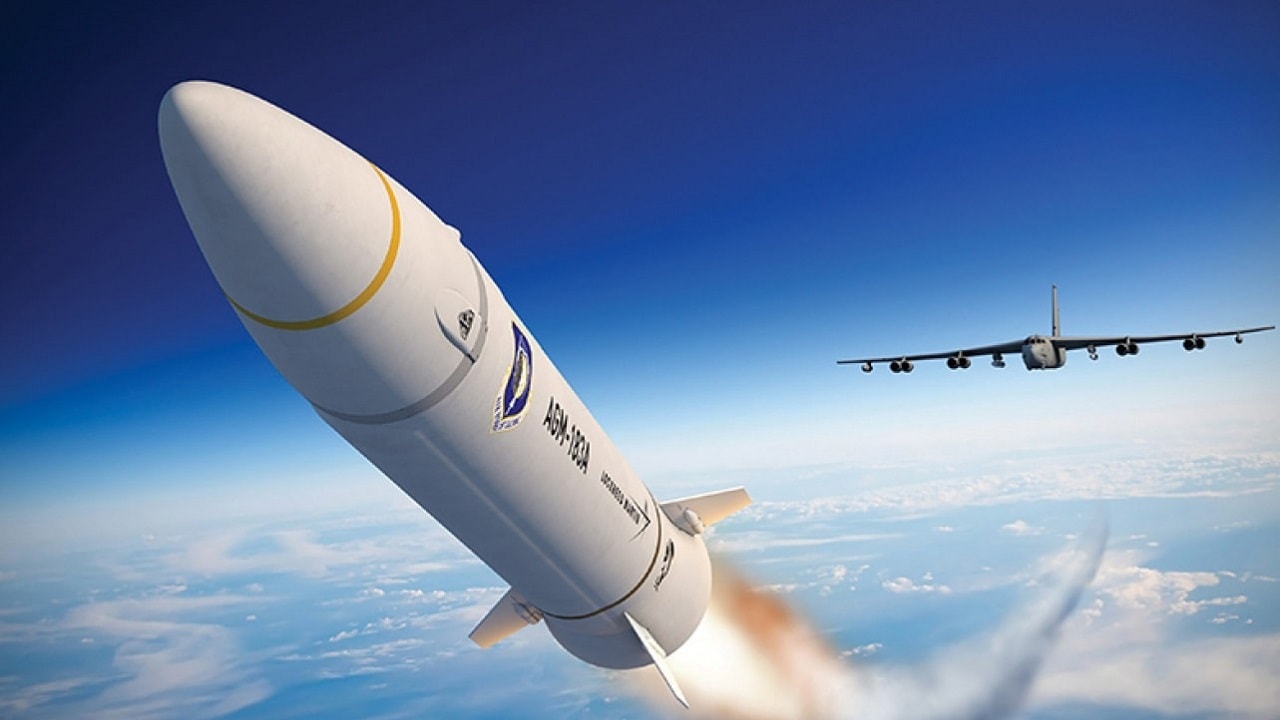
Hypersonic missile artist rendering. Image Credit: Creative Commons.
The United States has mostly been a laggard. “While [American] hypersonic weapons bring new technology to defense, the U.S. has faced challenges in this area of missile development. Questions remain about reliability, accuracy, and cost-effectiveness, particularly given the complexity introduced by maneuverability and the limited impact range of conventional warheads compared to nuclear alternatives,” according to Defense and Security Monitor.
High Level of Buy-In
However, the Americans know they need to catch up, and most military, Congressional, Pentagon, and White House leadership entities are interested in hypersonic weapons development.
The pace has been slow because of conflicting priorities with other military hardware and budget constraints with the current war in Iran, which has placed an emphasis on the dwindling number of Tomahawk cruise missiles.
U.S. hypersonic missiles are still being tested and evaluated, and the programs have a long way to go before full operational efficacy.
Give the United States time, though. Political leadership is aware of the progress that China and Russia have made.
The Americans will catch up over the next few years and could even eclipse their adversaries in range and maneuverability.
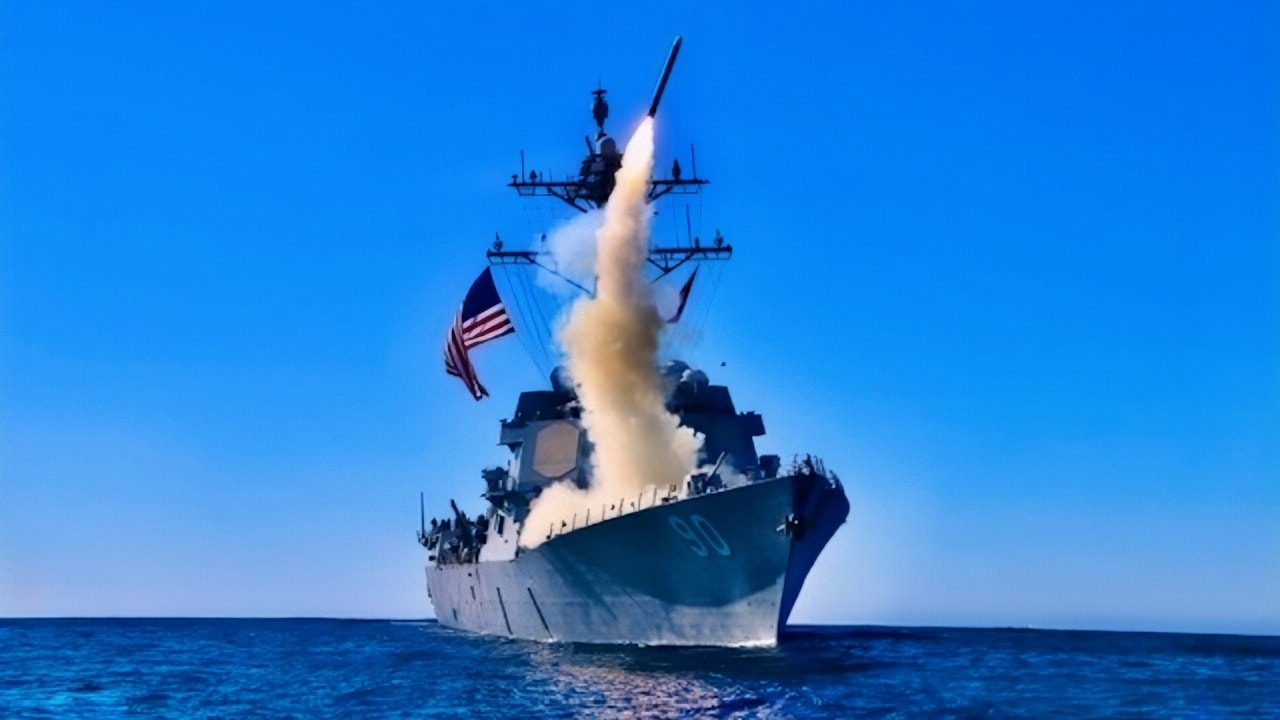
(Dec. 01, 2020) – The guided-missile destroyer USS Chafee (DDG 90) launches a Block V Tomahawk, the weapon’s newest variant, during a missile exercise. This event marked the first time a Block V Tomahawk missile was operationally tested, marking the Navy’s transition to a more advanced capability for the fleet. Block V includes an upgrade that will enhance navigation performance and provide robust and reliable communications. Chafee is currently assigned to Carrier Strike Group ONE and is homeported in Pearl Harbor. (U.S. Navy photo by Ens. Sean Ianno/Released)
I am concerned that each service branch has different models. This inter-service rivalry could hinder the development of hypersonics.
Plus, the war in Iran is beginning to cost even more, and that could force defense contractors to focus on existing missiles such as the Tomahawk that would outweigh efforts to pursue newfangled hypersonics.
About the Author: Brent M. Eastwood
Author of now over 3,000 articles on defense issues, Brent M. Eastwood, PhD, is the author of Don’t Turn Your Back On the World: A Conservative Foreign Policy and Humans, Machines, and Data: Future Trends in Warfare, plus two other books. Brent was the founder and CEO of a tech firm that predicted world events using artificial intelligence. He served as a legislative fellow for US Senator Tim Scott and advised the senator on defense and foreign policy issues. He has taught at American University, George Washington University, and George Mason University. Brent is a former US Army Infantry officer. He can be followed on X @BMEastwood.