
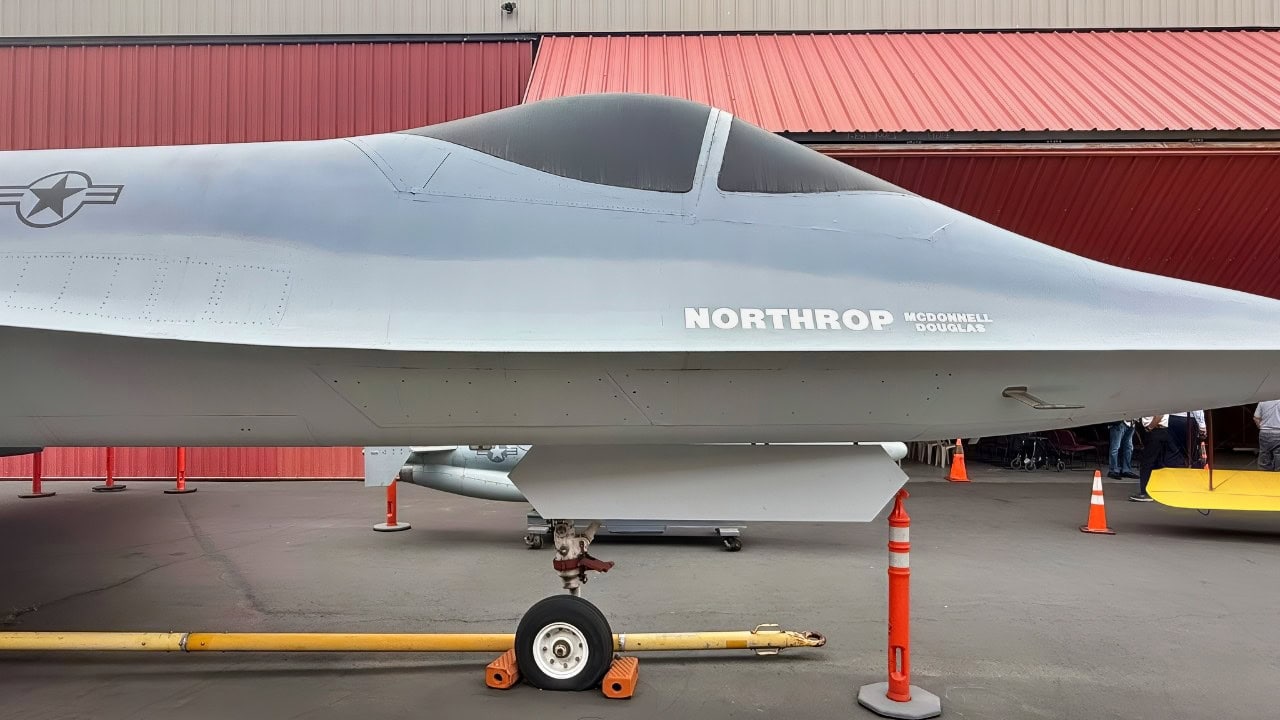
Summary and Key Points: Dr. Brent M. Eastwood, PhD, a former U.S. Army Infantry officer and expert tech CEO, evaluates the historical “what-if” of the YF-23 vs. F-22 Raptor competition as the latter flies strike missions over Iran in 2026.
-While the YF-22 won on maneuverability and showmanship, the Northrop YF-23 offered superior Mach 1.6 supercruise speeds and advanced diamond-shaped stealth architecture.

YF-23. Image Credit: 19FortyFive.com
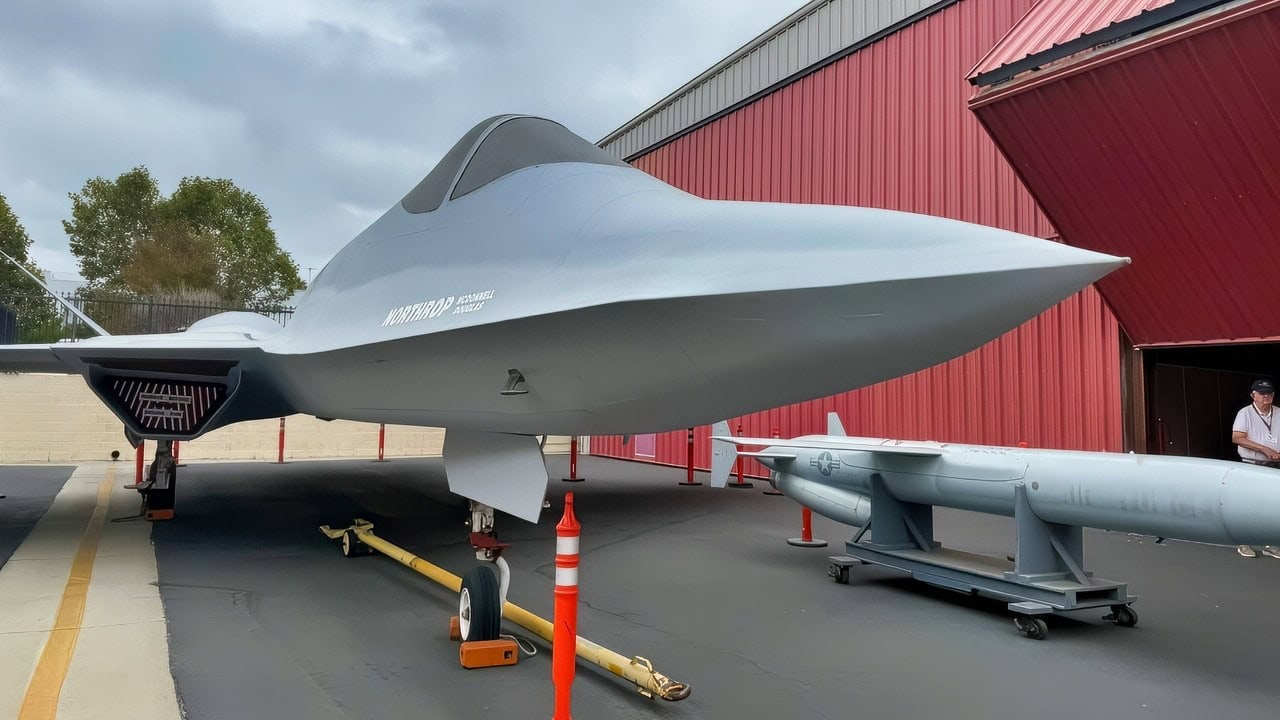
YF-23. Image Credit: 19FortyFive.com
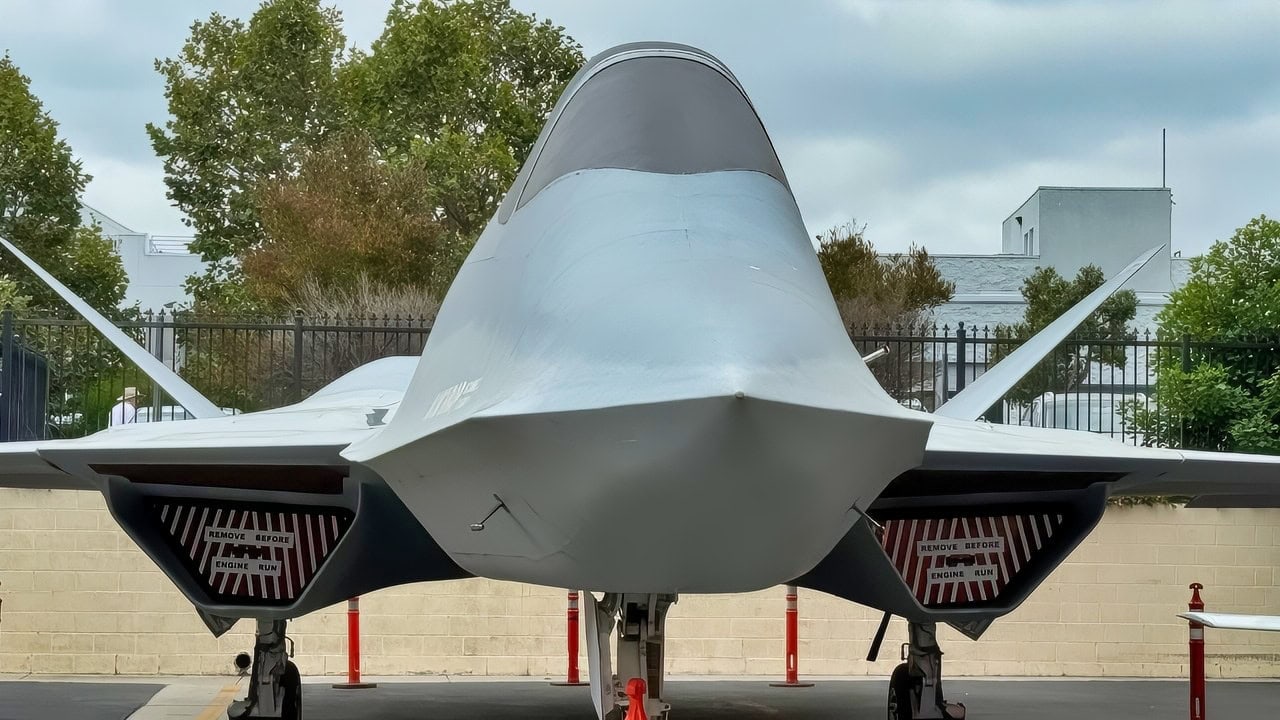
YF-23 at Western Museum of Flight. Image: 19FortyFive.com
-His analysis explores the Black Widow II and Grey Ghost prototypes, which featured significantly better radar-evasive coatings than the early Raptor.
-He concludes that the YF-23’s unmatched range, stealth, and speed could have redefined global air dominance had it reached serial production.
The Mach 1.6 Ghost: Why the YF-23 Was Faster and Stealthier Than the F-22 Raptor
We take the F-22 Raptor for granted these days. It has been in service for more than 20 years and is currently flying strike missions over Iran from Israel. The stealthy fifth-generation fighter has seen many software and hardware updates over the last two decades.
There is even a “Super 2.0” F-22 planned for keeping it relevant into the 2030s.
We love the F-22’s stealthiness. It is so radar-evasive that the U.S. government does not allow it to be exported to foreign air forces. The F-22 matches up well against enemy fifth-generation fighters like the Russian Su-57 Felon and the Chinese J-20 Mighty Dragon.
The radar cross-section of an F-22 is likely better than both of those stealth fighters.
Let’s Take a Closer Look at the YF-23
So, the F-22 has a considerable head start on other fifth-generation warplanes and could still dominate the fight despite its considerable age. But there was once a competition that yielded another airplane that might have been even better than the Raptor.
Known as the YF-23, Northrop Grumman originally thought it had a hit on its hands, and this warbird was supposed to eclipse the YF-22 in several areas.
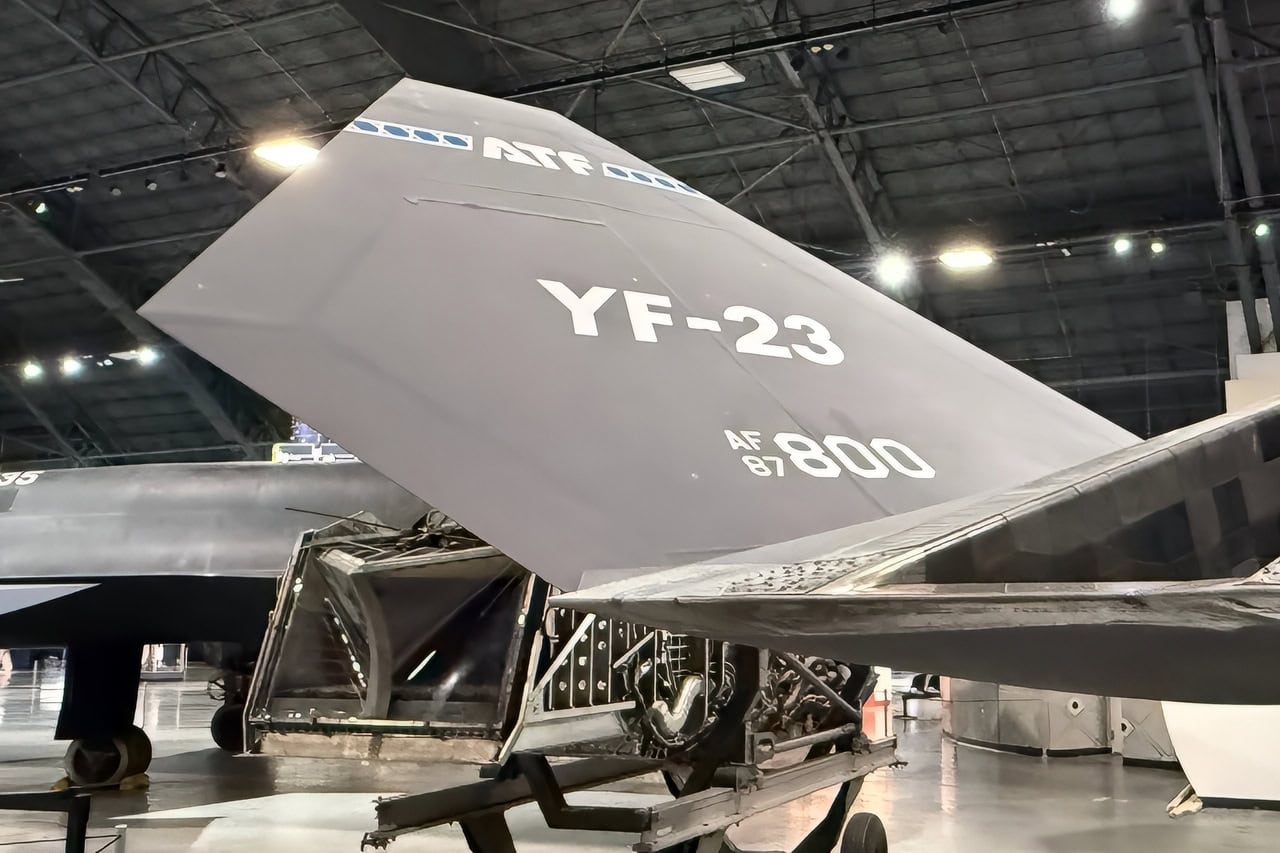
YF-23 Back End. 19FortyFive.com image.
The Air Force Wanted to Best the Russians
In the 1990s, the F-22 was known as the YF-22 during testing and evaluation. The airframe was designed to be dominant over the Russian stalwarts, the Su-27 and MiG-29. These were to challenge existing American jets like the F-16 Fighting Falcon and the F-15E Strike Eagle.
Build Something Better Than the F-117
The F-117 had already broken the stealth barrier in the 1980s. The Nighthawk was a successful radar evasive platform that DARPA and Lockheed Martin Skunk Works developed during the Carter and Reagan eras.
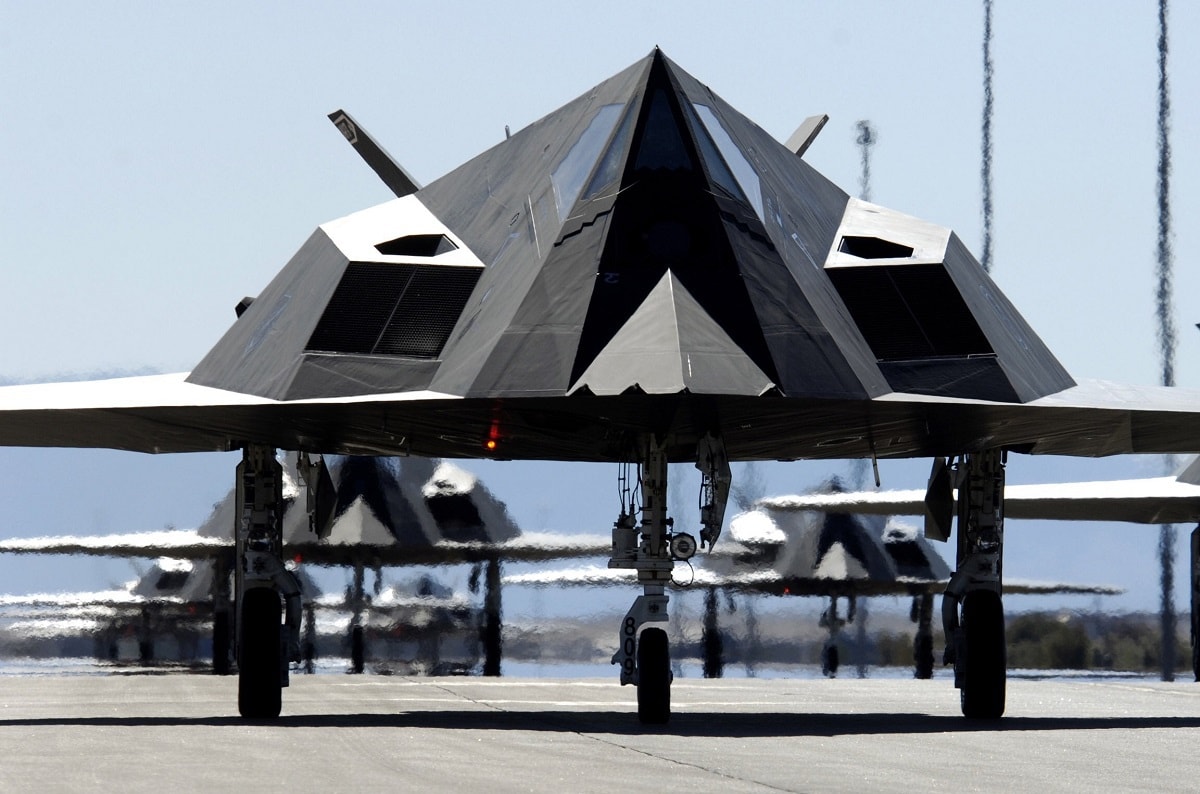
F-117 Image: Creative Commons.
The F-117 was a groundbreaker, and the Air Force thought it could make stealthiness even better. The F-117 is also a subsonic bomber and lacks the high-performance capabilities of fighters like the F-16 and F-15. It was time for a bona fide stealth jet, and engineers and technicians were excited about developing competing designs.
Here Were the Requirements of the New Stealth Warbird
Super cruise was seen as a way to save fuel when flying at high speed without afterburners. High-G maneuvers were also needed that would perform better than the F-117. Engines required a high-thrust-to-weight ratio. The top speed was desired to be close to MACH 2.
Modern munitions such as JDAMs, precision-guided bombs, and ground-strike missiles would be carried inside the wings. The Air Force wanted to acquire 750 of these new stealth fighters to replace the F-15.
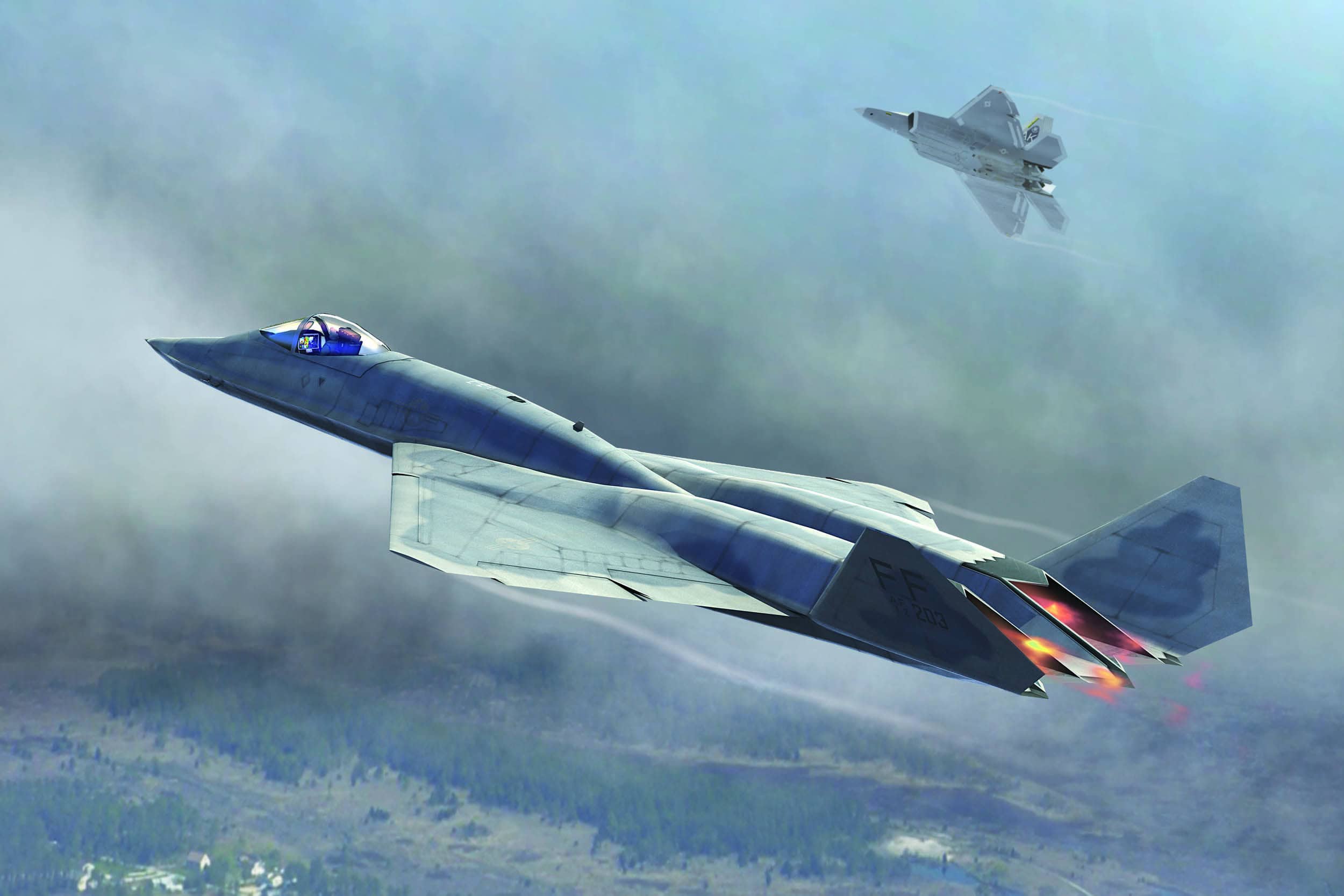
YF-23 Fighter. Image Credit: Creative Commons.
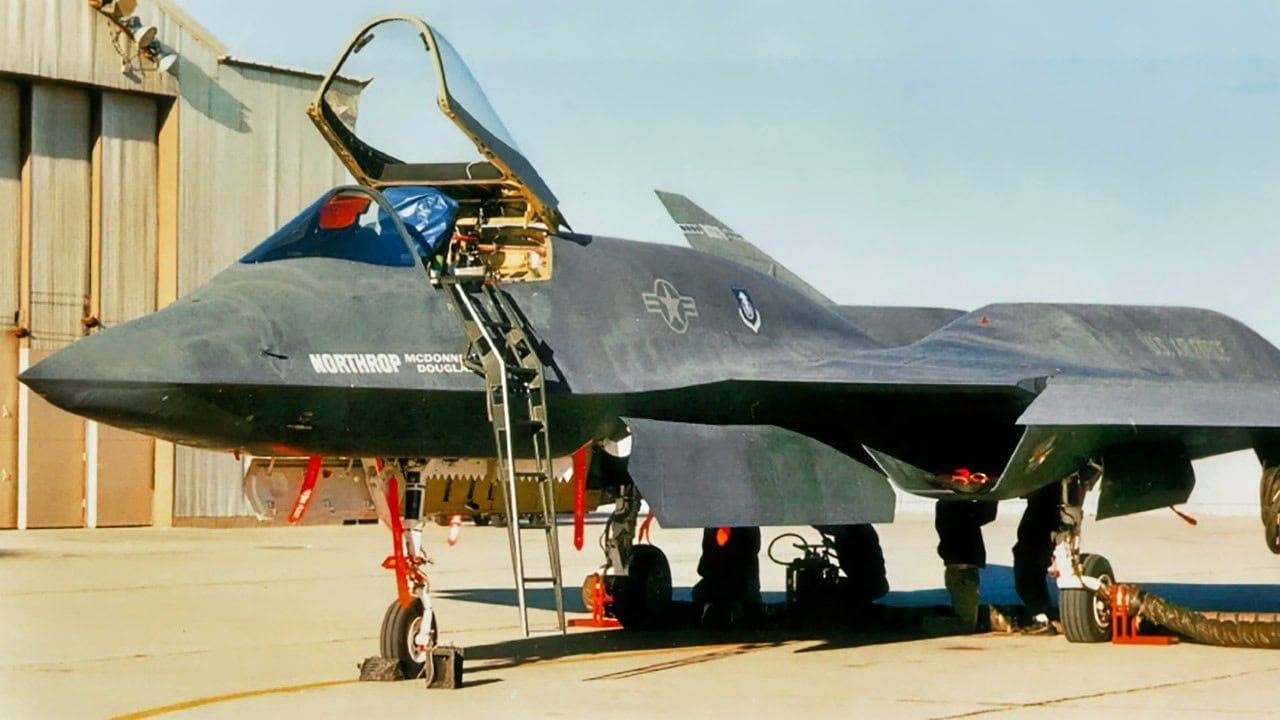
YF-23 Fighter. Image Credit: USAF.
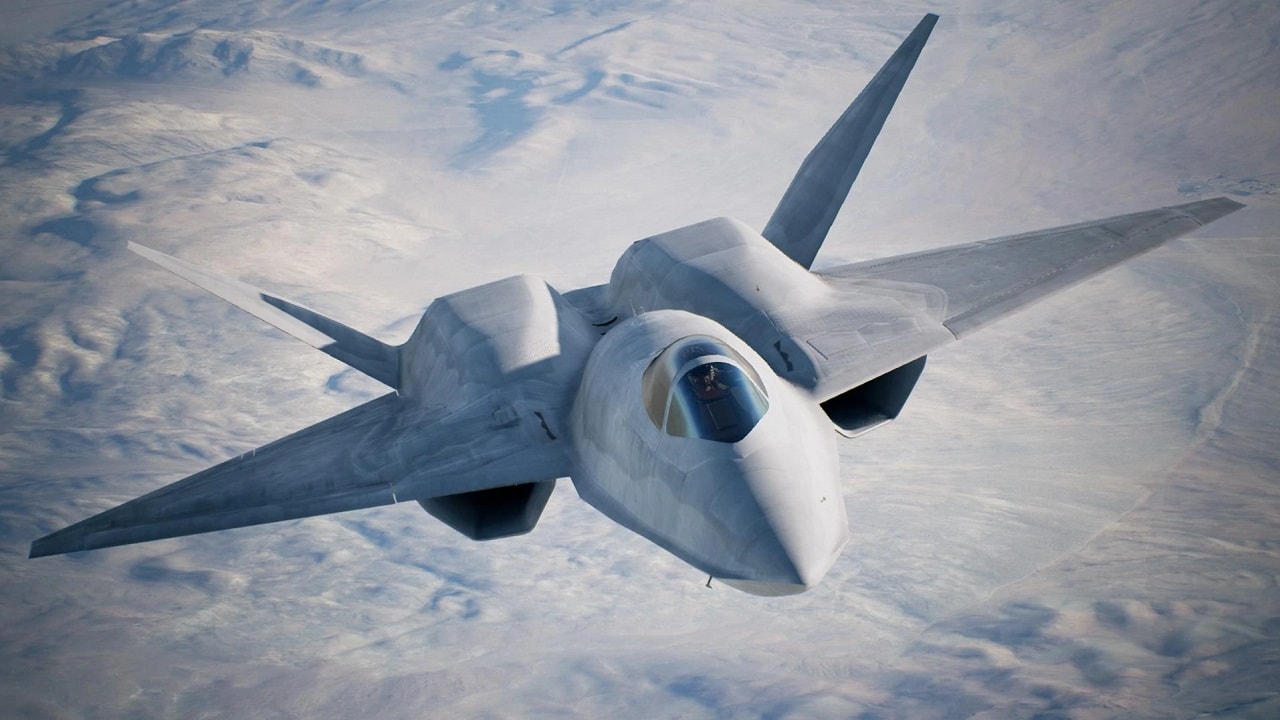
YF-23. Image Credit: Screenshot/Artist Rendering of Possible Final Design.
Two Partnerships Squared Off
There were two teams that competed for the prime contract. Northrop sided with McDonnell Douglas for one model. And Lockheed, Boeing, and General Dynamics formed the other team.
The YF-23 May Have Featured a Better Design Than the YF-22
Nice Stealth Design for the YF-23
The YF-23 was going to be different. It had a prominent nose and diamond-shaped wings for better stealthiness. The cockpit was pushed forward, similar to the F-35 Lightning II. The rear had an all-moving V-tail, according to Alex Hollings at Sandboxx News.
While the YF-22 had better thrust vectoring, the YF-23’s design could have performed nicely against enemy radar.
The YF-23 was also stealthier than the YF-22 due to that enviable design. The stealth coating performed better than the YF-22’s, and this was seen as a problem for the YF-22 design team. But with the YF-22’s thrust vectoring, that prototype was more maneuverable and could “turn on a dime” with that V-tail, as Hollings pointed out.
Speed Was an Important Consideration
There were two YF-23 prototypes, and the first became known as the Black Widow II to engineers and designers. Then there was the second, called the Grey Ghost. The Black Widow II could super cruise at MACH 1.43. That checked the box.
The Grey Ghost used General Electric YF120 engines that pushed it to MACH 1.6 in super cruise. The designers were enthusiastic that they would win the competition because the YF-23 was a shade faster than the YF-22. The top speed of the YF-23 without flying at super cruise may have been over MACH 2. Now, that was more like it.

YF-23A. Image Credit: Creative Commons.
Time to Take to the Air
During the fly-off competition, the YF-22 did much better than the YF-23. As Hollings noted, “Lockheed test pilots showed off the aircraft’s ability to utilize a high angle of attack, fire missiles, and execute maneuvers that placed more than 9Gs worth of force on the airframe.
While the YF-23 could have done the same, Northrop didn’t in the demonstration. Many contend that it was this salesmanship, rather than strictly platform capabilities, that helped the YF-22 stand out in the minds of defense officials.”
Three Top Reasons for the Win (and Even a Fourth Consideration)
So there you have it. The YF-23 could have won the competition. It had the better design, speed, and stealthiness. To do you one better, some even thought that the YF-23 had a superior range compared to the YF-22.
These were the main counterpoints to the YF-22 that would finally become the Raptor. The United States might have made the wrong decision – we’ll never know – but many countries would have been satisfied with the YF-23 if it had been allowed for export.
“What could have been?” is still a question that people have when debating about which airframe should have won the fly-off. The Air Force probably would not have been wrong either way, but it shows that competitions can be won with different tactics and showmanship, not just features and performance.
About the Author: Brent M. Eastwood
Author of now over 3,000 articles on defense issues, Brent M. Eastwood, PhD, is the author of Don’t Turn Your Back On the World: A Conservative Foreign Policy and Humans, Machines, and Data: Future Trends in Warfare, plus two other books. Brent was the founder and CEO of a tech firm that predicted world events using artificial intelligence. He served as a legislative fellow for US Senator Tim Scott, advising the senator on defense and foreign policy issues. He has taught at American University, George Washington University, and George Mason University. Brent is a former US Army Infantry officer. He can be followed on X @BMEastwood.