
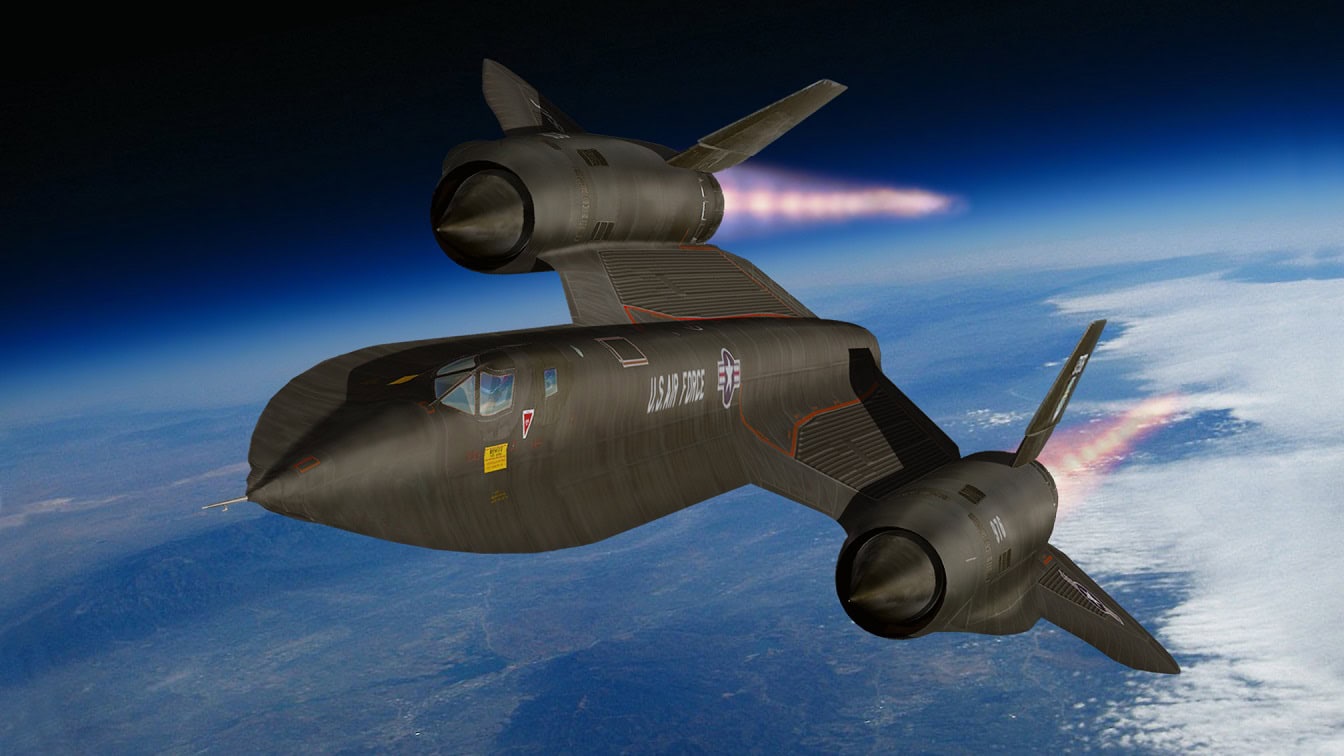
Col. Richard “Butch” Sheffield, SR-71 Blackbird Reconnaissance Systems Officer, before his death in 2018, asked his daughter, Linda, to “get my stories out there,” and Linda has been doing so for Aviation Geek Club.
In 2024, Linda shared one of those stories, of the time a Blackbird testing mission went wrong, at close to Mach 3.
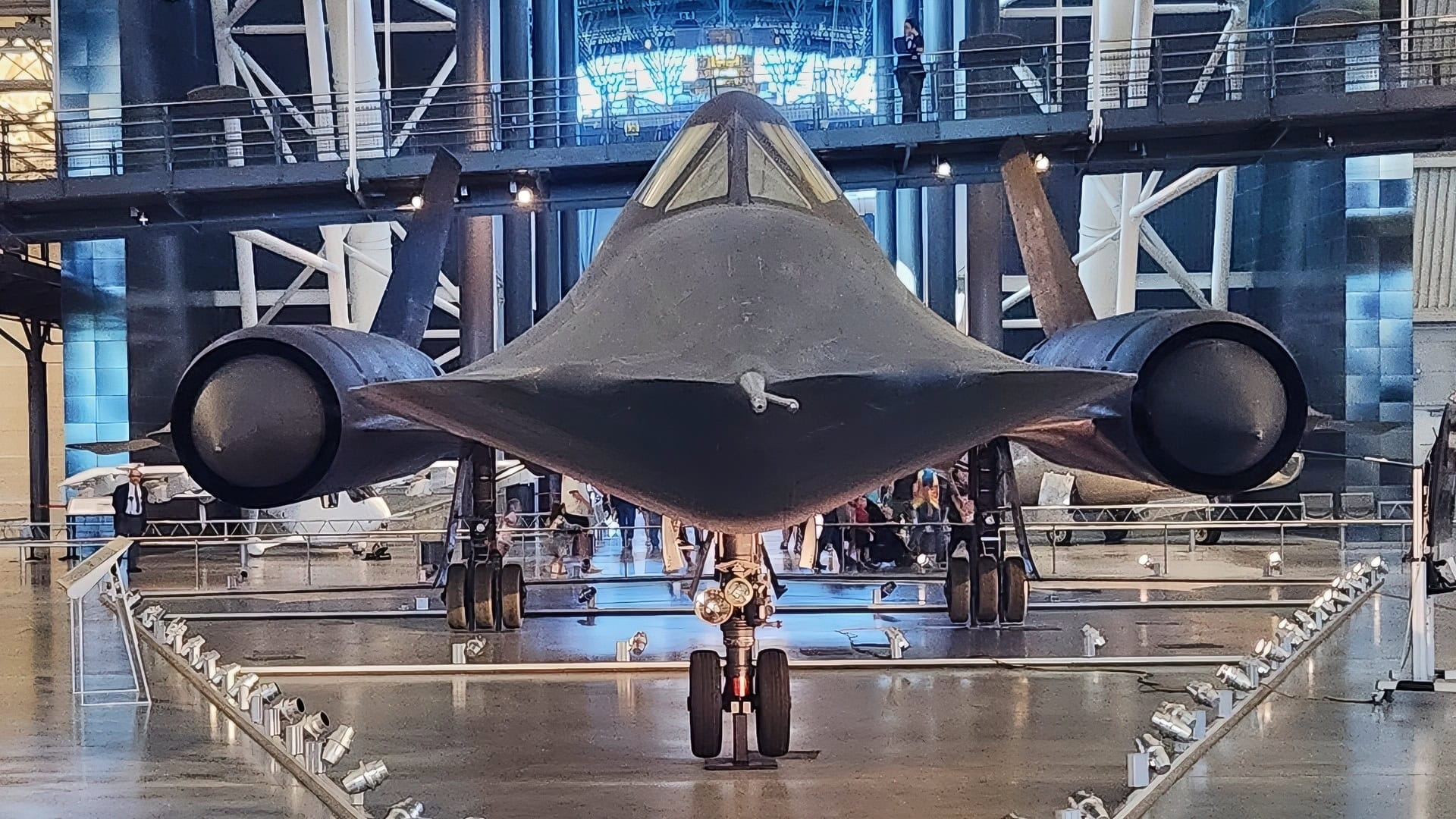
SR-71 At the Smithsonian. Image Credit: Creative Commons.
The SR-71 Blackbird Is A Legend for a Reason
According to Linda’s account, this took place in July of 1968, when Sheffield was stateside; the story came very early in the life of the Blackbird, which had entered service earlier that year.
Sheffield was sitting at his desk when he got the call that one of the other pilots had failed his pre-flight physical and could not fly that day. So Sheffield would fly, along with pilot Ben Bowles.
“I told them I would be right over, and I rushed over to PSD, took the pre-flight physical, ate the pre-flight meal, and rushed downstairs and suited up in my pressure suit for the flight,” was how the late RSO described his next move.
The purpose of the test flight was to “test out the aircraft’s long range,” and it entailed flying from coast to coast, at a much faster speed than any commercial flight. The flight covered nearly every state in the continental U.S.
During the flight, though, something went wrong.
Disaster at Mach 2.88
“We were at Mach 2.88 and 68,000 feet over Oklahoma when the right engine suffered catastrophic failure,” Sheffield said in his account. “The aircraft became very hard to control, and we could see the right engine burning even though we had shut off the fuel to it.”
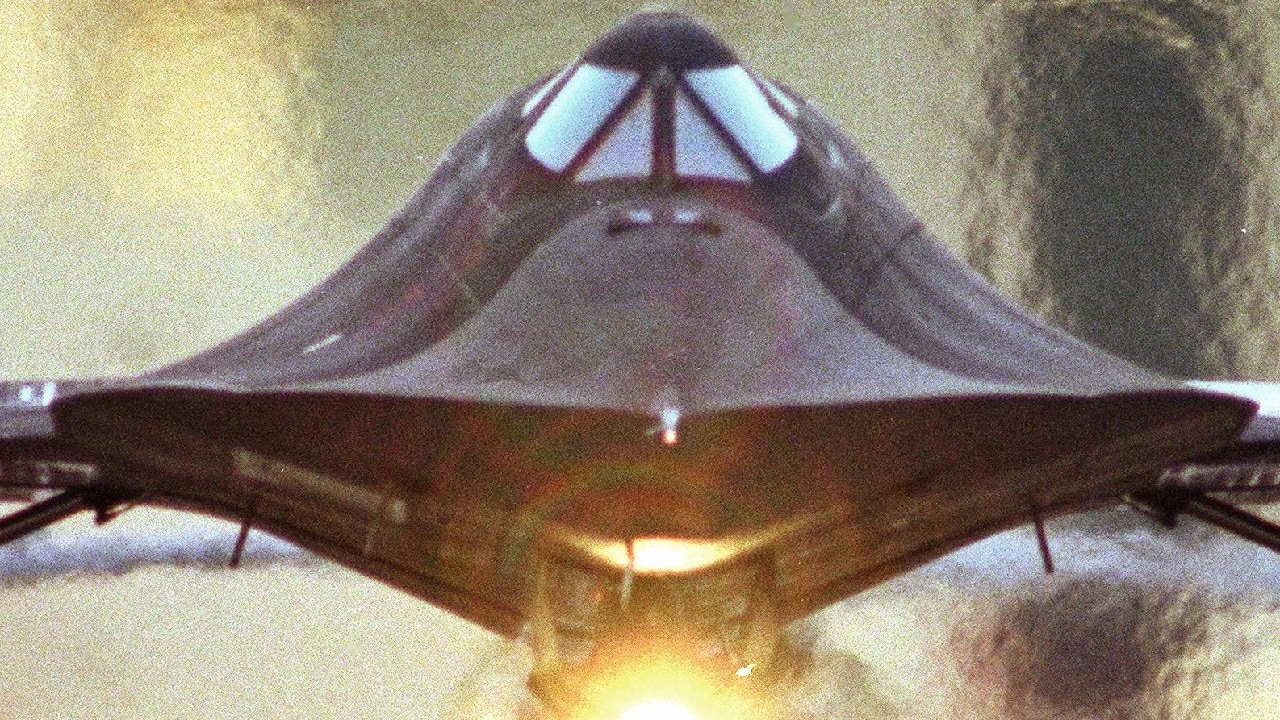
SR-71 Blackbird Spy Plane. Image Credit: Creative Commons.
The pilot asked Sheffield if he would like to eject, but he noted that his back was still sore from the last time he had ejected the year before, so he said no.
“It was a very rough ride down from 68,000 feet. The aircraft was bucking like a bronco. We were running lots of different checklists: (1) engine fire; (2) engine failure; (3) generator failure; (4) hydraulics failure; (5) descent and (6) others (still classified),” he wrote. And because he had been a last-second replacement for the other RSO, Sheffield wasn’t working with his own checklist, but rather the other one. And the checklist in use, he noted, was meant for a left-handed person, and Sheffield was right-handed.
The pilot and RSO opted to try landing at Carswell Air Force Base in Texas, where Bowles had landed before.
“I could see the fire & smoke coming out of the engine even after we shut off the fuel. We had fuel tanks in the SR’s wing, out to near the engine. If the fire reached that fuel, we would blow up.”
The plane approached the base, with smoke still coming out of the right engine, and the pilot and RSO agreed that the plane could explode upon landing.
“I suggested we fly by the tower and ask them if they can see flames, which we did. They said no flames, and we landed. The fire trucks surrounded us once on the runway, and I could see the fire chief making a large circle with his hands and arms—it was the size of the hole in the engine.”
Eventually, they realized that the forty-gallon oil tank in the wing was on fire. He went on to say that Kelly Johnson, the famous head of Lockheed Martin’s Skunk Works, had said later that “this was the only Blackbird that ever flew that was structurally unsound.”
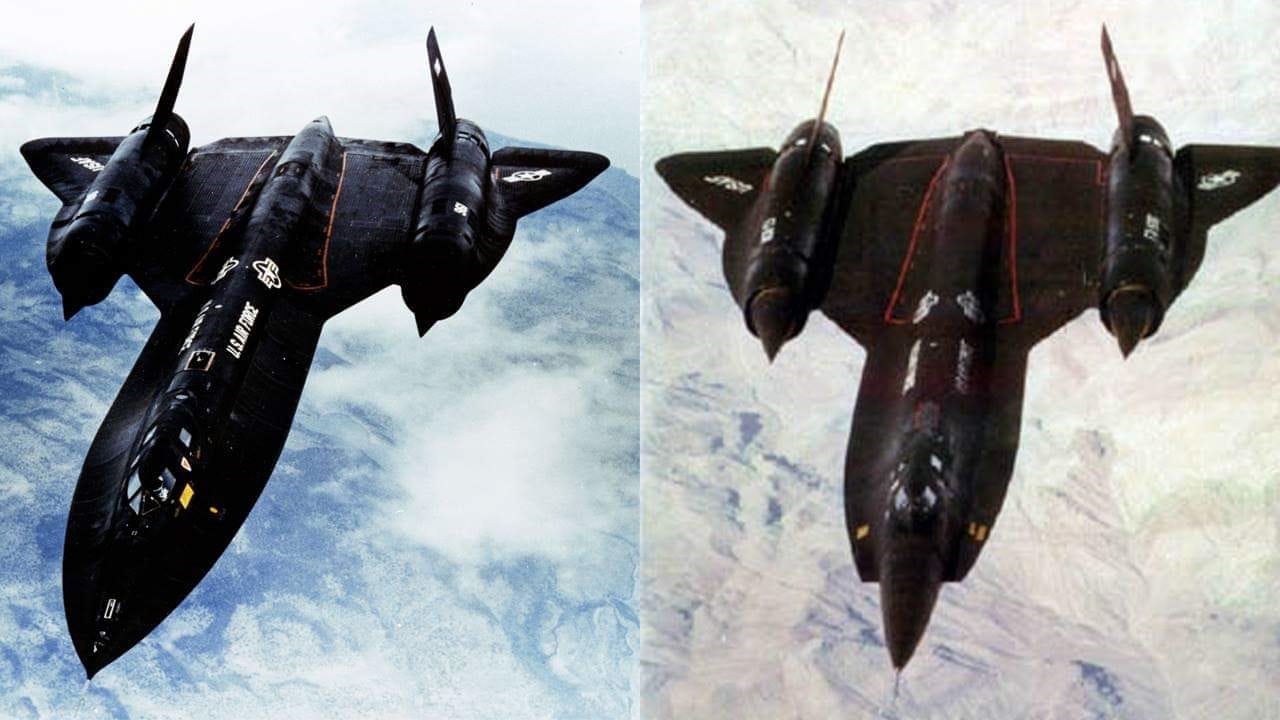
SR-71 and A-12 side by side for comparison.
Trouble on the Ground
The landing in Texas was not the end of the drama that day. They attempted to taxi the Blackbird into a hangar, but the fire chief on the ground “saw the fuel leaking out of the wings, like it always did on the ground, and stopped us from taxing into the hangar by blocking our way with his truck.” Instead, they shut the engine down outside the hangar and got out of the plane.
What came next was a “heated argument” between Bowles, the pilot, and the fire chief.
“The chief was saying no one pulls into one of our hangars dripping fuel. Ben was saying that the fuel won’t burn,” Sheffield’s account said. “The chief didn’t believe him. The fuel was PF-1; it was designed not to explode up to temperatures of 400 degrees Fahrenheit. To keep it from exploding, Cesium A-50 was added to the fuel. To light the fuel, we used Triethyliborane (TEB).” A crew chief used an oily rag to add fuel, which spread the fire further. This occasioned an “I told you so” from the fire chief.
After that, Sheffield was informed that the SAC Command Post was on the line and asked to speak with him.

SR-71 Blackbird Photo from Dr. Brent Eastwood at the Smithsonian. 19FortyFive.com Original Image.
“Why didn’t you land on the first pass? Why did you fly around with an engine out?” he was asked.
“I told them to call our Commander and tell him, and hung up,” Sheffield wrote. “I knew what our commander’s position was, you do what is right, and you land safely, and you don’t call or listen to SAC Command Post.”
Sheffield and Bowles were soon flown back to Beale, but before leaving, Sheffield said he “pulled off part of the right-wing composite structure” to carry back on the flight to California and to present to his commanders. The Blackbird, number 960, took about 6 months to fix.
A few days later, an Accident Board hearing was held, in which he realized that everything said in the cockpit that day had been recorded.
“I told them I had a checklist, but it was Jim’s. His checklist was the same as mine, but arranged a little differently,” Sheffield wrote of the Accident Board. “That seemed to make them happy. After I finished, I went to the Squadron and wrote on the blackboard in large print, ‘Did you know that everything you say in the cockpit is being recorded?’”
MORE – The U.S. Navy’s Ford-Class Is Just a Big Experiment
MORE – The SR-71 Hit Mach 3.56 And It Can’t Happen Ever Again
About the Author: Stephen Silver
Stephen Silver is an award-winning journalist, essayist, and film critic, and contributor to the Philadelphia Inquirer, the Jewish Telegraphic Agency, Broad Street Review, and Splice Today. The co-founder of the Philadelphia Film Critics Circle, Stephen lives in suburban Philadelphia with his wife and two sons. For over a decade, Stephen has authored thousands of articles that focus on politics, national security, technology, and the economy. Follow him on X (formerly Twitter) at @StephenSilver, and subscribe to his Substack newsletter.