
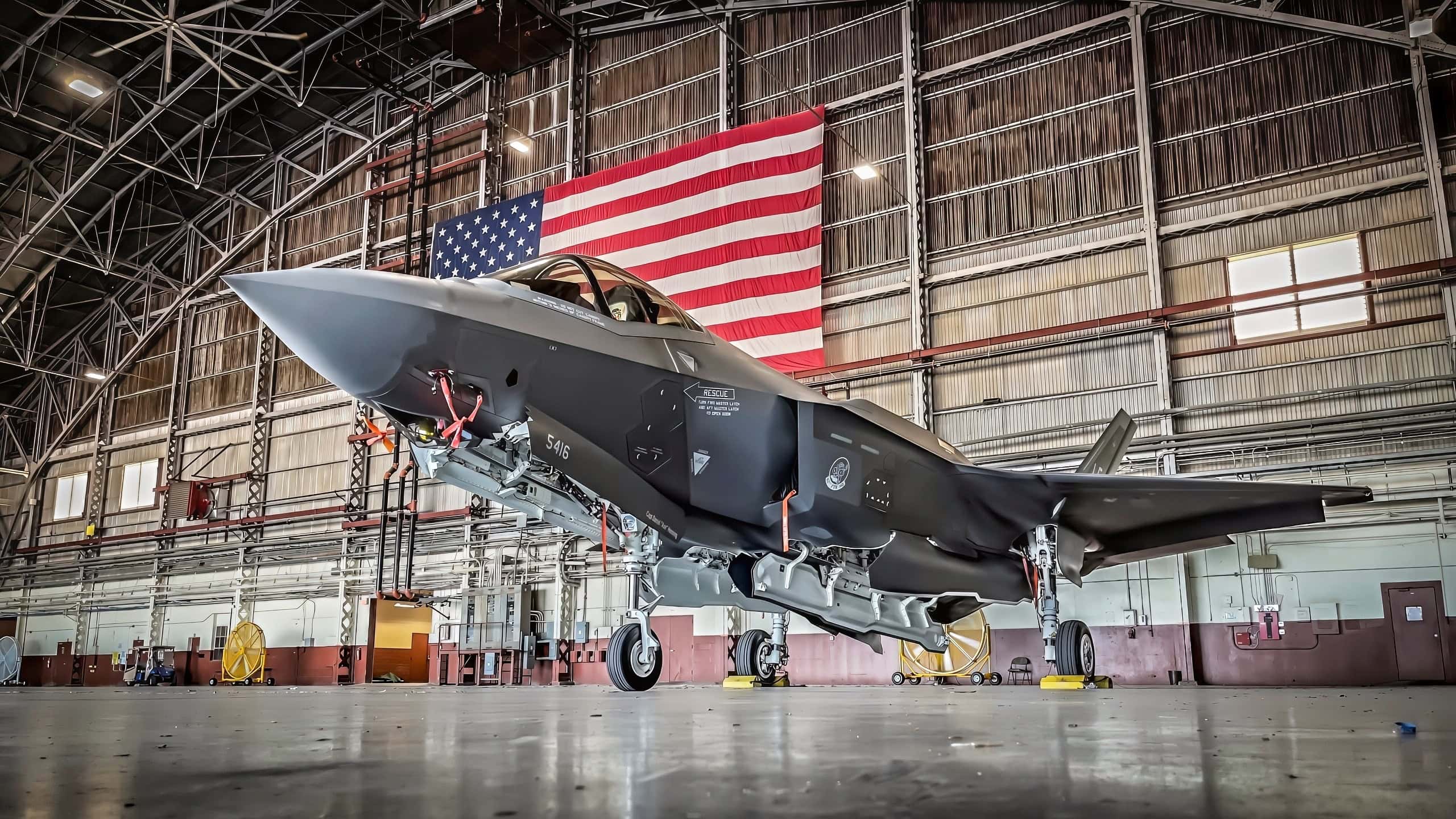
A fresh front has just opened in Canada’s cumbersome fighter jet debate. CBC News reported on Monday that Saab has made a lucrative offer to Ottawa for a Montreal-based sovereign data center as part of its bid to get the country to scrap its F-35 purchase in favor of its Gripen E/F fighters. The offer could well help lure Canada into taking up Saab’s increasingly generous offer, given that its long-running purchase review is being driven by arguments over how much strategic dependence on Washington can be tolerated.
Canada’s Confusing F-35 Review
As it stands, Canada is still contractually obligated to purchase 88 F-35As, the first of which could be delivered by 2028.
The review launched by Prime Minister Mark Carney’s government last March still has no precise deadline.
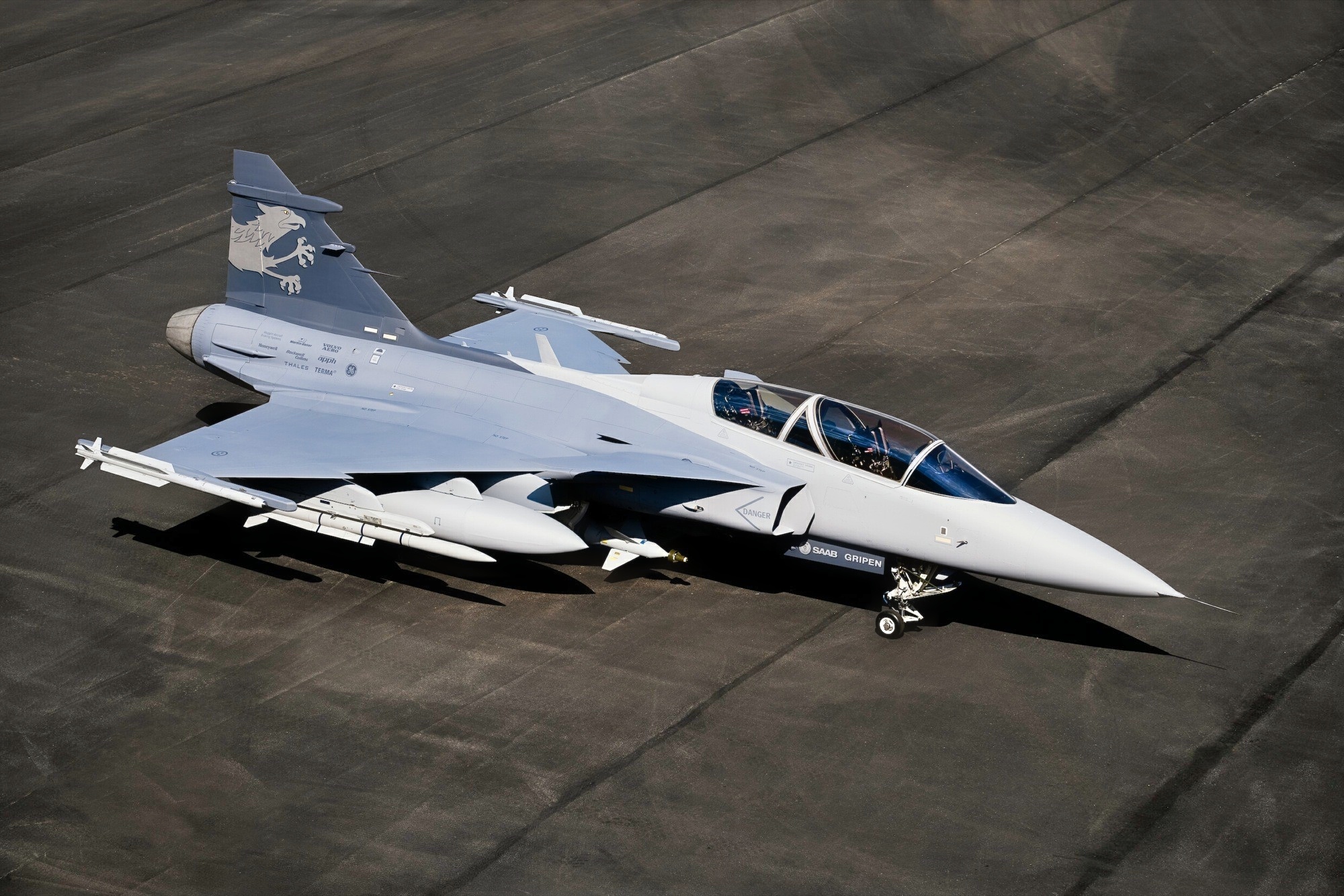
JAS 39 Gripen. Image Credit: Creative Commons.
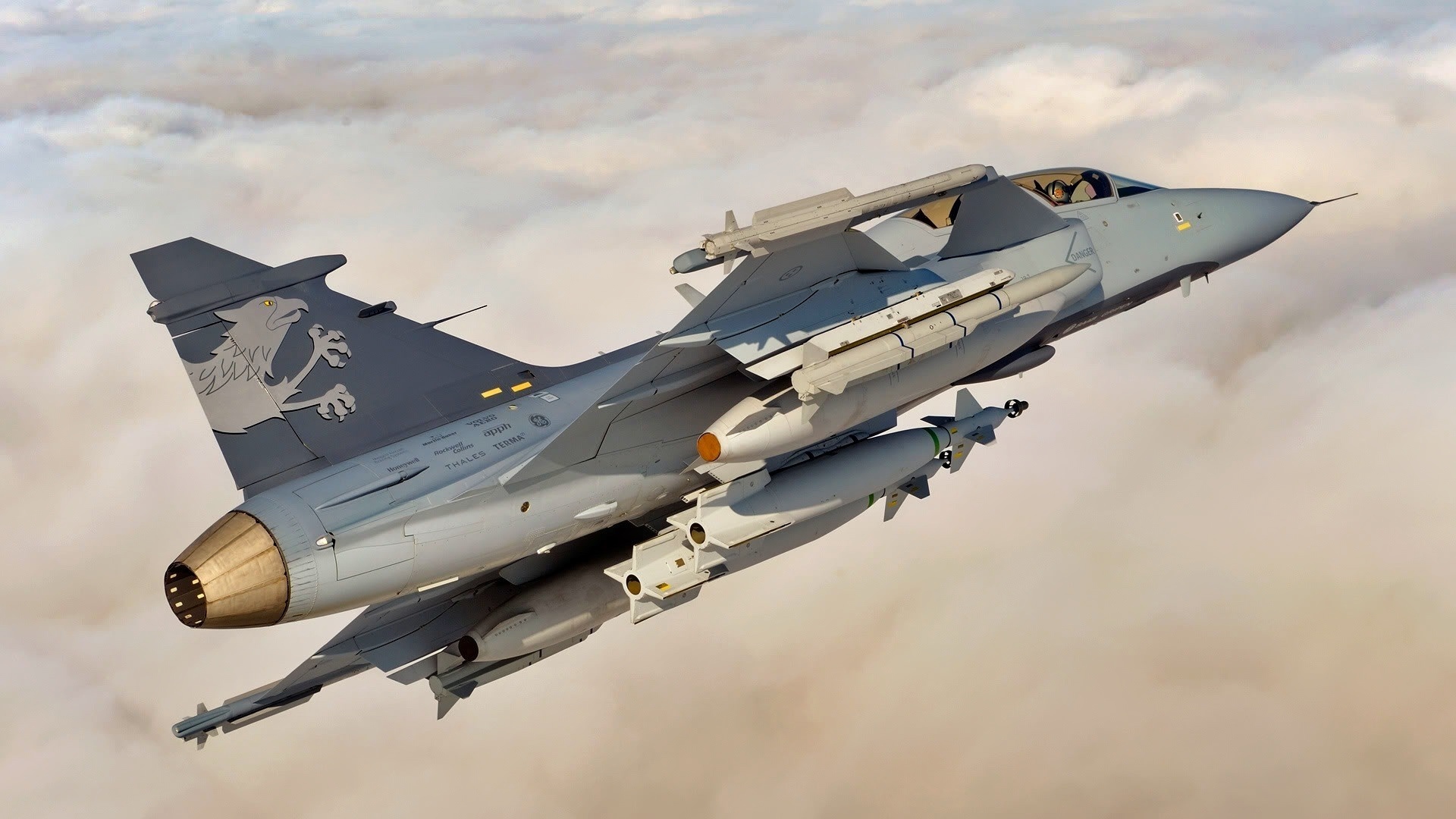
JAS 39. Image Credit: Creative Commons.
CBC’s Murray Brewster said Saab’s hypothetical Montreal location would store sensitive Gripen data on Canadian soil and host the fighter mission system as a whole. The firm claims that the Royal Canadian Air Force would have autonomous control over the jets, including their software and technical data.
It comes amidst speculation that F-35s could contain “kill switches” controlled by Washington.
If Canada and the U.S.’s foreign policies ever wildly diverge, what would happen to such jets? Can their policies ever truly diverge if their military resources are so deeply intertwined?
For Ottawa, being the junior partner, these are key questions, especially in an era when its government is embroiled in a bitter trade dispute with its southern neighbor.
Does Canada Want More Control?
It could be simply said that Saab is trying to get Ottawa’s mind off the F-35’s technological superiority and onto issues of control.
Over the years, aside from the “Kill Switch” claim, there have been suggestions that the jet’s logistics and sustainment architecture are highly reliant on U.S.-controlled processes.
Lockheed Martin claims to have addressed sovereign operating needs and that all F-35 customers get the data and infrastructure needed to sustain their aircraft independently. Saab evidently believes Canada does not fully buy that story.
Defense News reported in February that the company floated a Canadian Gripen production hub large enough not only to supply the Royal Canadian Air Force but also to potentially export to customers abroad.
AeroTime later reported Saab CEO Micael Johansson saying a first Canadian Gripen within five years was “absolutely doable,” arguing that Canada’s aerospace base gives it a stronger foundation than earlier local-production efforts elsewhere.
Saab has repeatedly pointed to the Brazilian model, and its March 25 announcement of the first Gripen E produced in Brazil gave that proposal a rather timely proof point.
The pitch to Ottawa is obvious: Canada can help build its own jets, more so than it would be doing if it stuck to the F-35s.
Canada to ‘Observe’ GCAP Program
Canada is now also lobbying to join the UK-Italy-Japan Global Combat Air Program (GCAP) as an observer.
If successful, it would permit Ottawa exclusive access to program information that is naturally under wraps to those outside the deal, while mulling over its commitment to the partnership.
Edgewing, the industrial joint venture backing up GCAP, has now received its inaugural £686 million contract for design and engineering work.
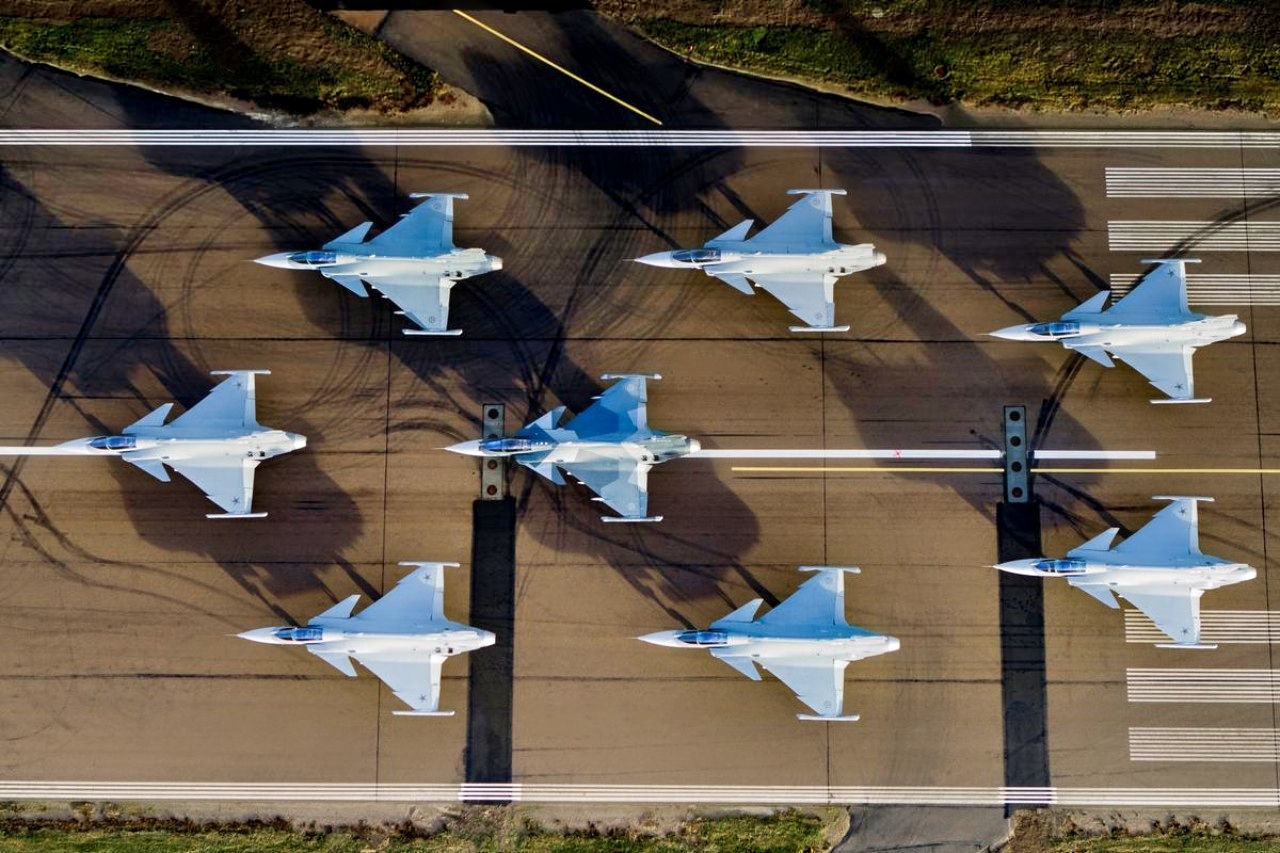
JAS 39 Gripen E. Image Credit: Creative Commons.
Are F-35s Worth the Price Tag?
None of this ultimately makes the choice easy. The F-35, despite being “tremendously expensive,” remains the stealthier and more advanced platform in a number of obvious respects.
Meanwhile, supporters of the program, such as Macdonald-Laurier Institute Senior Fellow Richard Shimooka, continue to argue that interoperability with the United States and NATO should outweigh political irritation or industrial wishful thinking.

U.S. Air Force Maj. Melanie “Mach” Kluesner, pilot for the F-35A Demonstration Team, preforms high-speed aerial maneuvers during a practice demonstration at Hill Air Force Base, Utah, Jan. 6, 2026. The team practices during their off-season to ensure that they are always sharp and ready to demonstrate the capabilities of the F-35A and the U.S. Air Force. (U.S. Air Force photo by Staff Sgt. Nicholas Rupiper)
But a mixed fleet, which is allegedly now the likely option, would not be a painless one and would add vast complexity regarding training and supply chains.
But Ottawa is no longer operating on the assumptions that shaped the original competition.
The political environment has shifted dramatically, the industrial question has become more urgent, and sovereignty in defense technology now extends far beyond where a jet is assembled.
It includes who owns the code, where the data sits, who can update the system, and how much freedom Canada would really have in a crisis.
About the Author: Georgia Gilholy
Georgia Gilholy is a journalist based in the United Kingdom who has been published in Newsweek, The Times of Israel, and the Spectator. Gilholy writes about international politics, culture, and education. You can follow her on X: @llggeorgia.


Bob
April 14, 2026 at 1:13 pm
Based on what I have heard on the news from military experts, it appears that China has developed a missile system to get around the stealth capability of the F35. If this is true then Canada better rethink its purchase due to the fact that the main advantage that the F35 has is its stealth capability. You can bet that both Russia and China will find a way to take down the F35, if they haven’t already. In my opinion, if Canada can bring back aviation development via SAAB, then this in the long term may make us better off.
Joe
April 15, 2026 at 12:00 pm
There should not be a discussion even of which fighter jets to go with. America is no longer a stable nation and is ran by a person with multiple mental disorders. Under trump, American companies could be ordered to use a kill switch, stop the parts supply chain, stop missiles and ammunition. The other trump playbook is a shake down and extortion tool to use against Canada. Go with Saab , it’s the only logical choice .
Willy
April 15, 2026 at 10:26 pm
Mixed fleet since we are a vast country and need to meet NORAD commitments as long as it lasts. I believe 30 F35s could protect the East and West coasts. We cannot change our geography but the USA will change its President.
The Gripen is best suited to protecting our Arctic coast and 58 (or more as they are less expensive) could protect our North and Prairie Provinces due to their short runway needs.