
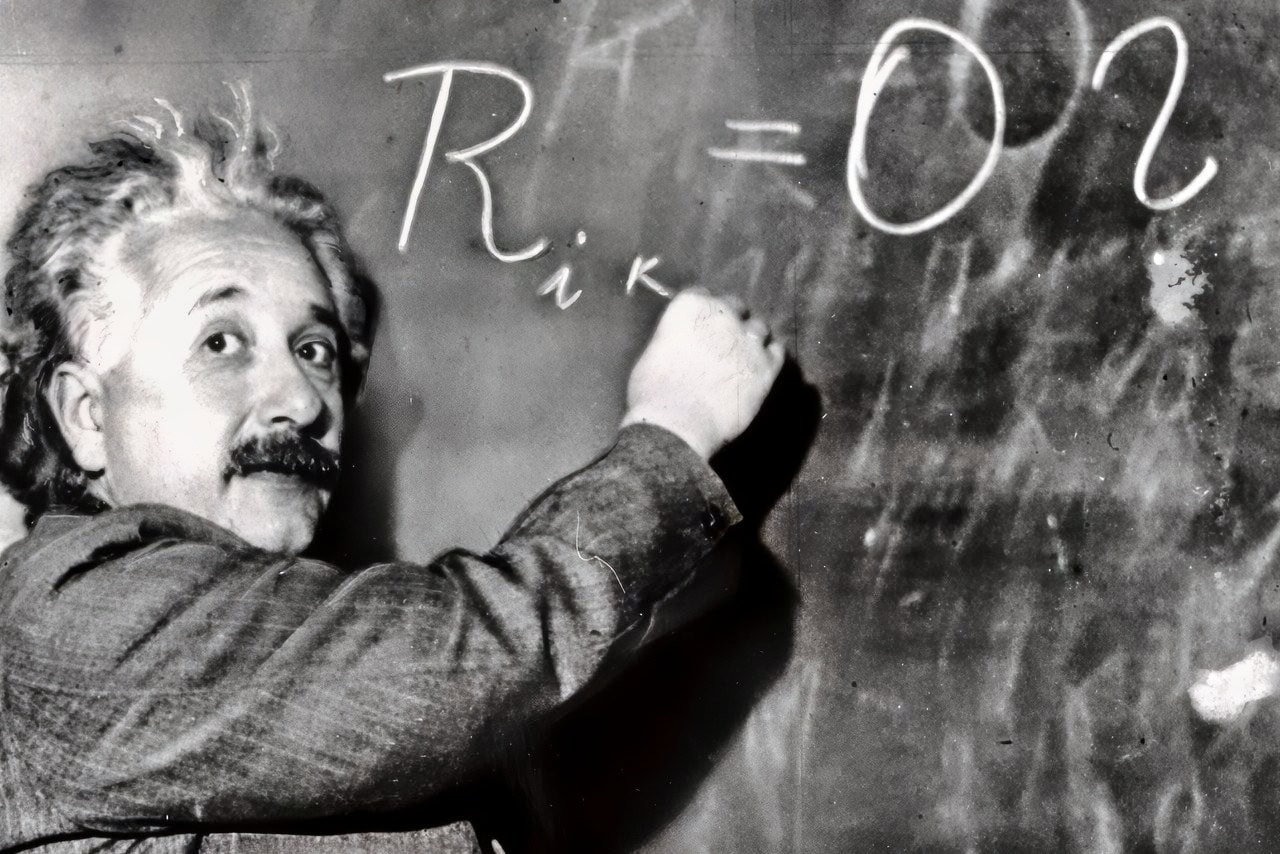
“No problem can be solved from the same level of consciousness that created it.” – Quote of the day by Albert Einstein.
Albert Einstein is a name that’s long been synonymous with genius.
According to his bio on the Nobel Prize organization’s website, which awarded Einstein the Nobel Prize in Physics in 1921, He was born in Württemberg, Germany, on March 14, 1879. In 1896, when he was just 17 years old, Einstein entered the Swiss Federal Polytechnic School in Zurich, where he studied physics and mathematics. In 1905, he earned his doctorate.
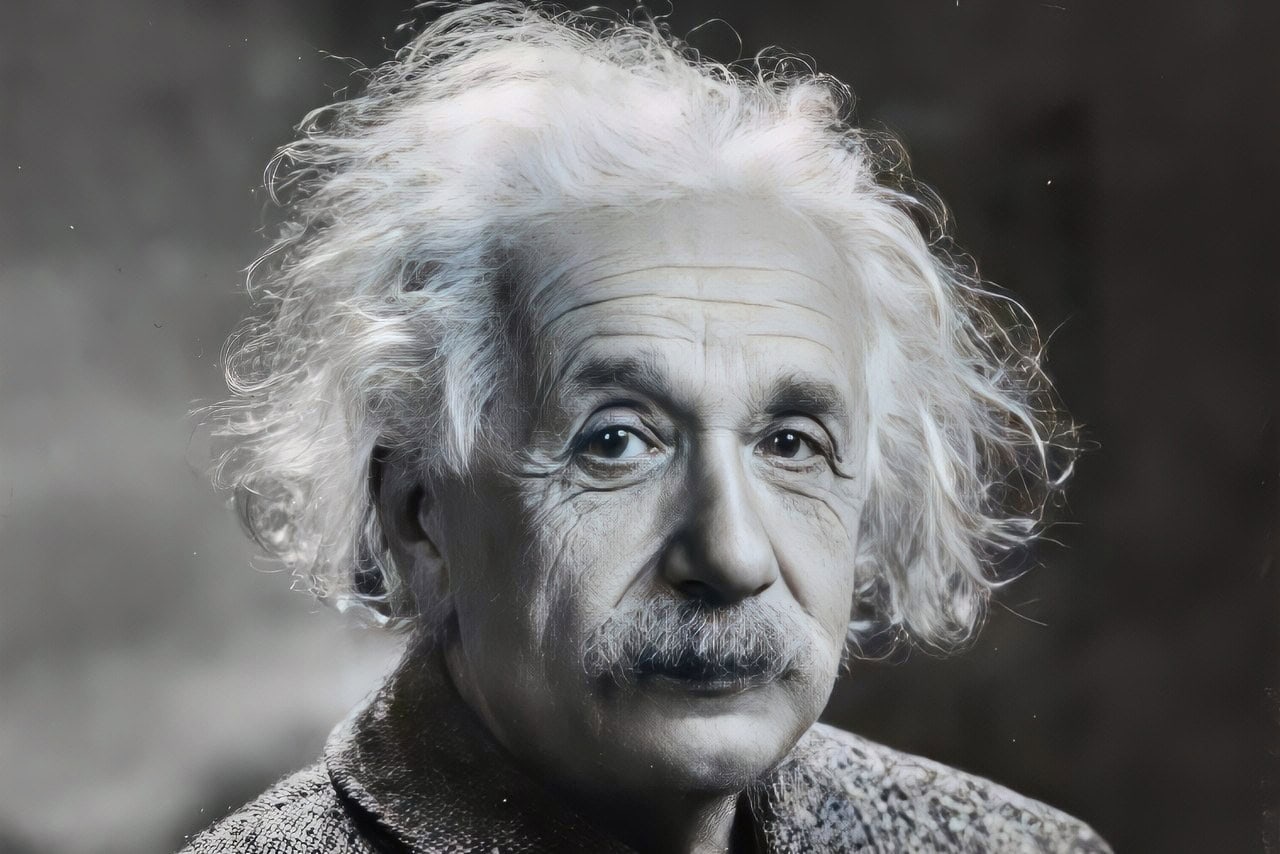
Albert Einstein. Image Credit: Creative Commons.
That was just the beginning of Einstein’s academic career.
Albert Einstein Changed Everything:
“In 1909, he became Professor Extraordinary at Zurich, in 1911 Professor of Theoretical Physics at Prague, returning to Zurich in the following year to fill a similar post. In 1914, he was appointed Director of the Kaiser Wilhelm Physical Institute and Professor in the University of Berlin,” the Nobel biography says. Einstein’s Theory of Relativity is perhaps his most important contribution to physics.
He stayed in Germany until 1933, the year Adolf Hitler was elected, when he renounced his German citizenship and emigrated to the United States. The first position he held in the U.S. was as Professor of Theoretical Physics at Princeton.
In 1939, he wrote his famous letter to President Roosevelt, one that he would come to regret.
Einstein and Nuclear Weapons
In August of 1939, the year after the discovery of fission in Germany, Einstein joined with his colleague Leo Szilard to write a letter to President Franklin Delano Roosevelt, drawing on reports of new advances in physics, showing that “it may be possible to set up a nuclear chain reaction in a large mass of uranium, by which vast amounts of power and large quantities of new radium-like elements would be generated.” Einstein saw right away that such technological advances could be used to build bombs and suggested that the United States pursue them.

Fat Man Nuclear Bomb from National Museum of the U.S. Air Force. 19FortyFive.com Image.
“In view of this situation, you may think it desirable to have some permanent contact maintained between the Administration and the group of physicists working on chain reactions in America,” Einstein wrote.
The letter itself was auctioned off in 2024, after the 2023 film “Oppenheimer” led to renewed interest in that period of history.
Einstein’s letter was seen as the origin of the Advisory Committee on Uranium, and then later of the Manhattan Project, the project to create an atomic bomb.
The Manhattan Project, of course, did successfully lead to the creation of the first atomic bomb, which was used at the end of World War II. But it also set off the nuclear arms race, which Einstein regretted for the rest of his life.
The year after the war, Einstein founded the Emergency Committee of Atomic Scientists.
“Had I known that the Germans would not succeed in developing an atomic bomb, I would have done nothing for the bomb,” Einstein went on to say after the war.
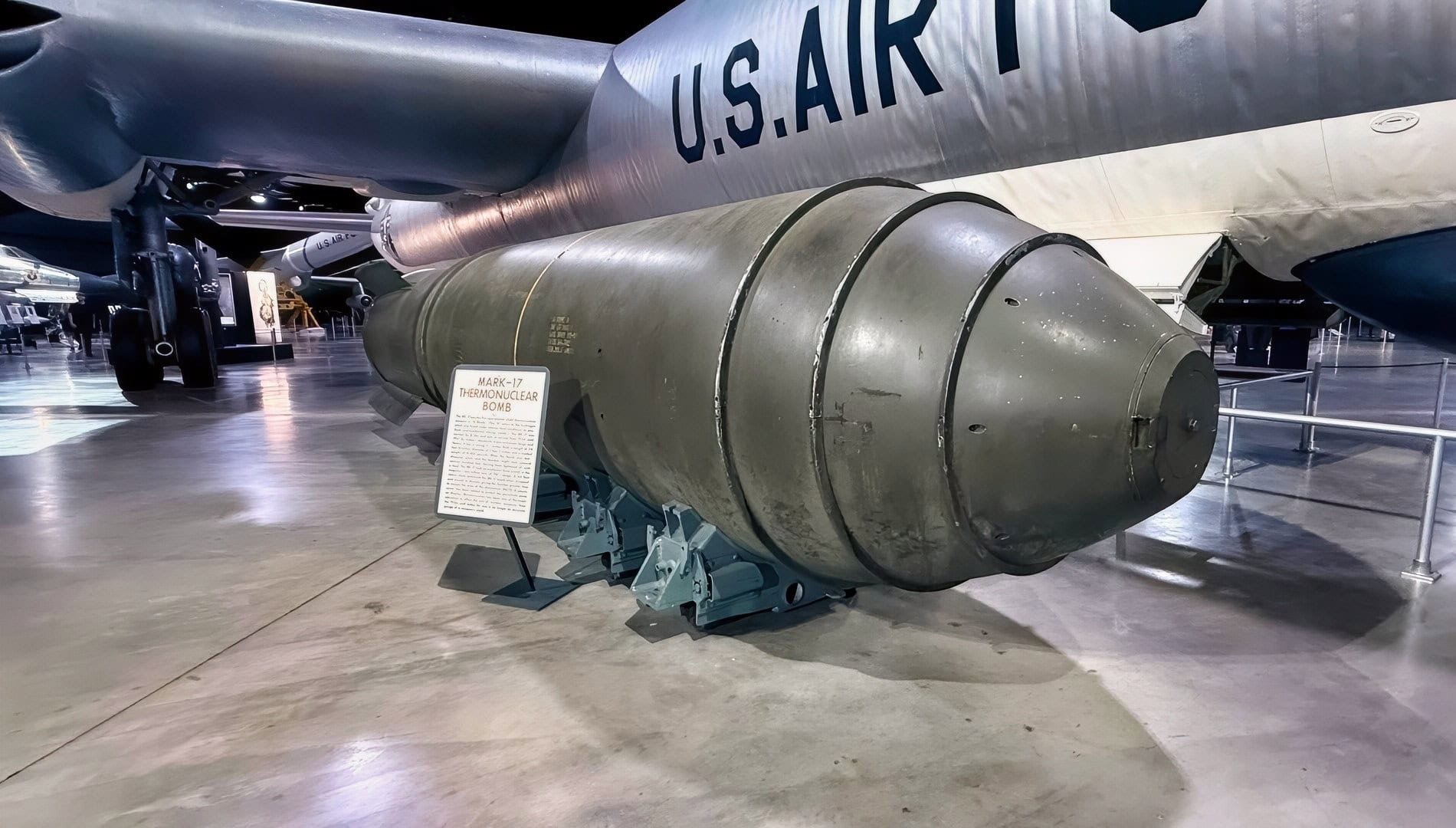
Mark-17 Nuclear Bomb 19FortyFive.com Image
“I made one great mistake in my life when I signed the letter to President Roosevelt recommending that atom bombs be made, but there was some justification – the danger that the Germans would make them,” Einstein said in 1954. He would go on to spend the rest of his life campaigning for nuclear disarmament.
The Manifesto
The following year came “The Russell-Einstein Manifesto,” in which Bertrand Russell, Einstein, and ten other scientists wrote about the need to “appraise the perils that have arisen as a result of the development of weapons of mass destruction… We have to learn to think in a new way. We have to learn to ask ourselves, not what steps can be taken to give military victory to whatever group we prefer, for there are no longer such steps; the question we have to ask ourselves is: what steps can be taken to prevent a military contest of which the issue must be disastrous to all parties?”
That letter, in 1955, acknowledged that the hydrogen bomb was more powerful than the atomic bombs that had been dropped in Japan.
That manifesto called on Congress to pass a resolution: “In view of the fact that in any future world war nuclear weapons will certainly be employed, and that such weapons threaten the continued existence of mankind, we urge the governments of the world to realize, and to acknowledge publicly, that their purpose cannot be furthered by a world war, and we urge them, consequently, to find peaceful means for the settlement of all matters of dispute between them.”

Nuclear Bomber Image Taken at National Museum of the Air Force by 19FortyFive.com
The July 1955 date on that letter indicates that it was published posthumously by Einstein. The great physicist died on April 18, 1955, at the age of 75.
The Quote
One quote often attributed to Einstein is “No problem can be solved from the same level of consciousness that created it.” Another version is “We cannot solve our problems with the same thinking we used when we created them.”
Whether Einstein ever actually said either of those things has been seriously disputed by Einstein scholars and other experts.
According to a discussion on the History of Science and Mathematics website, there doesn’t seem to be any solid source for Einstein ever having said or written the above quote, despite decades’ worth of articles and quotation lists attributing it to Einstein.
Einstein said, “We have to learn to think in a new way,” in the aforementioned “Russell-Einstein Manifesto,” which has the same general gist but is clearly not the same quote. Einstein had said, in a 1946 interview with the New York Times, that “a new type of thinking is essential if mankind is to survive and move to higher levels,” which is in the ballpark but once again not the same quote.
Ram Das, in 1970, had claimed to quote Einstein, as saying, “the world that we have made as a result of the level of thinking we have done thus far creates problems that we cannot solve at the same level as the level we created them at.”
“Einstein was so brilliant that, according to the internet, he continued to make up thousands of smart-sounding sentences even after he died,” one poster on that board said.
About the Author: Stephen Silver
Stephen Silver is an award-winning journalist, essayist, and film critic, and contributor to the Philadelphia Inquirer, the Jewish Telegraphic Agency, Broad Street Review, and Splice Today. The co-founder of the Philadelphia Film Critics Circle, Stephen lives in suburban Philadelphia with his wife and two sons. For over a decade, Stephen has authored thousands of articles that focus on politics, national security, technology, and the economy. Follow him on X (formerly Twitter) at @StephenSilver, and subscribe to his Substack newsletter.