

Summary and Key Points: As of February 2026, the legacy of Franklin Delano Roosevelt (FDR) remains a subject of intense historical debate.
-While revered as the courageous 32nd President who led the U.S. through World War II, his domestic record is under fire for policies like the 1934 National Firearms Act, the 1933 gold confiscation, and the challenge of Social Security.
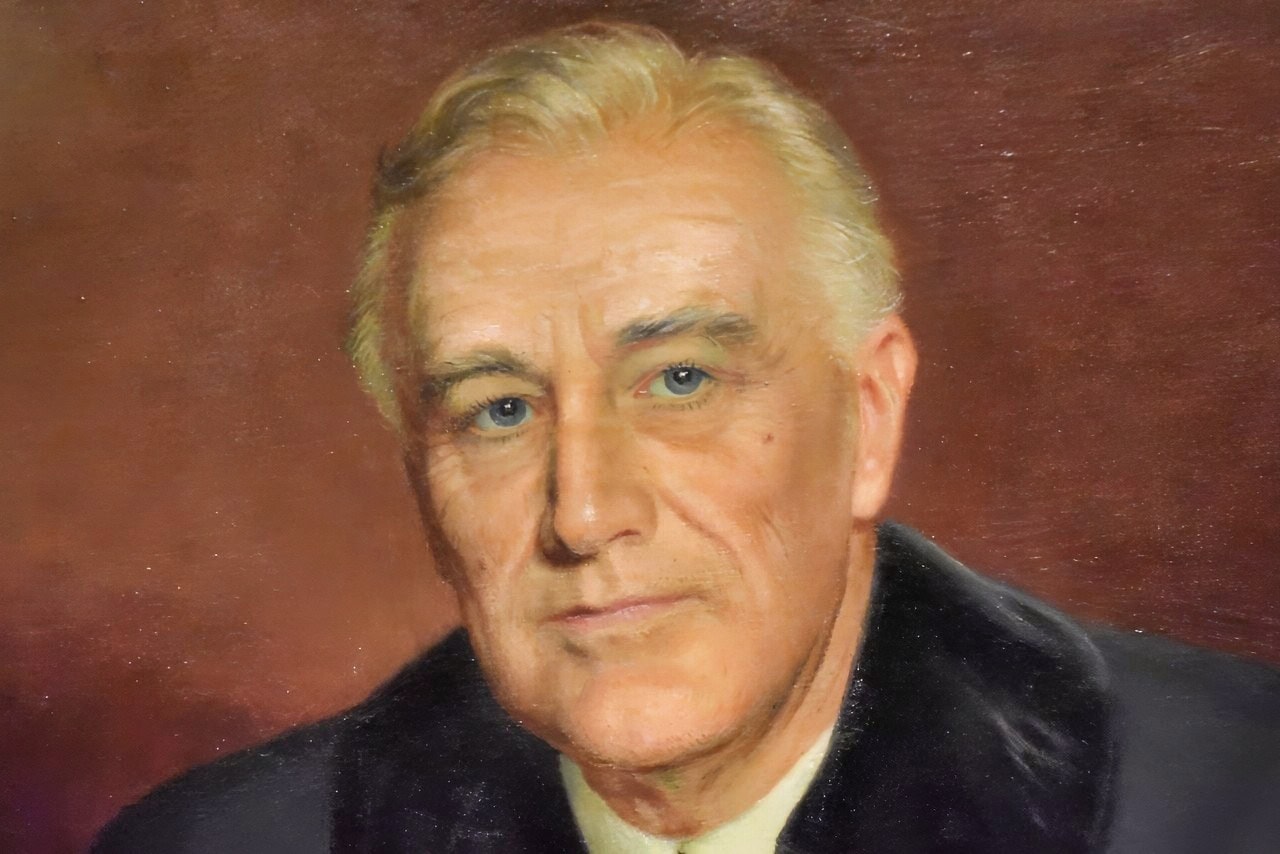
Franklin D. Roosevelt Portrait 19FortyFive Photo. Taken by Dr. Brent M. Eastwood at the Washington, DC National Portrait Gallery.
-Critics further argue his optimism toward Joseph Stalin at the Yalta Conference effectively sold out Eastern Europe to communism. FDR’s complex journey from a wealthy New Yorker to a four-term leader highlights the enduring tension between government power and individual liberty.
“Human kindness has never weakened the stamina or softened the fiber of a free people. A nation does not have to be cruel to be tough.” – Franklin D. Roosevelt
—This quote belongs to Franklin Delano Roosevelt, AKA “FDR. Though that saying is not as famous as his Pearl Harbor speech (“A date which will live in infamy.”) or his “We have nothing to fear but fear itself” speech, it was profound enough to make its way into the historical record.
FRD was the 33rd President of the United States (POTUS), and many historians rate him among the Top 3 POTUSs of all time (along with George Washington and Abraham Lincoln). I would certainly rate him highly as a courageous wartime leader (though certainly far from perfect in that regard), but as a peacetime POTUS…er, hold that thought…
FDR’s Birth, Childhood, Young Adulthood, and Presidential Family Ties
Franklin Delano Roosevelt was born on January 30, 1882, in Hyde Park, New York, to businessman James Roosevelt I and his second wife, Sara Ann Delano; both families were wealthy.
And yes, he was indeed related to Theodore Roosevelt (AKA “TR,” “Teddy”), the 26th President of the United States; TR was FDR’s fifth cousin, though, of course, Teddy was a Republican, a war hero, and a gun lover, whilst Franklin was a Democrat and a non-veteran (though he did hold a civilian posting as Assistant Secretary of the Navy) who hated the 2nd Amendment (more on this in a bit).
Franklin graduated from Harvard in 1904 and married his distant cousin Anna Eleanor Roosevelt (best known by her middle name, of course). He then attended Columbia Law School and began his legal practice shortly thereafter.
Pre-POTUS Political Career
As per his Ducksters bio, “Roosevelt became active in politics in 1910 when he was elected to the New York State Senate and, later, the Assistant Secretary of the Navy. However, his career stopped for a while in 1921 when he became sick with polio. Although he survived his bout with polio, he nearly lost the use of his legs. For the rest of his life he could only walk a few short steps by himself…Franklin’s wife, Eleanor, told her husband not to give up. Despite his condition, he continued both his legal and political careers. In 1929, he was elected Governor of New York and, after serving two terms as governor, he decided to run for president in the 1932 election.”
Presidency: Courageous in Wartime, Questionable in Peacetime
Love him or hate him, Franklin Roosevelt cemented his place in history as the only POTUS to win a third term…and then a fourth term for good measure, though he didn’t live long enough to complete that fourth term, dying of a cerebral hemorrhage on April 12, 1945, in Warm Springs, Georgia, thus leaving it up to Harry S Truman to take over and finish the job against Nazi Germany and Imperial Japan alike.
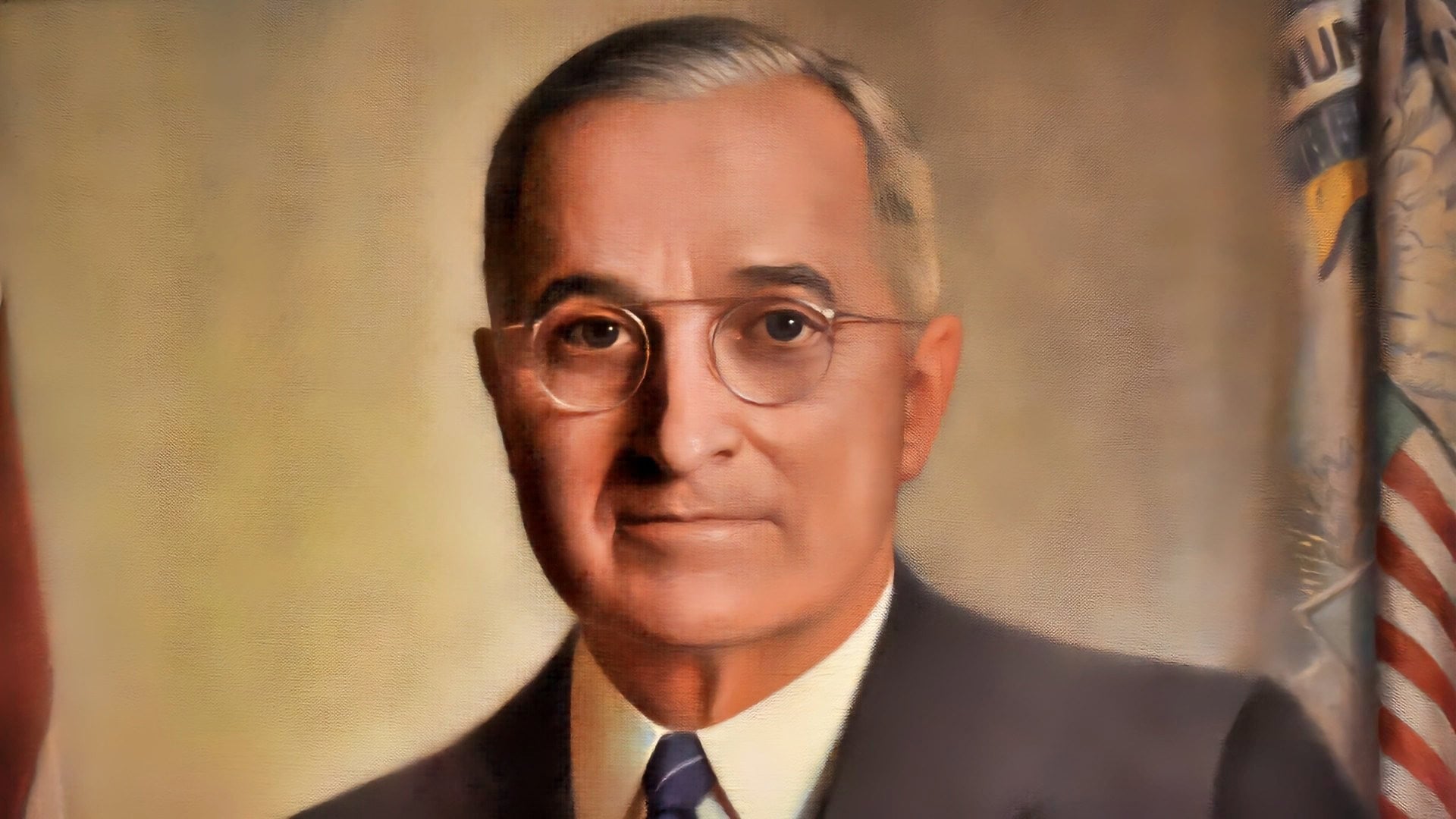
Harry S. Truman National Portrait Gallery 19FortyFive.com Photo Taken in Washington, DC on 1/23/2026.
But for all the adulation lavished upon FDR by so many historians, I’m going to risk the ire of a lot of our readers by daring to say that his domestic policies were absolutely godawful, at least according to my perspective:
-The National Firearms Act of 1934, the most opprobrious anti-gun legislation since the racist “black codes” of the segregationist Jim Crow South
–Confiscation of all privately-owned gold in the country in 1933
-Social Security, which Romina Boccia of the Cato Institute labels “a legal Ponzi scheme.”
-The New Deal, which, contrary to popular belief, did **not** end the Great Depression
And though his World War II leadership was certainly commendable, even that legacy was tarnished during the Yalta Conference, whereupon FDR sold out the Eastern European peoples to Joseph Stalin and the Soviet Union; instead of being truly liberated, the soon-to-be Warsaw Pact (Eastern Bloc) nations went from one tyrannical jackboot (the National Socialism of Adolf Hitler) to another (global communism).
FDR a Communist Enabler? One Expert’s Opinions
As luck and cool coincidence would have it, the same day that our esteemed Editor-in-Chief assigned me this article, I attended a fireside chat with Professor Amos N. Guiora—professor at the S.J. Quinney College of Law, University of Utah, where he directs the Bystander Initiative—titled “Communist Crimes of Complicity: Collaborators, Bystanders, and Enablers in Communist Countries.”
The event took place at the Victims of Communism Memorial Foundation and Museum (VOC), and was moderated by Eric Patterson, VOC’s President and CEO.
During the Q&A session, I asked Dr. Guiora the following two-part question:
“Let me stir the pot a little bit by asking about Communist enablers in our own country, two former U.S. Presidents no less. First of all, FDR. It’s well known that FDR practically had a mancrush on Joseph Stalin—Bill O’Reilly talked about it in his book “Killing Patton“—and Susan Butler compiled a book titled ‘My Dear Mr. Stalin: The Complete Correspondence of Franklin D. Roosevelt and Joseph V. Stalin.’ So then, would you consider it reasonable to label FDR a Communist enabler? Why or why not?
(NOTE: I also asked about Dwight David Eisenhower’s status as a Communist enabler due to his refusal to help the Hungarian freedom fighters of 1956, but spatial limitations prevent me from covering that portion of the Q&A right now.)
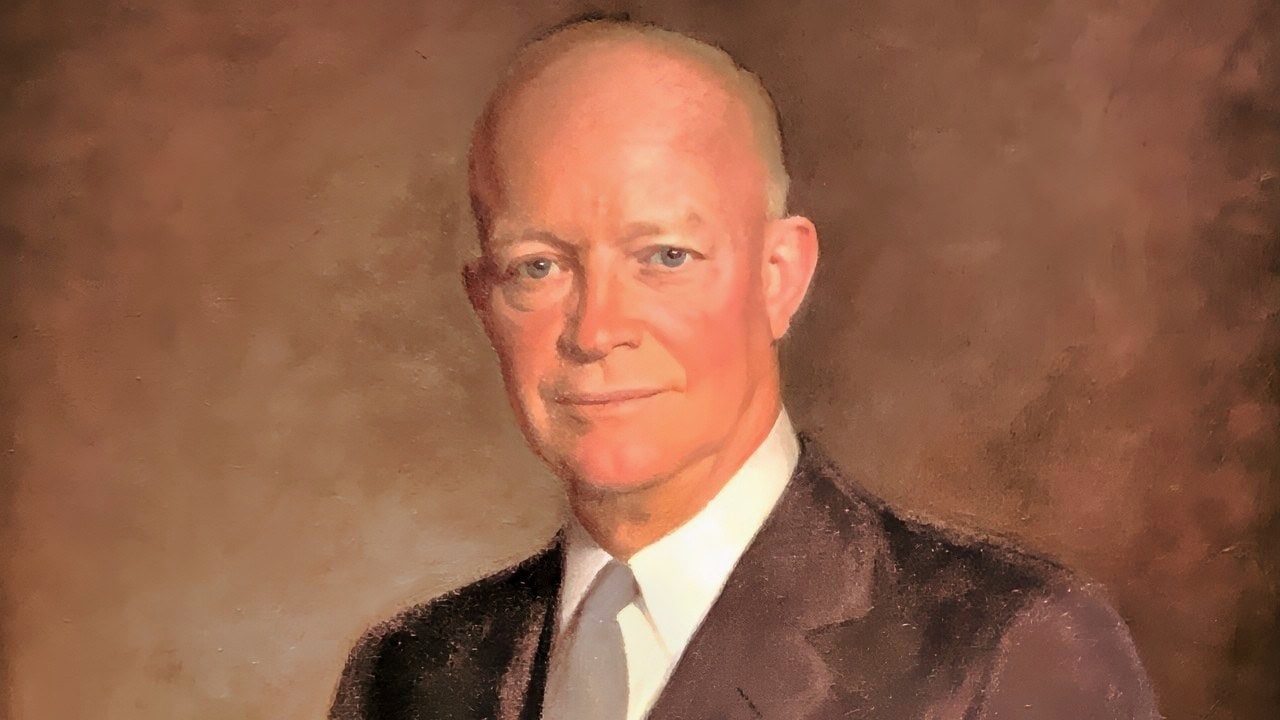
Dwight D. Eisenhower President. Image Credit: Creative Commons.
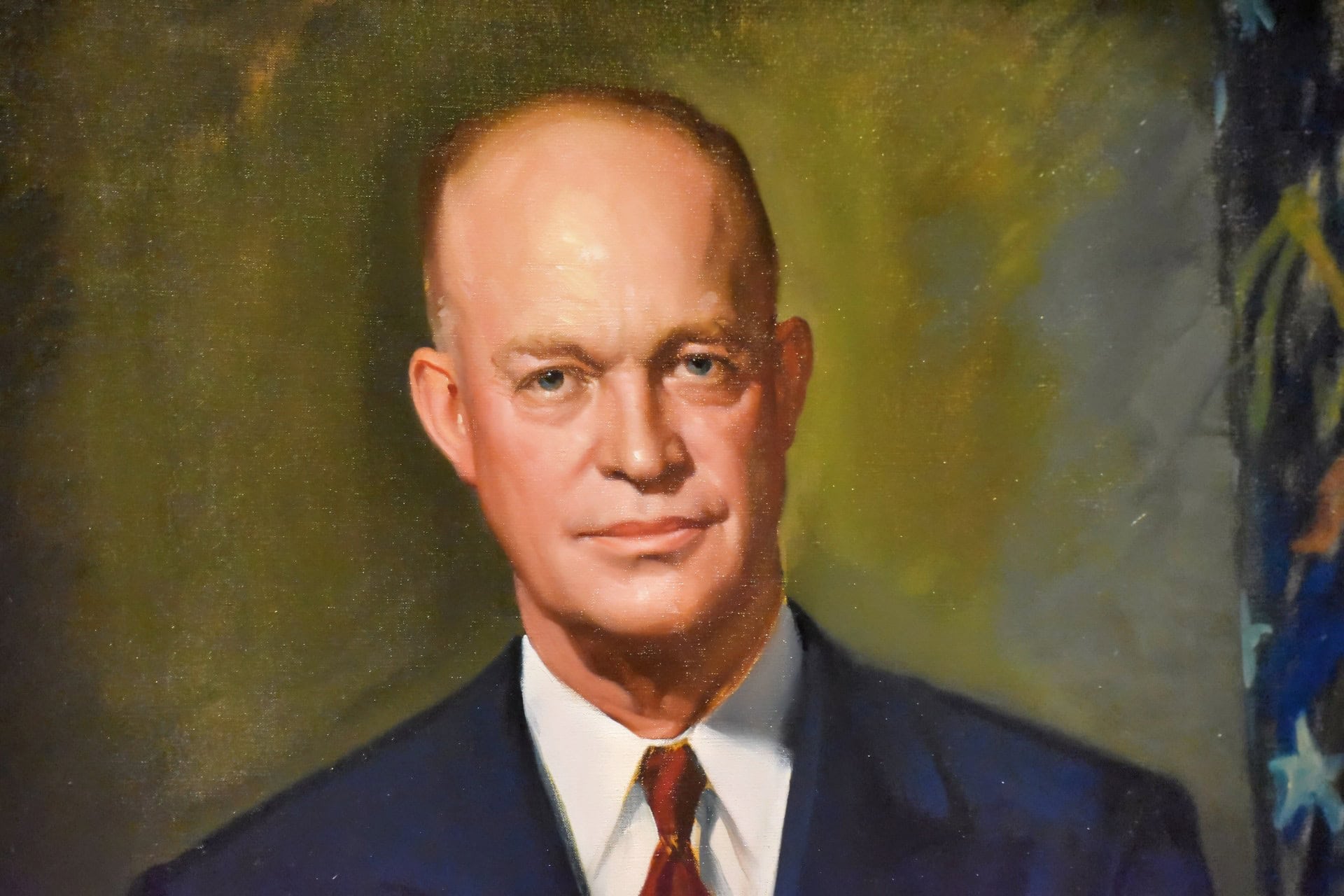
Dwight D. Eisenhower 19FortyFive.com Image. Taken on 1/23/2026 at the National Portrait Gallery in Washington, DC By Dr. Brent M. Eastwood.
Amos answered my question thusly:
“When you first mentioned FDR, I thought you were going to mention his [failure to intervene] in the Holocaust … it raises some questions about his decisions not to bomb the railroads [that led to the concentration camps] … So, in my spare time, I am a huge [Sir Winston] Churchill [aficionado] … He, Churchill, to your question, sir, had a far better and keener understanding of Stalin … on the other hand, without that unique relationship between Churchill and FDR … none of us would be here…and so, we all have our faults, but there’s no doubt that the United States in the Second World War under FDR saved the world.”
A fair & balanced and nuanced answer, I daresay, much appreciated.
About the Author: Christian D. Orr
Christian D. Orr is a Senior Defense Editor. He is a former Air Force Security Forces officer, Federal law enforcement officer, and private military contractor (with assignments worked in Iraq, the United Arab Emirates, Kosovo, Japan, Germany, and the Pentagon). Chris holds a B.A. in International Relations from the University of Southern California (USC) and an M.A. in Intelligence Studies (concentration in Terrorism Studies) from American Military University (AMU). He is also the author of the newly published book “Five Decades of a Fabulous Firearm: Celebrating the 50th Anniversary of the Beretta 92 Pistol Series.”