
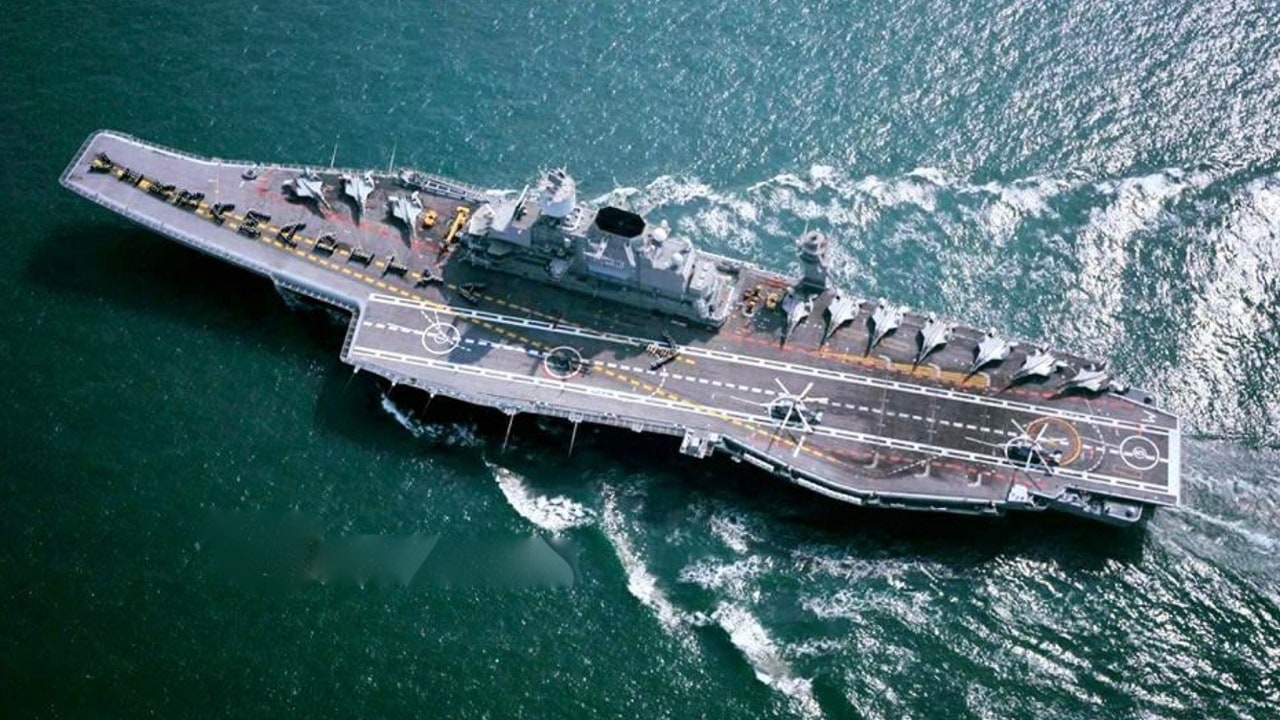
The Soviet Union was building a nuclear aircraft carrier designed to rival the American Nimitz-class — 80,000 tons, four nuclear reactors, steam catapults, a full air wing including AWACS aircraft. The USSR collapsed before it was finished, and within six months an American company had paid to cut it into scrap — a company some Russians still believe was a CIA front.
Russia’s Nuclear Aircraft Carrier Dream
Before the end of the Cold War, the Soviet Union was already developing plans to replace its troubled Kuznetsov-class carrier, and that meant nuclear-powered aircraft carriers. Project 1143.7 was intended to usher in a new type of aircraft carrier that could compete with the U.S. Navy’s Nimitz-class supercarriers.
The lead ship, Ulyanovsk, was supposed to be the first of two ships in the class and was planned to become the flagship of the Soviet Navy.
When the USSR collapsed, ownership of the carrier was transferred to Russia, which had financed the entire project, but construction had already begun in the now-independent Ukraine.
With both nations strapped for cash, neither had the resources or the political will to see the project through to its conclusion.
The project that was supposed to revolutionize Soviet Naval might died before it could even reach the waves.
A New Type of Soviet Supercarrier
For most of the Cold War, Soviet naval doctrine rejected American‑style carrier fleets. Soviet strategists instead favored submarines, long‑range maritime bombers, and anti‑ship missiles as asymmetric counters to U.S. naval superiority.
The result was a series of hybrid designs, such as the Kiev-class and, later, the Admiral Kuznetsov, which carried aircraft but relied on ski‑jumps rather than catapults and were constrained by payload, sortie rate, and operational flexibility.
By the late 1970s and early 1980s, however, senior officers, most notably Admiral Sergey Gorshkov, recognized that these compromises left the Soviet Navy unable to contest U.S. carrier groups on equal terms.
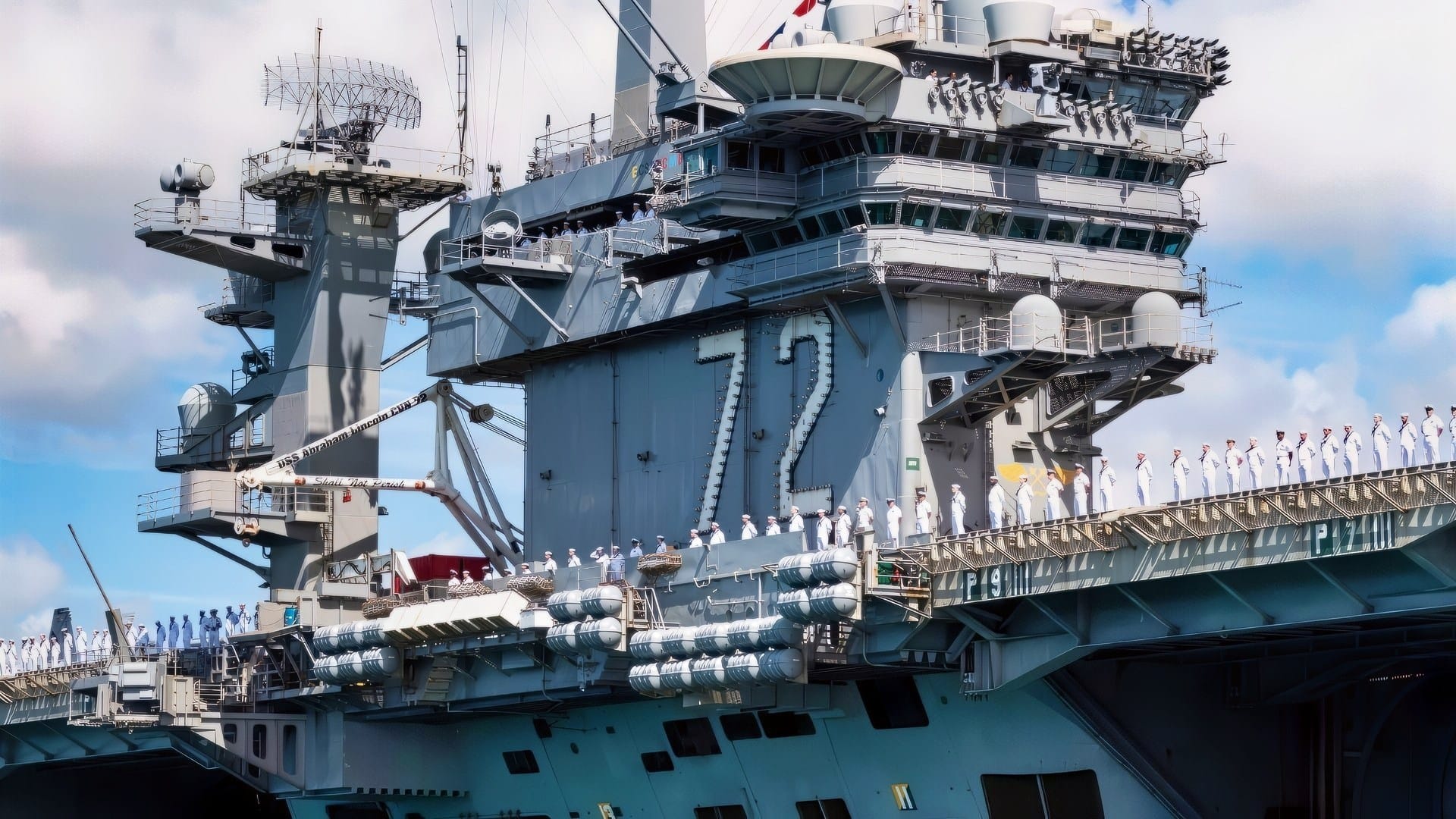
(June 28, 2022) – Nimitz-class aircraft carrier USS Abraham Lincoln (CVN 72) arrives at Joint Base Pearl Harbor-Hickam to participate in Rim of the Pacific (RIMPAC) 2022, June 28. Twenty-six nations, 38 ships, four submarines, more than 170 aircraft and 25,000 personnel are participating in RIMPAC from June 29 to Aug. 4 in and around the Hawaiian Islands and Southern California. The world’s largest international maritime exercise, RIMPAC provides a unique training opportunity while fostering and sustaining cooperative relationships among participants critical to ensuring the safety of sea lanes and security on the world’s oceans. RIMPAC 2022 is the 28th exercise in the series that began in 1971. (U.S. Navy photo by Mass Communication Specialist 1st Class Devin M. Langer)
This realization drove the decision to pursue a full‑scale carrier design equipped with catapults, nuclear propulsion, and a specialized airborne early‑warning aircraft, all features absent from previous Soviet carriers.
Ulyanovsk was the result of the USSR’s doctrinal shift. With a planned full‑load displacement of approximately 75,000 to 80,000 tons, the ship would have been the largest warship ever built by the USSR.
It was to be powered by four KN‑3 nuclear reactors driving steam turbines with a total output of roughly 280,000 shaft horsepower, providing a maximum speed of around 30 knots and essentially unlimited range.
This propulsion system mirrored the strategic logic of American nuclear carriers: sustained global operations without dependence on underway refueling.
The ship’s flight deck incorporated two steam catapults, allowing fully fueled and armed fixed‑wing aircraft to launch, which the Kuznetsov-class could not do due to its ski‑jump configuration.
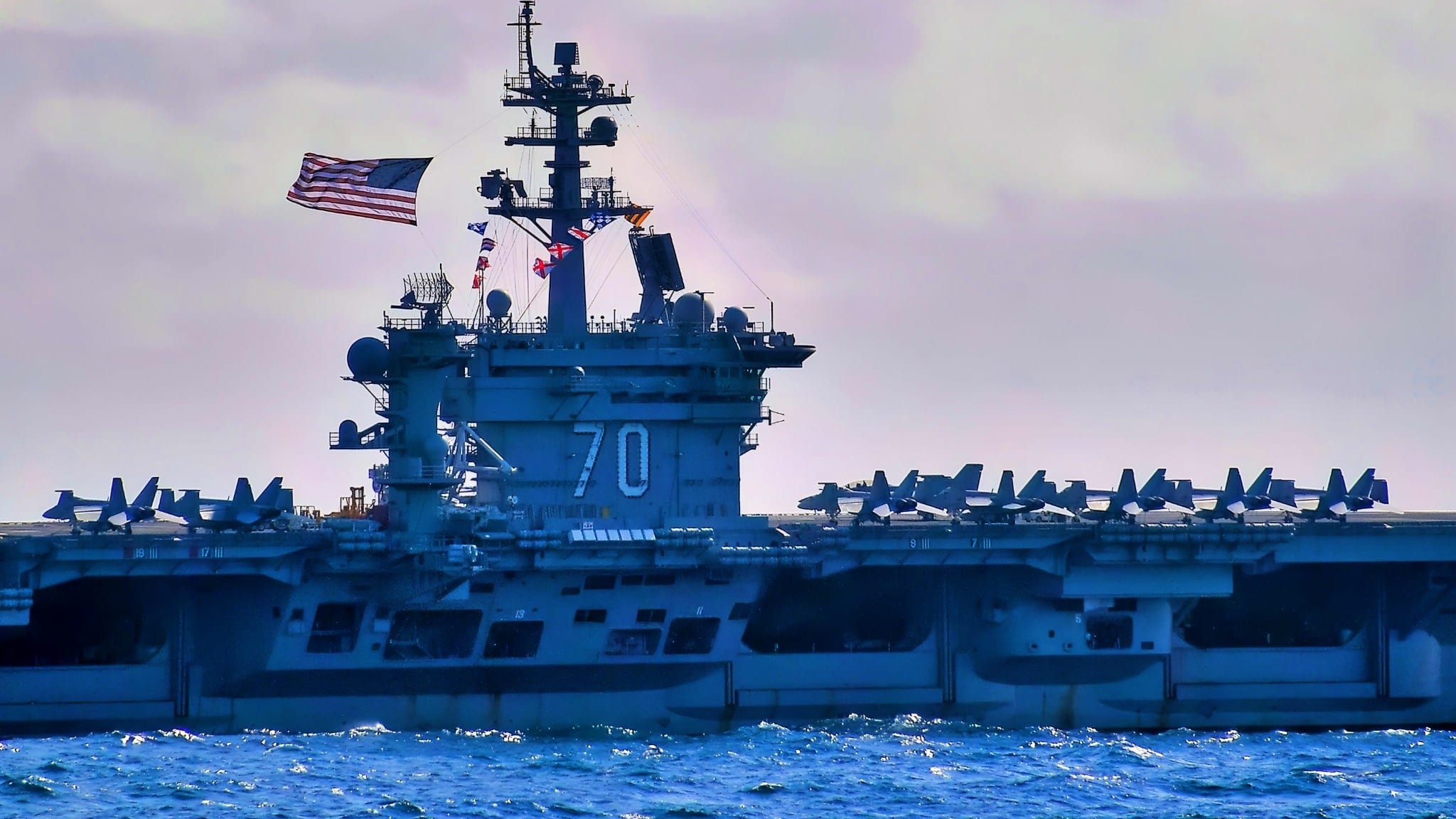
The Battle Ensign is flown aboard the Nimitz-class aircraft carrier USS Carl Vinson during an exercise with the Peru navy. Carl Vinson is supporting Southern Seas 2010, a U.S. Southern Command-directed operation that provides U.S. and international forces the opportunity to operate in a multi-national environment.
Design and Construction: Not a Nimitz-Class Copy
The carrier was designed to operate roughly 68 to 70 aircraft, including Su‑33 and MiG‑29K fighters for air defense and strike missions, Ka‑27 helicopters for anti‑submarine warfare and search‑and‑rescue, and, most importantly, the Yak‑44 AWACS aircraft.
The Yak‑44 was intended to provide radar coverage and battle management capabilities similar to those of the American E‑2 Hawkeye, a capability the Soviet Navy had long lacked. In line with the Soviet design tradition, Ulyanovsk also carried heavy organic armament, including 12 P‑700 Granit anti‑ship missiles and layered air‑defense systems, reflecting lingering concerns about relying exclusively on carrier aviation for self‑protection.
Construction of Ulyanovsk officially began on 25 November 1988 at the Black Sea Shipyard in Nikolayev (now Mykolaiv, Ukraine).
Building a ship of this scale required extensive modernization of the shipyard, including new heavy‑lift cranes, expanded fabrication halls, and upgraded infrastructure for handling massive hull sections. These preparations alone had been a significant industrial investment.

Artist concept of a Soviet Kiev-class aircraft carrier in a floating drydock. “Soviet Military Power,” 1983, Page 82-83
A bow view of a Soviet Kiev-class aircraft carrier (CVHG) underway
By late 1991, estimates of completion ranged from roughly 20 to 40 percent, depending on whether progress was measured by hull structure or overall system installation. Major components such as the nuclear reactors and propulsion machinery had not yet been installed, and full operational capability was not expected before the mid‑1990s.
The Fall of the USSR and the End of Ulyanovsk
The project’s cancellation was driven primarily by the collapse of the Soviet economy. By the late 1980s, systemic inefficiencies, falling revenues, and the burden of sustained military spending had pushed the USSR into a deep financial crisis.
Large military programs increasingly competed with basic economic needs, and Ulyanovsk was exceptionally expensive.
Contemporary estimates placed its cost at around 800 million Soviet rubles for the hull alone and as much as 2 billion rubles once the air wing, weapons, and infrastructure were included. As the Soviet Union moved toward bankruptcy, funding such a prestige project became politically and economically indefensible.
When the Soviet Union dissolved in December 1991, Ulyanovsk found itself stranded in a newly independent Ukraine, while Russia claimed ownership because it had financed the project.
At the same time, the Soviet defense‑industrial system fractured along new national borders, leaving key suppliers, reactor manufacturers, and design bureaus in different countries.

An aerial port bow view of the Soviet aircraft carrier KIEV underway.
The centralized planning mechanisms that had sustained projects like Ulyanovsk simply ceased to exist. Neither Russia nor Ukraine possessed the financial resources or political incentive to resolve ownership disputes and continue construction of a nuclear supercarrier.
The Systematic Gutting of Russian and Ukrainian Naval Industries
Despite the harsh economic situation in the newly formed Russian Federation, some in both Russia and Ukraine still proposed completing the project, or at least launching it before deciding its fate. This proposal was rejected by the Russian state itself under Prime Minister Viktor Chernomyrdin.
In 1992, the Nikolaev Black Sea Shipyard stopped work on Ulyanovsk, along with her unnamed sister ship and the Kuznetsov-class carrier Varyag.
In just six months, the carrier was mostly reduced to scrap as required by a contract signed with an American company (which some Russians today speculate was actually a CIA front company, interestingly enough). Not long after, nothing of Ulyanovsk remained.
The story of Ulyanovsk perfectly illustrates the decline of Russia’s shipbuilding industry.
As a result of the USSR’s collapse, up to 50% of shipbuilding and ship repair facilities, up to 85% of its ships, up to 70% of its design bureaus and research institutes, and up to 80% of its scientific personnel were lost. Most of these losses were due to Russia’s harsh economic realities, which necessitated pragmatic but tough decisions.
A lot was also due to short-sighted decisions and corruption within the Russian Navy itself (which is a completely different topic in itself). As a result, Russia is still climbing out of the pit it dug for itself. Scraping Ulyanovsk made logical sense at the time, but it caused more harm to Russia’s fleet in the medium and long term.
About the Author: Isaac Seitz
Isaac Seitz, a Defense Columnist, graduated from Patrick Henry College’s Strategic Intelligence and National Security program. He has also studied Russian at Middlebury Language Schools and has worked as an intelligence Analyst in the private sector.