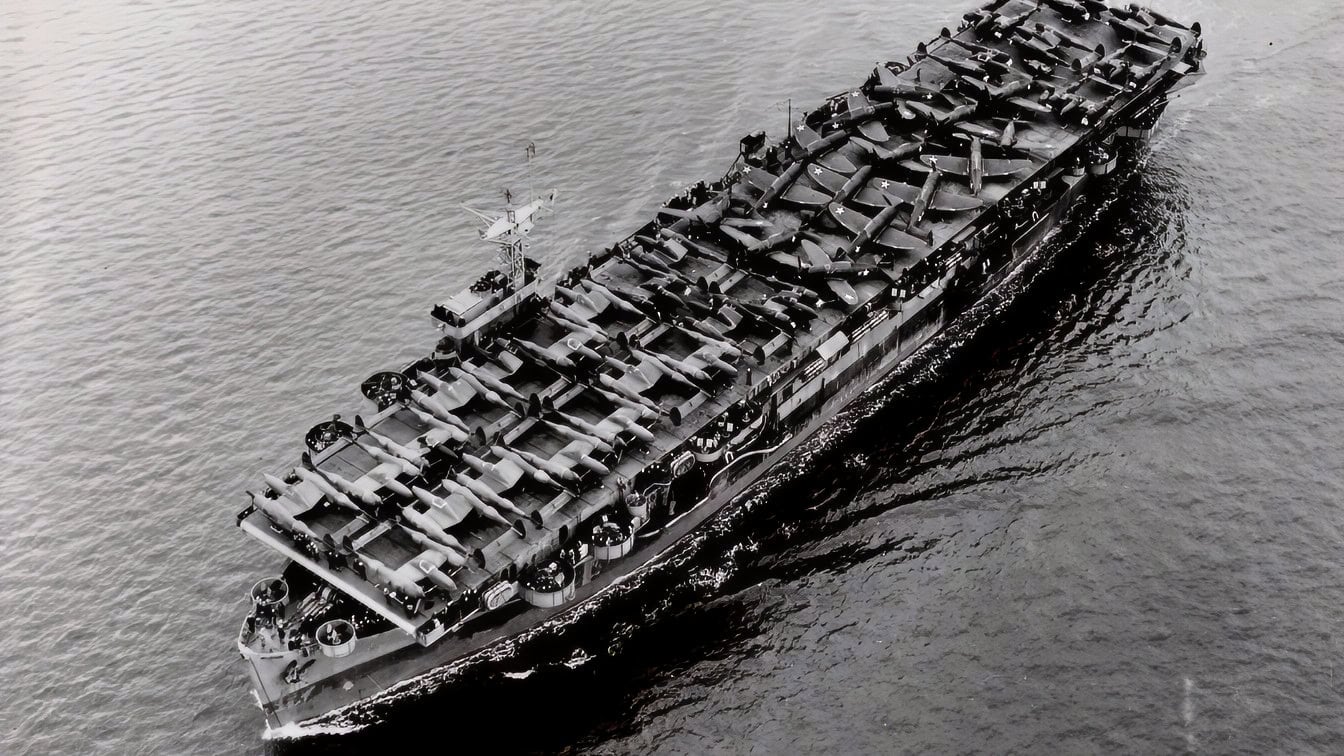
In the early morning hours of May 2, 1964, two Viet Cong frogmen emerged from a sewer tunnel in the port of Saigon carrying 90 pounds of TNT and C4 explosives each, with the intention of setting off two time bombs. The target was the USNS Card (T-AKV-40) – a Bogue-class escort aircraft carrier from World War II. In a stunning attack on the ship, the combined 180 pounds of explosives detonated at three o’clock in the morning, and sank the ship, stern first, in 15 meters of water.
It was a huge victory for the Viet Cong.
It was the only major vessel lost by the United States during the war in Vietnam. The Card was quickly refloated, repaired, and returned to service until it was retired in 1970.
Background on The USNS Card (ACV-11) Later (T-AKV-40):
The Card was launched in 1942 as a Bogue-class escort carrier (ACV-11). It was named after Card Sound, a part of Biscayne Bay near Miami, Florida.
During World War II, the Card served in the Atlantic, where it participated in several hunter-killer cruises to seek out and destroy German U-boats.
The Card was the flagship of Task Group 21.14. And the ship’s crew and small complement of aircraft were very successful, where over three cruises, its airmen sank nine U-boats.
After the war in 1946, the Card was decommissioned and placed in the reserve fleet until 1958, when it was reactivated for the Military Sea Transportation Service as an aircraft transport (T-AKV-40). Ships such as the Card were owned by the Navy but crewed by civilians. The Navy continues to do so today, with most of the Roll-on/Roll-off ships operated by civilian engineers.
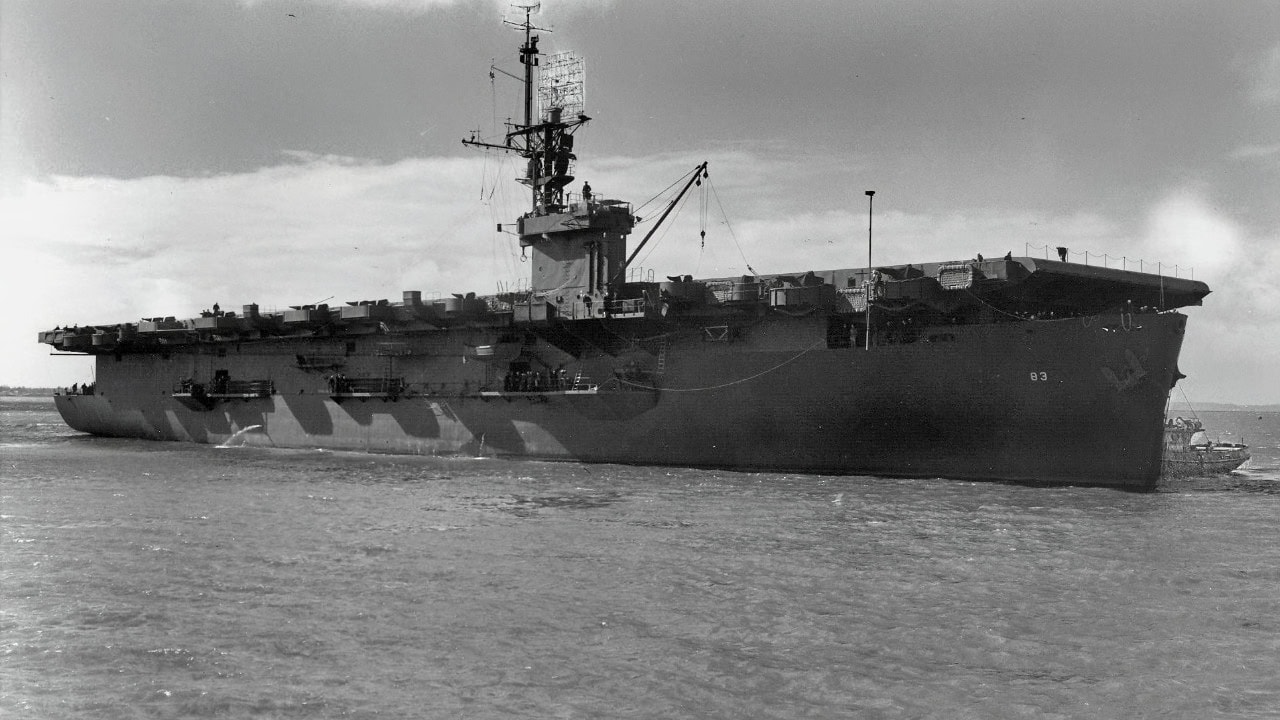
Casablanca-Class Aircraft Carrier
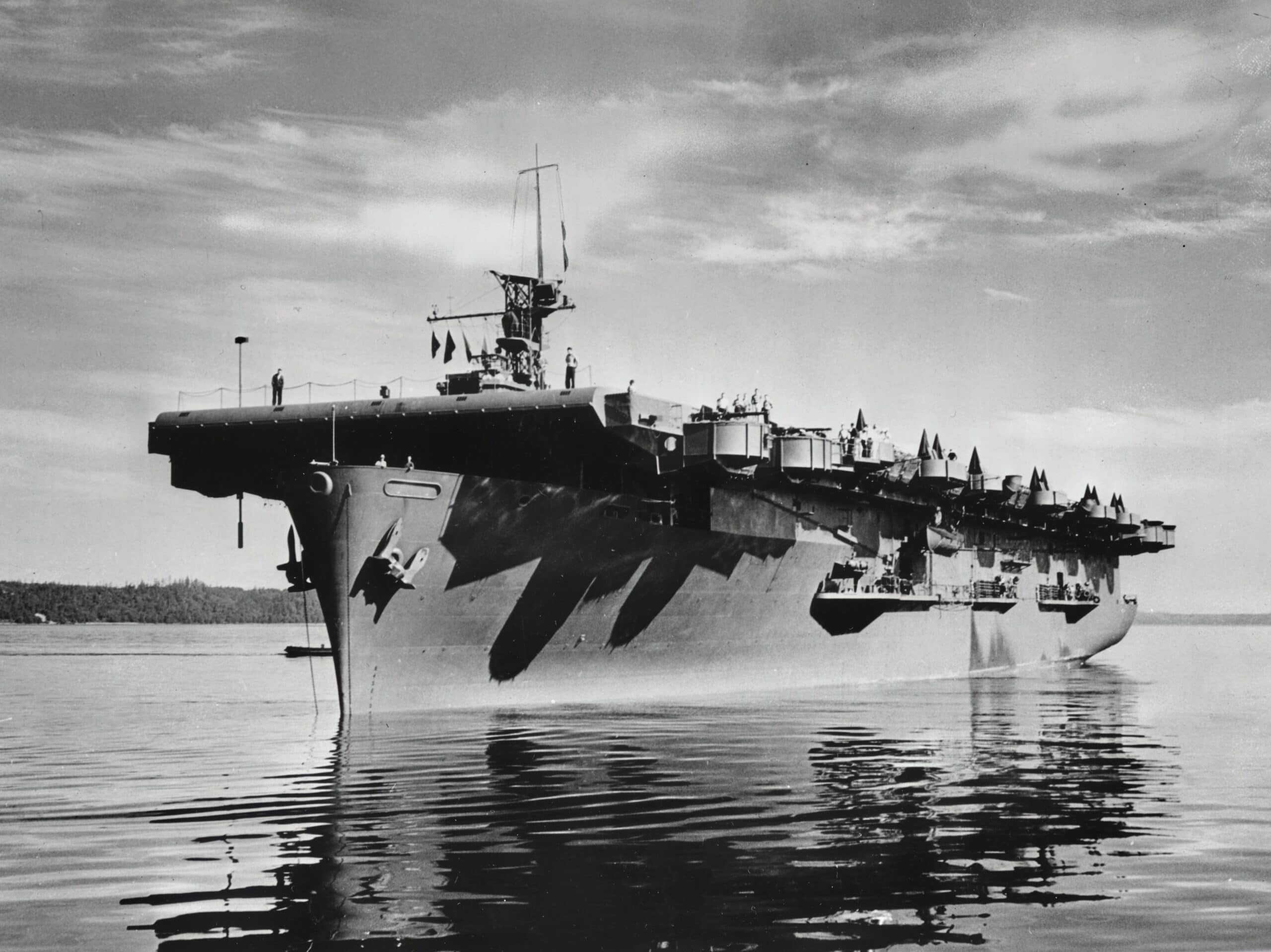
Casablanca-Class.
So, during the early days of American involvement in Vietnam, the Card was one of several older escort carriers used to ferry older aircraft the US was furnishing to the South Vietnamese.
Viet Cong Frogman/Stevedore In The Port Sees His Chance:
During the mid-1960s, the Port of Saigon was a civilian port under the control of the Republic of Vietnam’s governmental port authority. Cargo ships were loaded and unloaded by local civilian stevedores.
One of those Vietnamese stevedores who was tasked with loading and unloading cargo at the port in late April 1964 was Lam Son Nao. Nao became a member of the Viet Cong’s 65th Special Operations Group.
When Nao learned of the Card’s arrival into the port the following week, he decided to act. He had attempted to place mines on the USNS Core (T-AKV-41), but those failed to explode. This time would be different.
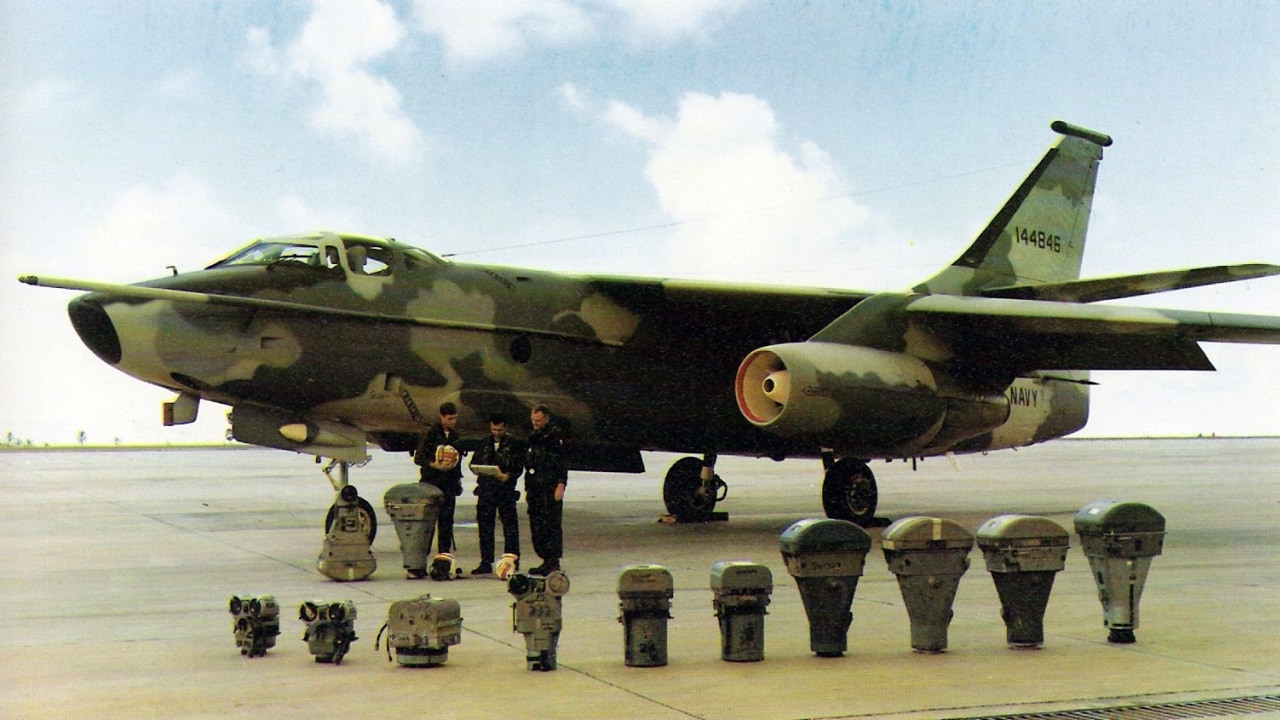
A camouflaged U.S. Navy Douglas RA-3B Skywarrior aircraft of reconnaissance squadron VAP-61 World Recorders (BuNo 144846) at Naval Air Station (NAS) Agana, Guam. Standing beside it are PH1c R. Laurie, LTJG D. Schwikert and LCDR Chas. D. Litford. On the ground in front of them are twelve cameras. VAP-61 was performed reconnaissance missions over Vietnam until it was disestablished on 1 July 1971. 144846 became an ERA-3B in 1982. It was later sold to Hughes Aircraft, inherited by Raytheon, (civil registration N547HA) and finally srcapped in 1999.
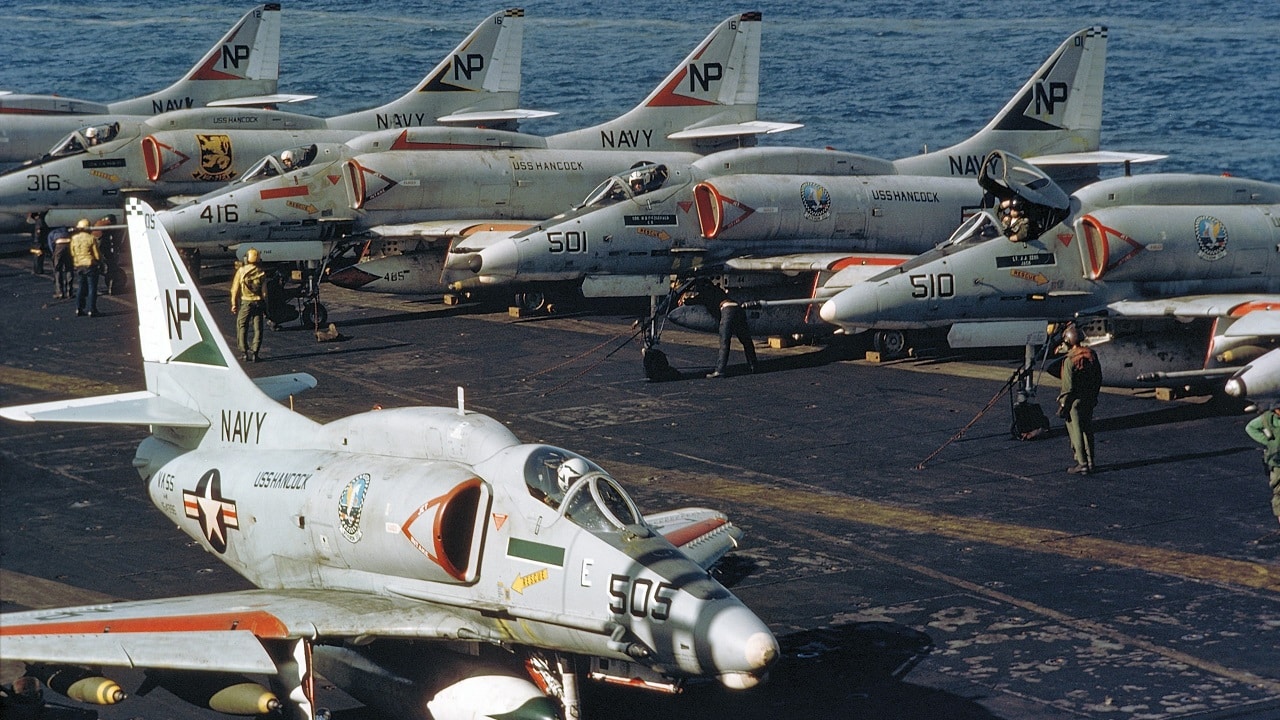
U.S. Navy Douglas A-4F Skyhawk of Attack Carrier Air Wing 21 (CVW-21) are parked on the flight deck of the attack aircraft carrier USS Hancock (CVA-19), armed for a mission over Vietnam on 25 May 1972. Skyhawks NP-501 (BuNo 155046), -505 (BuNo 154996), and -510 were assigned to Attack Squadron 55 (VA-55) “Warhorses”, NP-316 to VA-212 “Rampant Raiders”, NP-412 and NP-416 to VA-164 “Ghost Riders”. The aircraft are armed with Mk 82 (500 lb/227 kg) and Mk 83 (1000 lb/454 kg) bombs. CVW-21 was assigned to the Hancock for a deployment to Vietnam from 7 January to 3 October 1972.
“I was educated by the revolution, given a mission by my superiors, and protected by the city inhabitants. My job when I was a docker was to gather information on all the American areas, on all their boats and all their military storage facilities,” Lao recalled in 1981.
“When I found out that the USS Card was coming up the river, this was a ship that was carrying all kinds of airplanes to the country in order to kill the Vietnamese people, I got extremely mad. But I was able to turn my anger into action when I was tasked with trying to blow up the ship to support the political struggles of the city’s population.”
Nao constructed two mines, one with 80 kilos of TNT and the other with 8 kilos of C-4 plastic explosive. He and another Viet Cong operative transported the mines across the Saigon River at Thủ Thiêm at the other side of the dockyard from where the Card was berthed, but they were stopped by local port police.
The pair bribed the port police officers with 1,000 Vietnamese dong. The police officers demanded another bribe when the pair returned.
When the two operatives reached the sewer tunnel, they assembled the mines and swam through the tunnel, each towing nearly 90 pounds of explosives. After emerging from the tunnel, they swam toward the Card, which anchored near the sewer opening.
Náo and Hùng attached two bombs to the ship, with one near the bilge and one at the engine compartment, just above the waterline. Náo then inspected both bombs to ensure proper assembly. He then set the mines to explode at 0300 hrs.
Just an hour later, and only 15 minutes after Nao made it to his home, the mines detonated. The massive explosion ripped a 12-foot gash in the ship’s side under the waterline. Five civilian crew members were killed, and the ship sank stern-first into the harbor in some 15 meters of water.
Salvage Operations Began Immediately:
After some issues with pumping equipment, the Card was refloated on May 19. The USS Reclaimer, a rescue and salvage ship, and the tugboat USS Tawakoni then towed the Card to Subic Bay in the Philippines for repairs.
The Card re-entered the fleet in December 1964 and continued to serve until 1970, when it was retired and decommissioned. The USNS Card was later broken up and scrapped in 1971.
About the Author: Steve Balestrieri
Steve Balestrieri is a National Security Columnist. He served as a US Army Special Forces NCO and Warrant Officer. In addition to writing on defense, he covers the NFL for PatsFans.com and is a member of the Pro Football Writers of America (PFWA). His work was regularly featured in many military publications.