
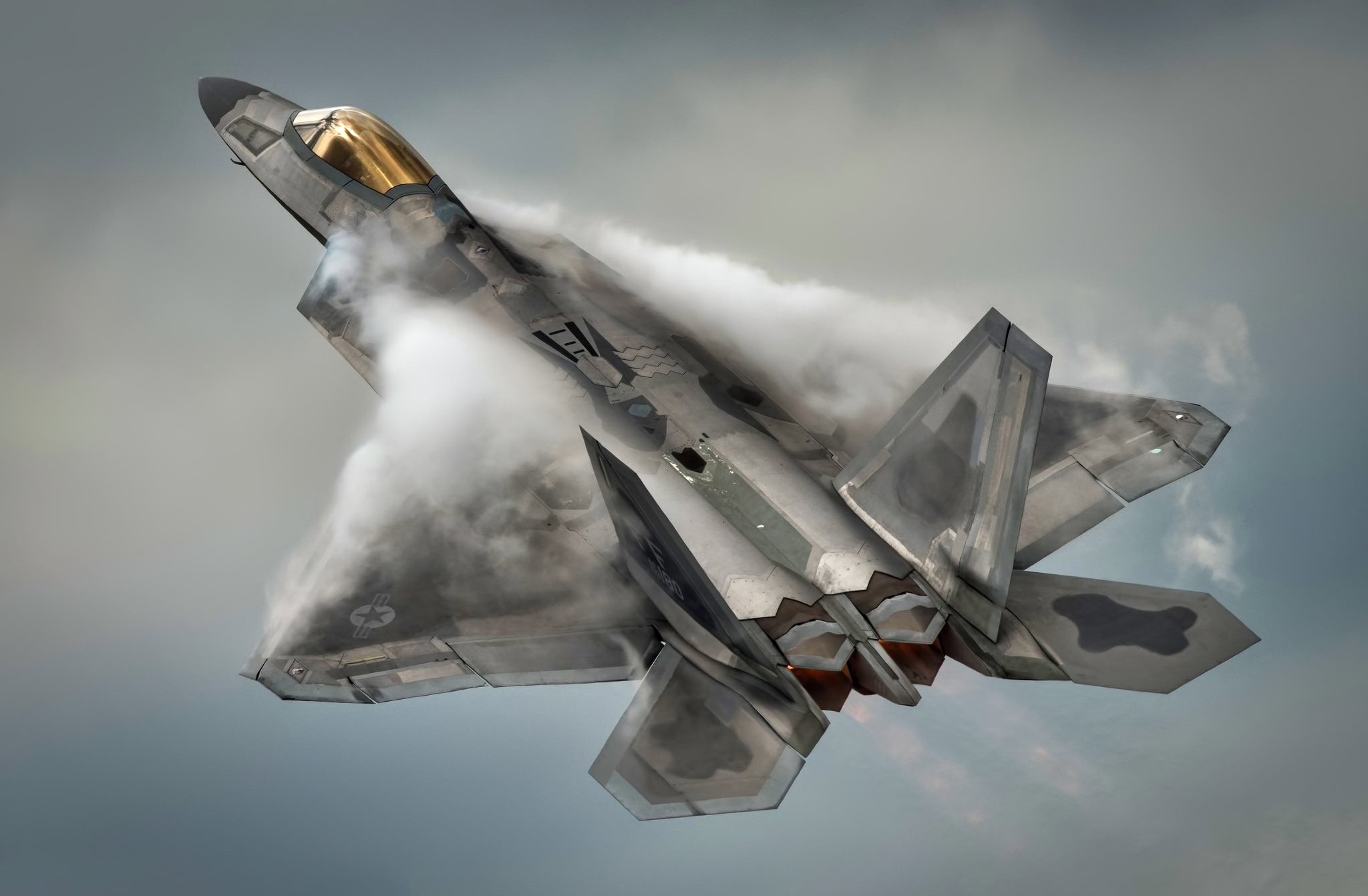
The F-22 Raptor—the world’s first operational 5th Generation stealth fighter and therefore a major set of bragging rights for both Lockheed Martin’s famed “Skunk Works” division and the United States Air Force alike—might be “dead” in the sense that then-U.S. Secretary of Defense (SECDEF) Bob Gates made the incredibly short-sighted decision back in 2009 to kill the F-22 Raptor program after only 187 airframes were built out of the original 381 planned, and therefore, we can’t build any more of them. (Gee, thanks, Bob.)
However, as for the Raptor specimens that *were* built, not only are they far from dead (the F-22 is still considered by many to be the world’s premier air superiority fighter, 28.5 years after making its maiden flight), there’s a plan to keep them alive and in service for many decades to come.
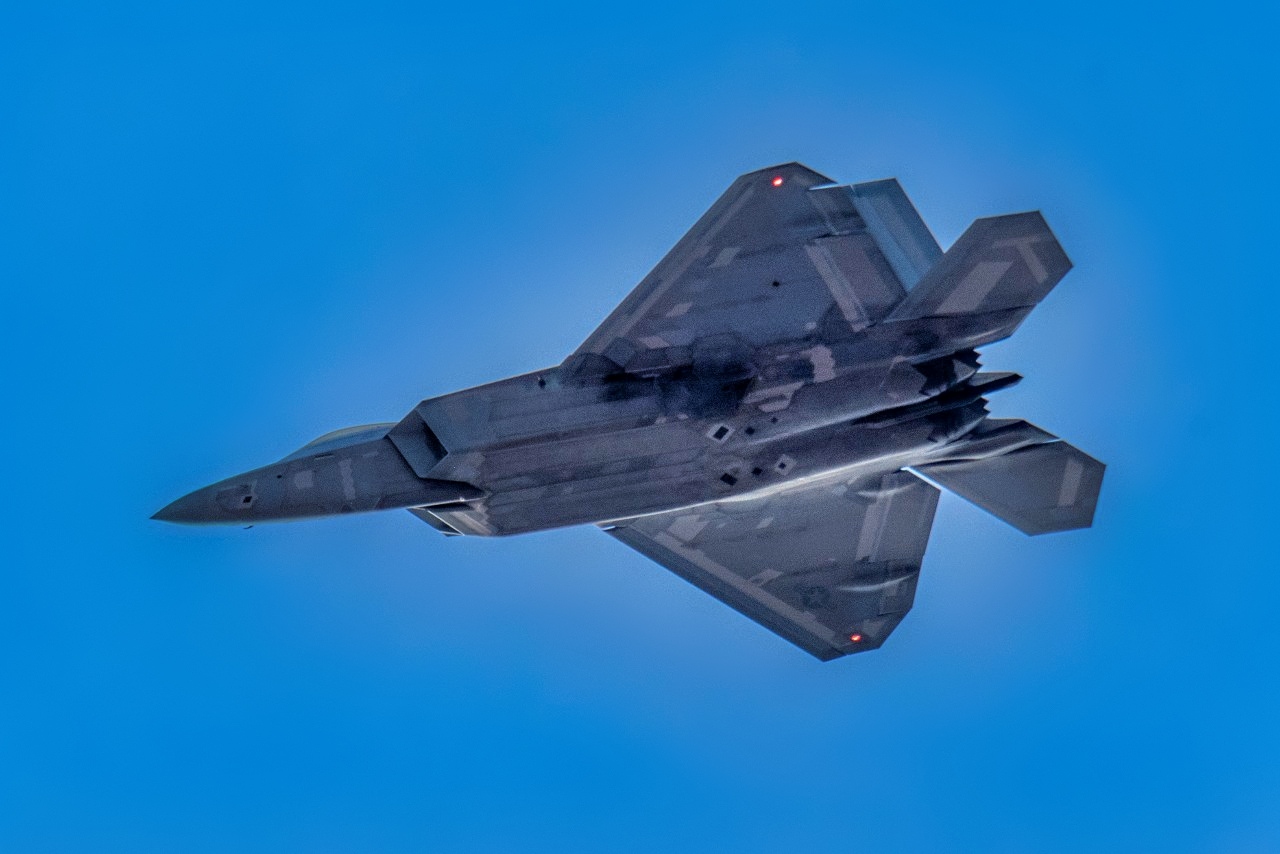
A U.S. Air Force F-22 Raptor assigned to the 3rd Wing conducts aerial practices at Joint Base Elmendorf-Richardson, Alaska, March 28. The F-22 is an American twin-engine, all-weather, supersonic stealth fighter aircraft and provides power projection across the Indo-Pacific region. (U.S. Air Force photo by Airman 1st Class Tala Hunt)
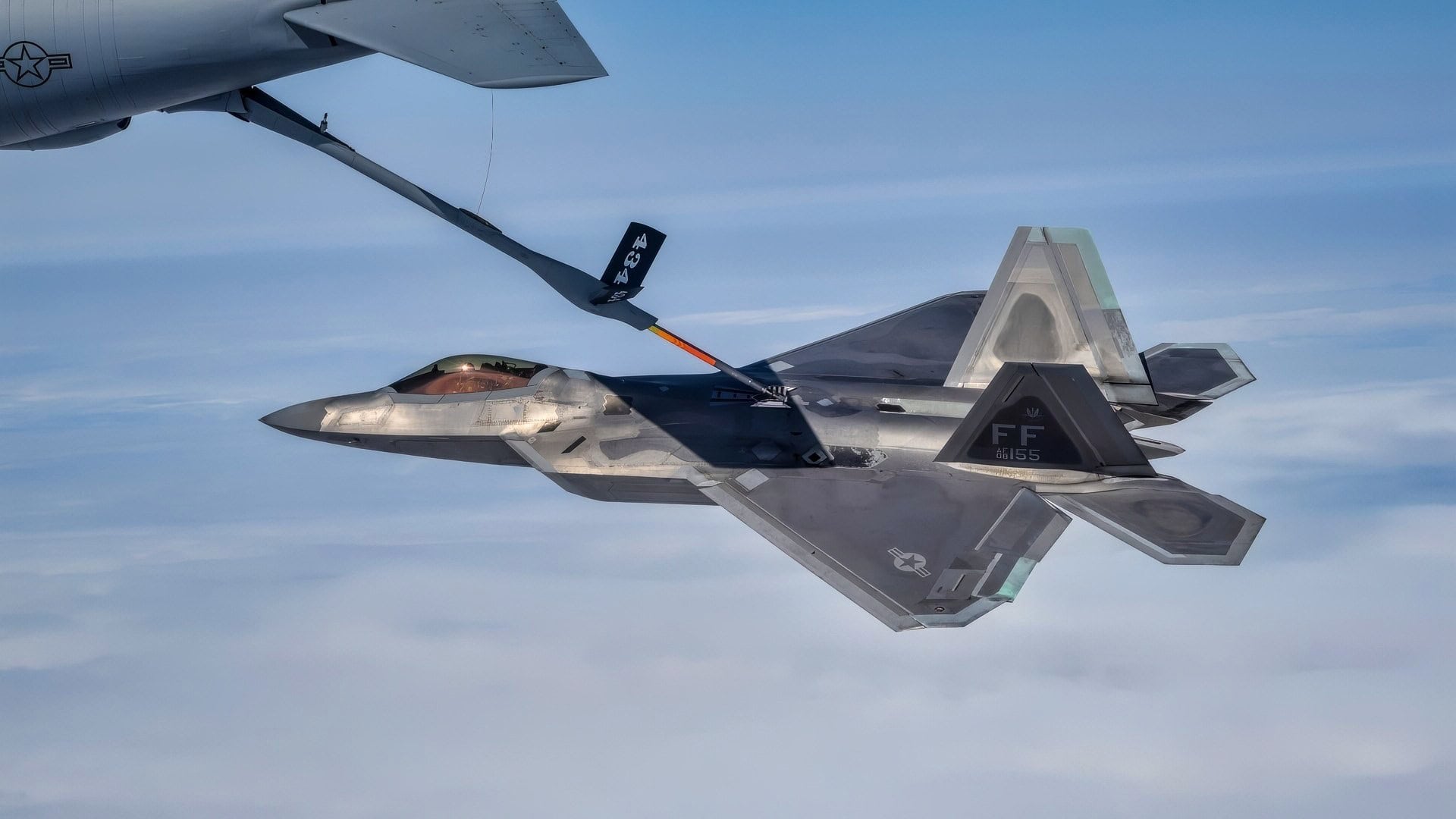
A U.S. Air Force F-22 Raptor and a KC-135 Stratotanker, assigned to the 434th Air Refueling Wing, Grissom Air Reserve Base, Ind., conduct aerial refueling over the continental United States, Aug. 21, 2018, during the Northern Lightning 18-2 exercise. Northern Lightning is one of seven Air National Guard joint accredited exercises held at a Combat Readiness Training Center and provides tailored, cost-effective and realistic combat training for participating units in a joint and multinational environment. (U.S. Air National Guard photo by Tech. Sgt. Mary E. Greenwood)
Indeed, if all goes as planned, the F-22 might become the fighter jet equivalent of the B-52 Stratofortress heavy bomber—unofficially nicknamed the “Stratosaurus” due to its current septuagenarian status (with the distinct possibility of becoming a centenarian before it’s finally retired)—in terms of sheer longevity.
Prelude and Preliminary Prolonging
Back in the earlier part of this decade (coincidental to the COVID-19 lockdowns, or as some folks called it, “The ChiCom Flu), it looked as though the Raptors that had survived the SECDEF Gates moratorium axe would be headed for a fairly short service life (especially with the emphasis on a comparatively newer Lockheed Martin stealth fighter that *wasn’t* discontinued, namely the F-35 Lightning II). In 2021, the USAF hinted that the F-22 would be retired by 2030 to make way for the 6th-generation F-47 Next Generation Air Dominance (NGAD) aircraft.
But then a funny thing happened on the way to the Raptors’ retirement party. Well, okay, more like a couple of funny things.
First of all, the NGAD program encountered developmental delays; indeed, then-Air Force Chief of Staff (CSAF) Gen. David Allvin put the NGAD on a “strategic pause” that may very well have ended up killing that program before President Donald John Trump and Senate Armed Services Committee (SASC) Chairman Sen. Roger Wicker (R-MS)- —himself a former US Air Force officer—gave it a new lease on life in early 2025.

F-22 Raptor Fighter. Image Credit: Creative Commons.
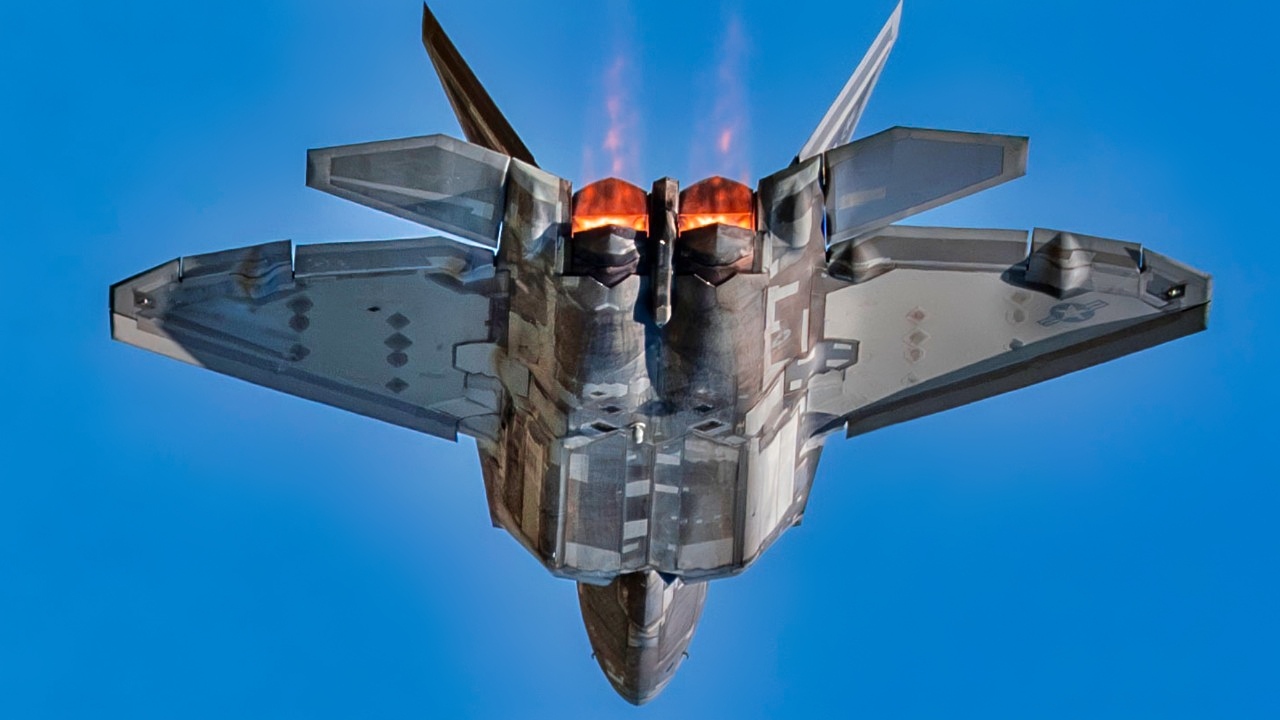
A U.S. Air Force F-22 Raptor performs an aerial demonstration during Altus airshow at Altus Air Force Base, Nevada, April 12, 2025. Aviation Nation is an airshow held at Nellis Air Force Base, showcasing the pride, precision and capabilities of the U.S. Air Force through aerial demonstrations and static displays. The F-22 Raptor performed there to highlight its unmatched agility and air dominance as part of the Air Force’s efforts to inspire, recruit and connect with the public. (U.S. Air Force photo by Staff Sgt. Lauren Cobin)
Second of all, the People’s Republic of China (PRC; the same country that stuck us with the “ChiCom Flu”) rapidly expanded its own Gen 5 stealth fighter fleet, namely the Chengdu J-20 Wēilóng (“Mighty Dragon,” NATO reporting name “Fagin”).
The USAF brass would’ve had a serious credibility gap on their hands had they proceeded with their Raptor retirement party plans in light of that PRC plane plague progression.
Raptor Revival
Ergo, instead of drawing down and demobilizing the F-22, the brass decided to double down on it instead; not by attempting to resurrect the production lines that Bob Gates had killed, but rather by choosing to keep the warbird relevant through incremental yet transformative upgrades designed to extend its service life well into the 2040s.
As the ever-savvy Wiley Stickney of Bolt Flight put it in an October 14, 2025, article titled “F-22 Raptor Upgrades Transform It into a 5.5-Generation Fighter with Drone Integration and Advanced Systems,” The decision was strategic and economic. The Raptor’s original program cost exceeded $62 billion (equivalent to $99 billion today). Decommissioning such a sophisticated aircraft while global competitors surged ahead made little sense. Modernization, rather than replacement, became the Air Force’s preferred course—especially with Lockheed Martin’s open-architecture systems allowing modular, cost-effective improvements across avionics, sensors, and weapons.” [author’s original emphasis]
Yes, you read that correctly: 5.5-Generation fighter. Just as so-called 4.5 Generation non-stealth fighters like the Eurofighter Typhoon and F-15EX Eagle II remain relevant in this day & age of Gen 5 stealth warplanes, in turn, 5.5 Generation technology will help the F-22 stay relevant once Gen 6 fighters like the NGAD (and hopefully the F/A-XX and Future Combat Air System [FCAS] for good measure) come online.
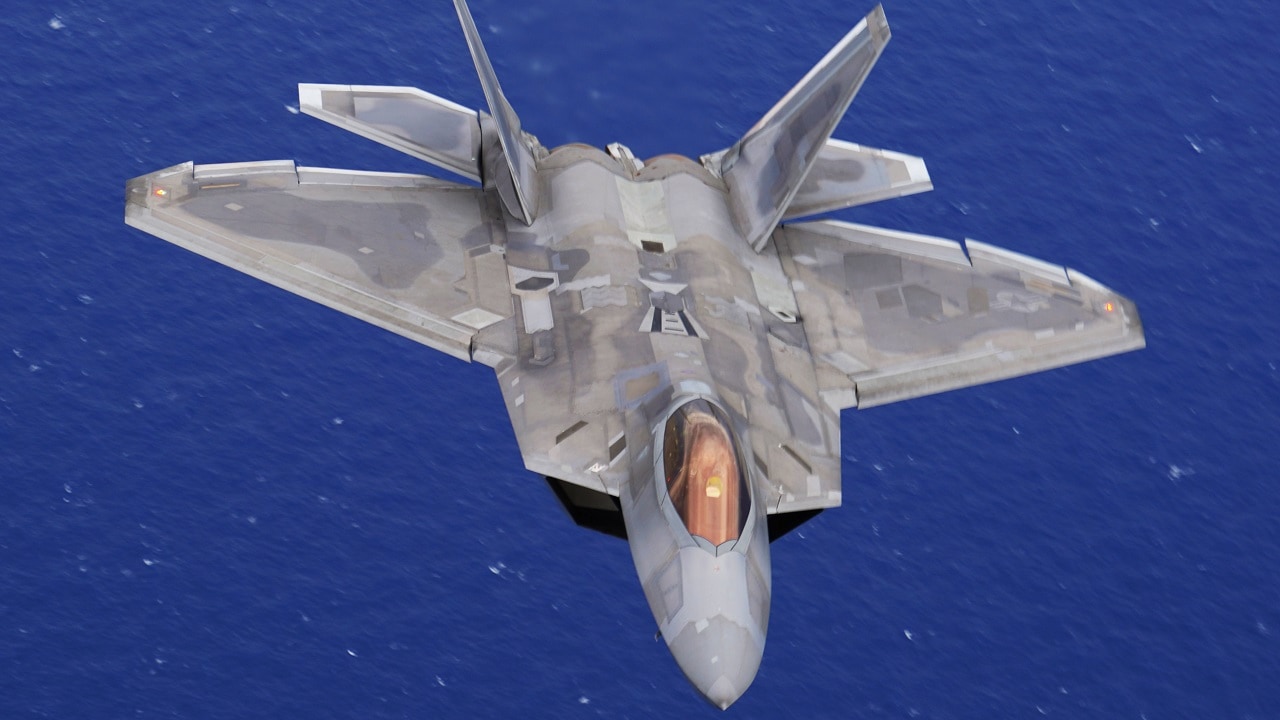
F-22 Hawaiian Raptor flies over Joint Base Pearl Harbor-Hickam, Hawaii, Dec. 5, 2019. Image Credit: Creative Commons.
Okay, great, that sounds all well and good in the general, abstract sense, but what does that mean in terms of specifics? Well, we’re glad you asked…
Raptors Remaining Relevant
…Enter the “Super Raptor.” Neither Mr. Stickney nor Joseph Trevithick of The War Zone (TWZ)—the latter in a July 2, 2025, piece titled “New F-22 Upgrade Package To Keep The Jets Viable Laid Out”—use the exact phrase “Super Raptor” in the sources that this author came across whilst conducting research for this article, but it’s pretty obvious that that’s what they’re talking about.
When the Air Force released its budget request for the Fiscal Year 2026, it asked for $90.34 million in funding in the then-upcoming fiscal cycle.
Amongst the upgrades envisioned for the F-35s from that slice of the Department of War budgetary pie:
-The Infrared Defensive System (IRDS) is one of the most hyped and ballyhooed items on the laundry list.
It gives the F-22 eyes in the thermal spectrum, capable of detecting long-range missile launches from multiple vectors, thus complementing the radar warning systems and improving 360-degree situational awareness (SA).
-An electronic warfare (EW) suite is being comprehensively updated with a new generation of software-defined countermeasures and miniaturized decoys inspired by the BrightCloud concept. These expendable decoys can mimic the F-22’s radar signature, thus drawing enemy missiles off target.
Okay, so that covers reactive, passive measures for defense against enemy forces…but what about proactive, active measures for offense, i.e., hunting down and killing those enemy forces? After all, having a hunter-killer mindset is a huge part & parcel of the warrior ethos of a fighter pilot. Again, we’re glad you asked:
-Paired Infrared Search and Track (IRST) pods.
Mounted roughly 9 meters (29.5 feet) apart, these pods provide stereo thermal imaging, enabling passive heat detection at long range. Tests indicate these sensors can spot rear-aspect stealth aircraft (like the aforementioned J-20) at 70–90 kilometers (43.5–55.9 miles) in wide-search mode and up to 130 kilometers (80.7 miles) in focused tracking.
This passive detection capability allows Raptors to track targets without blowing their cover via radar signal emissions—a massive tactical advantage in stealth-versus-stealth engagements.
-The AIM-260 Joint Advanced Tactical Missile (JATM)—yet another Lockheed Martin product—will replace the active radar-guided AIM-120 AMRAAM (Advanced Medium-Range Air-to-Air Missile; nicknamed the “Slammer”) and the infrared-guided (IR) AIM-9X “Sidewinder” in the coming years.
The JATM features roughly 30 percent more propellant, and if it employs a dual-pulse motor, it could achieve a range over 50 percent greater. Initial test firings from F/A-18 Super Hornets in 2024 suggest that the AIM-260’s engagement envelope could be double the area of the Slammer’s, giving the Raptor overwhelming standoff capability, thus boosting the probability of beyond-line-of-sight (BLOS) kills against both fighters and high-value assets like AWACS or tankers.
About the Author: Christian D. Orr
Christian D. Orr is a Senior Defense Editor. He is a former Air Force Security Forces officer, Federal law enforcement officer, and private military contractor (with assignments worked in Iraq, the United Arab Emirates, Kosovo, Japan, Germany, and the Pentagon). Chris holds a B.A. in International Relations from the University of Southern California (USC) and an M.A. in Intelligence Studies (with a concentration in Terrorism Studies) from American Military University (AMU). He is also the author of the book “Five Decades of a Fabulous Firearm: Celebrating the 50th Anniversary of the Beretta 92 Pistol Series,” the second edition of which was recently published.