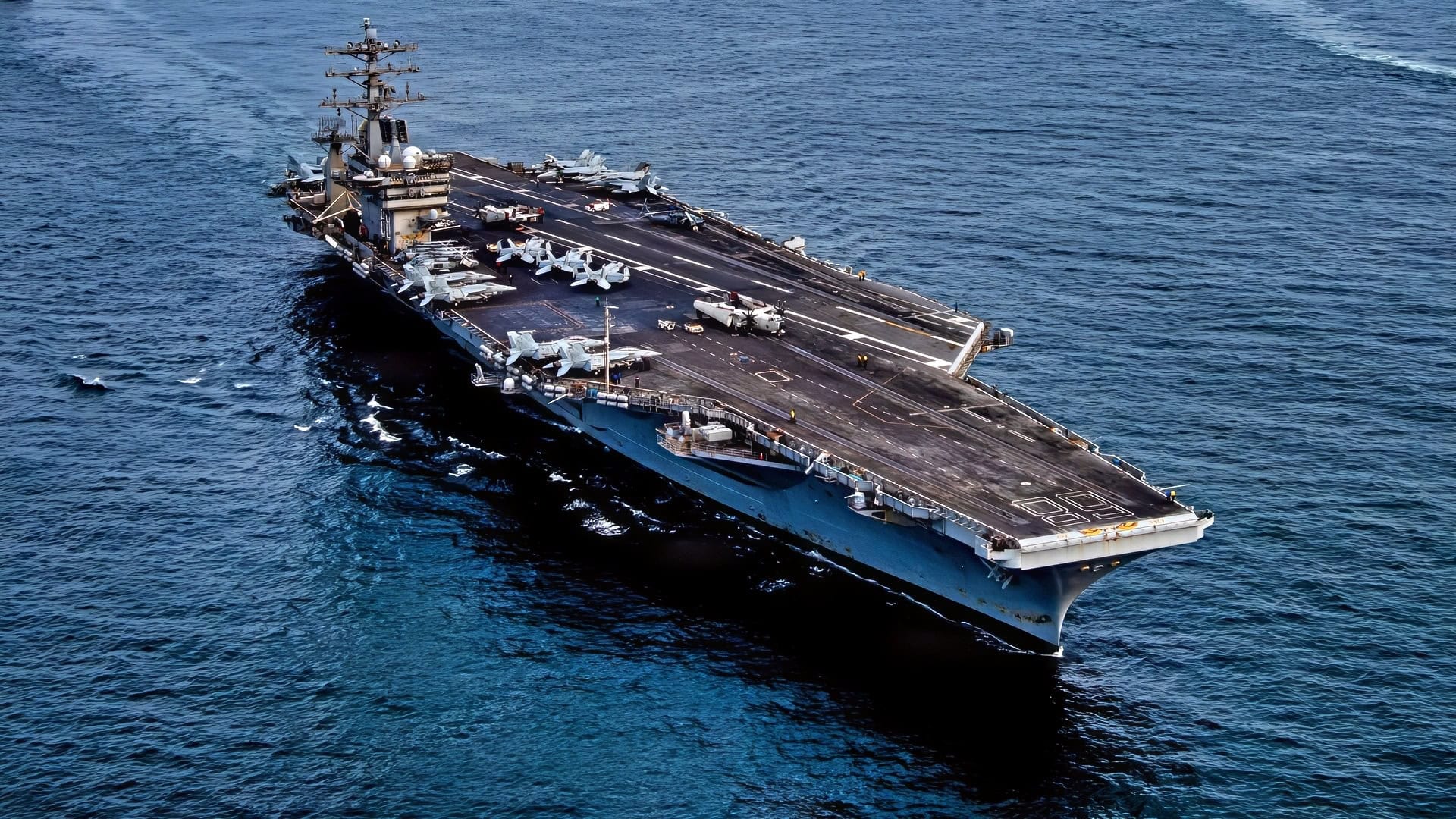
The U.S. Navy is in a precarious position. It is the world’s leading maritime force, yet it is the weakest it has been in decades. The Navy is smaller than it has been at any time outside the interwar years. Yet it is being tasked with waging two full-blown conflicts—one in the Middle East, and the other in Latin America—while continuing to deter both Russia and China. And now we have an Iran blockade to contend with, but more on that in a second.
Too Few Ships for Too Many Conflicts
Currently, the Navy has about 280–290 deployable ships. That might sound like a lot.
But given the United States’ global responsibilities, it is not a large force. During World War II, the Navy had more than 6,000 ships.
During the Cold War, the number fluctuated between 400 and 900. Today, the Navy is struggling due to its declining numbers.
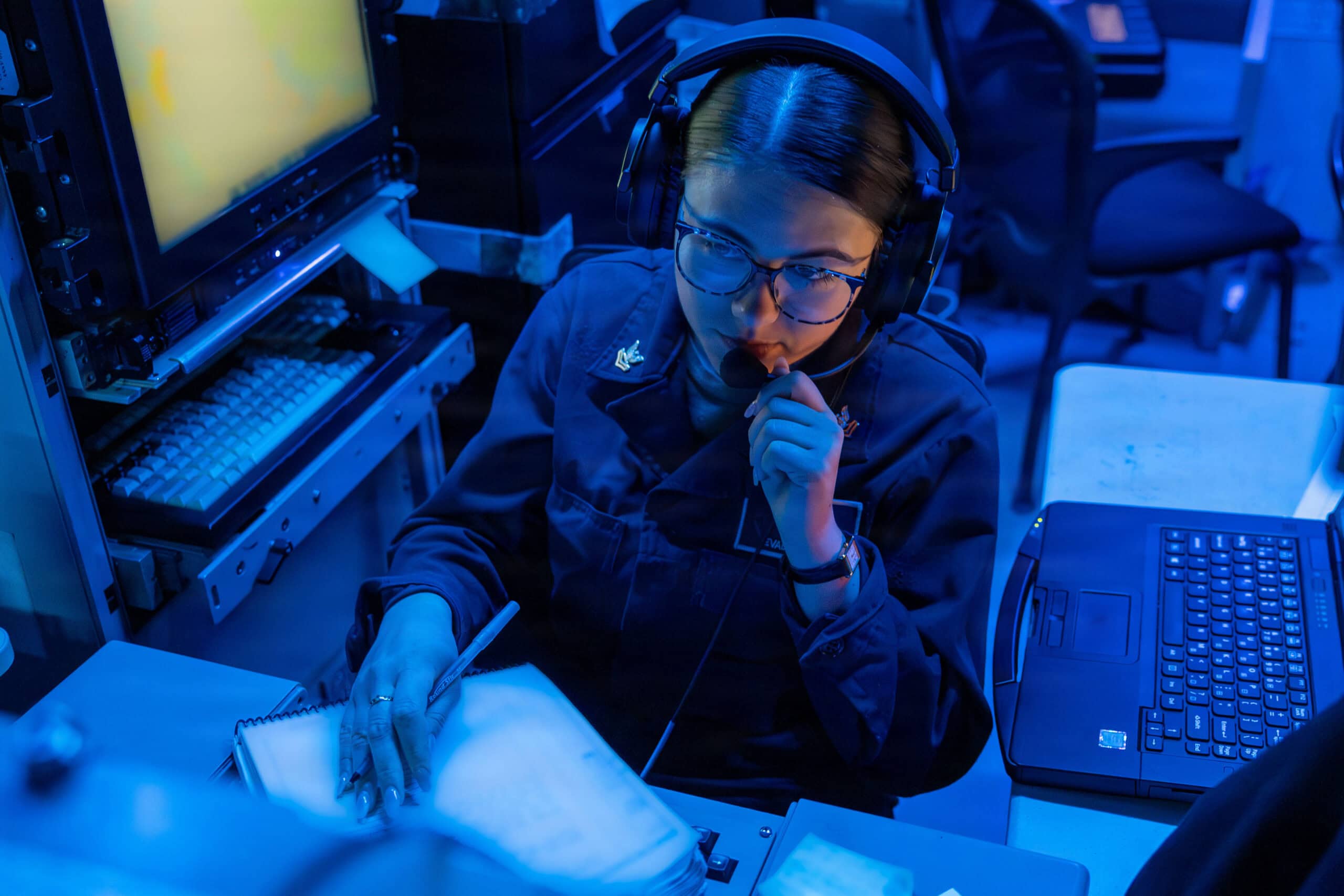
(April 7, 2026) Cryptologic Technician (Technical) 2nd Class Evalyn Allen stands Electronic Warfare Supervisor watch aboard Arleigh Burke-class guided-missile destroyer USS Gonzalez (DDG 66), April 7, 2026. Gonzalez is on a scheduled deployment in the U.S. 6th Fleet area of operations to support the war fighting effectiveness, lethality and readiness of U.S. Naval Forces Europe-Africa, and defend U.S., Allied and partner interests in the region. (U.S. Navy photo by Mass Communication Specialist 3rd Class Mark Peña)
Add in the Navy’s shipyard and supply chain crises, and the picture seems one of a service in terminal decline.
The Post-Cold War “Peace Dividend” Disaster
According to most analysts, the Navy has been in decline since the end of the Cold War, when Washington began slowly cutting Navy funding to reflect the so-called peace dividend. Because everyone in Washington believed that the end of the Cold War and the bloodless defeat of the Soviet Union meant the “end of history,” few took care to anticipate the consequences of a return of geopolitical risk.
The U.S. military cannibalized critical stockpiles. The Navy slashed its fleet size. Now, the demand for a robust military is significantly higher.
Since the United States is predominantly a naval power supporting an expeditionary force, the cuts to Navy capability over the last several decades demonstrate how irresponsible Washington has been.
From USS Gerald R. Ford to USS Boise: Crisis in Plain Sight
Today, the U.S. Navy is poorly supported by a declining defense industrial base and by naval shipyards stretched to their breaking point.
How this plays out can be seen in recent headlines: The new $13 billion USS Gerald R. Ford (CVN-78) aircraft carrier is potentially registering a record-long deployment; the Los Angeles-class attack submarine USS Boise (SSN-764) is being scrapped after spending a decade in the shipyard awaiting overdue repairs. In each of these stories, the brutal reality of America’s naval crisis comes to life.
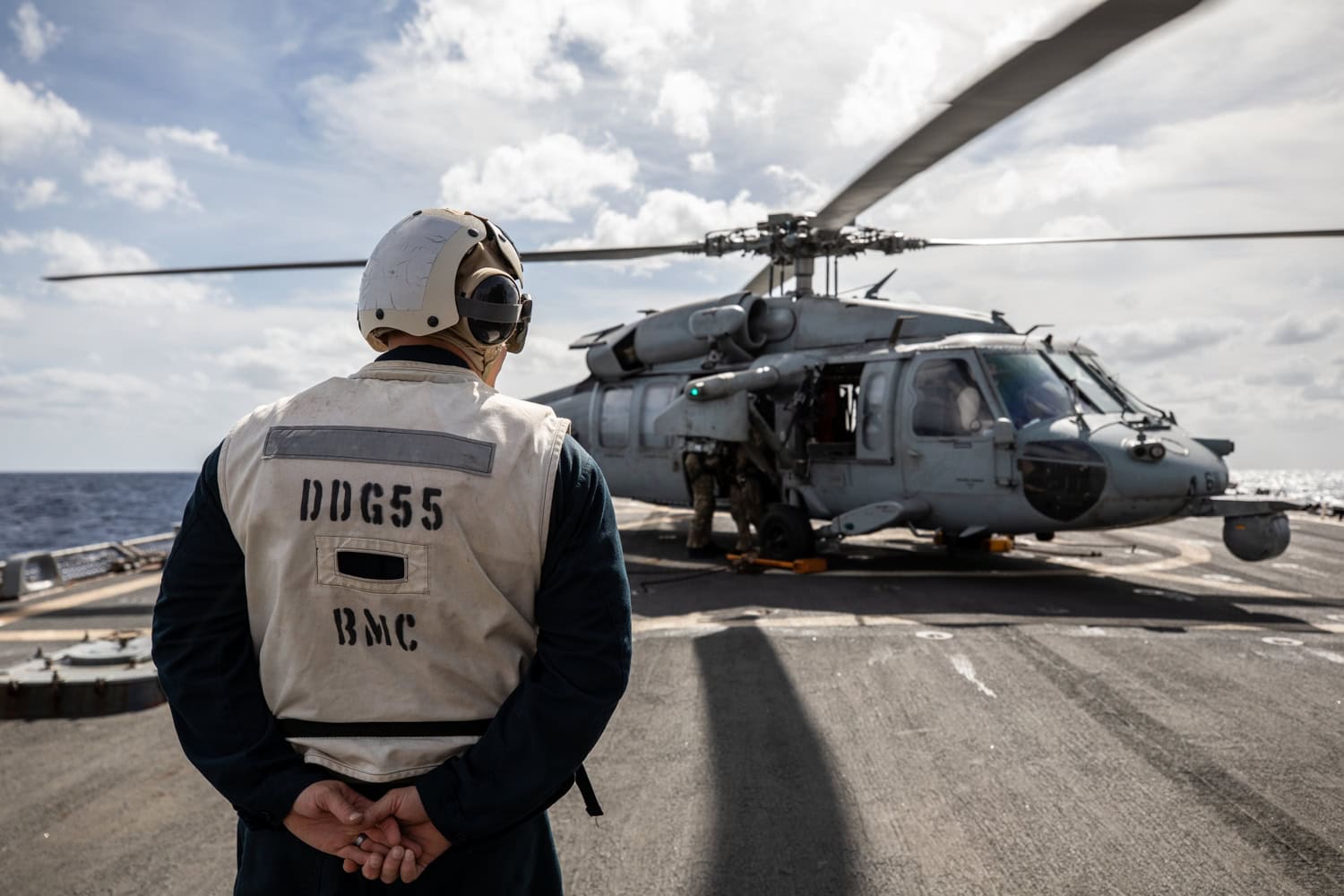
U.S. CENTRAL COMMAND AREA OF RESPONSIBILITY (Dec. 30, 2024) A U.S. Navy Boatswain’s Mate oversees the landing of an MH-60S Sea Hawk aboard the Arleigh Burke-class guided-missile destroyer USS Stout (DDG 55) in the U.S. Central Command area of responsibility. (Official U.S. Navy photo)
Yet, the White House continues to deploy its already strained Navy to carry out numerous, onerous missions that will only further strain it. The president now asks the Navy to enforce a massive counter-blockade against Iran’s blockade of the Strait of Hormuz.
The U.S. blockade will negatively impact global shipping and likely drive up prices worldwide.
What’s more, China and other countries have alluded to their intentions to run the blockade, daring the U.S. Navy to seize their cargo ships. It is highly unlikely that the Navy will be able to do that, considering diplomatic and legal constraints.
Further, it is impractical for the Navy to sustain such a robust blockade, given the service’s overall strain.
A Blockade the Navy Cannot Sustain
Many of the ships participating in the blockade have already had their current service extended and will soon require maintenance.
That maintenance, as has been the case for years, will be delayed by the shipyard crisis.
The more ships are put into sustaining the blockade—and the longer it lasts—the less capacity the Navy’s reduced force will have to handle a real crisis.
At some point, reality hits—and it will hit far sooner than Washington thinks, when much of the fleet will be forced to return to port to await maintenance that ships have put off for far too long.
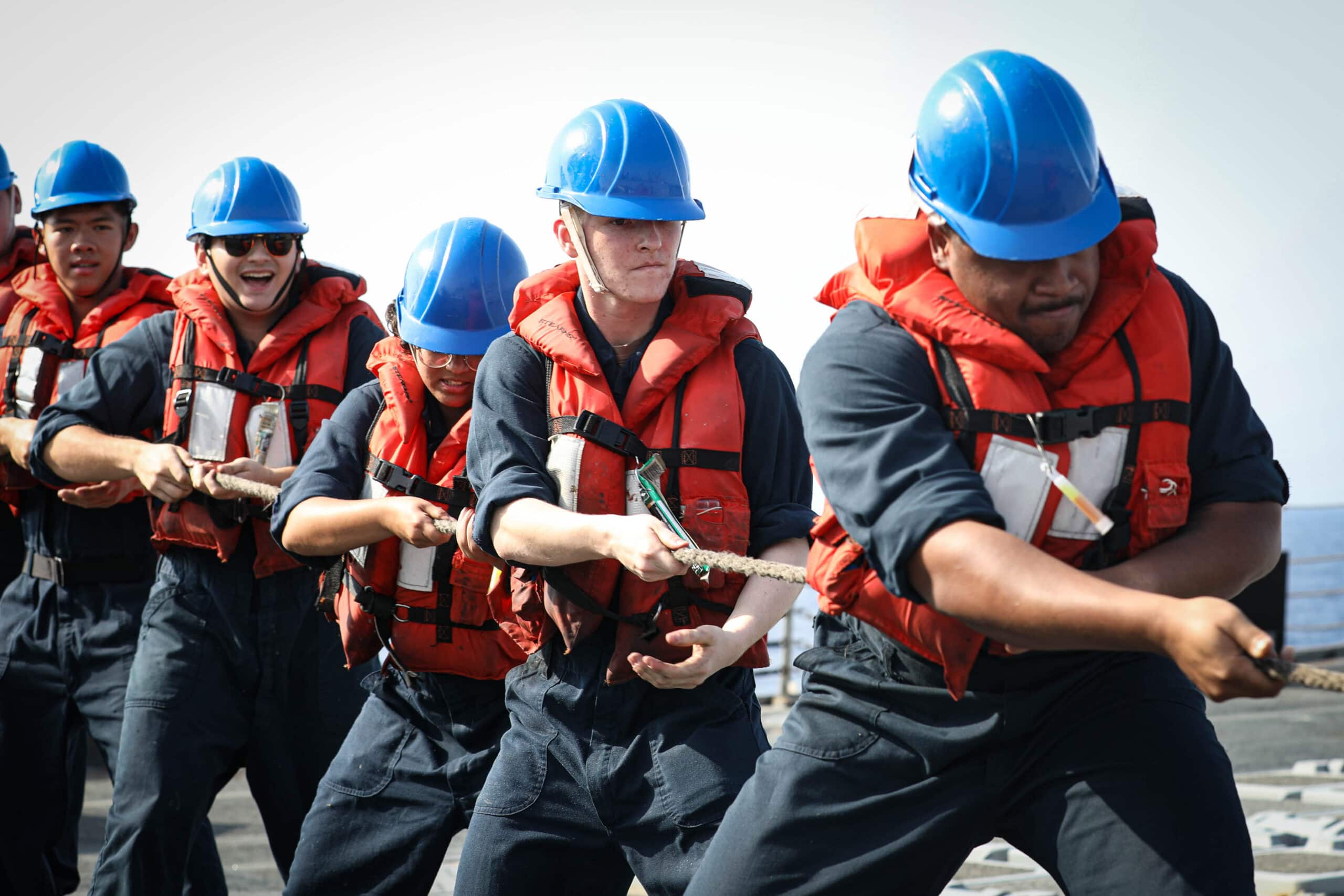
U.S. CENTRAL COMMAND AREA OF RESPONSIBILITY (Dec. 19, 2024) U.S. Sailors handle lines during a replenishment-at-sea (RAS) aboard the Arleigh Burke-class guided-missile destroyer USS Jason Dunham (DDG 109) in the U.S. Central Command area of responsibility. (Official U.S. Navy photo)
A Strategy Dictated by Industrial Failure
The United States has long ignored the plight of its naval shipyards and the bottlenecks in its defense industrial base. Ignoring those problems for decades has led to the crisis the Navy now faces.
At some point soon, the Navy will be forced to change its strategic calculus, because its global commitments and current operational tempo are unsustainable.
The Navy will be dictated to by broken shipyards and a sclerotic defense industrial base, regardless of what America’s enemies threaten to do. This is the slow, agonizing death of a superpower unfolding in real time.
About the Author: Brandon J. Weichert
Brandon J. Weichert is the Senior National Security Editor at 19FortyFive.com. Recently, Weichert became the editor of the “NatSec Guy” section at Emerald.TV. He was previously the senior national security editor at The National Interest. Weichert is the host of The National Security Hour on iHeartRadio, where he discusses national security policy every Wednesday at 8pm Eastern. He hosts a companion show on Rumble entitled “National Security Talk.” Weichert consults regularly with various government institutions and private organizations on geopolitical issues. His writings have appeared in numerous publications, among them Popular Mechanics, National Review, MSN, and The American Spectator. And his books include Winning Space: How America Remains a Superpower, Biohacked: China’s Race to Control Life, and The Shadow War: Iran’s Quest for Supremacy. Weichert’s newest book, A Disaster of Our Own Making: How the West Lost Ukraine, is available for purchase wherever books are sold. He can be followed via Twitter/X @WeTheBrandon.