
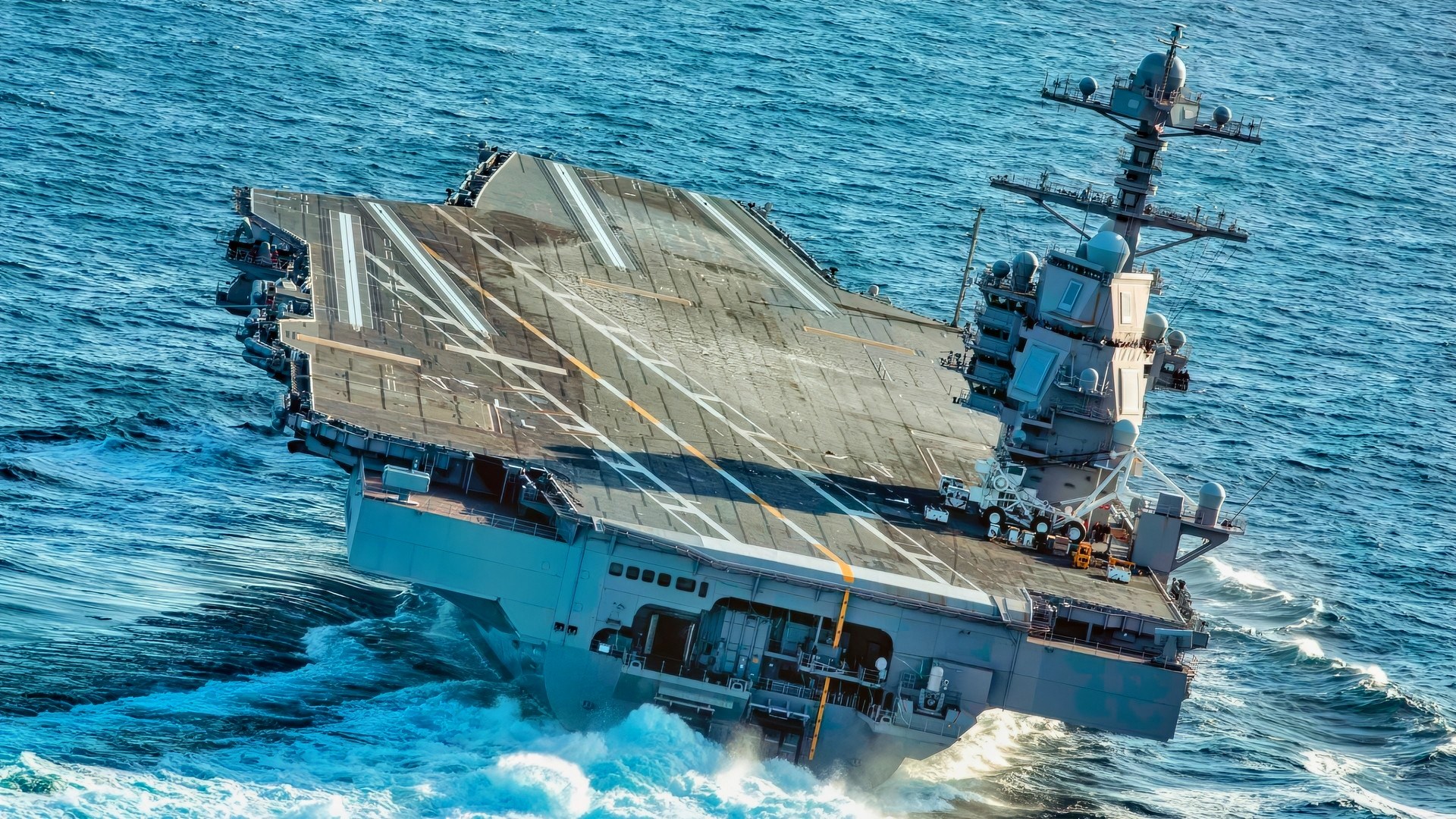
The USS Gerald R. Ford took roughly a decade from steel-cutting to operational deployment. Headlines called it a delay. Congressional hearings called it mismanagement. Neither framing is quite right. What the Navy attempted with the Ford-class was something the service hadn’t tried before — several generational technology leaps bundled onto a single hull: the Electromagnetic Aircraft Launch System replacing steam catapults that had worked for sixty years, the Advanced Arresting Gear replacing proven recovery systems, a completely redesigned electrical plant to power both, plus new radar and weapons handling architecture.
None of these technologies being installed was mature. They were technologies still being developed — in some cases, still being made to work at all — while the shipyard simultaneously tried to build the ship around them.
That decision determined everything that followed.
Ford-Class: Concurrency, Not Speed
There is a word for this approach: concurrency. The logic sounds reasonable. Develop and produce simultaneously, compress the timeline, and avoid the cost of sequential phases.
The intention was to field the capability faster.
In practice, it works in reverse. Concurrency doesn’t compress timelines — it relocates risk. Instead of resolving technical problems during development, when fixes are cheaper and consequences are bounded, they are pushed into construction, where fixing anything costs more and takes longer.
On Ford, the problems arrived as predicted and were more expensive than planned. EMALS proved unreliable through testing cycles that stretched far beyond projections. The Advanced Arresting Gear fell years behind schedule. Weapons elevators — eleven of them — became a sustained embarrassment, still incomplete at commissioning. These weren’t independent failures.
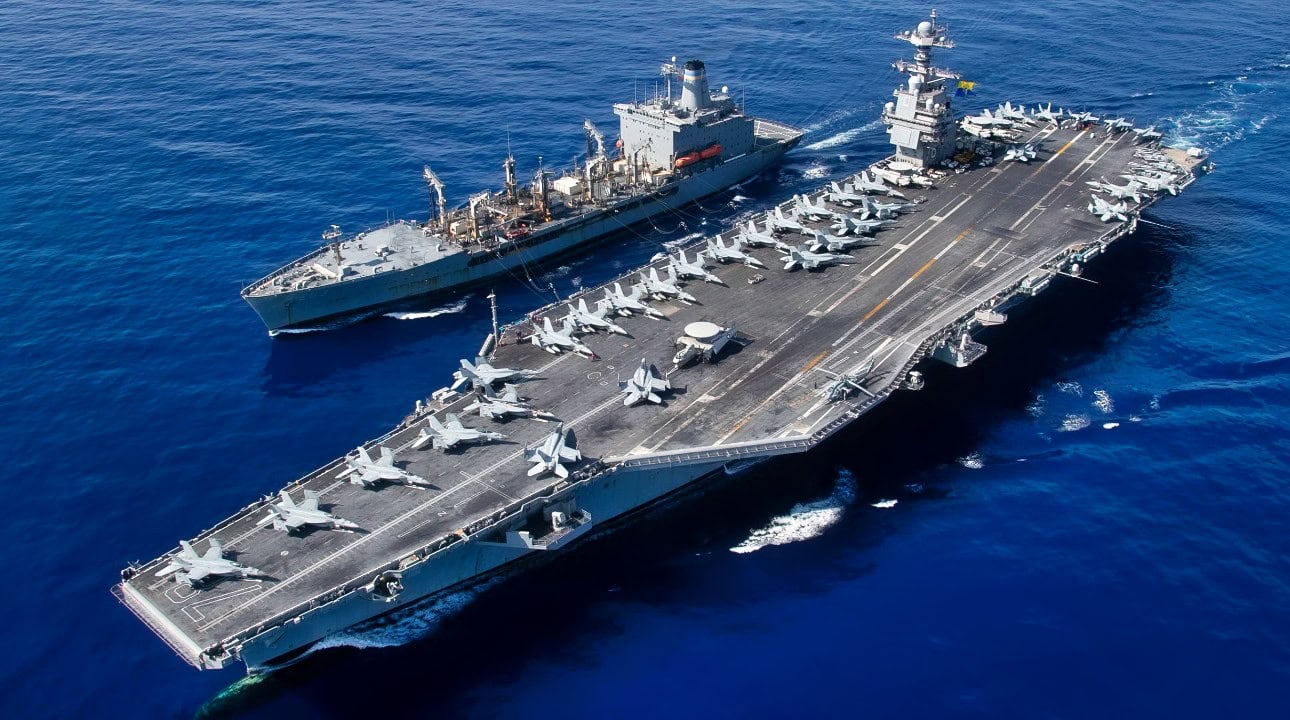
The world’s largest aircraft carrier USS Gerald R. Ford (CVN) 78 and the USNS Laramie (T-AO-203) conduct a refueling-at-sea in the Eastern Mediterranean Sea, Oct. 11, 2023. USS Gerald R. Ford is the Navy’s newest and most advanced aircraft carrier, representing a generational leap in the U.S. Navy’s capacity to project power on a global scale. The Gerald R. Ford Carrier Strike Group is currently operating in the Eastern Mediterranean Sea, at direction of the Secretary of Defense. The U.S. maintains forward deployed ready and postured forces to deter aggression and support security and stability around the world.(U.S. Navy photo by Mass Communication Specialist 2nd Class Jackson Adkins)
They were connected. A launch system that didn’t behave consistently slowed flight deck testing. Fixes to one system triggered retesting requirements in others. The ship became the laboratory.
Time fell into the same cycle on repeat: test, identify the failure mode, diagnose the cause, redesign, retest. What looked to outside observers like program drift was often something more specific — the program discovering, at enormous expense, what should have been learned before steel was ever cut.
Supercarrier Drama: The System It Came From
A carrier that can’t reliably generate sorties isn’t a carrier in the operational sense. It’s a platform in progress. Ford’s entire value proposition — higher sortie rates allow for reduced crew requirements, improved weapons throughput — was tied to the systems that took the longest to stabilize.
Navies count ships. Wars test what those ships can actually do on demand.
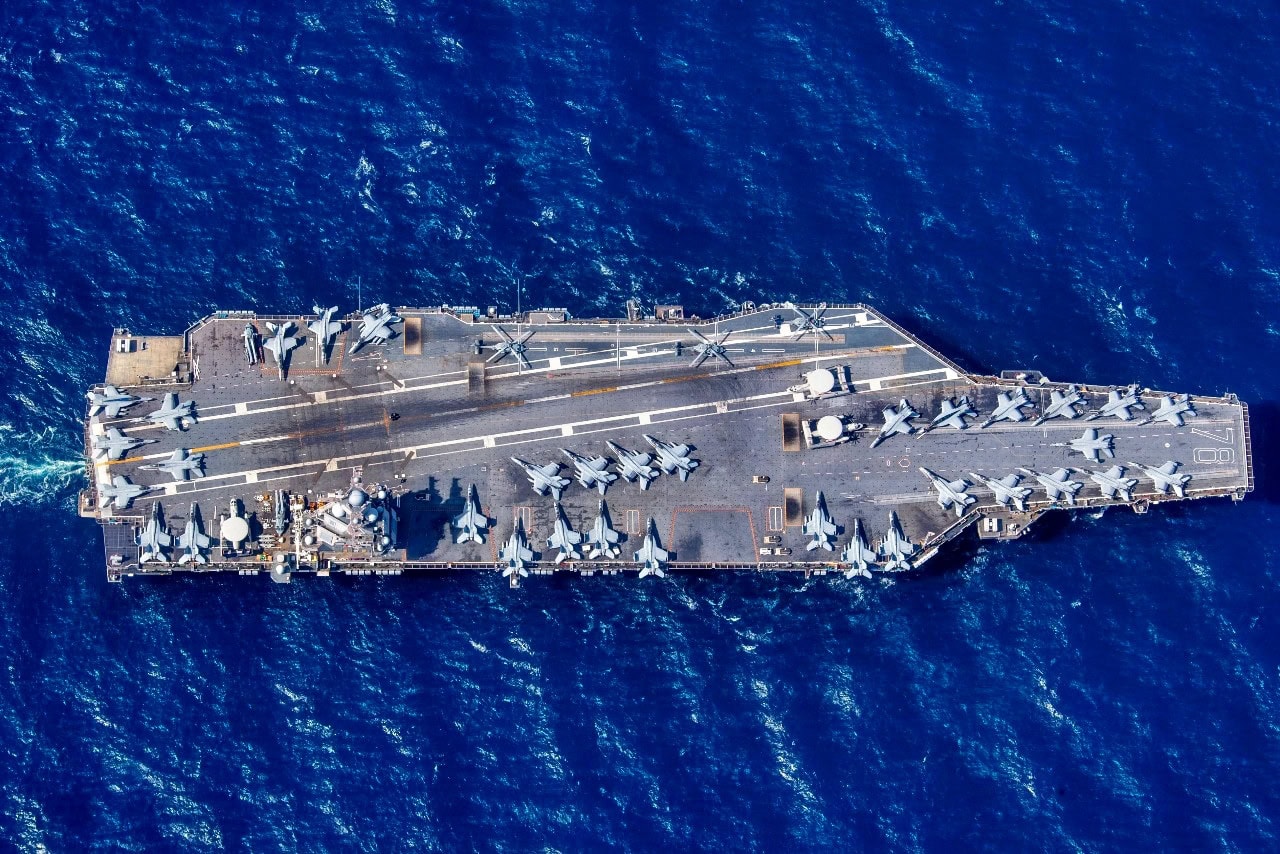
The first-in-class aircraft carrier USS Gerald R. Ford (CVN 78) transits the Atlantic Ocean, March 19, 2023. Ford is underway in the Atlantic Ocean executing its Composite Training Unit Exercise (COMPTUEX), an intense, multi-week exercise designed to fully integrate a carrier strike group as a cohesive, multi-mission fighting force and to test their ability to carry out sustained combat operations from the sea. As the first-in-class ship of Ford-class aircraft carriers, CVN 78 represents a generational leap in the U.S. Navy’s capacity to project power on a global scale. (U.S. Navy photo by Mass Communication Specialist 2nd Class Jackson Adkins)
Ford’s commissioning in 2017 put a ship in the fleet that the fleet couldn’t fully use.
For six years, the Navy carried it in the force structure at full weight while the program worked through what was supposed to have been resolved by delivery.
A carrier represents roughly $13 billion in sunk cost and a decade of industrial commitment. When it falls short of its designed capability upon arrival, that shortfall shows up in operational planning, deployment schedules, and in the assessments of anyone paying attention from the outside.
Ford isn’t an outlier, which is the part the program’s critics often miss.
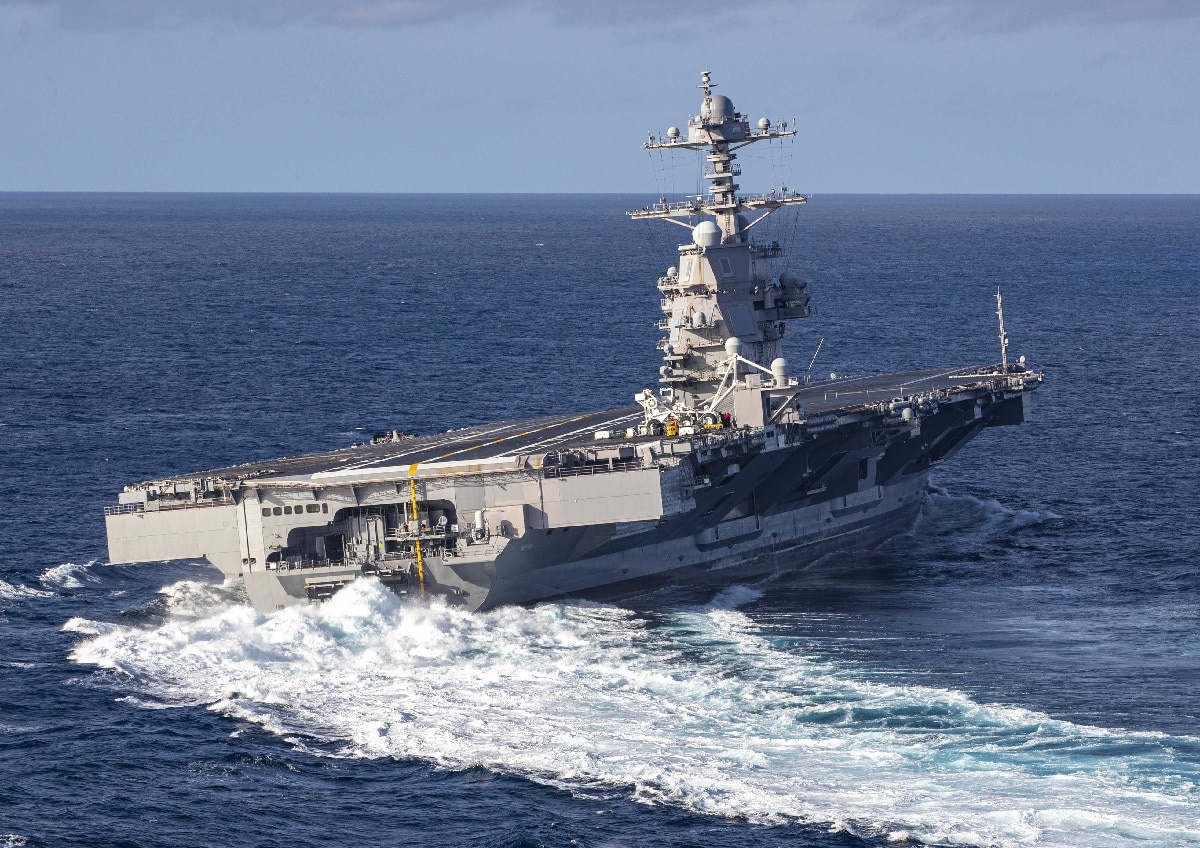
Gerald R. Ford-class. Image: Creative Commons.
The F-35 spent years in low-rate initial production while software blocks remained unfinished.
The Littoral Combat Ship was designed around a modular mission package concept that was supposed to let one hull swap between anti-submarine, surface warfare, and mine countermeasures roles — a flexibility that never translated from initial concept into operational reality. In each program, the same structure repeats: promise transformation in a single acquisition step, then absorb the cost when that step expands. The issue isn’t execution. It’s the terms on which the program was sold.
What Improvement Would Actually Require
USS Kennedy and USS Enterprise will come out of the yard faster.
The workforce has climbed the learning curve, and some of Ford’s toughest technical problems have now been worked through and carried forward.
That’s real. It also doesn’t touch the underlying issue.
Real improvement means maturing technologies before they reach a production hull—not after. It means keeping development and production in separate phases rather than running them together and hoping the friction resolves itself. The programs that emerge from that approach are harder to sell.
The capability they deliver actually exists when it’s needed.
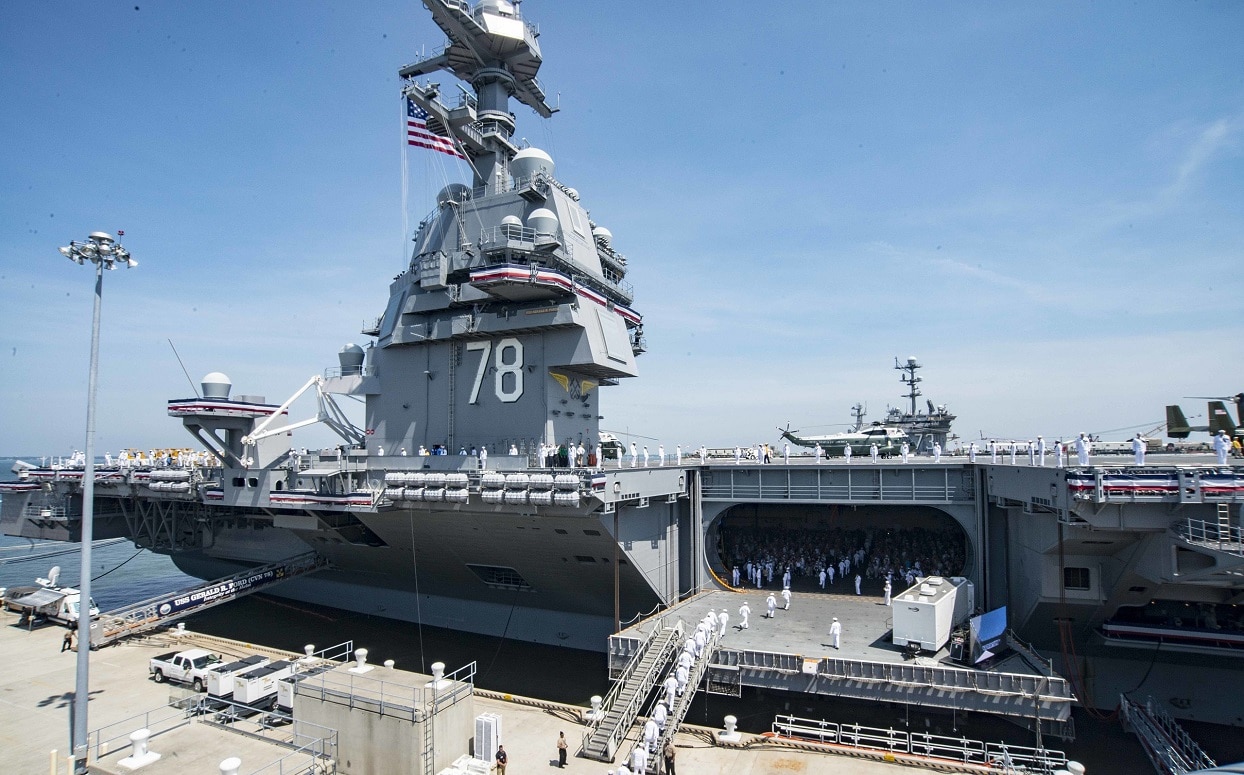
Gerald R. Ford-class. Image: Creative Commons.
The incentives — institutional, budgetary, political — continue to reward programs that promise more and deliver it later.
Nothing visible suggests that’s changing.
The Strategic Clock
That used to be a procurement problem. Now it’s a strategic one.
The threat environment has changed. China has spent two decades studying how carrier strike groups operate and building the layered capabilities — ballistic missiles, hypersonic weapons, long-range sensors, submarine forces — designed to hold them at risk.
The Ford-class got there eventually. It was deployed in 2024 and performed as designed. But the next carrier in the class will open that gap again, and the one after that.
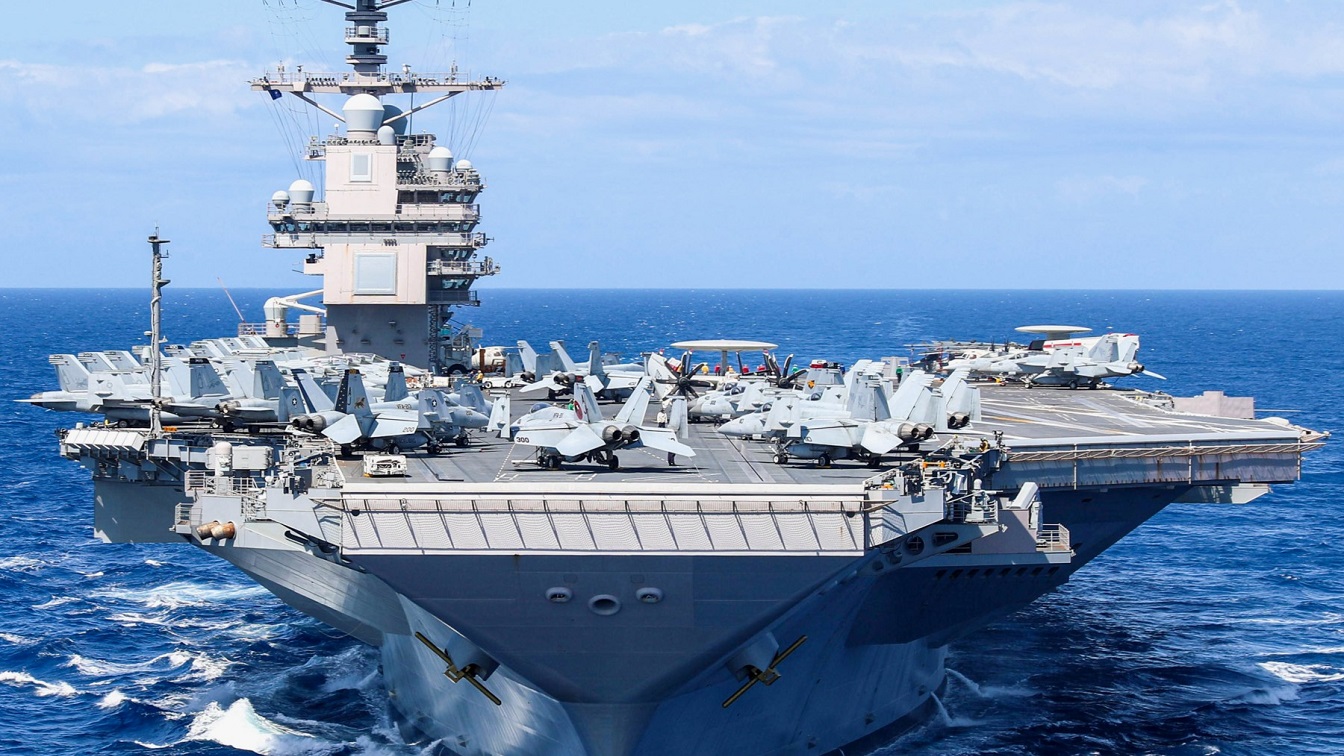
Ford-Class. Ford-Class Aircraft Carrier USS Ford.
Every new hull running new systems through the same maturation cycle represents the same window — a ship counted in the order of battle that hasn’t yet become what it’s counted as. An adversary who has spent two decades learning to target carriers has had time to learn to read that difference, too.
The Ford-class was not delayed. It arrived exactly when a program built around concurrency was due. Kennedy will arrive the same way. The cycle doesn’t break until the Navy decides the cost of running it is higher than the cost of changing it — and so far, there’s no sign of that happening.
About the Author: Dr. Andrew Latham
Andrew Latham is a non-resident fellow at Defense Priorities and a professor of international relations and political theory at Macalester College in Saint Paul, MN. You can follow him on X: @aakatham. He writes a daily column for 19FortyFive.com