The late Israeli political analyst and writer Amos Elon despaired throughout his life about the impossibility of maintaining peace agreements, truces, and ceasefires. There was a long history of failures to create stable relations between Israel and the Palestinians.
“It is always easier to make peace with those who would know what to do with it,” he said more than once.
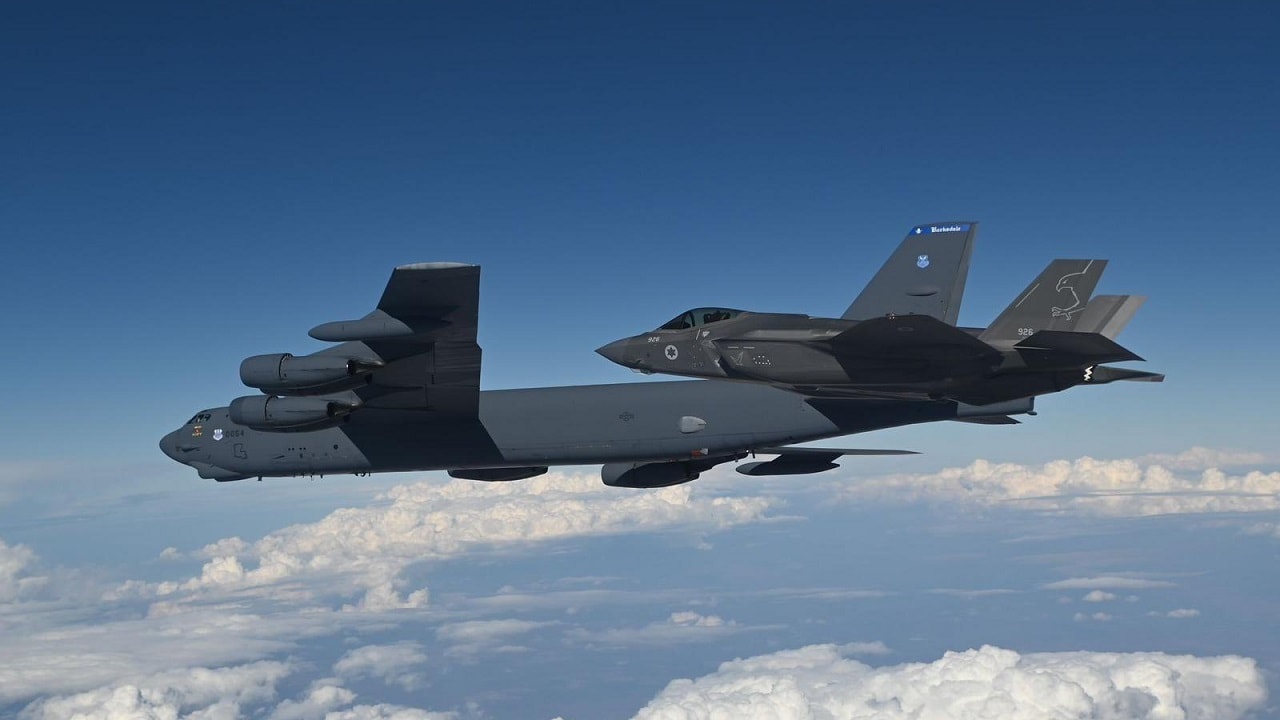
B-52H and F-35I Adir. Image Credit: IDF.
That is a precondition also for maintaining the current ceasefire in Iran—unfortunately, Iran’s leadership has not shown itself prone to humanitarian impulses.
Time magazine and other U.S. publications have asked many experts about the ceasefire’s viability. Their reactions vary, largely depending on whether freedom of navigation in the Gulf is restored, but few experts are optimistic.
Daniel Fried is a former U.S. Ambassador who ran the State Department’s Bureau of European and Eurasian Affairs during the Bush administration. He was then in charge of sanctions policy under the Obama administration.
Fried sees too much daylight between the two sides’ positions.
He points out that Iran is now demanding that any ships wishing to transit the Strait of Hormuz must notify Tehran’s military and obtain clearance. “That is something the Iranians did not have [in place before],” Fried told Time. “So we are already starting out [the ceasefire] from behind. That’s a problem. If your principal objective is to restore the status quo, you’re not winning.”
Conflicting Agendas
One point on which the United States and Iran are not in sync is the set of conditions that must be met for a ceasefire to hold. This is already challenging Washington, because the war “is not going the way [the U.S. President] expected,” said Fried.
“Iran may want to [have a] ceasefire because they’ve been badly hurt. They don’t feel as if they’re in a weak position. So from their perspective, it may be advantageous to agree to the ceasefire and then negotiate from a very advantageous starting point—which is their 10 points—what seems to be [them demanding] a US acquiescence to some sort of Iranian control over the Strait of Hormuz,” he explained to Time.
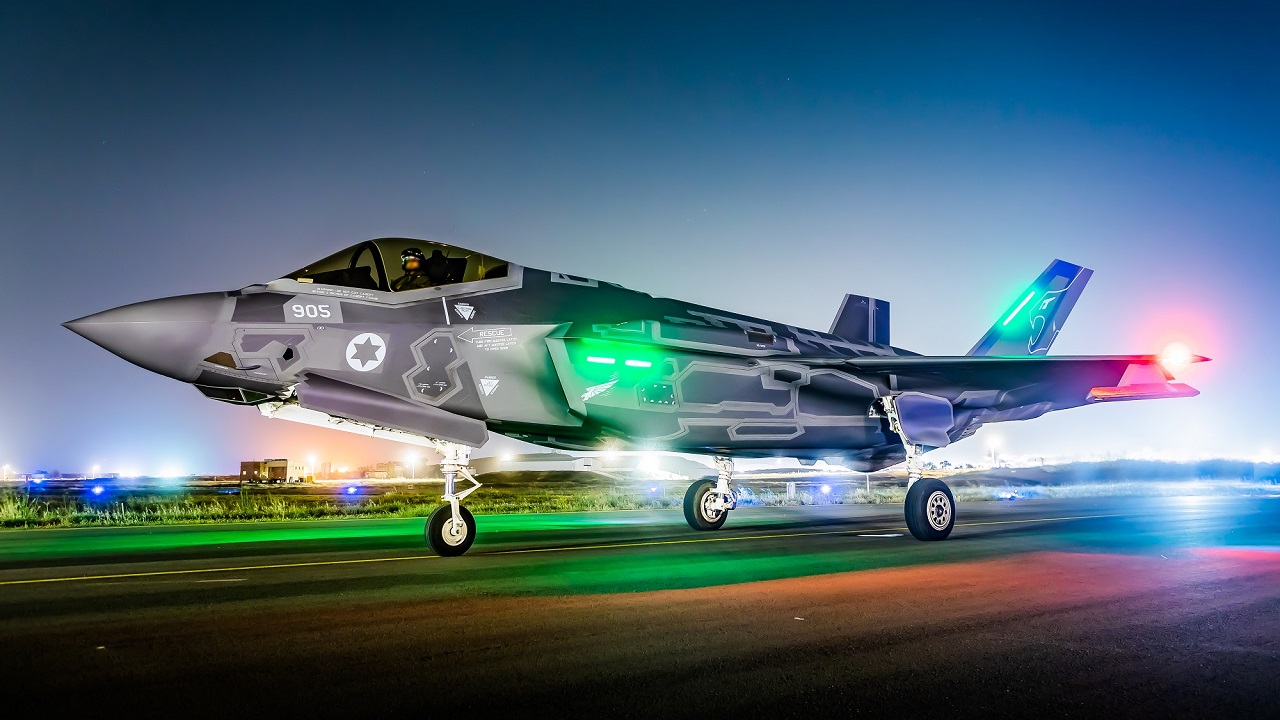
F-35I Adir serving in Israel’s Air Force. Image Credit: Creative Commons.
Another commentator is retired U.S. Navy Admiral Mark Montgomery, now a fellow at the Foundation for Defense of Democracies, with expertise in shipping. “It’s highly likely that there’ll be a lot of contentious moments in the follow-on discussions on the ceasefire,” he said.
“One of the things we tend to do pretty well is work over an adversary’s [communications] systems. So we need to wait 24, 48 hours—and then you have to see if things are coordinated across regions. But isolated things [on the part of the Iranians] for the next 24, 48 hours would be excusable under the circumstances.“
Fragmented Control of Authority
Brandan Buck, a former intelligence officer at the National Geospatial-Intelligence Agency and now a foreign policy expert at the CATO Institute, points out that it is unclear which authority Iranian units respond to.
“A ceasefire between who?” he asks. “I think it could be durable between the United States and Iran, but as far as a larger region, it’s not looking that way thus far.
“I think we forget that Iran devolved its command-and-control authority down to the lowest levels throughout the course of this war. If this thing is going to hold, it’s probably going to take some time and order for those orders to filter down to the various levels [on the ground] in Iran.”
Fundamentally, “the asks of the two parties are still pretty far apart,” he continues. “You know, last night, there were reports that the president was going to negotiate along the lines that Iran put forward, but then now some things have come out, so that’s been denied. So it’s still not clear under what conditions these three sides are going to negotiate, and therefore how this ceasefire will be put into place.”
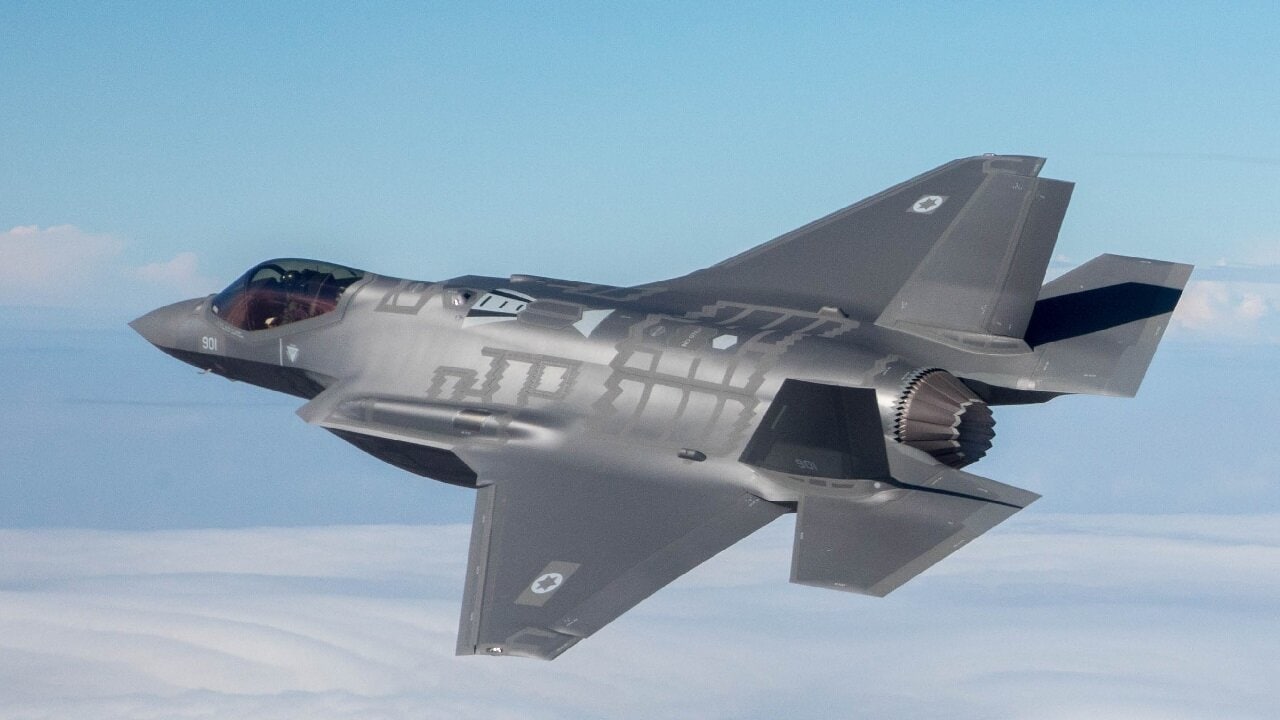
Israeli Air Force F-35I Adir stealth multi-role fighter.
Too Many Open-Ended Issues
The Center for Strategic and International Studies (CSIS) has its own analysis of the ceasefire. A senior CSIS staffer points out the almost complete disagreement that still exists on many issues, any one of which could cause the ceasefire to fall apart.
“The two sides are far apart,” writes Danial Byman, who is director of CSIS’s Warfare, Irregular Threats, and Terrorism Program. “Both seek to convince audiences at home that they have won—something that will further complicate negotiations.
“It is possible that the ceasefire itself will be the settlement: The United States, Israel, and Iran will not come to a final deal, but the ceasefire will continue indefinitely, with the risk of a flare-up hovering over the region.”
Byman continues: “The ceasefire is less a resolution than a pause in a conflict whose underlying drivers remain not only intact but, in some cases, intensified. The nuclear issue is unresolved, Lebanon is destabilized, the risk of terrorism persists, and US alliances have been strained—all while Israel and Iran retain strong incentives to continue a shadow war that periodically erupts into open violence.
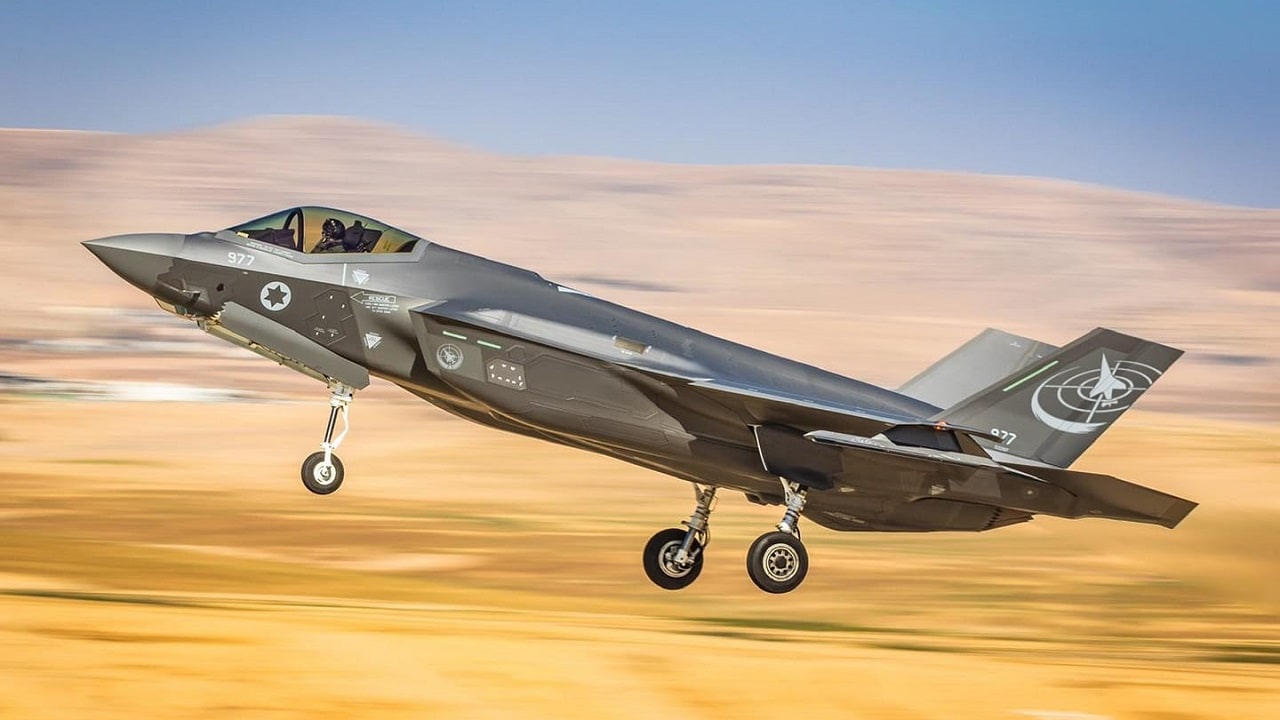
Photo by Amit Agronov via IDF.
“Even if large-scale fighting does not immediately resume, the United States faces a region marked by persistent instability, emboldened adversaries, wary allies, and a continuing cycle of escalation that will be difficult to control or conclude.”
A likely scenario could see the sides compete in a series of cat-and-mouse military actions alongside tortured negotiations that stretch on for years.
Most of the specialists we spoke to agreed that hostilities will last a comparatively short period of time. But the follow-on actions of maintaining the peace, continuing to enforce sanctions and chasing down those who violate them, and taking out rogue actors will continue—likely, there is no end in sight.
About the Author: Reuben F. Johnson
Reuben F. Johnson has thirty-six years of experience analyzing and reporting on foreign weapons systems, defense technologies, and international arms export policy. Johnson is the Director of Research at the Casimir Pulaski Foundation. He is also a survivor of the Russian invasion of Ukraine in February 2022. He worked for years in the American defense industry as a foreign technology analyst and later as a consultant for the U.S. Department of Defense, the Departments of the Navy and Air Force, and the governments of the United Kingdom and Australia. In 2022-2023, he won two consecutive awards for his defense reporting. He holds a bachelor’s degree from DePauw University and a master’s degree from Miami University in Ohio, specializing in Soviet and Russian studies. He lives in Warsaw.